
Vue lecture

Next Wave: Money is coming back to African startups; we need a better story to make it stay

Next Wave Logo

27 July, 2025

After consecutive steep drops in the amount of venture capital funding made out to startups in both halves of 2023 and 2024, the first half of 2025 has been a collective sigh of relief for stakeholders across Africa’s technology landscape.

But make no mistake, the uptick in startup fundraising is only part of a larger trend towards revising the case for investing in an African startup. I find that more people—fund managers, founders and other enablers are asking hard questions about what it means to build commercially viable businesses on the continent. And the 166% growth in the concentration of fundraising into fintech reflects an unspoken consensus that investors are clustering around what has been proven to work under the current “Africa opportunity narrative” versus where innovation meets deeper risk.

But, unlike mature technology business ecosystems, where concentrated investor interest in large language artificial intelligence models is the driving force behind the resurgence in startup investing, concentration narratives like the simplistic “fintech for inclusion” story is showing signs that it is near its structural limit. Even fintech-focused firms are modulating this story in their communications. It tells me that:

  1. Our startup and capital archetypes are evolving.
  2. The overarching story of startup and tech in Africa is losing its compelling power.

An overarching narrative is a set of stylised facts that explain something. It is the foundational set of generally accepted and simplified realities or idealized patterns that theories are constructed around to advance capital and entrepreneurial utility.

Next Wave continues after this ad.

Join Us in Paris for the Bridge & Value Trade Mission: Sept 22–26, 2025.

This trade mission offers unparalleled access for Nigerian businesses seeking strategic partnerships, market entry support, and visibility across the European economic landscape. It is an exceptional opportunity for forward-thinking companies ready to scale, partner, and expand to Europe.

Register here!

For us in Africa, the major narratives oscillated between Africa’s demographic expansion and the implied market opportunity it represented. And the opportunity to create, shape and capture market share in some of the fastest-growing economies globally by deploying new technology to leapfrog institutional gaps and market failures.

Sectorally, “financial inclusion,” for example, drove financing flows and policy reform that fueled fintech ventures. That ship has lost steam today. Solar-based micro-grids, for example, drove financing to the models that produced the M-KOPAs of this world. That story has evolved into more complex models today, just as climate adaptation is driving funding to smallholder farm improvement technologies.

While many of the underlying stylised facts remain mostly true, the collision of the grand narrative with market realities and global capital flows has damaged the prevailing story. Unfortunately, most investors and even founders are still caught on the wrong side of a compelling non-moralistic narrative about building and investing in startups. In this sense, the current rebound in startup fundraising is a positive surprise.

Thus, while it’s easy to call the rebound in startup funding a “flight to quality,” it sounds and looks more like a “flight to safety” to me. It tells me that the big story that drove building and investing in startups is due for an upgrade.

Next Wave continues after this ad.

ICTEL

The Lagos Chamber of Commerce and Industry (LCCI) is proud to announce the 11th edition of the ICTEL Expo, set for July 29–30, 2025, at the Lagos Oriental Hotel, Victoria Island. Under the theme “Leveraging Technology for Innovation and Development in Africa,” the event aims to further position ICTEL as a premier platform for digital transformation, regional collaboration, and economic progress

Join us!

Billions of dollars were raised and deployed based on the existing stories. Unicorns were created, new fund managers joined the VC gravy train, and growth in startup hiring created work opportunities for thousands of brilliant young talent. 

But when the private startup capital market broke down from 2023 onwards, it became clear to anyone paying attention that the stories that turned on the capital spigot were not enough to keep the taps flowing. And most importantly, those stories probably worked because of cheap global money, and not always because of their commercial soundness. 

We now need stories that are less correlated to the global state of capital, and this applies whether your capital is local or not, because all capital is universal, if not geographically, then in terms of opportunity cost.

Next Wave continues after this ad.
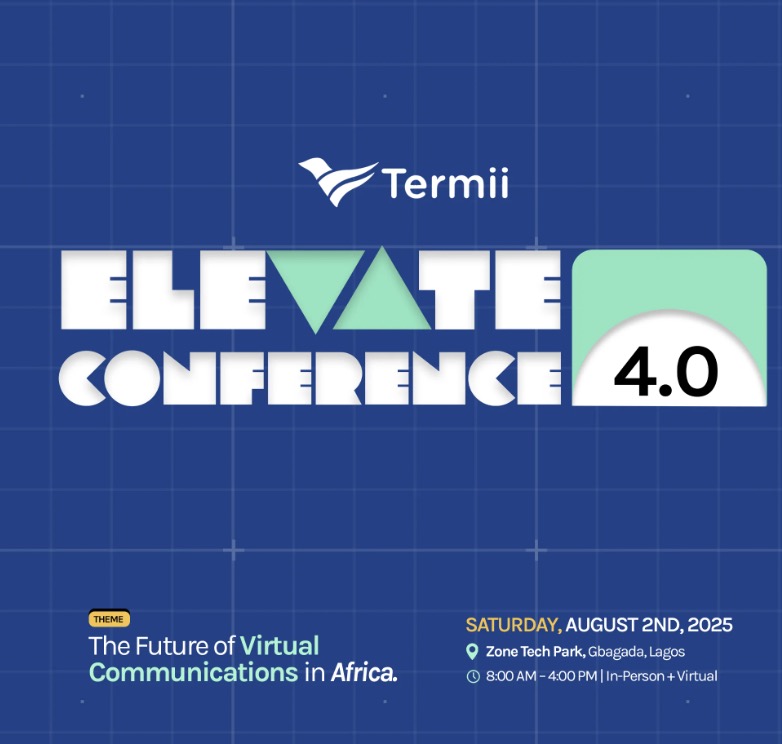
Termii

Join Africa’s builders at Termii Elevate 4.0 on August 2 – where AI, APIs, and digital infrastructure take center stage. With Iyin Aboyeji, Wetech, and other top voices. Free to attend:

Get your ticker here!

The State of Tech in Africa H1 2025 is a brilliant snapshot of the numbers and context behind a 6-quarter record haul in startup funding, startup layoffs, shutdowns, M&A, and deal count.

It is one thing to read a report about technology startups in Africa and focus on the headline numbers. But a better way for the reader to parse this compilation is to test where the reported numbers improve or disprove your set of stylised facts on building or investing in African startups. And this applies regardless of what your story was, e.g. demographic opportunity, leapfrogging, or even the failings of the VC model.

Next Wave continues after this ad.

moonshot

Africa’s tech ecosystem is alive with ambition, and Moonshot 2025 is catalysing it into unstoppable momentum. Our theme, “Building Momentum,” honours past builders and calls for doubling down on systems, capital, policies, and partnerships.

Expect new formats, deeper conversations, and broader voices. This is where vision becomes action. If you’re building, funding, or enabling Africa’s innovation economy, join us October 15–16 in Lagos. Early Bird tickets are 20% off! Let’s build the future, faster, smarter, together.

Reserver your spot!

Again, this applies whether your focus is on local or global capital because money and business are mobile, and narratives are a powerful vehicle for universal capital mobility.

The point is that despite the rebound in startup funding, the case for updating our commercial and collective narrative for investing in and building African startups has never been more urgent. Don’t believe me? Ask any of the more than two dozen local VC firms that are actively raising capital today.

Abraham Augustine

Ecosystem & Marketing Manager, Norrsken

Thank you for reading this far. Feel free to email abraham[@]norrskenfoundation.org, with your thoughts about this edition of NextWave. Or just click reply to share your thoughts and feedback.


We’d love to hear from you

Psst! Down here!

Thanks for reading today’s Next Wave. Please share. Or subscribe if someone shared it to you here for free to get fresh perspectives on the progress of digital innovation in Africa every Sunday.

As always feel free to email a reply or response to this essay. I enjoy reading those emails a lot.

TC Daily newsletter is out daily (Mon – Fri) brief of all the technology and business stories you need to know. Get it in your inbox each weekday at 7 AM (WAT).

Follow TechCabal on Twitter, Instagram, Facebook, and LinkedIn to stay engaged in our real-time conversations on tech and innovation in Africa.

If you liked this edition of Next Wave, please share with your friends. And feel free to reply with thoughts and feedback. We welcome those.

17, Eniyansoro Street, Ajao road off Ogunlana Drive, Surulere, Lagos.

View in Map
You received this email because you signed up on our website or made purchase from us. If you know longer wish to recieve these emails, please unsubscribe
  •  

Kenya’s cybersecurity ‘talent gap’ is a hiring problem

Next Wave Logo

First published O6 July, 2025

Kenya’s cybersecurity ‘talent gap’ is a hiring problem

cybersecurity

Image: Pixbay


This week, my colleague Adonijah published a piece about how Kenya’s digital economy is expanding rapidly and how that growth has come with its own set of problems. Banks, telecom companies, and insurers are expanding their mobile-first services. Government services are also going online, and with that comes a sharper need for cybersecurity. The risks are growing, and so is the demand for talent that isn’t just there, or so we have been made to believe.

Kenya’s cybersecurity workforce gap is often framed as a supply problem, and the result, we’re told, is understaffed banks, overworked tech teams, slow response to incidents, and dangerous exposure to digital threats. But, this version of the story sidesteps a harder question: what if the problem isn’t that the talent doesn’t exist, but that hiring systems are too rigid and narrow, and too flawed to recognise it?

The dominant logic across these sectors (especially in banking, for this context) is that hiring cybersecurity professionals should be technical, standardised, and rigorous. Roles are posted with lengthy checklists that include multiple certifications, years of experience, and specialised areas of expertise. Interviews, if they happen at all, are modelled after global formats, usually by solving a puzzle on a whiteboard, proving you know complex algorithms, or passing a coding test under pressure. But few local candidates make it through these filters, not because they aren’t skilled, but because the format itself works to exclude them.

Next Wave continues after this ad.

cardtonic

It’s Upskill with Cardtonic season again. Applications for Upskill 3.0 are open

Now is your chance to win one of the 20 units of 2024 M4 MacBook Pro Laptops we are giving away. If you’re a techie in software engineering, design, data science, product management, and content creation, this is for you!

Find out more here!

Technical interviews often reward the ability to perform under artificial, time-pressured conditions, not real-world competence. I spoke with former college and high school classmates who work in banking, telecommunications, and big tech (Google and Microsoft). Before they were hired for these international roles, they admitted to being asked to solve sorting problems, tree traversals, and optimisation challenges they hardly face on the job.

They were expected to write perfect code on a whiteboard or shared doc, from memory, without syntax help, debugging tools, or a collaborative setup. There’s an unspoken belief that this is how you separate “real” engineers from the rest. But what it actually filters for is who studied computer science in the right way or who enjoys brain teasers under surveillance. It is something that just doesn’t work.

This problem is shaping how local employers screen tech talent. In Nairobi, technical interviews are increasingly mimicking this pattern, especially in firms that want to compete with or supply to international partners. And in the process, they’re weeding out strong candidates who think differently, communicate differently, or just haven’t had the luxury to rehearse interview puzzles for weeks.

I have been told by the same group that certifications are treated as mandatory in most Kenyan cybersecurity job listings (I now understand why they are such a big deal on LinkedIn). Yet a Certified Information Systems Security Professional (CISSP) certification costs more than most entry-level IT workers make in several months.

Next Wave continues after this ad.

Alltalentz

All Talentz has launched Nigeria’s first nationwide tech hackathon, with TechCabal as media partner. Interested teams should register by July 4, 2025. The event runs from July 14 to August 23 in Lagos, and winners get ₦10M, a TechCrunch Disrupt trip, and opportuninty fr jobs. All applicants will join a global tech talent pool.

Register here!

And even those who invest in it still find themselves screened out if they lack the ‘right’ work history or can’t demonstrate fluency in jargon during interviews. Meanwhile, there are thousands of capable IT professionals, including network engineers and support staff who’ve spent years in adjacent roles, responding to incidents, managing infrastructure, or securing systems informally. They’re already doing half the job, but because hiring filters are rigid, they never even get interviewed.

Candidates who struggle with high-pressure environments tend to flounder in traditional interview formats. A close friend who worked in a software development firm in Uganda described how a colleague with a shy streak consistently failed interviews, despite being easily the most talented developer they had ever worked with. His mind worked differently, but the process never made space for that.

In other cases, some say that interviews are adversarial, especially for Kenyan banks. You’re asked to perform a trick the interviewer already knows the answer to, under judgment, with little real collaboration or feedback. And if you ask for clarification or go off-script, you risk triggering visible frustration. Some interviewers even nitpick syntax during whiteboard sessions, defeating the point of the tool as a sketchpad for thinking.

Next Wave continues after this ad.

moonshot

Africa’s tech ecosystem is alive with ambition, and Moonshot 2025 is catalysing it into unstoppable momentum. Our theme, “Building Momentum,” honours past builders and calls for doubling down on systems, capital, policies, and partnerships.

Expect new formats, deeper conversations, and broader voices. This is where vision becomes action. If you’re building, funding, or enabling Africa’s innovation economy, join us October 15–16 in Lagos. Early Bird tickets are 20% off! Let’s build the future, faster, smarter, together.

Reserver your spot!

What’s most concerning is that this interview culture—while claiming to be objective—is riddled with bias. Candidates who don’t live in Nairobi or didn’t go to JKUAT or Strathmore are less likely to be taken seriously. And because the process rewards fluency in academic algorithms and fast recall over real-world problem-solving, it disproportionately advantages younger candidates who recently studied those topics or those who have the spare time to grind interview prep. People with practical business experience, like delivering on projects, managing security under pressure, or navigating messy legacy systems, are penalised because they can’t whiteboard a binary search tree in 20 minutes.

This is how Kenya has ended up with a false perception of a shortage. A talent pool that exists but is largely invisible to current hiring filters. Employers say they can’t find people, but what they often mean is they can’t find people who fit a very narrow image of what skilled looks like. And in chasing that image, they’re letting real, practical, trainable talent walk out the door.

Kenn Abuya

Senior Reporter

Thank you for reading this far. Feel free to email kenn[at]bigcabal.com, with your thoughts about this edition of NextWave. Or just click reply to share your thoughts and feedback.


We’d love to hear from you

Psst! Down here!

Thanks for reading today’s Next Wave. Please share. Or subscribe if someone shared it to you here for free to get fresh perspectives on the progress of digital innovation in Africa every Sunday.

As always feel free to email a reply or response to this essay. I enjoy reading those emails a lot.

TC Daily newsletter is out daily (Mon – Fri) brief of all the technology and business stories you need to know. Get it in your inbox each weekday at 7 AM (WAT).

Follow TechCabal on Twitter, Instagram, Facebook, and LinkedIn to stay engaged in our real-time conversations on tech and innovation in Africa.

If you liked this edition of Next Wave, please share with your friends. And feel free to reply with thoughts and feedback. We welcome those.

18, Nnobi Street, Surulere, Lagos, Nigeria

View in Map
You received this email because you signed up on our website or made purchase from us. If you know longer wish to recieve these emails, please unsubscribe

  •