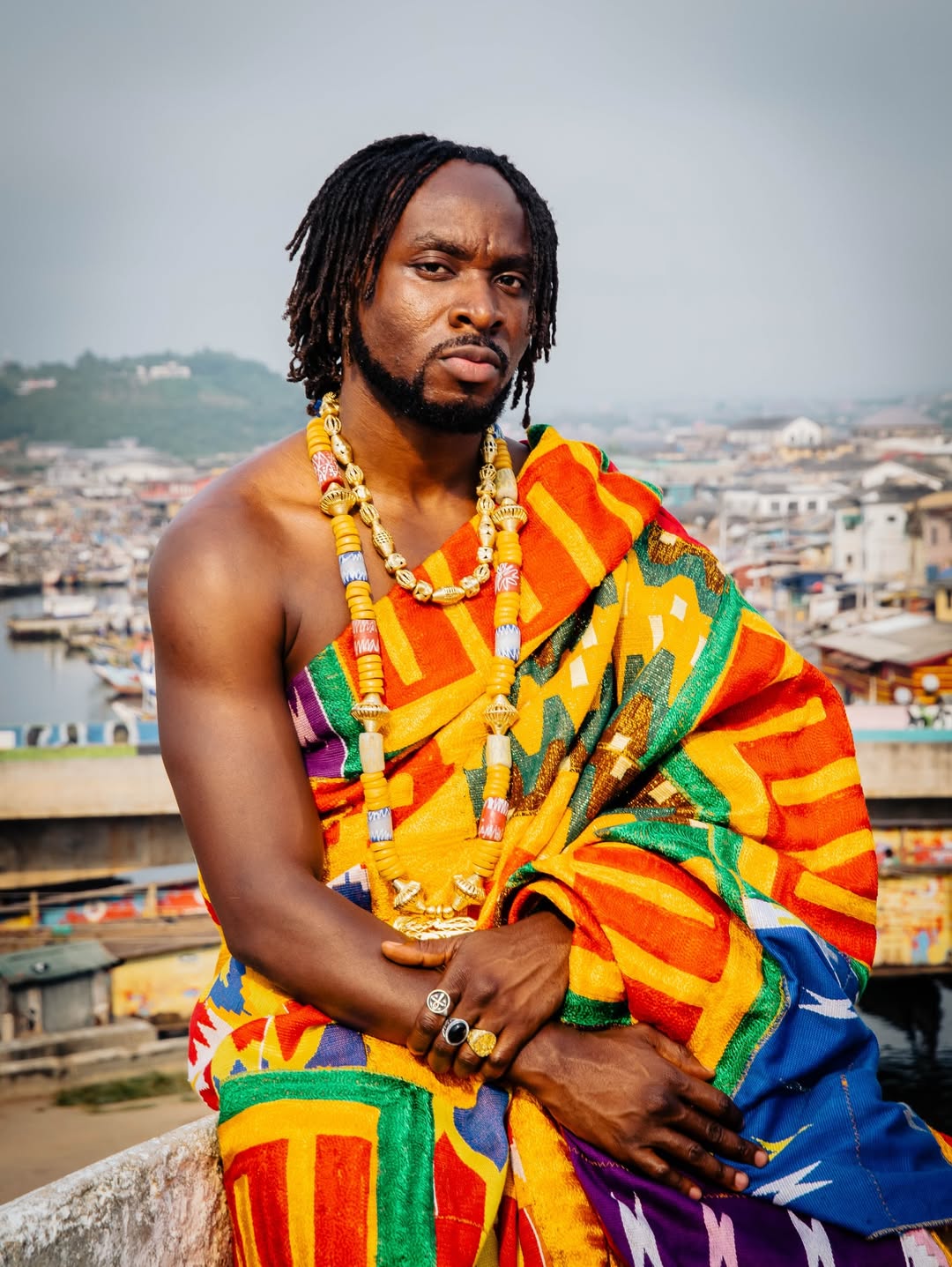
Ghanaian musician Fuse ODG draped in traditional Kente cloth and gold beaded necklaces, seated overlooking a coastal Ghanaian city. Photo Credit: Fuse ODG/Instagram
Ghana turns 69 today and the country has every reason to celebrate. On 6th March 1957, Ghana became the first sub-Saharan African country to gain independence from colonial rule — a moment so significant it did not just belong to Ghana, it belonged to the entire African continent. The independence movement that sta
Ghanaian musician Fuse ODG draped in traditional Kente cloth and gold beaded necklaces, seated overlooking a coastal Ghanaian city. Photo Credit: Fuse ODG/Instagram
Ghana turns 69 today and the country has every reason to celebrate. On 6th March 1957, Ghana became the first sub-Saharan African country to gain independence from colonial rule — a moment so significant it did not just belong to Ghana, it belonged to the entire African continent. The independence movement that started in Accra inspired nations from Lagos to Nairobi to demand their own freedom, and the ripple effects of that singular moment are still felt across Africa today.
Sixty-nine years on, Ghana is still giving the world so much to be proud of — and music is right at the top of that list. From highlife to hiplife, Afrobeats to Afro-fusion, Ghana has consistently produced sounds that travel far beyond its borders and land on playlists all over the world. So whether you are Ghanaian, Nigerian, or simply a lover of good music, here are five songs that deserve a spot on your playlist this weekend.
Azonto — Fuse ODG ft. Tiffany
We could not make this list without starting here. Azonto is the song that turned a dance move into a global phenomenon and reminded the world that Ghana knew exactly how to have a good time. It is over a decade old and it still works at every single party. A classic for a reason and a forever staple on any Ghana playlist.
Makoma — King PalutaÂ
King Paluta’s breakthrough song did enormous numbers on streaming platforms and dominated TikTok and Instagram all through 2024. If you have not heard it yet, today is a very good day to fix that. It is the kind of song that makes you want to find out everything else he has ever made.
Sankofa — GyakieÂ
Gyakie’s latest track, Sankofa, debuted on the Billboard U.S. Afrobeats Songs chart, securing a spot within the Top 50 — which tells you everything you need to know about where she is headed. Jackline Acheampong, who grew up around music through her father, veteran highlife musician NanaAcheampong, has been building steadily and Sankofa is her most compelling work yet. Beautiful, intentional and very much worth your time.
Jejereje — StonebwoyÂ
Stonebwoy’s Jejereje was one of the most talked-about songs in Ghana in 2024, smooth guitar work sitting alongside heavy cultural drums that make the whole thing completely irresistible. It is the song you put on when you want the weekend to feel like it means something.
WOTOWOTO SEASONING — Black Sherif ft. ODUMODUBLVCKÂ
This standout collaboration between Black Sherif and Nigerian rapper ODUMODUBLVCK became a West African anthem that crossed every border it met. Ghana and Nigeria on one track, doing what West Africa does best. The perfect note to end the list on.
Ghana is taking decisive steps to bring cryptocurrency under official oversight, with plans to license and regulate digital asset platforms in a move that could reshape the country’s financial landscape.
The Bank of Ghana is finalising a regulatory framework expected to reach parliament by September, according to Governor Johnson Asiama. This development comes as millions of Ghanaians have already embraced cryptocurrencies for daily transactions and cross-border trade, desp
Ghana is taking decisive steps to bring cryptocurrency under official oversight, with plans to license and regulate digital asset platforms in a move that could reshape the country’s financial landscape.
The Bank of Ghana is finalising a regulatory framework expected to reach parliament by September, according to Governor Johnson Asiama. This development comes as millions of Ghanaians have already embraced cryptocurrencies for daily transactions and cross-border trade, despite operating in a legal gray area until now.
The push for regulation reflects both the growing influence of digital currencies in Ghana’s economy and the challenges they pose to traditional financial systems.
With an estimated 3 million Ghanaians (about 17% of the adult population) using virtual currencies, authorities are keen to bring these transactions into the formal financial sector. Recent data shows Ghana recorded USD 3 B in cryptocurrency transactions between July 2023 and June 2024, per Web3 Africa Group, though this pales in comparison to neighboring Nigeria’s USD 59 B volume during the same period.
Governor Asiama acknowledged the urgency of regulation, stating “We are actually late in the game.†Many economic activities involving cryptocurrency payments currently escape official records due to the lack of oversight, creating blind spots for monetary policymakers.
This gap has become particularly problematic given the Ghanaian cedi’s dramatic fluctuations – the currency gained 48% over the past year following a 25% drop in the previous 12 months. Such volatility complicates inflation management in a country heavily dependent on imports.
The proposed framework aims to strike a balance between harnessing cryptocurrency’s potential benefits and mitigating its risks. Officials hope regulation will help stabilise the local currency, attract strategic investment, and improve financial transparency while protecting consumers from fraud. Kwame Oppong, head of fintech and innovation at the central bank, emphasised the need for safeguards, noting “Our goal for this whole process is to put safe guards and rails around it.â€
With inflation at 13.7% and policy interest rates at 28%, the stakes for getting this balance right couldn’t be higher for Ghana’s economic future. As Ghana joins a growing list of African nations establishing cryptocurrency regulations, the coming months will reveal how effectively the new framework can reconcile innovation with financial stability in one of West Africa’s most dynamic economies.
In January of this year, President John Mahama was inaugurated as the 14th President of Ghana. During his inauguration speech, Mahama, who was taking over from former President Nana Akufo-Addo, emphasized the country's need for urgent reforms. "For some time, our country has urgently needed leadership with an unwavering desire to get things done," he said in his speech.President Mahama's win in the 2024 elections was a historic demonstration of voting power and an expression of widespread discon
In January of this year, President John Mahama was inaugurated as the 14th President of Ghana. During his inauguration speech, Mahama, who was taking over from former President Nana Akufo-Addo, emphasized the country's need for urgent reforms. "For some time, our country has urgently needed leadership with an unwavering desire to get things done," he said in his speech.
President Mahama's win in the 2024 elections was a historic demonstration of voting power and an expression of widespread discontent towards the previous administration. In his campaign, Mahama’s promises centred on policies around revitalising the Ghanaian economy and trimming the government.
Upon resumption, Mahama developed a social contract — a list of policies and developments expected to have been completed or implemented within his first 120 days in office. The contract, in 26 key points, promised amongst many things, to promote exports, implement the famous 24-hour economy proposition that was at the forefront of his campaign, scrap infamous taxes like the e-levy and COVID-19 levy, known to increase cost of doing business in Ghana, create a lean and cost efficient government and launch the Black Star Experience a culture, arts and tourism outfit reminiscent to the Year Of Return campaign launched by the previous administration.
So far, many Ghanaians say the administration is gradually honoring that contract. While it is typical for a new administration to have a relatively smooth start, Mahama's administration began at a time when Ghana was going through one of its worst economic crises. Inflation was high, and Ghana's exchange rate was performing poorly. In six months, he has trimmed down ministries in a bid to reset the country. Meanwhile, the Ghanaian Cedi has seen a commendable appreciation against the dollar. Upon entering office, the cedi was 14 to a dollar; now it sits at 10 cedis to a dollar owing to a range of economic reforms.
"Most of the key economic indicators are moving in the right direction," Caleb Wuninti Ziblim, an economic analyst, tells OkayAfrica. "We have seen some stability in the exchange rate, ease of inflation, and signs of growth. That is a strong footing."
Edem Kojo, a financial commentator and media practitioner, agrees. "It's been an impressive start. The economy has seen some stability, and people seem to have greater confidence in the management of the country," Kojo says to OkayAfrica. "Also, the President seems to be up and running with what many term his legacy term."
Different time, same playbook?
On the ground, opinions about Mahama's current administration are treated with a level of caution. During his first tenure, he was criticised for failing to deliver on many of his campaign promises. Critics say high levels of economic challenges, unbearable inflation, and infrastructural issues marked his previous administration. Others say he is rectifying that reputation.
So far, Mahama has removed the E-levy tax as promised and launched investigations into former government officials accused of misconduct. "Hopefully it doesn't end at just uncovering it, but uncovering and jail time for culprits," Nana Kojo Mula, a writer and publicist who describes the first six months of Mahama's administration as a breath of fresh air, tells OkayAfrica.
While many of his policy changes are yet to translate into a lower cost of living, some issues have seen improvement. "The drop in fuel prices has had a great impact on my monthly expenses," Antoinette Boama, a legal practitioner, tells OkayAfrica. "I used to spend between 800 and 1200 Cedis weekly on fuel, but in the last month and a half, I spent between 500 and 700 weekly. Not ideal, but at least we know that if our leaders want things to work, they will work."
Experts say Mahama's winning strategy lies in his proactive and receptive approach to governance.
"For instance, despite introducing an ESLA levy increase, which went against what the 2024 budget initially indicated, the government quickly suspended it after the Israel–Iran conflict began, citing the need to shield Ghanaians from further hardship. That kind of responsiveness is rare and commendable," Ziblim, the economic analyst, says.
This responsiveness is also evident in the constitutional reforms and policies that dragged on during the previous administration. "This administration appears serious about pushing through some long overdue amendments. The speed with which they have revived the process is promising," says Ziblim.
A long way to go
With three and a half years to go, Mahama still has time to prove the strength of his current style of governance while fulfilling his promises. For many Ghanaians, the primary pain points revolve around stabilizing the economy, reducing the cost of living, and ensuring that policies have a trickle-down effect on utilities and everyday commodities.
Media personality Emmanuel KwameSarpong hopes that the current administration will focus on addressing galamsey, an illegal mining issue that is destroying precious water bodies and causing health problems. "While campaigning, he promised us a complete revocation of LI 2462 (the environmental protection regulation), which allowed mining of any kind in forest reserves. Unfortunately, it has been a slow and shaky approach, especially with the latest development in parliament, where the aforementioned regulation has only been amended," Sarpong tells OkayAfrica.
Ghana also has a vibrant creative community that Sarpong hopes will see infrastructural support from this administration. According to him, this support would help bridge earning gaps and ensure Ghanaians have improved access to global earning tools. There is also the matter of reducing the cost of data and internet access, a costly commodity in the country. "The Communications Minister has hinted at works underway to reduce the high cost of internet despite MTN's near-monopoly. We are looking forward to seeing the manifestation of the real plans to regulate pricing or promote competition," he says.
Additionally, economists like Ziblim believe that the Ghanaian industrial sector needs a complete overhaul. Ziblim notes that the previous administration's One District, One Factory initiative was poorly designed and didn't yield desired results. "Much of the current economic momentum is driven by high gold prices, but we are still exporting raw gold. If we refined and processed it locally, we would retain more value, create jobs, and stabilise forex inflows," he says.
With so much at stake for Mahama, not merely because this is his second try at presidency but also his legacy tenure, which will define the rest of his political reputation, the energy on the ground is one of cautious hope. One that is being sustained by the current administration's responsive approach to the needs of the Ghanaian people. As Sarpong puts it, "It feels like the country we once loved again."
Cross-border payment is the most bankable buzzword in finance right now and pretty much the side of tech that deals with heft money. Globally, monies that crossed borders in 2024 reached $194.8 trillion.
It’s becoming important in how we work. Freelancers need to get paid from global employers. Digital nomads need their money to cross borders with them. Businesses of all sizes make payments to bring shipments into their home countries. Students studying abroad want to withdraw the money sent
Cross-border payment is the most bankable buzzword in finance right now and pretty much the side of tech that deals with heft money. Globally, monies that crossed borders in 2024 reached $194.8 trillion.
It’s becoming important in how we work. Freelancers need to get paid from global employers. Digital nomads need their money to cross borders with them. Businesses of all sizes make payments to bring shipments into their home countries. Students studying abroad want to withdraw the money sent to them from home, and diasporan Africans want to send the same back home.
This demand is driving fintechs to build rails that allow money flow smoothly across borders. There is a joke that if you shake a tree, any tree, a remittance fintech will fall. But these startups are overlooking one critical aspect of cross-border payments: intra-African payments.
The problem with intra-African payments
Nnenna Nkata, a Nigerian who went to college in Ghana, and completed her master’s in the UK, has seen both worlds and witnessed the difficulty firsthand. Monirates was her solution to what she describes as “the harder problem.”
“The idea [for Monirates] came when we realised that we could see different fintech startups out there and the various means of sending money from the diaspora to Africa,” said Nkata. “But as a student in Ghana, it was almost difficult to send money from Ghana to Nigeria.” Both countries are about a one-hour flight apart.
It wasn’t just difficult. At one point, she had to move across borders with ₦150,000 ($750)* in her handbag—tuition fees in cash—because digital options were limited, unreliable, or inaccessible. The lack of alternatives wasn’t a bug in the system; it was the system.
“As an undergraduate, I didn’t really realise the effect of this,” she said. “I took it as a norm.”
That changed when she moved to the UK for graduate school. There, sending money back home meant opening five apps, comparing rates, and completing transactions in minutes.
The arguments for why the problem with intra-African payments persists are familiar: there are 42 different currencies in Africa, and regulations, like payments, are fragmented. Where Europe has the Euro and North America spans only three main currencies, Africa is a patchwork quilt.
Get the best African tech newsletters in your inbox
Finding workarounds
Back in 2013, when Nkata schooled at Accra Institute of Technology in Ghana, she and her peers relied on Ecobank automated teller machines (ATMs) to withdraw cash. If you had a Nigerian-issued Ecobank card, you could withdraw cash in cedis from ATMs in Ghana and other countries where Ecobank operated. For a time, it worked.
Then came Central Bank regulations in Nigeria that placed limits on international ATM withdrawals. First $300 per day. Then $100 per month. Eventually, transactions stopped altogether.
“At some point—I think in my final year—I had to move with cash,” Nkata recalled. “There was no way to move the money. You couldn’t even open a bank account as a Nigerian student in Ghana.”
Mobile money, while widely adopted in Ghana, had limits too. It couldn’t handle the large, one-time payments needed for tuition or rent. The fallback was to carry cash across borders, change it at the border unofficially, and hope nothing went wrong.
“It felt like you were smuggling gold when traveling with cash,” she said, laughing. “It came with a lot of risk and stress.”
Her former co-founder—who was a classmate at Accra Institute of Technology—a trader working across Ghana, Guinea, and Nigeria, had to do the same. With both founders living through the complications of everyday payments across borders, Monirates began to take shape.
Building intra-African payments rails from scratch
The product started out as a peer-to-peer tool, something lightweight that allowed users transfer funds directly to one another. But after two months, it pivoted. Escrow wasn’t scalable. What they needed was real infrastructure: rails that could support direct transfers and quick settlements.
“We built our infrastructure from scratch. Every single line of code,” Nkata said. “Eventually, we agreed that there was no point plugging into a system we couldn’t control.”
This decision defined the company’s trajectory. They moved from a consumer payments tool to an infrastructure provider—an “infrastructure-as-a-service” company for tech-enabled businesses moving money within Africa.
But the hurdles kept coming. Intra-African payment is complex not only because of the number of currencies, but because of how disconnected the regulatory frameworks are across regions.
“If you want to support even a quarter of Africa, you’re looking at 20 different currencies. That means 20 different regulations, 20 different central banks, and 20 different infrastructures,” said Nkata.
Expansion wasn’t just a matter of plugging into a new market. It often meant starting over.
“In Ghana, for example, you need to register your business there, and one of your board members has to be Ghanaian,” she said. “It’s like launching a new startup every time.”
The more she looked at the problem, the more she realised most players in the ecosystem were only doing the easy parts.
“What we saw were businesses out there who told customers, ‘We can help you collect payment and pay outright,’ which is fine. But two downsides to that was you could collect, but how do you convert?,” she asked. “If you find a way to convert, settlements become an issue. T+2, T+3. Some can go as far as T+5 days,” she said, referring to how long it can take for a business to receive its money.
“Then the cost is way too high. You are charged 2%, 3% to collect payment from a customer in Uganda, for example. Add that to the cost of FX and the settlement delay, and the business case falls apart,” Nkata added.
That’s why Monirates chose to build a full stack: collection, conversion, and payout. Its rails are designed to move money across corridors with low latency and low cost, making intra-African trade financially viable again.
Get the best African tech newsletters in your inbox
A new quest to power Africa’s SME economy
While Monirates continues to serve individuals, the company is leaning heavily into B2B. Their partners are procurement platforms, logistics firms, and commerce networks—businesses with recurring, high-value transactions.
“Businesses move more money,” Nkata said. “And when they trust you with their payment needs, it forces you to build more reliable systems.”
One such client is Brydge, a pan-African trade company. Monirates powers its cross-border payment flows, allowing them to focus on the rest of the supply chain without worrying about delayed settlements or unofficial agents.
The future of Monirates also includes stablecoins. The company is building capacity to allow customers to send funds in digital currencies such as USDC and USDT. These payments then settle in local African currencies.
“Stablecoin is the quickest and easiest way right now,” she said. “It helps us bridge corridors where we don’t yet have local liquidity.”
Underneath it all, Monirates is also investing in fraud prevention. Their internal system tracks patterns like repeated transfers, irregular intervals, and matching behavior that suggests abuse or circumvention. With over 15 fraud indicators being monitored, the system is constantly evolving.
“Everything is taken care of,” Nkata said. “You can’t scale in this space if you don’t take compliance seriously.”
Doing the hard part
For now, Monirates supports both individuals and businesses—but its energy is behind business infrastructure. Business users currently make up only 10% of their user base but account for significantly higher volume.
“That’s where our head is,” she said. “Building for business clients, because that’s where the impact and growth are.”
The company’s mission is to build Africa’s payment engine; one that supports intra-African trade, scales across regulation, and reflects the economic ties that already exist between countries.
“You can’t build African trade without African payments,” Nkata said. “And you can’t build African payments if you’re not willing to go through the hard part.”
* The exchange rate used in the article is ₦200/$1 in 2015.
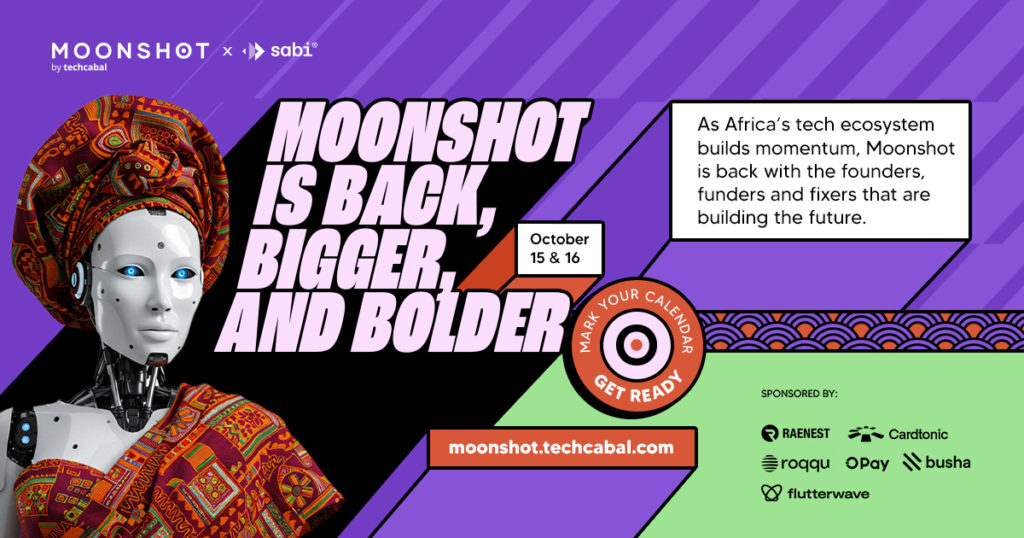
Mark your calendars! Moonshot by TechCabal is back in Lagos on October 15–16! Join Africa’s top founders, creatives & tech leaders for 2 days of keynotes, mixers & future-forward ideas. Early bird tickets now 20% off—don’t snooze! moonshot.techcabal.com
Au Ghana, douze anciens hauts fonctionnaires du gouvernement de Nana Akufo-Addo font face à des poursuites judiciaires. L’ancien ministre des Sports Mustapha Ussif y est impliqué. Ils sont accusés d’avoir détourné 53 millions de dollars de fonds publics précédemment alloués à un programme national pour l’emploi.
Ghana : 12 fonctionnaires poursuivis pour détournement de 53 millions de dollars
Le ministre ghanéen de la justice a mis la lumière sur une affaire de corruption d’une envergure m
Au Ghana, douze anciens hauts fonctionnaires du gouvernement de Nana Akufo-Addo font face à des poursuites judiciaires. L’ancien ministre des Sports Mustapha Ussif y est impliqué. Ils sont accusés d’avoir détourné 53 millions de dollars de fonds publics précédemment alloués à un programme national pour l’emploi.
Ghana : 12 fonctionnaires poursuivis pour détournement de 53 millions de dollars
Le ministre ghanéen de la justice a mis la lumière sur une affaire de corruption d’une envergure majeure ce vendredi 13 juin . Douze responsables de l’ancien régime du président de Nana Akuffo Addo sont accusés d’avoir détourné 548 millions de cedis (53 millions de dollars) sur six ans.
En effet, le « modus operendi » de ces derniers consiste à enregistrer de faux bénéficiaires du Services national. Il s’agit d’un programme d’emploi pour les jeunes diplômés. Ainsi, l’effectif est gonflé artificiellement dans le but de détourner les fonds alloués sur une période de six ans . Le préjudice est évalué à 53 millions de dollars de fonds publics détournés.
Parmi les inculpés figure Mustapha Ussif, ancien ministre des Sports. Cette investigation est lancée sous la présidence de Mahma. Elle fait suite à une série de procédures qui ont pour objectif d’assainir la gestion publique.Selon The Fourth Estate, les pertes pourraient être bien supérieures au montant initial estimé.
When Chef Eric Adjepong first stepped onto the set of Top Chef, he wasn't just competing for a title. It was 2018 — the show's 16th season — he knew he was also competing for Africa."In all the seasons I'd watched, there wasn't anyone doing food from the continent," he tells OkayAfrica. "And I very specifically knew that if I were to make it on, I wanted to showcase skill, but also showcase Ghanaian and West African food as much as possible."
That mission was a risk. Although we as Africans have
When Chef Eric Adjepong first stepped onto the set of Top Chef, he wasn't just competing for a title. It was 2018 — the show's 16th season — he knew he was also competing for Africa.
"In all the seasons I'd watched, there wasn't anyone doing food from the continent," he tells OkayAfrica. "And I very specifically knew that if I were to make it on, I wanted to showcase skill, but also showcase Ghanaian and West African food as much as possible."
That mission was a risk. Although we as Africans have always seen the value in our cuisine, African food at that time was nowhere near mainstream in American culture. But this mission set him apart, and with his bold flavors and skillful execution in every challenge, he cooked his way to the finale.
Now, years later, Adjepong is standing at the moment he's been dreaming of since he was a child: the opening of his first restaurant and the launch of his debut cookbook. The restaurant came first -Elmina opened this past February in Washington, D.C., while the cookbook,Ghana to the World, followed weeks later. Together, they mark personal milestones and a public test: can African cuisine find its place in the mainstream culinary world?
For Adjepong, the answer is firmly yes, especially in a city like Washington, D.C., with its diverse African population and history of African restaurants. "You can have so many French, Chinese, Indian, and Italian restaurants, and nobody bats an eye. There's one on every corner," he says. "To see that there's now a spark and a resurgence of other stories, other chefs, and other food coming into a city that's already so well represented by Africans, that's exciting."
As a first-generation Ghanaian American born and raised in New York City, Adjepong has spent his career weaving together heritage, education, and storytelling through food. That story spans continents and influences — from a childhood in the Bronx to summers in Ghana, from a degree in Culinary Arts & Nutrition at Johnson & Wales in Rhode Island to a Master of Public Health from the University of Westminster in London. His path has also included stints at Michelin-starred kitchens and multiple appearances on Top Chef, including All-Stars, where he became known for pushing West African flavors into the culinary spotlight.
Today, he's also the host of Food Network's Wildcard Kitchen and Alex vs. America, as he continues introducing new audiences to his cuisine and perspective.
With Elmina finally open and Ghana to the World now published, Adjepong's vision feels more urgent — and more expansive — than ever. Through every dish, every recipe, and every appearance, he's inviting diners and readers alike to see African food not as a niche, but as essential.
He spoke to OkayAfrica about what this moment means for him, being intentional about showcasing African food, why he chose to name his restaurant Elmina, and how he earned his family's approval for his career.
This interview has been edited for length and clarity.
OkayAfrica: Congratulations on your new cookbook, "Ghana to the World." Is this book Ghanaian or Ghanaian American?
Chef Eric Adjepong:It's all of it. The experience of being Ghanaian is not monolithic. There's not only one way to do it. I think there are several accounts people can have across the world — obviously, Ghana, but also so many places where Ghanaians live — that are authentic Ghanaian stories. I don't claim this to be the book that speaks for all Ghanaians, or the book that speaks for all Ghanaian Americans. It's a book that speaks for me and my experience. I was born in America and raised in Ghana. I visit home every year. That's the lens that I see myself through and the lens the world sees me through. And I'd be remiss to say I wasn't impacted by other places I've worked and lived, coming from New York. That's something I can't shy away from either. So the book is authentically all of it.
In the cookbook, I noticed how much the idea of Sankofa — "going back to go forward" — serves as a guiding principle. You also wrote a children's book of the same name. How does this concept guide your work as a chef and storyteller of Ghanaian cuisine?
With Sankofa, the ethos behind that is very much how I've viewed myself as a cook and storyteller. There's so much beautiful, rich history in Ghana and Africa that I'd be empty if I didn't talk about it. But I'd also be empty if I didn't talk about what inspires me now and where my creative mind goes. It's the embodiment of both books. In the children's book, the main character travels back to Ghana with his grandfather, looking back, but he's also in the present talking about food. And in the cookbook, you'll find traditional recipes — dishes our ancestors cooked as authentically as possible — but I'm also taking peri peri and egusi, and using them in ways that aren't traditional. I'm using them in ways that, as someone who's been in the industry for a while, I can see how these ingredients can be used to create different textures, flavors, and experiences.
Did you intentionally showcase African food when you joined Top Chef? For sure, absolutely. They're picking 13 to 15 of the best chefs in America every season. I always admired that and looked toward that pinnacle. But I also realized that no one was doing food from the continent in all the seasons I'd watched. There might have been a few things here and there, but no one was really representing at all. And I knew that if I were to make it on, I wanted to showcase skill and Ghanaian and West African food as much as possible. So I made it a goal. If it didn't fit the challenge, I didn't cook the food from Africa. But if it were something like, 'Use your interpretation, use your dish, use your flavors,' I would automatically go to Ghanaian food."
Did you feel pressure to represent African food?
I remember one contestant telling me not to cook African food as much. But I didn't feel pressure. I felt pride. I felt very cool. Serving fufu for the first time was an incredible moment for me and the show. It's been great to see more chefs now proudly cooking the food they grew up with. I'm glad I could be part of that.
I found it interesting that you named your restaurant Elmina, which to many is known for its role in the transatlantic slave trade. Why did you name the restaurant that?
I love Elmina. It is a town in Ghana, a humble, blue-collar fisherman town. I also visit it to put my phone on 'Do Not Disturb' and relax. But more than that, Elmina means 'the mine.' It is a Portuguese name for the gold mine, for treasure. And that is what I see. Despite some complex stories from there, there is a lot of beauty. If you visit Elmina today, no one is burdened by the past. It is part of the story, but there is so much treasure, gold, and wealth in the people and what they are doing. That is what I see when I look at Africans: wealth, abundance, treasure, gold, bronze, all the different elements. Elmina, to me, is the gold mine.
How is that reflected in the restaurant?
When you walk into the space, each room in the restaurant is dedicated to something that brings wealth or a valuable resource to the country, the region, or the continent. There is a lot of intentionality behind the name, how the design fits with the name, and how we use materials like gold, bronze, wood, timber, and the colors of tobacco, cotton, and indigo. We have a sugarcane room for the rum and sugarcane that grows abundantly in Ghana. Everything is intentional. And of course, the food speaks to the richness of our incredible culinary background in Ghana. When I sat with the name, it made sense. And the more I said it, the more conviction I felt.
How did your family react to your choosing culinary arts as a career?
Cooking is a matriarchal thing in Ghanaian society. A lot of it is based in the kitchen, so you don't see a lot of men doing culinary arts. That was taboo, honestly. But I got a cool mom who saw it in me. She saw me watching cooking shows after school and encouraged me. There were uphill battles like 'You won't make money' or 'Your parents came all the way here for you to cook?' I didn't let it discourage me. At times, I was frustrated; I remember specific conversations with people who now come to the restaurant or watch the shows. I don't hold it against them, but you don't forget it.
No one sees the vision you have for yourself like you do. I use a lot of that as motivation to prove people wrong. I like being doubted; it gives me fuel. I knew where I could take myself with this career, and I'm so blessed.
Now that you've achieved so much, what do you dream of next?
I'm a simple person. I want to live comfortably. I want my daughter to be safe and have a future. But ultimately, it's about telling this story. If I can tell it from one place in D.C., New York, Los Angeles, Chicago, Elmina, Ghana, and Nairobi, that would be fantastic. Or anywhere in the world. I'd love to continue sharing this food. I want to multiply but stay with the same mindset. I don't want any of this to veer me off. I've seen it happen to a lot of chefs. They let success get to them. I pray that's not my portion. I want to keep doing what I'm doing. And if nothing else changes, I'm very, very happy.
If you had to pick one dish for someone tasting Ghanaian food for the first time, what would it be?
Jollof rice is the dish everybody should try. It's a good intro to our flavors and how we think about food.
And if you wanted to surprise someone who already knows Ghanaian food, what would you serve?
One of my favorites is the sweet fried plantain with benne misso, benne seeds, and caramelized onions. It's a fun spin. It reminds you of the flavors from home, but it's also a very cool offering. I think that's a dish people would enjoy. The banana grits are unique too, and it's something a lot of people really like when I cook it at the restaurant.
In this month's Best West African Songs list, OkayAfrica travels through Côte d'Ivoire, where coupé-décalé is still ruling the scene, Ghana, where artists like Lali x Lola experiment with Afropop-influenced sounds, and Nigeria, where legends make triumphant comebacks. Tiwa Savage "You4Me" (Nigeria)The Queen of Afrobeats, Tiwa Savage, is entering a new era. Here, she returns to her R&B roots, ditching percussion for guitars and tender lyrics. After releasing the reggae-infused "Forgiveness" l
In this month's Best West African Songs list, OkayAfrica travels through Côte d'Ivoire, where coupé-décalé is still ruling the scene, Ghana, where artists like Lali x Lola experiment with Afropop-influenced sounds, and Nigeria, where legends make triumphant comebacks.
Tiwa Savage "You4Me" (Nigeria)
The Queen of Afrobeats,Tiwa Savage, is entering a new era. Here, she returns to her R&B roots, ditching percussion for guitars and tender lyrics. After releasing the reggae-infused "Forgiveness" last year, "You4Me" plays like an earnest, feel-good contemporary R&B track that still carries her subversive touch. The track samples Tamia's "So Into You," drawing clear connections between the influences Savage is drawing from for her upcoming project and the sounds she is looking to create. As is familiar with Savage's work, the writing is tightly constructed, and well-placed riffs anchor the vocals.
Serge Beynaud “Taper Dedans” (Côte d’Ivoire)
One of the prominent champions of coupé-decalé and loko loko, Serge Beynaud's new track "Taper Dedans" is instantly infectious and club-ready. The track is enlivened by a playful call-and-response, repetitive hooks that stick to the brain, and an explosive beat that would make a perfect soundtrack to an end-of-year music festival. With over a decade of working in the Ivorian music industry, Beynaud is one of the ardent voices that have continued to embody the communal and transformative essence of coupé-decalé while adding a modern spin.
Reekado Banks “Mukutu” (Nigeria)
In "Mukutu,"Reekado Banks keeps things seductively simple. Singing over a bouncy yet stripped-down beat, Banks offers a splashy, beach-ready track for the summer. More than a decade since his debut, it's clear that Banks still knows what it takes to make a hit song.
Dayo Lamar “Woody” (Côte d'Ivoire)
Dayo Lamar's "Woody" lends itself to classic hip-hop and EDM sensibilities. Executed as if in one breath, Lamar raps over a thumping beat, clearing his mind and getting his thoughts out without an interlude or chorus. "Woody" is a short, well-defined, and brilliantly executed confessional that places sufficient trust in the sharpness of Lamar's rap flows, the slimness of the beat, and the precision with which he delivers his message.
Team Paiya “Révolté” feat. Le Grand Homme (Côte d'Ivoire)
In many ways, Team Paiya's music carries an urgency that's difficult to explain yet essential to their impressive discography. Even though they were formed in 2022 and haven't been around for long in the star-studded music scene in Côte d'Ivoire, their energetic, blended approach to music has made them a crucial part of the current success of Ivorian music. In "Révolté," their latest track, the crew blends coupé décalé, rap, and boucan in a signature sound they call "maimouna 2.0." Like their previous hits, "Révolté" has an explosive, thrilling essence that, yet again, proves how attentive Team Paiya is to the sounds and messages that move the youth.
Joyce Olong "WWYD" (Nigeria)
Nigerian indie artist Joyce Olong created much of her latest, full-length project, Soseo, in Ghana. Tucked away in a serene and spiritually charged space, Olong became a channel through which several ethereal, otherworldly songs were birthed. "WWYD," a groovy, bewitching track, is one of them. Starting with short, sharp chants and an echoey, trance-like beat, "WWYD" quickly segues into a gentle pep before Olong's soothing voice enters, asking questions and beseeching a love interest. Known for languid sounds that inspire reflection and easy living, Olong takes these qualities (her most powerful artistic qualities) and throws them into a highly experimental pot, where everything feels light, honest, and aggressively beautiful.
Lali X Lola "Unstable" feat. Oiza x Meyi (Ghana/Nigeria)
Fast-rising Ghanaian musical duo Lali X Lola share much in common with their Nigerian counterparts, Oiza x Meyi. They're both identical twins, and their music sits at the fringe of the mainstream, often melding R&B with indie and exploring Afropop and folk. In their first and fitting collaboration, both duos bring their well-oiled charm, playful but sensitive lyrics, and experimental musicality to a lively track. "Unstable" explores classic themes of self-preservation, ultimately recognizing misdeeds and reaffirming one's strength amidst a chaotic relationship. Both groups share the same concerns regarding matters of the heart, and because they're both excellent documentarians of the state of modern romance, they're compelling to listen to.
Demmi "Still Rolling" (Ghana)
Ghanaian artist and producer Demmi (McDonald Otubuah) is an ardent student of modern Afropop. Thanks to his producer background, Demmi collects references from well-known and obscure sounds, which he then simmers into groovy yet deeply personal Afropop tracks. In his latest drop, "Still Rolling," that formula comes into play excellently. His lyricism is personal and anecdotal, the beat experimental but club-ready. For Demmi, "Still Rolling" is an alluring tease of something big to come.
Melissa "Tattoo" feat. Blaqbonez (Ghana)
Ghanaian R&B star Melissa teams up with Nigerian rapper and singer Blaqbonez for a sultry, emotion-heavy number on "Tattoo." Covering the plains of desire and tease, "Tattoo" evokes a blurry image of a sweaty dance floor filled with willing love interests. Blaqbonez's raspy tone and playfully brash lyrics complement Melissa's airy, fluttering voice. Ultimately, "Tattoo" blends the softness of R&B with the subtle bounce of Afropop into a song that would sound magical after a dip in the pool on a hot summer day.

 Connexion