
Vue normale

Reçu hier — 22 avril 2026
  • ✇BellaNaija Music
  • Doja Cat Performs First-Ever Show in Africa at Global Citizen’s Move Afrika in Kigali | See Highlights
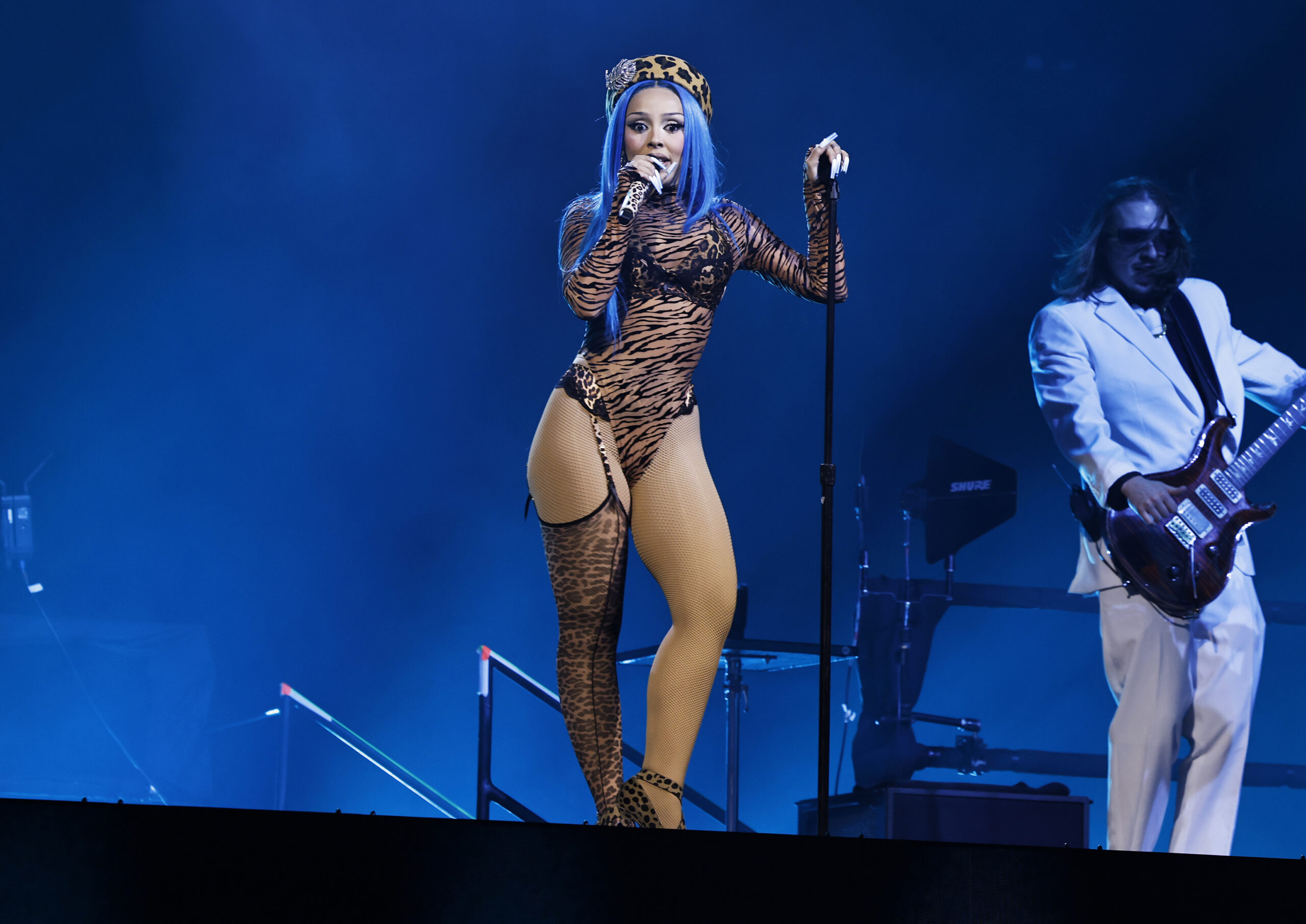
    Doja Cat performs onstage during Global Citizen’s Move Afrika: Kigali at BK Arena on March 17, 2026 in Kigali, Rwanda. (Photo by Jemal Countess/Getty Images for Global Citizen) There’s something about a night where music meets purpose, and Move Afrika: Kigali delivered just that. Global Citizen returned to BK Arena for another unforgettable edition, bringing together live music, community, and citizen-led advocacy in one vibrant space. At the centre of it all
     

Doja Cat Performs First-Ever Show in Africa at Global Citizen’s Move Afrika in Kigali | See Highlights

18 mars 2026 à 18:39

Doja Cat performs onstage during Global Citizen’s Move Afrika: Kigali at BK Arena on March 17, 2026 in Kigali, Rwanda. (Photo by Jemal Countess/Getty Images for Global Citizen)

There’s something about a night where music meets purpose, and Move Afrika: Kigali delivered just that. Global Citizen returned to BK Arena for another unforgettable edition, bringing together live music, community, and citizen-led advocacy in one vibrant space.

At the centre of it all was Doja Cat, who headlined the night with an electrifying set that had the sold-out crowd completely locked in. From “Paint The Town Red” to “Woman,” “Streets,” “Need to Know,” and “Jealous Type,” it was hit after hit. At one point, she paused, taking it all in, and shared a heartfelt moment with the audience: “This is my first time in Africa… I love you… thank you so much Rwanda.”

The energy didn’t stop there. DJ IRAA also took to the stage, adding her own flavour to a night that celebrated both global and homegrown talent.

Beyond the music, Move Afrika continues to grow into something much bigger. As Global Citizen Co-Founder and CEO Hugh Evans shared, the vision is to build a pan-African touring circuit that not only brings international artists to the continent but also creates real opportunities within the creative economy. From local vendors to production crews, the impact stretches far beyond the stage.

“Global Citizen launched Move Afrika to build the first ever touring circuit for international artists in Africa, and create thousands of jobs in the creative economy,” he said. “And Kigali, we could not have chosen a better place to start!”

Now in its third year, the initiative is steadily building momentum, with previous editions featuring global stars like John Legend and Kendrick Lamar, alongside landmark performances from Beyoncé, Jay-Z, Usher, Davido, Tiwa Savage, SZA, Stormzy, and Tems across cities like Johannesburg, Lagos, and Accra.

With Kigali setting the tone once again, the tour now moves on to its next stop in Pretoria, South Africa on 20th March.

Were you there? See how it all went down and relive the moments.

Doja Cat performs onstage during Global Citizen’s Move Afrika: Kigali at BK Arena on March 17, 2026 in Kigali, Rwanda. (Photo by Jemal Countess/Getty Images for Global Citizen)

Doja Cat performs onstage during Global Citizen’s Move Afrika: Kigali at BK Arena on March 17, 2026 in Kigali, Rwanda. (Photo by Jemal Countess/Getty Images for Global Citizen)

Hugh Evans, Founder & CEO of Global Citizen, speaks onstage during Global Citizen’s Move Afrika: Kigali at BK Arena on March 17, 2026 in Kigali, Rwanda. (Photo by Jemal Countess/Getty Images for Global Citizen)

Doja Cat performs onstage during Global Citizen’s Move Afrika: Kigali at BK Arena on March 17, 2026 in Kigali, Rwanda. (Photo by Jemal Countess/Getty Images for Global Citizen)

Doja Cat performs onstage during Global Citizen’s Move Afrika: Kigali at BK Arena on March 17, 2026 in Kigali, Rwanda. (Photo by Jemal Countess/Getty Images for Global Citizen)

Doja Cat performs onstage during Global Citizen’s Move Afrika: Kigali at BK Arena on March 17, 2026 in Kigali, Rwanda. (Photo by Jemal Countess/Getty Images for Global Citizen)

Doja Cat performs onstage during Global Citizen’s Move Afrika: Kigali at BK Arena on March 17, 2026 in Kigali, Rwanda. (Photo by Jemal Countess/Getty Images for Global Citizen)

DJ Iraa performs onstage during Global Citizen’s Move Afrika: Kigali at BK Arena on March 17, 2026 in Kigali, Rwanda. (Photo by Jemal Countess/Getty Images for Global Citizen)

Fans attend duringGlobal Citizen’s Move Afrika: Kigali at BK Arena on March 17, 2026 in Kigali, Rwanda. (Photo by Jemal Countess/Getty Images for Global Citizen)

Fans attend duringGlobal Citizen’s Move Afrika: Kigali at BK Arena on March 17, 2026 in Kigali, Rwanda. (Photo by Jemal Countess/Getty Images for Global Citizen)

Fans attend duringGlobal Citizen’s Move Afrika: Kigali at BK Arena on March 17, 2026 in Kigali, Rwanda. (Photo by Jemal Countess/Getty Images for Global Citizen)

***

For more information visit moveafrika.org.

The post Doja Cat Performs First-Ever Show in Africa at Global Citizen’s Move Afrika in Kigali | See Highlights appeared first on BellaNaija - Showcasing Africa to the world. Read today!.

Reçu avant avant-hier

Fears of Exploitation Resurface as U.S. President Touts Minerals Deal as Part of Democratic Republic of Congo & Rwanda Peace Deal

2 juillet 2025 à 15:12


U.S. President Donald Trump has publicly expressed his excitement over the signing of a peace deal between the Democratic Republic of Congo and Rwanda, saying his administration has secured “a lot of the mineral rights from the Congo.” This has raised eyebrows among those critical of the potentially exploitative effects of a proposed mineral security deal between the U.S. and the DRC.

The shaky and sometimes testy relations between the Congo and Rwanda already complicate the implementation of this deal; however, Trump is optimistic that the agreement will hold. “If anyone violates this agreement, there will be consequences,” he said.


Some of the terms of the deal, which include the repatriation of refugees in both countries and the “social reintegration” of former rebels who lay down their arms, will most likely stretch the limits of Congo-Rwanda relations. With Trump keen on ensuring things happen, however, the economic emphasis may take precedence over proper justice. This aligns with the history of the Congo as a country that has consistently been exploited by external forces due to its abundance of natural minerals.


Government officials from the Democratic Republic of Congo and Rwanda signed a peace deal in Washington, D.C. on Friday, June 27, a culmination of a U.S.-led mediation effort aimed at reducing tensions between the two nations. It is expected that this agreement will serve as a concrete step toward ending hostilities in the region. The deal will also benefit the U.S. government and American companies by improving access to critical mineral mining operations in Congo.


Hostilities between the neighboring African countries resumed earlier this year after the M23 rebels took over cities in the mineral-rich eastern region of Congo with purported assistance from Rwanda. The armed group is reportedly backed financially by Rwanda, while thousands of soldiers from the Rwandan army are alleged to have assisted M23’s march into eastern Congo.

The U.S.-backed deal could be a major accomplishment, considering that both countries have been at odds for over two decades. However, peace is not yet guaranteed. M23 has repeatedly stated its preference to negotiate with the Congolese government, meaning the group could interpret this deal as not binding on its interests. In March, the group boycotted planned peace talks, protesting sanctions placed on some of its high-ranking officials.


Speaking to the Associated Press earlier this week, M23 spokesman Oscar Balinda stated that the U.S.-facilitated deal doesn’t concern the rebels. Without assurances that the armed group will vacate the eastern region, the effectiveness of the deal is highly uncertain, meaning the Congo will have to rely even more on its potentially momentous mining-for-security agreement with the U.S., which has been criticized for its long-term imbalance and extractive nature.


The U.S. had initially set the exit of all Rwandan troops from Congo as a condition for the deal to be signed; however, the demand had not been met and was subsequently dropped. While Rwanda has consistently denied arming and supporting M23, it says operations in Congo are an act of self-defense, as it considers armed groups domiciled in its neighbor an existential threat, especially the Democratic Forces for the Liberation of Rwanda (FDLR), which carried out the Rwandan genocide over 30 years ago.

Uncertainties remain with this deal; both Rwanda and Congo have yet to put on a friendly facade. Just yesterday, the African Court on Human and Peoples’ Rights (AfCHPR) dismissed Rwanda’s objection that it could not hear a case in which the Congolese government accuses Rwanda of grave human rights abuses in Congolese territory.

Congo is accusing Rwanda of mobilizing its troops and working with proxies to commit atrocities, including massacres, sexual violence, and forced displacement of civilians.


Earlier this month, Rwanda announced that it is withdrawing from the Economic Community of Central African States (ECCAS) due to ongoing complaints by the Congo, which have resulted in international sanctions. Rwanda’s foreign affairs minister, Olivier Nduhungirehe, said Congo was “still whining around in all regional and international organizations accusing Rwanda of its turpitudes, not to mention crying out for sanctions.”

Considering the shaky nature of relations between both countries, it remains to be seen how effective the U.S.-backed deal will be. “The heart of this peace agreement is the decision to establish a standing Joint Security Coordination Mechanism between Rwanda and the DRC,” Nduhungirehe said at the signing ceremony, an optimistic stance without much evidence to support it for now.

This story was originally posted June 27 at 4:03 p.m. and has been updated.

July 2, 11:12 a.m. Updated to include U.S. President Donald Trump mineral deal statements

❌