Vue normale

Reçu aujourd’hui — 24 avril 2026
  • ✇TechCabal
  • Nigerian telecom customers to receive airtime refunds after disruptions, says NCC
    Nigeria’s telecom subscribers will receive airtime refunds as compensation for poor service experienced between November 2025 and January 2026. The refunds will begin on Friday, April 24, according to the Nigerian Communications Commission (NCC). The NCC said operators failed to meet required performance benchmarks in several parts of the country following a March 29, 2026, directive. While this is not the first time the regulator has ordered compensation for service fai
     

Nigerian telecom customers to receive airtime refunds after disruptions, says NCC

23 avril 2026 à 17:41

Nigeria’s telecom subscribers will receive airtime refunds as compensation for poor service experienced between November 2025 and January 2026. The refunds will begin on Friday, April 24, according to the Nigerian Communications Commission (NCC).

The NCC said operators failed to meet required performance benchmarks in several parts of the country following a March 29, 2026, directive.

While this is not the first time the regulator has ordered compensation for service failures—MTN and Celtel (now Airtel) were fined in 2008—the latest directive signals a more assertive approach to holding telecom operators accountable. 

The NCC said it has also directed tower companies responsible for many of the outages to channel their compensation obligations into upgrading tower infrastructure. These investments, separate from their annual capital plans, will be monitored by independent auditors to ensure compliance.

“It’s actually compensation for the quality of service experience you may have had,” NCC’s Executive Vice Chairman and chief executive officer, Aminu Maida, said at a press briefing on Thursday in Lagos, adding that subscribers will begin receiving alerts via SMS detailing the credits applied to their lines.

Unlike previous enforcement approaches, which assessed service quality at the state level, the NCC said it has shifted to a more granular system. Performance is now measured at the local government level, allowing the regulator to better capture variations in network experience across the country.

“What we have now adopted is to carry out the assessment at local government levels,” Maida said. “This ensures that whatever we measure is as close as possible to what subscribers actually experience.”

Under this framework, operators are evaluated across multiple network layers—2G, 3G, and 4G—against key performance indicators set out in the commission’s quality of service regulations. Where operators fall short, penalties are imposed, part of which is now being redirected as compensation to affected users.

Maida acknowledged the gap between demand and current network capacity but pointed to ongoing investments by operators as a sign of progress. In 2025, the industry invested over $1 billion upgrading networks, importing equipment, and building new towers. According to Maida, one operator has already invested $1 billion in infrastructure this year. 

“Things actually improve, but we need to be patient,” he said, noting that infrastructure expansion remains the primary driver of better service quality.

According to him, operators deployed just under 300 new sites last year. In contrast, they have committed to rolling out about 12,000 sites in 2026. So far, around 2,800 have been completed, including new builds, spectrum additions, and upgrades such as converting 3G sites to 4G and deploying 5G in select locations.

“You can see we’re already moving way ahead of what we did last year,” he said.

Operators say they are complying with the directive while continuing to invest in network improvements. MTN Nigeria said in a statement on Thursday that all affected customers will receive airtime compensation in line with the NCC framework, describing the directive as one that “places customers at the centre of regulatory decision-making.”

  • ✇TechCabal
  • Mauritius’ new AI policy makes ethics mandatory, not optional
    While many African countries race to deploy artificial intelligence, Mauritius has made governance and ethics the starting point of its AI strategy, rather than a problem to solve after the technology is in use. Central to the strategy is the FAIR framework, a set of guidelines that governs how AI systems are designed, deployed, and managed. It sets clear expectations across sectors and applies to the entire AI lifecycle, from design and development to deployment, monitoring, and eventual de
     

Mauritius’ new AI policy makes ethics mandatory, not optional

23 avril 2026 à 12:02

While many African countries race to deploy artificial intelligence, Mauritius has made governance and ethics the starting point of its AI strategy, rather than a problem to solve after the technology is in use.

Central to the strategy is the FAIR framework, a set of guidelines that governs how AI systems are designed, deployed, and managed. It sets clear expectations across sectors and applies to the entire AI lifecycle, from design and development to deployment, monitoring, and eventual decommissioning.

Mauritius’s approach reflects a broader shift in how African countries may position themselves in the AI landscape. While larger markets such as Nigeria and Kenya emphasise scale and ecosystem growth, and South Africa focuses on institutional regulation, Mauritius is advancing a governance-led model centred on enforceable standards. 

The Mauritius National AI Strategy 2025–2029, alongside the FAIR Guidelines introduced in April 2026, is designed to be vendor-neutral and border-agnostic. Any AI system operating within the country, regardless of origin, must comply with a unified set of ethical and operational standards.

Imported AI tools are subject to the same level of scrutiny as domestic systems. The framework requires compliance with principles of fairness, accountability, inclusiveness, integrity, and responsibility. In high-risk sectors such as fintech and gaming, systems must undergo bias audits to mitigate discriminatory outcomes. Accountability provisions also require foreign providers to designate locally based representatives who can be held responsible for system outcomes.

Any AI system that affects individuals, organisations, or public interests in Mauritius falls within the framework’s scope, reflecting a recognition that AI risks are not bound by geography and that governance should be determined by impact rather than origin.

Although the FAIR Guidelines are currently non-binding, there are no immediate legal penalties or fines for non-compliance—at least not yet; they are designed with a clear legal and policy trajectory. They are expected to shape government policy, inform sector-specific regulations, influence procurement standards, and eventually underpin future legislation. 

In effect, Mauritius is building a regulatory framework that can evolve alongside the technology, rather than locking in rigid rules too early. This contrasts with approaches like South Africa’s Draft National AI Policy, which proposes steep penalties—including fines of about $530,000 or up to 10 years in prison—for serious ethical breaches. 

The Mauritius approach allows the country to remain flexible while still establishing a stable reference point for accountability. Policymakers, regulators, businesses, and even courts can rely on these principles as AI adoption expands.

The framework has four pillars: fairness, accountability, inclusiveness, and integrity. Each addresses a specific risk that has emerged in global AI deployment and is tied to concrete expectations.

Fairness focuses on preventing bias. AI systems must not discriminate based on income, gender, ethnicity, or geography, the policy stated. This is particularly important in a small and diverse society, where flawed systems could quickly exclude entire groups from access to services or opportunities. To address this, the guidelines emphasise the use of representative local datasets and require bias testing, especially in high-impact sectors such as finance and public services.

Accountability tackles one of AI’s most persistent challenges: the “black box” problem. Under the FAIR framework, there must always be a clearly identifiable party responsible for an AI system’s decisions. This includes defining liability, maintaining audit trails, and establishing mechanisms for redress when harm occurs. AI decisions are not meant to be opaque or unchallengeable.

Inclusiveness ensures that the benefits of AI are widely distributed. Rather than concentrating advantages among large firms or urban populations, the strategy promotes AI literacy through initiatives like “AI for All,” supports small and medium-sized enterprises, and expands access to digital infrastructure. The goal is to prevent a new form of inequality—what the policy’s authors describe as a potential “digital divide 2.0.”

The final pillar, integrity and responsibility, addresses the technical and ethical robustness of AI systems. It covers data governance, privacy, cybersecurity, and safeguards against misuse, including fraud and manipulation. For a government that plans to integrate AI into public service delivery, trust in system reliability is essential.

What sets Mauritius apart is not just the inclusion of these principles, but how they are embedded into the broader economic strategy. The FAIR framework is tied directly to procurement decisions, system design, and policy development. It is positioned as a baseline requirement, not optional guidance.

This reflects a broader strategic choice: as a small, open economy of just 1.26 million people and a roughly $15 billion GDP, Mauritius cannot compete on scale with larger economies like South Africa, with an over $400 billion GDP.

It is not that South Africa and Nigeria are ignoring trust. The difference lies in priorities and timing. Mauritius is using its smaller size to position itself as a focused, “boutique” AI regulator, while South Africa and Nigeria must balance building trust with driving the scale of growth their larger economies demand.

In doing so, it hopes to attract investment, build partnerships, and integrate into global AI value chains.

The country’s economic ambitions reinforce this direction. AI is seen as a new growth pillar, alongside traditional sectors like manufacturing, whose contribution to GDP has steadily declined—from over 20% in the late 1990s to about 10.7% in 2020, and only a modest recovery to roughly 12.8% in 2024. 

According to the policy, the country now sees AI as a way to revitalise these sectors, improve efficiency, and create new opportunities in areas such as fintech, logistics, and the ocean economy.

To drive this transformation, Mauritius is building institutional capacity in the form of an AI Council. The council would be supported by public and private sector stakeholders, and international experts, who will oversee implementation, coordinate projects, and measure socio-economic impact. Incentives such as tax credits, grants, and regulatory support are also being deployed to encourage adoption.

This governance-led approach stands in contrast to other African AI strategies. Nigeria, for instance, is prioritising large-scale deployment and talent development, with governance structures still evolving. Kenya is focused on building a regional innovation hub and a powerful AI sheriff, while South Africa is leaning toward a more regulation-heavy model with multiple oversight bodies.

Mauritius, by comparison, is betting that trust can be a competitive advantage.

There are risks to this strategy. Overemphasis on governance could slow down innovation if not carefully managed. And as the guidelines transition into binding rules, questions will arise about enforcement capacity and regulatory burden. But for now, the country appears to be striking a balance, setting clear expectations without stifling experimentation.
Reçu avant avant-hier
  • ✇TechCabal
  • Network outages worsen as Nigerian telcos report 445 vandalism incidents since May
    Vandalism of telecom infrastructure in Nigeria has more than doubled since May 2025, rising from an average of two to five incidents per day, according to data compiled by the Association of Licensed Telecommunications Operators of Nigeria (ALTON). This sharp increase, amounting to 445 cases over 88 days, has led to widespread network outages, affecting voice calls, internet access, SMS, and USSD services across all major mobile network operators.   Gbenga Adebayo, Pr
     

Network outages worsen as Nigerian telcos report 445 vandalism incidents since May

28 juillet 2025 à 14:31

Vandalism of telecom infrastructure in Nigeria has more than doubled since May 2025, rising from an average of two to five incidents per day, according to data compiled by the Association of Licensed Telecommunications Operators of Nigeria (ALTON). This sharp increase, amounting to 445 cases over 88 days, has led to widespread network outages, affecting voice calls, internet access, SMS, and USSD services across all major mobile network operators.  

Gbenga Adebayo, President of ALTON, told TechCabal that the attacks have grown increasingly aggressive. 

“In many cases, the vandals now confront site engineers directly and demand ransom before releasing stolen cables,” Adebayo said, highlighting the escalating threat to telecom operations. The highest number of vandalism incidents has been recorded in states such as Delta, Rivers, Cross Rivers, Akwa Ibom, Ogun, Ondo, Edo, Lagos, Kogi, FCT, Kaduna, Nigeria, Osun, Kwara, and the Federal Capital Territory (FCT), Abuja. 

Vandalism against telecom infrastructure in Nigeria has been most severe in states like Delta, Rivers, Cross River, Akwa Ibom, Ondo, Edo, Kwara, and Kaduna. The impact peaked in May 2025, with 88 network outages linked to fibre cuts, equipment theft, and power failures. That number declined to 71 in June and 27 in July, but the threat remains persistent. 

Telecom operators in Nigeria face rising challenges beyond theft and vandalism of assets like copper cables and diesel. In many cases, local communities demand compensation before allowing repairs, delaying service restoration, and increasing operational costs.

In June, the Nigerian government issued the Designation and Protection of Critical National Information Infrastructure (CNII) Order, which recognises telecommunications as critical infrastructure and makes its deliberate damage a criminal offence. 

The Nigerian Communications Commission (NCC) is leading the rollout of the CNII framework, supported by security agencies: the Office of the National Security Adviser (ONSA) coordinates overall strategy; the Inspector General of Police leads enforcement; the Department of State Services (DSS) provides intelligence on emerging threats; and the Nigeria Security and Civil Defence Corps (NSCDC) is charged with protecting telecom infrastructure on the ground. 

Industry stakeholders say implementation has fallen short. Despite the rise in vandalism, there have been no reported arrests or prosecutions. The NCC declined to comment on the matter. 

“We appeal to every Nigerian to please join us in the fight against the vandalisation of telecom infrastructure,” said Adebayo. “These assets power our banks, emergency services, education, healthcare, security systems, and daily communication. Attacking them is an attack on our economy and national stability.”

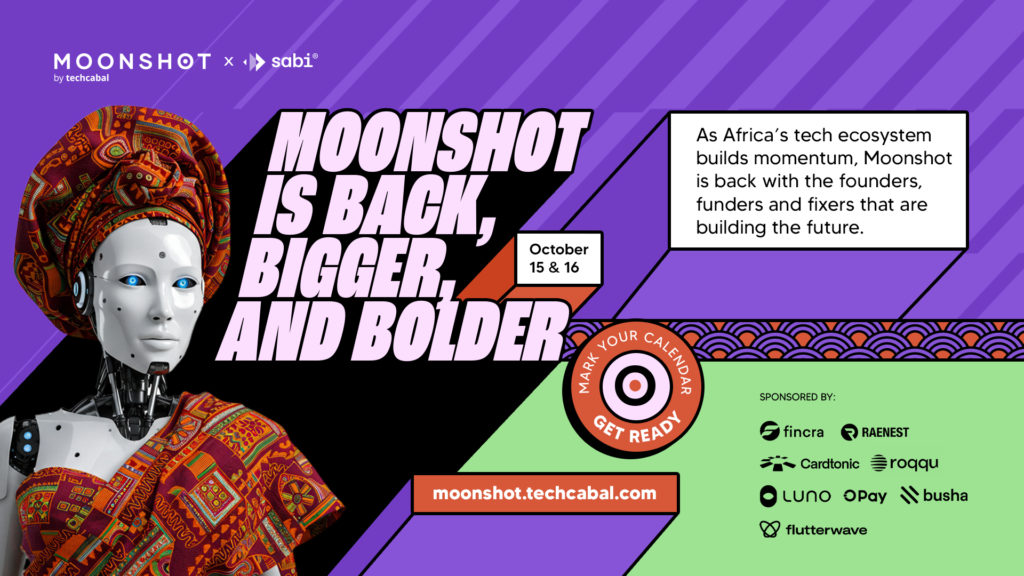
Mark your calendars! Moonshot by TechCabal is back in Lagos on October 15–16! Join Africa’s top founders, creatives & tech leaders for 2 days of keynotes, mixers & future-forward ideas. Early bird tickets now 20% off—don’t snooze! moonshot.techcabal.com

  • ✇TechCabal
  • NCC gives tower companies August deadline to improve internet quality or face fines 
    The Nigerian Communications Commission (NCC) has directed tower companies to make urgent improvements in service quality or face regulatory penalties. The regulator set an August end deadline for these companies to address issues affecting internet quality, such as poor power supply, equipment failures, and a lack of sufficient technical support. Aminu Maida, NCC Executive Vice Chairman, gave the directive on Thursday during a high-level meeting in Abuja, attended by major tower infrastructur
     

NCC gives tower companies August deadline to improve internet quality or face fines 

4 juillet 2025 à 15:18

The Nigerian Communications Commission (NCC) has directed tower companies to make urgent improvements in service quality or face regulatory penalties. The regulator set an August end deadline for these companies to address issues affecting internet quality, such as poor power supply, equipment failures, and a lack of sufficient technical support.

Aminu Maida, NCC Executive Vice Chairman, gave the directive on Thursday during a high-level meeting in Abuja, attended by major tower infrastructure providers, including IHS Towers, American Tower Corporation (ATC), Pan-African Towers, and other key stakeholders like the internet network providers. The session focused on identifying bottlenecks in infrastructure delivery and improving the performance of shared telecom assets, according to two industry stakeholders who attended the meeting and asked not to be named to speak freely.

NCC did not immediately respond to a request for comments.

Tower companies, commonly known as TowerCos, form the structural backbone of Nigeria’s telecommunications industry. They provide the physical infrastructure—cell towers, rooftop sites, and associated facilities—on which mobile network operators (MNOs) like MTN, Airtel, and Glo deploy their radio and data transmission equipment.

TowerCos are also responsible for ensuring a 24/7 electricity supply to these sites and securing them against theft and vandalism. Any failure at the tower level directly impacts the quality of voice and data services delivered by MNOs.

“When there’s no power, the radios shut down. If the power fluctuates, the radios restart, and that leads to dropped calls, frozen data sessions, and frustrated customers,” explained one industry insider. “So, while the Commission rightly holds MNOs accountable for service quality, tower providers must also be held to the same level of operational reliability.”

IHS Towers is the dominant tower infrastructure provider in Nigeria, managing between 16,000 and 19,000 sites, which accounts for roughly 62% of all co-located telecom infrastructure nationwide. American Tower Corporation (ATC) is the second-largest player, with about 8,270 towers, while Pan-African Towers—a smaller, indigenous firm—operates between 760 and 1,000 sites, although not all are currently active.

Given their market size and role in connectivity, the NCC’s directive places the burden squarely on these companies to resolve issues of downtime, delayed maintenance, and poor power management that have plagued the network in recent months.

Until 2024, the NCC’s Quality of Service (QoS) Regulations focused mainly on mobile network operators. However, in August 2024, the Commission revised the framework to include the entire connectivity value chain, including TowerCos. The updated regulations, which have since been gazetted, introduced new key performance indicators (KPIs) that infrastructure providers are now obligated to meet.

“It’s been eleven months since those new regulations came into effect,” Maida said during the meeting. “That’s more than enough time for all parties to align with the performance standards expected of them.”

The NCC is implementing a transparency-focused enforcement strategy, a source familiar with the matter said. As part of this approach, the Commission recently launched the Major Incident Reporting Portal, mandating all service providers to publicly disclose significant network disruptions. 

The regulator is also developing a set of performance dashboards to be hosted on its website, allowing consumers to track how well tower and mobile network operators are adhering to their Key Performance Indicators (KPIs).

While some tower companies have attributed their failure to meet Service Level Agreements (SLAs) to delayed payments from mobile network operators, claiming that cash flow constraints limit their ability to maintain sites or invest in backup power systems, the NCC is no longer accepting these explanations.

During the Abuja meeting, Maida made it clear that financial disputes are not a valid excuse for poor service delivery. “Operators must fulfill both their technical and financial responsibilities,” he said, stressing that performance expectations remain non-negotiable regardless of internal challenges.

Mark your calendars! Moonshot by TechCabal is back in Lagos on October 15–16! Join Africa’s top founders, creatives & tech leaders for 2 days of keynotes, mixers & future-forward ideas. Early bird tickets now 20% off—don’t snooze! moonshot.techcabal.com

  • ✇TechCabal
  • One year on, Nigeria’s telecom protection law fails to stop fibre cuts
    In June 2024, Nigeria signed the Designation and Protection of Critical National Information Infrastructure Order (CNII), which classifies telecom infrastructure, such as fibre cables, data centres, and towers, as critical national assets and makes their protection a matter of national security. However, one year on, Nigeria is seeing record levels of fibre cuts and network disruptions, raising questions about the policy’s implementation. Between January and June 2025, Nigeria recorded 349 ma
     

One year on, Nigeria’s telecom protection law fails to stop fibre cuts

13 juin 2025 à 14:02

In June 2024, Nigeria signed the Designation and Protection of Critical National Information Infrastructure Order (CNII), which classifies telecom infrastructure, such as fibre cables, data centres, and towers, as critical national assets and makes their protection a matter of national security. However, one year on, Nigeria is seeing record levels of fibre cuts and network disruptions, raising questions about the policy’s implementation.

Between January and June 2025, Nigeria recorded 349 major network outages—an average of two per day, according to Uptime, a network monitoring website launched by the Nigerian Communications Commission (NCC). May alone witnessed 75 disruptions, the highest in any single month so far this year.

In the first 12 days of June, there were 19 more outages, with 11 caused by fibre cuts, seven by power failures, and one due to equipment vandalism. These outages have affected states across the country, including Borno, Kaduna, Abia, Akwa Ibom, Imo, Rivers, Anambra, and Lagos, and have disrupted essential services such as USSD banking, voice calls, and internet connectivity.

Industry frustration mounts

Gbenga Adebayo, Chairman of the Association of Licensed Telecommunication Operators of Nigeria (ALTON), acknowledged the delay in implementing the CNII framework. “I must admit we have been too slow in getting the operationalisation of the CNII Order off the ground,” he said. “This is due to the back-and-forth between stakeholders. But we want the results to be sustainable and last for a long time.”

That delay is proving costly.

In Lagos alone, telcos lost an estimated ₦5 billion ($10.8 million) in 2024 due to more than 2,500 fibre cuts. MTN Nigeria spent ₦11.1 billion ($24.1 million) between 2022 and 2023 to repair and relocate over 2,500 kilometres of fibre-optic cables, resources that could have gone into expanding network infrastructure in underserved regions. The telecom industry lost an estimated ₦27 billion ($58.6 million) to fibre-related damages in 2023.

These losses go beyond financial metrics. Every fibre cut delays services to banks, hospitals, government offices, and businesses. In June 2025, a Glo fibre cut in Abia and Rivers states left subscribers without USSD, SMS, voice, or data services for nearly an hour. Airtel faced a similar challenge in Anambra and Imo, with over an hour of disruption. These outages have far-reaching economic consequences, undermining confidence in digital services and stalling digital transactions.

Wider economic risks

For businesses dependent on cloud computing, digital payments, and remote work, these network failures are a direct threat to revenue and productivity. 

In the final week of May 2025, fibre cuts in Kebbi, Sokoto, Zamfara, and Yobe brought business operations to a standstill. Residents couldn’t access basic telecom services, banks struggled with failed USSD transactions, and healthcare providers were locked out of telemedicine platforms.

Recognising the economic risks, some states are taking steps to support telecom operators. 

“It’s part of why we eliminated Right of Way (RoW) fees,” said Suleiman Isah, Commissioner for Communication Technology and Digital Economy in Niger State. “We’ve also partnered with the NCC and telecom providers to coordinate with the Ministry of Works and Water Resources, so there’s advance notice before any construction that could impact fibre routes.”

Niger is one of 12 states that have waived RoW charges to accelerate fibre deployment. But fibre cuts continue to rise. On May 8, 2025, a Globacom fibre line running through Kebbi, Niger, and Sokoto was severed by road contractors from China Civil Engineering Construction Corporation (CCECC), knocking out internet access in several communities for nearly three hours. Another incident in Niger State on June 10 disrupted SMS, voice, and data services across eight communities and took more than two hours to fix.

Repair times vary widely—from 30 minutes to several hours or days—depending on the terrain, accessibility, and the state of supporting infrastructure like roads or drainage systems. Each hour lost chips away at economic activity, customer trust, and Nigeria’s broader digital transformation goals.

Promises of progress

The CNII Order was designed to make the willful damage of telecom infrastructure a serious criminal offense, with penalties of up to 10 years imprisonment. It also called for minimum protection standards, coordinated information sharing, and enforcement led by the Office of the National Security Adviser (ONSA) and the Nigeria Security and Civil Defence Corps (NSCDC). These measures have yet to yield tangible improvements.

Adebayo said stakeholders—including ALTON, the NCC, the Ministry of Communications, Innovation and Digital Economy, ONSA, and NSCDC—have now reached consensus on the best approach for implementation.

The NCC recently signed a memorandum of understanding with the Ministry of Works to protect fibre infrastructure during road construction. “You will soon start seeing the implementation of what we have been working on,” Adebayo said.

Mark your calendars!  Moonshot by TechCabal is back in Lagos on October 15–16! Join Africa’s top founders, creatives & tech leaders for 2 days of keynotes, mixers & future-forward ideas. Early bird tickets now 20% off—don’t snooze! moonshot.techcabal.com.

Roam
❌