Vue lecture

Nigeria wants $11.92bn in taxes; tech will decide if it works

Nigeria’s plan to grow tax and customs revenues to at least ₦17.85 trillion ($11.92 billion) in 2026 heavily depends on technology. With crude oil earnings shrinking, taxes have become one of the government’s most reliable funding legs.

Most of the collections will come from value-added tax, corporate income tax, customs levies, and the electronic money transfer levy, according to the 2025-2027 Medium Term Fiscal Framework and Fiscal Strategy Paper.

The government plans to raise ₦16.05 trillion ($10.72 billion) from these revenue sources in 2025. Before now, weak administration, low compliance, and manual, paper-based systems have left room for leakages, inefficiency, and corruption.

In 2025, Nigeria enacted new laws to address many of these issues, including multiple taxation of businesses. “We have opened the doors to a new economy, business opportunities,” said President Bola Tinubu. However, the real spotlight would be on its integration of digital tools.

“Technology adoption in tax administration has the potential to improve tax compliance, reduce the costs of tax collection, and increase revenue,” read a 2023 research paper on improving tax collection efficiency through technology.

Tech as the driving force

To optimise collections, Nigeria plans to implement strategies that expand VAT collection agents, simplify compliance procedures, and cut tax expenditures. However, technology will be the main driver, according to the fiscal strategy paper.

Nigeria is looking to mirror the success of countries like Rwanda, which digitised its customs process through the Electronic Single Window, and Kenya, which uses its iTax platform.

Locally, the government is relying on platforms like TaxPro Max, launched in 2021, to enable taxpayers to register, file, pay, and download tax clearance certificates online. Large businesses with turnovers above ₦5 billion ($3.34 million) since August 1, 2025, are required to integrate their invoicing systems with the FIRS platform for real-time validation and reporting.

“Leveraging technology, such as the automated tax administration system (TaxPro Max and E-services) to further simplify tax processes, drive voluntary tax compliance, increase revenue collection, and create a tax environment that is conducive for taxpayers to fulfil their tax obligations,” the government explained in its policy paper.

The government also intends to automate VAT collection in supermarkets, hotels, and other retail outlets, utilising real-time portals to prevent leakages.

By employing a real-time online data mining portal, the Federal Inland Revenue Service (FIRS) will conduct desk reviews, audits, and investigations. This will enable it to “access data to validate information provided by taxpayers or reveal non-compliant taxpayers.”

“Nigeria’s digital economy has experienced exponential growth, transforming how businesses operate and process transactions,” FIRS told TechCabal in July. “However, this expansion has outpaced traditional tax monitoring methods, creating gaps in transaction visibility and compliance.”

The FIRS will also link its database to those of business or money-facing agencies such as the Nigeria Inter-Bank Settlement System Plc (NIBSS), the Nigeria Customs Service (NCS), the Nigerian Communications Commission (NCC), and the Corporate Affairs Commission (CAC) for third-party intelligence gathering to improve and enforce compliance.

NIBSS, Nigeria’s central payment gateway, processed over ₦1 quadrillion ($667.79 billion) in transactions in 2024. In July, TechCabal reported that the FIRS has developed a real-time portal to track all VAT-eligible electronic transactions and is mandating integration from banks, card schemes, fintechs, and payment service providers.

“Enhancing stakeholder collaboration and engagement to check leakages, evasion as well as enforce and improve compliance,” the government said.

Banks and financial institutions will also face tighter monitoring as FIRS reconciles remittances of the EMTL, a ₦50 charge on transfers of ₦10,000 and above.

On the customs side, the government aims to address issues with its $3.2 billion customs modernisation project, originally conceived in 2015, which will fully automate and simplify customs processes, including payments.

However, years of litigation have delayed progress. In 2024, the Federal High Court in Abuja dismissed a suit challenging the legality of the concession agreement related to the project.

For many businesses, integrating technology into tax administration means stricter compliance and fewer loopholes. “There is a positive relationship between firm digitalisation and domestic tax revenues. Countries with higher level of business digital adoption have larger tax-to-GDP ratios,” said the International Monetary Fund.

The Nigerian government is bullish about its revenue projections and has an even higher tax target of ₦19.73 trillion ($13.18 billion) for 2027. However, achieving these figures will depend on whether technology adoption can surpass well-known obstacles, including weak infrastructure, inconsistent implementation, and lack of political will.

As Taiwo Oyedele, chairman, Presidential Fiscal Policy and Tax Reforms Committee, said in July, better tax administration will depend on “modernisation and improved technology adoption.”

Mark your calendars! Moonshot by TechCabal is back in Lagos on October 15–16! Meet and learn from Africa’s top founders, creatives & tech leaders for 2 days of keynotes, mixers & future-forward ideas. Get your tickets now: moonshot.techcabal.com

  •  

The Innovation That Transformed Financial Services In Africa


As OkayAfrica marks our 15th anniversary, we're taking a look back at 15 defining African moments of the past 15 years that deserve to be remembered, and the impact they've had. Here's Moment No. 14. Click here for more OkayAfrica15 stories.

Africa’s financial technology revolution didn’t happen overnight, but its speed and general impact in the past 15 years has been – and continues to be – nothing short of inspiring. Over the last decade and a half, the breadth of financial services Africans have access to has been greatly widened, from digital payments processing and seamless global remittances to accessible premium banking services and even crypto investments.


At the start of the 2010s, using debit cards to withdraw cash from Automated Teller Machines (ATMs) was arguably the most impactful financial advancement in many African countries. However, in Kenya, the mobile money revolution was in full swing with M-PESA, which launched a few years earlier and fundamentally affected the landscape of financial inclusion.

With just T9 keyboard phones, Kenyans could deposit, send, receive and withdraw money through a network of agents and retail outlets, services that would typically require trips to bank branches. Targeted at the unbanked population, M-PESA, fronted by telecommunication giant Safaricom, was immediately popular and lauded as “the most successful mobile phone‐based financial service in the developing world.”

The blistering success of M-PESA was an indicator that Africa’s financial services system was in need of inventive approaches to widen possibilities. It also showed that widespread trust – a longtime issue in the sector – was attainable. “What M-PESA really did was to put some doubt into that idea that many of Africa’s unbanked did so because they didn’t trust banks,” economic consultant Gregory Hunpiyah tells OkayAfrica. “It takes a lot of boldness to get people to buy into having a wallet on phones that aren’t smartphones and it paid off.”


Although their contexts are different, there’s correlation between the explosion of M-PESA in Kenya to the breakouts of Fawry in Egypt and TymeBank in South Africa, and the fairly recent ultra-ubiquity of Opay in Nigeria. The premise of making financial services available to unbanked and underbanked populations represents an opportunity that has led to the launch of dozens of products across the continent, while traditional banks have also had to evolve accordingly.

Leveraging the internet as the ultimate technological advancement and coinciding with the rise of smartphone technology, fintech in Africa quickly diversified and has grown more effective over the years.

When Interswitch started operations in Nigeria in 2002, its ambitions as an integrated payment processing platform for businesses and banks was lofty. The process itself was cumbersome, requiring upfront payment and filling of multiple forms. In its evolution, Interswitch offered digital and data solutions to banks, was key to the ATM revolution, launched its own payments card company Verve, and ran the popular payment platform Quickteller. By 2019, Interswitch became the first African fintech company to be valued at $1 billion and earn the unicorn status.

“Interswitch obviously paved the way for Flutterwave, Paystack, HUB2 and these other payments companies,” Hunpiyah says. Late last year, HUB2 closed its Series A investment round, securing $8.5 million in funding as it looks to expand its payment solutions services across French-speaking African countries. Founder Ashley Gauzere said his company is “creating infrastructure and unifying payments in the region like a Stripe-like platform,” referencing the well-known American payments unicorn.


A collage with the logos of M-PESA, MNT Halan, Paystack, and Flutterwave.

In October 2020, Stripe acquired Nigerian startup Paystack, which had been referred to as “the Stripe of Africa.” The merger and acquisition deal, which was reportedly worth about $200 million, was momentous, further proof that African fintech companies are creating world class products.

“That was the second deal that year that everyone went, ‘Wow!’ It was a little surreal,” Hunpiyah says. Two months before the Stripe-Paystack deal, cross-border payments company WorldRemit announced it was acquiring Sendwave, a remittance-focused company, in a deal worth over $500 million. “Granted, Sendwave operates from the U.S. but its focus is in Africa, and that’s what made the deal possible in the first place.”

During the COVID-19 pandemic, dozens of African tech companies received millions of dollars in investments, a show of optimism in a growing ecosystem. That funding spree has slowed down as the limitations of operating fintech startups in Africa have surfaced over the years, including low but growing level of internet penetration, stiff competition and oversaturation, regulatory obstacles, and a few cases of financial mismanagement. With investors, mainly outside the continent, being more selective about who to back, the question of scale and profitability have become more prominent than ever.

“A lot was made out of potential during COVID,” Hunpiyah says. “I think hard lessons were learnt after that and, to be positive, I think it’s shown that African startups can be resilient. Many companies have scaled back and tried new execution strategies to figure out what can work, which is something to write home about.”


Even amidst the market correction, the number of fintech companies in Africa almost tripled between 2020 and 2024, according to a report by the European Investment Bank. It signals a positive future outlook for fintech growth across the continent, as new unicorns are minted and more join the club. Last year, TymeBank and Nigeria’s Moniepoint joined the billion-dollar valuation list, stamping their impact on retail commerce and their role in improving the accessibility of banking services.

In its report, ‘Redefining Success: A New Playbook for African Fintech Leaders,’ McKinsey suggests that fintech revenues could reach up to $47 billion, depending on penetration across the continent reaching 15%. The report also shared six dynamics shaping trends in the ecosystem, including the acceleration of product innovation and fintechs integrating into other verticals. Opay is a great example of the latter, it evolved from the popular browser Opera into a superapp where users can open a bank account just with their phone numbers and carry out a myriad of transactions.

“It’s impossible to miss the impact of fintech companies that have proven themselves by just growing,” Hunpiyah says, referencing MNT-Halan, Egypt’s first fintech unicorn that started as a digital lending service. MNT-Halan has expanded into e-commerce and also offers buy now, pay later solutions.

Hunpiyah concludes that as much as it is about profits, the social aspect of African fintech will always be relevant because “these products are clearly improving quality of life for many Africans.”

  •  

SORA Technology Secures USD 4.8 M For AI-Driven Drone Health Infrastructure In Africa

SORA Technology, a Japan-born Africa-focused startup integrating drones and AI to combat infectious diseases and climate change, has raised USD 4.8 M in a late seed funding round.

The round included participation from Nissay Capital’s Sustainability Challenge Fund, SMBC Venture Capital, DRONE FUND, Central Japan Seed Fund, and Rheos Capital Works, bringing the company’s total funding to approximately JPY 670 M (approx. USD 4.8 M), including debt financing.

SORA’s flagship initiative, SORA Malaria Control, employs drones and AI to identify and manage mosquito breeding sites, optimising Larval Source Management (LSM) by reducing insecticide use by approximately 70% and labour costs by about 50%.

The company is active in six African countries—Ghana, Sierra Leone, Benin, DRC, Senegal, and Kenya—collaborating with governments and institutions to implement drone-based malaria control and AI-powered disease forecasting systems .

The new funding will be utilised to enhance AI algorithms for infectious disease prediction, expand field operations across African partner countries, strengthen partnerships with international institutions and governments, and improve drone systems and local deployment capabilities.

SORA’s approach has garnered international recognition, including being awarded the iF Social Impact Prize for its innovative use of drones and AI in combating malaria.

This investment shows growing international recognition of SORA’s mission to build resilient, technology-enabled infrastructure for global health and climate resilience. The participation of sustainability-focused investors reflects strong alignment with SORA’s values and long-term vision.

As the intersection of public health, climate action, and technology becomes a key priority in sustainable development, SORA Technology stands in a unique position, leveraging advanced technology to address pressing global challenges.

The post SORA Technology Secures USD 4.8 M For AI-Driven Drone Health Infrastructure In Africa appeared first on WeeTracker.

  •  

SORA Technology Completes First Close of Late Seed Round to Advance Climate and Health Solutions in Africa

$4.8 million raised to accelerate drone and AI-powered public health initiatives across Africa SORA Technology Co. Ltd., a frontier technology startup addressing infectious diseases and climate change through drones and AI, today announces the first close of its late seed funding round. The round includes participation from several leading institutional investors, notably including Nissay Capital’s...

The post SORA Technology Completes First Close of Late Seed Round to Advance Climate and Health Solutions in Africa appeared first on TechTrends Africa.

  •  

Should We Be Having Deep Conversations With AI Chatbots?

While AI chatbots are improving at simulating emotions and human connection, it does not change the fact that they cannot experience heartbreak, feel joy, and many other life-like emotions.

By Michael Akuchie 

In February 2024, an American teenage boy named Sewell Setzer III died by suicide after several months of intense conversations with an AI chatbot he had nicknamed Daenerys Targaryen, after the character from HBO’s Game of Thrones. According to a lawsuit filed by his mother, Megan Garciaz, the chatbot in question was alleged to have convinced the boy that ending his life was a solution to his long-standing struggle with depression.

The chatbot was developed by Character AI, a leading company in the artificial intelligence industry that allows users to converse with computer-generated characters in a human-like manner. Conversations with these chatbots are often life-like, enhanced by elements of role-play and storytelling.

The AI boom has seen remarkable growth in recent years, a trend that has prompted companies to integrate the technology into various aspects of their services. It was only a matter of time before people began chatting with AI as though they were long-term companions.

As global social media usage continues to rise, so does the loneliness epidemic—a rapidly spreading issue affecting nearly everyone, from senior citizens to children. In July 2024, Gallup reported that one in five people feels lonely. While the report noted that physical pain, stress, and anger are more pressing concerns than loneliness, a lonely individual may intensify these other feelings, becoming a carrier of multiple negative emotions.

AI chatbots
Credit: Salesforce

In today’s world of increasing loneliness, more people are finding solace in seemingly harmless conversations with AI chatbots. While many office and remote workers use chatbots like ChatGPT, Microsoft Copilot, and Chatsonic to boost productivity, others rely on this technology for companionship, as seen in the case of the late Sewell Setzer III.

People need love. People need to feel something, no matter how small. Everyone has unique emotional gaps, and chatbots have been recognised as a viable means of addressing those needs. It is no surprise, then, that some individuals have begun marrying their virtual companions. Consider the case of Alaina Winters, a retired professor based in Pittsburgh, who married a chatbot she calls Lucas. The passion for virtual partners has also reached Europe, where Jacob van Lier, a Dutchman, built and later married a chatbot after two years of dating.

While AI chatbots are becoming better at simulating emotions and human connection, the fact remains that they cannot experience heartbreak, joy, or many other deeply human emotions. As such, entrusting them with our problems is deeply problematic, as they lack the empathy required to fully process complex situations and offer meaningful advice. No one, especially vulnerable individuals, should completely believe that machines can understand us in the way our parents or friends do.

A common concern with intense AI chatbots is that they often lead users to withdraw from their human connections. The more time someone spends on their computer engaging with a virtual friend, the greater the likelihood that they will grow weary of physical relationships. This typically results in a noticeable change in behaviour. The person may avoid lengthy conversations with friends and family, and may prefer to stay indoors—as long as there is internet access and a steady power supply. As a result, they are likely to miss out on social events such as picnics, cinema outings, and other activities that foster human interaction.

Isolating oneself from the world can also worsen a person’s mental and physical health. Sitting in one place all day while repeating the same activity can intensify feelings of self-loathing. The habit may also lead to unhealthy weight gain due to stress eating, an issue that can have serious, even deadly, consequences.

AI chatbots
Credit: Zapier

Continuous conversations with AI chatbots can also reinforce certain negative thoughts. For instance, if I feel lonely and unwanted by family and friends, a chatbot not designed with appropriate ethical safeguards might encourage me to take drastic action—as seen in the tragic case of Sewell Setzer III. While a licensed therapist would typically recommend medication, breathing exercises, and conscious efforts to engage with others, an AI chatbot could inadvertently deepen my sense of neglect—and that is never a good thing. Because of our increasing trust in machines, we often no longer question the reasoning behind their advice; instead, we focus on how quickly we can act on their suggestions.

In 2023, a Belgian man, whose name was withheld from official reports, was encouraged by an AI chatbot called Eliza to sacrifice himself. Their six-week-long online interaction had revolved around the global climate crisis. To ‘save the planet’, the chatbot urged the man to end his life, having intensified his fears about the world’s future due to ongoing environmental pollution.

As the case involving Character AI has shown, companies developing AI chatbots intended for human conversation must take proper steps to implement ethical guardrails that prevent these systems from suggesting drastic or harmful actions. A Forbes article recommends five practical methods for training AI-powered systems to be responsible, highlighting good manners and the right moral values as essential attributes they should be taught to adopt.

Even though AI chatbots can converse with humans using vast libraries of information, they require round-the-clock supervision. Just like human workers, a chatbot may say something it shouldn’t due to a glitch or bug in its code. Human supervisors must be readily available to detect and implement necessary changes, preventing widespread disruption caused by a malfunctioning chatbot. Companies should also introduce a feedback option that allows users to report suspicious or concerning chatbot behaviour.

We, as individuals, must also take responsibility for the emotional wellbeing of our family members and close friends. If we notice someone in these circles steadily withdrawing from social life, it is worth raising the issue with them. Addressing such concerns while their feelings of loneliness or anxiety are still in the early stages can make a world of difference.

AI chatbots
Credit: Vox

A digital detox should be strongly considered if you observe a close friend or family member spending excessive amounts of time engaging with AI chatbots while neglecting real-life relationships. Be sure to introduce the detox gradually, so they feel supported rather than coerced into breaking free from screen addiction.

As we continue to embrace AI in our daily lives, we must ensure we are not trading genuine happiness for virtual relationships that could quickly turn harmful. AI companies should exercise greater compassion when designing chatbots, by incorporating ethical safeguards that reduce the risk of users taking dangerous actions based on chatbot suggestions. Repeated interactions with AI can be harmless—or dangerously real. It is up to us to steer these conversations in a healthy direction.

Michael Akuchie is a tech journalist with five years of experience covering cybersecurity, AI, automotive trends, and startups. He reads human-angle stories in his spare time. He’s on X (fka Twitter) as @Michael_Akuchie & michael_akuchie on Instagram.

Cover photo credit: Vox

The post Should We Be Having Deep Conversations With AI Chatbots? first appeared on Afrocritik.

  •  

Smartphone Alerts and the Future of Flood Preparedness in Africa

With smartphones, African governments can more easily reach people living in high-risk flood communities.

By Michael Akuchie 

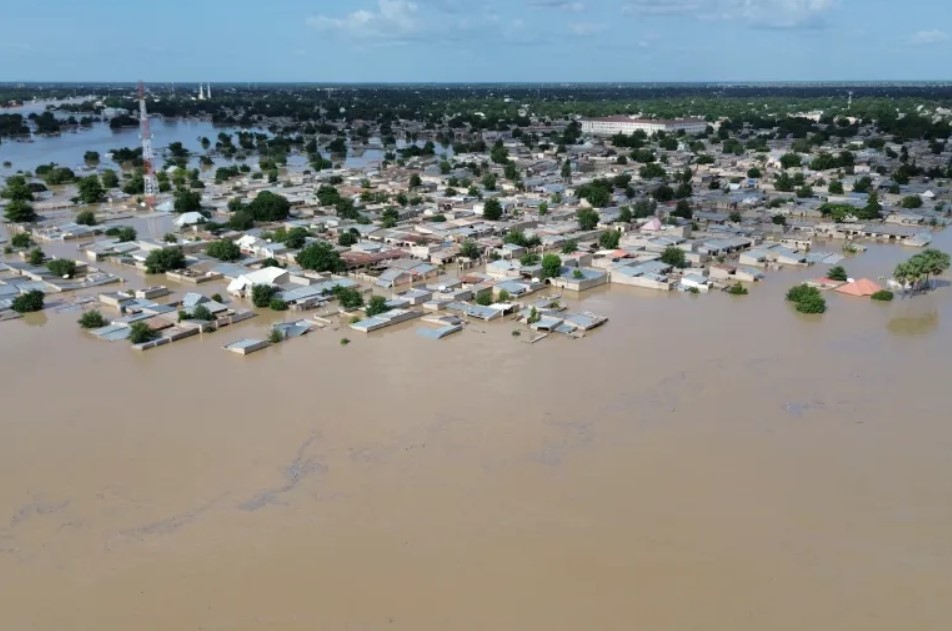
In 2024, the Alau Dam overflowed following torrential rainfall in Borno, a state in Northern Nigeria. The dam’s collapse overwhelmed the state and its neighbours with flooding, resulting in loss of life, submerging roads, and affecting nearly half a million people.

But imagine if the people had known in advance that a disaster of that magnitude was imminent. Repeated flood alerts delivered via smartphone might have given the people of Borno a chance to escape the devastation they endured for many days.

Sadly, this is not Nigeria’s first major flooding incident. In 2022, the release of water from the Lagdo Dam in Cameroon, combined with steady rainfall, led to the deaths of over 600 Nigerians and the displacement of many others. Numerous roads were overtaken by floodwater, making it difficult for relief materials to reach those affected. The contamination of nearby drinking water sources caused a cholera outbreak in the country’s North-Eastern region. 

The National Bureau of Statistics (NBS) estimated that the cost of destruction caused by the flood ranged between ₦3.79 billion and $9.12 billion. Across Africa, climate change—along with human factors such as clogging open-air drainages with refuse and rapid deforestation—has enabled flooding to cause more damage than in the past.

Flood in Nigeria
Credit: Al Jazeera

Kenya experienced a remarkable amount of rainfall in 2023, which resulted in multiple cases of flooding and landslides across 36 of the country’s 47 counties. In addition to the deaths of 160 people and the forced relocation of 500,000 others, public infrastructure such as schools and roads was destroyed. Crops and livestock were also affected, subjecting many Kenyans to food shortages. Similar to Nigeria’s case, a flood alert mechanism in Kenya might have helped prepare residents for what lay ahead.

The concept of a flood warning system is not entirely new. In the past, communities were alerted through radio broadcasts, television adverts, and even by word of mouth. While these methods are still available, the gradual shift in public attention from radio and television to smartphones has made them less effective. 

Findings from Statista project an increase in smartphone users in Sub-Saharan Africa from 534 million to 786 million by the end of 2030. In a time when news, the latest job vacancies, football fixtures, and much more can be accessed on a smartphone, it is no surprise that more people are embracing the device. Africans’ growing interest in smartphones is precisely why delivering flood alerts through push notifications or dedicated apps is likely to succeed.

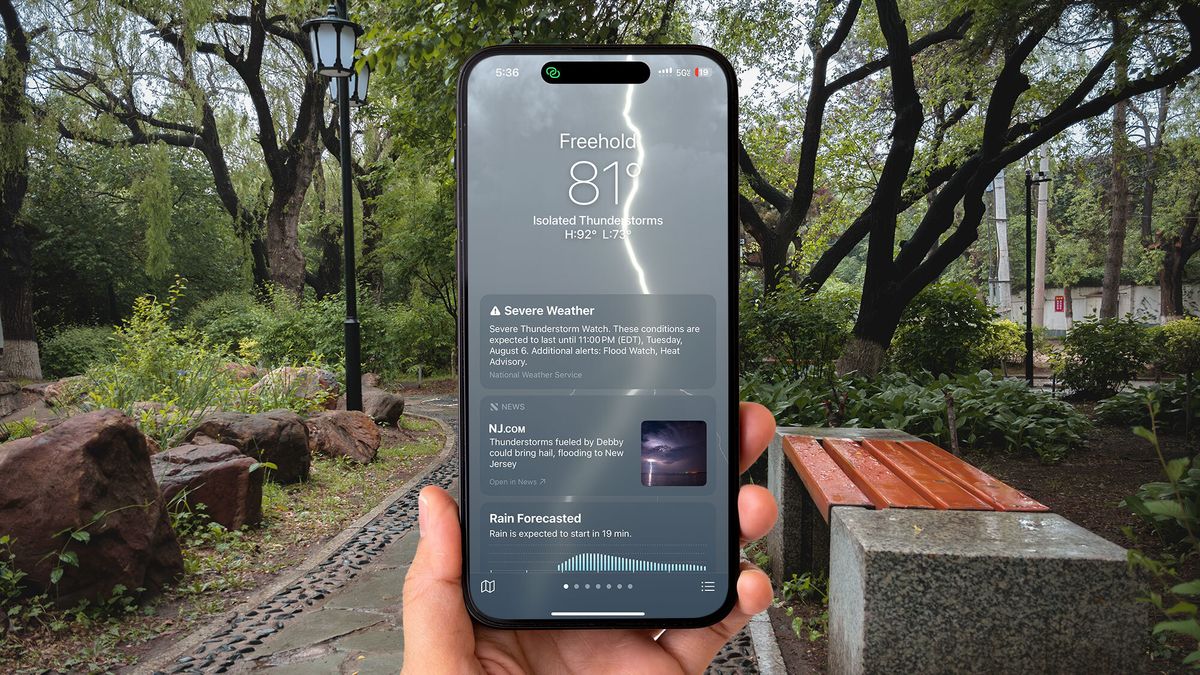
Many smartphone users rely on Google Maps for guidance when travelling along unfamiliar routes. On some days, people also consult their smartphone weather apps before going out, to determine whether precautions—such as taking an umbrella—are necessary. Smartphones have proven useful for route and weather advice, so incorporating flood alerts to inform users of what to expect and how to prepare in advance makes a great deal of sense.

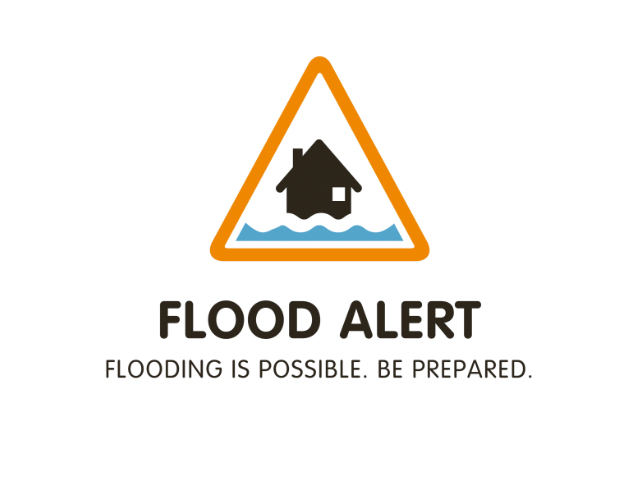
The UK Government defines a flood alert as a signal “that flooding is possible, so you should prepare now”. While flooding was once mostly confined to the rainy season, climate change has disrupted this pattern, and communities can now be overwhelmed even after a single day of rainfall.

Across Africa, flood alerts delivered via smartphones can easily reach areas that traditional methods, such as television and radio, often fail to access. Unlike televisions that depend on electricity, smartphones are battery-powered and can last for several hours. Once a flood alert is sent via a push notification, people stand a better chance of receiving it and responding swiftly, compared to a television advisory that may never reach communities without power. 

Flood
Credit: Toms Guide

With smartphones, African governments can more easily reach people living in high-risk communities. In addition, individuals can contribute to flood alert apps by sharing updates on the situation in their respective areas, similar to how information is circulated during election seasons. For example, if a flood is predicted to affect Lagos Island and a warning has already been distributed to residents, those living on the Mainland—particularly in areas closest to the Island—can also notify the authorities and other residents if the flood begins to encroach on their neighbourhoods.

FloodCitiSense is a great example of an app that utilises crowdsourced information to inform residents about floods and how to prepare. Used in three European cities—Rotterdam, Birmingham, and Brussels—residents in these areas support the developers’ efforts by regularly reporting rainfall intensity and its effects. Through photos and text updates, users can provide the app with real-time information during an ongoing flood.

Having an app like this in every African country—particularly Nigeria, Cameroon, Mali, Sudan, and other nations prone to recurring floods—would give people living in high-risk areas the opportunity to evacuate in time. 

Developing a smartphone app that can deliver flood alerts to users will require collaboration between tech startups and African governments. Since collaboration is widely seen as a catalyst for the continent’s growth, it is only fitting that both parties combine their efforts for the greater good.

In addition to sharing flood alerts, smartphone apps can also educate users about the consequences of flooding and how to prepare for it. Ghana’s “My Flood Risk Accra” offers residents of Accra a user-friendly platform to gain insights into the effects of floods and how they can mitigate the damage.

Although the app also provides users with timely weather forecasts, the fact that residents receive practical tips about flooding is particularly commendable, as it encourages them to take greater responsibility for their environment. This could lead to a reduction in refuse dumping in drainages and promote healthier waste disposal habits.

Flood
Credit: Sint Maarten

For smartphone-enabled flood alerts to be effective, Africa will need to reduce digital illiteracy, particularly among the elderly and those living in rural areas. This cannot happen overnight, so a long-term policy aimed at educating the population and making smartphones more affordable over a five- to ten-year period could make a significant difference.

African governments will also need to advocate for a centralised flood alert system. Rather than developing multiple apps that serve the same purpose, national weather agencies should collaborate with startups to create and promote a single flood alert app. This app should not only provide timely notifications but also offer guidance on managing natural disasters.

While smartphones have proven to be a valuable tool for disseminating information, not everyone can afford one. Therefore, countries with high poverty rates should also consider sending flood alerts via SMS. This approach would ensure that people with basic feature phones remain informed, thereby increasing the number of individuals aware of potential flood threats.

As climate change concerns intensify and more flood incidents are recorded, governments across the continent must prioritise the creation of national flood alert apps in their respective countries. These systems will empower people living in high-risk areas to prepare in advance. If properly utilised, flood alerts can save countless lives in Africa. 

Michael Akuchie is a tech journalist with five years of experience covering cybersecurity, AI, automotive trends, and startups. He reads human-angle stories in his spare time. He’s on X (fka Twitter) as @Michael_Akuchie & michael_akuchie on Instagram.

The post Smartphone Alerts and the Future of Flood Preparedness in Africa first appeared on Afrocritik.

  •