
Vue lecture

A New Addis Ababa Is Rising. But Who Is This Urbanization Really For?


Across Africa, many people can no longer afford the cities and neighborhoods they've long called home. OkayAfrica is running This Place Called Home - a series exploring the housing crisis transforming African cities and communities, and what happens when basic shelter becomes a luxury commodity.


If you were to land in Addis Ababa today after just a few months away, much of the city would feel unfamiliar.

Driving from Bole International Airport toward the center, you'll pass a light-filled, tree-lined boulevard with wide sidewalks, stylish cafés, and boutique shops. Neighborhoods like Piassa and Kazanchis, once renowned for their rich histories and vibrant street life, have disappeared. In their place stands a new skyline of Addis. The tallest building in the city is now a gleaming glass tower that houses the Commercial Bank of Ethiopia and a rooftop restaurant by chef Marcus Samuelsson.

The message is clear: Addis Ababa, home of the African Union, is repositioning itself as a global city.

But for locals like Qal Fessehaye, a writer and filmmaker, the urbanization is a story of fading belonging. She grew up in Addis and has always called it home. The changes have been "discombobulating," especially given the breakneck speed of construction.

"You would wake up, go outside, and a road would be finished overnight," she says in an interview with OkayAfrica. "It is a feat construction-wise. But for somebody living in the city, it's very jolting. You would try to visit somewhere, and an entire neighborhood would just be gone within a few days!"


Much of this change is driven by a multibillion-dollar "City Corridor Project" by Addis Mayor Adanech Abebe and Ethiopian Prime Minister Abiy Ahmed to develop and modernize the city's infrastructure. It is part of a larger Corridor Development Project across at least 58 cities.

The project envisions a city of pedestrian boulevards, bike lanes, green spaces, libraries, and commercial corridors. The broader goal is to make Addis a more livable, investor- and foreigner-friendly destination and a model African capital.

They have built a national library and a new science museum. The National Palace, the former residence of Emperor Haile Selassie I, has undergone a new refurbishment. In some neighborhoods, streets are newly paved, and dark streets now have streetlights. Residents now walk freely through areas once considered unsafe after dark.

But could the price of progress be too high?
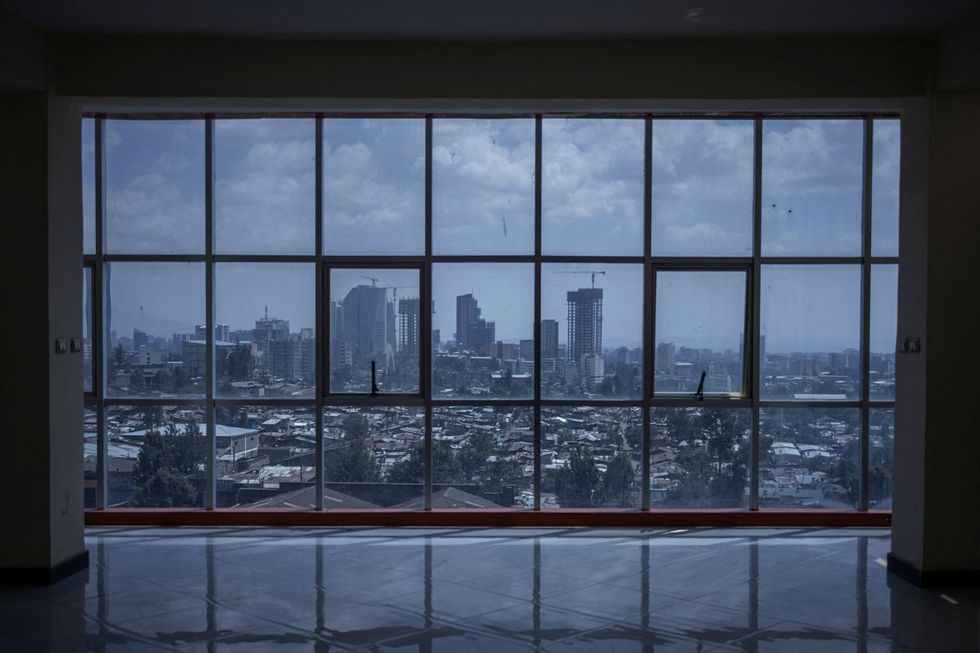

A view of the city's skyline through glass windows.


Thousands of residents have been displaced, many of whom were removed from homes they had lived in for decades with little notice and relocated to condominiums on the city's edge. Some were instructed to enter lotteries to determine their new housing assignments. Others have reported little to no compensation. These new locations are often far from familiar jobs, schools, and the support systems they once depended on.

In April, Amnesty International called for the Ethiopian government to pause the project and end forced evictions.

Some, like Fessehaye, were not evicted by bulldozers but pushed out by the rising cost of living. She had lived in her previous apartment for about three years when her landlord informed her that the rent would more than double, from 12,000 birr (USD$87) to 25,000 birr (USD$181).

When she questioned the legality of the increase, the landlord simply told her she could either find another place or pay the new rate. Despite the notice, she had no choice but to downsize.


The dislocation pushed Fessehaye to act. She reached out to friends, fellow creatives, and longtime residents to reflect on the changes reshaping their city. Few were speaking openly, and many artists were hesitant to voice their discomfort. For them, it was a tricky balance between enjoying the changes and feeling that it was unfair to complain.

The result was a Substack post that spoke volumes. Many described feeling alienated in their city. While they acknowledged the improved infrastructure, they mourned the loss of Addis Ababa's soul and community.

"When I was having conversations with my friends... they're like, 'Okay, we can walk on the roads now, but you know, what about our neighborhoods? What about our homes?" she explains.
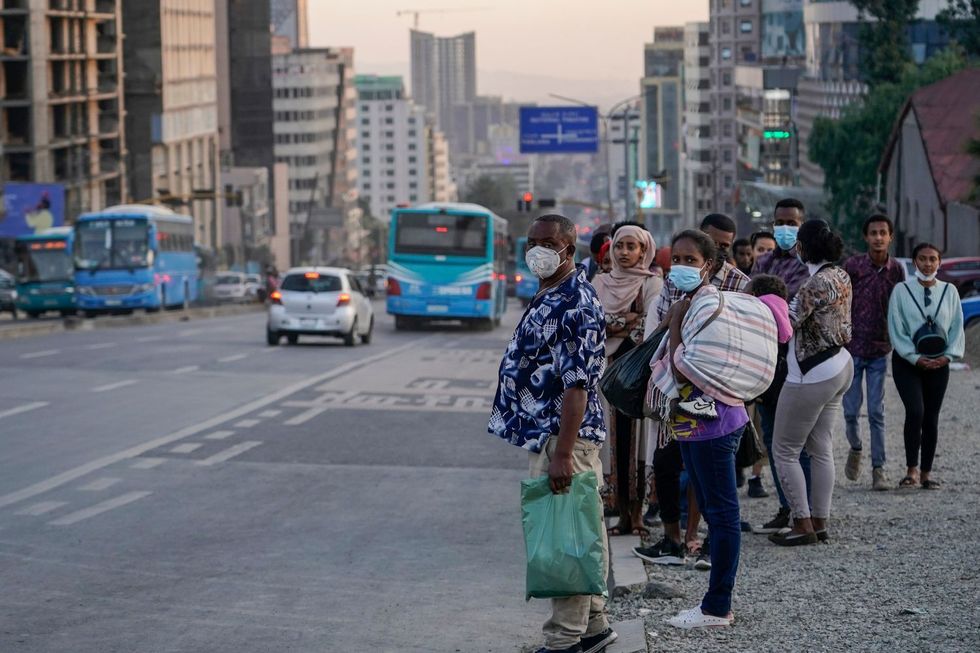

Commuters wearing masks in line with Coronavirus protocols wait in line for public transportation in Piassa during rush hour on December 25, 202, in Addis Ababa, Ethiopia.


And it's not just the residents. Third spaces, such as cafés, bars, and cultural venues, are either vanishing or shifting their focus toward wealthier customers. Others have completely disappeared because they can't afford it. As a result, people are staying home more and interacting less with their community.

According to Fikir Getaneh Haile, an Assistant Professor at Acadia University, the city has prioritized private investment while sidelining residents. She argues that political leaders have to balance economic ambition with protections for everyday citizens. She also stresses the need for meaningful consultation with the communities.

Fessehaye agrees. But for her, consultation is not enough. True inclusion means being part of the planning process from the beginning. She points to the construction of Entoto Park as a positive example, where creatives and local professionals had a say in shaping the space.


"That gave people a sense of ownership," she said. "But with the [current project], for example, we were not part of the plan. It just happened around us."

She adds that the changes around them are isolating: "Those of us who lived in the center of the city just felt like nobody wants us here anymore. Because we can't afford anything, we can't afford the houses, we can't afford the food."

Despite the changes, a fierce loyalty to the city remains, with many hoping they will not have to move to other parts of the country that are more affordable. However, Fessehaye admits that it is becoming a reality that many face daily. "I've heard this a few times where people are saying it's just easier to move to a different region and live there."

  •  

From El Salvador to South Sudan: Washington’s Third-Country US Immigrant Deportation Policy Hits Africa


On Friday, July 4, eight men landed at Juba International Airport in South Sudan. The group included two Cubans, two Burmese nationals, and one each from Laos, Mexico, and Vietnam. Only one of them was South Sudanese. According to the U.S. government, each had served a prison sentence in America for serious crimes and faced formal removal orders upon completing their terms. A prolonged court battle over the legality of their deportation kept them detained for more than six weeks at Camp Lemonnier in Djibouti.


Since they arrived in Juba, their fate has been a mystery. No reliable reports have emerged regarding their whereabouts or current condition. When pressed for details, former U.S. border czar Tom Homan said, “They’re free as far as we’re concerned. They’re no longer in our custody. Will they stay in Sudan? I don’t know,” he said in an interview.

Their removal illustrates the Trump administration’s immigrant deportation under the “third-country” removal policy, in which the U.S. sends detained illegal immigrants to nations other than their own when home governments refuse to accept them. In February and March this year, detainees were sent to Costa Rica and El Salvador’s CECOT prison.


CECOT was billed as a state-of-the-art solution to gang violence. Instead, it became a symbol of systemic abuse. Human-rights groups have documented detainees sleeping on concrete floors, being denied medical care, and subsisting on spoiled food. Venezuela’s Attorney General opened an investigation into allegations of torture and sexual violence against more than 250 of their citizens sent there. The resulting outrage damaged El Salvador’s standing and raised questions about accountability at facilities run by private contractors.


By sending eight unrelated migrants to South Sudan, Washington made Juba its latest African partner in U.S. immigration policy. South Sudan is a young nation still wrestling with civil conflict, famine, and mass displacement while its institutions struggle to deliver basic services. Ironically, Juba agreed to accept these men just months after Washington revoked all South Sudanese visas in April 2025 over a dispute about repatriating a Congolese national.

Last week, five more detainees landed in Eswatini under the same U.S. immigrant deportation policy. They are citizens of Vietnam, Jamaica, Cuba, Yemen, and Laos, and U.S. officials say their convictions include murder and child rape. Eswatini’s government has placed them in solitary confinement at undisclosed prisons while it arranges repatriation through a U.N. agency.

Other African states have faced similar discussions. Rwanda held exploratory talks with Washington about hosting deportees, though no deal was signed. And most recently, Nigeria’s foreign minister rebuffed Washington, saying his country “has enough problems of its own” and would not accept third-country removals.


These developments reveal a troubling pattern. Washington is using its economic and diplomatic weight to enlist developing nations in enforcing U.S. immigration policy. For fragile states across Africa, agreeing to host detainees can mean aid boosts, security support, or eased visa rules. Yet these same governments often lack the legal frameworks and oversight to ensure fair treatment. If they follow El Salvador’s model, they risk swift global criticism and continued reputational risk should reports of abuse emerge.

As more countries sign on — and it seems likely — the continent risks becoming a dumping ground for America’s crackdown on migration. African leaders and regional bodies must demand transparency and push back against coercive deals. Otherwise, smaller, less powerful states will succumb to U.S. pressure while their own citizens are deprived of essential services and protection.

  •  

Industrie Africa Turns Five and Opens a New Chapter for African Luxury and Fashion on Zanzibar’s Bawe Island


When Tanzanian entrepreneur Nisha Kanabar launched Industrie Africa in 2018, the African fashion landscape was still taking shape. Designers from the continent were gaining global attention, but meaningful infrastructure, long-term visibility, and access to markets remained out of reach.


Her company set out to change that.

"Industrie Africa began as a response to absence," Kanabar tells OkayAfrica. "A lack of structure, visibility, and context around Africa's fashion industry. What started as a digital directory has evolved into a dynamic ecosystem."

Five years later, the platform has become a trusted online store and content hub, supporting both long-established and emerging brands, including Doreen Mashika, Dye Lab, Hertunba, and This Is Us. Now, it is stepping into the physical world. Last Friday, July 18, on the shores of Zanzibar's Bawe Island, Industrie Africa marked its fifth anniversary with the launch of SoLA, the Society of Luxury Artisanship.


SoLa, a high-end concept store situated within the Bawe Island private resort, presents a curated selection of African designers alongside global labels, providing visitors with a thoughtful and stylish shopping experience. Its first exclusive collection is a limited-edition resort capsule by Senegalese brand Tongoro, specifically designed for the Zanzibar location, and available both in-store and online.


Interior of SoLA concept store in Zanzibar, featuring racks of colorful clothing, jewelry displays on wooden and marble blocks, and a man walking past in a blur.


For Kanabar, this next step builds on what she started in 2018, while adapting to how people want to discover and shop for fashion today. "The mission hasn't changed, but the way we deliver it has. We've moved from simply connecting people to products to influencing how and where those products live in the world."

Moving into physical retail is also a strategic response to challenges African designers still face. While names like Thebe Magugu, Orange Culture, Lagos Space Programme, and Kenneth Ize have gained global recognition, many struggle with reliable production, distribution, and access to customers.

Industrie Africa's answer to this gap is Industrie Africa Select, a new consulting arm that works with luxury hotels and resorts across the continent to design curated retail experiences. SoLA is its first project, and a model for what is possible when retail meets storytelling in a space that focuses on both culture and craftsmanship.

"As luxury travel flourishes across the continent and globally, we kept noticing the same disconnect: beautifully considered hospitality spaces, paired with retail concepts that felt like an afterthought," Kanabar explains. "That gap became our entry point."


Model in a flowing coral gown with an orange fabric behind her


At the same time, platforms like Industrie Africa continue to challenge outdated ideas of what African luxury looks like. "African luxury is less about price point and more about process and provenance," Kanabar says. "It's the rhythm of handwork, the intentionality behind materials, the intimacy of small-batches. It possesses a subdued power, inimitably rooted in story, place, and identity."

  •  

What It’s Like To … Be a Competitive Breakdancer in Kenya


Growing up, Acy Kare was an introverted child. Dance was something she did at church or at home with her mother. But after high school, everything changed when she walked into a community center and saw people spinning on their heads. That moment sparked a curiosity that quickly turned into a deep passion.


Today, Kare, 24, is one of the few visible b-girls in Kenya's breaking or breakdancing scene. The space is still predominantly male, but her presence is helping to shift that. Through hard work and consistency, she has made her way into competitive circles and international events.

"I couldn't even do one push-up when I started," she says. "But I kept going because I wanted to be that girl spinning on her head."


Kare shares her story with OkayAfrica, reflecting on how breaking gave her confidence, opened doors, and inspired her to create more space for Kenyan women in the sport.


Kare: Dance is my way of expressing myself. I was an introvert growing up. But once I started dancing, I found my voice. I found my people. I've been breaking since 2020. Before that, I danced in church and later tried dancehall, but I eventually got tired of it. Then I met some breakdancers and I really wanted to know what that feels like. From that moment, I never looked back.

I mainly joined out of curiosity. My first class was challenging. I arrived late, and some little kids were already flipping. But the coach was nice and encouraging.

Now, five years later, I'm part of a group called Halisi Breakin. I'm one of two girls. We train at our community center from Monday to Saturday, 9 a.m. to 2 p.m. What drew me in was seeing that there weren't many girls doing it. I thought it would be so cool to see a woman doing headspins, handstands, and backflips. I wanted to be that girl.

The breaking scene in Kenya is way bigger than people think. In Nairobi, there are strong communities in areas like Kibera, Kangemi, Kayole, and Dandora. Outside Nairobi, you'll find scenes in Nakuru and Mombasa. Each year, all these dancers come together for the Kenyan Breaking Championship, held at Alliance Française. More than 500 breakers participate in a week of workshops that culminate in fierce battles. This past November, I won the competition.

The community is super welcoming. Whether you know just one move or none at all, you're accepted. That's what makes it beautiful. Breaking is a sport, and you have to understand the basics. But everyone starts somewhere. If you're interested, simply show up. Every area has community classes, and people are happy to guide you.

But it's also tough. Really tough. It took me five years to reach a level where I could compete. When I started, I couldn't even do one push-up. I was very weak. So I had to push myself hard. I started running, going to the gym, arriving early to practice, and taking extra classes. Since there weren't many girls to compete with, I had to match the level of the guys.


Acy Kare stands smiling in front of the Red Bull BC One World Final backdrop in Rio de Janeiro, wearing a Halisi Breakin shirt.


I was supposed to attend a qualifier for the Olympics, but my passport was delayed. So I had to give up my spot. Still, it was amazing to see breaking included in the Games. When it was removed from the 2028 Los Angeles Olympics, it drew more attention to the sport. People started asking why, and that curiosity helped raise awareness.

I remember when Raygun, the Australian competitor, went viral at the Olympics. I don't understand why people hated on her. In breaking, you're not supposed to look like anyone else. If you do, that's called biting. She was having fun and showing her personality. That's precisely what breaking is about, and I thought she was really cool.

For me, breaking is about being original. I used to watch a lot of battles in the U.S., and people here would start copying that style. However, I now see more African dancers incorporating traditional moves. It's going to be amazing when we're breaking using African rhythms and movements. Everyone has their way of moving. You can be given the same move, but each of us will interpret it in our own way. That's what makes it real.


People can build careers in dancing. Many dancers earn money by teaching private classes, working in schools, or performing in theater productions. I'm also learning film and graphic design to expand my options.

Last year was rough, though. I almost quit. It felt like too much. People started saying I was only being picked for competitions because I'm a woman, not because I was good. That really hurt, especially with how hard I'd been training. I needed to step away for a while.

But I'm still here. Breaking has given me opportunities to travel. I've competed in Tanzania and Brazil, worked with Red Bull, and now I'm building a support group for Kenyan b-girls so none of us feel left out.

I hope that breaking is as recognized as football one day. I believe it can be both a cultural movement and a sport. Dance gives me freedom. It's like being a voice for the voiceless. When I'm competing, it's just me.

  •  

"We Are the Dream Diggers:" Poetry Becomes a Lifeline in Malawi’s Dzaleka Refugee Camp


Charles Lipanda was only five years old when he became an orphan. By the time he was a teenager, he was fleeing war in the Democratic Republic of Congo.


When he was 14, he arrived at Dzaleka Refugee Camp in Malawi, carrying the weight of trauma and loss. In a place marked by limited opportunity, he turned to poetry as a lifeline.

"I let my heart mourn just like my pen bleeds on scratches of papers and collected them to form a poem," he tells OkayAfrica of his first poem, At the Age of Nine. "I have written so many poems that not only help me heal, but also serve as therapy for others."

Now, six years later, Lipanda is the founder and president of African Youth Artistic Poetry (AYAP), a collective within the camp that offers writing workshops, performances, and mentorship for children and teens. Through AYAP, poetry has become a tool for self-expression and healing.


Dzaleka Refugee Camp, formerly a maximum-security prison, was constructed to accommodate up to 12,000 people. Today, it shelters over 57,000 refugees and asylum seekers from countries including Burundi, Rwanda, and the DRC, according to UNHCR. Humanitarian aid has declined in recent months, making the camp more crowded and under-resourced than ever. Despite these conditions, young artists continue to find ways to create and connect.


An aerial view of Dzaleka Refugee camp.


Espoir Kahitani is one of them. At 19, he is one of the most recognized performers in the camp. His spoken word poems are known for their intensity and emotional truth.

"Poetry entered my life like a breath when I was suffocating," he tells OkayAfrica. "It came during moments when I had no words left to speak but too many feelings inside. Living in Dzaleka, I watched my family suffer and saw friends leave while we stayed. I needed somewhere to release it all."

The eldest of six siblings, Kahitani was born in the Democratic Republic of Congo and has lived in Dzaleka since 2014. He speaks poetically, even in casual conversation. Though respected for his craft, he admits to feeling trapped. "This place is too small for me. I need space to grow. But there is nowhere to go."


He dreams of performing internationally and resettling in the US. He draws inspiration from poets such as Rudy Francisco and Clayton Jennings. "They are my role models," he says. "I imagine myself on the same stages [they perform on]."


Espoir Kahitani, a young man in a black shirt, stands beside a house in Dzaleka Refugee Camp.


Also, the frustration of waiting for resettlement weighs heavily on him as he has watched friends come and go. "You see new arrivals coming, and they get resettled abroad," he says. "They leave us, 'the long-stayers' in the camp, and it's creating trauma. It says that we've been forgotten or left behind."

In response, he and other young poets have created their own spaces to be seen. Talent shows, poetry battles, and open mics offer moments of release. The annual Tumaini Festival, dubbed the only arts festival in a refugee camp, transforms the camp into a creative hub. With more than 50,000 attendees, it is one of the few chances for young refugees to perform for a bigger audience.

"[Tumaini] means hope," Lipanda says. "The festival not only brings us hope but also offers more opportunities to meet with the right people …It is where our poets go and showcase their abilities in the spoken word industry."


One of those opportunities includes We Name Ourselves, an upcoming documentary that features both Lipanda and Kahitani. The film follows a group of teenage poets from Dzaleka as they prepare for the Tumaini Festival. Filmed last October, the project explores how art can offer hope, resilience, and a sense of identity for young refugees facing systemic barriers.


The film, produced by Home Storytellers, challenges negative perceptions of refugees by highlighting their creativity, humanity, and untapped potential. Both Lipanda and Kahitani embody this message.

Kahitani dreams of performing internationally and sees the United States as a place where his talent could flourish. He imagines sharing his story on global stages, then returning to Dzaleka to inspire the next generation. His goal is to show others that it is possible to be seen and to create change beyond the limits of being a refugee.

Lipanda has already made steps toward that future. He has published two books, Our Voice Is Our Advocate and Being Refugee Wasn't a Choice, and continues to lead AYAP workshops. The program welcomes youth from across the camp's communities. "We provide a safe space for expression," he says. "Poetry is in their blood now."

Day-to-day life in Dzaleka remains difficult. Hunger is common. School is not guaranteed. Kahitani says many young people are focused on survival and have little energy for much else. As a result, leadership in a place like Dzaleka comes with pressure.


Espoir Kahitani passionately performing spoken word poetry outside, wearing a black shirt


"Being a leader here means carrying the silence of others," Kahitani says. "Even when you feel broken inside, you have to keep going. Someone is looking to you for strength."

Both poets are also working to shift how refugees are perceived. Rather than being reduced to statistics or labels, they see themselves as individuals with potential.

In his poem We Are the Dream Diggers, Lipanda describes Dzaleka as "a grave of dreams." Yet despite that, he sees his fellow poets as more than the limitations of their environment. "We are the dream diggers," he writes.

  •  

The Best East African Songs of 2025 So Far — Mid-Year Roundup


From Nairobi to Kigali to Dar es Salaam, 2025 has been a year of quiet reinventions and loud declarations in East African music. Some of the region's biggest names returned to the spotlight with tracks that fused romance, rebellion, and cross-cultural flair, while others chose introspection or experimentation. The result? A genre-bending, emotionally rich soundtrack that reflects where we've been and hints at where we're going.

The year kicked off with a string of certified hits. Kenya's Matata dropped "Mpishi," an infectious anthem that quickly became the country's most popular song. Tanzania's Abigail Chams rode the momentum of "Me Too," her single alongside Harmonize, to a BET Awards nomination. Meanwhile, artists like Zuchu, King Saha, and Juma Jux delivered records that navigated personal transformation and public visibility with confidence.

But beyond the charts, it's the emotional depth and sonic boldness that have stood out to me most this year. Mereba's "Heart of a Child" offered a homecoming steeped in diasporic reflection. Joshua Baraka's "Wrong Places" and Dyana Cods' "Get Busy" reminded us that growth isn't always loud. However, when it is, it had better have a melody worth moving to.

This list isn't just about what's trending. It's about the songs that have sparked conversation and moved bodies. From viral dance tracks to intimate confessionals, here are the East African songs that have defined 2025 so far.

Matata – “Mpishi” feat. Bien (Kenya)


"Mpishi" isn't just one of Kenya's biggest hits of the year; it's a pure shot of joy! After taking a year-long break, Matata stormed back with a track that's as infectious as it is celebratory. Teaming up with Bien, the group cooked up a chart-topper that had me dancing from the first listen. There's something about the blend of Bien's smooth vocals, Matata's rhythmic swagger, and the song's playful energy that feels like a burst of sunshine. I was especially looking forward to catching the band live at Blankets and Wine before the show was canceled due to anti-government protests. But seeing them take the hit on tour with Bien in Europe softens the blow. Some songs just feel good in your body. "Mpishi" is that song for me.

Abigail Chams – "Me Too" feat. Harmonize (Tanzania)


I had the pleasure of interviewing Abigail Chams just as "Me Too" was climbing the charts, and it was clear even then that she was meant to be a star. It's been so rewarding to watch that potential unfold. "Me Too" is a flirty love song featuring Harmonize that has not only become a massive hit, racking up over 15 million views, but also confirmed Abigail's staying power. With a historic BET Awards nomination under her belt, Abigail is already defining her generation.

Joshua Baraka – "Wrong Places" (Uganda)


After lying low for much of the year, Joshua Baraka is back with "Wrong Places," a soulful, emotionally charged single that signals a new chapter for the Ugandan artist. This track leans into the raw, honest storytelling that's fast becoming his signature. With 1.8 million views and counting, "Wrong Places" might just be the first glimpse into the next phase of Baraka's artistry.

Marioo – "Nairobi" feat. Bien (Kenya/Tanzania)


Marioo's "Nairobi," featuring Kenya's Bien, has emerged as a standout anthem of 2025, amassing over 26 million views and igniting a wave of cross-cultural love across East Africa. With smooth Swahili lyrics, the song is a romantic ode to the women of Kenya's capital. Its viral success — fuelled by TikTok dance clips and lifestyle reels set to its chorus — has made it more than just a cultural moment. The song also marks a high point in a remarkable year for Marioo, who had another chart-topper with "Tete."

Jux – "God Design" feat. Phyno (Tanzania)


I love love. And even more than that, I love seeing a man declare his love loudly. Juma Jux is deep in his lover-boy era, and "God Design" is a celebration of that. Fresh off his headline-making wedding to Nigeria's Priscilla Ojo, Jux dropped this romantic banger with visuals pulled straight from the ceremony. The song radiates joy and devotion, and Phyno's verse adds just the right amount of edge to balance the sweetness. It's the crown jewel of Jux's EP A Day to Remember, which he calls a soundtrack to his love story.

Mereba – "Heart of a Child" (Ethiopia/USA)


This track is a personal pick. "Heart of a Child" is a soulful, introspective gem from Mereba's second studio album, The Breeze Grew a Fire. For me, the track feels like a quiet revelation as she traces her journey back to herself through sound and storytelling. Shot in Ethiopia by acclaimed videographer Maranata Tegegne, the music video beautifully captures the emotional weight of returning home. Mereba described the album as a process of reconnecting, asking, "What do I want to say to people now?" With "Heart of a Child," she answers that with vulnerability and a sound that hangs long after the last note.

Element Eleéeh – "Tombé" (Rwanda)


No East African roundup feels complete without Element Eleéeh. As both an artist and one of Rwanda's most influential producers, he continues to leave his mark on the country's music scene. His single, "Tombé," blends Afrobeats and kompa into a sultry love song that has racked up over 7.1 million views on YouTube and sparked a viral TikTok dance trend. Smooth, addictive, and expertly produced, "Tombé" is a reminder that Element is building momentum to take his music global.

Bien – “Safari” feat. Suldaan Seeraar (Kenya/Somalia)


Bien is amid a global takeover, and "Safari" is a standout moment in his ongoing evolution. Teaming up with Somali superstar Suldaan Seeraar, the track is a rare and powerful cross-border collaboration that bridges the musical landscapes of Kenya and Somalia. "Safari" is more than just the lead single from Bien's upcoming album; it is a statement of intent. Currently on tour across Europe and the U.S., Bien is showing that he's not only a solo powerhouse but also quietly building a case as Africa's king of features. His recent run of collaborations says it all: from the viral hit "Mpishi" with Matata and the pan-East African favorite "Nairobi" with Marioo (both featured on this list) to the house anthem "All I Need" with Brazil's Rammor and "Katam" with Diamond Platnumz.

Toxic Lyrikali – "Sick" (Kenya)


Kenya's Toxic Lyrikali kicked off 2025 with a bang through "Sick," a blend of gengetone, dancehall, and drill that is cementing his place as a leading voice in Nairobi's underground music scene. With aggressive flows and hard-hitting production, the track captures the raw energy and street sensibility that define his style. It set the tone for a strong year, followed by "Confirmation" in April featuring Mr Ree and a standout guest verse on Dyana Cods' "Get Busy." All of these moves signal that Toxic Lyrikali is not just riding the wave of Nairobi's street music; he is actively shaping it.

King Saha – “TikTok Life” (Uganda)


King Saha taps into the trials of modern life with "TikTok Life," a catchy song that captures the joy and exhaustion of living online. The song reflects the digital-age reality of constantly being on display, delivered with Saha's signature depth and finesse. The song has been steadily climbing the Ugandan charts, resonating with a generation caught between performance and authenticity. More than a decade into his career, King Saha proves he still has his finger on the pulse.

Dyana Cods – "Get Busy" feat. Toxic Lyrikali (Kenya)


Dyana Cods is done playing it safe, but did she ever? In "Get Busy," she dives headfirst into steamy dancehall territory, teaming up with Toxic Lyrikali for a track that oozes confidence and raw appeal. The video, in which she stars as a seductive officer teasing her inmate, is a bold statement from an artist who has struggled to find her groove. A few months earlier, she dropped "Chude Genje" with Femi One. It's a gritty, high-energy banger that shows Cods is finding her groove following her 2024 hit "Set It." With each release, Dyana is sharpening her sound and proving that her spotlight is no fluke.

Zuchu – "Hujanizidi" feat. D Voice (Tanzania)


Zuchu has been keeping a low profile in 2025. But when she drops music, the impact is still loud. She kicked off the year with "Hujanizidi," a January release featuring D Voice, which has already garnered over 7.5 million views. The bongo flava track leans into their smooth chemistry, reminding listeners why Zuchu continues to command attention even without a constant spotlight. In May, she followed up with "Lollipop," a sultry collaboration with Yemi Alade from her 2024 album Peace and Love. It's been a quieter year for the usually prolific star. But with each move, Zuchu proves she doesn't need the noise to stay on top.


Missed the best East African music of May 2025? Head to our article for all the March hits from Rwanda, Tanzania, Kenya, Uganda, and more.

  •  

What It’s Like To … Be a Working Stand-Up Comedian and Satirist in Kenya


Kenya has long been a country of wit and laughter, but few comedians have tapped into that rhythm with the sharpness and range of Justine Wanda.


A stand-up comic, writer, and satirist, she has carved a niche for herself with a voice that is both disarmingly funny and fiercely observant. Whether on stage or online, Wanda’s work reflects a distinct ability to locate humor in the heart of discomfort. What began as an escape from a stressful job has evolved into a career that spans stand-up festivals, digital satire, and scriptwriting. As the creator and host of Fake Woke With Justine, her incisive online show tackling Kenya’s sociopolitical contradictions, she has become a compelling comedic voice of her generation.

But beneath the punchlines is a deeper commitment to truth-telling, to making space for marginalized voices, and to showing up with integrity even when the jokes are hard to find.

“People think if you’re funny in everyday life, you can be a comedian. Not really,” she tells OkayAfrica. “Being funny casually is instinct. Being a comedian is a craft. You’re expected to make people laugh,” She adds, “Being funny is who you are, but being a comedian is something you have to practice and own.”

That distinction is central to her approach and reveals the discipline behind her work, even when it looks effortless. She shares her story with OkayAfrica, reflecting on how a class clown evolved into a cultural commentator, why jokes still matter when everything feels bleak, and how comedy can serve as a form of resistance.


Justine Wanda holding a microphone and performing on stage in front of a blue curtain


Justine Wanda: It’s hard to pinpoint the exact moment it all clicked for me, but there’s something really pure about stepping onto a stand-up stage, reading the room, trying to lift people’s spirits, and taking them on a little journey with your joke. That moment happened for me in 2019, and it was my first time doing stand-up.

It didn’t go well. I may have landed one or two jokes, but the rest? Atrocious. Nothing went as planned. But I didn’t give up. I made two people laugh, and somehow that was enough. Not giving up in that moment felt right.

I loved working in interior design, but my boss yelled constantly. I needed space to clear my head. Comedy became that space. It wasn’t just a break I needed. It was a breakthrough. So I went to this open mic show, needing something to shift. I got on stage, shaky but determined. Doug Mutai was on the lineup that night. He runs Stand-Up Collective. After my set, he encouraged me. That moment meant more than I realized at the time. It wasn’t just validation; it was a door. For the first time, I felt like I was stepping into a creative community I didn’t even know I was searching for.

I’ve always been a class clown. Growing up, I was mostly quiet. But when I did speak, it was usually something ridiculous. Like I needed to make it count. I wanted people to remember me. I didn’t think I was being funny on purpose. I was just trying to make sure no one felt uncomfortable. Being funny in everyday life, making people laugh, that’s more of an innate sense of humor built on human connection.


People think if you’re funny in everyday life, you can be a comedian. Not really. Being funny casually is instinct. Being a comedian is a craft. You’re expected to make people laugh. If you don’t, it messes with your sense of self. When your joke flops in real life, you move on. But on stage, silence cuts deep. Being funny is who you are, but being a comedian is something you have to practice and own.

Kenyan humor is different. We laugh at the absurd because taking it seriously would crush us. It’s part of how we survive. Like when the president got hit with a shoe, the memes were instant and hilarious. You’ll be at a kibanda, and someone will joke about dying from amoeba but still say it was the best fish they ever had. We’re dealing with so much, but we cope through laughter. It’s how we connect.

That spirit is what led me to start my show, Fake Woke with Justine. It was a way to talk about real things with humor. My terrible work experience sparked my curiosity about Kenya’s labor laws, and I wanted to share what I was learning. I remember wondering, ‘Why doesn’t my job feel secure?’ That became one of my first episodes. Another one was about the Huduma Number. The government said it would help us access services, but I already had an ID. That confusion was the comedy.


Justine Wanda smiling and holding a bouquet while audience members applaud at a comedy event in a bookstore.


When I started doing comedy, I did a lot of reading. That’s important to me. I wanted to understand the world I was stepping into. I studied people like Trevor Noah, Dave Chappelle, and especially Hasan Minhaj. I loved Patriot Act. I still watch it. The topics remain relevant. They tell the truth, even when it’s messy. That’s what inspires me.

But satire doesn’t always come easy.

Last year, I originally joined the anti-government protests against the Finance Bill 2024. On one of those days, I stayed home to do some writing, and that’s when everything escalated. That was when Rex Masai was shot. I saw footage of live bullets outside Parliament. Then came the disappearances, the shooting of 12-year-old Kennedy Onyango. I kept asking myself, how do I make a joke out of this?

I tried to keep up the momentum. A joke a day. But by September 2024, I couldn’t anymore. I was losing it. I’d look at stories, and where I used to see six or ten jokes, I saw nothing. Everything was gray. I was afraid that was the end of joke writing, the end of this career, the end of the thing I love so much.

So I stopped. I let myself feel everything. I slept. I tried therapy. I held onto a bit of hope that maybe I’d bounce back. Eventually, I did. And when I returned, I remembered: jokes are king. If there’s no joke, no matter how emotional the story, it’s not comedy.


You can make money as a comedian, but it’s tough. It’s tough and incredibly humbling. You have to diversify how you use your voice. I love stand-up comedy, but it can’t pay every single bill. Sometimes, you may receive small contracts for writing, which help you stay afloat. Sometimes, you write your own show and hope someone will pay to come to a screening. You make a little money here and there. At other times, you may need to join a larger ensemble or a group working on a different project.

When I’m working on concepts, I try to think about the people around me who could contribute to or benefit from them. If you’re getting paid for a job, pull as many people with you as you can. Give someone an extra bump by sharing the revenue.

In Kenya, we need more spaces for comedy. More clubs, libraries, writing rooms, and community centers. We need to be able to read, connect, and understand each other. For comedy to grow, we need to interact with people from different backgrounds. That’s where the good stories come from.

The better you get at the craft, the more doors open. But more than anything, I hope this industry continues to value real voices. Because what we’re doing matters. These aren’t just jokes. They’re reflections. They’re truths - a way for us to find each other in the madness.

  •  

Koyo Kouoh Built Institutions for African Art. We Must Keep Building.


“We need to take the time to do the things that are urgent, that are essential, that are necessary,” renowned curator Koyo Kouoh said in a 2023 podcast. “And for me, building out institutions on the continent is a matter of urgency.”

Today, those words carry even more weight following her death on Saturday, May 10, in Basel, Switzerland, after a short battle with cancer.

With her passing, the art world mourns one of its most fearless visionaries. But for African artists and practitioners, this is the loss of a giant—and I say that without exaggeration. Kouoh believed deeply that Africa’s creativity must be shaped and shared by those who live it.

Even more tragic is the timing: she died just ten days before she was to unveil her concept for the 2026 Venice Biennale. As the first African woman appointed to curate one of the world’s most prestigious art exhibitions, it was a dream interrupted. Yet her legacy continues. We can honor her legacy by moving with the same urgency she lived by in building our own spaces and telling our own stories.

Kouoh spent her life working to build platforms where African creativity could be seen, respected, and celebrated. She was the executive director and chief curator at the Zeitz Museum of Contemporary Art Africa in Cape Town. She once called the museum “an unapologetically and decisively Pan-African, pan-diasporic museum… we are building our own voice, our own language.” And she meant it. Under her leadership, the museum became a space that showcased African talent in powerful and lasting ways.

Born in Cameroon, raised in Switzerland, and building a career in Senegal, Kouoh knew how to move between worlds. She built bridges between artists, countries, and ideas. In 2008, she opened RAW Material Company in Dakar, an artist residency and space where she mentored young talent, published writing, and curated exhibitions that asked difficult questions about identity, migration, and history.

When she joined Zeitz MOCAA in 2019, she transformed a struggling institution. She changed how it was operated, brought in new people, and even redesigned the space to serve the art better. Under her leadership, the museum focused on giving artists the space to tell their full stories. She led major solo exhibitions for artists like Otobong Nkanga, Tracey Rose, and Senzeni Marasela.

In 2022, she curated When We See Us: A Century of Black Figuration in Painting, a powerful show about how Black people have represented themselves in art across Africa and the diaspora. It was part of her larger mission to reclaim African stories in contemporary art.

“Art is in the cracks, not in the polish,” she once said, reminding us that beauty and meaning often come from broken places. She also believed museums should stay close to their communities, not just the art world.

Kuouh was repeatedly named one of ArtReview’s 100 most influential figures in contemporary art. But what made her special wasn’t the rooms she was in or the titles she held. It was how she always put Africa at the center. Through her warmth, generosity, and belief in others, she created spaces where African artists and curators were seen and valued. She rooted everything she built on the continent and helped others believe they could lead too.

Her life is a reminder that we can’t wait. We must continue to build institutions and platforms. But more importantly, we must build each other, just as Kouoh did. If we want African creativity to be seen, we must make the space ourselves. That’s what she did, and that’s how we honor her.

  •  

Chef Eric Adjepong Is Putting African Food at the Center of the Table


When Chef Eric Adjepong first stepped onto the set of Top Chef, he wasn't just competing for a title. It was 2018 — the show's 16th season — he knew he was also competing for Africa.


"In all the seasons I'd watched, there wasn't anyone doing food from the continent," he tells OkayAfrica. "And I very specifically knew that if I were to make it on, I wanted to showcase skill, but also showcase Ghanaian and West African food as much as possible."

That mission was a risk. Although we as Africans have always seen the value in our cuisine, African food at that time was nowhere near mainstream in American culture. But this mission set him apart, and with his bold flavors and skillful execution in every challenge, he cooked his way to the finale.

Now, years later, Adjepong is standing at the moment he's been dreaming of since he was a child: the opening of his first restaurant and the launch of his debut cookbook. The restaurant came first - Elmina opened this past February in Washington, D.C., while the cookbook, Ghana to the World, followed weeks later. Together, they mark personal milestones and a public test: can African cuisine find its place in the mainstream culinary world?

For Adjepong, the answer is firmly yes, especially in a city like Washington, D.C., with its diverse African population and history of African restaurants. "You can have so many French, Chinese, Indian, and Italian restaurants, and nobody bats an eye. There's one on every corner," he says. "To see that there's now a spark and a resurgence of other stories, other chefs, and other food coming into a city that's already so well represented by Africans, that's exciting."


Chef Eric Adjepong looking straight into the camera. He wears a brown shirt and a gold chain. He has a full beard.


As a first-generation Ghanaian American born and raised in New York City, Adjepong has spent his career weaving together heritage, education, and storytelling through food. That story spans continents and influences — from a childhood in the Bronx to summers in Ghana, from a degree in Culinary Arts & Nutrition at Johnson & Wales in Rhode Island to a Master of Public Health from the University of Westminster in London. His path has also included stints at Michelin-starred kitchens and multiple appearances on Top Chef, including All-Stars, where he became known for pushing West African flavors into the culinary spotlight.

Today, he's also the host of Food Network's Wildcard Kitchen and Alex vs. America, as he continues introducing new audiences to his cuisine and perspective.

With Elmina finally open and Ghana to the World now published, Adjepong's vision feels more urgent — and more expansive — than ever. Through every dish, every recipe, and every appearance, he's inviting diners and readers alike to see African food not as a niche, but as essential.

He spoke to OkayAfrica about what this moment means for him, being intentional about showcasing African food, why he chose to name his restaurant Elmina, and how he earned his family's approval for his career.

This interview has been edited for length and clarity.


An image of jollof rice from the \u201cGhana to The World\u201d cookbook


OkayAfrica: Congratulations on your new cookbook, "Ghana to the World." Is this book Ghanaian or Ghanaian American?

Chef Eric Adjepong: It's all of it. The experience of being Ghanaian is not monolithic. There's not only one way to do it. I think there are several accounts people can have across the world — obviously, Ghana, but also so many places where Ghanaians live — that are authentic Ghanaian stories. I don't claim this to be the book that speaks for all Ghanaians, or the book that speaks for all Ghanaian Americans. It's a book that speaks for me and my experience. I was born in America and raised in Ghana. I visit home every year. That's the lens that I see myself through and the lens the world sees me through. And I'd be remiss to say I wasn't impacted by other places I've worked and lived, coming from New York. That's something I can't shy away from either. So the book is authentically all of it.

In the cookbook, I noticed how much the idea of Sankofa — "going back to go forward" — serves as a guiding principle. You also wrote a children's book of the same name. How does this concept guide your work as a chef and storyteller of Ghanaian cuisine?

With Sankofa, the ethos behind that is very much how I've viewed myself as a cook and storyteller. There's so much beautiful, rich history in Ghana and Africa that I'd be empty if I didn't talk about it. But I'd also be empty if I didn't talk about what inspires me now and where my creative mind goes. It's the embodiment of both books. In the children's book, the main character travels back to Ghana with his grandfather, looking back, but he's also in the present talking about food. And in the cookbook, you'll find traditional recipes — dishes our ancestors cooked as authentically as possible — but I'm also taking peri peri and egusi, and using them in ways that aren't traditional. I'm using them in ways that, as someone who's been in the industry for a while, I can see how these ingredients can be used to create different textures, flavors, and experiences.


The cover of Chef Eric Adjepong\u2019s \u201cGhana to the World\u201d cookbook


Did you intentionally showcase African food when you joined Top Chef?

For sure, absolutely. They're picking 13 to 15 of the best chefs in America every season. I always admired that and looked toward that pinnacle. But I also realized that no one was doing food from the continent in all the seasons I'd watched. There might have been a few things here and there, but no one was really representing at all. And I knew that if I were to make it on, I wanted to showcase skill and Ghanaian and West African food as much as possible. So I made it a goal. If it didn't fit the challenge, I didn't cook the food from Africa. But if it were something like, 'Use your interpretation, use your dish, use your flavors,' I would automatically go to Ghanaian food."

Did you feel pressure to represent African food?

I remember one contestant telling me not to cook African food as much. But I didn't feel pressure. I felt pride. I felt very cool. Serving fufu for the first time was an incredible moment for me and the show. It's been great to see more chefs now proudly cooking the food they grew up with. I'm glad I could be part of that.


I found it interesting that you named your restaurant Elmina, which to many is known for its role in the transatlantic slave trade. Why did you name the restaurant that?

I love Elmina. It is a town in Ghana, a humble, blue-collar fisherman town. I also visit it to put my phone on 'Do Not Disturb' and relax. But more than that, Elmina means 'the mine.' It is a Portuguese name for the gold mine, for treasure. And that is what I see. Despite some complex stories from there, there is a lot of beauty. If you visit Elmina today, no one is burdened by the past. It is part of the story, but there is so much treasure, gold, and wealth in the people and what they are doing. That is what I see when I look at Africans: wealth, abundance, treasure, gold, bronze, all the different elements. Elmina, to me, is the gold mine.

How is that reflected in the restaurant?

When you walk into the space, each room in the restaurant is dedicated to something that brings wealth or a valuable resource to the country, the region, or the continent. There is a lot of intentionality behind the name, how the design fits with the name, and how we use materials like gold, bronze, wood, timber, and the colors of tobacco, cotton, and indigo. We have a sugarcane room for the rum and sugarcane that grows abundantly in Ghana. Everything is intentional. And of course, the food speaks to the richness of our incredible culinary background in Ghana. When I sat with the name, it made sense. And the more I said it, the more conviction I felt.


How did your family react to your choosing culinary arts as a career?

Cooking is a matriarchal thing in Ghanaian society. A lot of it is based in the kitchen, so you don't see a lot of men doing culinary arts. That was taboo, honestly. But I got a cool mom who saw it in me. She saw me watching cooking shows after school and encouraged me. There were uphill battles like 'You won't make money' or 'Your parents came all the way here for you to cook?' I didn't let it discourage me. At times, I was frustrated; I remember specific conversations with people who now come to the restaurant or watch the shows. I don't hold it against them, but you don't forget it.

No one sees the vision you have for yourself like you do. I use a lot of that as motivation to prove people wrong. I like being doubted; it gives me fuel. I knew where I could take myself with this career, and I'm so blessed.

Now that you've achieved so much, what do you dream of next?

I'm a simple person. I want to live comfortably. I want my daughter to be safe and have a future. But ultimately, it's about telling this story. If I can tell it from one place in D.C., New York, Los Angeles, Chicago, Elmina, Ghana, and Nairobi, that would be fantastic. Or anywhere in the world. I'd love to continue sharing this food. I want to multiply but stay with the same mindset. I don't want any of this to veer me off. I've seen it happen to a lot of chefs. They let success get to them. I pray that's not my portion. I want to keep doing what I'm doing. And if nothing else changes, I'm very, very happy.


If you had to pick one dish for someone tasting Ghanaian food for the first time, what would it be?

Jollof rice is the dish everybody should try. It's a good intro to our flavors and how we think about food.

And if you wanted to surprise someone who already knows Ghanaian food, what would you serve?

One of my favorites is the sweet fried plantain with benne misso, benne seeds, and caramelized onions. It's a fun spin. It reminds you of the flavors from home, but it's also a very cool offering. I think that's a dish people would enjoy. The banana grits are unique too, and it's something a lot of people really like when I cook it at the restaurant.

  •  

Video: The Lupita Nyong’o Oscar Win That Opened the Door


As OkayAfrica marks our 15th anniversary, we're taking a look back at 15 defining African moments of the past 15 years that deserve to be remembered, and the impact they've had. In chronological order, here's Moment No. 6.

In 2014, Lupita Nyong’o became the first Kenyan to win an acting Oscar. Her words, “Your dreams are valid,” echoed around the world and marked a major shift for African representation in Hollywood.

In the video below, OkayAfrica spotlights the moment that inspired a generation and opened doors for African talent. From award-winning films to redefining beauty standards, Nyong'o continues to put African stories at the center of her work.


  •  

Op-Ed: As U.S. ‘America First’ Policies Threaten Africa, Who Stands up for Its Citizens?


When U.S. Secretary of State Marco Rubio announced in April that President Donald Trump's administration had revoked visas for all South Sudanese citizens, citing South Sudan’s failure to accept deportees “in a timely manner,” it sounded like South Sudan was being punished for refusing to cooperate.


But the reality was far more ridiculous and unfair.

The problem centered on a single passenger: a man on a U.S. deportation flight whom South Sudan refused to accept because he was Congolese, not South Sudanese. Yet America didn’t care.

Even after South Sudan capitulated days later and agreed to take in the Congolese man, “in the spirit of friendly relations,” the U.S. has kept the visa revocation in place. Friendly relations, it seems, are one-sided.

Across social media, South Sudanese described it as American bullying. South Sudan’s Information Minister, Michael Makuei Lueth, told the media that the U.S. was “attempting to find faults with the tense situation” in the country.

“No sovereign nation would accept foreign deportees,” he said.


South Sudan is the world’s youngest country and is on the brink of renewed civil war, threatening over 11 million people.

And yet, from the African Union and other African heads of state? Silence.

That silence is telling and extremely dangerous.

South Sudan’s visa crisis came amid rumors of a draft U.S. travel ban list in which most of the countries are African.

This is just one example of how Trump’s second-term “America First” agenda has hurt Africa, with little pushback from leaders. Since returning to office, he has frozen billions of dollars in aid, ended Power Africa, and imposed new tariffs that threaten African Growth and Opportunity Act (AGOA) trade and jobs across the continent. His policies are also threatening African students studying in the U.S.


Even South Africa, already punished after Trump suspended aid and controversially offered asylum to white Afrikaners, stood alone as it expelled the U.S. ambassador. There is no solidarity from neighbors. No AU statement.

Some may see America stepping back as a push toward self-reliance or simply wish to avoid Washington’s ire. And the African Union may still be adjusting under new leadership. The newly elected AU Commission Chairperson and commissioners took office in March.

But history shows the AU can speak up. In 2017, then-AU Commission Chair Nkosazana Dlamini-Zuma condemned Trump’s travel ban on several Muslim-majority countries.

“The very country to which many of our people were taken as slaves during the transatlantic slave trade has now decided to ban refugees from some of our countries,” she told the AU summit in Addis Ababa. “What do we do about this? Indeed, this is one of the greatest challenges to our unity and solidarity.”

Today, the challenge remains, but unity and solidarity seem missing.

If Africa’s institutions won’t stand up for their citizens, who will?

  •  

The Best East African Songs Right Now


April has been a superb month for East Africa's music scene. This month's standout releases are all about bold moves, unexpected collaborations, and deeply personal storytelling, proving once again that the region's artists continue to innovate while staying true to their roots.


Tanzania's Jux celebrates love's grandest gesture with "God Design" featuring Nigeria's Phyno, with visuals from his real-life wedding. Kenya's Bien takes listeners on a rare cross-border journey with Somalia's Suldaan Seeraar on "Safari," bridging cultures with a heartfelt collaboration. Uganda's King Saha reflects on the highs and lows of life lived online in "TikTok Life," while Kenya's Bensoul and V-BE toast to the sweetness of love in "Kautamu Flani."

These are just some songs that kept East Africa grooving in April.


Listen to OkayAfrica's Best East African Songs Right Now below.

Jux - "God Design" Feat. Phyno (Tanzania)


Fresh off "Africa's wedding of the year" to Nigeria's Priscilla Ojo, Tanzania's Juma Jux returns with a new track featuring visuals from the actual ceremony. According to Jux, the song is part of his seven-track EP, A Day to Remember, described as "a soundtrack to our love story." "Straight from the heart, for the love of my life," he shared on social media. "Forever starts now." Don't sleep on Phyno's verse.

Bien - “Safari” feat. Suldaan Seeraar (Somalia/Kenya)


Kenya's Bien is gearing up to release a new album, kicking things off with the lead single "Safari," a collaboration with Somalia's Suldaan Seeraar. Despite Kenya and Somalia's shared border, musical collaborations between the two nations are rare. This makes the track a compelling glimpse into the album's direction and Bien's evolving artistry. The album arrives ahead of his upcoming tour across Europe and the U.S. this summer.

King Saha - “TikTok Life” (Uganda)


One of Uganda's finest, King Saha returns with a song that celebrates and laments the experience of living life in front of a phone screen. It reflects digital-age realities, delivered with his signature melodic flair—and it's been steadily climbing the Ugandan charts. Even over a decade in the game, King Saha continues to craft music that speaks to and for the people.

Bensoul - "Kautumu Flani" feat. V-BE (Kenya)


Six months after his hit "Extra Pressure," Bensoul returns with "Kautamu Flani," a new single featuring Nairobi-based duo V-BE (Vijana Barubaru). Since its release, the song has quickly climbed to the top of Kenya's charts. Known for their romantic, soulful sound, V-BE brings their signature vibe to the track, celebrating an unnamed, indescribable sweetness that love brings.

Matata - “Mpishi” feat. Bien (Kenya)


It's been a year since Norway-based group Matata released new music, and they've returned in style with "Mpishi," teaming up with Kenya's hitmaker Bien for a track that has topped the Kenyan charts. Known for their vibrant fusion of rap, Sheng, and Kikuyu influences, Matata's latest release also highlights their colorful aesthetic and infectious choreography, reaffirming their place as one of East Africa's most exciting acts.

Marioo - Tete  (Tanzania)


Marioo is on a roll this year. His hit "Nairobi" remains at the top of the charts, and he is ready to add to that with "Tete."

Toxic Lyrikali - "Confirmation" feat. Mr Ree (Kenya)


After a breakout year in 2024, urban tone-drill sensation Toxic Lyrikali kicks off 2025 with his first single, "Confirmation." Hailing from gritty Nairobi, Toxic Lyrikali has built a loyal digital following with his electrifying stage presence, sharp lyricism, and bold storytelling.

  •  

Motherland Sounds Is LA’s Must-Attend East African Party


On a warm evening in early April, more than 500 people lined up outside a Los Angeles warehouse for what had quickly become one of the city's must-attend parties.


The door team greeted each guest with warmth and style, setting the tone for what lay inside. Thick with hookah smoke and heavy bass, the air pulsed as the DJ spun a soundscape rooted in East African mixes.

Beautiful Black faces filled the room while conversations buzzed. Old friends reunited, and strangers quickly became kin. At the bar, honey wine flowed steadily. Mereba was the guest host.

Whether guests came to dance, unwind, or simply take it all in, one thing was clear: this wasn't just a party. Motherland Sounds is a cultural event and movement redefining how East African culture is celebrated in the diaspora.


A large crowd of partygoers dancing and mingling inside a warehouse during a Motherland Sounds event in Los Angeles.


"It's a very come-as-you-are type of environment," Addis Daniel, co-founder and artistic director of Motherland Sounds, tells OkayAfrica. "You walk in and immediately feel like you're seen. People are stylish, and the energy is up but grounded. It's not about exclusivity; it's about belonging."


What began in 2023 as a casual launch for a honey wine brand has since evolved into one of LA's most intentional cultural platforms. Founded by five creatives — Daniel, Miriam Haregot, Tamé Bezabeh, Yonas Michael, and Denkinesh Argaw —their mission was to create a contemporary space that amplifies East African identity, particularly that of Ethiopians and Eritreans, through sound, visuals, and community.


Mereba smiles for the camera in a green dress and gold jewelry

The Roots of a Movement


Long before Motherland Sounds officially came together, its foundation was being laid during the pandemic. Daniel says that it was a collaborative time among East African artists and creatives in Los Angeles. They organized conversations and informal gatherings focused on Ethiopia and Eritrea, particularly in response to the political conflicts that had started back home.

These early efforts were as much about community as they were about activism. The group explored how diaspora artists, many of whom are first- or second-generation, could utilize their creativity and cultural capital to raise awareness and express solidarity. How do you stay connected to home while building something meaningful abroad?

"We asked how we can utilize our art and our cultural capital to bring attention to what's happening, and then also to bring attention to what we have going on," Daniel says.


Four smiling East Africans pose together at Motherland Sounds


Motherland Sounds is also an effort to shift the spotlight to East Africa, at a time when music and aesthetics from West and South Africa dominate the global stage. While Ethiopia and Eritrea are recognized for their ancient histories and cuisine, their cultures remain underrepresented in modern diaspora narratives. This gap is especially striking in Los Angeles — home to America's entertainment industry — where Ethiopians and Eritreans have long been present. Their community is centered along Fairfax Avenue, in the officially designated "Little Ethiopia," yet public cultural expressions have mostly been limited to weddings, church events, or family gatherings.

For first and second-generation Habesha youth, Motherland Sounds offers a new cultural space. "This is something people can share with non-East African friends," says Daniel. "It's a source of pride. And for people outside the community, it's a door that's been burst open. It's a space to connect."


So it's not surprising that Motherland Sounds also echoes the legacy of Nipsey Hussle, the late rapper and entrepreneur of Eritrean descent who built his movement in South LA. Hussle was always proud of his roots. As a result, his spirit is a guiding presence for the collective, which honored him in an event on his birthday in 2024. "Nipsey proved you can hold space for your community and still think globally," Daniel says.


Music Takes Centre Stage


Music is the heart of the Motherland Sounds experience. It's curated with a deep understanding of "the assignment," the team's shorthand for their commitment to authentically representing East Africa and beyond. The DJs selected are chosen based on their ability to curate a diverse range of African sounds, not just their popularity.


Three young East African women smiling and posing together at Motherland Sounds.


"It's about championing those eclectic sounds from the continent," Daniel says. "And if all you know how to do is play whatever the latest amapiano hit is, then Burna Boy and Wizkid, and that's your whole Afrobeats set — no shade — but I don't know if you can really stick to the assignment."

DJ Arkie Tadesse, a regular at the events, is known for delivering what they call an "Arkie set." It's a selection-focused African mix, from Salif Keita to Amadou & Mariam and vintage Sudanese funk. DJ Chinua and Tana Yonas are also regulars who understand the assignment.

As attendance grows, Daniel acknowledges the challenge of maintaining intimacy from the event's early days while expanding the vision. The team is exploring smaller, members-only gatherings and spacing out their flagship events to preserve the original spirit.

"It's important that our day-one people still feel seen," she says.

Funding, too, remains a hurdle. The community powers the events, but Daniel admits it can be hard. "Nobody talks about how much support, financial and otherwise, you need to do something like this." But there are discussions about taking the event around the country and maybe even to Africa. But for now, Daniel says Motherland Sounds continues to be curated by and for a new generation of diasporans reclaiming their narrative.

"We've always been here. Now, we've got a space that says it out loud."

  •  

The Chimamanda Ngozi Adichie Speech that Became a Feminist Anthem


As OkayAfrica marks our 15th anniversary, we're taking a look back at 15 defining African moments of the past 15 years that deserve to be remembered, and the impact they've had. In chronological order, here's Moment No. 5.

The lights dimmed as Chimamanda Ngozi Adichie walked onto the TEDxEuston stage in London, her calm presence commanding the quiet attention of the room. What would follow was one of the most iconic feminist speeches of the 21st century: We Should All Be Feminists.


Delivered in December 2012, the talk would become a global touchstone, especially for African feminists. Blending personal narrative with cultural critique — and a fistful of humor — Adichie articulated feminism in a way that resonated deeply with a wide audience.

This wasn’t her first significant TED Talk. Three years earlier, she had delivered The Danger of a Single Story, a powerful speech on African representation and cultural stereotypes. That talk has since become one of the 25 most popular TED Talks of all time, firmly establishing Adichie not just as a celebrated novelist, but as a global thought leader.

By the time she gave We Should All Be Feminists, Adichie’s literary career was at its height. Her debut novel, Purple Hibiscus, had garnered international acclaim for its exploration of post-colonial Nigeria and familial tension. She followed it with Half of a Yellow Sun, a portrayal of the Nigerian Civil War that won the prestigious Orange Broadband Prize for Fiction. In 2008, she released The Thing Around Your Neck, a collection of short stories that further solidified her reputation. By then, she had also received numerous accolades and awards.

What made the We Should All Be Feminists speech groundbreaking was its accessibility. She didn’t begin with theory or statistics — she began with a story. She recalled being called a feminist by her childhood friend, Okoloma, a label that at the time felt like an accusation rather than a compliment. With humor and honesty, she unpacked the societal baggage tied to feminism, especially in African contexts where it had often been framed as radical or anti-male. Adichie redefined the word in its simplest form: a belief in the social, political, and economic equality of the sexes.


Dr. Ainehi Edoro, Assistant Professor of English at the University of Wisconsin-Madison and founder of the African literary blog Brittle Paper, sees this talk as a watershed moment. “That was the moment African feminism went viral,” Dr. Edoro tells OkayAfrica. “Before that, African feminism had long been powerful, as a movement, an academic discipline, and a philosophy, but it wasn’t necessarily popular. What Adichie did with We Should All Be Feminists was make feminism feel universal and personal at once.”

Adichie’s intersectional approach was also key to the speech’s impact. Though rooted in her lived experience as a Nigerian woman, the themes she addressed — gender roles, societal expectations, cultural double standards — transcended borders. Through relatable examples, from tipping waiters in Lagos to navigating male-dominated workspaces, she exposed how sexism operates on multiple levels. Her critique was both personal and globally relevant.

“Adichie can explain complex ideas clearly, but more importantly, she makes people care about them,” Dr. Edoro says. “That’s one of her superpowers. She knows how to take something people might take for granted and reframe it so they feel its emotional and political urgency.”

Perhaps most significantly, We Should All Be Feminists reframed feminism for African audiences. For decades, the movement had been dismissed by some as a Western import, disconnected from local realities. Adichie challenged that idea, reminding us that African countries have long histories of powerful women and that injustice must be addressed. “It mattered that this message came from her own experience as a Nigerian woman,” Dr. Edoro says. “You couldn’t dismiss it as ‘Western feminism.’ It was grounded, local, and global all at once.”


Chimamanda Ngozi Adichie reading from her latest book 'Dream Count,' holding a microphone against a bright red, textured background.

The message gained even more traction in 2013, when Beyoncé sampled the speech in her song “Flawless” from her self-titled album. Suddenly, millions who had never heard of TEDxEuston were listening to Adichie’s voice proclaim: “We teach girls to shrink themselves, to make themselves smaller…”

While Adichie appreciated the exposure — saying that “with this song [Beyoncé] has reached many people who would otherwise probably never have heard the word feminism, let alone gone out and buy my essay" — she later expressed unease about the limits of pop culture to fully convey feminist nuance. For her, visibility alone isn’t enough.

Dr. Edoro echoes this tension: “That was such a cultural moment … Suddenly, feminism wasn’t just a political movement or an academic conversation. It was something you could live by.” Yet she adds, “It raised big questions. Like: What happens when feminist messages become high fashion? Are we still talking about liberation, or are we watching a movement being folded into celebrity and consumer culture?”

In 2014, the talk was adapted into a book, distributed to every 16-year-old in Sweden as part of a national gender equality initiative. By that time, the TEDx video had already surpassed one million views. Today, that number has grown to over 8.6 million. In 2017, Adichie followed up with Dear Ijeawele, or A Feminist Manifesto in Fifteen Suggestions, offering practical guidance on raising feminist daughters.

Since then, Adichie’s work has continued to evolve. In 2021, she published Notes on Grief, a moving meditation on the loss of her father. She also ventured into children’s literature in 2023 with Mama’s Sleeping Scarf, and in 2025, returned to fiction with Dream Count, her fourth novel.


However, Adichie’s relationship with contemporary feminist discourse has not been without controversy. In a 2017 interview with Channel 4, she remarked that “trans women are trans women,” suggesting their experiences are different from those of cisgender women. The controversy deepened after a public dispute with non-binary author Akwaeke Emezi, followed by Adichie’s essay It Is Obscene in 2021, which restarted debates about her views on trans rights, cancel culture, and literary politics. While some defended her call for nuance, others viewed her comments as dismissive and exclusionary.

Can her foundational role in 21st-century feminism coexist with these criticisms? Dr. Edoro believes so: “That talk is foundational. It’s hard to talk about 21st-century feminism, especially the kind that reached a wide audience on the continent and beyond, without talking about Adichie.”

She adds: “We can honor We Should All Be Feminists for what it made possible, and we can also stay in conversation with the feminist questions and critiques that continue to emerge.”

More than a decade later, Adichie’s message still resonates. “It’s the simplicity and power of that title,” says Edoro. “‘We should all be feminists.’ It reminds us that feminism isn’t just for women, or for people who’ve read the canon. It’s for everyone.”

  •