
Vue normale

Reçu aujourd’hui — 13 juin 2026
  • ✇BellaNaija Music
  • 5 Things to Know About Uganda’s Ghetto Kids Ahead of Their 2026 World Cup Final Performance
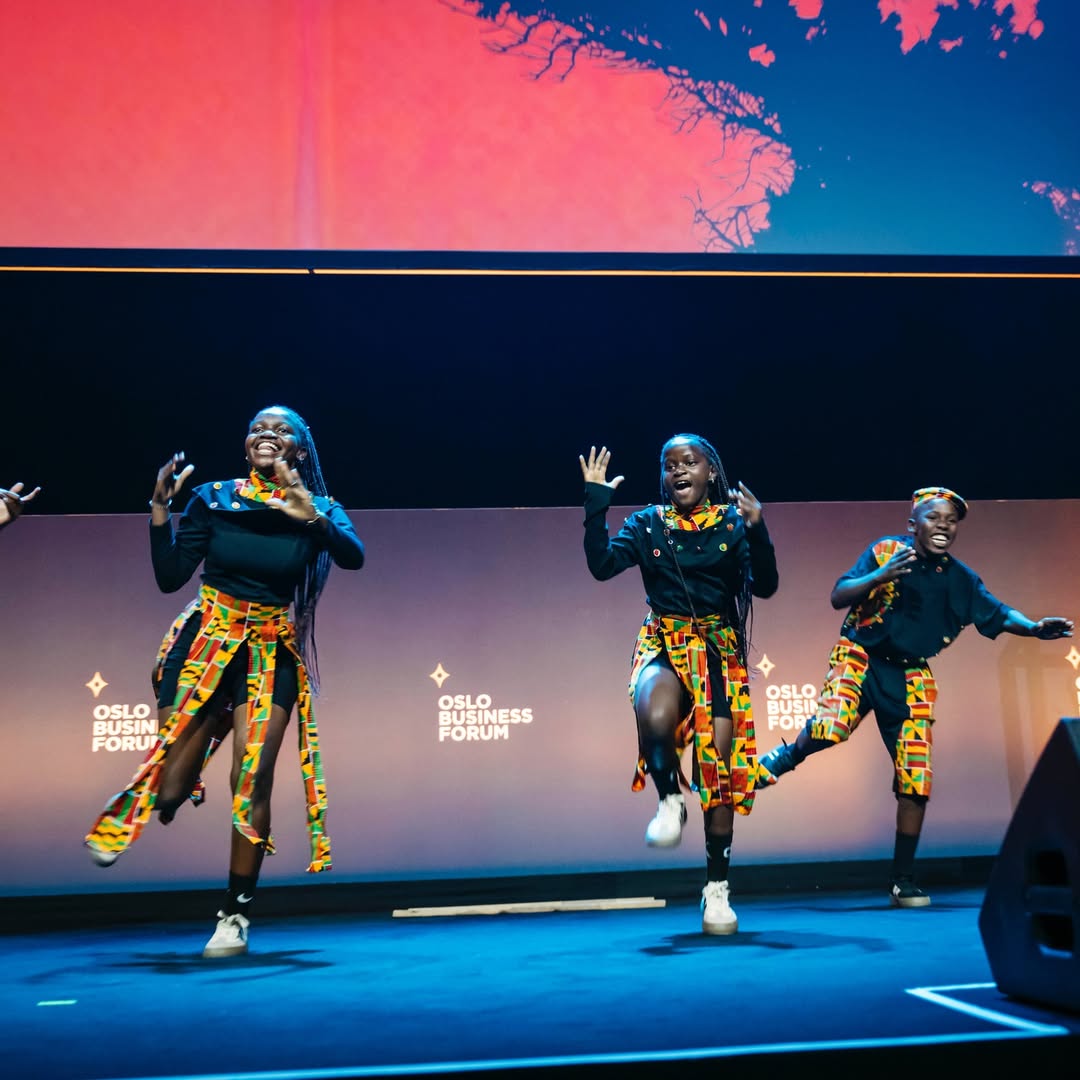
    Three members of the Ugandan dance group Ghetto Kids executing a synchronised mid-air dance routine on stage at the Oslo Business Forum. Photo Credit: Triplets Ghetto Kids/Instagram If you have spent any time on the internet over the last few years, chances are you have come across the Ghetto Kids. The Ugandan dance group’s high-energy performances have a definitive way of stopping people mid-scroll. Recently, the group brought their signature choreography to â€
     

5 Things to Know About Uganda’s Ghetto Kids Ahead of Their 2026 World Cup Final Performance

3 juin 2026 à 22:07
Three members of the Ugandan dance group Ghetto Kids executing a synchronised mid-air dance routine on stage at the Oslo Business Forum.

Three members of the Ugandan dance group Ghetto Kids executing a synchronised mid-air dance routine on stage at the Oslo Business Forum. Photo Credit: Triplets Ghetto Kids/Instagram

If you have spent any time on the internet over the last few years, chances are you have come across the Ghetto Kids. The Ugandan dance group’s high-energy performances have a definitive way of stopping people mid-scroll. Recently, the group brought their signature choreography to “Dai Dai,” the official 2026 FIFA World Cup anthem by Shakira and Burna Boy.

As the world prepares for their upcoming appearance alongside Shakira at the World Cup final halftime show at MetLife Stadium on 19 July, here are five essential facts about the Kampala creators who made it to football’s ultimate stage.

They grew up in the Katwe slums of Kampala

Founded in 2014 by Dauda Kavuma, the Ghetto Kids began in the Katwe slums of Kampala, Uganda. Kavuma’s foundation has provided shelter, nutrition, and education to street children since 2007, using music, dance, and drama as a sustainable pathway to a better life. The group currently supports 60 children between the ages of 4 and 16, all coming from underprivileged backgrounds.

A group portrait of the Ghetto Kids dance group from Kampala posing outdoors in matching green, yellow, and black patterned tracksuits.

A group portrait of the Ghetto Kids dance group from Kampala posing outdoors in matching green, yellow, and black patterned tracksuits. Photo Credit: Triplets Ghetto Kids/Instagram

A viral 2014 video changed everything

The group first secured international attention after a homemade dance routine to Ugandan star Eddy Kenzo‘s hit track “Sitya Loss” went viral online. Their digital footprint expanded significantly in 2017 when they teamed up with Rwanda-born choreographer Sherrie Silver for a routine to Angolan musician Dotorado Pro’s Afro-house track “Marimba Rija,” gathering over 25 million views and establishing a permanent global audience.

They made Britain’s Got Talent history

The Ghetto Kids became a global talking point when they earned a Golden Buzzer mid-performance on Britain’s Got Talent—marking the first time in the franchise’s history that the buzzer was pressed before an act had even finished their routine. The moment introduced their story to a massive European audience and ultimately propelled them to the competition’s finals.

They have commanded global stages for years

Their upcoming stadium performance is part of a long history of high-profile appearances. The group famously featured in French Montana’s multi-platinum “Unforgettable” music video, performed at events during the 2022 World Cup in Qatar, and made their Norwegian debut at the Oslo Business Forum in September 2025. Their accolades include an AFRIMMA Award, a YouTube Creators Award, and official recognition from the Recording Industry Association of America (RIAA).

A member of the Ghetto Kids performing on stage at the Oslo Business Forum against a blue background, lifting a traditional calabash prop.

The Ghetto Kids delivering their debut performance in Norway at the Oslo Business Forum, incorporating traditional African props into their routine. Photo Credit: Triplets Ghetto Kids/Instagram

They are co-starring in the 2026 FIFA World Cup Final

The group’s relationship with Shakira evolved from a viral dance challenge they created for one of her tracks, eventually landing them a featured slot in the official Hannah Lux Davis-directed music video for “Dai Dai” alongside Burna Boy. Now, Shakira has confirmed the Ghetto Kids will join her live on stage at New Jersey’s MetLife Stadium for the halftime show on 19 July—placing the Kampala dancers in front of a global television audience expected to exceed one billion viewers


View this post on Instagram


A post shared by Shakira (@shakira)

The post 5 Things to Know About Uganda’s Ghetto Kids Ahead of Their 2026 World Cup Final Performance appeared first on BellaNaija - Showcasing Africa to the world. Read today!.

  • ✇Music – BellaNaija
  • 5 Things to Know About Uganda’s Ghetto Kids Ahead of Their 2026 World Cup Final Performance
    Three members of the Ugandan dance group Ghetto Kids executing a synchronised mid-air dance routine on stage at the Oslo Business Forum. Photo Credit: Triplets Ghetto Kids/Instagram If you have spent any time on the internet over the last few years, chances are you have come across the Ghetto Kids. The Ugandan dance group’s high-energy performances have a definitive way of stopping people mid-scroll. Recently, the group brought their signature choreography to â€
     

5 Things to Know About Uganda’s Ghetto Kids Ahead of Their 2026 World Cup Final Performance

3 juin 2026 à 22:07
Three members of the Ugandan dance group Ghetto Kids executing a synchronised mid-air dance routine on stage at the Oslo Business Forum.

Three members of the Ugandan dance group Ghetto Kids executing a synchronised mid-air dance routine on stage at the Oslo Business Forum. Photo Credit: Triplets Ghetto Kids/Instagram

If you have spent any time on the internet over the last few years, chances are you have come across the Ghetto Kids. The Ugandan dance group’s high-energy performances have a definitive way of stopping people mid-scroll. Recently, the group brought their signature choreography to “Dai Dai,” the official 2026 FIFA World Cup anthem by Shakira and Burna Boy.

As the world prepares for their upcoming appearance alongside Shakira at the World Cup final halftime show at MetLife Stadium on 19 July, here are five essential facts about the Kampala creators who made it to football’s ultimate stage.

They grew up in the Katwe slums of Kampala

Founded in 2014 by Dauda Kavuma, the Ghetto Kids began in the Katwe slums of Kampala, Uganda. Kavuma’s foundation has provided shelter, nutrition, and education to street children since 2007, using music, dance, and drama as a sustainable pathway to a better life. The group currently supports 60 children between the ages of 4 and 16, all coming from underprivileged backgrounds.

A group portrait of the Ghetto Kids dance group from Kampala posing outdoors in matching green, yellow, and black patterned tracksuits.

A group portrait of the Ghetto Kids dance group from Kampala posing outdoors in matching green, yellow, and black patterned tracksuits. Photo Credit: Triplets Ghetto Kids/Instagram

A viral 2014 video changed everything

The group first secured international attention after a homemade dance routine to Ugandan star Eddy Kenzo‘s hit track “Sitya Loss” went viral online. Their digital footprint expanded significantly in 2017 when they teamed up with Rwanda-born choreographer Sherrie Silver for a routine to Angolan musician Dotorado Pro’s Afro-house track “Marimba Rija,” gathering over 25 million views and establishing a permanent global audience.

They made Britain’s Got Talent history

The Ghetto Kids became a global talking point when they earned a Golden Buzzer mid-performance on Britain’s Got Talent—marking the first time in the franchise’s history that the buzzer was pressed before an act had even finished their routine. The moment introduced their story to a massive European audience and ultimately propelled them to the competition’s finals.

They have commanded global stages for years

Their upcoming stadium performance is part of a long history of high-profile appearances. The group famously featured in French Montana’s multi-platinum “Unforgettable” music video, performed at events during the 2022 World Cup in Qatar, and made their Norwegian debut at the Oslo Business Forum in September 2025. Their accolades include an AFRIMMA Award, a YouTube Creators Award, and official recognition from the Recording Industry Association of America (RIAA).

A member of the Ghetto Kids performing on stage at the Oslo Business Forum against a blue background, lifting a traditional calabash prop.

The Ghetto Kids delivering their debut performance in Norway at the Oslo Business Forum, incorporating traditional African props into their routine. Photo Credit: Triplets Ghetto Kids/Instagram

They are co-starring in the 2026 FIFA World Cup Final

The group’s relationship with Shakira evolved from a viral dance challenge they created for one of her tracks, eventually landing them a featured slot in the official Hannah Lux Davis-directed music video for “Dai Dai” alongside Burna Boy. Now, Shakira has confirmed the Ghetto Kids will join her live on stage at New Jersey’s MetLife Stadium for the halftime show on 19 July—placing the Kampala dancers in front of a global television audience expected to exceed one billion viewers


View this post on Instagram


A post shared by Shakira (@shakira)

The post 5 Things to Know About Uganda’s Ghetto Kids Ahead of Their 2026 World Cup Final Performance appeared first on BellaNaija - Showcasing Africa to the world. Read today!.

Reçu avant avant-hier

MTN Uganda Plans Mobile Money Spin-Off

13 juin 2025 à 12:09
MTN Uganda has shared plans to restructure its mobile money operations through a proposed reorganization of its subsidiary, MTN Mobile...

Source

  • ✇OkayAfrica
  • Justice Delayed Is Justice Denied: Africa Keeps Failing Its Women and Girls
    Women in Africa have been protesting gender-based violence for years, having to amplify their voices to get some justice. The rape of a young girl or the murder of a woman hardly moves the needle of justice until placards of "Stop Killing Us," "EnaZeda," "End Femicide," or "#ShutitAllDown" are raised in outrage. Across South Africa, Kenya, Uganda, Ethiopia, Tunisia, Nigeria, and more, NGOs and women's shelters have had to step up in place of the government to provide aid and fight for justice fo
     

Justice Delayed Is Justice Denied: Africa Keeps Failing Its Women and Girls

12 juin 2025 à 19:55


Women in Africa have been protesting gender-based violence for years, having to amplify their voices to get some justice. The rape of a young girl or the murder of a woman hardly moves the needle of justice until placards of "Stop Killing Us," "EnaZeda," "End Femicide," or "#ShutitAllDown" are raised in outrage.


Across South Africa, Kenya, Uganda, Ethiopia, Tunisia, Nigeria, and more, NGOs and women's shelters have had to step up in place of the government to provide aid and fight for justice for victims of gender-based violence (GBV). However, in recent times, some African countries have taken some measures to combat GBV.

In January, after years of petitions, the South African government announced that it would release the list of sex offenders and those convicted of GBV to the public. Kenya's President William Ruto set up a 42-member task force on GBV and femicide.


In Uganda, the Anti-Female Genital Mutilation Act and the Domestic Violence Act were adopted in 2010 to tackle acts against women and girls. Eight years later, the government created a special court session to rule on cases of sexual and gender-based violence. According to a 2023 report by its judiciary, the conviction rate increased from 20 percent to 70 percent in over 2000 cases.


Despite these actions, some experts say it is increasingly clear that the protection and justice for women and girls remains of low priority to their respective governments. For instance, South Africa's sex offender list is yet to be made public. Sabrina Walter, founder of Women for Change (WFCWFC), says it seems unlikely that it will ever happen.

"The promised release of the public sex offenders list was yet another empty commitment from our government," Walter tells OkayAfrica. "By withholding such critical data, the government becomes complicit in the ongoing violence. They are choosing to protect the privacy of criminals over the safety and rights of survivors."


Withholding this information allows perpetrators to continue causing harm. A sex offender can start working at schools or stay near potential victims without their knowledge, rendering them vulnerable.


A 2024 UNICEF report states that one in five women and girls in Sub-Saharan Africa have been raped or sexually assaulted before turning 18, the highest number of victims globally.

Meanwhile, when victims seek justice, the process is often grueling, financially draining, and fraught with delays. By the time a court reaches a verdict, the families of the victims are frequently left unsatisfied with the outcome. As was the case for Damilola Ayanwole, whose sister, Bamise Ayanwole, was raped and murdered in the state-operated rapid transit bus in Lagos, Nigeria in 2022.


The bus driver, Andrew Nice Ominikoron, was recently sentenced to death for his crimes. But Ayanwole believes that more could have been done to achieve true justice. "The conviction is okay but still needs work," she tells OkayAfrica. "When two or three people commit a crime, and only one of them faces the penalty, it shows we need to reform our judicial system. I gave up everything that belonged to me to fight for my sister. Since February 27, 2022, I have been on this journey, and it has seriously affected me."


However, in South Africa, the court ruling was swifter in Joshlin Smith's case – the six-year-old girl sold by her mother, her mother's boyfriend, and their friend in February 2024. After an eight-week trial this year, the perpetrators (Racquel Smith, Jacquen Appollis, and Steveno van Rhyn) were sentenced to life imprisonment for kidnapping and trafficking. Still, it remains a sad case as Joshlin is yet to be found.

"This case marks a rare moment of justice in a country where most GBV cases drag on for years and often end without accountability," Walter says. "But despite months of investigation, the child has not been found, highlighting yet another devastating failure by the police."


In 2020, South Africa launched the National Strategic Plan on Gender-Based Violence and Femicide, with a ten-year roadmap to create a safe environment for women and girls. Burkina Faso upgraded its National Action Plan on Women, Peace, and Security in 2023 for a two-year duration to prevent violence against women. Similarly, Namibia plans to revamp its old national plan of action on gender-based violence.


Despite policies put in place to tackle GBV in some of these countries, there continues to be an epidemic of violence against women because governments address violence and crimes against women with a surface-level approach. Their policies might look good on paper, but the implementation is often lackluster.


Abiodun Kolawole, a lawyer and human rights activist, believes that the fundamental problem behind GBV is the government's disinterest. "It is a matter of selfishness; they don't care about women," he tells OkayAfrica. "The foundation is weak; our government has failed us all. They serve merely as decorations because, while they excel in theoretical discussions, the essence of law lies in strong implementation. If people do not feel the practical impact, then their performance grade is below F9."

  • ✇OkayAfrica
  • The Best East African Songs Right Now
    April has been a superb month for East Africa's music scene. This month's standout releases are all about bold moves, unexpected collaborations, and deeply personal storytelling, proving once again that the region's artists continue to innovate while staying true to their roots.Tanzania's Jux celebrates love's grandest gesture with "God Design" featuring Nigeria's Phyno, with visuals from his real-life wedding. Kenya's Bien takes listeners on a rare cross-border journey with Somalia's Suldaan Se
     

The Best East African Songs Right Now

1 mai 2025 à 16:15


April has been a superb month for East Africa's music scene. This month's standout releases are all about bold moves, unexpected collaborations, and deeply personal storytelling, proving once again that the region's artists continue to innovate while staying true to their roots.


Tanzania's Jux celebrates love's grandest gesture with "God Design" featuring Nigeria's Phyno, with visuals from his real-life wedding. Kenya's Bien takes listeners on a rare cross-border journey with Somalia's Suldaan Seeraar on "Safari," bridging cultures with a heartfelt collaboration. Uganda's King Saha reflects on the highs and lows of life lived online in "TikTok Life," while Kenya's Bensoul and V-BE toast to the sweetness of love in "Kautamu Flani."

These are just some songs that kept East Africa grooving in April.


Listen to OkayAfrica's Best East African Songs Right Now below.

Jux - "God Design" Feat. Phyno (Tanzania)


Fresh off "Africa's wedding of the year" to Nigeria's Priscilla Ojo, Tanzania's Juma Jux returns with a new track featuring visuals from the actual ceremony. According to Jux, the song is part of his seven-track EP, A Day to Remember, described as "a soundtrack to our love story." "Straight from the heart, for the love of my life," he shared on social media. "Forever starts now." Don't sleep on Phyno's verse.

Bien - “Safari” feat. Suldaan Seeraar (Somalia/Kenya)


Kenya's Bien is gearing up to release a new album, kicking things off with the lead single "Safari," a collaboration with Somalia's Suldaan Seeraar. Despite Kenya and Somalia's shared border, musical collaborations between the two nations are rare. This makes the track a compelling glimpse into the album's direction and Bien's evolving artistry. The album arrives ahead of his upcoming tour across Europe and the U.S. this summer.

King Saha - “TikTok Life” (Uganda)


One of Uganda's finest, King Saha returns with a song that celebrates and laments the experience of living life in front of a phone screen. It reflects digital-age realities, delivered with his signature melodic flair—and it's been steadily climbing the Ugandan charts. Even over a decade in the game, King Saha continues to craft music that speaks to and for the people.

Bensoul - "Kautumu Flani" feat. V-BE (Kenya)


Six months after his hit "Extra Pressure," Bensoul returns with "Kautamu Flani," a new single featuring Nairobi-based duo V-BE (Vijana Barubaru). Since its release, the song has quickly climbed to the top of Kenya's charts. Known for their romantic, soulful sound, V-BE brings their signature vibe to the track, celebrating an unnamed, indescribable sweetness that love brings.

Matata - “Mpishi” feat. Bien (Kenya)


It's been a year since Norway-based group Matata released new music, and they've returned in style with "Mpishi," teaming up with Kenya's hitmaker Bien for a track that has topped the Kenyan charts. Known for their vibrant fusion of rap, Sheng, and Kikuyu influences, Matata's latest release also highlights their colorful aesthetic and infectious choreography, reaffirming their place as one of East Africa's most exciting acts.

Marioo - Tete  (Tanzania)


Marioo is on a roll this year. His hit "Nairobi" remains at the top of the charts, and he is ready to add to that with "Tete."

Toxic Lyrikali - "Confirmation" feat. Mr Ree (Kenya)


After a breakout year in 2024, urban tone-drill sensation Toxic Lyrikali kicks off 2025 with his first single, "Confirmation." Hailing from gritty Nairobi, Toxic Lyrikali has built a loyal digital following with his electrifying stage presence, sharp lyricism, and bold storytelling.

❌