 Connexion
Westcon-Comstor Appoints New Cybersecurity Director For Southern Africa
Global technology provider and distributor, Westcon-Comstor, has announced the appointment of Nicodemus (Nickey) Mannya as Director of Cybersecurity & Next...

Global technology provider and distributor, Westcon-Comstor, has announced the appointment of Nicodemus (Nickey) Mannya as Director of Cybersecurity & Next...

Southern Africa's music scene is currently undergoing an exhilarating renaissance — a vibrant blend of history and boundary-pushing innovation. Across the region, artists are boldly redefining genres, merging the ancestral with the avant-garde, and crafting sounds that resonate far beyond their borders. From South Africa's pulsating electronic beats and razor-sharp lyricism to Lesotho's compelling storytelling and Zimbabwe's infectious dancehall rhythms, this collection of standout tracks reveals a region bursting with creative energy and artistic confidence.
Each artist featured here commands their own unique space, like Ciza's chart-climbing dancefloor anthem, which marries irresistible grooves with cinematic flair; Brotherkupa's fearless reimagining of jiggy rap with a rebellious edge; or Ntate Stunna's gripping narrative follow-up that pushes Lesotho's rap scene into new cinematic territory. The soulful introspection of Moonchild Sanelly, the magnetic swagger of Nasty C, and the genre-defying sounds of Kharishma's Limpopo-rooted lekompo further highlight the rich diversity fueling this creative explosion.
This is a sonic landscape where tradition meets experimentation, where stories of resilience, love, and identity unfold over infectious beats and intricate flows. Collectively, these songs showcase the artistry, innovation, and cultural pride that define the music horizon of 2025.
"Isaka" is an undisputed banger. Since its release in April, the song has climbed the charts, entered the hearts of dance music lovers, and given dance floors another reason to come alive. The Tarryn Tippens-directed video is a lavish display that mirrors the track's energy, allure, and infectious groove, securing its place within the lush and evolving terrain of South African electronic music.
This track is a bold statement from some of Lesotho's most potent artists. Led by Sannere, who is arguably the artist of the moment, "Ho Ba Monna" gathers a constellation of the country's sharpest talents to interrogate the myths and expectations of masculinity in a time that demands truth, vulnerability, and emotional depth. Each voice adds a distinct texture, offering not just musical range but layered perspectives. The result is a timely, resonant anthem that reflects Lesotho's evolving sound and places it squarely within the global conversation.
Jah Prayzah has carved out many musical bags in the many years he's been active in music, and he can twist and turn at any point to reveal a different side of his artistry. "Kuno" was the first release from his new album, Ndini Mukudzeyi. He digs deep to sing his heart out about love, legacy, and the bonds that remain unbroken after life has ended. It's also an assurance to the one left behind that the ancestors see them and know them. Jah Prayzah is a formidable artist.
On "Change," Eswatini emcee Oriiginelle traded lavish bars with South Africa's Zulu Mecca and effectively marked the 'real rap' register with one of 2024's underrated releases. "Nguwe" carries the same jazzy, lo-fi feel and finds a vulnerable Oriiginelle singing her lungs out and stacking harmonies, with lines like "still got so much work, I'm ill-prepared" before busting meticulous raps using flows integrated into some form of a higher power. Jay Jody stays on topic and elevates the song to a super saiyan level, rapping: "But I ain't perfect, ke na le diphoso (I have my own flaws)." This is elegant rap music that will resonate now and forever.
"Lerato," a stirring duet by Botswana's Mpho Sebina and Gabopatwe, is as close as music comes to the sound of joy. Rooted in longing and desire, it's a moody, slow-burning love song that speaks to the sweet surrender that happens when love takes over completely. Sebina's featherlight vocals and razor-sharp pen glide effortlessly over Gabopatwe's delicate, expressive piano work as his fingers trace every emotional contour of the track. It's a luminous offering for lovers everywhere.
Angolan artist Taniâ breathes fresh life into Bernardo Jorge Bangão's classic "Dioguito," transforming the semba staple into a dynamic dialogue between tradition and modernity. Her voice glides effortlessly over the track, weaving nostalgia and innovation, while Francisco Alexandre Pedro's vibrant production injects just the right bounce to keep heads nodding and feet moving. It's a seamless blend of past and present that honors the roots while pushing forward.
About a month ago, a clip surfaced online featuring Kabza De Small and Dlala Thukzin in the studio, cooking up what one can only imagine to be sizzling bangers. Some of the fruits from that collaboration are featured on 031 Studio Camp 2.0, a refreshing approach to electronic music rooted in a deep understanding of spirituality and a future-forward mindset unafraid to break new barriers. "Muthi" is sonic alchemy delivered in Dlala Thukzin's 3-Step grooves, Kabza De Small's unmistakable baselines, and Zeh McGeba's reassuring vocals. We might have another song for the summer with this one.
Kharishma is the moment. Her main occupation? Dishing out hits, which she does superbly. On "Fly High Lekompo," a melodic earworm rooted in South Africa's Limpopo province, she uses the infectious beat as a springboard to showcase the full range of her talent. The result is both catchy and commanding, a clear reminder that she's a force to be reckoned with.
With his debut offering, Sesotho Fashioneng, Ntate Stunna ushered a new age of Lesotho rappers, ones who drew from the innovations of both Famo musicians and rappers of an earlier time, such as Kommanda Obbs and Skebza D. The original "Robari," taken from that album, is a vivid tale of a robbery gone wrong. A series of unfortunate events leaves the protagonist at odds with himself, wondering how he'll escape a situation that now involves police officers. On the Flash Cortez-produced follow-up, Ntate Stunna disregards imminent danger and tries to negotiate with the hostages. "Toronko kapa mokhohlane/ ke re nka mpa ka baleha/ lebaka le nke keng ka tšoaroa, ke tsoile ka parole ene ha ke sa itlaleha, ("Jail or funeral/I'd rather run away/ I can't be arrested, I haven't been reporting for parole/")" he raps, as the cinematic soundscape elevates the song's impact. This is how you do a follow-up.
Shandesh is a rising voice from Limpopo championing the lekompo sound — a genre defined by staccato percussion, synth-heavy production, and the signature use of auto-tune. Popularized by acts like Shebeshxt and Kharishma, lekompo gives voice to the everyday highs and lows of South Africa's youth. With "Sdudla or Slender," Shandesh adds another anthem to his growing catalog, building on the momentum of his 2024 breakout EP Versatile and further cementing his place in the genre's vanguard.
Brotherkupa's aura is currently unmatched. Alongside artists like Mfanatouchline and collectives like The Qwellers, he's ushering in a new era of jiggy raps and outlandish production that borders on disrespect in the best way possible. Here, samples are chopped, sped up, slowed down, reversed, and paired with buzzing 808s. It's an entire vibe. And the streets are responding: his fourth album, Before The Worst, shot to number one on streaming platforms upon release. Echoing the sunshine and glory of Ice Cube's 1992 hit. "Today Is A Good Day" is more than a statement — it's a lifestyle, a religion, and a way of life.
In the animated video for "Magunje," Zimbabwean dancehall stalwart Killer T portrays an easy, carefree life. The song celebrates the finer things, luxuries, and pleasures that, while enjoyable, might still attract trouble with the authorities. Through a series of hilarious incidents, Killer T maintains an energetic flow that drives the song from start to finish, adding to its charm and playful defiance.
South African R&B is in a mighty healthy place right now, with new releases emerging left, right, and center across the burgeoning scene. Lordkez, a staple of this sonic wave, whose reign has blessed us with collaborations with Maglera Doe Boy, Bas, and Shekhinah, shines on "Aweh," a colloquial term for "yo." The vibes are vibing; the choreography by the inimitable Tarryn Alberts is on point, and her command of the music elevates the track to another level.
Every track the Zimbabwean emcee Voltz JT touches turns to gold. With a voice that echoes the gravitas of rap's greats and a mastery of flow that stretches words, flips meanings, and reassembles them into nuggets of inside jokes, prophetic wisdom, and unapologetic badassery, he carries an entire scene on his back. "Medzai Fridge" (Shona for "put it in the fridge") is bass-heavy, raw, unfiltered, and impossible to ignore. Beware of the funk.
Lowfeye and Usimamane butt heads and unleash pure lyrical warfare. Lowfeye sets it up, leaving the slate clean for his counterpart to run wild on the beat. "This how it be, nobody's safe when I step out the house," he declares in the opening line. Usimamane wastes no time, making it clear that every rapper in the game is his offspring. He even slips in a shoutout to Riky Rick before passing the mic back to Lowfeye, who excavates words so jiggy they deserve their own dictionary.
On "Sheleni," Eswatini's Grixxly puts his own spin on the one thing that rules us all: money. Teaming up with Lyrikal Busta and Sarnilo, the fire-spitting emcee trades intensity for ease. The trio glides over the beat with effortless, laid-back flows that make the track feel timeless. It's a smooth, head-nodding anthem that reminds us that sometimes, the best flex is not stressing at all.
If distinctive melodic flows and heavyweight rap bars are your thing, then Lesotho emcee Tieho is about to re-arrange your worldview. His latest release rides a warm synth bed and a chopped vocal sample from Lihoba tsa Matšekha, unfolding into a fully-formed cautionary tale about the fleeting nature of material wealth. Tieho stretches syllables, bends language to his will, and locks into rhyme schemes with surgical precision, all delivered over Emjay Elphy's minimalist but striking production.
Nasty C is the undisputed don of modern South African hip-hop. With a decade's worth of hits to go back on, the artist doesn't seem intent on resting on his laurels. "Psychic" is the rage-inspiring song of the season, a display of the skill that the emcee has mastered over the years. It's full of memorable lines ("I gotta pay, rent/ so don't be nervous baby, hit the link"), the beat is anthemic, with horns that sound like moments before the earth ends, and the vibe is generational, proof that Nasty C is not the one to mess with at any time.
Moonchild Sanelly bares new layers on Full Moon, her most cohesive and emotionally resonant project to date. There's a striking honesty that pulses through the album — a kind of vulnerability that doesn't come overnight but is earned over years of living, breaking, and healing. On "Mntanami," she digs into old wounds, not for nostalgia's sake but to make peace with the past and move forward. The production feels cosmic, bold, experimental, and unmistakably hers. It's the sound of an artist in full bloom.
It's been over a decade since Cassper Nyovest crashed into the mainstream with "Gusheshe," and in that time, he's remained one of South African music's most polarising figures. He's filled stadiums, launched a successful liquor brand, and undergone a spiritual transformation. Now, with "Kusho Bani," he returns to form, firing back at doubters and reminding the game of his staying power and knack for crafting hits. The song has introduced a new language to the cultural lexicon; "hosh kharamima," a phrase that appears in the song, is used by lovers across the board to express their admiration for their significant other.
Sjava's new EP Inkanyezi stands as a singular achievement in South African music. Recorded live during an intimate December 2024 performance, the project comprises entirely unreleased material. His command of the stage, his ability to hold space and guide emotion, is masterful. On "Uyena," he leads listeners through a gospel-tinged journey that blurs the line between concert and communion.
Internet Girl's sound is an edgy mix of pop-rock, trap, and electronica fed through effect pedals, post-teenage angst, and the fleeting state of youth—all delivered through frontman TK's raw, unfiltered, and emotionally resonant lyrics. "Bhati Ntsika, where's your posi?/ they don't understand I got divorced parents/ and to my son I'd be the worst parent," he raps, his voice a fuzzy haze of broken childhood promises and the looming responsibilities of adulthood. Internet Girl is the sound of now.
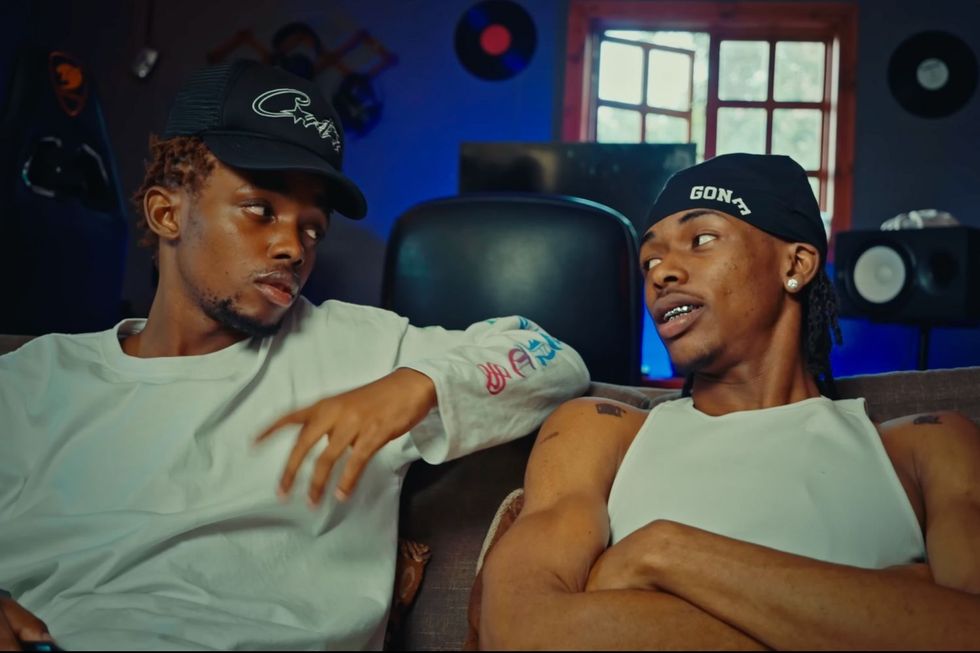
Lesotho's saveHXPE wears his influences on his sleeve. Following up on "Real," released earlier this year, he channels a Kendrick Lamar-esque cadence to magnetic effect. Baby Daiz adds the extra seasoning, elevating an otherwise intimate affair into a rap banger with serious replay value.
Miss out on the best Southern African songs of May 2025? Head to the article for hits from Lesotho, South Africa, and Zimbabwe, and more!


A plane carrying the first batch of white South Africans granted refugee status by the U.S. government landed near Washington, D.C. today, Monday May 12, 2025. The 49 Afrikaner refugees are entering the U.S. at a time when the Trump administration is bent on dismantling most of the country’s refugee resettlement programs and generally laying siege on immigrants and immigration rights.
Earlier this year, U.S. President Donald Trump claimed that South Africa’s government is persecuting its minority white population and proceeded to sign an executive order stopping all financial aid to South Africa. Trump also offered resettlement to white South Africans, and about 70,000 people reportedly indicated interest in relocating to the U.S. as refugees.
The first batch of refugees is part of a “much larger-scale relocation effort,” according to White House Deputy Chief of Staff Stephen Miller. The Trump administration’s acceptance of Afrikaner refugees is the latest escalation of its strained relationship with South Africa, even though its stance is partly based on gross misinformation.
While many white South Africans have ridiculed the idea that they need to be rescued and seek asylum in the U.S., the Trump administration has made the refugee program for Afrikaners a priority. This is happening at a time when refugees and protected immigrants are having their rights to remain in the U.S. revoked.
Last month, the U.S. Department of Homeland Security (DHS) announced that it would not renew the temporary protected status (TPS) of some 7,900 Cameroonians. TPS, granted to people from countries dealing with armed conflicts and other dire circumstances, is routinely renewed every 18 months. The decision to end the TPS designation for the thousands of affected Cameroonians could lead to forced removals from the U.S. by late June.
Over half a million migrants from Afghanistan, Cuba, Haiti, Nicaragua, and Venezuela have had their TPS designation revoked.
Also, last month, the U.S. government announced that it had revoked the visas of all South Sudanese and placed travel restrictions on the East African country. It cited South Sudan’s unwillingness to accept the return of its citizens in “a timely manner.” South Sudan’s government had initially rejected the deportation of an individual from the U.S., stating that the person was from Congo.
However, following strong words from U.S. Secretary of State Marco Rubio, South Sudan accepted the deported individual, hoping to undo the visa revocation announcement, which didn’t happen. South Sudan, the world’s youngest country, is in danger of plunging into another civil war, and the visa revocation endangers the lives of those who successfully sought asylum in the U.S. and could be forcefully deported.
Trump’s stance towards Africa (and the global south) has mainly been antagonistic. He infamously referred to African countries as “shithole” countries during his first term. This makes the extension of refugee status to white South Africans a curious case, if not disturbing.
South Africa’s former ambassador to the U.S., Ebrahim Rasool, was expelled by the American government after he suggested that white supremacy plays a role in Trump’s relationship with South Africa.
According to a draft list, 22 of the 43 countries that could face travel restrictions to the U.S. are African countries. Libya, Somalia, and Sudan are among eight countries that could face an outright travel ban. Eritrea, South Sudan, and Sierra Leone would face travel restrictions, and citizens from 16 other African countries would need two months to clear serious security checks.


With Sabbatical, writer and director Karabo Lediga mines a memory to produce a no-holds-barred critique on the strangers we become once we leave home to establish our own lives. Lesego (played by the impressive Mona Monyane) is on track to become CEO at the financial firm she works for when an investigation threatens to upend her aspirations. She wakes up in her childhood home following a heavy night, and what unfolds is an up-close view of a life becoming undone.
"I had a really invasive surgery while living alone in Joburg. At the time, I didn't have anyone to take care of me post-surgery because I had a six-week recovery. I had to go home to my mom," Lediga tells OkayAfrica, adding that the period felt like a re-examination of her relationship with her mother.
Lesego's mother, Dorothy, played by the decorated, acclaimed Clementine Mosimane, who is nothing like Lediga's mother, fondly holds on to the memories of her daughter as a child. She is confident in the version of Lesego that exists in her head, a version corroded by the passage of time; this is where the conflict arises.
"We have two different cultures now because of apartheid. I had to go and learn Whiteness, and [my mother] worked hard for me to attain that. But I came back home as a foreigner, so I was really interested in examining that generational gap, which I think is very common in the global South, where people are immigrants. However, we're immigrants in our own country when we go to Whiteness and leave our homes," says Lediga.
Over a day, Lesego discovers that she is under investigation at work and that her bank accounts have been frozen. Panic ensues as she tries to undo the damage quickly taking root, leaving her mother confused and in the dark. Lesego decides to lay low for a bit, hoping that the smoke clears.

There were things Lediga was intentional about throughout the film, small details that contribute to the greater story. For instance, Lesego's mother knocks and enters her room while she's still dazed and confused, trying to figure out what is happening. She makes two universally applicable comments — one about unopened curtains and windows, and another about how late in the day it is for her daughter to still be asleep.
"There's a certain respectability that is interesting to me and that a lot of people of my generation and younger break. It's a cause for conflict, which is great for film. I'm also obsessed with nostalgia because it can be neat and romantic. It's how we remember stuff, but it's not always factual," says the director.
Being a black woman on television sets means that Lediga, who has just over two decades of experience as a writer, director, and sometimes actor on South African television classics such as the Pure Monate Show and Bantu Hour, has to consistently watch her own back by paying attention to the slightest detail. She brought this keen eye into Sabbatical, her directorial debut for a full-length feature film.
"I was very deliberate about creating the entire visual deck on my own," continues Lediga. "It's a great opportunity, to be exact, not to try to freestyle too much. It can sometimes put you in a corner, but it's good if you can be malleable. I think it's good to be prepped."
Lediga says that she wanted to distinguish between Lesego's work world, which is plush but cold and unwelcoming, and her home, which is warm and filled with distorted recollections of old events. "Much of it was borrowing from family albums, which I use a lot. Even not being too wide in the frame of the old world. It's almost like going through an album," she says.
The world of independent filmmaking requires an unrepentant attitude, an unshakable self-belief, and an abundance of community. Lediga reached out to this community about her film; her brother Kagiso Lediga's production company, Diprente, took this project on, and regular collaborators such as Loyiso Gola and Chris Forrest.


We’re getting deeper into the year, and the music releases keep piling up. For April, our bag packs treats from Eswatini, Lesotho, Angola, Zimbabwe, and beyond. Tap in and make sure to update your listening habits with the awesomeness we have.
Internet Girl’s sound is an edgy mix of pop-rock, trap, and electronica fed through effect pedals, post-teenage angst, and the fleeting state of youth—all delivered through frontman TK’s raw, unfiltered, emotionally resonant lyrics. “Bhati Ntsika where’s your posi?/ they don’t understand I got divorced parents/ and to my son I’d be the worst parent,” he raps, his voice a fuzzy haze of broken childhood promises and the looming responsibilities of adulthood. Internet Girl is the sound of now.
Jah Prayzah has carved out many musical bags in the many years he’s been active in music, and he can twist and turn at any point to reveal a different side of his artistry. “Kuno” is the first release from his forthcoming album, Ndini Mukudzeyi. He digs deep to sing his heart out about love, legacy, and the bonds that remain unbroken after life has ended. On “Uzuyi Bheke,” he features South African rapper illRow, who details the struggle one faces when trying to escape street life and go on a straight and narrow path.
On his debut album, Ingoma Busuku, multi-layered vocalist Paras Sibalukhulu Dlamini finds a delicate sweet spot that swings between Zulu vocal traditions advanced by the likes of Shaluza Max and Mbuso Khoza, and an undefined, new territory that he can get to own with time. He also gathers a heavy set of cats to help him advance his vision. Nduduzo Makhathini handles production duties, while a cast of musicians from across South Africa, Switzerland, and France completes the cipher. “Yobe” sets the tone for meditative reflections on spirituality, tradition, and what it means to be an African in the modern age.
Angolan artist Taniâ updates Bernardo Jorge Bangão’s classic, “Dioguito.” In her hands, the semba classic morphs into a cultural counterpoint that brings the old and new together. Her voice floats effortlessly, while Francisco Alexandre Pedro’s production adds the bounce necessary to keep head bopping.
About a month ago, a clip surfaced online featuring Kabza De Small and Dlala Thukzin in the studio, cooking up what one can only imagine to be sizzling bangers. Some of the fruits from that collaboration are featured on 031 Studio Camp 2.0, a refreshing approach to electronic music rooted in a deep understanding of spirituality, and a future-forward mindset unafraid to break new barriers. “Muthi” is sonic alchemy delivered in Dlala Thukzin’s 3-Step grooves, Kabza De Small’s unmistakable baselines, and Zeh McGeba’s reassuring vocals. We might have another song for the summer with this one.
“Autumn leaves are falling, hear me out I’m calling,” sings Eswatini-based artist Sarnilo on her latest release, “Autumn.” In the Tru Hitz-produced song, the artist utilizes her sultry voice to confess her feelings as she glides effortlessly on the song’s gospel chords.
Lesotho’s Thope tse Khang are household names, made famous by their daring, provocative lyrics and addictive famo melodies. “Lerato” is taken off their second offering since signing to the Universal Music Group in 2024. Titled Ha E Lume, it’s a four-track collection of the material the group has come to be known for.
Voltz JT is an emcee’s emcee. He has the vocal tone to command audiences, and the lyrical content makes him one of the dopest coming from the African continent right now. “Crisis” details the difficulties people from different corners of the world are experiencing right now; salaries don’t increase, only the cost of living does.
On ” Pharadise,” revered artist and producer K.O dips into his emotionally charged bag (see: “Skhanda Love,” “Hate Love”) to unearth a beacon of hope for hustlers in the city of Johannesburg. “And my patience is running low; I wanna know,” he raps, taking the position of someone who has to suffer at the hands of these hustlers. Young Stunna, who also appeared on one of K.O’s biggest songs, “Sete,” adds his spiritually-tinged flavor on the chorus, begging and pleading to his creator to give him the power to overcome. “Pharadise” is the last single until his fourth studio album, Phara City, drops this June. In a statement, the rapper described the work as “a mirror held up to our lives, reflecting the raw, beautiful chaos we navigate every day.”
