 Connexion


👨🏿🚀TechCabal Daily – DStv tests out weekly payments

Wazzup!
How much do you know about technology in Francophone Africa? What are the region’s most important startups or crucial policy developments around tech innovation? We’re excited to partner with Lina Kacyem, Investment Manager, Launch Africa Ventures to introduce a web-only newsletter about tech in Francophone Africa.
Lina has almost twenty years of experience in various sectors of the financial industry and is the co-founder of the angel network, Next Millennia Angels. As an investment manager, Lina leads investments in Francophone Africa and will bring decades of first-hand experience, insider insights and analysis of the region’s technology landscape into curating a newsletter that will help you and our wider audience learn about the tech innovation, policy, culture, and economy as it unfolds in Francophone Africa.
Expect a dispatch every two Tuesdays, beginning tomorrow. Sign up here.
Streaming
DStv’s weekly subscription test: A new chapter in pay-TV?
We’ve heard Multichoice’s 9% year-on-year revenue decline in the recently ended financial year. We’ve heard of their 1.2 million decline in subscribers. Now, we are hearing that the pay-TV giant has quietly started testing weekly subscription plans in Uganda for the last seven weeks.
Users can now pay weekly, instead of paying for a full month. If this trial gains traction, it could spread to the company’s other markets in the coming months.
Why the sudden change? The short answer: people aren’t paying like they used to. Tough macroeconomic situations have made many users cut back on pay-TV, and DSTV wants to adapt. Weekly payments might feel less heavy for users.
What does this mean for viewers? In addition to weekly payments, this move means there’s some flexibility on the horizon, but not full control. MultiChoice still doesn’t believe in customers building their bundle by choosing channels. However, it is exploring an offering where customers could get a base product and then add channels to it. This is in line with its recent plan to unbundle SuperSport from its offerings.
Zoom out: If weekly plans catch on, could they replace monthly plans? Would paying week by week turn out to be cheaper, or become more expensive over time? Could this move bring back old users or lure people away from Netflix and other streaming services?
It’s still in its testing phase, but it is clear that DStv knows it has to evolve or risk being left behind.
Join Fincra for an Exclusive Networking Mixer at iFX Expo, Cyprus.
Fincra is co-hosting “AI-Powered Fintech and Blockchain” at iFX Expo, Cyprus, with Quidax. Join the brightest minds in fintech and blockchain for insightful panels & networking. Limited spots – RSVP here.
Get the best African tech newsletters in your inbox
Mobility
Tesla, the popular EV company, has opened an office in Morocco
It looks like Elon Musk wants to lock in again.
After months of playing right-wing politics and being buddies with US President Donald Trump, Musk, the CEO of Tesla, has decided to turn his focus back on his companies.
In his first move after his very public, messy exit from the White House, Musk’s Tesla, the company which makes electric cars, has opened an office in Casablanca, Morocco, with an initial investment of $2.75 million. This is the first time the electric car company will enter an African country—and it’s an interesting play.
Tesla will make and sell its electric cars in Morocco, along with providing energy solutions like charging stations, solar panels, and photovoltaic technologies.
With a presence in Africa, Tesla can control the launch, distribution, and after-sales services of its cars in the market. This is a value chain it previously controlled remotely from the US. People didn’t just steer clear of buying a Tesla because of the lack of infrastructure (South Africans buy electric cars), but the lack of boots on the ground made them second-guess Tesla. This will change things.
But why Morocco? Tesla likely chose Morocco for its strategic location; the region offers a window into the rest of Africa—with cheaper duty-free exports—and also gives the mobility company the opportunity to export to Europe, Gulf countries, or the rest of the Middle East.
Again, with Trump’s “big, beautiful bill” threatening to cut EV subsidies—which have made Tesla cars affordable for Americans over the years—the car company could be looking elsewhere for growth opportunities.
Tesla is entering a $2.56 billion shared mobility market where longtime competitor, China’s BYD, already exists. In Morocco, Renault, Dacia, and Hyundai sell the most cars due to their low-cost maintenance, yet EV demand—especially for e-bikes—is growing.
Whether Tesla will start making e-bikes is something we cannot answer yet, but our guess is it will try to create demand for its cars. If you’re a Moroccan reading this newsletter, this news will make you happy. This author’s dream car is a Tesla.
Order physical Paga cards, spend with confidence.
Tired of declined payments? Avoid the side-eyes at the cash till with Paga’s physical prepaid card. Designed to give you control, security, and ease. Fund and spend with confidence. Get yours today!.
Startups
Moove eyes $1 billion valuation with planned $300 million raise
From Lagos to Miami, Moove is on the move to become a unicorn.
The Uber-backed Nigerian startup wants $300 million, a cash injection that could drive its valuation over the $1 billion mark, earning it a unicorn badge.
“What’s this $300 million for?” See it as fuel for the next lap. Moove is growing (and expanding) at breakneck speed. The company’s revenue has climbed to $360 million from $115 million in just a little over a year. In January, it acquired Kovi, a Brazilian urban mobility provider that finances ride-hailing drivers, marking its footprint in Latin America.
The acquisition came after Moove’s partnership with Waymo, a self-driving vehicle division, to manage fleets of autonomous vehicles in US states, including Phoenix, Arizona, and Miami, Florida.
If you don’t know Moove: This startup buys cars with bank loans and offers them to Uber drivers through a drive-to-own model—meaning the drivers can pay for the cars with part of their earnings until they eventually own them.
The new capital will power its expansion ambitions and strengthen its US operations, pushing it further into the world of self-driving cars. This isn’t just another startup trying to bulk up on funding. Moove is plotting a full-blown global takeover, from Lagos to London, and to Waymo robo-taxis in the US.
Where the road leads for Moove: Although the company’s current agreement with Waymo is limited to fleet management, it plans to purchase AV-enabled cars from manufacturers and lease mini-fleets of robotaxis to individuals or businesses. Moove’s ambition is to become a key player in the autonomous mobility ecosystem.
If Moove lands this $300 million, it will possibly become a key infrastructure layer for autonomous vehicles, signalling that African-born startups can lead in shaping global tech infrastructure, not just participate in it.
Stay up to date with the latest Paystack news!
Subscribe to Paystack for a curated dose of product updates, insights, event invites and more. Subscribe here →
Get the best African tech newsletters in your inbox
Cryptocurrency
CBEX Ponzi scheme: Nigerians need regulators to save them from themselves
It’s sad that despite multiple media reports, warnings, and red flags, many Nigerians are still hooked on CBEX, the Ponzi scheme that took the country by surprise in April.
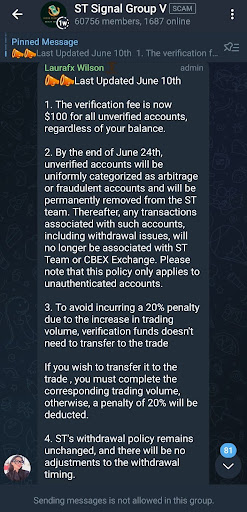
After freezing withdrawals, CBEX is now asking users to pay a $100 “verification fee” to get their money back.
This makes no sense. A platform that owes you money shouldn’t ask for more. It’s like charging people to unlock the door you already locked from the outside. Classic Ponzi behaviour.
Remember Racksterli? The platform collapsed in 2021, then returned with a dummy site asking users to keep engaging. People kept paying in, but no one got paid out.
Our theory on CBEX is simple: the money is gone. And in its final days, it’s trying to squeeze more out of desperate users to “pay them back.” And sadly, some are still falling for it. According to engagements seen in Telegram groups, users who pay the fee are added to a “private” group to talk to CBEX admins about repayments.
The shuffle of Nigerians toward predatory schemes like CBEX—stemming from greed or desperation at this point—is driven by a deep-rooted lack of financial education. CBEX promised steady monthly returns from crypto futures trading. But if you know anything about trading, you know returns are never guaranteed.
Regulators need to step up. The Securities and Exchange Commission (SEC), for example, could work with telecom operators in the country to block access to known Ponzi websites like CBEX. It might not solve everything, but it could slow the damage.
For now, CBEX says it will pay 50% of debts by June 25. Fingers crossed, but the Ponzi platform remains a ticking time bomb.
Introducing, The Naira Life Conference by Zikoko
This August, the Naira Life Con will bring together wealth builders, entrepreneurs, financial leaders, and everyday Nigerians to share their experiences with earning, managing, and spending money. Think: bold conversations, immersive workshops, and content tracks that hand you a playbook for building real wealth. Get early bird tickets now at 30% off only for a limited time.
CRYPTO TRACKER
The World Wide Web3
Source:
|
Coin Name |
Current Value |
Day |
Month |
|---|---|---|---|
| Bitcoin |
$106,617 |
+ 0.72% |
+ 2.95% |
| Ether |
$2,610 |
+ 2.44% |
+ 4.75% |
| Hosico |
$0.02566 |
+ 11.91% |
+ 16.92% |
| Solana |
$157.35 |
+ 7.21% |
– 6.37% |
* Data as of 06.45 AM WAT, June 16, 2025.
Job Openings
- Cowrywise — iOS Software Engineer — Lagos, Nigeria
- Moniepoint — Business Development Manager — Lagos, Nigeria
- CredPal — Product Manager — Hybrid (Lagos, Nigeria)
- Grey — Frontend Engineer, Fullstack Engineer, Multi-Platform Mobile Engineer, Financial Accountant — Remote (Lagos, Nigeria)
- Mono (Internships) — Business, Technology, Commercial — Lagos, Nigeria
There are more jobs on TechCabal’s job board. If you have job opportunities to share, please submit them at bit.ly/tcxjobs.
Written by: Opeyemi Kareem and Emmanuel Nwosu
Edited by: Faith Omoniyi
Want more of TechCabal?
Sign up for our insightful newsletters on the business and economy of tech in Africa.
- The Next Wave: futuristic analysis of the business of tech in Africa.
- TC Scoops: breaking news from TechCabal
P:S If you’re often missing TC Daily in your inbox, check your Promotions folder and move any edition of TC Daily from “Promotions” to your “Main” or “Primary” folder and TC Daily will always come to you.