Vue normale

Reçu avant avant-hier
  • ✇WeeTracker
  • 5 Times African Businesses Fought People For Bad Reviews And It Backfired
    Some customers write a bad review. Sometimes a brand fights back. And sometimes, the fight becomes headline news. In an era where a single tweet, TikTok, or Facebook post can dent a brand’s reputation, some African companies have taken “defending their name” to extremes; dragging customers and critics to court, threatening multimillion-dollar suits, or even involving police. From tomato paste makers and biscuit brands to beauty labels
     

5 Times African Businesses Fought People For Bad Reviews And It Backfired

16 septembre 2025 à 14:01

Some customers write a bad review. Sometimes a brand fights back. And sometimes, the fight becomes headline news.

In an era where a single tweet, TikTok, or Facebook post can dent a brand’s reputation, some African companies have taken “defending their name” to extremes; dragging customers and critics to court, threatening multimillion-dollar suits, or even involving police.

From tomato paste makers and biscuit brands to beauty labels and smartphone giants, these five African companies turned what should have been minor customer complaints into full-blown legal battles, and in the process, showed just how thin the line is between defending reputation and torching it.

Here are real cases revealing the perilous line between protecting reputation and silencing dissent:

1. Erisco Foods vs. Chioma Okoli (Nigeria)

In September 2023, Chioma Okoli, a consumer in Lagos, posted a Facebook review claiming that Erisco’s Nagiko Tomato Mix tasted “too much sugar”.

What followed was a chain of legal actions. Erisco filed a petition, the Police arrested Okoli, and the matter turned into a full-blown court case.

Erisco’s CEO, Eric Umeofia, made some forceful statements:

“I am pursuing legal charges against her because I have a conscience. Is she right to falsely criticise my product, and people are supporting her?,” he fumed. “I have over 3000 people in my factory; indirectly, we are paying 20,000 people. I cannot allow this type of ‘syndicate’ to come and destroy my business.”

Okoli’s legal representation countered strongly. She has threatened to demand NGN 500 M (~USD 334 K at current rates) from Erisco for violation of her human rights, saying the company’s actions went far beyond what is reasonable.

The saga has become a lightning rod in Nigeria for debates about weaponising cybercrime laws to muzzle legitimate consumer criticism.

This case also highlighted the potential for the Cybercrime Act in Nigeria to be used in defamation or “misinformation” cases, raising concerns among consumer rights advocates, activists, and legal experts about the chilling effects on legitimate criticism.

2. Nuvita Biscuits vs. TikTok Reviewer (Kenya)

Back in 2018, Kenyan TikTokers and Facebook users began complaining that Nuvita’s biscuits were “shrinking” in size while prices rose.

When a popular content creator posted a sarcastic video showing a tiny biscuit in her palm, Nuvita hit back. They issued public denials, flagging takedown requests, and allegedly pressuring the influencer’s agency to silence her.

The dispute escalated into public rows, removal requests for ads, and reported attempts to pressure or discredit the critic, a classic example of a brand pushing back at a consumer’s public review and commentary.

Rather than quelling the backlash, Nuvita’s combative stance supercharged it, with memes, boycott hashtags, and coverage in Kenyan business outlets dissecting its PR blunder.

The incident became a textbook cautionary tale for Kenyan marketers on the dangers of escalating snarky reviews into corporate vendettas.

3. Van Deventer Inc vs. Sizwe Mdakane (South Africa)

In 2023, a South African law firm, Van Deventer Inc, attempted to use the courts to silence a former client, Sizwe Mdakane, after he posted a negative review of the firm’s service on Google Reviews.

Mdakane complained that the advice he received from junior practitioners at the firm was poor. The firm believed this criticism “implied it was unprofessional, dishonest and untrustworthy,” and sought a court order to force the removal of the post and restrain Mdakane from making further comments.

The Gauteng High Court rejected the application. Judge Stuart Wilson, in his ruling, stressed that what matters in defamation isn’t necessarily the intent of the critic, but how a “reasonable reader of ordinary intelligence” would interpret the statement. He found that Mdakane’s comments, while critical, did not meet the legal threshold for defamation that justifies gagging speech.

The judgment was hailed by legal commentators as a landmark win for consumer speech in South Africa.

4. Native Child Africa vs. Beauty Influencer (South Africa)

In 2021, South African haircare brand Native Child Africa sought an interdict (court injunction) against a local beauty influencer who had posted Instagram Stories calling its products unsafe.

The company argued the posts were false and defamatory; the court granted an interim interdict forcing the influencer to stop posting any further criticism pending full trial.

Consumer-rights groups criticised the move as “corporate censorship via lawfare,” warning it could chill honest product reviews.

The case underscored how South African defamation law can be used pre-emptively to muzzle critics, even before any full evidence hearing.

5. OPPO Kenya vs. AIfluence / Influencers

A more modern twist on review-based conflict is playing out in the influencer economy. In early 2025, OPPO Kenya sued the marketing agency AIfluence over a dispute triggered by content creators who claimed they were not paid for their work promoting OPPO’s Reno12 series campaign.

Influencers like Flaqo Raz publicly shared that they had created three months’ worth of content in only two weeks under pressure from OPPO and AIfluence, only for payments to be delayed or not delivered, even five months later.

OPPO Kenya insists it fulfilled its obligations to AIfluence, making an initial 50 % down payment, then the remaining 50% once work was complete, on 25 October 2024.

Still, with unpaid influencers complaining, OPPO filed suit alleging defamation and brand damage due to the agency’s failure.

The earlier mentioned Flaqo, put it plainly: “How you both have handled the influencer team is absolutely disappointing and downright shameful.”

OPPO insists it paid AIfluence in full and accused the agency of defamation for letting unpaid influencers tarnish its brand.

The post 5 Times African Businesses Fought People For Bad Reviews And It Backfired appeared first on WeeTracker.

  • ✇OkayAfrica
  • In Her Debut Novel, Esther Ifesinachi Okonkwo Expands the Nigerian Immigrant Experience
    When Nigerian writer Esther Ifesinachi Okonkwo first arrived in America to further her education, she was 23 and a fog sat at the edge of her mind. It was a kind of fog characterised by inexperience, and the acute awareness of that inexperience. "I was trying to figure out who I was. I felt that there was something that I should know that I did not know, and that frustrated me a lot," Okonkwo tells OkayAfrica. "There were so many things that were so unclear to me, and then they began to unwrap
     

In Her Debut Novel, Esther Ifesinachi Okonkwo Expands the Nigerian Immigrant Experience

22 juillet 2025 à 18:12


When Nigerian writer Esther Ifesinachi Okonkwo first arrived in America to further her education, she was 23 and a fog sat at the edge of her mind. It was a kind of fog characterised by inexperience, and the acute awareness of that inexperience. "I was trying to figure out who I was. I felt that there was something that I should know that I did not know, and that frustrated me a lot," Okonkwo tells OkayAfrica. "There were so many things that were so unclear to me, and then they began to unwrap themselves slowly."


It is from this feeling of existential cluelessness that she created the emotional composition of Somkelechukwu, the main character in The Tiny Things Are Heavier, her stunning debut novel about a Nigerian immigrant woman and her convoluted journey towards self-discovery.

When we first meet Somkelechukwu, who is affectionately referred to as Sommy in the book, she is entering a new country and a new life. In her early twenties, Sommy is at once in awe of everything in this new world and also seriously disoriented by the life that has thrust her into it.


The book, which will resonate with fans of Chimamanda Ngozi Adichie's Americanah and Nicole Dennis-Benn's Patsy, follows Sommy's journey as she navigates life as a graduate student, studying a course she has little interest in, but that provides an anchor away from a life she has been told she must stay away from. The story takes place between Lagos and Iowa, touching on themes of grief, listlessness, belonging, and identity.


In Tiny Things, Okonkwo writes with impeccable observation of the quirks that define human nature. Nothing escapes her sharp gaze, from the way a character perceives the smell in their space to the way monumental events disrupt their self-perception.

Okonkwo's writing is often taut and skillfully restrained, even when dissecting a seemingly minor detail for long paragraphs. Her ability to transform small complications into compelling philosophical arguments is masterful and impressive. It's what makes this book wise and thoughtful. Also present is Okonkwo's understanding of how national tragedies impact the lives of young Nigerians.

"The book started to form for me during the #EndSARS movement," Okonkwo explains. "I then began to think about the ways that these sorts of big structures can shape your life, can shape the way you love, can shape the way you interact with people, and can even shape the chemicals in your brain."

Okonkwo's work joins a list of many art pieces that have been born from the #EndSARS protests that claimed the lives of many Nigerians who were shot at by military officers. What Okonkwo does in her debut is settle on the disappointment and sense of despair that comes from living in a country without systems, a country that has its hands on your back, pushing you to run as far as you can.

A coming of age


On the face of it, "The Tiny Things Are Heavier" could be described as a story about migration. It does feature a lot of movement and the feelings of displacement that come with it. A closer look, however, will reveal that migration functions here as a feature, rather than the heart of the story. More pressing are issues of human character: how do we perceive ourselves and our capacity to be good or bad, the book asks. Who are we when cultural expectations no longer shape our identity?

Sommy's ability to have her leg between two worlds shifts her sense of privilege and her sense of self. While in the United States, she is forced to grapple more with why she chose to leave and who she has become as a result of that, and back home, she is faced with the guilt of one who has found a way out. With steady emotional agility, the book shifts between Sommy's complicated relationship with her brother, Mezie, who influences much of her emotional maturity, an even more complicated relationship with her partner, Bryan, with whom she shares a life-altering connection, and her nonexistent relationship with herself.

It's what makes this book a skillfully crafted bildungsroman. "I just didn't want this to be a migrant novel," Okonkwo explains. "I wanted it to be a person trying to move from young adulthood to maturity."


Throughout the book, Sommy faces varying emotional and situational challenges in a way that upsets traditional categorizations of good and bad behavior. In this book, Okonkwo says she aimed to dissect not the categorization of behavior but its ability to exist outside the binary. "I wanted her to go through all that is required to get to an understanding of yourself."

Okonkwo's work arrives at a delicate time in both the U.S and Nigerian politics. Like many of the characters in this book, there is a restlessness among young Nigerians that is drawing their gaze away from their own homes. And in the U.S, stricter immigration policies are bringing up questions of who gets to have a better life and at what cost?

By making the characters exhibit both unkindness and care towards each other, Okonkwo highlights that special ability of humans to live with contradictions.


"I want people to lean into the ugliness of being human. I think that we are so preoccupied with purity in a world that is so impure," Okonkwo says. "Look at the world and look at the things that are happening in the world and the decisions that people are making. They don't come from one big evil act. These are little tiny choices that people make that then lead to all of this sort of destruction that we see. And I think that there is a tendency for us to shy away from those small evils."

Before writing this book, Okonkwo had pieces published in Guernica, VQR, Catapult, and other places. Writing this book was transformative for Okonkwo. Written over the course of four years, Okonkwo, who graduated from the Iowa Writers' Workshop and was a recipient of the Elizabeth George Foundation Grant, wrote herself through a difficult time in her life. "I was terribly unhappy," she says. "I had not seen my family in a long time because I couldn't afford to travel as much as I'd like. My father was ill at one point. I couldn't go back to see him. Normal life challenges, but most of them I had to sort of figure out alone." It was from those feelings of stress and relentless unbelonging that she infused her characters with depth.

At its core, Okonkwo hopes that this book speaks to the times, but also to the complexity of the human condition. "I want us to be more comfortable with our mistakes, owning them, then working to change them."

  • ✇OkayAfrica
  • For Many Ghanaians, President John Mahama Is off to a Great Start
    In January of this year, President John Mahama was inaugurated as the 14th President of Ghana. During his inauguration speech, Mahama, who was taking over from former President Nana Akufo-Addo, emphasized the country's need for urgent reforms. "For some time, our country has urgently needed leadership with an unwavering desire to get things done," he said in his speech.President Mahama's win in the 2024 elections was a historic demonstration of voting power and an expression of widespread discon
     

For Many Ghanaians, President John Mahama Is off to a Great Start

2 juillet 2025 à 20:01


In January of this year, President John Mahama was inaugurated as the 14th President of Ghana. During his inauguration speech, Mahama, who was taking over from former President Nana Akufo-Addo, emphasized the country's need for urgent reforms. "For some time, our country has urgently needed leadership with an unwavering desire to get things done," he said in his speech.


President Mahama's win in the 2024 elections was a historic demonstration of voting power and an expression of widespread discontent towards the previous administration. In his campaign, Mahama’s promises centred on policies around revitalising the Ghanaian economy and trimming the government.

Upon resumption, Mahama developed a social contract — a list of policies and developments expected to have been completed or implemented within his first 120 days in office. The contract, in 26 key points, promised amongst many things, to promote exports, implement the famous 24-hour economy proposition that was at the forefront of his campaign, scrap infamous taxes like the e-levy and COVID-19 levy, known to increase cost of doing business in Ghana, create a lean and cost efficient government and launch the Black Star Experience a culture, arts and tourism outfit reminiscent to the Year Of Return campaign launched by the previous administration.


So far, many Ghanaians say the administration is gradually honoring that contract. While it is typical for a new administration to have a relatively smooth start, Mahama's administration began at a time when Ghana was going through one of its worst economic crises. Inflation was high, and Ghana's exchange rate was performing poorly. In six months, he has trimmed down ministries in a bid to reset the country. Meanwhile, the Ghanaian Cedi has seen a commendable appreciation against the dollar. Upon entering office, the cedi was 14 to a dollar; now it sits at 10 cedis to a dollar owing to a range of economic reforms.


"Most of the key economic indicators are moving in the right direction," Caleb Wuninti Ziblim, an economic analyst, tells OkayAfrica. "We have seen some stability in the exchange rate, ease of inflation, and signs of growth. That is a strong footing."


Edem Kojo, a financial commentator and media practitioner, agrees. "It's been an impressive start. The economy has seen some stability, and people seem to have greater confidence in the management of the country," Kojo says to OkayAfrica. "Also, the President seems to be up and running with what many term his legacy term."

Different time, same playbook?


On the ground, opinions about Mahama's current administration are treated with a level of caution. During his first tenure, he was criticised for failing to deliver on many of his campaign promises. Critics say high levels of economic challenges, unbearable inflation, and infrastructural issues marked his previous administration. Others say he is rectifying that reputation.

So far, Mahama has removed the E-levy tax as promised and launched investigations into former government officials accused of misconduct. "Hopefully it doesn't end at just uncovering it, but uncovering and jail time for culprits," Nana Kojo Mula, a writer and publicist who describes the first six months of Mahama's administration as a breath of fresh air, tells OkayAfrica.

While many of his policy changes are yet to translate into a lower cost of living, some issues have seen improvement. "The drop in fuel prices has had a great impact on my monthly expenses," Antoinette Boama, a legal practitioner, tells OkayAfrica. "I used to spend between 800 and 1200 Cedis weekly on fuel, but in the last month and a half, I spent between 500 and 700 weekly. Not ideal, but at least we know that if our leaders want things to work, they will work."

Experts say Mahama's winning strategy lies in his proactive and receptive approach to governance.

"For instance, despite introducing an ESLA levy increase, which went against what the 2024 budget initially indicated, the government quickly suspended it after the Israel–Iran conflict began, citing the need to shield Ghanaians from further hardship. That kind of responsiveness is rare and commendable," Ziblim, the economic analyst, says.

This responsiveness is also evident in the constitutional reforms and policies that dragged on during the previous administration. "This administration appears serious about pushing through some long overdue amendments. The speed with which they have revived the process is promising," says Ziblim.

A long way to go


With three and a half years to go, Mahama still has time to prove the strength of his current style of governance while fulfilling his promises. For many Ghanaians, the primary pain points revolve around stabilizing the economy, reducing the cost of living, and ensuring that policies have a trickle-down effect on utilities and everyday commodities.

Media personality Emmanuel Kwame Sarpong hopes that the current administration will focus on addressing galamsey, an illegal mining issue that is destroying precious water bodies and causing health problems. "While campaigning, he promised us a complete revocation of LI 2462 (the environmental protection regulation), which allowed mining of any kind in forest reserves. Unfortunately, it has been a slow and shaky approach, especially with the latest development in parliament, where the aforementioned regulation has only been amended," Sarpong tells OkayAfrica.

Ghana also has a vibrant creative community that Sarpong hopes will see infrastructural support from this administration. According to him, this support would help bridge earning gaps and ensure Ghanaians have improved access to global earning tools. There is also the matter of reducing the cost of data and internet access, a costly commodity in the country. "The Communications Minister has hinted at works underway to reduce the high cost of internet despite MTN's near-monopoly. We are looking forward to seeing the manifestation of the real plans to regulate pricing or promote competition," he says.

Additionally, economists like Ziblim believe that the Ghanaian industrial sector needs a complete overhaul. Ziblim notes that the previous administration's One District, One Factory initiative was poorly designed and didn't yield desired results. "Much of the current economic momentum is driven by high gold prices, but we are still exporting raw gold. If we refined and processed it locally, we would retain more value, create jobs, and stabilise forex inflows," he says.

With so much at stake for Mahama, not merely because this is his second try at presidency but also his legacy tenure, which will define the rest of his political reputation, the energy on the ground is one of cautious hope. One that is being sustained by the current administration's responsive approach to the needs of the Ghanaian people. As Sarpong puts it, "It feels like the country we once loved again."

  • ✇Musique Archives - Africa Top Success
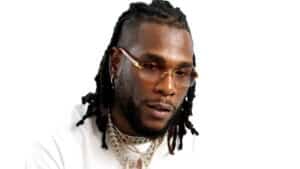
  • Burna Boy électrise Chicago : rendez-vous au United Center le 1er décembre 2025 à 20h30
    Le phénomène afro-fusion Burna Boy, couronné aux Grammy Awards, s’apprête à faire vibrer le United Center de Chicago dans le cadre de sa tournée mondiale « I Told Them… ». La plus grande salle du Midwest accueillera ce show spectaculaire, promesse d’une soirée mémorable. Ne manquez pas votre chance d’y assister Les billets sont dès … L’article Burna Boy électrise Chicago : rendez-vous au United Center le 1er décembre 2025 à 20h30 est apparu en premier sur Africa Top Success.
     

Burna Boy électrise Chicago : rendez-vous au United Center le 1er décembre 2025 à 20h30

Le phénomène afro-fusion Burna Boy, couronné aux Grammy Awards, s’apprête à faire vibrer le United Center de Chicago dans le cadre de sa tournée mondiale « I Told Them… ». La plus grande salle du Midwest accueillera ce show spectaculaire, promesse d’une soirée mémorable. Ne manquez pas votre chance d’y assister Les billets sont dès …

L’article Burna Boy électrise Chicago : rendez-vous au United Center le 1er décembre 2025 à 20h30 est apparu en premier sur Africa Top Success.

❌