Vue lecture

Today in Africa — July 28, 2025: RSF Forms Parallel Government in Sudan, Cameroon Bars Main Opposition Leader From Presidential Race, US Says South African Refugee Program Is for Whites Only


Every day, OkayAfrica shares a roundup of news we’re following but haven’t published as full articles. These short updates cover what’s happening on the continent — in culture, politics, and beyond. For more on stories like these, be sure to check out our News page, with stories from across the regions.

RSF Forms Rival Government in Sudan as Conflict Deepens, Famine Spreads


Sudan’s Rapid Support Forces (RSF) and allied rebel and political groups have named General Mohamed Hamdan Dagalo head of a new 15-member presidential council, effectively creating a parallel government to rival the military-led administration. Announced Saturday from Nyala in RSF-controlled Darfur, the lineup includes Abdel Aziz al-Hilu as deputy and Mohamed Hassan al-Taishi as prime minister, alongside regional governors for contested and army-held areas. The army, led by General Abdel Fattah al-Burhan, has condemned the move and vowed to continue fighting until it secures control of the entire country.

The announcement follows a February pledge by the RSF and its allies to form a secular “New Sudan” and challenge the army’s legitimacy. Both Dagalo and Burhan are under U.S. sanctions — Dagalo for alleged genocide, and Burhan for rejecting peace talks. The country remains locked in a devastating 27-month war that has killed tens of thousands and pushed half the population toward hunger and famine, according to the UN.

Cameroon Election Board Blocks Main Opposition Leader From Presidential Race as Biya Seeks Seventh Term


Cameroon’s main opposition leader, Maurice Kamto, has been barred from running in the October 12 presidential election, according to a list released Saturday by the electoral commission, ELECAM. No explanation was given for excluding Kamto, who placed second in the 2018 vote and was widely seen as President Paul Biya’s strongest challenger. Thirteen candidates were approved, including Biya. Kamto has two days to appeal the decision.

The move has sparked fears of unrest, with heavy security deployed across the capital, Yaoundé, and the economic hub Douala. The UN warned Friday that the announcement could trigger protests. Biya, 92, is the world’s oldest serving head of state and has been in power since 1982. His long tenure has been marked by corruption allegations and a violent separatist conflict in Cameroon’s Anglophone regions.

Trump’s South Africa Refugee Program Questioned After U.S. Says Only Whites Qualify


A July diplomatic cable from the U.S. embassy in South Africa reveals internal confusion over President Donald Trump’s refugee program for South Africans, which originally prioritized white Afrikaners facing alleged discrimination. Embassy officials asked Washington whether other minority groups — such as Coloured South Africans and Khoisan people — could qualify. The response from a senior U.S. State Department official indicated the program was intended for white applicants, contradicting the agency’s public statements that broader racial minorities are eligible.

Since Trump’s executive order in February, 88 white South Africans have been resettled under the program, with more expected soon. Critics say the policy reflects far-right claims of white persecution and undermines the U.S.’s broader refugee approach. South Africa’s government rejects the idea that white South Africans are being systematically targeted, while some Jewish and Coloured South African families have already shown interest or been admitted. The State Department has yet to clarify who officially qualifies for this designation.

Christopher Nolan Slammed for Filming in Occupied Western Sahara Amid Repression Fears


British American filmmaker Christopher Nolan is facing backlash from Sahrawi activists and the FiSahara film festival for shooting scenes of The Odyssey in Dakhla, a city in occupied Western Sahara. Critics say the production helps whitewash Morocco’s decades-long military occupation and repression of the region’s Indigenous people. FiSahara says filming in a place where Sahrawis are barred from telling their own stories undermines their struggle for self-determination and normalizes human rights abuses that the UN and Amnesty International continue to document. The film stars Lupita Nyong’o, Zendaya, Matt Damon, Charlize Theron, Anne Hathaway, and others.

U.S. Suspends All Visa Services in Niger, Citing Government Concerns and High Overstay Rates


The U.S. embassy in Niamey has halted all routine visa processing, immigrant and non-immigrant, amid rising diplomatic tensions with Niger’s junta-led government. While official and diplomatic visas are still being handled, an internal cable now instructs embassies to scrutinize all applicants from Niger more closely, citing high overstay rates, especially among student visa holders. The move follows last year’s U.S. troop withdrawal from Niger and forms part of a broader Trump-era immigration crackdown led by Secretary of State Marco Rubio.

ISIS-Linked Rebels Kill 38 Worshippers in Church Attack in Eastern Congo


At least 38 people were killed and 15 injured in a brutal attack on a Catholic church in Komanda, eastern DRC, early yesterday morning, Sunday, July 27. City officials say the assailants were members of the Islamic State-backed ADF rebel group, who stormed a night mass with guns and machetes. Several people remain missing. A local human rights activist said victims were mostly Christians gathered for overnight prayers. The UN mission in Congo condemned the surge in violence in the region, which has been plagued by repeated attacks from armed groups.

Overloaded Boat Capsizes in Niger State, 13 Dead and Dozens Missing


At least 13 people died and dozens are missing after a wooden boat carrying about 100 passengers capsized on Saturday, July 26, in Niger state, north central Nigeria. The passengers were on their way to a local market when the overloaded boat went down. Emergency officials rescued 26 people, mostly women and children. The boat driver survived but couldn’t confirm the total number onboard. Boat accidents are common in the area, which is home to Nigeria’s major hydroelectric dams. Rescue efforts briefly paused yesterday, Sunday, July 27, for a river ritual before recovery resumed.

Al-Shabab Seizes Strategic Somali Town After Suicide Blasts and Troop Pullback


Al-Shabab fighters captured the town of Mahaas in central Somalia yesterday, Sunday, July 27, after suicide explosions and heavy gunfire forced government troops and allied militias to withdraw. Located in the Hiraan region, Mahaas had been a key base in Somalia’s fight against the extremist group and was under government control for over a decade. A local intelligence official was reportedly killed, but full casualty numbers remain unclear. The loss of the town highlights ongoing challenges in Somalia’s counterterrorism efforts despite recent gains by federal forces.

Ghana Sends Troops to Bawku as Chieftaincy Violence Escalates, Students Killed


Ghana has deployed more soldiers to the northeastern town of Bawku following a deadly flare-up in the decades-long chieftaincy dispute between the Mamprusi and Kusaasi communities. The violence last week left a local Kusaasi chief and three high school students dead, prompting the government to impose a curfew and bolster security. Presidential spokesperson Felix Kwakye Ofosu said recent killings had disrupted near-final mediation efforts by the Asantehene and called for “drastic actions” to contain the unrest. The region, near the Burkina Faso border, remains tense.

Mali’s Ex-PM Choguel Maïga Probed for Alleged $3.3M Public Funds Misuse


Mali’s former Prime Minister Choguel Maïga is under investigation for alleged embezzlement and irregular spending amounting to nearly 2 billion CFA francs ($3.3 million) during his tenure. The probe, led by the Office of the Auditor General, focuses on questionable project inauguration costs and mission-related payments. Judicial authorities are reviewing the “Choguel Maïga Files,” which could lead to his questioning by the Supreme Court. Maïga’s supporters claim the case is politically motivated due to his outspoken criticism of the military-led government, while allies warn he holds his own evidence to challenge the accusations.

  •  

Today in Africa — June 13, 2025: Cholera Spreads From Sudan to Chad, President Bola Tinubu’s Ogoni Pardon Rejected, Teen Sues Parents for Sending Him to Ghana


Every day, OkayAfrica shares a roundup of news we’re following but haven’t published as full articles. These short updates cover what’s happening on the continent — in culture, politics, and beyond. For more on stories like these, be sure to check out our News page, with stories from across the regions.

Cholera Crisis Deepens in Sudan, WHO Warns of Spillover Into Chad Refugee Camps


The World Health Organization has raised alarms over the rapid spread of cholera in Sudan, warning the outbreak could cross borders into neighboring Chad, where nearly 300,000 Sudanese refugees live in overcrowded, unsanitary camps. The disease has reached 13 Sudanese states and killed at least 1,854 people, with high transmission risk fueled by war-damaged infrastructure and the onset of the rainy season. WHO officials say the situation is especially critical in Darfur, near the Chad border, where surveillance is low and mass vaccination efforts are hindered by ongoing conflict and lack of humanitarian access.

The WHO is calling for urgent investment in prevention, mass vaccinations, and the creation of humanitarian corridors to avoid a regional health catastrophe. In Chad, suspected cases near the border town of Geneina have sparked fears of an imminent outbreak. Officials stress that unless funding and international support ramp up fast, refugee populations weakened by war and displacement face a devastating new threat.

Tinubu’s Pardon of Ogoni Nine Rejected by Activists Demanding Full Exoneration


President Bola Tinubu’s posthumous pardon of the Ogoni Nine, including renowned writer Ken Saro-Wiwa, has been flatly rejected by Ogoni activists who say the gesture falls short of justice. The group was executed by Nigeria’s military regime in 1995 for protesting Shell’s oil pollution in the Niger Delta. Activists argue that a pardon implies guilt and insist on full exoneration, calling the pardon “insulting” and demanding accountability from the Nigerian state for decades of environmental and human rights abuses in Ogoniland.

The pardon, announced yesterday on Democracy Day, is widely seen as a symbolic gesture, but critics say it coincides with Tinubu’s push to resume oil drilling in the region, despite unresolved environmental damage. Local leaders warn that true reconciliation must begin with restoring the legacy of the Ogoni Nine and giving the community a real say in its land and resources. Shell has long denied wrongdoing, and activists maintain that the core issues of pollution, displacement, and justice remain unresolved.

Teen Wins Right to Rechallenge Parents Who Sent Him from UK to Ghana Against His Will


A 14-year-old boy who was sent from London to Ghana by his parents without his consent has won a major legal victory in the UK Court of Appeal. The teenager had been told he was visiting a sick relative, only to find himself enrolled in a Ghanaian school. His parents claimed they acted out of love, trying to shield him from gang involvement in London. But the boy, who described his life in Ghana as “hell,” took legal action to return to the UK, arguing he feels abandoned and culturally alienated.

The High Court initially sided with the parents, but the Court of Appeal has now overturned that ruling, stating the original judge failed to fully consider the boy’s maturity and best interests. The case will be reheard by a new judge. Lawyers say the decision is a landmark moment in international family law, as it underscores the need to center children’s voices in legal decisions that deeply impact their lives.

Lesotho Garment Industry Reels as U.S. Tariff Threat Triggers Factory Shutdowns


Thousands of garment workers in Lesotho are facing unpaid layoffs after U.S. buyers pulled back orders, fearing a possible 50 percent import tariff under the Trump administration. Once protected by African Growth and Opportunity Act (AGOA) trade terms, Lesotho’s clothing exports, 80 percent of which go to the U.S., are now in limbo, with many factories suspending operations for at least three months. Union leaders warn that up to 20,000 jobs could be lost, and the government says it has no resources to provide support. While some factories cling to South African orders, others are preparing to shut down or relocate. A final U.S. decision on the tariffs is expected by July 8.

Somalia Tells Donors: Stop Treating Us Like a Transitional State


Somalia has formally called for the dissolution of the C6+ coordination group — a body of international donors and partners formed after the country’s civil conflict — arguing that it no longer reflects Somalia’s political progress or sovereign status. In a letter to the UN and major stakeholders like the US, UK, AU, and EU, the government declared that it has functioning institutions, a democratic system, and a clear national vision. The statement also reiterated Somalia’s readiness to continue cooperation, but strictly on state-to-state terms, not under legacy oversight frameworks.This assertive shift comes as President Hassan Sheikh Mohamud’s government faces pressure over political reforms and upcoming elections. It also follows Somalia’s earlier push to close the UN political office in the country. Behind the scenes, diplomatic tensions are rising, especially with the US and UK, over issues like national reconciliation and opposition boycotts. Somalia’s latest move signals a deepening demand for control over its political trajectory — and could reshape how international aid and diplomacy operate in the country.

Tinubu Denies One-Party State Ambitions Amid Defections and Backlash


President Bola Tinubu has rejected claims that Nigeria is veering toward a one-party system, following a wave of defections from opposition parties to the ruling All Progressives Congress. Speaking on Democracy Day, Tinubu said he opposes any shift away from multiparty democracy. But critics, including the opposition PDP, accuse him of using state power to pressure rivals into switching sides. Protesters in Lagos slammed the government for corruption and misrule, while some APC members also warned that a dominant-party system would threaten Nigeria’s democratic future.

US Scales Back Military Role in Africa, Urges Local Ownership of Security


The US is pulling back its military footprint in Africa, shifting focus toward homeland defense and encouraging African nations to shoulder more of their own security. General Michael Langley, head of US Africa Command (USAFRICOM), says the goal is “burden sharing,” but analysts warn the change could leave a power vacuum, emboldening extremist groups and undermining years of counterterrorism progress.

The move comes amid global competition, with China and Russia ramping up their security partnerships on the continent. While some see this as a chance for Africa to take charge, experts argue that most countries still lack the resources and infrastructure to handle these challenges alone. As US priorities pivot, the question is whether African nations will be ready or left vulnerable.

UK Soldier Accused of Rape in Kenya Allegedly Assaulted British Woman, Not Kenyan


The UK Ministry of Defence has confirmed that the woman allegedly raped by a British soldier near the British Army Training Unit in Kenya (Batuk) last month is British, not Kenyan as initially reported. The soldier was arrested, repatriated to the UK, and is under investigation by the UK Defence Serious Crime Command. The Batuk base, located near Nanyuki, has faced years of controversy, including the unresolved 2012 murder of Agnes Wanjiru, a Kenyan woman whose body was found in a septic tank. A public inquiry in Kenya has since revealed a pattern of misconduct by British troops, from alleged abuse to abandoned children fathered by soldiers.

  •  

Four African Teams Are Headed to the First-Ever 32-Team FIFA Club World Cup in the U.S.


For the first time in the history of the FIFA Club World Cup, four African clubs will take the global stage when the expanded tournament kicks off in the United States on Sunday, June 15. Al Ahly (Egypt), Wydad Casablanca (Morocco), Espérance de Tunis (Tunisia), and Mamelodi Sundowns (South Africa) will represent the continent in what is being billed as a new era for club football.


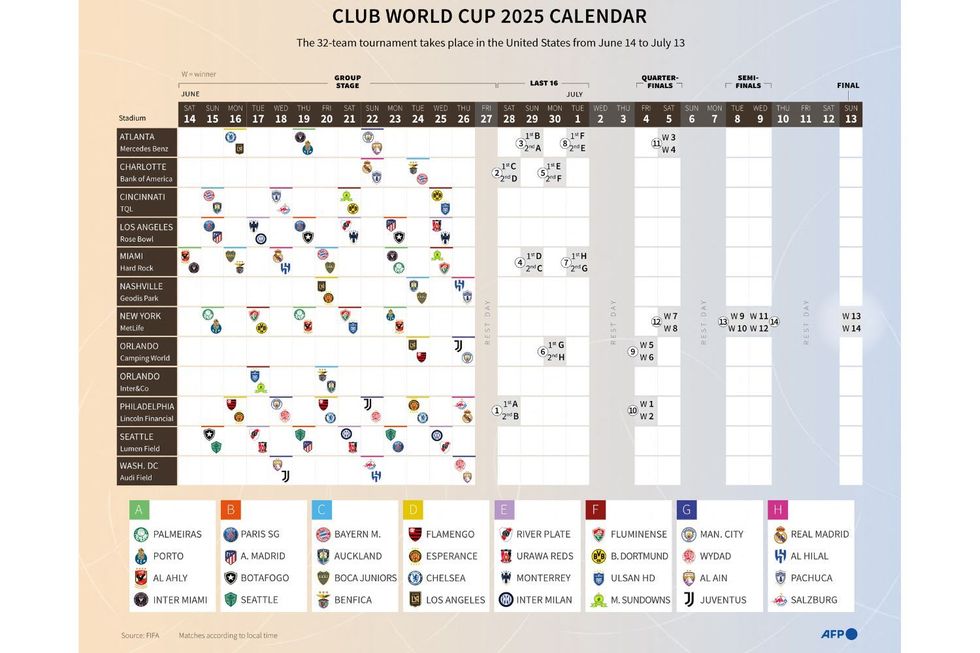
The Club World Cup isn't new — it's been around since 2000 — but this year is different. The tournament has been supersized. Instead of seven teams and a quick knockout format, 2025's edition features 32 clubs, a group stage, and a month-long run across 11 U.S. cities. It ends on July 13 in East Rutherford, New Jersey, where Nigerian star Tems will headline the tournament's first-ever halftime show. Sixty-three matches. Sixty-three chances for clubs outside Europe and South America to prove they belong.

Africa has never had more than one team at a time in the Club World Cup. That changes this year. For decades, the continent's champions showed up, played one or two games, often against vastly better-resourced clubs, and went home. The two exceptions? The Democratic Republic of Congo's TP Mazembe's stunning run to the final in 2010 and Morocco's Raja Casablanca's underdog story that saw the team make it to the 2013 final. Neither team won, but both defied expectations and reminded the world that African clubs are not just here to participate.

Now, four of the continent's most dominant teams are in the mix, and they're not just going for the experience. They're playing for serious money and long-overdue respect. The four African teams are guaranteed at least $9.55 million just for qualifying, which is more than double the $4 million prize for winning the African Champions League. The same applies to clubs from Asia, North America, Central America, and the Caribbean. In contrast, South America's clubs will all get $15.21 million for qualifying, and the European clubs will receive qualification payments from $12.81 million to $38.19 million.


A win in the group stage earns an additional $2 million; a draw, $1 million. The ultimate winner takes home $40 million.

Al Ahly, the most decorated club in Africa, opens against Inter Miami and Lionel Messi. Espérance, back in the tournament for the first time since 2019, is drawn into a tough group with Chelsea, Flamengo, and LAFC. Wydad starts against Manchester City before facing Juventus and Al Ain. Sundowns will meet Borussia Dortmund, Ulsan HD, and Fluminense.


Espérance coach Maher Kanzari says he expects his team to play its matches "with passion and enthusiasm. The most important thing is that we honor the shirt – both Espérance's colors and the name of Tunisia itself." FIFA president Gianni Infantino says the new tournament marks "a new era of football." That future includes Africa, but not equally. While UEFA sends 12 teams and CONMEBOL sends six, CAF gets just four. Hersi Said, chairman of the African Club Association, says that needs to change. "We need to push for more numbers in the next editions," he told the BBC. "It's a platform we need to showcase our potential."


A graphic displays the full match schedule and venues for the 32-team 2025 FIFA Club World Cup taking place across the U.S. from June 14 to July 13.

Back on the global stage


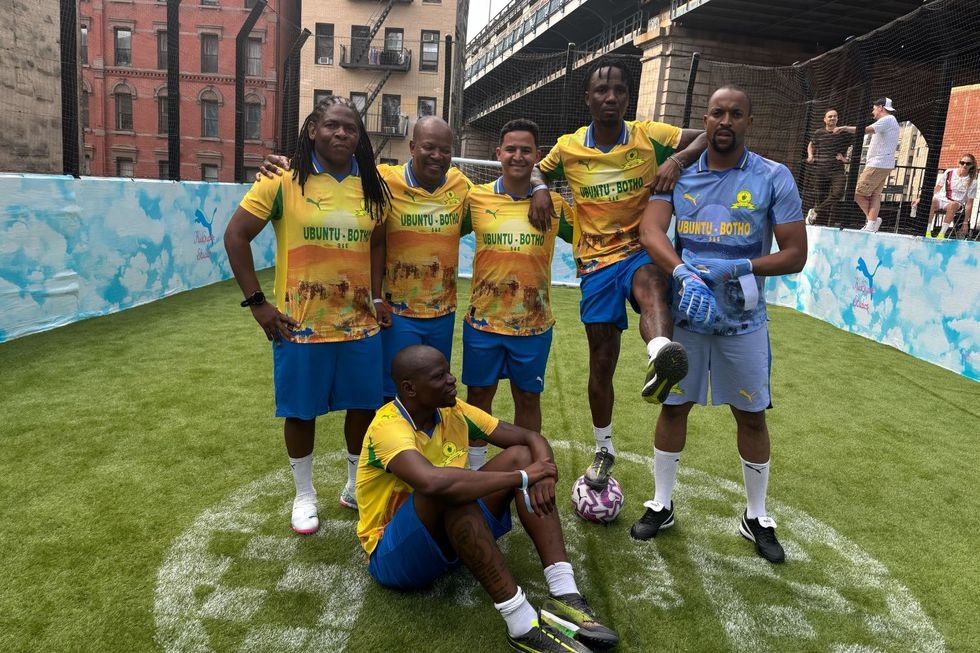
OkayAfrica caught up with Mamelodi Sundowns legends Hlompho Kekana, Tiyani Mabunda, and Teko Modise yesterday in New York City. The three were part of the Sundowns team that played in the 2016 Club World Cup. Yesterday, June 12, they took part in a rooftop four-a-side tournament that also featured teams representing Manchester City and Borussia Dortmund.

"Unbelievable for us as Mamelodi Sundowns, South Africa, to be right here again in the Club World Cup," Mabunda tells OkayAfrica. "This time, I'm coming to support the boys, just to give them that extra courage. Where they are now, it's a global stage."


Sundowns finished sixth out of seven in 2016. Now, with a stronger squad and deeper international experience, there are bigger expectations. "We do have a better team this time around," says Modise. "Look at the teams that are part of the Club World Cup. Those are teams that you normally never had an opportunity to play against. It's good for the boys to check themselves as to how far they are," he tells OkayAfrica.

More than a tournament


The expanded format doesn't just bring visibility. It brings questions. Can this global spotlight elevate African domestic leagues? Can it boost investment in infrastructure, training, and talent pipelines? Will the massive prize money filter back into African football systems, or will it simply serve as a payday for a few top-tier clubs?

The stakes are especially high for Sundowns. Backed by Patrice Motsepe, South African mining billionaire and President of the Confederation of African Football (CAF), the Pretoria-based club has dominated the local Premier Soccer League for years. But success at home hasn't always translated to global recognition. "This is a great experience for the club," Kekana tells OkayAfrica. "It's a platform to showcase what they've got in Africa. The world will know more about South African football now."

For Kekana, the expanded tournament means one thing: opportunity. "The playing field is now leveled. The opportunities that the other teams got, we finally got them. It's about time that we show the world what we've got."


A group of former Mamelodi Sundowns players pose together on a rooftop football field

Carrying the continent


The four African clubs aren't just representing their cities or countries. They carry the hopes of a continent that has long been underrepresented in global club football.

"African football is a conversation all over the world now," says Modise. "We've been internationally recognized, and to see many teams coming into the USA to represent Africa, it's dope. It's something that we've been fighting for."


Each former player OkayAfrica spoke with emphasized the importance of not just participating but also showing up and making a statement. "Play so that when you look back, you can say, I really enjoyed my time," Modise says. "These moments don't come often."


The bigger picture


For young Africans watching, four teams from the continent being in the tournament sends a clear message. Your dreams can go global, not just as a player but as part of a club making waves internationally. "African players have shown all over the world that we're good," says Kekana. "We've got talent. We've got what it takes to win a major tournament."

The next few weeks will reveal whether African clubs can not only compete but also dominate. Whether they advance or not, one thing is clear: they belong.

  •  

Op-Ed: Stop Guilt-Tripping African Women into Motherhood


“Who will take care of you when you’re old?” “What’s the point of all your success if you have no one to inherit it?” “But what is your purpose on this earth?”


These are the kinds of questions my friends get asked almost every time they reveal that they do not have children and don’t want them. My friends aren’t confessing some shameful secret. They’re sharing a firm, well-considered decision. But in African communities, they are treated as strange, even offensive. It is as if motherhood is a group project, and opting out is a betrayal.

Across Africa and its diaspora, more women are choosing not to become mothers. Some are child-free by choice. Others are childless, facing infertility, miscarriage, or life circumstances beyond their control. And instead of being offered understanding or respect, they are often met with judgment, suspicion, and pity.

This needs to stop.

On a day like Mother’s Day — when we celebrate the joys and labor of parenting — we should also challenge the narrow definition of womanhood that centers on childbearing. We should interrogate the idea that motherhood is every woman’s destiny, or her only path to value.

Because it isn’t.

We are not here simply to reproduce


I’m a mother. I chose motherhood. I love my children deeply and cannot imagine my life without them. If I had to live my life again, I’d choose them every time. They bring me joy, purpose, and a love that defies language. But that is my path. It is not every woman’s, and I have no right to expect that other women follow it just because I did.

I have friends, intelligent, warm, loving women, who have chosen not to become mothers. Their lives are whole. Their relationships are rich. Their homes are happy. Yet, they are routinely treated as if they are a threat to tradition, as if something is missing. When an African woman says she doesn’t want children, we act like she’s broken. But what if she’s whole and doesn’t need anything else added to her life? In what world is it okay to ask anyone, “But what is your purpose?” Why do we still deny women the agency to define their purpose?

Child-free vs. childless


The difference matters.

A child-free woman is someone who has chosen not to have children; this is not about delay, infertility, or loss. It is a conscious, often radical choice in cultures where motherhood is compulsory.

A childless woman, on the other hand, may want children but is unable to conceive. She might be grieving, healing, or trying while enduring the same cruel questions from strangers, relatives, and even close friends.

In African communities, the difference is often ignored. Both groups are treated with suspicion or scorn. In South Africa, Zulu songs like “Gabi gabi mfazi ongazalanga” — a taunt that loosely translates to “Eat your heart out, childless woman” — mock women without children, turning their circumstances into targets for gloating and ridicule. People say they are “selfish” or “too modern,” as if women owe their wombs to tradition. Even worse, these women are shamed for not having children.

This policing of women’s bodies, through unsolicited questions, gossip, or social exclusion, is not just rude, it’s oppressive.

The weight of reproductive discrimination


Dr. Sizakele Marutlulle, a South African academic and strategist, has done powerful research on reproductive discrimination. She found that Black South African women who are child-free face judgment not just from society but also within their own families and workplaces. Her thesis explored how women navigate the stigma of being child-free, calling for cultural sensitivity and policy change.

“In my family, when my nieces get married and I want to join in the counselling session, I am told the women can only speak to her, because I’m branded a non-woman,” she said in an interview with the Sunday Times. “So the idea that being a mother is what makes me a woman is hugely problematic.”

Her findings are sobering: child-free women are seen as immature and are sometimes passed over for promotions because they are perceived as lacking responsibility. They’re expected to be constantly available and rarely considered in workplace policies.

“In this country, we had a thing called bring a child to work. So I go to HR and say I’m child-free. Can I take it as a leave day then? No, I can’t. Okay, so then, because you’re not recognising me, what do you want me to do?” she says. “We need to find a way of altering policy in the workplace so you can start to allow for a diversity that includes reproduction diversity.”

The global and local shift


Kenyan women are undergoing sterilization in growing numbers to affirm their child-free status, rejecting the assumption that all women want children. Kenyan YouTuber Muthoni Gitaus video, where she discusses her decision to undergo tubal ligation and be child-free, has over 20,000 views. The comment section is full of women supporting her decision, some even saying they got the courage to have their tubes tied after watching her video.

In Nigeria, platforms like Amaka Studio have highlighted stories of women defying pressure to “produce children for their husbands.” And in South Africa, child-free women are increasingly rejecting societal expectations and defining their lives on their own terms.


These women are not anomalies. They are part of a growing global and continental shift, a quiet revolution of autonomy. A Pew Research Center survey found that 44 percent of American non-parents aged 18 to 49 say it’s “not too” or “not at all” likely they will ever have children, citing reasons ranging from personal preference to concerns about climate change and the environment.

The unspoken reasons we push motherhood


Let’s be honest. Why do we expect women to have children?

To keep a man? To fulfill religious or cultural expectations? To avoid shame or pity? To guarantee a built-in retirement plan?

Those are not good enough reasons to bring a human being into the world. It is not fair or ethical to expect someone to create life so they won’t be alone in old age. If we’re being brutally honest here, some children may suffer because they were born to parents who felt obligated to have children to avoid the stigma that comes along with being childless in our communities.

Love is a beautiful reason to have a child. Pressure is not.

If your purpose is to raise children with love and intention, that is beautiful. But it’s just as valid to say: my purpose is to write, to build, to serve, to create, to rest. Women are not incubators for a legacy that must be biological to count.

Reclaiming wholeness without motherhood


Motherhood is a gift. But it is not the only gift. We must stop making women justify their choices or explain their pain. We must stop reducing womanhood to a womb. We must stop asking personal, invasive questions and pretending it’s just a concern.

We are not doing this to men. We are not asking them about their purpose. We are not asking if their bloodline ends with them. So why are we doing it to women?

This Mother’s Day, let’s expand the conversation


Let’s celebrate the mothers, yes. But let’s also make room for the women who aren’t, and won’t be, mothers.

The women who said no to motherhood and yes to themselves. The women who want children but are quietly grieving. The women who are tired of being asked when they’ll finally “settle down.”

To those women, let us say: You don’t owe anyone an explanation. You are not incomplete. You are not less. You are whole and worth celebrating, too.

  •  

How This Nigerian Woman Is Crossing Africa on a Motorcycle: One Border, One Story at a Time


When Nigerian adventurer Ebaide Udoh took off from Kenya in 2023 on a motorcycle she had only just learned to ride, her goal was simple: see Africa before her body gave out. A near-fatal car accident in 2015, when she was just 23, left her with screws in her spine after the vehicle flipped several times, hurling her out and slamming her onto her back. She spent months in a wheelchair and vowed to herself that if she ever got her legs back, she would use them as much as she could.


“In my head, seeing the world just made the most sense because I have screws holding my back in place, and I know I won’t have this ability to move around forever. So I want to see as much as I can before I can’t anymore,” Udoh, now 33, tells OkayAfrica via Zoom from Dakar, Senegal.

Udoh lives with constant pain, but her will to move has never been stronger. She has covered 20 countries and 24,000 kilometers (15,000 miles) on her 250cc motorcycle. The first leg of her journey was a 9,000km (5,600 miles) trip from Mombasa, Kenya, to Lagos, Nigeria. The second leg she is now wrapping up took her through West Africa.

In June, she plans to ride from South Africa to Kenya to complete the final leg and claim a Guinness World Record.

Rewriting the Map


Born and raised in Ibadan, a city in southwestern Nigeria, Udoh studied criminology and social work but never worked in the field. A job in TV led her to radio, then to film production, and eventually to backpacking around West Africa. After COVID-19 shut down borders, she paused. When the world reopened, she didn’t just pick up where she left off; she leveled up.

In 2021, she decided to tour East Africa. “I planned to do five countries, one country per month. I went to Rwanda first, and spent a month there, but when I went to Kenya, I spent four months there. I just couldn’t leave; I loved it too much. In early 2022, I traveled back to Nigeria, sold everything I had, and moved to Kenya,” she says.

In Kenya, she bought and rebuilt a dusty old 1987 Nissan van from scratch, traveled around in it for a while, and then upgraded to a tuk-tuk. That still wasn’t enough. She bought a brand-new motorcycle, enrolled in a riding school for one week, and learned how to ride, with a few falls along the way. She rode the bike around for a while in Kenya for practice, almost 1,900km (1,200 miles). Then, she mapped out her first border-crossing trip on the bike. That first crossing from Kenya to Uganda left her screaming with joy. She hasn’t stopped riding since then.

“The funny thing is that until now, I don’t even know how to ride a bicycle, so learning to ride a motorcycle was even more challenging," she laughs. "But I’ve now done 20 countries on a bike, and I still can’t believe it."


Udoh sits on a powerful touring motorcycle, looking directly into the camera. She\u2019s dressed in black riding gear with her helmet resting behind her, exuding elegance and strength.

Life on the Road


Udoh has a set of rules for her journey across Africa. She rides no more than four to five hours a day and never after dark. She chooses hotels for safety, avoids attention in remote areas, and keeps a strict code to stay under the radar. Her backpack holds five tops, two pairs of pants, and her photography gear.

"I travel light. I don’t announce myself when I reach a destination. I’m very low-key," she says. "Only people on the Internet know me. I follow these rules to try and keep as safe as possible.”

A typical day starts around 7 a.m., and she rides between 4 and 5 hours. “I can’t push it, even if I wanted to, my body would not allow me. 12 p.m. to 1 p.m., I’m already at my destination.”

Udoh has financed her entire journey independently, relying on her remote writing job to support her travels. However, as she prepares for the final leg from South Africa to Kenya, she is actively seeking sponsorship to alleviate the financial burden and bring greater visibility to her mission.

The Border Problem


Crossing borders from one country to the next is challenging, from visas to corrupt border officials who want bribes. "My Nigerian passport is one of the weakest in Africa," Udoh tells OkayAfrica. Visas are a major barrier. “I’m supposed to be in Morocco right now, but I’m stuck here in Senegal because I’ve been waiting six weeks for my Mauritania visa.”

Her next ride - South Africa to Kenya - will require 12 visas. “It’s wild to require visas to travel within the continent as an African. But I have no choice,” she says.


She has partnered with Youth Hub Africa and the African Union, and they launched a video project called One Africa. No Borders on her social media platforms, advocating for a visa-free Africa for Africans.


When Guinness Said No


In early 2024, Udoh applied to Guinness World Records (GWR) for the title of Longest Journey by Motorcycle in Africa (Female). Applying for a Guinness World Record is free, but the wait is long, and Udoh says she did not have the patience to wait the 12 to 20 weeks record-breakers wait to get a decision. “I don't know how to wait. My life is going, my health is going,” she says.

She paid a $1,000 fee to have her application expedited. The record exists. Multiple people hold similar titles. But her application was rejected.

“They said the category doesn’t exist. But it does. Just not for Africans.” After she emailed them back, listing the names of the people who currently hold similar records, GWR replied, saying that her journey needed to be entirely solo to qualify. And it is. More emails followed, with her proving that she was, indeed, traveling solo.

“Then they sent back one sentence after my long rant. ‘Oh, longest journey can only go through our business consultation service, and to apply for the business consultation service, you have to pay $10,000.’ I wasn't having it,” she says.

She went public, posting a video detailing the exchange with GWR on her social media platforms. The video went viral. Nigerians, and eventually Africans around the world, rallied behind her. It currently has over 20,000 comments on Instagram alone. GWR refunded her money, reinstated her application, and officially approved it on May 1, 2025, under the title: Longest Journey by Motorcycle in Africa (Female). The current record to beat is 30,000 kilometers (19,000 miles). By the time she finishes the final leg of her trip, she expects to reach 35,000km (22,000 miles).


“Now they follow me on Instagram. The director even emailed me personally and said he wishes me a safe trip and hopes I get the record,” she laughs.

The Bigger Picture


The GWR rejection inspired her to build her own platform: African People’s Records. Launching on Africa Day (May 25), it aims to recognize Africans doing extraordinary things. Applications are already rolling in, including one from someone attempting to cycle from Nigeria to the U.S.

She’s also starting the Ebaide Foundation, which will teach young girls skills like tailoring, hairstyling, and baking, then fund their start-ups.


A smiling Ebaide Udoh with light brown locks and cat-eye glasses looks directly at the camera. Her glossy lips and clear skin catch the light. She wears a dark top with puffed sleeves and exudes joy and confidence.

The Record-Breaking Wave


Udoh’s journey is part of a broader movement. Across the continent, Africans are pushing for recognition, record by record.

This year alone, Tunde Onakoya, a Nigerian chess master, played nonstop for 64 hours in New York City’s Times Square to promote education and break the Guinness World Record for the longest chess marathon. Kanyeyachukwu Tagbo-Okeke, a 15-year-old autistic artist from Nigeria, painted the world’s largest canvas, using art to raise awareness about autism. Ashraf Mahrous, an Egyptian wrestler, pulled a 279-ton train with his teeth, earning global attention in March.

Why now? For some, it’s national pride. For others, it’s personal redemption. Social media fuels virality, but legacy is the real driver.

Udoh never wanted fame. She wanted visibility and representation. “If a girl with a spinal injury who never learned to cycle can break a world record, then what’s your excuse?”

Legacy in Motion


What would visiting all 54 countries mean for Udoh? "Dreaming about 54 countries is even too much," she admits. “But if I can do South Africa to Kenya, that’s 32 countries. Alone! Alone! Can you believe it?"

She hasn’t crossed the entire continent yet, but with 20 countries behind her and 12 to go, she’s on her way to becoming the first African, man or woman, to claim a world record for riding solo across 32 countries in Africa. Her name will be in the record books.

More importantly, she says, “I’ll know my accident didn’t define me. Every curveball life threw at me, I turned into gold."

The next leg of Udoh’s journey starts on June 12.

And Africa will be watching.

  •