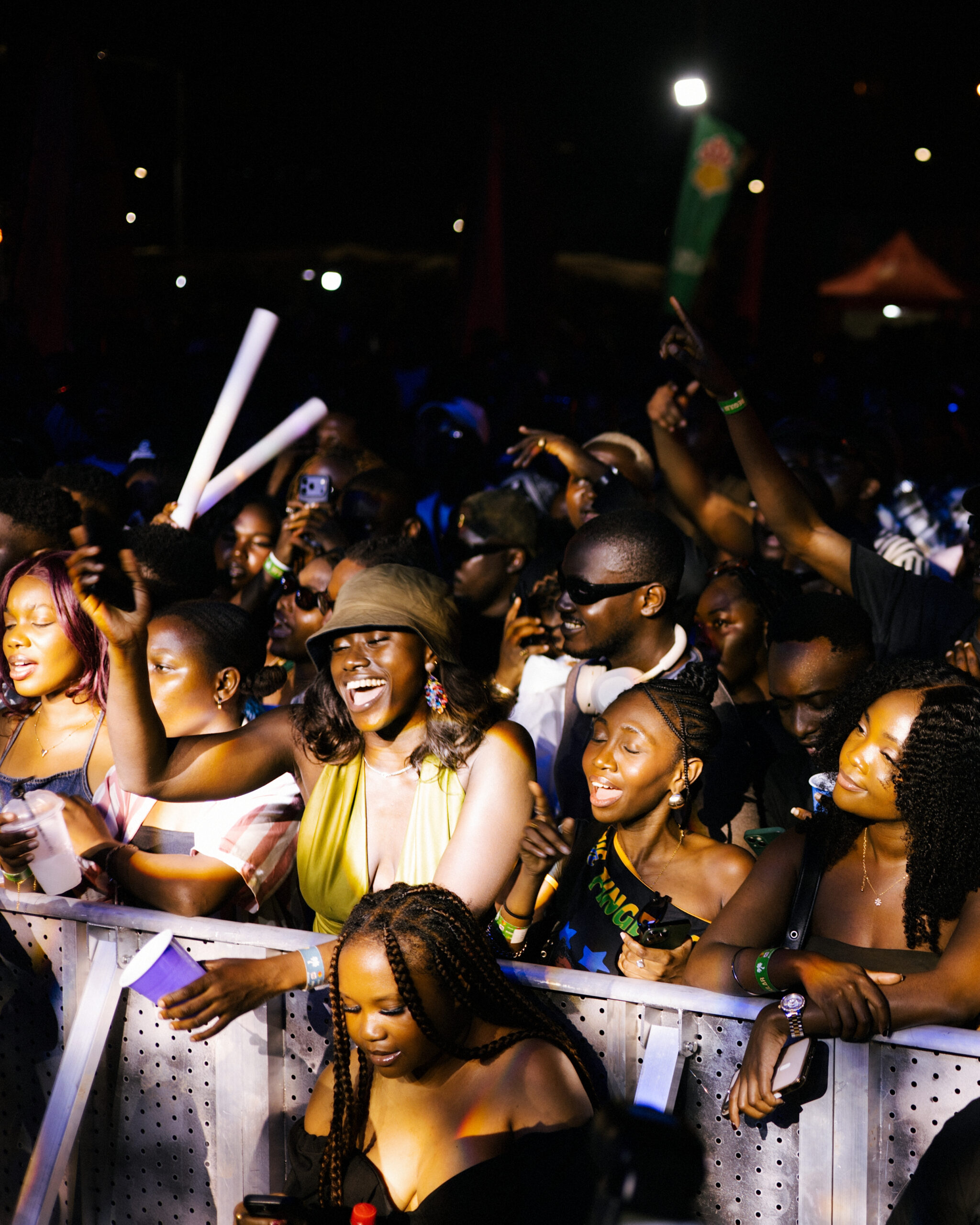
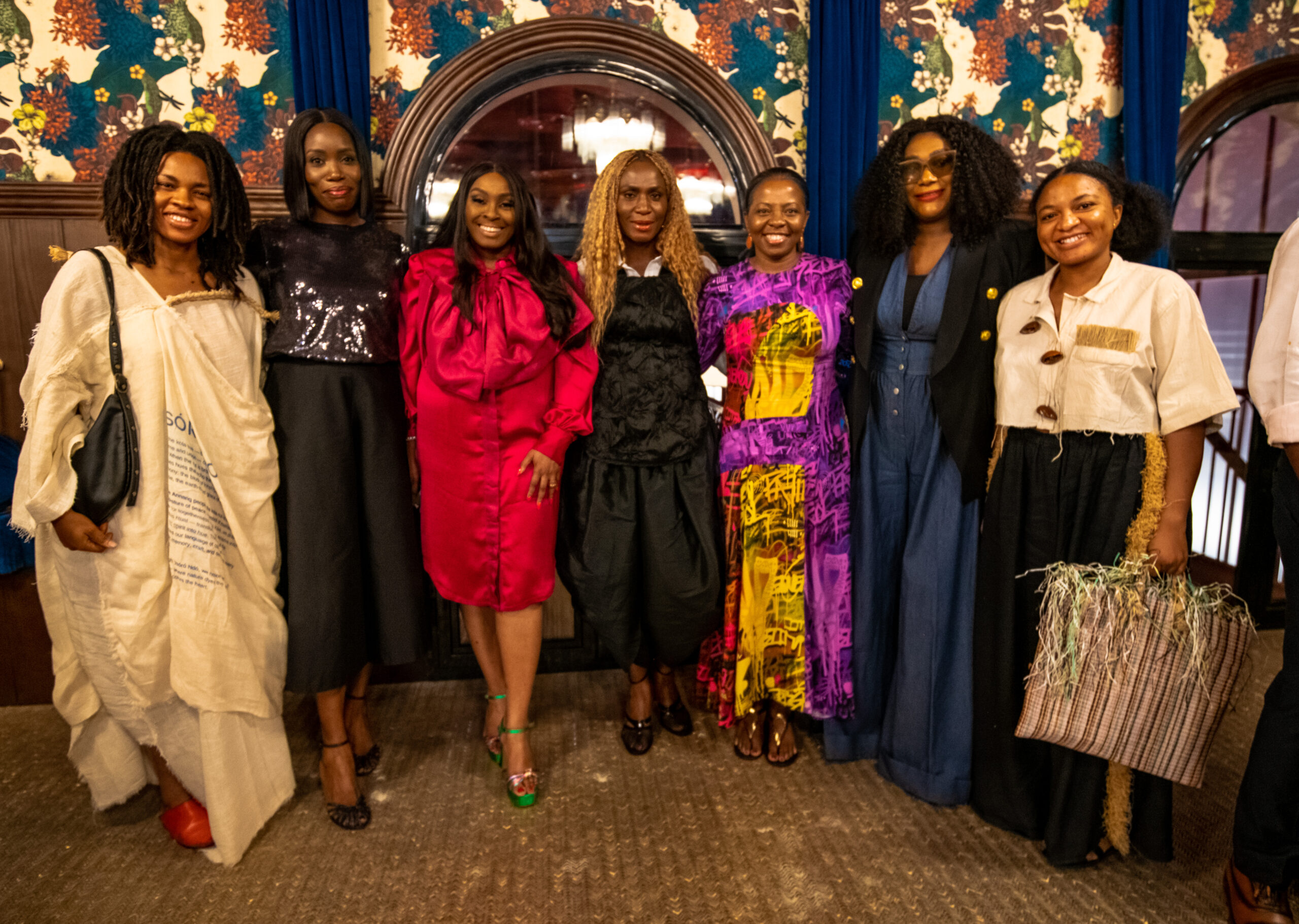
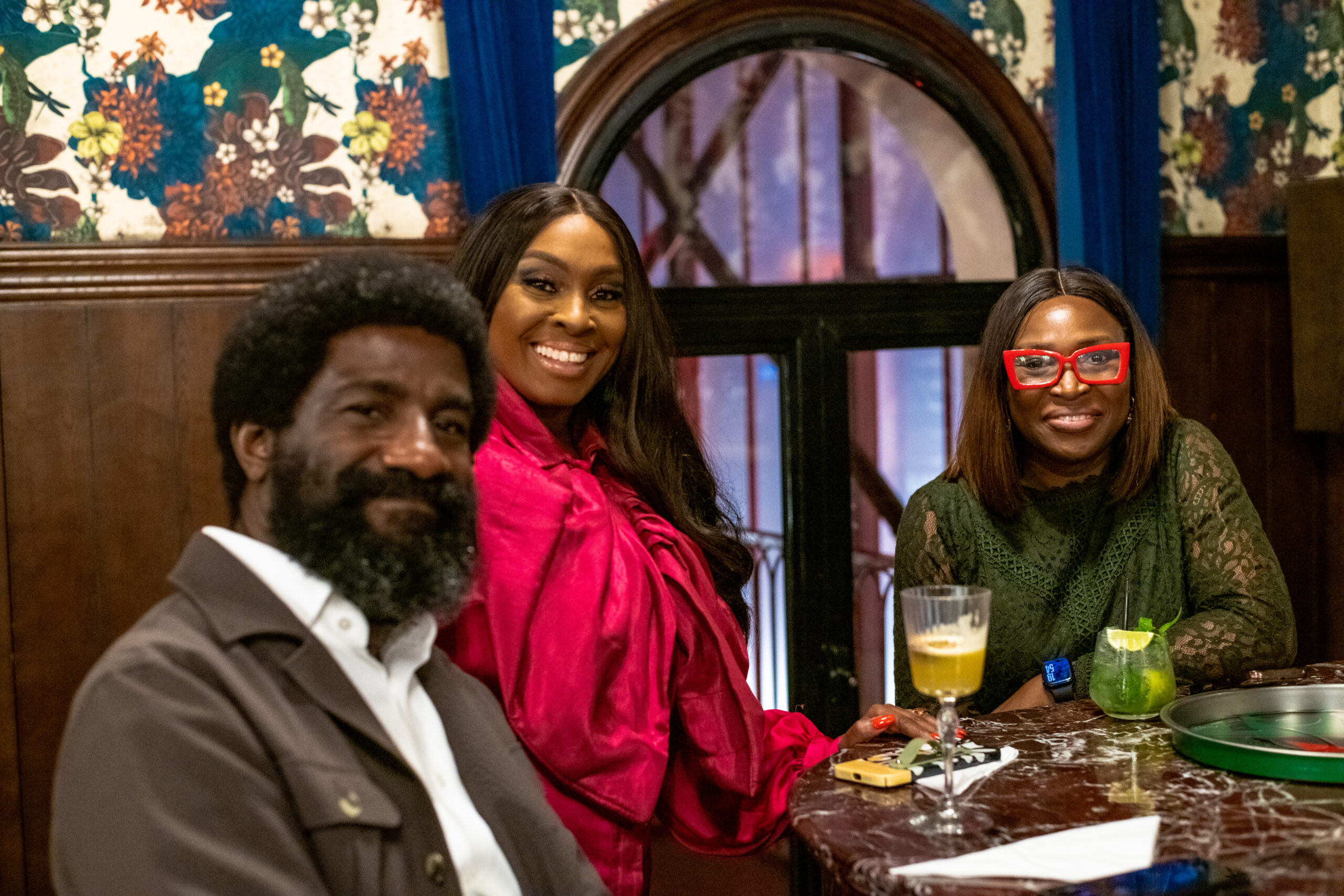
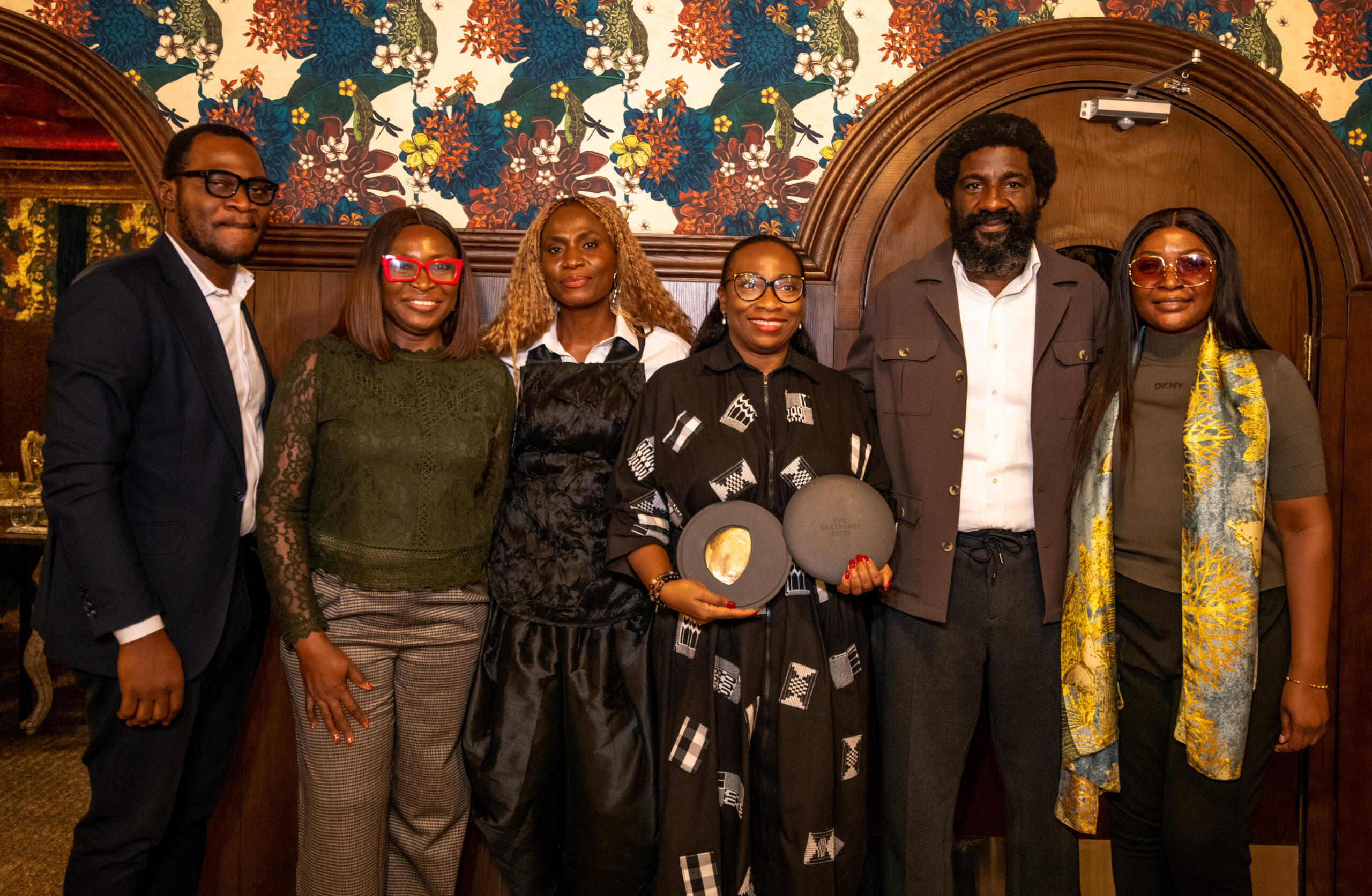
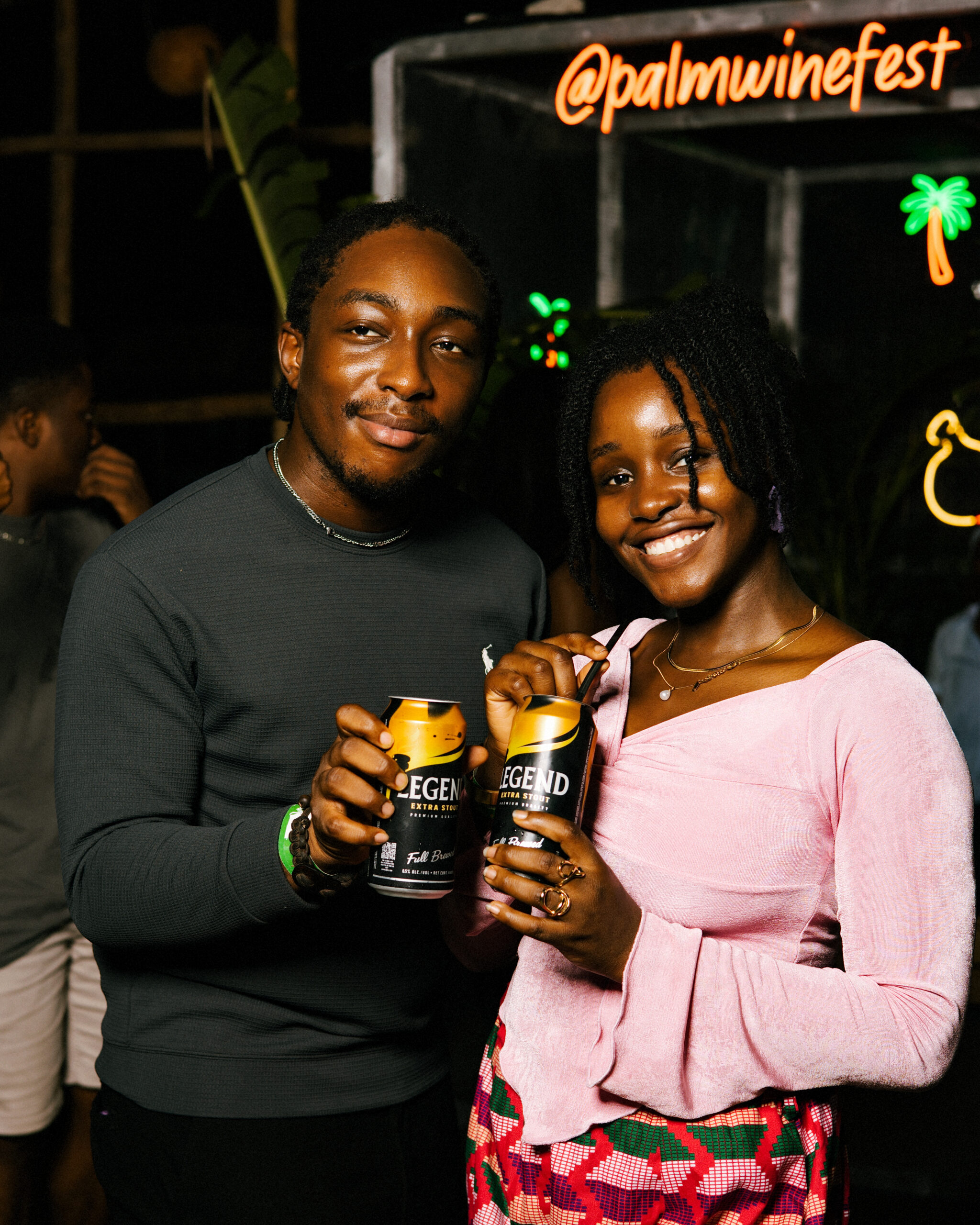
Legend Extra Stout partnered with Palmwine Music Festival this December to deliver two nights of carefully curated live music across Abuja and Lagos. Both cities delivered memorable performances, but the Lagos edition added a layer of unpredictability when Tems and Odumodu Blvck made unannounced appearances.
The festival moved through two cities, starting in Abuja on December 12 at Jabi Boat Club before heading to Lagos on December 21 at The Fidelity Ground in Oniru. Across both nights, Legend Extra Stout’s signature was evident – bold, unapologetic and rooted in the culture it celebrates.
Abuja set the tone with performances from Ladipoe, BOJ, Ajebutter and Moelogo, among others. The night leaned into intimacy, with relaxed, assured sets that allowed the music to breathe. Legend Extra Stout flowed naturally through the evening, from backstage moments to shared conversations in the crowd, reinforcing the festival’s unhurried, communal atmosphere.
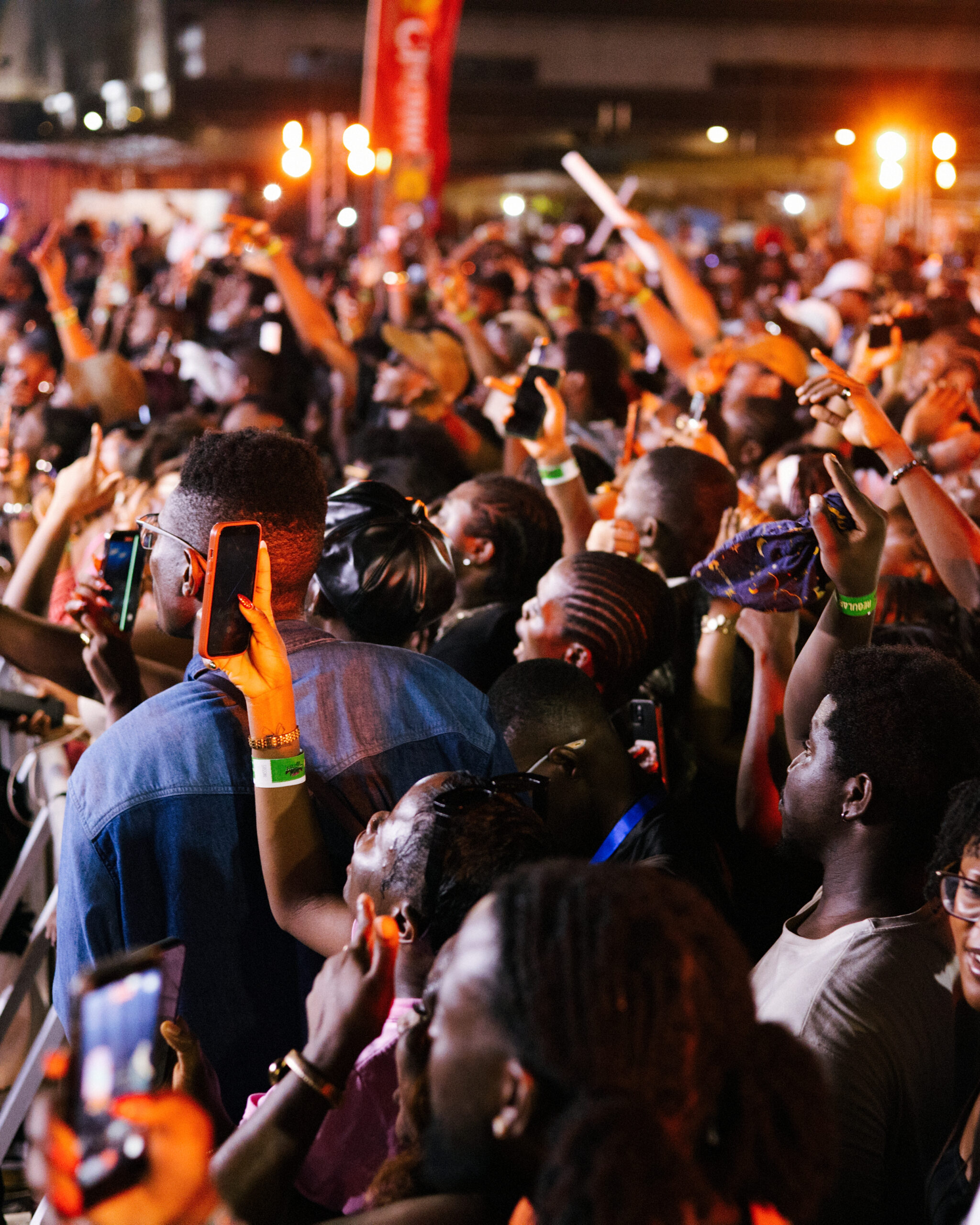
By the time the festival reached Lagos a week later, anticipation had built. The Fidelity Ground became a hub for Nigeria’s alternative music community, powered by Legend Extra Stout, hosting performances from Show Dem Camp, BOJ, Ladipoe, Tay Iwar, Lady Donli, Prettyboy D-O, Moonchild Sanelly and others. Each act brought a distinct energy, with performances unfolding seamlessly and the crowd responding in kind.
Midway through the night, the momentum shifted. As Show Dem Camp settled into their set, Tems stepped onto the stage without introduction. The response was instant – a surge of excitement that marked one of the festival’s defining moments. The night pushed further as Odumodu Blvck followed, another surprise that sent energy through the crowd and kept the atmosphere escalating.
Palmwine Music Festival occupies a distinct space within Nigeria’s live music circuit, spotlighting artists and sounds just outside the mainstream while shaping contemporary culture. The Abuja and Lagos editions proved the strength of that approach through strong line-ups, intimate environments and well-timed spontaneity. The takeaway was clear: Palmwine Fest is less about spectacle and more about experience. Legend Extra Stout’s partnership across both cities reflected a natural alignment with a festival built on authenticity, creative expression and cultural connection.
Legend Extra Stout partnered with Palmwine Music Festival this December to deliver two nights of carefully curated live music across Abuja and Lagos. Both cities delivered memorable performances, but the Lagos edition added a layer of unpredictability when Tems and Odumodu Blvck made unannounced appearances.
The festival moved through two cities, starting in Abuja on December 12 at Jabi Boat Club before heading to Lagos on 21st December at The Fidelity Ground in Oniru. Across both nights, Legend Extra Stout’s signature was evident – bold, unapologetic and rooted in the culture it celebrates.
Abuja set the tone with performances from Ladipoe, BOJ, Ajebutter and Moelogo among others. The night leaned into intimacy with relaxed assured sets that allowed the music to breathe. Legend Extra Stout flowed naturally through the evening from backstage moments to shared conversations in the crowd, reinforcing the festival’s unhurried, communal atmosphere.
By the time the festival reached Lagos a week later, anticipation had built. The Fidelity Ground became a hub for Nigeria’s alternative music community, powered by Legend Extra Stout, hosting performances from Show Dem Camp, BOJ, Ladipoe, Tay Iwar, Lady Donli, Prettyboy D-O, Moonchild Sanelly and others. Each act brought a distinct energy with performances unfolding seamlessly and the crowd responding in kind.
Midway through the night, the momentum shifted. As Show Dem Camp settled into their set, Tems stepped onto the stage without introduction. The response was instant – a surge of excitement that marked one of the festival’s defining moments. The night pushed further as Odumodu Blvck followed another surprise that sent energy through the crowd and kept the atmosphere escalating.
Palmwine Music Festival occupies a distinct space within Nigeria’s live music circuit, spotlighting artists and sounds just outside the mainstream while shaping contemporary culture. The Abuja and Lagos editions proved the strength of that approach through strong line-ups, intimate environments and well-timed spontaneity. The takeaway was clear; Palmwine Fest is less about spectacle and more about experience. Legend Extra Stout’s partnership across both cities reflected a natural alignment with a festival built on authenticity, creative expression and cultural connection.
"Two years ago today, during Ramadan, my son woke up terrified to the loud sound of bombings and explosions just outside our building, which I thought was a random sound of an accident nearby. Little did I know back then, my son and I were witnessing the beginning of the Sudan war (armed conflict between rival militaries) on April 15, 2023," reads Maya Gadir's Instagram post.
The war didn't knock. It kicked down the door.
On April 15, 2023, the first Saturday of Ramadan, Gadir was home in Aramat, Khartoum, an eighth-floor apartment, not far from the airport that the RSF first targeted and took over. It was early morning when the windows began to shake. First, a dull thud. Then a louder blast. Then silence — the kind that suffocates.
"We didn't even know it was war," she tells OkayAfrica. "We thought maybe it was an accident nearby, until the second explosion hit harder. Then it didn't stop."
Gadir is Sudan's first woman English-language radio broadcaster and a well-known figure at Capital Radio 91.6 FM. She made history hosting the nation's Independence Day celebration in 2019, which was broadcast live to 17 international news outlets. She presented presidential ceremonies for heads of state like Rwanda's president, Paul Kagame, and Ethiopia's prime minister, Abiy Ahmed, at the Republican Palace in Khartoum. She built a network that spanned borders and led a women's initiative called The Circle.
Yet, when war broke out two years ago, none of that protected her.
She lived with her 11-year-old son, who has cerebral palsy and uses a wheelchair. When the city exploded into chaos, they became trapped. No electricity. No food. No way out.
"We lived in Amarat area on the 8th floor, so every time an explosion took place at the airport or around our area, our windows shook violently to the extent that out of utter fear for my son's life, I went knocking on my neighbours' door, crying my eyes out, asking them to give us refuge."
For almost two weeks, Gadir and her son lived with neighbours on the safer side of the building — in defiance of everything she'd grown up practicing. "It was Ramadan. Men and women aren't meant to mix like that,†she explains. “But this was war. Protocol didn't matter anymore. My son's safety did."
Outside, Khartoum burned. The RSF, Sudan's paramilitary Rapid Support Forces, moved into neighbourhoods, looting shops, and taking over buildings. From their windows, they watched trucks roll past with mounted machine guns. They watched the city implode. Bullets zipped by the alleyways, cracking into their building's walls.
On days when the power would flicker on and off like a stubborn lighter, Gadir would access the outside world through her phone. "Although my family, who were all living outside Khartoum and Sudan at that time, kept calling me to boost my morale, it was difficult to see an escape route with my son because our area was among the worst hit as the RSF were in it."
She began preparing for the worst. "I told my son, we might die. We need to accept death. It will be over soon, and we will be okay. We should be happy — we're going to meet Allah."
The boy began sleeping with headphones on, trying to drown out the whine of warplanes. The sound of explosions was constant — some far, some terrifyingly near. "He was always scared," Gadir says. "I tried to act strong for him, but inside, I felt like a failure. I wasn't the protector I was supposed to be."
"Just a few days into the war, my only brother escaped the danger zone with his family, leaving me and my son behind. My aunt lost her life as a result of an explosion. My friends started leaving the city due to the increased bombings and shootings around heavily populated areas."
Gadir stayed in Khartoum for two weeks after the war broke out. There was no electricity, no phone signal, just the sound of shelling and the long, unspoken fear that came with every new day. But sometimes, by chance, the power would return. When it did, she would quickly check WhatsApp, those quiet digital corridors where strangers turned into guides. People shared information on where to find food, where to obtain medicine, and how to escape. It was in one of those groups that she first saw the message: evacuations were happening for British nationals.
Her son was born in the UK. His passport had expired, but he was a child with special needs. She called the number in the message. The woman on the line listened, then said gently, "Your son is a high priority. However, I can't help you reach the base. You'll have to find your way."
The base was three hours away in Omdurman.
A friend at the Egyptian border gave Gadir the number of a man with a minibus. He asked for $200. She didn't have it. But a neighbour, someone also trying to escape, lent her the money. That's how people survived back then. Through grace. Through each other.
She packed one backpack. Her son. His medicine and wheelchair. Nothing else. The driver arrived, and they left.
What should have taken three hours took six. The main roads were no longer safe, as they were overtaken by the RSF. They wound through back routes, bumping along unfamiliar ground, flinching at every distant blast. From the van window, Gadir saw her city unraveling. Shops she once knew, now gutted. Apartment buildings were crumbling. Cars were burnt to their frames. Homes emptied of life.
"I didn't want this to be my last memory of Khartoum," she says. "But it was. And it still is."
At a military checkpoint, the Sudanese army waved them through. A few kilometres later, they met the RSF. Guns raised. Orders shouted. "Everyone out!" Maya didn't move. "My son can't walk," she said. There was a tense silence, a pause where anything could have happened. Then, quietly, they were allowed to pass.
At the evacuation point, she found the line for British nationals. When they saw her son, they moved her forward, giving her emergency priority.
They were given food, blankets, and a moment to breathe. She thought they were being flown to Egypt. But when the plane landed, it was in Cyprus. Then, the UK. The Red Cross received them upon arrival, took them to a processing hall, and provided them with aid. Then they were moved to a hotel where they stayed for three weeks before being placed in a small flat in south London. Her son's condition meant the state prioritised their case. She was given a three-month visa. Later, refugee status.
They survived on state funds, food banks, and small amounts of money from families in Egypt. But the process was heavy. "You're treated like you've done something wrong," she says. "There's no kindness in it. Not like how refugees from Europe are treated. It's as if we're expected to suffer."
She remembers the day she broke. Endless appointments. Long waits. Being sent from one office to another for stamps and signatures. No explanations. No eye contact. Just that quiet erasure. She raised her voice — not in rage, but in exhaustion. It wasn't about paperwork anymore. It was about everything she'd lost. Her land. Her work. Her name. Her voice.
Since being granted refugee status, some things have settled. Their rent is covered. Her son's education and healthcare are provided for. But the toll remains. "Living on handouts humbles you," she says. "The only jobs I can get now are cleaning or caregiving. I used to host state events. Now, no one even asks what I used to do."
She often sits in silence. Not because she has nothing to say, but because there's no one to speak to.
"That first bomb in April 2023, that's the last clear image I have of Sudan. Before that, it was vibrant. Loud. Full of life. Now, it's a blur of rubble and checkpoints."
She misses the smell of rain. The noise of the street. The sense of belonging. "I feel invisible here. I feel constantly out of place. And the way people look at me sometimes confirms it. Like, I don't belong. Like I never could."
She no longer has a passport. She can't leave. She can't go back. "I'm just another refugee," she says. "That's what the papers say." But that's not who she is. She's learning to live with it. Not to accept it, but to hold it gently. "I don't want being a refugee to be the last sentence in my story."
"When African countries are at war, it's treated like background noise. It doesn't trend. It doesn't stay in the news cycle. It's as if people expect Africans to suffer and be at war. So when we flee, we're not seen as survivors. Just bodies. Illegal. Other."
Maya says it softly. No bitterness.
"People forget that refugees had lives. Full, rich lives. Sometimes better than the lives of those watching from the outside." Counselling has helped. So has stillness and time. She's learning to carry both grief and hope. Every day, she wakes up not knowing what the future holds, but she is determined not to be defined by what she has lost.
Maya's journey lays bare the brutal truth: war not only displaces the poor or the forgotten. It reduces even the celebrated and accomplished to struggle, survival, and silence.
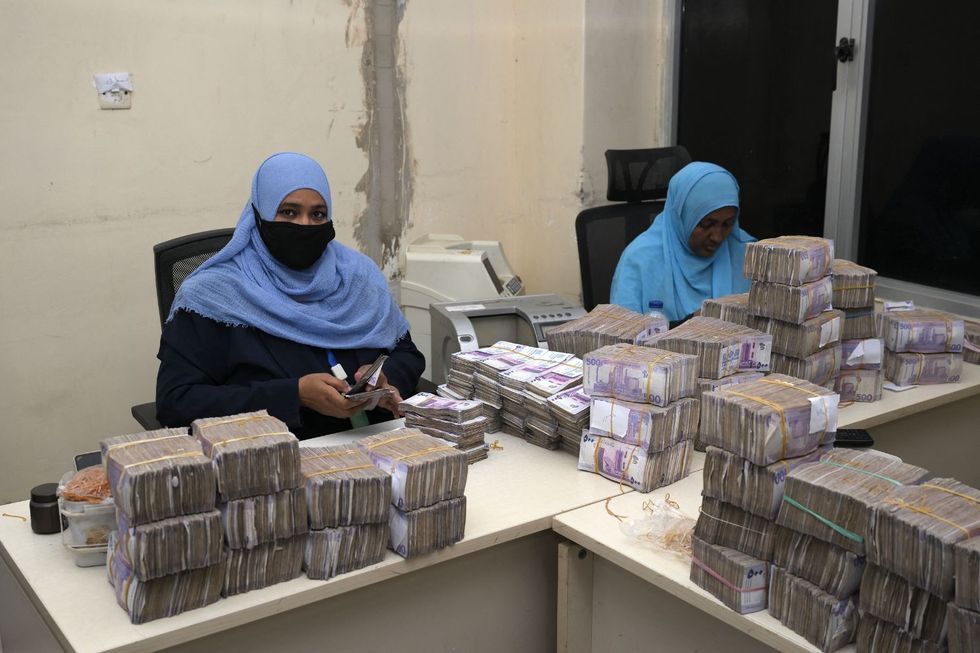
In January, Sudan’s army-backed government issued a new 1,000 Sudanese pound banknote, sending people into panic and the banking system into chaos. The streets of Port Sudan, the de facto wartime capital, were filled with citizens scrambling to file cash into their bank accounts, which should then be turned into the new currency.
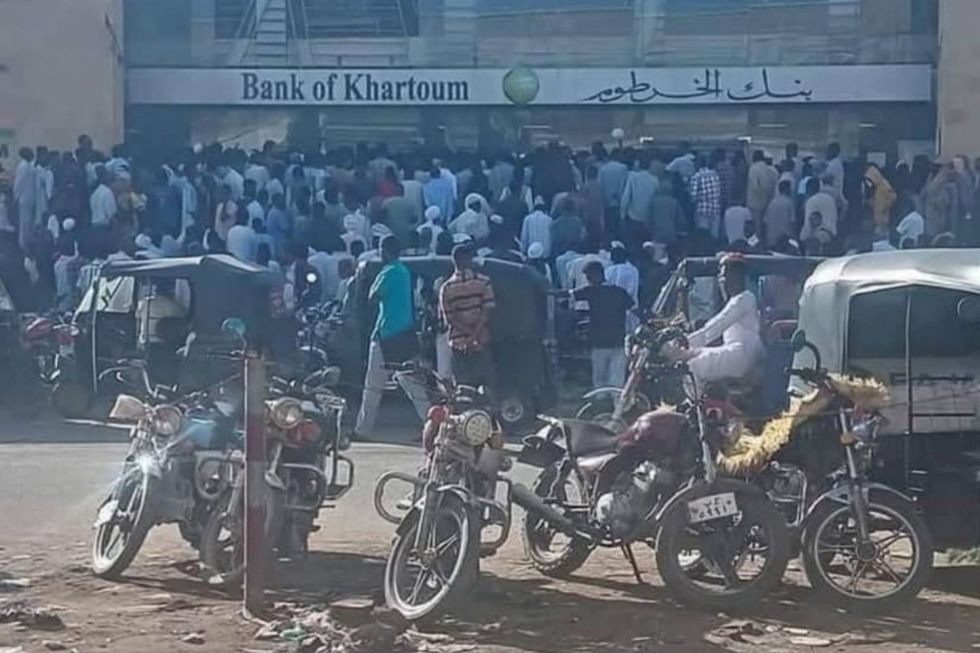
“The process of exchanging old currency for new proved to be highly inefficient and cumbersome,†Dr. Mohamed Osman, who works at the Bank of Sudan, tells OkayAfrica. “A very short timeline was set for the exchange, leading to overcrowded banks, a severe cash shortage, and a general paralysis of commercial activity.â€
The first images of this political decision were long lines of people who would sometimes wait outside their bank branches for days with no success exchanging their money. The second group was the same disbelieving citizens who were left without cash when the government realized that the banks could not print enough new notes to replace the old ones.
As a result, grocers, gas stations, and rickshaw drivers no longer accepted the old currency, but citizens did not have the new one to pay for necessary amenities. Banks began relying on digital currency, and in an unexpected turn, a country ravaged by war underwent a rapid transformation towards online banking.
“Following the deterioration of Sudan's economy, the government implemented a plan to bring money back into the banking system,†says Osman. “This was crucial because, since the Omar al-Bashir regime, most of the circulating currency had been held by individuals. Recovering these hoarded funds was seen as a potential way to revitalize the economy.â€
This was the official narrative, but replacing 500 and 1,000 Sudanese pound banknotes (worth around $0.25 and $0.50 respectively) with new ones was widely understood to be a political strategy by the Sudanese Armed Forces (SAF) amidst their ongoing war with the Rapid Support Forces (RSF).
“Another objective of the currency change was to recover stolen balances and funds in Khartoum and Al Jazirah states and return them to the banks,†says Osman. After the RSF had looted banks, the SAF wanted to regain control of Sudanese cash flows, implementing a currency that could not be used in RSF-controlled states.
Even before this war divided Sudan into a two-currency country, it caused the world’s worst humanitarian crisis, widespread famine, and soaring inflation. From 500 Sudanese pounds to the US dollar in April 2023, it just reached 3000, showing no sign of stabilizing despite the new bank notes.
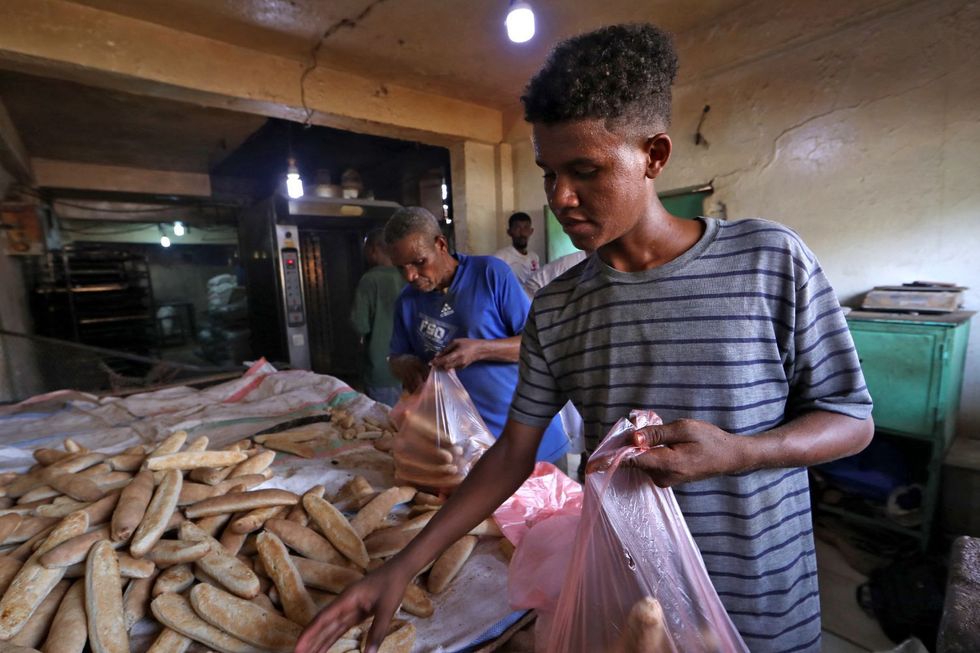
“The people of Sudan started a revolution against Omar al-Bashir because the bread price was raised from 4 [loaves of] bread for one pound to 2 [loaves of] bread for one pound,†Almuthanna Abdulmoneim Alryeih Abdulgabbar, an electrical engineer from Port Sudan, tells OkayAfrica. “Now they buy one [loaf of] bread for 150 pounds.â€
Presently, most Sudanese in areas controlled by the SAF rely on bank apps for their money transactions. The Bank of Khartoum’s “Bankak†is most widely used, but other banks have created their own apps, such as Faisal Islamic Bank’s “Fawry†and Omdurman National Bank’s “Ocash.â€
“[These apps] were initially not accessible to everyone and performed poorly,†says Osman. Once again, people were crowding around their bank branches, waiting for hours to simply activate the apps.
Engineer Muhannad Hassan, who developed Ocash, explains to OkayAfrica that these issues stem from the banking systems, not the applications’ design.
“Obstacles for the user in using the application generally arise when the application system is updated,†he says. “This is when the user faces difficulty completing transactions and transfers through the application, as the update originally comes from the bank's databases.â€
Accordingly, whenever the system is updating or down, people cannot pay for necessities. In a war-torn country, this reliance on digital banking puts citizens, who are already suffering in the economic crisis, in an even more fragile position.
“Amidst this changing currency landscape, a new type of trade has emerged: the exchange of cash currency for balances transferred via applications, with financial benefits,†says Abdulgabbar. “For example, if you want to receive 100,000 Sudanese pounds, the profit from the transaction could be up to 10,000 Sudanese pounds, where you transfer from any application and receive the amount in banknotes.â€
This process, which Abdulgabbar calls “nothing but plain usury,†is forbidden in Islam, Sudan’s primary religion.
He agrees that moving banking to the digital sphere is good in general, but says that it was implemented at the wrong time in Sudan, and for the wrong reasons. Like many others, he believes that the currency change’s purpose was to benefit the army, not the people who have nonetheless adjusted to this new system.
Osman strikes a more positive note. “Despite the initial challenges, there has been a clear improvement in the transaction system since the initial period, with the process of opening bank accounts becoming easier for the general public,†he says.
"Sudanese families are not aware that Egyptians practice FGM. Amongst them, type three [the most extreme] is usually known as Pharaonic. So when we ask them whether Egyptians practice FGM or not, they realize that Egyptians must practice FGM because it's Pharaonic," Dr. Yussra Mohammed tells OkayAfrica. "During a [recent] conference, Egyptian organizations and activists were surprised that Sudanese referred to type three FGM as Pharaonic because, in Egypt, they refer to it as Sudanese. So they're throwing the blame on each other."
Female Genital Mutilation (FGM) is illegal in Egypt andSudan, and yet 87.2 percent of Egyptian women and 86.6 percent of Sudanese women aged 15-49 have undergone it. In both societies, people believe that genital cutting is a tradition to preserve a girl's honor and, by extension, her family's.
In the firststudy of its kind,Equality Now andTadwein for Gender Studies look at how perspectives around FGM might be changing in Egypt's Sudanese migrant communities. While it lays open several opportunities that could lead to its abandonment, it also reveals how little most people know about the practice and how much the nicknaming of the different types affects how people perceive them: as ancient, foreign, or religiously mandated.
Since theoutbreak of war in April 2023, an estimated1.2 to 1.5 million Sudanese have fled to Egypt. Equality Now, an international human rights organization that aims to protect and advance the rights of all women and girls around the world, and Tadwein for Gender Studies, an Egyptian organization with a mission to promote gender equality and address gender-based violence through research, advocacy, and community interventions, had been working to end FGM in Sudan and Egypt separately.
"When we saw the influx of people into Egypt, we thought that there was an opportunity to try and see what this migration means for the continuation or the abandonment of FGM," says Paleki Ayang, MENA Gender Advisor at Equality Now.
Economic instability, insecure housing, and obtaining legal status are among themany issues Sudanese are dealing with in Egypt. Although FGM is a deeply embedded cultural practice that is often falsely framed as a religious necessity, it is not a top priority for a refugee. So, could displacement be the reason Sudanese communities let go of FGM?
To find out, Tadwein interviewed 30 grandmothers, mothers, fathers, and young adults in Cairo and Giza. Half of them had been living in Egypt since before the war; the other half were refugees. They shared their varying knowledge of the three types of FGM, colloquially known as Sunna (type one), Sandwich (type two), and Pharaonic (type three).
"We need to debunk the myth that type one is harmless or religiously required," says Ayang. "People need to understand that the harms of FGM are physical, psychological, social, and economic."
The practice's main drivers are grandmothers; young men and fathers are the least informed. All interviewees claimed not to practice FGM, but Dr. Mohammed cautions that this might be because it is illegal in Egypt, and people will not go on record admitting that they broke the law. Most participants, however, were not aware of the law's exact ramifications; they merely assumed that it exists.
Both Ayang and Dr. Mohammed were surprised to find that neither Sudanese nor Egyptians know which type of FGM is prevalent in the other community. This is a testament to thetension between the communities.
In Sudan, FGM is usually done by a midwife, nurse, or grandmother, whereas in Egypt, it is carried out by doctors. In the study, many Sudanese said that they are not comfortable asking Egyptians for help or information due to the racism they experience. Not understanding how the system works and potentially jeopardizing their legal status could be a major deterrent to continuing FGM in Egypt.
In terms of ending FGM, Dr. Mohammed considers this lack of communication a good thing. "If the Sudanese find out that healthcare providers in Egypt conduct FGM, it will be on the rise," she says. Paired with the misconception that type 1 is not harmful, people will assume it is safe if a doctor performs it."
She continues, "When interaction happens and the families talk about FGM, God knows what could happen," she says. "So if we will intervene, we need to do it now."
Published at this crucial moment, the study is meant to be a stepping stone that paves the way for more in-depth research and campaigns, aiming to reframe FGM from being a legal or medical issue to a plain and simple human rights violation. It offers several recommendations, such asinvolving courts to enforce the law and elders to shift communal attitudes.
"There are now many female-headed Sudanese households in Egypt," says Ayang. "It's important to empower mothers with knowledge, confidence, and tools to resist whatever pressure they might face from their families and communities."
While Ayang admits that "There is no clear cut answer to whether FGM will be abandoned or continued," Dr. Mohammed believes that the factors that will help people abandon FGM are greater than those that provide room for its continuation.
Sudan's bid to sue the United Arab Emirates (UAE), alleging that the UAE is providing the paramilitary Rapid Support Forces (RSF) with weapons that are being used to commit genocide in Darfur, has been dismissed by the International Court of Justice (ICJ).
On Monday, May 5, the United Nations' top court in The Hague announced that it "manifestly lacked" the authority to continue the proceedings. Sudan had requested emergency measures to prevent genocidal acts against the Masalit tribe, which has been subject to ethnic-based attacks by the RSF and its allied Arab militias.
Since April 2023, the RSF has been in armed conflict with the Sudanese Armed Forces (SAF), plunging Sudan into the world's worst humanitarian crisis. While both parties stand accused of committing war crimes, the RSF has explicitly been inflicting widespread sexual violence on women and girls and terrorizing communities across the country.
On March 5, Sudan filed the case with the ICJ, asking that provisional measures be taken and for the UAE to do all it can to prevent the killing and targeting of the Masalit people in Darfur. On April 11, the RSF descended onto Zamzam camp in West Darfur, home to half a million displaced persons, killing at least 400 people, looting and burning homes.
People are voicing their anger over the ICJ's dismissal on social media. "Lack of jurisdiction? It's the INTERNATIONAL court of justice; their jurisdiction is the whole globe," wrote one user on Instagram.
However, lack of jurisdiction refers to the fact that, even though both countries are signatories to the 1948 Genocide Convention, the UAE made a reservation against Article 9 of the Convention. Accordingly, other states cannot sue it over genocide allegations. The ICJ rejected the request for provisional measures by a 14-2 vote and ordered the case removed from its docket by a 9-7 vote.
"The Court concludes from the foregoing that, having regard to the UAE's reservation to Article IX of the Genocide Convention, this Article cannot constitute, prima facie, a basis for the jurisdiction of the Court in the present case," the court said in its order.
Amongst Sudanese, the UAE's relationship with the RSF is a well-known, undisputed fact. While there is no direct evidence of the UAE's involvement in the RSF's warfare, Sarah Nouwen from the European University Institute tells DW that Sudanese claims are based on suspicious activity.
"Flights are going from the United Arab Emirates in that direction," she says. "One cannot really explain what else would be there. The United Arab Emirates says it's humanitarian aid, but there isn't much humanitarian aid coming in. Many Sudanese say this must be arms. Otherwise, we can't explain how the RSF has been so successful militarily."
While online users doubt that the ICJ holds any actual power or significance after it failed to stop the genocide in Palestine, the court's decision to abstain from the horrors being committed in Sudan deals another blow to its fragile reputation and closes another pathway for Sudan to leave its hellish war.

 Connexion


 Midway through the night, the momentum shifted. As Show Dem Camp settled into their set, Tems stepped onto the stage without introduction. The response was instant – a surge of excitement that marked one of the festival’s defining moments. The night pushed further as Odumodu Blvck followed, another surprise that sent energy through the crowd and kept the atmosphere escalating.

 Â