Vue lecture

👨🏿‍🚀TechCabal Daily – EVs crash SA’s road fund

Good morning ☀

What does it mean to be a trillionaire in dollars? Until recently, it was inconceivable for most people, but not all. The SpaceX IPO made a lot of people very financially happy, but it made one man—Elon Musk—wealthy beyond what a good chunk of the earth’s inhabitants can conceive. One question I have: what’s he going to do with all that money? What can anyone do with all that money?

It’s a good reminder to lock in this week: you won’t become a trillionaire, but maybe you can hustle towards millionaire status.

—Zia

Get smarter about Francophone Africa with our newsletter, Francophone Weekly—the startups, tech policies, and institutions building the pipelines for ecosystem growth.

today's edition image

government

DRC unveils national digital ID system

Image: Mediacongo 

If you asked the Democratic Republic of Congo (DRC)’s government for a description of a future for its citizens, it’d probably be one word: RDC-PASS.

What’s with the RDC-PASS craze? The DRC is rolling out RDC-PASS, a national digital identity system that aims to give citizens one digital identity for authentication, e-government services and financial verification. The government stated that it will be rolled out in phases, although official launch dates have not been communicated.

So what exactly will it do? RDC-PASS comes with four promises: verify SIM card owners using biometric data to reduce fraud, give citizens one identifier to access government platforms instead of multiple credentials, power digital know-your-customer (e-KYC) checks for banks and financial services, and create a secure digital identity that works alongside — not instead of — physical identity documents.

Why governments love digital IDs: For modern services to remain secure, trust is crucial. Before a bank opens an account or a government agency provides benefits, it needs to know the person on the other end is who they claim to be. Across the continent, governments are building digital ID systems. Nigeria has the National Identification Number (NIN) system, with over 126 million Nigerians registered. 

South Africa is proposing a digital ID system that will serve as an additional form of identity, established via biometric verification. The goal is to make it easier for citizens to access services, while helping institutions verify people faster

What will this change for the Congolese? If RDC-PASS works as intended, opening a bank account may require fewer documents, accessing government services could involve fewer trips between agencies, and identity checks could happen faster. Adoption will be the real test. A digital ID is only useful if banks, telecom companies, government agencies, and citizens use it.

We Have Secured the Bank of Ghana EPSP Licence.
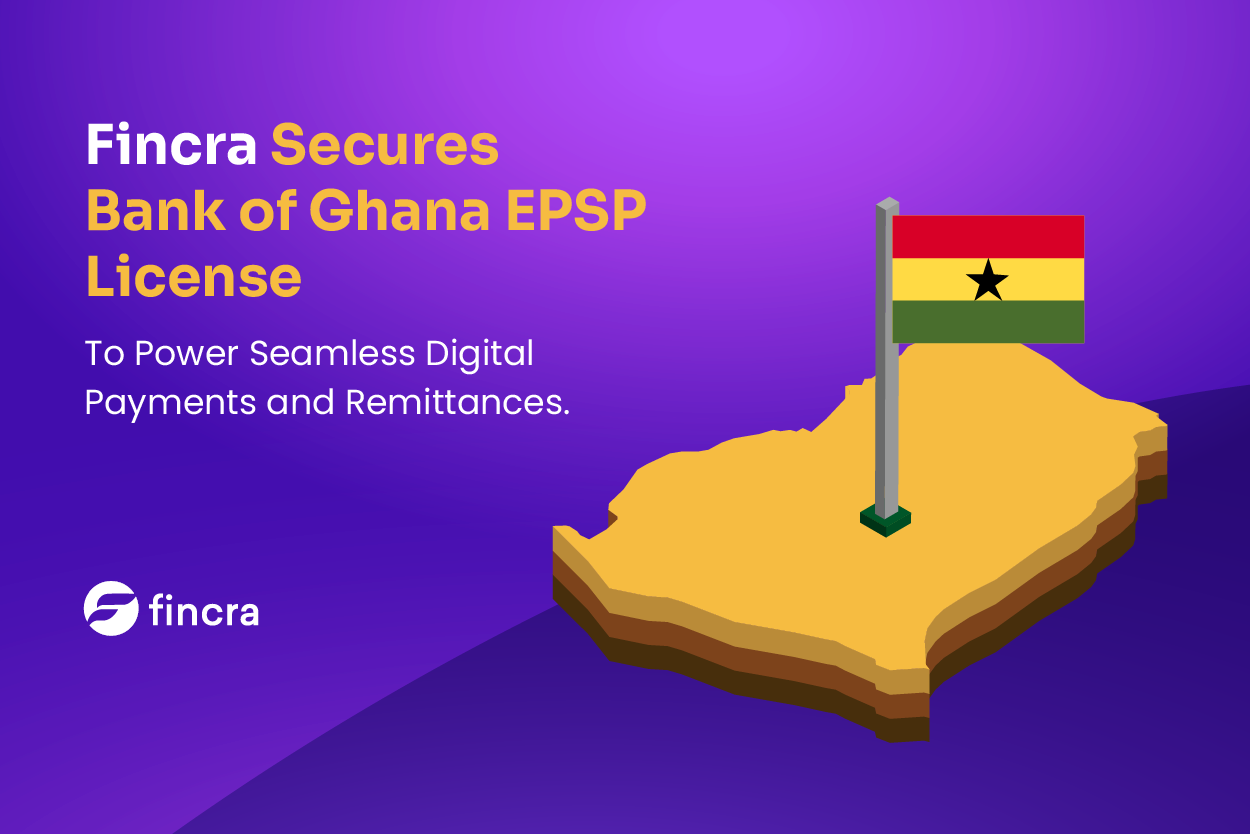
Fincra has officially secured its Enhanced Payment Service Provider licence. This regulatory milestone authorizes Fincra to directly collect, process, and settle payments in Ghanaian Cedis, offering a highly streamlined financial pipeline for businesses operating within the region. Start here.

mobility

South Africa’s EV transition is creating an unexpected funding problem
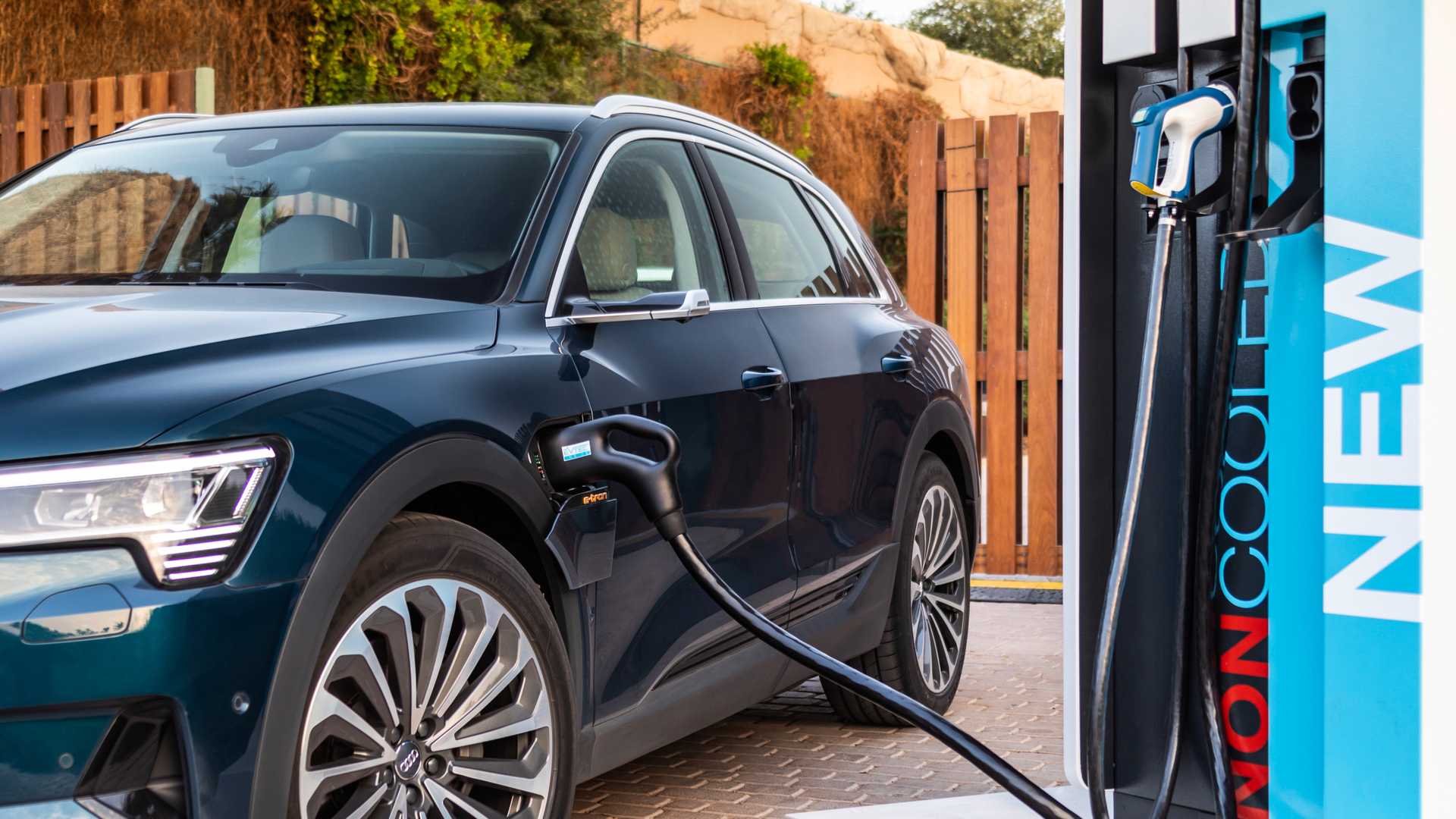
Image: Inside EVs

South Africa has funded its Road Accident Fund (RAF) that provides compensation and support to individuals who suffer bodily injuries or are killed in motor vehicle accidents, through a levy baked into the price of every litre of petrol and diesel sold.

But there’s a problem: Electric vehicles don’t drink petrol. In the first quarter of 2026, battery-electric vehicle (BEV) sales rose 96% year on year. As more EVs are sold and as more South African’s switch to EVs, fewer litres of fuel are sold, and less money flows into the fund that compensates road accident victims. Now the government is considering a new licence disc renewal fee to plug the gap.

Why people are upset: Right now, motorists driving petrol and diesel vehicles already contribute to the RAF through the fuel levy. Under the new proposal, they could also pay an additional fee when renewing their licence discs. Meanwhile, EV owners, the group whose growth partly triggered the funding problem, don’t pay the fuel levy because, well, they don’t buy fuel.

Then the bigger issue: In 2025, the RAF told Parliament that it is structurally insolvent, meaning its long-term liabilities exceeded its assets and expected income. It also reported a backlog of 400,000 claims in November, with no indication that it had been cleared. 

What happens next? South Africa is confronting a challenge that many countries with fast EV adoption will eventually face. Fuel taxes have funded roads, transport infrastructure, and accident compensation schemes, but as vehicles become electric, governments must find new ways to collect that money.

Kora joins IATA’s Financial Gateway
Kora joins IATA’s Financial Gateway, giving global airlines a single connection to Africa’s payment infrastructure. Read more:

countries

Gabon is an oil country trying to become a digital one
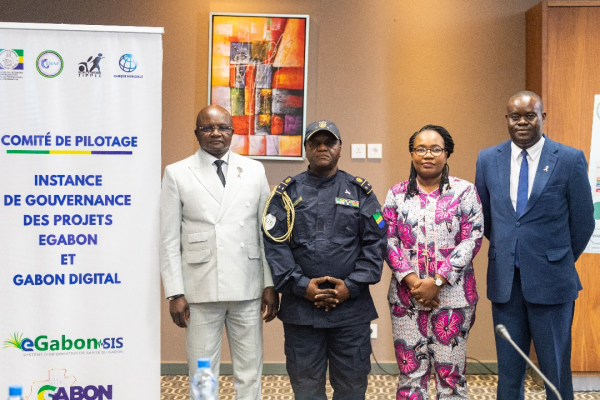
Image source: Wearetech.Africa.

Gabon earns roughly 70% of its export revenue from crude oil. That’s both the country’s greatest asset and its most pressing problem, because oil runs out, oil prices swing, and an economy built almost entirely on one commodity is an economy living on borrowed time. The military-led transition government that took power in 2023 seems to know this, and it’s using digital infrastructure as one of its primary bets on what comes next.

What Gabon is spending: The country has allocatedXAF 82 billion ($133 million) to its digital economy, about 1.5% of itsrevised 2026 total budget of XAF 5,495.2 billion ($9.67 billion). More importantly, some of it is already on the ground. The Magadipe programme, formally known asMaDigiPaie, lets citizens pay for public services via mobile money using GIMACPAY QR codes, with over 1,000 already deployed with merchants and service providers. 

The Central African Interbank Monetary Group (GIMAC) and the Bank of Central African States (BEAC) are the institutional partners behind the programme. A parallel$8.9 million investment is funding a national digital skills training scheme, building out local talent in artificial intelligence (AI), cybersecurity, and cloud computing.

Between the lines: Central Africa is the continent’s most digitally underserved region. Gabon, with its relatively high GDP per capita of$10,840 and small population (2.5 million people), is better positioned than most of its neighbours to make this shift. The difference between this and previous digital economy announcements across the continent is that Gabon has something already running: a payments infrastructure, QR codes that are deployed, and a skills programme with a named institutional partner. 

Naira Life 2026 is here!

The theme for this year’s Naira Life Conference by Zikoko is “All About Wealth.”
Join 2,000+ in Lagos on August 22 for a day of practical money conversations and workshops designed to move you from simply earning an income to building lasting wealth. Get 15% off early bird tickets.

countries

Kenya’s fuel prices just dropped, but the full picture is a bit more complicated
Image Source: New Vision

Remember two weeks ago whenBolt raised fares by 6% because fuel prices were eating into driver margins? The Energy and Petroleum Regulatory Authority (EPRA)announced on Sunday that petrol will drop to KES 214.03 ($1.6) per litre in Nairobi, and diesel to KES 222.86 ($1.7) per litre for the June–July cycle. Kerosene remains KES 191.38 ($1.48). The new prices take effect on June 15.

The diesel cut, KES 10 ($0.007) per litre, is the one that matters most. Diesel powers trucks, matatus, generators, and the logistics chains that move goods across the country. A drop that size could ease pressure on transport operators and, over time, nudge food prices down. The petrol cut of KES 0.22 ($0.001) is, comparatively, a rounding error.

Thelanded cost of diesel actually rose slightly, up 0.21% to $1,294.71 per cubic metre between April and May, meaning the price drop at the pump is partly a function of how EPRA calculates the regulated price, not a reflection of genuinely cheaper imports.Middle East supply pressures that drove prices up in April have not resolved. What drops in June can return in July.

Zoom out: Bolt raised fares citing fuel costs and has not signalled any rollback. The company has historically responded to EPRA’s upward revisions faster than its downward ones, which means the 6% increase may quietly become the new baseline for Kenyan riders, regardless of what happens at the pump.

Showcase Your Brand at Moonshot by TechCabal

Founders. Investors. Policymakers. Enterprise leaders. Moonshot 2026 brings together the people shaping Africa’s technology ecosystem across AI, commerce, climate, enterprise, and culture. Spotlight your brand today.

CRYPTO TRACKER

The World Wide Web3

Source:

CoinMarketCap logo

Coin Name

Current Value

Day

Month

Bitcoin $65,731

+ 2.27%

– 16.75%

Ether $1,717

+ 2.64%

– 22.78%

XRP $1.18

+ 3.55%

– 16.74%

Solana $71.07

+ 4.42%

– 19.67%

* Data as of 06.34 AM WAT, June 15, 2026.

JOB OPENINGS

Looking for more opportunities? There are additional openings on TechCabal’s job board. We’ve also cleared out outdated listings to keep opportunities fresh for job seekers. If you’re hiring and would like to feature an open role, please submit it via this form.

in other news image
  •  

Quick Fire 🔥 with Bolaji Anifowose

Bolaji Anifowose is a product marketing manager and go-to-market (GTM) engineer with over 7 years of experience helping startups across Africa and beyond sharpen their positioning, launch products, and build compounding growth engines. He has led growth, GTM, and marketing efforts for high-impact companies such as Simpu, Distrobird, Chatbase, and Tecno, delivering successful product launches, demand generation campaigns, and market expansion strategies that produce significant results.

Before tech, Bolaji studied Metallurgical and Materials Engineering at the University of Lagos, Nigeria, a background that shaped how he approaches marketing today: systems-first and evidence-led. He is a graduate of the pioneer cohort of the GTM Engineer School and spends a lot of his time these days at the intersection of marketing and AI, building automations and workflows that let small teams punch far above their weight.

  • Explain your job to a five-year-old.

You know when you make something really cool, like a drawing or a sandcastle, but nobody comes to look at it? My job is to make sure people come and look. I help companies that have built something good figure out how to tell the right people about it, in a way that makes them go “I want that.” I find the people who would love it, work out what to say to them, and build little machines that help do it again and again.

  • Did your 16-year-old self ever imagine he’d end up in marketing?

Not even close. At 16, I was deep in science, headed for engineering, convinced my future involved metals and lab coats. Marketing wasn’t on the map. If you’d told that kid he’d spend his days writing, building automations, and obsessing over why people buy things, he’d have laughed. But here’s the funny part: the engineer never left. I still approach marketing the way I’d approach a materials problem. Test, measure, find the system underneath the noise. I didn’t abandon engineering. I just changed what I was building.

  • Who’s a GTM engineer, and what’s the path to becoming one?

GTM engineering is a term Clay coined in 2023. The simplest way to think about it is this: a GTM engineer builds systems that generate revenue. You’re combining artificial intelligence (AI), automation, and creative problem-solving to do work that would normally require a much larger team. That’s the core of it: giving a small team the firepower of a big one.

Think about traditional growth work. You’re manually searching LinkedIn for leads, writing outreach emails one by one, juggling inboxes, and tracking replies. Now flip that. Clay finds and enriches leads. A signal tool identifies who’s actually in-market. Claude and OpenAI personalise outreach. A sequencer sends it, and an n8n agent handles responses. Same goal, far less manual work. That’s what a GTM engineer builds.

There isn’t just one type of GTM engineer. I usually break it into three. First, the software engineer who could work on a product or data team but chose revenue instead. Second, the systems specialist, often from revenue operations (RevOps) or marketing operations, who excels at orchestrating tools. Third, the marketer or salesperson who picked up technical skills and sits at the intersection of strategy and execution. That’s me, and for most people, it’s the most realistic path in.

The skills transfer more than you’d think: systems thinking, customer understanding, copywriting, learning new tools quickly, and being comfortable working alongside code. You don’t need a computer science degree.

To get started, learn the fundamentals first: ideal customer profile (ICP), positioning, channels, and messaging. Then look at your week and identify a repetitive task, whether that’s lead research, follow-ups, or reporting. That’s your first automation opportunity.

Build with tools companies are hiring for today, like Clay, n8n, and Claude Code. Turn a real task into a working system, then run it on actual campaigns. After that, document what you built, make it part of your portfolio, and join the communities where jobs and collaborations happen.

Every system you ship becomes proof that you can do the work. In this field, proof beats a fancy résumé every time.

  • What’s your hot take on why most product launches fail?

Here’s my hot take—and the numbers back me up on this: most product launches don’t fail because of the product. They fail because teams mistake shipping for creating demand.

The numbers back it up. Depending on the study, 80–95% of new products fail. Harvard’s Clayton Christensen put the figure at 95%. In B2B, only about one in four launches hits its revenue target. That’s not bad luck. That’s a pattern.

The mistake is usually the same. Teams build the product, pick a launch date, post about it, then wonder why the market shrugs. But a launch was never an announcement. It’s the moment you prove you understand your buyer well enough to make them care.

The data shows where things break. Simon-Kucher’s global pricing study found that 72% of new products miss their sales targets, and a quarter of companies said none of their recent launches met expectations. That’s rarely a product problem. It’s usually a failure to understand what buyers value and what they’ll pay for. Many teams build on assumptions and don’t test them with real customers until it’s too late.

Messaging is another common culprit. Most launches focus on the company and its features: look what we built. Buyers care about something else: what’s changing for them, and why now. If that isn’t clear, no amount of launch-day promotion will save you.

That’s why I think launches don’t fail on launch day. Launch day simply exposes months of skipped homework. If you can’t clearly explain who the product is for, what changes for them, and why it matters now, you don’t have a launch. You have an announcement nobody asked for.

The teams that win do the unglamorous work first. They talk to customers, sharpen their positioning, and align around a clear story. By the time they hit publish, demand already exists. The launch just opens the door.

  • What’s your favourite and least favourite part of the work you do?

My favourite part is the moment a system clicks. I’ll build a workflow, go to sleep, and wake up to find it has spent the night finding leads, enriching data, and sending personalised outreach without me lifting a finger. There’s something magical about that. You build it once, and it keeps paying you back. That feeling of compounding, where yesterday’s work keeps working for you, never gets old.

It’s the same with marketing. When positioning I’ve shaped makes a prospect say, “This is exactly what we needed,” that’s just as rewarding. For me, the real payoff is building something that creates results without me having to be in the room.

My least favourite part is keeping up with the tools. In AI, the pace is relentless. Every day there’s a new product, a new feature, or a new model. You finally master a tool and build it into your workflow, then three new alternatives show up claiming to be faster, cheaper, or smarter.

You can’t ignore them because some genuinely are better, and clients expect you to stay current. But you also can’t chase every shiny object, or you’ll never get anything done. So you’re constantly balancing learning with execution. I love that this field forces me to keep growing, but even for someone who enjoys learning, the pace can be exhausting.

  • What’s the one mistake you wish you could save every early-career marketer from making?

Don’t chase titles in the beginning. Just do the work.

I see a lot of people early in their careers obsessing over the label. They want “Manager” in their title, they want to be “Head of” something, they want the senior tag before they’ve built the skills those titles are supposed to represent. And I get it. It feels like progress. But a title is just a word on LinkedIn. It doesn’t make you good. The work makes you good.

When you’re starting out, your job is to get your hands dirty. Build the campaigns. Write the copy that flops and figure out why. Run the experiments. Learn the tools. Get close to customers and understand why they buy. That’s where real growth happens: in the doing, not in the title.

Because here’s what nobody tells you: when you become genuinely good at the work, the titles come looking for you. You don’t have to chase them.

The people who skip work and chase titles early often get exposed. They land the senior role, but the title isn’t backed by real ability. So my advice is simple: forget what they call you for now. Get obsessed with becoming great at the craft. Be the person who can actually do the thing.

The recognition, the titles, and the money follow. They always do.

  •  

Quick Fire 🔥 with Kolawole Bekes

Kolawole Bekes is a Database Administrator, Database Reliability Engineer, and DevOps Engineer with over a decade of experience spanning multiple industries. He holds a Bachelor’s degree in Mathematics from the University of Abuja. Following his relocation to the United States in 2015 and subsequently to Canada in 2017, he has built a career working with organisations such as Microsoft, AppDirect, WorkJam, Sunwing Airlines, Agio, and Big Fish Games. 

He is also the founder and chief executive officer of WakaMi, an on-demand errand service platform focused on delivering reliable and efficient errand solutions to Nigerians both locally and in the diaspora.

  • Explain what you do to a 5-year-old.

Once upon a time, there was a big fruit garden where fruits kept falling everywhere—apples here, bananas there, and oranges rolling all over the ground. Nobody could find what they wanted.

So I became the helper of the garden. I picked up all the fruits and put them into the right baskets; apples in one basket, bananas in another, and oranges in their own place.

I also made sure the fruits stayed fresh and safe. Whenever someone came looking for a fruit, I could quickly say, “I know exactly where it is,” and give it to them right away.

My job is to keep everything neat, safe, and easy to find, just like the fruit baskets in the garden.

  • How did you become a Database Administrator?

I became a Database Administrator as part of a deliberate effort to improve my earning potential and build a more reliable career path. I joined a community of IT professionals in North America, where I was exposed to new ideas and opportunities. 

Through that network, I discovered and enrolled in a bootcamp, completed several training sessions, and gained hands-on experience. I then applied to multiple roles, and eventually secured an opportunity that marked the beginning of my career as a Database Administrator.

  • What is the easiest and most difficult part about your job?

The easiest part of my job is when systems are well-structured and everything is running smoothly. Tasks like monitoring, backups, and routine maintenance become very straightforward.

The most difficult part is handling unexpected issues, like performance bottlenecks or outages, especially under time pressure. But that’s also the most rewarding part, because it challenges me to think critically, troubleshoot quickly, and ensure systems are restored with minimal impact.

  • If your job had a warning label, what would it say?

Warning: Unexpected issues may occur at any time. Requires patience, quick thinking, and a strong relationship with coffee.

  • What’s one real-world incident where your database decisions directly saved (or cost) a company big time?

Early in my career, I was involved in a deployment where a change was made directly in production without a proper rollback plan. Unfortunately, it caused a temporary disruption to a critical service.

Although we resolved it quickly, it highlighted the importance of change management. From that point on, I enforced stricter deployment processes introducing staging validation, rollback strategies, and better communication.

It significantly reduced risk for us in future deployments, critical because it now shapes how I approach database changes today.

  • As a first-time founder living abroad, what is the hardest part about building a startup for a market where you’re not physically present? How do you deal with this?

One of the hardest parts of building a startup remotely while living in Canada and operating in Nigeria is maintaining strong team alignment and accountability when you are not physically present day to day.

Early on, I experienced challenges with staff management, particularly around consistency, ownership, and productivity. Some team members struggled with structure, and it became clear that the issue was not just about effort. It was about clarity, expectations, and systems.

To address this, I shifted my approach in a few ways. First, I implemented clear performance metrics and deliverables so everyone understands exactly what success looks like. Second, I introduced regular check-ins and reporting structures to improve visibility. Third, I focused more on hiring for accountability and cultural fit, not just technical skills.

I also make it a point to spend time in Nigeria periodically, which helps reinforce relationships, build trust, and reset expectations with the team.

Overall, the experience taught me that managing a remote team, especially across different environments, requires intentional structure, strong communication, and the right people in place. Once those are aligned, performance improves significantly.

  • What’s the vision behind WakaMi and why do you think a marketplace for managed services can scale in Nigeria?

The vision behind WakaMi came from a personal experience. While living in Canada, I needed someone to handle an errand for me in Nigeria. I tried finding help online, but unfortunately, I had a bad experience where I lost money.

That led me to dig deeper, and I realised this was not just my problem. Many people, especially those in the diaspora, face the same challenge. There is no reliable, structured way to get trusted services done remotely in Nigeria.

WakaMi was built to solve that. It is an on-demand managed services marketplace that connects people who need errands or services done with verified service providers. It also provides oversight by tracking progress and only releasing payment once the task is completed and confirmed.

I believe it can scale in Nigeria because it addresses a real and growing problem. As more Nigerians live and work abroad, and as urban life becomes busier locally, the demand for trusted on-demand services will continue to increase.

What makes it scalable is the combination of trust, structure, and technology, bringing accountability into an otherwise informal market. Once you solve trust at scale in a service marketplace, growth becomes a natural outcome.

  •  

👨🏿‍🚀TechCabal Daily – Ethiopia is Awash with shares

TGIF. ☀

Put a finger down if you experienced poor service with Nigerian telecom operators between November 2025 and January 2026.

The Nigerian Communications Commission (NCC), the country’s telecoms regulator, has said that subscribers will receive airtime refunds as compensation for poor service experienced within the said time.

In other news, Nigeria’s elections have a retention problem. A new Zikoko Citizen report predicts what participation in the 2027 election might look like, drawing on trends from previous cycles, and explores what could bring about a massive turnaround.

Read the full report here.

— Yemi

today's edition image

FEATURES

Quick Fire 🔥 with Kolawole Bekes

Kolawole Bekes, Database Administrator founder/CEO, WakaMi.

Kolawole Bekes is a Database Administrator, Database Reliability Engineer, and DevOps Engineer with over a decade of experience spanning multiple industries. He holds a Bachelor’s degree in Mathematics from the University of Abuja. Following his relocation to the United States in 2015 and subsequently to Canada in 2017, he has built a career working with organisations such as Microsoft, AppDirect, WorkJam, Sunwing Airlines, Agio, and Big Fish Games. 

He is also the founder and chief executive officer of WakaMi, an on-demand errand service platform focused on delivering reliable and efficient errand solutions to Nigerians both locally and in the diaspora.

  • Explain what you do to a 5-year-old.

Once upon a time, there was a big fruit garden where fruits kept falling everywhere—apples here, bananas there, and oranges rolling all over the ground. Nobody could find what they wanted.

So I became the helper of the garden. I picked up all the fruits and put them into the right baskets; apples in one basket, bananas in another, and oranges in their own place. My job is to keep everything neat, safe, and easy to find, just like the fruit baskets in the garden.

  • How did you become a Database Administrator?

I became a Database Administrator as part of a deliberate effort to improve my earning potential and build a more reliable career path. I joined a community of IT professionals in North America, where I was exposed to new ideas and opportunities. 

Through that network, I discovered and enrolled in a bootcamp, completed several training sessions, and gained hands-on experience. I then applied to multiple roles, and eventually secured an opportunity that marked the beginning of my career as a Database Administrator.

  • If your job had a warning label, what would it say?

Warning: Unexpected issues may occur at any time. Requires patience, quick thinking, and a strong relationship with coffee.

  • What’s the vision behind WakaMi and why do you think a marketplace for managed services can scale in Nigeria?

The vision behind WakaMi came from a personal experience. While living in Canada, I needed someone to handle an errand for me in Nigeria. I tried finding help online, but unfortunately, I had a bad experience where I lost money.

That led me to dig deeper, and I realised this was not just my problem. Many people, especially those in the diaspora, face the same challenge. There is no reliable, structured way to get trusted services done remotely in Nigeria.

I believe it can scale in Nigeria because it addresses a real and growing problem. As more Nigerians live and work abroad, and as urban life becomes busier locally, the demand for trusted on-demand services will continue to increase.

20+ Markets. One API.

Fincra connects your business to Africa’s payment rails without building market by market. For collection, payout, FX, and settlement through a single integration. See what this means for your business.

BANKING

Ethiopia’s second-largest commercial bank has listed on the country’s stock market

Image Source: Tenor

Awash Bank, Ethiopia’s second-largest commercial bank by assets—and largest privately-owned lender—has listed on the Ethiopian Stock Exchange (ESX), the country’s stock exchange. Launched in 2025, the ESX brought the total number of stock exchanges in Africa to 30 at the time. Awash’s listing is only the third since that launch.

State of play: Awash Bank listed 37.9 million shares by introduction, out of the 54 million which it previously registered with the Ethiopian Capital Market Authority (ECMA), the country’s capital markets regulator, in March.

The listing allows Awash to provide liquidity for its existing shareholders, while diversifying its shareholder base. The listing by introduction method is typically used by companies that have listed on other stock exchanges or have recently raised capital.

In Awash’s case, the bank previously raised its paid-up capital in 2022 to ETB 55 billion (about $1 billion), a few months after Ethiopia opened up its banking sector to foreign investors.

Why this matters: Awash Bank serves over 15 million customers, runs nearly 1,000 branches, and reported a record profit of ETB 25.67 billion ($163.9 million) last year. When a company of that size goes public, investors now have a heavyweight stock to trade. It also signals confidence. If a market leader is willing to show up, others are more likely to follow.

What happens next: Awash is only the third listing on the ESX, but it likely won’t be alone for long. Other major banks are already lining up to join, with more listings expected before mid-2026. 

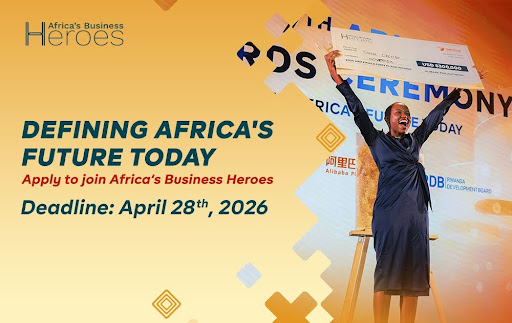
Apply to Africa’s Business Heroes

Africa’s Business Heroes is calling Africa’s boldest entrepreneurs, shaping the future today. If you’re building a high-impact business, this is your moment. Apply for a chance to win a share of the $1.5M prize pool, plus mentorship and access to a powerful pan-African network. Applications close April 28. Start your journey now.

GOVERNMENT

South Africa plans a 3-year reset for its troubled State IT Agency

Image source: TechCentral

South Africa’s Department of Communications & Digital Technologies, the government agency that regulates broadcasting and communications services, has put down a three-year plan to fix the State Information Technology Agency (SITA), the state-owned IT company responsible for managing IT resources for the government. 

Why does it need a reset? If SITA were graded for its performance, it was doing very badly. In the 2024/2025 fiscal year, in its audit, the communications regulator found that the IT agency failed to deliver R12. 1 billion ($729 million) worth of projects. The operator was struggling to function properly; a lack of staff and leadership gaps stalled multiple projects.

Now, the regulator wants to make sure SITA has no excuses in the coming fiscal year.

Rebuilding it brick by brick: The restructuring will happen in three phases. First, SITA mustdefine the problem, then diagnose what happened before designing a new framework for its operation. The third phase is a consultation with stakeholders, and then a final draft of the new business model will be presented.

Planning is the easy part: This is not the first attempt to rejig the agency. Those plans were among the institutional reform priorities for the year ended 2025. So this plan is less about what needs to be done (they already know that) and more about whether it can actually be done this time.

TECHCABAL 4.0

In March 2013, TechCabal published its first article. Thousands of stories later, the work continues, and today, it goes deeper.

TechCabal has always been free. That’s not changing.

We’ve opened a new layer. Reporting that goes further, built on sources you won’t find anywhere else, and told in ways we haven’t tried before. You’re among the first to see it.

Getting in takes less than 15 seconds.

You’re one step away from the other side.

Click the button below to see what TechCabal 4.0 looks like and what it means for you.

Insights

Funding Tracker

Image Source: Success Sotonwa, TechCabal Insights

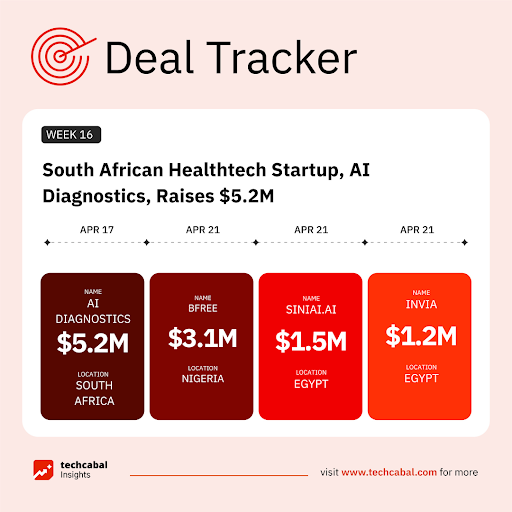
AI Diagnostics, a South African healthtech startup, raised 5.2 million in a funding round led by The Steele Foundation for Hope, with participation from the iFSP Group, Global Innovation Fund, and angel investors. (Apr 17)

Here are the other deals for the week:

  • BFree, a Nigerian fintech startup, raised $3.1 million in debt funding from undisclosed investors. (Apr 21)
  • Sinai.ai, an Egyptian edtech startup, raised $1.5 million in a pre-seed funding round led by KAUST Innovation Ventures and DisrupTech Ventures, with participation from Maza Ventures, YOUXEL Ventures, and several angel investors. (Apr 21)
  • INVIA, an Egyptian fintech startup, raised $1.2 million in seed funding from angel investors and strategic backers. (Apr 21)
  • Swoop, an Eswatini food delivery startup, raised $7.3 million in seed funding from Silicon Valley investors including Long Journey, Variant, Version One, Dune Ventures, Soma Capital, and Zero Knowledge Ventures. (Apr 23)

Follow us on Twitter, Instagram, and LinkedIn for more funding announcements. Before you go, how much did African tech raise at the end of Q1 2026? Find out here.

CRYPTO TRACKER

The World Wide Web3

Source:

CoinMarketCap logo

Coin Name

Current Value

Day

Month

Bitcoin $77,596

– 0.51%

+ 9.08%

Ether $2,304

– 1.96%

+ 6.11%

XRP $1.42

+ 0.60%

+ 0.53%

Solana $85.39

– 0.73%

– 7.58%

* Data as of 06.22 AM WAT, April 24, 2026.

JOB OPENINGS

There are more jobs on TechCabal’s job board. If you have job opportunities to share, please submit them at bit.ly/tcxjobs.

in other news image

Written by: Success Sotonwa, Emmanuel Nwosu and Opeyemi Kareem

Edited by: Emmanuel Nwosu and Ganiu Oloruntade

Want more of TechCabal?

Sign up for our insightful newsletters on the business and economy of tech in Africa.

P:S If you’re often missing TC Daily in your inbox, check your Promotions folder and move any edition of TC Daily from “Promotions” to your “Main” or “Primary” folder and TC Daily will always come to you.

Email Us
  •  

👨🏿‍🚀TechCabal Daily – New airtime lenders are in town

Wazzup. ☀

In the world of Kenyan elites, wristwatches are becoming the new real estate. Yes, instead of land plots, some of the crème de la crème are now putting money into pre-owned luxury watches, because apparently, you can wear your investment and flip it later for profit. What makes this wild is how much it makes sense. Unlike property, a watch doesn’t need permits or months to sell. It can be liquidated in days and carried across borders on your wrist.

If you were to invest in something unconventional, what would it be?

In other news, Nigeria’s elections have a retention problem. A new Zikoko Citizen report predicts what participation in the 2027 election might look like, drawing on trends from previous cycles, and explores what could bring about a massive turnaround.

Read the full report here.

— Yemi

today's edition image

Telecoms

Nigeria’s consumer protection watchdog approves five airtime lenders

Image source: The Punch

After Nigeria’s largest telecom operators MTN and Airtel temporarily suspended airtime lending last week, new players have swooped in to take their place—at least temporarily.

On Wednesday, the Federal Competition and Consumer Protection Commission (FCCPC), Nigeria’s consumer protection watchdog, approved five companies to operate airtime and data lending services: Total TIM Nigeria Limited, Rane Interactive Medien CLS Limited, Mode NG Applications Nigeria Limited, Cloud Interactive Associate Limited, and Coverage Broadband Limited.

The move comes as Globacom and T2, which round up the four telcos operating in Nigeria, have also quietly paused their own lending services, according to our checks.

Will telcos resume airtime lending? Airtime lending has not been scrapped; it is being reorganised. Under the FCCPC’s 2025 regulations, services like MTN’s Xtratime are now classified as consumer credit, requiring proper licencing, disclosure of fees, and clearer accountability.

For users, the immediate question is what happens to existing debt. Telecom operators haven’t addressed this yet.

There is another wrinkle. The newly approved lenders, it is worth noting, do not yet have listed consumer-facing apps in the FCCPC’s disclosure, making it unclear how Nigerians can actually access these services for now.

Between the lines: This is opening the door to new competition. Telcos have long dominated airtime credit, but once they secure approval and return, they may find themselves sharing that space with licenced third-party lenders operating under stricter rules.

What is really happening? Airtime credit is being pulled into the formal lending system, where the business is clearer, and the players are easier to hold accountable.

20+ Markets. One API.

Fincra connects your business to Africa’s payment rails without building market by market. For collection, payout, FX, and settlement through a single integration. See what this means for your business.

companies

M-Tiba is shutting down its health savings wallet

Image Source: M-Tiba

A curious little back story: In 2025, a cyberattack hit M-Tiba, a Kenyan healthtech platform, and went undetected for ten days. That attack exposed the personal and medical information of nearly five million Kenyans, including insurance claims, patient information, and clinical records.

What’s the news here? The same platform is now shutting down its My Health Funds (MHF) wallet, the feature that allowed people to set aside money strictly for healthcare. M-Tiba users have begun receiving refunds of the amount in the wallet into their M-PESA accounts without requesting withdrawals.

There is no confirmed link between the breach and the decision to shut down the wallet, but the timing raises eyebrows. Plus, the explanation that CarePay Limited, M-Tiba’s operator, gave is… thin. The official line is that it is evolving and will now shift its focus to “improving health insurance management.” 

Beyond that, there is very little detail on why the wallet is being retired, how many users were affected, no clarity on how affected users transition, and no real sense of what this new focus will look like. Will this mean deeper partnerships with insurers? A new insurance-led product? Or a full pivot away from individual users entirely? For now, it seems like a product shutdown wrapped in a vague strategy shift. 

While one can make guesses about what might be happening behind the scenes, this is one of those moments where CarePay needs to spill a bit more tea.

TECHCABAL 4.0

In March 2013, TechCabal published its first article. Thousands of stories later, the work continues, and today, it goes deeper.

TechCabal has always been free. That’s not changing.

We’ve opened a new layer. Reporting that goes further, built on sources you won’t find anywhere else, and told in ways we haven’t tried before. You’re among the first to see it.

Getting in takes less than 15 seconds.

You’re one step away from the other side.

Click the button below to see what TechCabal 4.0 looks like and what it means for you.

banking

Absa Kenya is spending $23.2 million on digital banking

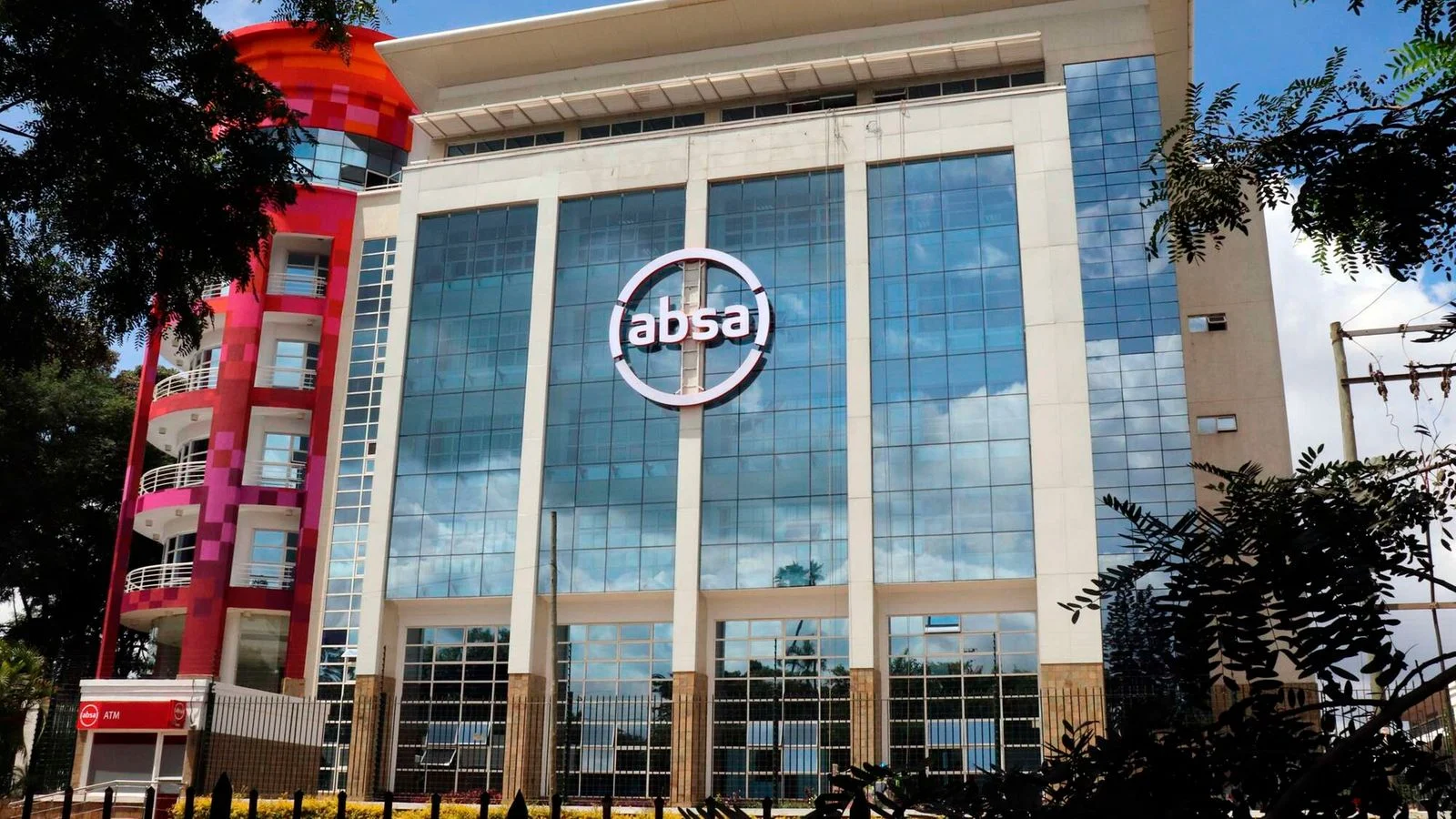
Absa Kenya headquarters in Nairobi. Image source: Absa

Across Africa, walking into a bank branch is becoming a backup plan, as digital payments deepen. Absa Kenya, the country’s seventh-largest bank by assets, is leaning fully into that shift. The lender says it plans to spend up to KES 3 billion ($23.2 million) annually on technology as it pushes more customers toward mobile and self-service banking.

The investment is not new, but it is becoming routine. Absa spent KES 2.16 billion ($16.7 million) on technology in 2025, and now treats digital spend as a recurring cost of staying competitive. The payoff is already visible: 94% of all transactions now happen outside branches, a sharp jump from roughly 40–50% a decade ago.

This is less about innovation and more about survival. Kenya’s banking sector has long been shaped by mobile money, and customer expectations now revolve around speed, convenience, and always-on access. Traditional banks are adjusting or risking irrelevance.

What is really happening? Absa is rebuilding its retail strategy around digital channels, and leadership changes reflect that shift. The appointment of former M-Pesa Africa chief executive Sitoyo Lopokoiyit to lead personal and private banking signals where future growth is expected to come from.

The efficiency gains are starting to show. The bank’s cost-to-income ratio improved to 36.5% in 2025 from 46% a year earlier, while operating expenses dropped 21% to KES 7.35 billion ($56.9 million). At the same time, net profit rose 10% to KES 22.9 billion ($177.3 million), suggesting the digital push is not just about convenience, but also margins.

Zoom out: Kenyan banks are no longer just competing with each other. They are competing with the habits shaped by mobile money, where transactions are instant and physical branches are optional. Absa’s spending signals that keeping up now comes with a permanent technology bill.

Mobility

Chery is bringing its first EV to South Africa

Chery Q/QQ3 EV Image Source: MyBroadBand

Chery, South Africa’s best-selling Chinese car brand, is launching its first fully electric car in South Africa in 2026: the Chery Q.

All the technical ways to describe a cool car: The Chery Q comes with a 42.7kWh battery, up to 400km range, a peak power output of 90kW, a rear-mounted motor, and a cabin that leans heavily into screens and software, including a 15.6-inch infotainment display and a 360-degree panoramic camera.

The EV market is getting busy: South Africa’s new energy vehicles (NEV) growth was valued at R244 million ($14.3 million) in 2024, with about 3,800 units sold, as reported by Forbes Africa.

Competition in this sector is already there from Chinese automakers like BYD and Geely— which recently made its local debut at a starting price of R339,900 ($20,600). Though Chery claims some of the features of the Q car trumps those of the competitor (peak power output), its edge is that it has already built its reputation locally with its non-EV models. 

A familiar name with a heavy past: If the Chery Q sounds familiar, it should. This is a modern reboot of the QQ3, one of the cheapest cars South Africa had seen when it first arrived in 2008. It was cheap, only going for R59,900 ($3,600) at the time. 

However, these cars received a zero-star safety rating in a South African car safety campaign conducted by the Global New Car Assessment Programme (NCAP). While this new version has history, the Chery Q is now getting a second chance to meet a higher safety and car quality expectation.

CRYPTO TRACKER

The World Wide Web3

Source:

CoinMarketCap logo

Coin Name

Current Value

Day

Month

Bitcoin $77,800

– 0.62%

+ 10.90%

Ether $2,343

– 2.30%

+ 10.01%

XRP $1.41

– 2.92%

+ 0.35%

Solana $85.84

– 2.65%

– 4.73%

* Data as of 06.34 AM WAT, April 23, 2026.

Events

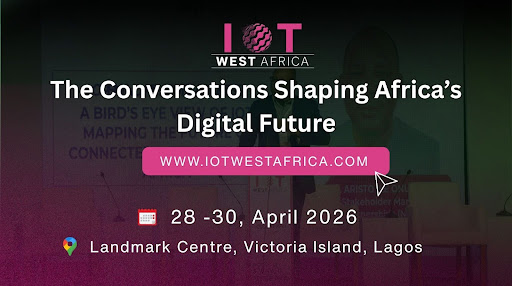
  • The voices shaping Africa’s digital future are taking the stage. From AI and IoT to cloud, connectivity and smart infrastructure, IOT West Africa | Data Centre & Cloud Expo Africa 2026 brings together the leaders building the continent’s next digital chapter. This is where the ecosystem meets, and we’ll see you there. The event kicks off on April 28–30 at the Landmark Centre, Victoria Island, Lagos. Register here to attend.
  • All roads lead to Nairobi on May 7, 2026. Gathered at the Sarit Expo Centre, senior leaders from across Africa’s fintech and payments ecosystem will gather for a day of meaningful connections, market insights, and cross-border collaboration. The focus of the Africa Fintech Live event is on driving real engagement, bringing together industry leaders and emerging innovators to spark strategic conversations that will shape the future of finance on the continent. Secure your early bird ticket now at 50% off
  • On May 6–8, 2026, policy, capital, and innovation in Africa will take centre stage at the 3i Africa Summit. Happening at the Destiny Arena, Accra, Ghana, it will pack operators, investors, and policymakers in one room to answer questions about the continent’s integrated fintech future, and what it’s still missing. Register here to attend.
  • The Africa Tech Summit London 2026 is back for its 10th edition. Held at the London Stock Exchange building in London on May 29, it will feature 350 attendees from over 200 companies, the event will be a small, high-impact gathering of founders, investors, and global partners driving the future of tech in Africa. Use the code TC10 to get 10% off tickets. Apply to attend.
in other news image

Written by: Emmanuel Nwosu and Opeyemi Kareem

Edited by: Emmanuel Nwosu and Ganiu Oloruntade

Want more of TechCabal?

Sign up for our insightful newsletters on the business and economy of tech in Africa.

P:S If you’re often missing TC Daily in your inbox, check your Promotions folder and move any edition of TC Daily from “Promotions” to your “Main” or “Primary” folder and TC Daily will always come to you.

Email Us
  •  

👨🏿‍🚀TechCabal Daily – Kenya freezes Binance wallets

Happy midweek. ☀

Introducing… WhatsApp Premium (because money must be made).

You read that right. WhatsApp is testing paid subscriptions that unlock features like more pinned chats, custom app icons, themed interfaces, and exclusive ringtones and stickers. Fun, but we’ll see how that plays out.

South Africa’s communication regulator, the Independent Communications Authority of South Africa (ICASA), is also side-eyeing the platform and other over-the-top (OTT) services like Netflix. The focus is to open a market inquiry into whether these services are eating into the space that traditional broadcasters once dominated, and what that means for competition and regulation. Findings are expected after the 2026/2027 financial year.

Fingers crossed for whatever ICASA finds.

In other news, Nigeria’s elections have a retention problem. A new Zikoko Citizen report predicts what participation in the 2027 election might look like, drawing on trends from previous cycles, and explores what could bring about a massive turnaround.

Read the full report here.

— Yemi

today's edition image

Telecoms

Nigeria’s Central Bank and telecoms regulator team up to give banks real-time access to telecom data

Aminu Maida, the EVC of Nigerian Communications Commission (Middle) and Cardoso Olayemi, the Governor the Central Bank (Right) of Nigeria during the signing of the MoU. Image source: NCC

Financial fraud in Nigeria has gone beyond stealing passwords or tricking people into sending over sensitive financial information. SIM cards are now identity anchors used in financial services; recycled or swapped phone numbers have become a sort of back door for fraudsters to intercept one-time passwords (OTPs) and move money before anyone notices. The impact is ₦52.26 billion ($37.86 million) in losses in 2024.

Now, the Central Bank of Nigeria (CBN) and the Nigerian Communications Commission (NCC), the country’s telecoms regulator, have signed a new agreement that would allow banks to check mobile number activity before a transaction goes through.

How would it work? At the centre of this partnership is something called the Telecom Identity Risk Management System (TIRMS), a centralised platform designed to track and verify the risk status of mobile numbers. With this new setup, banks can see what’s going on behind a phone number in real-time: whether it has been recently altered, reassigned, flagged for suspicious activity, or is inactive. It’s like sharing intelligence.

What does peeking into this data do? With real-time verification, banks can flag risky transactions before they happen. It will increase scrutiny on phone numbers that show signs of compromise in the system. This could mean that banks can pause authentication steps or transactions tied to those phone numbers before money is transferred. 

Will this reduce fraud? Though this additional data will close a huge gap for banks, it is not a standalone fix. It will likely make it harder for attackers to exploit one of the most common entry points, and frankly, easy-to-obtain methods of identity farming, which are mobile numbers. 

However, the extent of regulatory oversight is still unknown. It is unclear whether banks, for example, will have autonomy to report compromised phone numbers to law enforcement agencies, or how they will handle such cases.

This matters because fraud cases succeed when systems are disconnected. This collaboration could reduce fraud vulnerabilities.

20+ Markets. One API.

Fincra connects your business to Africa’s payment rails without building market by market. For collection, payout, FX, and settlement through a single integration. See what this means for your business.

Cryptocurrency

Kenya freezes accounts of Binance users

Image Source: Zikoko Memes

POV: you’re a Binance user in Kenya, and you wake up to check if your trades are up or down, or maybe even cash out. But suddenly, you can’t access your account or move anything.

It’s not a glitch: Kenya’s Directorate of Criminal Investigations (DCI), an investigative agency, has moved to freeze an undisclosed number of Binance accounts, in a crackdown on crypto-linked fraud, money laundering, and suspected terrorism financing. Binance has told affected users that the restrictions came at the request of authorities.

Crypto must conform: Kenya is under pressure to tighten its financial controls and exit the Financial Action Task Force (FATF) grey list, following Nigeria and South Africa’s exits in October 2025. This list flags countries with gaps in anti-money laundering controls, including crypto. 

The Virtual Asset Service Providers (VASP) Act, passed in 2025, will regulate virtual asset businesses in the country by bringing exchanges and intermediaries under formal oversight. Freezes on accounts such as this seem like early enforcement; authorities acting on suspected risks even as the full regulatory framework is still being operationalised. 

What happens to the frozen accounts? That really depends on what investigators find. Once an account is flagged on such suspicions, it stays restricted while investigations are ongoing. 

Authorities may request transaction histories, identity verification, and links to other flagged accounts to determine whether the funds are tied to illicit activity. Access to their accounts can be restored if they are cleared. Otherwise, their funds could remain frozen for a longer time or be subject to forfeiture under anti-money laundering laws.

20+ Markets. One API.

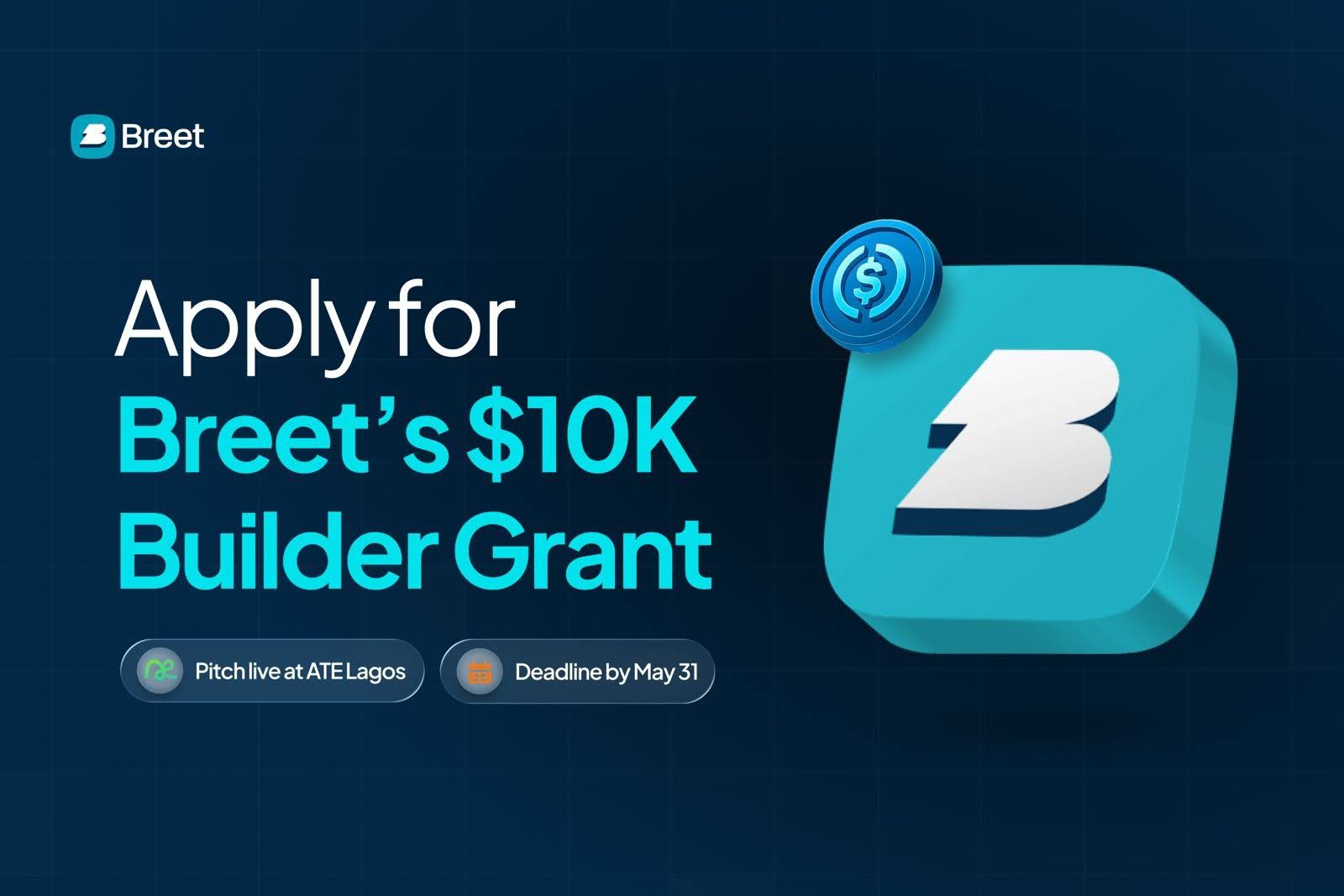
Breet is offering a $10,000 equity-free grant to growth-stage fintech, crypto and payments startups in Africa. Integrate the API, submit your product, and pitch live at ATE Lagos. Two winners get $5,000 each. Deadline by May 31. Learn more.

Regulation

South Africa takes aim at Netflix and WhatsApp as TV money dries up

Image Source: Zikoko Memes

South Africans are watching less traditional TV and spending more time on Netflix and WhatsApp, and the regulator is starting to ask whether that balance is fair. 

The Independent Communications Authority of South Africa (ICASA), the telecoms and ICT regulator, now plans to investigate how over-the-top (OTT) platforms, like streaming and messaging services, are affecting broadcasting revenue, just as the country’s pay-TV market slipped below 7 million subscribers for the first time in five years.

The regulator says services like Netflix, YouTube, and WhatsApp are no longer simple “alternatives” to television, but direct competitors for both audiences and advertising income. Its upcoming market inquiry will look at whether this shift is weakening the financial base of licenced broadcasters. While we smell a fish behind this plan, we still wonder what will come out of this. If OTT streaming platforms like Netflix are, indeed, found guilty, what’s a realistic way to ensure market control or fairness?

Between the lines: This is where the debate turns uncomfortable for traditional media. Pay-TV operators argue that while they carry regulatory obligations, global platforms operate in South Africa without the same rules, yet still pull away viewers and ad spend. Competitive tension is now being packaged under “fair share” discussions.

What is really happening? Telecom operators in South Africa, through the industry body Association of Comms and Technology (ACT), want streaming and messaging platforms to contribute to network costs, arguing that services like Netflix and WhatsApp only work because broadband infrastructure exists in the first place. ICASA will weigh this against broader policy changes already being drafted by the government, including possible content quotas and tax reviews for global streaming platforms.

Zoom out: The timing matters. Traditional broadcasting is shrinking, streaming is growing, and messaging apps have become a default communication layer. ICASA is stepping into a market where old revenue models are already under pressure, and trying to decide who should pay for the infrastructure behind it all, and how much.

TECHCABAL 4.0

In March 2013, TechCabal published its first article. Thousands of stories later, the work continues, and today, it goes deeper.

TechCabal has always been free. That’s not changing.

We’ve opened a new layer. Reporting that goes further, built on sources you won’t find anywhere else, and told in ways we haven’t tried before. You’re among the first to see it.

Getting in takes less than 15 seconds.

You’re one step away from the other side.

Click the button below to see what TechCabal 4.0 looks like and what it means for you.

Mobility

South African carmakers sold a record 664 plug-in hybrid electric cars in March

Image Source: Tenor

South Africans are slowly realising that petrol stations are not the only place to fill up anymore, and plug-in hybrids are starting to reflect that shift in a way that is finally showing up in the numbers.

March marked a record month for plug-in hybrid electric vehicle (PHEV) sales in the country, with 664 units sold, according to the National Association of Automobile Manufacturers of South Africa (Naamsa), the industry group for carmakers.

Why it matters: It is a 130% jump from February and comfortably above the previous record set in September 2025. In Q1 2026, South African carmakers sold over 1,200 PHEVs, already outpacing Q1 2025 levels, and pointing to a market that is picking up speed rather than drifting. The uptake also comes amid petrol price hikes in South Africa, where it increased by 20 cents per litre in March. Another planned petrol hike is already underway in April.

Between the lines: This is not happening in a vacuum. The fuel price pressure and a wave of more affordable Chinese models are doing most of the heavy lifting. Until recently, plug-in hybrids were firmly in the luxury bracket. Now, several options are landing between R500,000 and R1 million, pulling them closer to mainstream buyers.

What is really happening? BYD, the Chinese EV manufacturer, is leading the charge, followed closely by Chery and its sister brands Omoda and Jaecoo. BMW, Volvo, and a handful of legacy automakers are still present, but the centre of gravity is clearly shifting toward Chinese manufacturers offering cheaper, feature-heavy alternatives.

Zoom out: PHEVs sit in a strange middle ground. They are not fully electric, but they offer enough electric driving range to meaningfully cut fuel use for typical daily commutes. In a country where most drivers cover under 50km a day, that hybrid flexibility is starting to feel less like a compromise and more like a practical option.

CRYPTO TRACKER

The World Wide Web3

Source:

CoinMarketCap logo

Coin Name

Current Value

Day

Month

Bitcoin $78,043

+ 2.90%

+ 13.83%

Ether $2,389

+ 3.04%

+ 15.53%

OpenGradient $0.3773

+ 97.10%

+ 97.10%

Solana $87.87

+ 2.74%

+ 1.12%

* Data as of 06.30 AM WAT, April 22, 2026.

Opportunities

  • Applications are open for ClimateLaunchpad, the world’s largest green business ideas competition run by Climate-KIC. The programme helps early-stage climate founders turn rough ideas into viable startups through training, mentorship, and pitch competitions. Entrepreneurs from around the world, including Africa, can apply for the 2026 cohort and compete for up to €10,000 in prize money and access to a global cleantech network. Apply here.
  • Google for Startups: Africa, a three-month hybrid accelerator for growth-stage startups on the continent, is now accepting applications. The accelerator will provides equity-free support for the duration of the programme, mentorship, training, cloud credits, and access to Google’s AI products designed to bring the best of its programmes, products, people, and technology to communities across Africa. Apply here.
  • Google and UpSkill Universe have partnered to relaunch Hustle Academy, now offering free AI and business training to individuals and small businesses across Africa. The programme features 60-minute expert-led webinars and 1-day bootcamps (3–5 hours), covering digital marketing, e-commerce, business strategy, financial management, and AI tools. Open to students, jobseekers, entrepreneurs, and past applicants, it provides practical, hands-on skills that can be immediately applied to grow careers or businesses. Apply here.
in other news image

Written by: Emmanuel Nwosu and Opeyemi Kareem

Edited by: Emmanuel Nwosu and Ganiu Oloruntade

Want more of TechCabal?

Sign up for our insightful newsletters on the business and economy of tech in Africa.

P:S If you’re often missing TC Daily in your inbox, check your Promotions folder and move any edition of TC Daily from “Promotions” to your “Main” or “Primary” folder and TC Daily will always come to you.

Email Us
  •  

👨🏿‍🚀TechCabal Daily – MultiChoice begins Canal+ restructuring

Good morning. ☀

Get ready for Moonshot 2025 🚀

At Moonshot 2025, we’re bringing together the builders, dreamers, and doers who are turning ideas into impact and scaling what’s next for Africa’s digital economy.

Picture this: 5,000 attendees, founders, creators, investors, policymakers, and industry leaders in one space, sharing playbooks, lessons, and finding collaborators who understand the grind of building. This isn’t just a conference; it’s a propeller. Whether you’re fine-tuning your startup, scaling your operations, or creating digital products that push culture forward, Moonshot is the place to gain the insights, connections, and energy to keep building.

Don’t just watch the future take shape, be a part of the force driving it

Get tickets here.

Let’s dive in.

Companies

Multichoice kicks off Canal+ restructuring

Image source: MyBroadBand

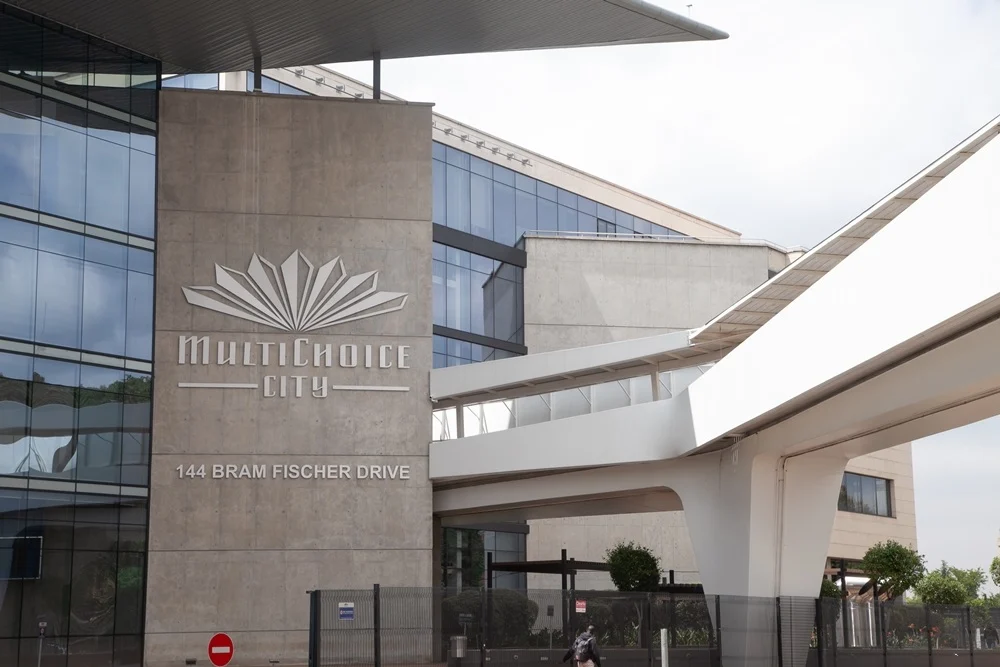
We have no crystal ball, but you likely had two reactions when you saw MultiChoice in today’s newsletter: ‘Did the pay-TV company finally reduce its DSTv prices?’ or ‘has it entered trouble with another regulator?’

Your thoughts are well…your thoughts. But MultiChoice is hogging the headlines again for the high-profile Canal+ takeover. On Tuesday, the company said it has started restructuring its businesses to accommodate the French media outfit operated by the Vivendi Group. The R55 billion ($3.17 billion) buyout, which has been a public spectacle since Canal+ first bought shares five years ago, is coming to an end.

Catch up: After Canal+ made a mandatory buyout offer to acquire 36.6% of the South African pay-TV company in 2024, it triggered a clause that gave the acquirer the right to make a takeover bid. It offered R125 ($7.21) per share to take over MultiChoice. Following approval of the deal, both companies have been scrambling to set up rules that allow Canal+ to own controlling stakes.

State of play: MultiChoice has since established a subsidiary, LicenceCo, which holds its broadcasting licences. It will reduce its controlling stake in LicenceCo to 20% to allow the deal to meet competition and foreign takeover requirements in South Africa.

Questions, questions: With this restructuring, where do consumers fit in? What changes for them? MultiChoice continues to oversee its operations, media content, and branding across platforms, according to CEO Calvo Mawela. The deal is unlikely to include a resource-sharing pact, so Canal+, one of France’s largest streamers, won’t merge its content into MultiChoice or vice versa.

We are edging closer to a monumental shakeup in Africa’s pay-TV market, with one of the continent’s biggest companies at the centre of it.

eCommerce Without Borders: Get Paid Faster Worldwide

Whether you sell in Lagos or Nairobi, customers want local ways to pay. Let shoppers check out in their local currency, using cards, bank transfers, or mobile money. Set up seamless payments for your global online store with Fincra today.

Banking

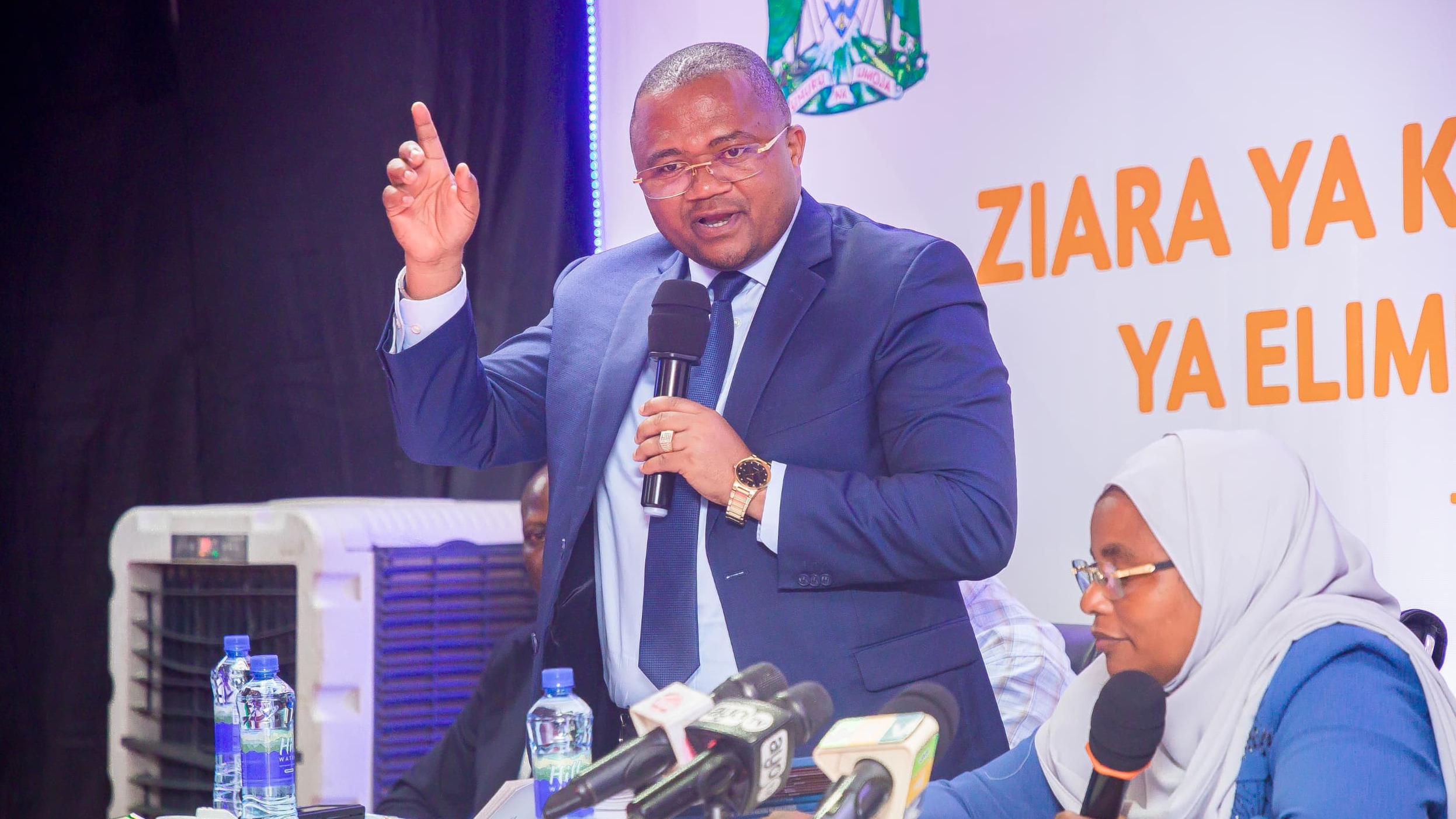
Tanzania’s biggest bank upgrades its core banking system to chase growth

CRDB’s chief executive Abdulmajid Nsekela. Image source: CRDB

Tanzania’s largest bank by assets, CRDB Bank, has replaced its old core banking system, the Fusion Banking Essence (FBE) by Finastra, with Temenos T24, the Swiss platform used by heavyweights such as KCB and Stanbic Bank. This migration happened in early September.

Why? CRDB wants to move beyond East Africa into Dubai, and you can’t really make that big move with outdated infrastructure. Not to mention keeping pace with regional competitors.

Core banking isn’t like upgrading a mobile app. It requires shifting millions of sensitive user records at a go. CRDB’s migration had the usual teething problems of service lags and balance mismatches. But they insist it was a critical move for efficiency.

What’s new? CRDB can now allow people to initiate transactions in English, Swahili, French, Kirundi, and Arabic. The new system also supports transactions in multiple currencies.

Why it matters. By jumping on Temenos T24, CRDB is signalling regional and global players that it is ready to play hardball. The upgrade gives the lender the backbone to chase diaspora money in Dubai and roll out products faster. With the Bank of Tanzania (BoT) nudging local banks to modernise their systems, other East African banks are likely to follow CRDB’s footsteps.

Shop anywhere with Paga’s physical prepaid card

Own every checkout with Paga’s Physical Prepaid Card. Suitable for all your security and speed needs. Just fund, shop, and pay anywhere with confidence. Get yours today.

Companies

South Africa’s Naspers wants to make its shares 5 times cheaper for investors

Image Source: Bloomberg

Remember when Alphabet, the parent company of Google, did a 20-for-1 stock split on the NASDAQ in 2022? Did you buy its shares? Because Naspers, one of Africa’s largest technology conglomerates, is following suit.

When it comes to the stock market. Some may think it’s all just an expensive gamble with a bunch of imaginary numbers and prices for big players that make little sense. Naspers wants everyone to think differently. 

State of play: It announced a 5-for-1 share split on the local bourse, the Johannesburg Stock Exchange (JSE), which will be effective from October 6. A stock split means each existing share is divided into smaller units, so the price per share drops, but the overall value of your investment stays the same. Companies with pricey shares typically use stock splits to make them affordable for smaller investors. 

By the close of market on Tuesday, Naspers’ shares were trading for R5,885.40 ($339) per unit; this means buying 100 shares costs nearly R600,000 ($34,500) before the split, among the highest prices on the JSE and locking out smaller investors. With this new split, the R600,000 ($34,500) investment could become R120,000 ($6,900) for the same ownership stake.

Between the lines: Most of Naspers’ valuation comes from its roughly 23% stake in the Chinese technology giant, Tencent. Tencent is valued at approximately $760 billion. Despite Nasper’s high stake, it is only valued at $53 billion; this gap tends to raise eyebrows. 

The split doesn’t change the company’s value, but it lowers the price per share, boosting liquidity and making the stock more accessible. 

This move is part of a bigger clean-up: Naspers has been buying back shares and tidying up its structure to convince investors that its value should be closer to what its books show.Stock splits can’t solve everything, but they can help close that valuation gap by drawing in smaller investors and improving market trading activity.

Accept Payments with Apple Pay on Paystack!

Anyone can get paid globally. With Paystack and Apple Pay, let customers pay you instantly and securely from 60+ countries. Get started here →

Economy

Nigeria’s inflation rate goes down for the fifth consecutive month

Image Source: TechCabal

Nigeria’s inflation numbers are in, and they are a mixed bag. While inflation has eased for the fifth time in a row, reactions trailing the results question why the numbers don’t seem to match everyday economic reality. In August, Nigeria’s Inflation eased to 20.12%.

The stats say something: Inflation is way down from 32.15% a year ago, meaning prices are still rising, just at a slower rate. Essentially, if your internet bill increased by 20% instead of 30%, you’re still paying more than last year. In 2024, Nigeria’s inflation was one of the highest in Africa. The inflation surge between 2023 and 2024 was mainly due to issues with sourcing foreign exchange, the fuel subsidy removal that increased the cost of logistics, and other agricultural disruptions that increased food prices. 

The Central Bank will decide next week whether to hold interest rates steady in its fight against inflation. Keeping rates unchanged would ease pressure on businesses and consumers who rely on fintech loans for daily expenses, but it could also risk prolonging inflationary pressures.

Nigeria is pushing ambitious economic reforms to boost investor confidence and hit a $1 trillion economy by 2030. But strong headline numbers don’t always translate into relief for ordinary Nigerians. Prices remain high, and consumer spending is still weak.

    HOT TAKE!

    Digital assets make up only 0.2% of global commerce, and stablecoins won’t change that overnight. The tech is impressive, but commerce runs on what people can actually use. For informal retailers, stablecoins are hard to grasp, and no one wants to fiddle with blockchain networks at the point of sale. Until stablecoin payments are built into familiar tools like cards, POS machines, and mobile apps that make the blockchain invisible, it’s hard to see them powering street-level commerce anytime soon.

CRYPTO TRACKER

The World Wide Web3

Source:

CoinMarketCap logo

Coin Name

Current Value

Day

Month

Bitcoin $115,207

– 0.58%

– 2.03%

Ether $4,514

– 3.13%

+ 0.86%

Avantis $1.12

+ 8.00%

+ 278.42%

Solana $234.32

– 3.55%

+ 21.83%

* Data as of 05.30 AM WAT, September 17, 2025.

Opportunities

  • Applications are now open for Techstars’ Spring 2026 accelerators. Startups that make it in get a $220,000 investment, mentorship, lifetime access to a global network of investors and alumni, plus over $4 million worth of partner perks. Techstars says graduates raise an average of $1 million+ after the programme. Apply by November 19.

Written by: Opeyemi Kareem and Ifeoluwa Aigbiniode

Edited by: Ganiu Oloruntade

Want more of TechCabal?

Sign up for our insightful newsletters on the business and economy of tech in Africa.

P:S If you’re often missing TC Daily in your inbox, check your Promotions folder and move any edition of TC Daily from “Promotions” to your “Main” or “Primary” folder and TC Daily will always come to you.

Email Us
  •  

👨🏿‍🚀TechCabal Daily – Takealot wants a lot

Good morning. ☀

It’s safe to say Multichoice Nigeria’s legal team isn’t having a good morning as they grapple with a hefty ₦766 million (500,000) fine from the Nigeria Data Protection Commission (NDPC) for violating the Nigeria Data Protection Act (NDP Act).

On a different note, how’s your second half of the year going? If you’re Gen Z, odds are you’re venting on TikTok about low pay, zero flexibility, and office drama. Owl Labs’ 2024 report says 43% of workers are more stressed than last year and 89% see no improvement in their work-related stress. The grind isn’t getting easier. How’s work treating you?

PS: If you’re curious about the tech ecosystem in Francophone Africa, sign up for our latest newsletter, TNW: Francophone Africa. We’ll bring the biggest insider insights and analysis of the region’s technology landscape bi-monthly. Sign up here and be the first to know.

Let’s get into today’s dispatch!

Banking

Nigerians can now swipe their naira card globally again

Image Source: Zikoko Memes

After three years, Nigerian banks have finally opened the gates for naira debit cards to roam globally again. That means you can now pay for your Apple Music, Amazon orders, or even that random item on AliExpress with the same card you use for Jumia.

United Bank for Africa (UBA) and Wema Bank are leading the comeback, confirming that their Premium Naira Cards and Naira Mastercards are once again enabled for international transactions—online transactions, POS machines, and ATMs abroad.

Why was there even a restriction? The year was 2022 and the survival of key sectors in the Nigerian economy were under threat. Foreign exchange was scarce, oil revenues were shaky, and Nigeria’s Central Bank’s managed exchange rate wasn’t helping. Eventually, financial institutions pulled the plug on global naira transactions. To keep their playlists going, people turned to virtual dollar cards from fintechs like Chipper Cash, Eversend, Cardtonic, and Payday.

What changed? It appears the confidence in Nigeria’s foreign exchange market is slowly creeping back to Nigeria’s Central Bank. The naira has shown signs of appreciation and diaspora remittances are now over $20 billion.

This is a curveball for virtual card providers. When banks locked international payments, startups like Chipper Cash, Eversend, Cardtonic, and Payday, stepped in with dollar cards. But now? These companies will have to step it up: offer better rates, more flexibility, or risk becoming irrelevant. 

This is because not everyone will keep paying extra for what their naira card can now do natively. And in Nigeria’s fast-moving payment space, only the most adaptable will survive the next chapter.

Save more on every NGN transaction with Fincra

Stop overpaying for NGN payments. Fincra’s fees are more affordable than other payment platforms for collections & payouts. The bigger the transaction, the more you save. Create a free account in 3 minutes and start saving today.

Get the best African tech newsletters in your inbox

E-commerce

Takealot wants to hire 18,000 new workers from the ruins of the Post Office

Image Source: Zikoko Memes/TechCabal

18,000 workers who lost their jobs at South Africa’s Post Office, one of the country’s largest public employer, are about to get a new home.

Takealot is in talks to hire up to 18,000 retrenched workers from the South African Post Office, as part of a government-backed plan to repurpose state talent for private sector growth. 

The plan, confirmed by the Department of Communications on July 3, is still under discussion. But the direction is clear: Takealot is ramping up its logistics workforce at scale ahead of a delivery war with the likes of new entrants Amazon, Shein, and Temu.

Why does it matter? Takealot is expanding aggressively to maintain its lead in South Africa’s e-commerce market. Amazon’s full local launch in 2024 changed the game. In response, Takealot has grown its revenue by 15%, offloaded non-core assets like Superbalist, and invested in AI tools, dark stores, and delivery operations. Now it’s looking at labour—skilled, available, and already trained in logistics basics.

This potential hiring wave reveals where Takealot’s focus is: building delivery muscle and shifting to an operations-heavy setup. Many of these former Post Office workers already know routing, package handling, and customer service. They also live close to the communities that Takealot wants to reach.

The online retail giant is also exploring township delivery programmes and driver development. It wants to build a national last-mile network that’s faster, more flexible, and harder for Amazon to replicate.

The state sees this as an opportunity to soften the blow of the Post Office collapse. Takealot sees a logistics edge and political capital. South Africa may get both jobs and an improved service delivery. A win for everyone involved.

Drive your business forward with Doroki

Whether you are a retail store, restaurant, pharmacy, supermarket, salon or spa, Doroki helps simplify your operations so you can focus on what matters most: your customers and your growth. Manage your business smarter, start here.

Internet

Egypt just landed two subsea cables with 126 TeraBits per second capacity

Subsea internet cables/Image Source: The Spectator

Telekom Egypt and SubCom just pulled off two key landings of the SEA-ME-WE-6 subsea cable system—one on the Mediterranean and the other on the Red Sea. 

SEA-ME-WE-6: Southeast Asia-Middle East-Western Europe 6 (pretty cool, huh?)

Why does this matter? This isn’t just confusing wiring talk, and the SEA-ME-WE-6 isn’t just a shiny new pipeline. It is built to deliver a design capacity of 126 terabits per second, enough to handle millions of high resolution video calls all at the same time. Think faster internet connection, fewer network outages, and better protection against cable disruptions, like the seismic shock that hit West Africa in 2024.

For Egypt, it strengthens its role as a digital transit hub. The country already hosts 10 cable landing stations, supports 15 live subsea cables, and has five more under construction. But the SEA-ME-WE-6 puts Egypt back at the centre of the internet map. With growing demand for high-speed connections driven by cloud services, remote work, and digital trade, Egypt is well-positioned to monetise its geography.More global players will pay to move traffic through its routes, and more investors will look at Egypt’s internet economy seriously. With this, comes more economic power and digital influence for Egypt.

The signal is clear: Egypt isn’t just hosting internet traffic, it is routing the future. Soon, the world won’t just be connecting to Egypt, it will be connecting through it.

Accept in-person payments with Paystack Virtual Terminal!

Anyone can sell in-person. With Paystack Virtual Terminal, you can accept secure payments anywhere using just a QR code. No hardware needed. Learn more here →

Get the best African tech newsletters in your inbox

Telecoms

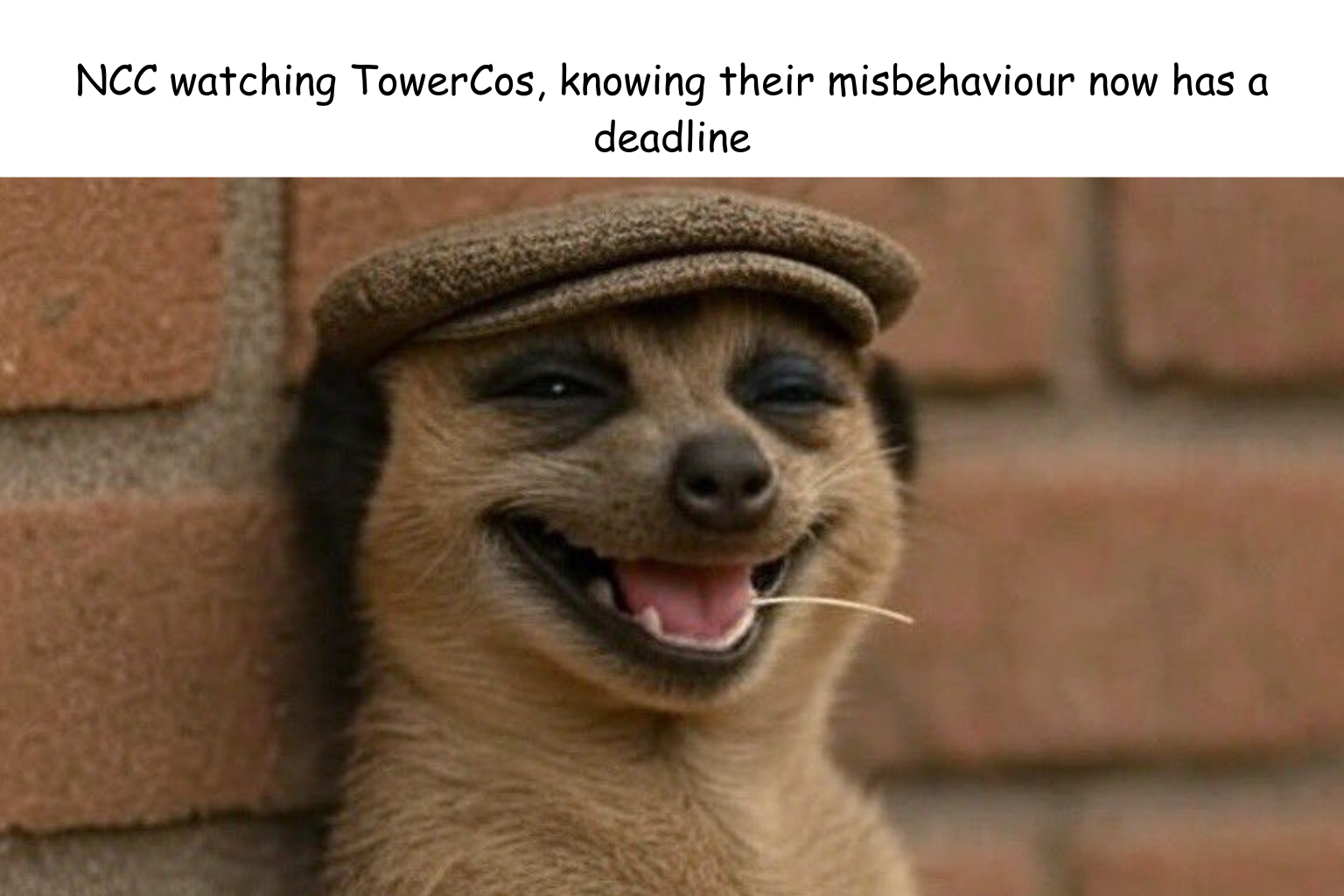
NCC gives tower companies until August to improve internet quality or face fines

Image Source: TechCabal

Dear Nigerians, the next time your internet glitches midway through your Netflix binge or a Zoom call, the NCC wants you to know who is responsible.

In a sweeping change, the Nigerian Communications Commission (NCC), the regulator for telecom firms and internet service providers (ISPs), has said it will introduce a portal for tower companies to report downtimes on their network facilities. It has also given them an August deadline to improve their infrastructure or face fines.

Why does this matter? According to the NCC, Nigeria experiences an average of two network outages daily, with a total of 349 major outages recorded across the country between January and June 2025.

The NCC wants every company involved in the network connectivity value chain to be held accountable. When your internet connection frustrates you next time, it’s not enough to blame MTN, Airtel, Glo, or 9mobile. There are more players behind the scenes that make internet connectivity happen. Tower Companies (TowerCos) are one of them; they manage and maintain the cell towers you see in your streets, lease them to telecom companies, and charge for it. When their infrastructure fails, it affects you too.

Zoom out: Since the telecom tariff hike took effect in February, Nigerians have been paying more for internet, voice, and SMS services. Now the NCC is saying: if consumers must pay more, then service providers—especially TowerCos—must deliver more. And fast. 

In September 2024, the telecom regulator reviewed its Quality of Service (QoS) benchmarks for mobile operators to improve internet quality and call drop rate. As part of that review, mobile operators now face a fine of ₦5 million ($3,300) if they fail to improve their service, and an additional ₦500,000 ($330) daily for the period the infraction lasts.

TowerCos too, like mobile operators, will get the same accountability treatment. No more excuses about diesel costs or unpaid bills from mobile operators. The Commission has made it clear: downtime has a deadline. And it expires in August.

Women, Apply to TC’s Battlefield Mentorship Programme.

If you’re a Nigerian woman in middle management with an ambitious idea and a passion to build, this is for you. TechCabal Battlefield and Ventures Platform are offering a mentorship program to help you explore and build your first tech-enabled venture. You’ll get practical insights, honest conversations with founders and investors, and a 1-on-1 session with venture builders and ecosystem enablers. Apply here→

CRYPTO TRACKER

The World Wide Web3

Source:

CoinMarketCap logo

Coin Name

Current Value

Day

Month

Bitcoin $109,191

+ 1.09%

+ 1.43%

Ether $2,577

+ 2.59%

+ 3.59%

XRP $2.27

+ 2.02%

+ 4.21%

Solana $151.93

+ 3.11%

+ 1.37%

* Data as of 06.15 AM WAT, July 7, 2025.

Introducing, The Naira Life Conference by Zikoko

This August, the Naira Life Con will bring together wealth builders, entrepreneurs, financial leaders, and everyday Nigerians to share their experiences with earning, managing, and spending money. Think: bold conversations, immersive workshops, and content tracks that hand you a playbook for building real wealth. Get early bird tickets now at 30% off only for a limited time.

Opportunities

  • MEST Africa has opened applications for its 2026 AI Startup Programme. The 12-month training and incubation programme will equip West African software developers aged 21–30 with the skills to build scalable AI startups. Selected participants will undergo seven months of hands-on training in Ghana starting January 2026, followed by a four-month incubation for the most promising teams. Applications close August 22, 2025. Apply here.
  • Applications are still open for the 2025 FATE Institute Fellowship, a two-year, part-time and virtual programme for experienced Nigerian professionals passionate about entrepreneurship and policy reform. The fellowship is open to candidates with at least 10 years of relevant experience and a completed or ongoing Master’s or PhD in fields like Economics, Law, or Political Science. Fellows will work remotely, contribute to research on Nigeria’s entrepreneurship ecosystem, engage with policymakers, and take part in virtual policy discussions, without needing to leave their current roles. Apply by July 25.
  • We’re launching TechCabal Insights Market Researcher™, a tool that helps you find and analyse African tech and business data in seconds. Whether you’re looking for startup funding numbers, market trends, or investor activity, it does the digging for you—fast and accurately. Be the first to try it. Join the waitlist.

Written by: Opeyemi Kareem and Emmanuel Nwosu

Edited by: Faith Omoniyi

Want more of TechCabal?

Sign up for our insightful newsletters on the business and economy of tech in Africa.

P:S If you’re often missing TC Daily in your inbox, check your Promotions folder and move any edition of TC Daily from “Promotions” to your “Main” or “Primary” folder and TC Daily will always come to you.

Email Us
  •  

👨🏿‍🚀TechCabal Daily – DStv tests out weekly payments

Wazzup!

How much do you know about technology in Francophone Africa? What are the region’s most important startups or crucial policy developments around tech innovation? We’re excited to partner with Lina Kacyem, Investment Manager, Launch Africa Ventures to introduce a web-only newsletter about tech in Francophone Africa. 

Lina has almost twenty years of experience in various sectors of the financial industry and is the co-founder of the angel network, Next Millennia Angels. As an investment manager, Lina leads investments in Francophone Africa and will bring decades of first-hand experience, insider insights and analysis of the region’s technology landscape into curating a newsletter that will help you and our wider audience learn about the tech innovation, policy, culture, and economy as it unfolds in Francophone Africa. 

Expect a dispatch every two Tuesdays, beginning tomorrow. Sign up here.

Streaming

DStv’s weekly subscription test: A new chapter in pay-TV?

Image Source: MultiChoice

We’ve heard Multichoice’s 9% year-on-year revenue decline in the recently ended financial year. We’ve heard of their 1.2 million decline in subscribers. Now, we are hearing that the pay-TV giant has quietly started testing weekly subscription plans in Uganda for the last seven weeks. 

Users can now pay weekly, instead of paying for a full month. If this trial gains traction, it could spread to the company’s other markets in the coming months.

Why the sudden change? The short answer: people aren’t paying like they used to. Tough macroeconomic situations have made many users cut back on pay-TV, and DSTV wants to adapt. Weekly payments might feel less heavy for users.

What does this mean for viewers? In addition to weekly payments, this move means there’s some flexibility on the horizon, but not full control. MultiChoice still doesn’t believe in customers building their bundle by choosing channels. However, it is exploring an offering where customers could get a base product and then add channels to it. This is in line with its recent plan to unbundle SuperSport from its offerings.

Zoom out: If weekly plans catch on, could they replace monthly plans? Would paying week by week turn out to be cheaper, or become more expensive over time? Could this move bring back old users or lure people away from Netflix and other streaming services? 

It’s still in its testing phase, but it is clear that DStv knows it has to evolve or risk being left behind.

Join Fincra for an Exclusive Networking Mixer at iFX Expo, Cyprus.

Fincra is co-hosting “AI-Powered Fintech and Blockchain” at iFX Expo, Cyprus, with Quidax. Join the brightest minds in fintech and blockchain for insightful panels & networking. Limited spots – RSVP here.

Get the best African tech newsletters in your inbox

Mobility

Tesla, the popular EV company, has opened an office in Morocco

Image Source: TechCabal

It looks like Elon Musk wants to lock in again.

After months of playing right-wing politics and being buddies with US President Donald Trump, Musk, the CEO of Tesla, has decided to turn his focus back on his companies.

In his first move after his very public, messy exit from the White House, Musk’s Tesla, the company which makes electric cars, has opened an office in Casablanca, Morocco, with an initial investment of $2.75 million. This is the first time the electric car company will enter an African country—and it’s an interesting play.

Tesla will make and sell its electric cars in Morocco, along with providing energy solutions like charging stations, solar panels, and photovoltaic technologies. 

With a presence in Africa, Tesla can control the launch, distribution, and after-sales services of its cars in the market. This is a value chain it previously controlled remotely from the US. People didn’t just steer clear of buying a Tesla because of the lack of infrastructure (South Africans buy electric cars), but the lack of boots on the ground made them second-guess Tesla. This will change things.

But why Morocco? Tesla likely chose Morocco for its strategic location; the region offers a window into the rest of Africa—with cheaper duty-free exports—and also gives the mobility company the opportunity to export to Europe, Gulf countries, or the rest of the Middle East.

Again, with Trump’s “big, beautiful bill” threatening to cut EV subsidies—which have made Tesla cars affordable for Americans over the years—the car company could be looking elsewhere for growth opportunities.

Tesla is entering a $2.56 billion shared mobility market where longtime competitor, China’s BYD, already exists. In Morocco, Renault, Dacia, and Hyundai sell the most cars due to their low-cost maintenance, yet EV demand—especially for e-bikes—is growing. 

Whether Tesla will start making e-bikes is something we cannot answer yet, but our guess is it will try to create demand for its cars. If you’re a Moroccan reading this newsletter, this news will make you happy. This author’s dream car is a Tesla.

Order physical Paga cards, spend with confidence.

Tired of declined payments? Avoid the side-eyes at the cash till with Paga’s physical prepaid card. Designed to give you control, security, and ease. Fund and spend with confidence. Get yours today!.

Startups

Moove eyes $1 billion valuation with planned $300 million raise

Image Source: Tenor

From Lagos to Miami, Moove is on the move to become a unicorn. 

The Uber-backed Nigerian startup wants $300 million, a cash injection that could drive its valuation over the $1 billion mark, earning it a unicorn badge. 

“What’s this $300 million for?” See it as fuel for the next lap. Moove is growing (and expanding) at breakneck speed. The company’s revenue has climbed to $360 million from $115 million in just a little over a year. In January, it acquired Kovi, a Brazilian urban mobility provider that finances ride-hailing drivers, marking its footprint in Latin America. 

The acquisition came after Moove’s partnership with Waymo, a self-driving vehicle division, to manage fleets of autonomous vehicles in US states, including Phoenix, Arizona, and Miami, Florida. 

If you don’t know Moove: This startup buys cars with bank loans and offers them to Uber drivers through a drive-to-own model—meaning the drivers can pay for the cars with part of their earnings until they eventually own them.

The new capital will power its expansion ambitions and strengthen its US operations, pushing it further into the world of self-driving cars. This isn’t just another startup trying to bulk up on funding. Moove is plotting a full-blown global takeover, from Lagos to London, and to Waymo robo-taxis in the US.

Where the road leads for Moove: Although the company’s current agreement with Waymo is limited to fleet management, it plans to purchase AV-enabled cars from manufacturers and lease mini-fleets of robotaxis to individuals or businesses. Moove’s ambition is to become a key player in the autonomous mobility ecosystem.

If Moove lands this $300 million, it will possibly become a key infrastructure layer for autonomous vehicles, signalling that African-born startups can lead in shaping global tech infrastructure, not just participate in it.

Stay up to date with the latest Paystack news!

Subscribe to Paystack for a curated dose of product updates, insights, event invites and more. Subscribe here →

Get the best African tech newsletters in your inbox

Cryptocurrency

CBEX Ponzi scheme: Nigerians need regulators to save them from themselves

Image Source: Zikoko Memes

It’s sad that despite multiple media reports, warnings, and red flags, many Nigerians are still hooked on CBEX, the Ponzi scheme that took the country by surprise in April. 

After freezing withdrawals, CBEX is now asking users to pay a $100 “verification fee” to get their money back.

This makes no sense. A platform that owes you money shouldn’t ask for more. It’s like charging people to unlock the door you already locked from the outside. Classic Ponzi behaviour.

Remember Racksterli? The platform collapsed in 2021, then returned with a dummy site asking users to keep engaging. People kept paying in, but no one got paid out.

Our theory on CBEX is simple: the money is gone. And in its final days, it’s trying to squeeze more out of desperate users to “pay them back.” And sadly, some are still falling for it. According to engagements seen in Telegram groups, users who pay the fee are added to a “private” group to talk to CBEX admins about repayments.

The shuffle of Nigerians toward predatory schemes like CBEX—stemming from greed or desperation at this point—is driven by a deep-rooted lack of financial education. CBEX promised steady monthly returns from crypto futures trading. But if you know anything about trading, you know returns are never guaranteed.

Regulators need to step up. The Securities and Exchange Commission (SEC), for example, could work with telecom operators in the country to block access to known Ponzi websites like CBEX. It might not solve everything, but it could slow the damage.

For now, CBEX says it will pay 50% of debts by June 25. Fingers crossed, but the Ponzi platform remains a ticking time bomb.

Introducing, The Naira Life Conference by Zikoko

This August, the Naira Life Con will bring together wealth builders, entrepreneurs, financial leaders, and everyday Nigerians to share their experiences with earning, managing, and spending money. Think: bold conversations, immersive workshops, and content tracks that hand you a playbook for building real wealth. Get early bird tickets now at 30% off only for a limited time.

CRYPTO TRACKER

The World Wide Web3

Source:

CoinMarketCap logo

Coin Name

Current Value

Day

Month

Bitcoin $106,617

+ 0.72%

+ 2.95%

Ether $2,610

+ 2.44%

+ 4.75%

Hosico $0.02566

+ 11.91%

+ 16.92%

Solana $157.35

+ 7.21%

– 6.37%

* Data as of 06.45 AM WAT, June 16, 2025.

Job Openings

Written by: Opeyemi Kareem and Emmanuel Nwosu

Edited by: Faith Omoniyi

Want more of TechCabal?

Sign up for our insightful newsletters on the business and economy of tech in Africa.

  • The Next Wave: futuristic analysis of the business of tech in Africa.
  • TC Scoops: breaking news from TechCabal

P:S If you’re often missing TC Daily in your inbox, check your Promotions folder and move any edition of TC Daily from “Promotions” to your “Main” or “Primary” folder and TC Daily will always come to you.

Email Us
  •