
Vue normale

Reçu avant avant-hier
  • ✇Afrocritik
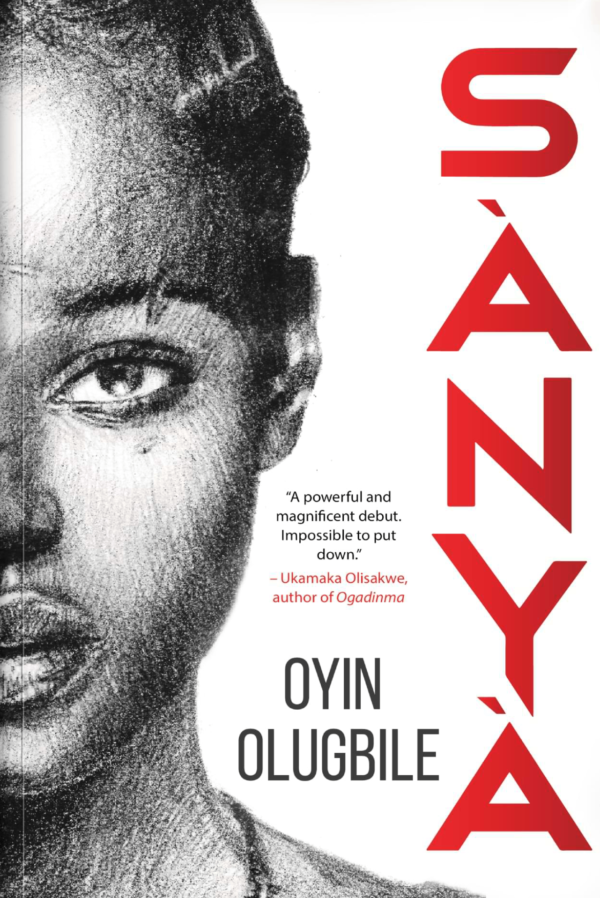
  • “Sanya” Review: Oyin Olugbile’s Debut Novel Is a Creative Retelling of Sango as a Woman Warrior
    It is perhaps this deep grounding in Yoruba history and mythology that earned Sanya a spot on the shortlist for the Nigeria Prize for Literature 2025. And deservedly so. By Evidence Egwuono  Literature, among many other things, serves as a mirror to society. Perhaps no writer embodies this idea more profoundly than the venerated William Shakespeare. Through his tragedies, Shakespeare revealed the dangers of unchecked power, unbridled ambition, and the inevitable consequences of hu
     

“Sanya” Review: Oyin Olugbile’s Debut Novel Is a Creative Retelling of Sango as a Woman Warrior

12 septembre 2025 à 07:12

It is perhaps this deep grounding in Yoruba history and mythology that earned Sanya a spot on the shortlist for the Nigeria Prize for Literature 2025. And deservedly so.

By Evidence Egwuono 

Literature, among many other things, serves as a mirror to society. Perhaps no writer embodies this idea more profoundly than the venerated William Shakespeare. Through his tragedies, Shakespeare revealed the dangers of unchecked power, unbridled ambition, and the inevitable consequences of human choices—whether seemingly good or bad. 

At its core, his work reflects the nuances and complexities of human nature. For instance, Macbeth’s extraordinary battle skills eventually gave way to an insatiable thirst for power, fostering a dangerous sense of invincibility that ultimately led to his downfall.

As a research student, it is easy to observe that Oyin Olugbile must have drawn deeply from these invaluable lessons in literature. What is especially commendable, however, is the way she has domesticated and recreated such lessons in her debut novel, Sanya. In her novel,  Olugbile offers a fresh, creative perspective on the mythology of Sango, one of the most significant primordial beings in the Aborisa religious system.

Sanya begins with a prologue that establishes the historical premise of the entire story. It follows a chronological storytelling style, reminiscent of tales-by-moonlight narratives about the Yoruba pantheon, but with a particular focus on the Orisas. Although fictional, the prologue draws from historical accounts and serves as a creative retelling of the mythological foundations upon which Sanya is built.

Sanya
Sanya

The main story introduces us to a sickly child, Dada, born with locs into the family of Ajoke and Aganju, an otherwise ordinary couple in Banire village. The couple, plagued by fear of Dada’s fragile health, desperately seeks more children. After several inquiries and the heartbreak of stillbirths, the eponymous character, Sanya, is finally born. Her arrival disrupts the seemingly ordinary lives of the family. Consequently, the sudden deaths of Ajoke first after childbirth and Aganju months later propel both siblings into a new phase of life with their mother’s twin sister in Aromire village. They gradually move toward fulfilling a prophecy in which they both play crucial roles, though they remain unaware of its significance.

The next time Sanya appears is in Part II, now a fourteen-year-old lanky teenager described as having “sturdier shoulders than her brother. Her arms had small, firm muscle mounds, and her legs, sticking out from her buba and adire shorts, seemed to go on forever”. 

This physical portrayal stands in stark contrast to her brother, Dada, who is depicted as “as weak as an okro plant, and anyone could bend him to their will by just applying a little force.” As the stronger and younger of the two, Sanya naturally assumes the role of protector. This sense of duty not only defines her relationship with Dada but also serves as the catalyst for many of the actions and conflicts that unfold in the later parts of the novel.

As the children grow, their differences—particularly their strengths and weaknesses—become more pronounced. What Dada lacks in physical strength, he makes up for with his gift of clairvoyance, though this ability also serves as his greatest vulnerability. He is the more introspective of the two, and we encounter him primarily through his stream of consciousness rather than through direct action.

Sanya, on the other hand, is driven largely by impulse. Her extraordinary physical strength fuels her brazenness, but she remains largely oblivious to her surroundings. Unlike her brother’s reflective nature, Sanya is defined by her actions. This contrast is evident from her first act of “saving” Dada, where the omniscient narrator highlights her personality: “Sanya continued talking, unaware of her brother’s thoughts… Her loud voice disturbing the birds…”. These contrasting traits are gradually deepened as the narrative unfolds, ultimately manifesting in the defining choices and actions of each character.

In many African cosmologies, dreams are understood not simply as psychological by-products but as spiritual experiences. They act as conduits between the human and the supernatural, providing warnings, revelations, or glimpses of destiny. 

Oyin Olugbile’s Sanya situates itself firmly within this African paradigm. Both Sanya’s and Dada’s dreams are not abstract psychological states but direct precedents of future realities. Dada’s opaque vision of a rivalry with his sister over a throne foreshadows the eventual conflict that shapes their intertwined destinies. Sanya’s dream encounter with her mother similarly becomes a literal turning point in the novel. In the dream, she is compelled to swallow a stone, which materialises in reality as a consuming, almost invincible strength in battle.

This spiritual empowerment, however, becomes uncontrollable. Sanya’s inability to master her newfound power culminates in the murder of Ropo, her brother’s bully, exposing the double-edged nature of divine gifts. The act disrupts the careful efforts of her aunt, Abike, who attempts to shield Sanya from a prophesied destructive path. Yet, true to the logic of African cosmology, destiny proves inescapable. On the eve of her arranged marriage, Sanya abandons Abike’s plan and flees, stepping into a future which is seemingly unknown, yet already etched into her fate.

After Sanya’s disappearance, Dada struggles with conflicting emotions: “A part of him, some dark part, was relieved that he would no longer be smothered by his sister’s need to protect him… but those feelings were also conflicted by a childish anger that Sanya had broken her promise to always be there for him.” As the novel progresses, however, and he gradually comes into his own—eventually crowned the new Kabiyesi of Banire—he concludes that it is best for his egocentric sister to remain far away, lest she undermine his authority and efforts.

Meanwhile, Sanya’s disappearance marks the beginning of her transformation. She wanders through an unknown path and emerges profoundly changed: “…she was noticeably older and looked fierce, as though well-cooked in the flames of a life she could not remember”. 

Oyin Olugbile
Oyin Olugbile

Her growth, however, extends beyond her physical appearance; she evolves into a formidable warrior. Finding herself in Oluji village, whose king has just been murdered by marauders, she rallies the few remaining warriors and leads them to victory. After months of living among the people and proving her strength, she is crowned king—mistakenly, under the assumption that she is a man due to her masculine appearance.

Both siblings rise to prominence, yet Dada’s determination to avoid his sister Sanya, rooted in the fear of his prophetic dream, inevitably erodes under the weight of destiny. His futile resistance mirrors the Shakespearean insight that human beings are often powerless before larger cosmic forces: “As flies to wanton boys are we to the gods; they kill us for their sport”. 

Indeed, Sanya offers a creative retelling of the story of Sango, but with a dynamic focus not only on power but also on the nuances of human emotions and relationships. One such instance is the sibling rivalry between Sanya and Dada. 

Because of his physique and frail health, Dada continues to nurse a wounded ego. His sister looks down on him, believing he is incapable of much, but Dada is determined to prove everyone wrong. When he gets the chance to become king, he accepts it as an opportunity to finally demonstrate his worth. 

However, Sanya reappears and, despite her earlier promise, reclaims the spotlight amidst the praises of the people of Banire. She, too, is crowned king, and from this point Dada begins to plot her downfall. Sanya, however, blinded by fame and adulation, remains unaware of her surroundings and does not see Dada’s schemes until it is too late. Her fall results largely from her hubris or pride rather than from any preternatural force.

Beyond pride, Sanya’s downfall also stems from her unchecked powers and overreaching ambition. Like Macbeth, she believes she can act without consequence. Her decision to subsume her brother’s kingdom under her control, as well as her refusal to heed Oya’s warnings about the dangers of her relationship with Osoosi, ultimately led to her tragic end

Although this book is undeniably a work of creative brilliance, it is not without its limitations. My first critique concerns the implicit message it conveys about femininity. In an interview with Literature Voices, Oyin Olugbile subtly distanced herself from the claim that she was reimagining Sango through female instincts but rather from a creative lens. 

Yet, when gender is at stake, neutrality is hardly possible. While Sanya is nominally identified as a woman, the text offers little to substantiate her femininity. As the narrator observes, “The only hint of femininity about her, [were] mere nubs where breasts should be”. Her physicality and attributes are consistently coded in masculine terms—strength, bravery, and fearlessness.

In contrast, her brother Dada is characterised through weakness, vulnerability, and, at times, effeminacy. This juxtaposition produces a troubling implication: that strength and authority are inherently masculine qualities, while weakness and fragility are aligned with femininity. 

Rather than disrupting patriarchal binaries, the novel inadvertently reinforces them, suggesting that power cannot be embodied in a recognizably feminine form. Thus, while Sanya succeeds as a mythological and literary reinvention, and attempts to blur the importance of gender in matters of power (see this excerpt: “If they did not feel that her deeds were more important than her gender, then it was their own failing rather than her problem”), it reinscribes stereotypes it might otherwise have subverted.

Sanya
Sanya (Source: Masobe Books)

Another criticism is the way the Orisa, Esu, is portrayed. In the Aborisa religious tradition, Esu is a trickster god and a divine messenger. As Wole Soyinka points out, people often blame Esu for everything evil, even though he is not evil at all. 

In Sanya, however, Esu is shown as exactly that—an evil figure, a disruptor of order, described as one who was rejected in heaven and cast down to earth. All through the novel, Esu appears in dark, menacing terms as the ultimate source of destructive dark power. The issue here is that this repeats a long-standing distortion. By painting Esu as purely evil, the book leans into the Euro-Christian view of Esu, rather than reflecting his true role in Yoruba belief.

Among other things, what makes Sanya such a remarkable work is the way it reimagines an important story in Yoruba mythology, one that deserves to be passed down from generation to generation. But beyond that, its real brilliance lies in its layered portrayal of human personalities and their complexities. 

The novel’s ending is not about punishment for wrongdoing or reward for making the right choices. Instead, it holds up a mirror to readers, showing us that binaries—right and wrong, fair and unfair—are often illusions. Sanya is the kind of novel that pushes us to question ideas of partiality, impartiality, fairness, and justice, all through the lens of history, culture, and myth.

It is perhaps this deep grounding in Yoruba history and mythology that earned Sanya a spot on the shortlist for the Nigeria Prize for Literature 2025. And deservedly so. Sanya is not just a book to admire for its beauty; it is a work that should be shared and taught.

Evidence Egwuono Adjarho is a dynamic and evolving creative with a flair for literature and the arts. She finds joy in reading and writing, and often spends her free time observing the world around her. Her interests span a wide range of artistic expressions, with a particular focus on storytelling in its many forms including photography.

The post “Sanya” Review: Oyin Olugbile’s Debut Novel Is a Creative Retelling of Sango as a Woman Warrior first appeared on Afrocritik.
  • ✇Afrocritik
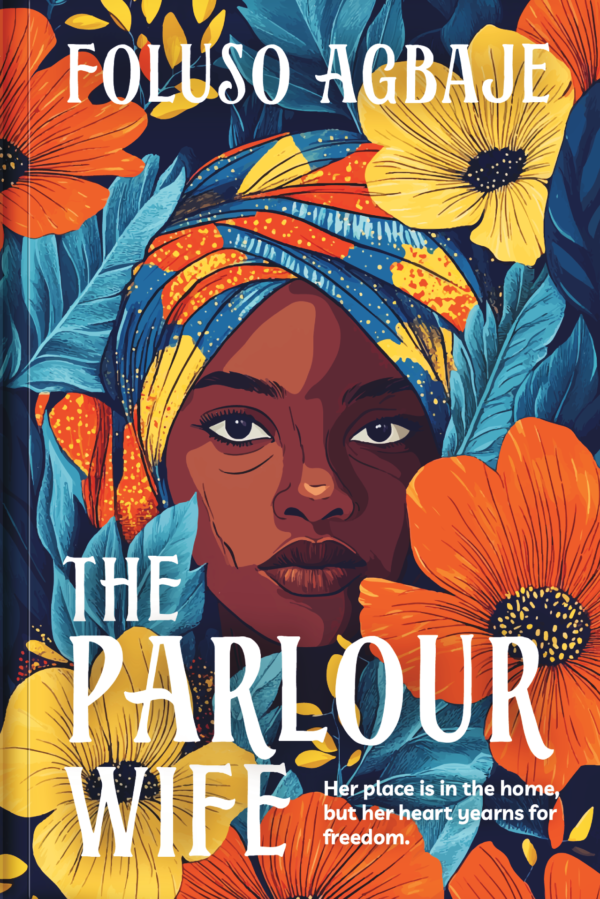
  • “The Parlour Wife” Review: Foluso Agbaje’s Novel Is a Vital Contribution to Historical Fiction
    Perhaps there are other historical novels set in Lagos, but few are as captivating, imaginative and yet historically detailed as The Parlour Wife.  By Evidence Egwuono Adjarho The first time Kehínde decides to take her brother Taiye’s advice, something bad happens—and she cannot forgive herself for it. Not only does she make her father angry (an unfamiliar experience for Kehínde, who is a classic daddy’s girl accustomed to his constant praise), but that angry look on his face becomes the last
     

“The Parlour Wife” Review: Foluso Agbaje’s Novel Is a Vital Contribution to Historical Fiction

7 juillet 2025 à 08:27

Perhaps there are other historical novels set in Lagos, but few are as captivating, imaginative and yet historically detailed as The Parlour Wife

By Evidence Egwuono Adjarho

The first time Kehínde decides to take her brother Taiye’s advice, something bad happens—and she cannot forgive herself for it. Not only does she make her father angry (an unfamiliar experience for Kehínde, who is a classic daddy’s girl accustomed to his constant praise), but that angry look on his face becomes the last memory she has of him.

The Parlour Wife by Foluso Agbaje is set in colonial-era Lagos and is easily identified as the compelling story of Kehínde, a young woman navigating both her internal turbulence of fear, self-doubt, and denial, and the external turmoil of a city grappling with the effects of the Second World War.

The novel is structured in three parts, each representing a distinct timeline. But the shifts between these parts are not merely chronological. What distinguishes them is how Kehínde and everyone and everything connected to her undergo significant transformation.

The Parlour Wife
The Parlour Wife

In the first part, Kehínde is mostly revealed to us through her thoughts. She is described as “Pretty, quiet, always smiling, so agreeable”. And rightly so. She struggles to express her true feelings, desires, and disdains, and is constantly silenced by the fear of her parents’ disapproval.

Her twin brother, Taiwo, is presented as her alter ego. Unlike her, he is outspoken, assertive, and unafraid to challenge their parents’ authority. It is he who informs their father of their career ambitions which contrasted with the plans their parents had mapped out. 

He hopes to enlist in the army while Kehínde, having received an offer from the West African Pilot, dreams of being a political writer. Kehínde, too timid to speak for herself, lets Taiwo do the talking. Throughout this section, we see her repeatedly wishing she was more like him.

The Parlour Wife’s rising action arguably begins when Kehínde is married off to Mr. Ogunjobi. Though she had been warned of this arrangement before her father’s death, she once again finds herself unable to protest. Foluso Agbaje draws a parallel between Kehínde and her country: “Kehínde was like Nigeria, silently screaming about her rights to parents who thought they knew better”. But the problem with silent rebellion is that silence is often mistaken for consent, or reshaped into it.

The latter is precisely Kehínde’s fate. Though unwilling to be the third wife of a man old enough to be her father, she convinces herself otherwise during a heated argument with Taiwo: “I’m doing what’s best for our family!” But Taiwo exposes the hollowness of this justification: “You care so much about what everyone else thinks that you can’t even go after what you want!”

This moment is highly symbolic in The Parlour Wife. It marks the climax of Kehínde’s internal conflict: her growing awareness that her actions are not only harmful to herself, but also shaped by expectations she no longer believes in, yet still lacks the courage to reject.

Foluso Agbaje
Foluso Agbaje

In the second part of the novel, Kehínde begins to mature. She becomes less intimidated by her domineering husband and his sharp-tongued first wife. She also begins making independent decisions. This Bildungsroman structure lends itself well to both character development and narrative progression. Kehínde transforms from a passive thinker into a woman of action. She becomes secretary of the Lagos Market Women Association (LMWA), a role that is in line with her earlier dream of political writing. Though she is unable to take the job at the West African Pilot, she ends up performing similar work under the leadership of Madam Titi.

Kehínde’s growth is also marked by her departure from societal expectations and moral codes. Unlike the quiet and reserved girl introduced in the opening pages of The Parlour Wife, the later version of Kehinde allows herself to fall in love with Emeka, the brother of her shop neighbour, Ama. 

This ‘forbidden’ relationship becomes the novel’s central conflict. Kehínde knows her actions risk scandal and punishment—why should a married woman take a lover?—but “She ignored the roaring sound in her head… she refused to think, each thought of her parents, Taiwo, the LMWA, Baba Tope, Ayo, what anyone would think, what the consequences would be.”

As Lagos edges toward the devastation of war, the atmosphere of unrest intensifies. Market prices rise, demand outweighs supply, and uncertainty looms. Even the once-wealthy, like Baba Tope and his friends, are reduced to struggling. The LMWA, under Madam Titi’s leadership, plays a crucial role in resisting colonial oppression. They are able to stir the market women to stage a peaceful protest against the colonial system. Although uncertain of the outcome, they are nonetheless unafraid to confront the systemic corruption of the Lagos government.  This political awakening marks Kehinde’s full transformation in The Parlour Wife

Meanwhile, Kehínde’s family begins to unravel. Like Kehínde, her mother and brother also undergo significant changes. Following the death of her husband, Kehínde’s mother quickly moves from authoritative to withdrawn and uninvolved. Not even the conflict of her twin children, Taiwo and Kehínde, can break her resolve. 

Similarly, Taiwo fades into the background a few chapters into the novel. This was somewhat disappointing because of the initial portrayal of this character as important. But again, we are reminded that the author is a god— able to make alive and unalive at will. 

The Parlour Wife
The Parlour Wife

Stylistically, The Parlour Wife demonstrates an impressive command of language. However, the book’s frequent use of similes occasionally slows the pacing for readers. While vivid description is one of the book’s strengths, an overreliance on comparison did feel repetitive and redundant. 

Still, this novel deserves praise for the depth of historical research it clearly reflects. Perhaps there are other historical novels set in Lagos, but few are as captivating, imaginative, and yet historically detailed as The Parlour Wife. Even fewer foreground the role of women in Nigeria’s protest against colonialism. For this reason alone, The Parlour Wife stands out and is wholeheartedly recommended. 

Evidence Egwuono Adjarho is passionate about African literature and is committed to amplifying its reach through book reviews and engaging video content. She is currently training as a photographer. Connect with her on Instagram, X, Facebook, and LinkedIn: @evidence egwuono.

The post “The Parlour Wife” Review: Foluso Agbaje’s Novel Is a Vital Contribution to Historical Fiction first appeared on Afrocritik.

  • ✇Afrocritik
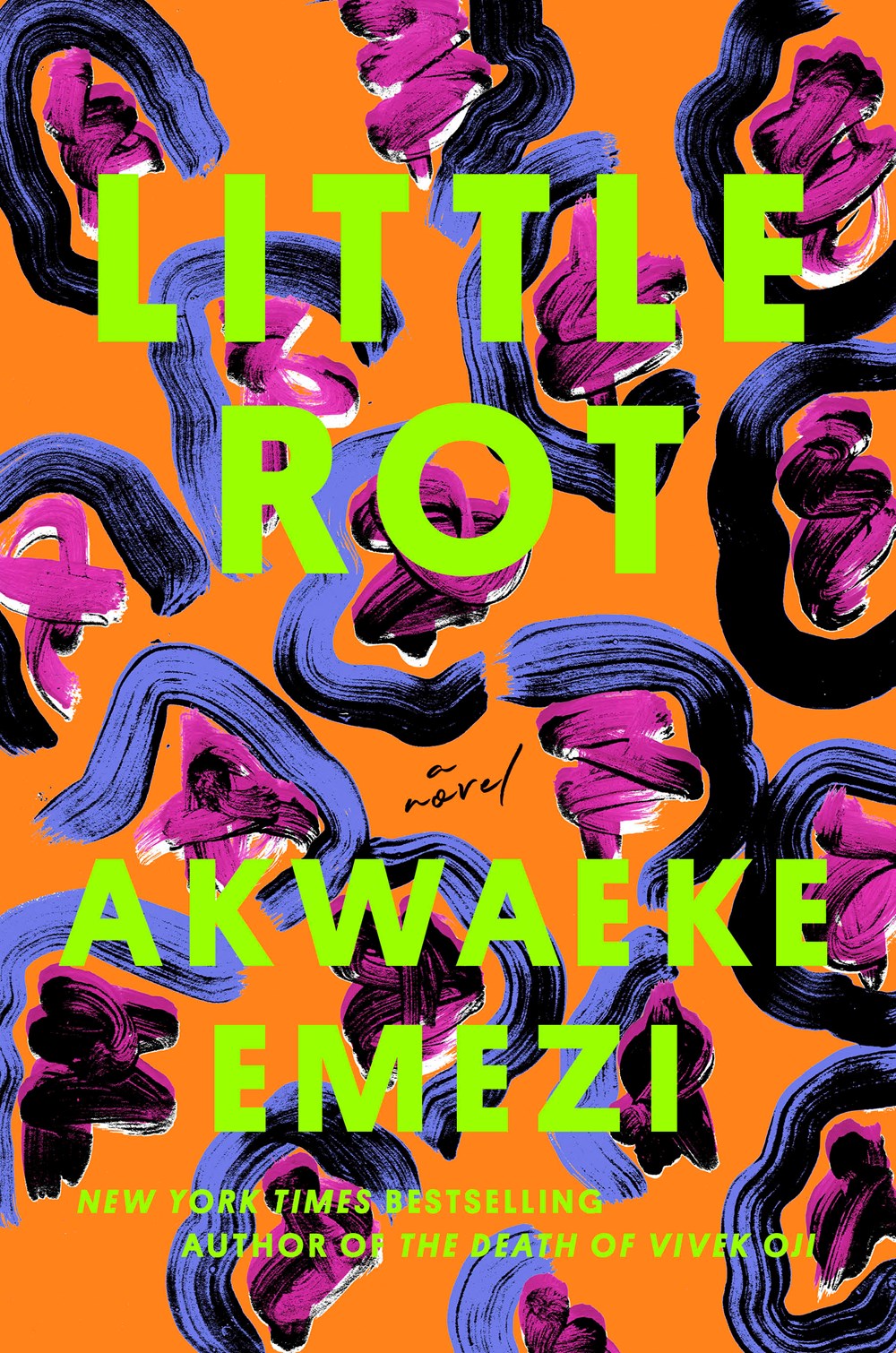
  • “Little Rot” Review: Akwaeke Emezi’s Novel Confronts The Performance of Morality
    Little Rot is an investigation into how society imposes rigid ideas of right and wrong, constructs we are expected to accept and embody without question. By Evidence Egwuono  Little Rot by Akwaeke Emezi is the story of Aima, a young Nigerian woman who returns home to New Lagos with her boyfriend, after years in the diaspora. She is reeling from a failing relationship with Kalu, whose reluctance to marry her has created a chasm between them. Their conflict is rooted in a clash of values: Aima,
     

“Little Rot” Review: Akwaeke Emezi’s Novel Confronts The Performance of Morality

16 juin 2025 à 07:17

Little Rot is an investigation into how society imposes rigid ideas of right and wrong, constructs we are expected to accept and embody without question.

By Evidence Egwuono 

Little Rot by Akwaeke Emezi is the story of Aima, a young Nigerian woman who returns home to New Lagos with her boyfriend, after years in the diaspora. She is reeling from a failing relationship with Kalu, whose reluctance to marry her has created a chasm between them. Their conflict is rooted in a clash of values: Aima, awakening to a renewed Christian faith, sees their unmarried cohabitation as sinful and untenable. Kalu, by contrast, is rooted in a more liberal view of partnership, one that no longer satisfies Aima’s evolving sense of self.

What Emezi does so well here is showcase the psychological unraveling that happens when personal convictions collide with reality. Aima’s decision to leave Kalu is initially a kind of triumph of her faith over sin. She is happy to be freed from fornication and a boyfriend who has no intention of marrying her. However, when the gravity of her decision hits her, she succumbs to emotional grief, confusion, and loneliness. 

Unable to deal with the consequences of her journey from New Lagos back to London–a permanent cutting off of Kalu–she reroutes to her best friend’s house instead. This single decision becomes highly significant in the plot as it sets off a chain of events that affect Aima and every other person related to her, directly or indirectly.

Little Rot
Little Rot

In Little Rot, the setting, New Lagos, is not just a city but an organism; it breathes, it intoxicates, it kills, and it saves. Aima’s decision to stay with her best friend, Ijendu, pulls her into the heart of this city’s underbelly. Her first night party acts as a ritual, a threshold into the city’s rot where Aima is finally free to explore her queerness through her sexual encounter with Ijendu. But it is also a place of disillusionment, as Aima comes to see that Ijendu is not the person she imagined. Just like the city itself, Ijendu holds dark secrets.

Aima’s descent into the rot of New Lagos is not romanticised nor moralised. Instead, it is presented as a part of the complexity of being human: the yearning to break free from the constraints of personal convictions, societal expectations, and religious doctrine; the desire to escape the monotony of a prescribed life, to explore, to question: “What makes a fruit forbidden?” “What makes something a sin?” Aima’s intense sexual experience with Ijendu is described not as a transgression, but as a deep, long-suppressed hunger. Even when she later asks God for forgiveness, she cannot articulate what she’s sorry for, because it did not feel like sin.

Kalu’s storyline, on the other hand, explores the rot at the heart of masculinity, wealth, and power. After Aima leaves him, he attends one of his best friend Ahmed’s infamous masked parties, an orgiastic gatherings that cater to the elite’s every indulgence, mostly sexual, all hidden from the judgment of society. Here, Emezi juxtaposes the public image of New Lagos sophistication with the depraved secret lives of its powerful men. 

Kalu’s unease at the party, especially when he gets a hint of the presence of underage girls, shatters his illusions of control and moral neutrality. His horror is palpable, but also complicated. He is, after all, there. He becomes a mirror for many well-meaning men who, despite their self-perception as ‘not like the others’, remain complicit in the very systems they claim to disdain.

Kalu is not an innocent observer. His outrage, while seemingly noble, is interrogated. Ahmed, the orchestrator of the party, defends himself by claiming that he is providing underage sex workers like Machi with safer, better-paying work. It’s a disturbing justification, but one that Akwaeke Emezi does not resolve. Instead, readers are left to judge.

Akwaeke Emezi
Akwaeke Emezi

Even as Kalu wrestles with his revulsion and sense of betrayal, he is no stranger to rot himself. His messiah complex is undercut by his own desires and secrets. He loves Aima, but that love does not stop him from sleeping with other women. More importantly, he too harbours a queerness he cannot fully name, let alone accept. His attraction to Ahmed is a hidden truth he tries to bury under masculinity and responsibility, but which nonetheless simmers beneath the surface.

Little Rot is an investigation into how society imposes rigid ideas of right and wrong, constructs we are expected to accept and embody without question. To resist these expectations is seen as rebellion, even betrayal. Aima cannot fully embrace her sexual desire for Ijendu because she believes it is sinful, despite knowing other lesbians who are practicing Christians. Kalu, likewise, denies his love for Ahmed out of fear—of judgment, of societal norms, of deviating from what is expected of him as a man.

Queerness in this novel is presented not just as sexual orientation but as something spiritual, intimate, connective, and even transcendent. Kalu and Ahmed’s bond is portrayed as a form of completion. They are tethered to one another in a way that suggests neither can be fully whole without the other. A similar dynamic is revealed in the relationship between Aima and Ijendu. It is therefore no coincidence that they are best friends. 

The author’s refusal to frame any character as wholly good or evil is one of the novel’s greatest strengths. Aima is not simply a victim, and Kalu is far from a villain. They are two people trying—and failing—to love each other in a world that makes that love conditional on performance, conformity, and timing. There is a palpable tragedy in how close they come to understanding each other, and how far apart they end up anyway.

Little Rot
Little Rot

Still, Little Rot goes beyond personal desires. It is also a biting critique of Nigeria’s systemic decay. This theme finds a sharp embodiment in Pastor O, a figure who is both a religious leader and a godfather of New Lagos’ shadow world. He manages his church with ease while simultaneously controlling the city’s dark side. What sets him apart, however, is his lack of denial. Unlike the others, Pastor O has embraced his contradictions: his gender nonconformity and his dual identity. Ironically, he seems to be the most liberated character in the story.

Little Rot does not wait until its conclusion to reveal its central message (if such a thing exists). And it is that rot exists in every society. It is a constant in the human condition. And in the end, no one is truly better than another—only more practiced at living with their rot, their truth, their reality. By the end of the novel, one thing stands out: the explicit rawness of Little Rot is something that reminds one of the nature of humans– imperfect, dark, and full of rot. 

Evidence Egwuono Adjarho is passionate about African literature and dedicates her time to amplifying it through book reviews and video contents. She is currently undergoing training as a photographer. Connect with her on Instagram, X, Facebook, and LinkedIn: @evidence_egwuono.

The post “Little Rot” Review: Akwaeke Emezi’s Novel Confronts The Performance of Morality first appeared on Afrocritik.

  • ✇Afrocritik
  • “Only Big Bumbum Matters Tomorrow” Review: Damilare Kuku’s Novel Addresses Body Politics, Biases, and Femininity
    Damilare Kuku’s Only Big Bumbum Matters Tomorrow is a novel that speaks clearly to a generation of women tired of being told how to behave, how to look, and how to live.  By Evidence Egwuono  “I plan to renovate my bumbum in Lagos, live there for some time, and hopefully meet the love of my life!”, Damilare Kuku begins her sophomore book, Only Big Bumbum Matters Tomorrow. Kuku rose to fame among readers after the publication of her 2021 debut book, Nearly All the Men in Lagos Are Mad. One reas
     

“Only Big Bumbum Matters Tomorrow” Review: Damilare Kuku’s Novel Addresses Body Politics, Biases, and Femininity

10 juin 2025 à 10:02

Damilare Kuku’s Only Big Bumbum Matters Tomorrow is a novel that speaks clearly to a generation of women tired of being told how to behave, how to look, and how to live. 

By Evidence Egwuono 

“I plan to renovate my bumbum in Lagos, live there for some time, and hopefully meet the love of my life!”, Damilare Kuku begins her sophomore book, Only Big Bumbum Matters Tomorrow.

Kuku rose to fame among readers after the publication of her 2021 debut book, Nearly All the Men in Lagos Are Mad. One reason why this book became a Roving Heights bestseller is because of its relatability, both in its title and its theme, to the many Lagosians who have had their fair share in the madness of Lagos men. 

As a writer with a bias for bandwagoning, I thought twice before purchasing this book to read due to its popularity, but was later intrigued by some stories in the collection, particularly how Damilare Kuku infuses humour while discussing grim issues in society. It does seem like this author has established her forte as a storyteller who is unafraid to tell stories of women’s struggles in society, sealing them with unconventional and curiosity-arousing titles.

Only Big Bumbum Matters Tomorrow

Only Big Bumbum Matters Tomorrow is built around the interconnected yet distinct lives of four women: Témì, Ládùn, Aunty Jummai, and Hassana. Each of these women grapples with different challenges, mostly shaped by the emotional residues of their past. Ládùn, the first child of Hassana and Titó, is the prodigal daughter who returns for her father’s burial after years of disappearance. Hassana, her mother, is the fierce matriarch who is trying to reconcile her own grief with the worry that she may be losing her second daughter as well. 

Aunty Jummai, Hassana’s sister, is the ever-present loudspeaker—opinionated, dramatic, and bitterly comic—who thrives on other people’s chaos and heartbreak, though rarely her own. And then there is Témì, the primary narrator, whose seemingly ridiculous proclamation to “renovate her bumbum in Lagos” sets the book’s central conflict in motion.

Kuku uses this cast of carefully crafted personalities to stage a multi-generational debate on beauty, desire, self-possession, and motherhood. In many ways, Témì’s desire to undergo a BBL becomes a cipher for everything these women have buried within themselves. Through the eyes of Témì, we see the implications of societal and familial expectations that women must always bend, if not their bodies, then their dreams, to fit someone else’s approval. 

From a place of observation, there is a lot to be said about the emotional honesty in Only Big Bumbum Matters Tomorrow, and by extension, about Kuku. She has a penchant for slipping heavy truths between bursts of humour, similar to what we find in her first book. One second, you’re laughing, the next, you’re swallowing a lump. It is this ability to switch tones, to balance the comedic with the tragic without losing the reader, that makes Damilare Kuku’s storytelling feel so alive. 

While Témì is the story’s compass, the novel refuses to flatten her into a Gen Z stereotype. Yes, she is bold, perhaps even reckless in some instances. But she’s also introspective, thoughtful, and aching to be seen. Her declaration to get a BBL is not just a cosmetic decision. As we discover while reading, it is a response to years of longing to be seen and frustration at being constantly body-shamed. It is not so much about becoming desirable as it is about reclaiming her body in a world that has used her shape as an emblem of deficiency.

Damilare Kuku
Damilare Kuku

However, what is interesting is how the other women in Only Big Bumbum Matters Tomorrow reflect their own insecurities onto Témì’s decision. Hassana, her mother, is haunted by her own body image, especially her sagging breasts. Aunty Jummai, in her obsession with decorum and control, hides the reality that her own life has been reduced to watching others live. And Ládùn, who fled the town years ago, sees Témì’s move to Lagos as a mirror of her own choices, perhaps even mistakes. This layering allows the novel to move beyond a singular storyline focused solely on the BBL.

What makes Only Big Bumbum Matters Tomorrow especially important is the space it creates for a different kind of African female protagonist, one who is not bound by moral perfection or respectability politics. Témì, the protagonist, is messy, impulsive, occasionally naive, and makes some foolish decisions and mistakes. 

But the author sends a powerful message through her protagonist. Temi is not perfect, nor is she elevated or given a super-human status. She is not punished for her choices, nor is she sanctified. She is simply allowed to be and exist on her own terms. Damilare Kuku emphasises in Only Big Bumbum Matters Tomorrow that the African woman has a fundamental right to be as complex as she desires.

Beyond the central theme of body politics, the novel is also a study of the relationships that exist between women and the importance of communication. Hassana and Aunt Jummai, who were once inseparable as kids, drift apart as adults; Ladun and Temi’s sisterhood bonding becomes messy after the former leaves her parents’ home; Hassana struggles with parenting Ladun because she believes her daughter hates her. But at the root of these rifts is not malice, but misunderstanding born from years of carrying burdens society teaches women to endure without protest. And in choosing not to speak, they become strangers to one another.

Only Big Bumbum Matters Tomorrow

It is important to point out that Only Big Bumbum Matters Tomorrow employs multiple points of view. Each of the women get to tell their story and readers have a nuanced perspective of their lives. 

However, this began to feel overindulgent, especially in the latter half of the book. The chapter shifts were jarring, with some voices sounding too similar in cadence. The plot also occasionally leaned on exposition rather than action, slowing the pace. However, these are forgivable imperfections considering what the author achieves in this novel. 

Damilare Kuku’s Only Big Bumbum Matters Tomorrow is a novel that speaks clearly to a generation of women tired of being told how to behave, how to look, and how to live. And for that reason alone, this is a story worth reading.

Evidence Egwuono Adjarho is passionate about African literature and dedicates her time to amplifying it through book reviews and video contents. She is currently undergoing training as a photographer. Connect with her on Instagram, X, Facebook, and LinkedIn: @evidence_egwuono

The post “Only Big Bumbum Matters Tomorrow” Review: Damilare Kuku’s Novel Addresses Body Politics, Biases, and Femininity first appeared on Afrocritik.

❌