Vue normale

Reçu avant avant-hier
  • ✇Afrocritik
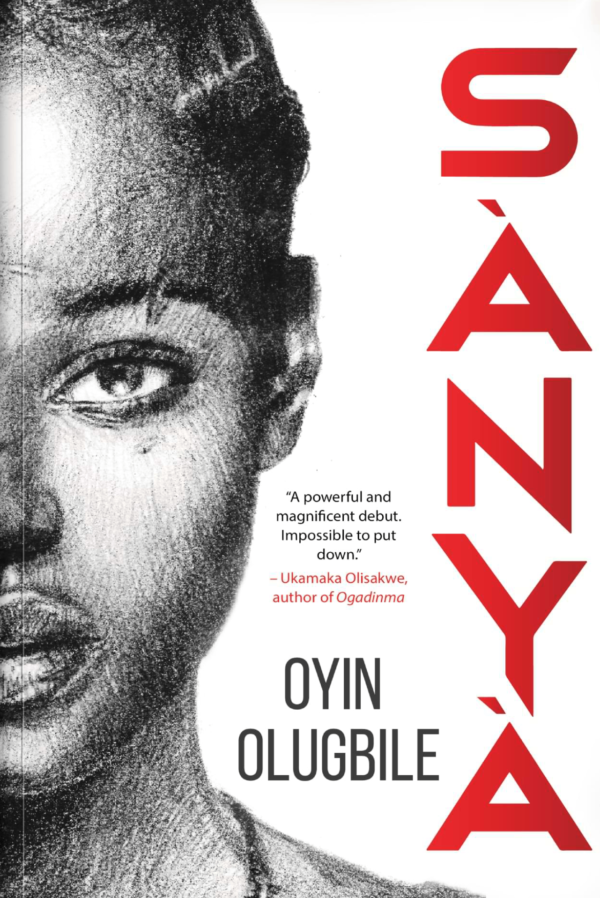
  • “Sanya” Review: Oyin Olugbile’s Debut Novel Is a Creative Retelling of Sango as a Woman Warrior
    It is perhaps this deep grounding in Yoruba history and mythology that earned Sanya a spot on the shortlist for the Nigeria Prize for Literature 2025. And deservedly so. By Evidence Egwuono  Literature, among many other things, serves as a mirror to society. Perhaps no writer embodies this idea more profoundly than the venerated William Shakespeare. Through his tragedies, Shakespeare revealed the dangers of unchecked power, unbridled ambition, and the inevitable consequences of hu
     

“Sanya” Review: Oyin Olugbile’s Debut Novel Is a Creative Retelling of Sango as a Woman Warrior

12 septembre 2025 à 07:12

It is perhaps this deep grounding in Yoruba history and mythology that earned Sanya a spot on the shortlist for the Nigeria Prize for Literature 2025. And deservedly so.

By Evidence Egwuono 

Literature, among many other things, serves as a mirror to society. Perhaps no writer embodies this idea more profoundly than the venerated William Shakespeare. Through his tragedies, Shakespeare revealed the dangers of unchecked power, unbridled ambition, and the inevitable consequences of human choices—whether seemingly good or bad. 

At its core, his work reflects the nuances and complexities of human nature. For instance, Macbeth’s extraordinary battle skills eventually gave way to an insatiable thirst for power, fostering a dangerous sense of invincibility that ultimately led to his downfall.

As a research student, it is easy to observe that Oyin Olugbile must have drawn deeply from these invaluable lessons in literature. What is especially commendable, however, is the way she has domesticated and recreated such lessons in her debut novel, Sanya. In her novel,  Olugbile offers a fresh, creative perspective on the mythology of Sango, one of the most significant primordial beings in the Aborisa religious system.

Sanya begins with a prologue that establishes the historical premise of the entire story. It follows a chronological storytelling style, reminiscent of tales-by-moonlight narratives about the Yoruba pantheon, but with a particular focus on the Orisas. Although fictional, the prologue draws from historical accounts and serves as a creative retelling of the mythological foundations upon which Sanya is built.

Sanya
Sanya

The main story introduces us to a sickly child, Dada, born with locs into the family of Ajoke and Aganju, an otherwise ordinary couple in Banire village. The couple, plagued by fear of Dada’s fragile health, desperately seeks more children. After several inquiries and the heartbreak of stillbirths, the eponymous character, Sanya, is finally born. Her arrival disrupts the seemingly ordinary lives of the family. Consequently, the sudden deaths of Ajoke first after childbirth and Aganju months later propel both siblings into a new phase of life with their mother’s twin sister in Aromire village. They gradually move toward fulfilling a prophecy in which they both play crucial roles, though they remain unaware of its significance.

The next time Sanya appears is in Part II, now a fourteen-year-old lanky teenager described as having “sturdier shoulders than her brother. Her arms had small, firm muscle mounds, and her legs, sticking out from her buba and adire shorts, seemed to go on forever”. 

This physical portrayal stands in stark contrast to her brother, Dada, who is depicted as “as weak as an okro plant, and anyone could bend him to their will by just applying a little force.” As the stronger and younger of the two, Sanya naturally assumes the role of protector. This sense of duty not only defines her relationship with Dada but also serves as the catalyst for many of the actions and conflicts that unfold in the later parts of the novel.

As the children grow, their differences—particularly their strengths and weaknesses—become more pronounced. What Dada lacks in physical strength, he makes up for with his gift of clairvoyance, though this ability also serves as his greatest vulnerability. He is the more introspective of the two, and we encounter him primarily through his stream of consciousness rather than through direct action.

Sanya, on the other hand, is driven largely by impulse. Her extraordinary physical strength fuels her brazenness, but she remains largely oblivious to her surroundings. Unlike her brother’s reflective nature, Sanya is defined by her actions. This contrast is evident from her first act of “saving” Dada, where the omniscient narrator highlights her personality: “Sanya continued talking, unaware of her brother’s thoughts… Her loud voice disturbing the birds…”. These contrasting traits are gradually deepened as the narrative unfolds, ultimately manifesting in the defining choices and actions of each character.

In many African cosmologies, dreams are understood not simply as psychological by-products but as spiritual experiences. They act as conduits between the human and the supernatural, providing warnings, revelations, or glimpses of destiny. 

Oyin Olugbile’s Sanya situates itself firmly within this African paradigm. Both Sanya’s and Dada’s dreams are not abstract psychological states but direct precedents of future realities. Dada’s opaque vision of a rivalry with his sister over a throne foreshadows the eventual conflict that shapes their intertwined destinies. Sanya’s dream encounter with her mother similarly becomes a literal turning point in the novel. In the dream, she is compelled to swallow a stone, which materialises in reality as a consuming, almost invincible strength in battle.

This spiritual empowerment, however, becomes uncontrollable. Sanya’s inability to master her newfound power culminates in the murder of Ropo, her brother’s bully, exposing the double-edged nature of divine gifts. The act disrupts the careful efforts of her aunt, Abike, who attempts to shield Sanya from a prophesied destructive path. Yet, true to the logic of African cosmology, destiny proves inescapable. On the eve of her arranged marriage, Sanya abandons Abike’s plan and flees, stepping into a future which is seemingly unknown, yet already etched into her fate.

After Sanya’s disappearance, Dada struggles with conflicting emotions: “A part of him, some dark part, was relieved that he would no longer be smothered by his sister’s need to protect him… but those feelings were also conflicted by a childish anger that Sanya had broken her promise to always be there for him.” As the novel progresses, however, and he gradually comes into his own—eventually crowned the new Kabiyesi of Banire—he concludes that it is best for his egocentric sister to remain far away, lest she undermine his authority and efforts.

Meanwhile, Sanya’s disappearance marks the beginning of her transformation. She wanders through an unknown path and emerges profoundly changed: “…she was noticeably older and looked fierce, as though well-cooked in the flames of a life she could not remember”. 

Oyin Olugbile
Oyin Olugbile

Her growth, however, extends beyond her physical appearance; she evolves into a formidable warrior. Finding herself in Oluji village, whose king has just been murdered by marauders, she rallies the few remaining warriors and leads them to victory. After months of living among the people and proving her strength, she is crowned king—mistakenly, under the assumption that she is a man due to her masculine appearance.

Both siblings rise to prominence, yet Dada’s determination to avoid his sister Sanya, rooted in the fear of his prophetic dream, inevitably erodes under the weight of destiny. His futile resistance mirrors the Shakespearean insight that human beings are often powerless before larger cosmic forces: “As flies to wanton boys are we to the gods; they kill us for their sport”. 

Indeed, Sanya offers a creative retelling of the story of Sango, but with a dynamic focus not only on power but also on the nuances of human emotions and relationships. One such instance is the sibling rivalry between Sanya and Dada. 

Because of his physique and frail health, Dada continues to nurse a wounded ego. His sister looks down on him, believing he is incapable of much, but Dada is determined to prove everyone wrong. When he gets the chance to become king, he accepts it as an opportunity to finally demonstrate his worth. 

However, Sanya reappears and, despite her earlier promise, reclaims the spotlight amidst the praises of the people of Banire. She, too, is crowned king, and from this point Dada begins to plot her downfall. Sanya, however, blinded by fame and adulation, remains unaware of her surroundings and does not see Dada’s schemes until it is too late. Her fall results largely from her hubris or pride rather than from any preternatural force.

Beyond pride, Sanya’s downfall also stems from her unchecked powers and overreaching ambition. Like Macbeth, she believes she can act without consequence. Her decision to subsume her brother’s kingdom under her control, as well as her refusal to heed Oya’s warnings about the dangers of her relationship with Osoosi, ultimately led to her tragic end

Although this book is undeniably a work of creative brilliance, it is not without its limitations. My first critique concerns the implicit message it conveys about femininity. In an interview with Literature Voices, Oyin Olugbile subtly distanced herself from the claim that she was reimagining Sango through female instincts but rather from a creative lens. 

Yet, when gender is at stake, neutrality is hardly possible. While Sanya is nominally identified as a woman, the text offers little to substantiate her femininity. As the narrator observes, “The only hint of femininity about her, [were] mere nubs where breasts should be”. Her physicality and attributes are consistently coded in masculine terms—strength, bravery, and fearlessness.

In contrast, her brother Dada is characterised through weakness, vulnerability, and, at times, effeminacy. This juxtaposition produces a troubling implication: that strength and authority are inherently masculine qualities, while weakness and fragility are aligned with femininity. 

Rather than disrupting patriarchal binaries, the novel inadvertently reinforces them, suggesting that power cannot be embodied in a recognizably feminine form. Thus, while Sanya succeeds as a mythological and literary reinvention, and attempts to blur the importance of gender in matters of power (see this excerpt: “If they did not feel that her deeds were more important than her gender, then it was their own failing rather than her problem”), it reinscribes stereotypes it might otherwise have subverted.

Sanya
Sanya (Source: Masobe Books)

Another criticism is the way the Orisa, Esu, is portrayed. In the Aborisa religious tradition, Esu is a trickster god and a divine messenger. As Wole Soyinka points out, people often blame Esu for everything evil, even though he is not evil at all. 

In Sanya, however, Esu is shown as exactly that—an evil figure, a disruptor of order, described as one who was rejected in heaven and cast down to earth. All through the novel, Esu appears in dark, menacing terms as the ultimate source of destructive dark power. The issue here is that this repeats a long-standing distortion. By painting Esu as purely evil, the book leans into the Euro-Christian view of Esu, rather than reflecting his true role in Yoruba belief.

Among other things, what makes Sanya such a remarkable work is the way it reimagines an important story in Yoruba mythology, one that deserves to be passed down from generation to generation. But beyond that, its real brilliance lies in its layered portrayal of human personalities and their complexities. 

The novel’s ending is not about punishment for wrongdoing or reward for making the right choices. Instead, it holds up a mirror to readers, showing us that binaries—right and wrong, fair and unfair—are often illusions. Sanya is the kind of novel that pushes us to question ideas of partiality, impartiality, fairness, and justice, all through the lens of history, culture, and myth.

It is perhaps this deep grounding in Yoruba history and mythology that earned Sanya a spot on the shortlist for the Nigeria Prize for Literature 2025. And deservedly so. Sanya is not just a book to admire for its beauty; it is a work that should be shared and taught.

Evidence Egwuono Adjarho is a dynamic and evolving creative with a flair for literature and the arts. She finds joy in reading and writing, and often spends her free time observing the world around her. Her interests span a wide range of artistic expressions, with a particular focus on storytelling in its many forms including photography.

The post “Sanya” Review: Oyin Olugbile’s Debut Novel Is a Creative Retelling of Sango as a Woman Warrior first appeared on Afrocritik.

  • ✇OkayAfrica
  • The African Literature Ecosystem Used to Be Unstoppable. What Went Wrong?
    When the Nigerian writer Dami Ajayi co-founded Saraba Magazine in 2009 alongside fellow writer Emmanuel Iduma, they were at the doorway of a renaissance in the African literary ecosystem. The internet was just exploding in Nigeria, and ambitious writers were taking advantage of its global connectivity to build mostly online publications and literary townhalls.Writers like Chimamanda Ngozi Adichie, Binyavanga Wainaina, Tope Folarin, NoViolet Bulawayo, and Teju Cole were gaining recognition on th
     

The African Literature Ecosystem Used to Be Unstoppable. What Went Wrong?

23 juillet 2025 à 18:02


When the Nigerian writer Dami Ajayi co-founded Saraba Magazine in 2009 alongside fellow writer Emmanuel Iduma, they were at the doorway of a renaissance in the African literary ecosystem. The internet was just exploding in Nigeria, and ambitious writers were taking advantage of its global connectivity to build mostly online publications and literary townhalls.


Writers like Chimamanda Ngozi Adichie, Binyavanga Wainaina, Tope Folarin, NoViolet Bulawayo, and Teju Cole were gaining recognition on the international literary scene. Soon, other publications like Expound, Praxis, Omenana Magazine, Bakwa, Munyori Journal, and Jalada Africa began to emerge. It was the era of Afro-politans, a term coined by Taiye Selasi to explain the globally mobile and culturally aware African, which saw a blending of worlds between African writers in the West and those on the continent. Attention from the West on African literature was blooming, and so was a local thirst for change. Essentially, it was an unbelievably great time to be an African writer.

"People were interested in books, people who read, people who wrote were able to come together, meet writers that they would never have met previously," Ajayi tells OkayAfrica.


At the time, there was a sufficient level of incentive to be an African writer, whether material or reputational. "There were numerous blogs for genre fiction, literary fiction, poetry, and creative nonfiction," says Enajite Efemuaye, a writer and editor who previously worked at Farafina Books, one of the foremost publishers of African literary fiction with a roster filled with writers like Chimamanda, Caine-Prize winner E.C. Osondu, Etisalat Literature Prize winner Jowhor Ile, Akwaeke Emezi, Yewande Omotoso, and others.


"You had writing communities on websites and social media, which served as spaces for writers to get honest critique on their work, feedback, and encouragement," Efemuaye adds. "These communities fueled and challenged the writers, and as a reader, you could see the quality of writing from the writers improve over time because they weren't working in silos. They were also reading and having conversations about writing, which is important for any literary ecosystem."

All of this began to change as the late 2010s rolled around. Lack of funding and economic hardships intensified across the continent, particularly in countries like Nigeria, which was regarded as a forerunner in the African literary space. Highly regarded publications like Saraba, which published writers like TJ Benson and Ironsen Okojie, began to fold up (Saraba halted operations in 2019, but an archive of its published works remains live). Online literary communities began to vanish, shuttering spaces for communal critique and avenues to discover exciting new voices.

More than a decade since that glorious era, the African literary ecosystem is now experiencing a drawn-out lull, what Kenyan writer and editor Troy Onyango describes as "the silent era."


Onyango himself emerged during that golden era of African literature. First, as a writer before co-founding one of the most prestigious publications of that time, Enkare Review. Enkare Review, during its time, published esteemed authors like Namwali Serpell, as well as an interview with David Remnick, the editor-in-chief of The New Yorker. It was an audacious publication that bravely brought the international literary community to Africa, offering up a lineup of brilliant voices with each issue. The publication folded up in 2019, its third year in operation.

And while Onyango has gone on to experience immense literary success and has now founded Lolwe, one of the very few African literary magazines still in operation, there is, according to him, a clear distinction between the quality of the work being submitted now and ten years ago.

"The quality of the work has gone down," Onyango says. "Even the output. We used to have African writers publish 10-15 short stories in a year. And that's one single writer. I published about eight stories in one year. And now we no longer see that. We see one or two people publish like maybe three stories max, or four stories max."

A break in transmission


A key aspect of what defined the African literary ecosystem in the 2010s was the establishment of a cycle for many African writers. Writers would begin in relative anonymity, honing their craft before summoning the courage to submit their work to the numerous African publications that flourished at the time. Once published, these writers gradually built networks within a growing community of fellow writers and engaged readers. Then they would get nominated for one of the many writing prizes; there was Writivism (which rewarded excellent short stories, nonfiction and poetry), The Brittle Paper Awards (which rewarded the best published works in a given year), The Gerald Kraak Prize (which awarded excellence in writing related to gender, sexuality and social justice) the Etisalat Prize for Literature (a prestigious prize that awarded debut authors) and many others. The cycle ensured that African writers found their voices and had the means to share and be rewarded for it.

"Everything seemed possible. World literary domination was coming," Efemuaye recalls. "As an editor and reader, I had high expectations of all the new writing that was going to come out of the continent in the following decades. I was excited about the future and being part of creating that future."

Another important aspect of that cycle was collective responsibility. African writers who achieved success were known to give back, often by supporting existing publications, mentoring emerging writers, or even founding their own publications and prizes to nurture other literary talents. There is now a break in that cycle.


There are significantly fewer literary African publications in operation now than there were six years ago. Alongside Lolwe, publications like Akpata Magazine, The Republic Magazine, Brittle Paper, Open Country Magazine, and Isele Magazine are among the few enduring platforms still holding the fort. In Nigeria, book publishing has shifted from literary works to commercially driven titles, with publishers like Farafina, Cassava Republic, and Parréssia Publishers scaling back their operations and publishing fewer titles. In Kenya and other parts of the continent, book publishing continues to dwindle. And most dangerously, the online spaces that facilitated healthy conversations in favor of the ecosystem have all but disappeared.

Many of the people who were part of that era, like Ajayi and Efemuaye, say the decline can be traced back to 2020. In Nigeria's case, many of the brilliant writers of that era suddenly found themselves compelled to pursue better opportunities outside the country after living through a disastrous economy and experiencing the 2020 #EndSARS Protests. Between 2022 and 2023, more than 3.6 million people emigrated from Nigeria, according to the Nigerian Immigration Service.

"Culture is the first casualty of a credit crunch, and it's the first thing to go," Ajayi says. "When the economy began to collapse, and EndSARS happened, a brain drain that had already begun intensified. So everyone who had the wherewithal to move, moved." As Ajayi sees it, these writers are still dealing with the task of adjusting to new realities, which often forces them to focus solely on their work and their survival, leaving little room to contribute to the well-being of a dying industry.


Onyango believes that funding and economic upheavals have long plagued the industry; however, it's not the only thing currently stymying it. There is a dearth of dialogue that has also contributed immensely, Onyango offers. "Younger writers are coming up, and they don't see writers of the previous generation being open and talking openly. It can kind of silence them as well," Onyango says. "People are not writing essays as well. At least with the previous generation, when writers were not on social media, they would produce all these essays. They would have blogs. I don't even remember the last time I read a blog. I don't even know if people still blog anymore."

This vacuum of conversation has created a chasm of understanding between old and new writers.


As Judith Atibi, a TV anchor and producer who has hosted numerous literary shows and events, sees it, this lull is costing the literary community. "We are losing the richness that comes from rigorous editorial systems, spaces where a writer could be challenged, and with challenge comes growth," Atibi tells OkayAfrica. "We are losing the diversity of voices, regionally, linguistically, and experimentally. Literary careers are not being nurtured in a way that builds longevity."


Efemuaye agrees, "Writers learned craft through multiple rounds of editing and feedback from editors since their work had to meet certain editorial standards. These thorough editorial processes are being replaced by the instant gratification that comes with self-publishing because writers bypass the developmental stage of working with skilled editors who can help them refine their voice and writing styles."

The effects are already showing. Books are expensive, and book prizes, which once boosted book sales, are no longer available, leaving many African writers to compete with those still accessible in the West. In the past five years, no new African writer has been nominated for the Booker Prize.

Despite the dire state of things, Ajayi is optimistic. The way forward is to hold institutions accountable, he says. While individuals should build what they can, Ajayi believes that administrative support will go a long way in subsidizing the cost of running literary institutions in the interest of preserving literary traditions and keeping the arts alive, especially in times like these.


And as Onyango sees it, the way to avoid this lull is by institutionalizing African literary spaces so they are formidable enough to last beyond whoever funded them. The first step to overcoming this lull is to acknowledge the problem while also recognizing that small support for the few existing literary publications and institutions can go a long way. The best kind of support isn't always in funding.


"We need to be more conscious about how we build structures that outlast the founders," Onyango says. "I don't get why we are not more involved in the building. Even if you are not able to build your literary magazine, I think even just saying, 'Hey, I volunteer 20 hours a month at [Isele Magazine] just editing, it's very helpful.' African writers need to be more involved in the literary production process than just the creative aspect. We need people who can be editors. It's not just enough to have people who are writing."

  • ✇OkayAfrica
  • In Her Debut Novel, Esther Ifesinachi Okonkwo Expands the Nigerian Immigrant Experience
    When Nigerian writer Esther Ifesinachi Okonkwo first arrived in America to further her education, she was 23 and a fog sat at the edge of her mind. It was a kind of fog characterised by inexperience, and the acute awareness of that inexperience. "I was trying to figure out who I was. I felt that there was something that I should know that I did not know, and that frustrated me a lot," Okonkwo tells OkayAfrica. "There were so many things that were so unclear to me, and then they began to unwrap
     

In Her Debut Novel, Esther Ifesinachi Okonkwo Expands the Nigerian Immigrant Experience

22 juillet 2025 à 18:12


When Nigerian writer Esther Ifesinachi Okonkwo first arrived in America to further her education, she was 23 and a fog sat at the edge of her mind. It was a kind of fog characterised by inexperience, and the acute awareness of that inexperience. "I was trying to figure out who I was. I felt that there was something that I should know that I did not know, and that frustrated me a lot," Okonkwo tells OkayAfrica. "There were so many things that were so unclear to me, and then they began to unwrap themselves slowly."


It is from this feeling of existential cluelessness that she created the emotional composition of Somkelechukwu, the main character in The Tiny Things Are Heavier, her stunning debut novel about a Nigerian immigrant woman and her convoluted journey towards self-discovery.

When we first meet Somkelechukwu, who is affectionately referred to as Sommy in the book, she is entering a new country and a new life. In her early twenties, Sommy is at once in awe of everything in this new world and also seriously disoriented by the life that has thrust her into it.


The book, which will resonate with fans of Chimamanda Ngozi Adichie's Americanah and Nicole Dennis-Benn's Patsy, follows Sommy's journey as she navigates life as a graduate student, studying a course she has little interest in, but that provides an anchor away from a life she has been told she must stay away from. The story takes place between Lagos and Iowa, touching on themes of grief, listlessness, belonging, and identity.


In Tiny Things, Okonkwo writes with impeccable observation of the quirks that define human nature. Nothing escapes her sharp gaze, from the way a character perceives the smell in their space to the way monumental events disrupt their self-perception.

Okonkwo's writing is often taut and skillfully restrained, even when dissecting a seemingly minor detail for long paragraphs. Her ability to transform small complications into compelling philosophical arguments is masterful and impressive. It's what makes this book wise and thoughtful. Also present is Okonkwo's understanding of how national tragedies impact the lives of young Nigerians.

"The book started to form for me during the #EndSARS movement," Okonkwo explains. "I then began to think about the ways that these sorts of big structures can shape your life, can shape the way you love, can shape the way you interact with people, and can even shape the chemicals in your brain."

Okonkwo's work joins a list of many art pieces that have been born from the #EndSARS protests that claimed the lives of many Nigerians who were shot at by military officers. What Okonkwo does in her debut is settle on the disappointment and sense of despair that comes from living in a country without systems, a country that has its hands on your back, pushing you to run as far as you can.

A coming of age


On the face of it, "The Tiny Things Are Heavier" could be described as a story about migration. It does feature a lot of movement and the feelings of displacement that come with it. A closer look, however, will reveal that migration functions here as a feature, rather than the heart of the story. More pressing are issues of human character: how do we perceive ourselves and our capacity to be good or bad, the book asks. Who are we when cultural expectations no longer shape our identity?

Sommy's ability to have her leg between two worlds shifts her sense of privilege and her sense of self. While in the United States, she is forced to grapple more with why she chose to leave and who she has become as a result of that, and back home, she is faced with the guilt of one who has found a way out. With steady emotional agility, the book shifts between Sommy's complicated relationship with her brother, Mezie, who influences much of her emotional maturity, an even more complicated relationship with her partner, Bryan, with whom she shares a life-altering connection, and her nonexistent relationship with herself.

It's what makes this book a skillfully crafted bildungsroman. "I just didn't want this to be a migrant novel," Okonkwo explains. "I wanted it to be a person trying to move from young adulthood to maturity."


Throughout the book, Sommy faces varying emotional and situational challenges in a way that upsets traditional categorizations of good and bad behavior. In this book, Okonkwo says she aimed to dissect not the categorization of behavior but its ability to exist outside the binary. "I wanted her to go through all that is required to get to an understanding of yourself."

Okonkwo's work arrives at a delicate time in both the U.S and Nigerian politics. Like many of the characters in this book, there is a restlessness among young Nigerians that is drawing their gaze away from their own homes. And in the U.S, stricter immigration policies are bringing up questions of who gets to have a better life and at what cost?

By making the characters exhibit both unkindness and care towards each other, Okonkwo highlights that special ability of humans to live with contradictions.


"I want people to lean into the ugliness of being human. I think that we are so preoccupied with purity in a world that is so impure," Okonkwo says. "Look at the world and look at the things that are happening in the world and the decisions that people are making. They don't come from one big evil act. These are little tiny choices that people make that then lead to all of this sort of destruction that we see. And I think that there is a tendency for us to shy away from those small evils."

Before writing this book, Okonkwo had pieces published in Guernica, VQR, Catapult, and other places. Writing this book was transformative for Okonkwo. Written over the course of four years, Okonkwo, who graduated from the Iowa Writers' Workshop and was a recipient of the Elizabeth George Foundation Grant, wrote herself through a difficult time in her life. "I was terribly unhappy," she says. "I had not seen my family in a long time because I couldn't afford to travel as much as I'd like. My father was ill at one point. I couldn't go back to see him. Normal life challenges, but most of them I had to sort of figure out alone." It was from those feelings of stress and relentless unbelonging that she infused her characters with depth.

At its core, Okonkwo hopes that this book speaks to the times, but also to the complexity of the human condition. "I want us to be more comfortable with our mistakes, owning them, then working to change them."

  • ✇Afrocritik
  • Nairobi LitFest 2025: NBO Explores The Countercurrents of Knowing
    Held in Nairobi’s public libraries, Nairobi Litfest endeavours to imagine these spaces not just as archives of knowledge but as forums for the nurturing of literary community across generations. By Frank Njugi Literary festivals are the rare soirees where the introverted soul of a writer momentarily steps into the spotlight, tastes the thrill of extroversion and brushes against the electric pulse of the ‘other side’ of human character. Perhaps this is why the yearly literary festival circuit i
     

Nairobi LitFest 2025: NBO Explores The Countercurrents of Knowing

7 juillet 2025 à 08:30

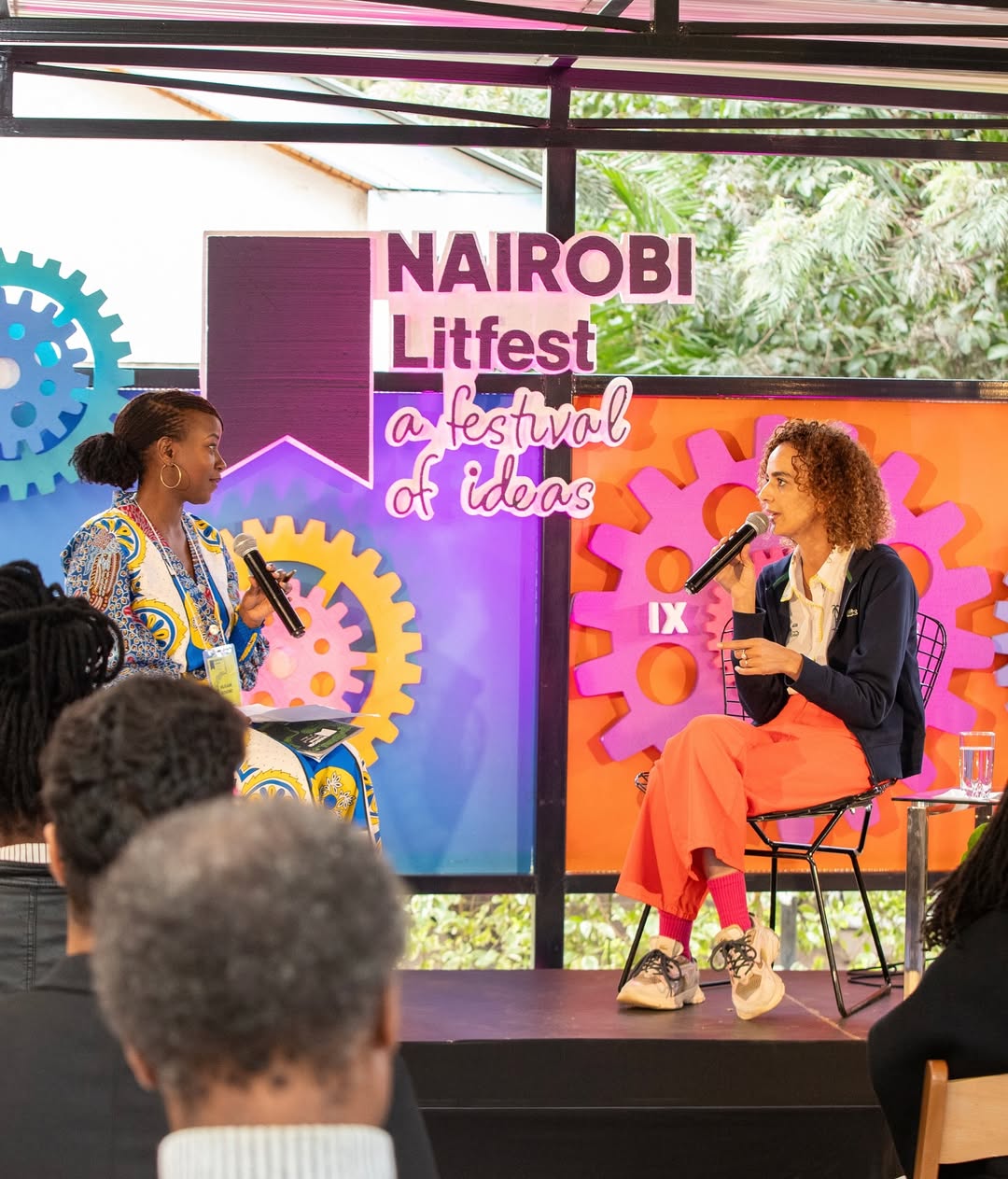
Held in Nairobi’s public libraries, Nairobi Litfest endeavours to imagine these spaces not just as archives of knowledge but as forums for the nurturing of literary community across generations.

By Frank Njugi

Literary festivals are the rare soirees where the introverted soul of a writer momentarily steps into the spotlight, tastes the thrill of extroversion and brushes against the electric pulse of the ‘other side’ of human character. Perhaps this is why the yearly literary festival circuit in Nairobi offers moments of anticipation, an almost sacred pause in routine, especially for young writers like myself, who long for that convergence of solitude and communion— where those words I whisper in private can suddenly echo in public, and my act of writing feels momentarily witnessed.

Coming off the first literary festival of the calendar year in April, NYrobi Book Fest–the second soiree in Nairobi’s literary calendar arrived in the form of the Nairobi LitFest, held between 26th and 29th June 2025. Where NYrobi had stirred the season’s early embers, Nairobi LitFest fanned them into fuller flame, offering yet another space for stories, reflection, and that rare extroversion writers crave.

Nairobi LitFest has, since its inception in 2021, steadily evolved into one of the city’s most anticipated cultural gatherings—a meeting point for storytellers, artistes, curious minds, and most of all, writers. Held in Nairobi’s public libraries, Nairobi Litfest endeavours to imagine these spaces not just as archives of knowledge but as living, breathing forums for the nurturing of literary community across generations.

Nairobi LitFest

This year’s edition of Nairobi LitFest, themed Exploring Alternative Knowledge Systems, called for a reawakening of thought and a bold reimagining of the world as we know it. As explained by the organisers, at a time when dominant narratives are really failing us, the festival invited participants to engage in dialogue that questioned disrupted, harmful ideologies that currently exist and offered new pathways beyond the exhaustion of the 24-hour news cycle. There were rich conversations and curated experiences from writers, artistes, and thinkers from across disciplines, including literature, music, visual arts, and poetry, who came together to uncover wisdom.

The first day of the festival, 26th June, opened with a brief vibrant opening ceremony—a teaser of the conversations, creativity, and critical reflection that would unfold over the days to come. This opening ceremony was only an usher to a second day, 27th June, which was dedicated to knowledge consumption, with a series of dynamic masterclasses held across two public libraries: Eastlands Makadara Library and Kaloleni Library. 

At Makadara, the day saw a compelling session led by Chinny Ukata and Astrid Madimba, the duo behind It’s a Continent podcast and winners of the 2024 Independent Podcast of the Year. Drawing from their own creative journey, they shared insights on how to stay fresh behind the microphone and build lasting resonance in the world of audio storytelling.

The lineup continued with a hands-on photojournalism masterclass by Luis Tato, Chief Photographer and Photo Coordinator for East Africa and the Indian Ocean at Agence France-Presse. Kenyan poet and filmmaker Ngwatilo Mawiyoo led Life as a Poem—an intimate exploration of how to re-language personal experience through poetry, drawing from reservoirs of joy, pain, and longing to create work that is both vulnerable and powerful. 

The day also featured a workshop by Ukombozi Library, a Kenyan archive of progressive media, focused on equipping educators and creatives with digital tools for transformative learning and storytelling.

Nairobi LitFest

At Kaloleni Library, the day also came alive for younger audiences. Master storyteller, Orpah Agunda, transported children into imaginative realms with tales that sparked wonder. This was followed by an interactive reading session with authors, Venna Odhiambo and Velia Vidal, who shared insights on their original works for children and young adults. Adding to the creative energy, writer, zine-maker, and educator, Ras Mengesha, led a lesson in word and image assembly, a zine-making workshop with hands-on experimentation.

The third day of Nairobi LitFest, 28th June, marked the beginning of this year’s much-anticipated panel sessions. Among the standout ones was a one-on-one conversation between the moderator, Frankline Sunday, and Ugandan author, Goretti Kyomuhendo, who discussed her latest novel, Promises. The book shines a stark light on the lives of immigrants and the ingenuity with which people navigate the cruel edges of legal systems. 

In another riveting session, Ayisha Osori sat down with James Murua to unpack her memoir Love Does Not Win Elections, an unflinching account of her 2015 bid for a seat in Nigeria’s House of Representatives under the People’s Democratic Party.  

For aspiring authors, a vibrant panel moderated by Otieno Owino featured three emerging Kenyan voices: Dennis Mugaa, Sandra Nekh, and Joan Thatiah, who shared personal stories of navigating the path to publication. 

Mugaa, who won acclaim after taking the 2022 Black Warrior Review Fiction Contest, spoke alongside Nekh, a filmmaker and lecturer with a growing catalogue of self-published novels, and Thatiah, a lawyer and creator of the widely read Confessions of Nairobi series.

Nairobi LitFest

The day also had a political urgency with a timely discussion moderated by Wanjeri Gakuru, titled One Year On: Lessons from the Gen-Z Revolution. The panel brought together Christine Mungai, News Editor at The Continent and former Curator at Baraza Media Lab; Keith Ang’ana, editor and co-founder of the youth collective, Qwani; and Faith Odhiambo, current President of the Law Society of Kenya. 

Together, they explored why the momentum from the June-July Kenyan protests hadn’t solidified into a lasting political movement, reflecting on both the fire of that historic moment and the sobering aftermath.

The final day of Nairobi LitFest, 29th June, unfolded with more conversations, performances, and reflections. There was a special live edition of A Palace for the People, the podcast hosted by Book Bunk co-founders Angela Wachuka and Wanjiru Koinange. The session traced the evolution of protest in Kenya through the lens of collective memory. Engaging and interactive, the recording also invited audience members to respond to the prompt, “Where were you on 25th June last year?”, a vital day in Kenyan history.

In a session moderated by Ciku Kimeria, creatives Eric Wainaina, Neddy Amoga, and Mutua Matheka offered a window into the stories they’re telling through music, film, and photography. Wainaina, through the NBO Musical Theatre Initiative, is crafting a brown-black love story that blends Asian-Kenyan and African-Kenyan sounds. 

Amoga’s Cinema in Nature project breathes new life into Kenya’s resistance history through immersive forest screenings, while Matheka’s FRGMNTS reimagines Nairobi’s skyline with sound and vision to evoke forgotten fragments of the city’s identity.

In another important conversation moderated by Francis Mutegi, Prof. Kithaka wa Mberia, and Jane Obuchi spotlighted the necessity of publishing in indigenous languages. Prof. Kithaka, a Kiswahili poet and dramatist, and Obuchi, a writer and linguist working in Ekegusii, challenged English language dominance and urged for literary spaces that reflect Kenya’s linguistic plurality.

Nairobi LitFest

Poetry took center stage in a captivating panel moderated by Abigail Arunga, where Momtaza Mehri, Michelle Angwenyi, and Willie Oeba unpacked the themes, silences, and provocations in their work. From Mehri’s Bad Diaspora Poems, winner of the 2023 Forward Prize, to Oeba’s politically charged spoken word and Angwenyi’s introspective lyricism, the conversation was a meditation on meaning-making and the poet’s role in these turbulent times.

Dennis Mugaa, in a solo session moderated by Muthoni Muiruri, delved into his debut short story collection, Half Portraits Under Water. He explored how his loosely linked stories interweave themes of love, grief, and the quiet intimacy of everyday life, offering a voice to moments that often go unnoticed.

Meanwhile, Chinny Ukata and Astrid Madimba hosted a lively exchange with Nigerian journalist and author Dipo Faloyin. Reflecting on his book, Africa Is Not a Country, Faloyin dissected the simplistic portrayals of the continent in global media and called for deeper, more diverse African narratives to take up space in global discourse. This session was supported by the Ford Foundation through Malunga: Network for Global Justice, in line with the festival’s pan-African and justice-oriented spirit.

As the sun set later in the evening, the festival closed on a high note with a DJ set that turned the space into a dance floor, maybe an invitation to let the insights shared settle into the body and carry their rhythm out into the world. 

Africa stands at a point where its people’s most suppressed ways of understanding the world are often those that resist or challenge dominant systems, such as the rationalism fueling fascism in East Africa or the restrictive capitalist values in West Africa. Literature, as one of society’s clearest mirrors, can be a powerful means to push back.

Nairobi LitFest

With awareness of this, the 2025 Nairobi Bookfest exemplified literature’s role as both a mirror and a catalyst for social critique. Through critical conversations, the event affirmed the capacity of literary discourse to inspire collective hope. In this way, the festival not only celebrated the extroversion of its writers and artistes as it has always done, but this time it also positioned literature as a vital site for negotiating and reimagining the broader socio-political realities shaping contemporary African life.

Frank Njugi is an Award-winning Kenyan Writer, Culture journalist and Critic who has written on the East African and African culture scene for platforms such as Debunk Media, Republic Journal, Sinema Focus, Culture Africa, Drummr Africa, The Elephant, Wakilisha Africa, The Moveee, Africa in Dialogue, Afrocritik and others. He tweets as @franknjugi.

The post Nairobi LitFest 2025: NBO Explores The Countercurrents of Knowing first appeared on Afrocritik.

  • ✇Afrocritik
  • “The Parlour Wife” Review: Foluso Agbaje’s Novel Is a Vital Contribution to Historical Fiction
    Perhaps there are other historical novels set in Lagos, but few are as captivating, imaginative and yet historically detailed as The Parlour Wife.  By Evidence Egwuono Adjarho The first time Kehínde decides to take her brother Taiye’s advice, something bad happens—and she cannot forgive herself for it. Not only does she make her father angry (an unfamiliar experience for Kehínde, who is a classic daddy’s girl accustomed to his constant praise), but that angry look on his face becomes the last
     

“The Parlour Wife” Review: Foluso Agbaje’s Novel Is a Vital Contribution to Historical Fiction

7 juillet 2025 à 08:27

Perhaps there are other historical novels set in Lagos, but few are as captivating, imaginative and yet historically detailed as The Parlour Wife

By Evidence Egwuono Adjarho

The first time Kehínde decides to take her brother Taiye’s advice, something bad happens—and she cannot forgive herself for it. Not only does she make her father angry (an unfamiliar experience for Kehínde, who is a classic daddy’s girl accustomed to his constant praise), but that angry look on his face becomes the last memory she has of him.

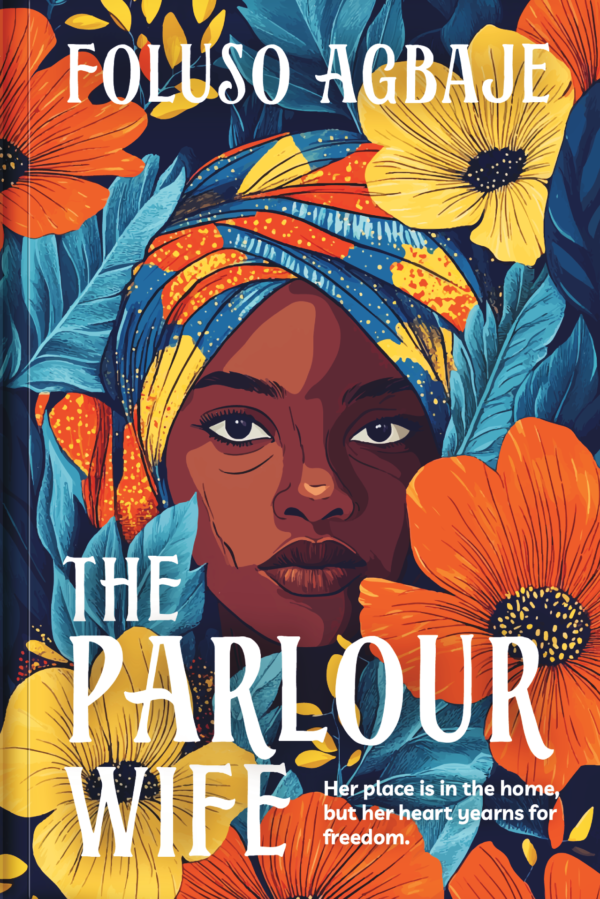
The Parlour Wife by Foluso Agbaje is set in colonial-era Lagos and is easily identified as the compelling story of Kehínde, a young woman navigating both her internal turbulence of fear, self-doubt, and denial, and the external turmoil of a city grappling with the effects of the Second World War.

The novel is structured in three parts, each representing a distinct timeline. But the shifts between these parts are not merely chronological. What distinguishes them is how Kehínde and everyone and everything connected to her undergo significant transformation.

The Parlour Wife
The Parlour Wife

In the first part, Kehínde is mostly revealed to us through her thoughts. She is described as “Pretty, quiet, always smiling, so agreeable”. And rightly so. She struggles to express her true feelings, desires, and disdains, and is constantly silenced by the fear of her parents’ disapproval.

Her twin brother, Taiwo, is presented as her alter ego. Unlike her, he is outspoken, assertive, and unafraid to challenge their parents’ authority. It is he who informs their father of their career ambitions which contrasted with the plans their parents had mapped out. 

He hopes to enlist in the army while Kehínde, having received an offer from the West African Pilot, dreams of being a political writer. Kehínde, too timid to speak for herself, lets Taiwo do the talking. Throughout this section, we see her repeatedly wishing she was more like him.

The Parlour Wife’s rising action arguably begins when Kehínde is married off to Mr. Ogunjobi. Though she had been warned of this arrangement before her father’s death, she once again finds herself unable to protest. Foluso Agbaje draws a parallel between Kehínde and her country: “Kehínde was like Nigeria, silently screaming about her rights to parents who thought they knew better”. But the problem with silent rebellion is that silence is often mistaken for consent, or reshaped into it.

The latter is precisely Kehínde’s fate. Though unwilling to be the third wife of a man old enough to be her father, she convinces herself otherwise during a heated argument with Taiwo: “I’m doing what’s best for our family!” But Taiwo exposes the hollowness of this justification: “You care so much about what everyone else thinks that you can’t even go after what you want!”

This moment is highly symbolic in The Parlour Wife. It marks the climax of Kehínde’s internal conflict: her growing awareness that her actions are not only harmful to herself, but also shaped by expectations she no longer believes in, yet still lacks the courage to reject.

Foluso Agbaje
Foluso Agbaje

In the second part of the novel, Kehínde begins to mature. She becomes less intimidated by her domineering husband and his sharp-tongued first wife. She also begins making independent decisions. This Bildungsroman structure lends itself well to both character development and narrative progression. Kehínde transforms from a passive thinker into a woman of action. She becomes secretary of the Lagos Market Women Association (LMWA), a role that is in line with her earlier dream of political writing. Though she is unable to take the job at the West African Pilot, she ends up performing similar work under the leadership of Madam Titi.

Kehínde’s growth is also marked by her departure from societal expectations and moral codes. Unlike the quiet and reserved girl introduced in the opening pages of The Parlour Wife, the later version of Kehinde allows herself to fall in love with Emeka, the brother of her shop neighbour, Ama. 

This ‘forbidden’ relationship becomes the novel’s central conflict. Kehínde knows her actions risk scandal and punishment—why should a married woman take a lover?—but “She ignored the roaring sound in her head… she refused to think, each thought of her parents, Taiwo, the LMWA, Baba Tope, Ayo, what anyone would think, what the consequences would be.”

As Lagos edges toward the devastation of war, the atmosphere of unrest intensifies. Market prices rise, demand outweighs supply, and uncertainty looms. Even the once-wealthy, like Baba Tope and his friends, are reduced to struggling. The LMWA, under Madam Titi’s leadership, plays a crucial role in resisting colonial oppression. They are able to stir the market women to stage a peaceful protest against the colonial system. Although uncertain of the outcome, they are nonetheless unafraid to confront the systemic corruption of the Lagos government.  This political awakening marks Kehinde’s full transformation in The Parlour Wife

Meanwhile, Kehínde’s family begins to unravel. Like Kehínde, her mother and brother also undergo significant changes. Following the death of her husband, Kehínde’s mother quickly moves from authoritative to withdrawn and uninvolved. Not even the conflict of her twin children, Taiwo and Kehínde, can break her resolve. 

Similarly, Taiwo fades into the background a few chapters into the novel. This was somewhat disappointing because of the initial portrayal of this character as important. But again, we are reminded that the author is a god— able to make alive and unalive at will. 

The Parlour Wife
The Parlour Wife

Stylistically, The Parlour Wife demonstrates an impressive command of language. However, the book’s frequent use of similes occasionally slows the pacing for readers. While vivid description is one of the book’s strengths, an overreliance on comparison did feel repetitive and redundant. 

Still, this novel deserves praise for the depth of historical research it clearly reflects. Perhaps there are other historical novels set in Lagos, but few are as captivating, imaginative, and yet historically detailed as The Parlour Wife. Even fewer foreground the role of women in Nigeria’s protest against colonialism. For this reason alone, The Parlour Wife stands out and is wholeheartedly recommended. 

Evidence Egwuono Adjarho is passionate about African literature and is committed to amplifying its reach through book reviews and engaging video content. She is currently training as a photographer. Connect with her on Instagram, X, Facebook, and LinkedIn: @evidence egwuono.

The post “The Parlour Wife” Review: Foluso Agbaje’s Novel Is a Vital Contribution to Historical Fiction first appeared on Afrocritik.

  • ✇Afrocritik
  • “Readers Will Bring All Kinds of Meaning to Your Work”: Uche Okonkwo, In Conversation with Afrocritik
    “When I write child characters, I think about how big some of my childhood moments felt and I try to channel those moments as much as possible” – Uche Okonkwo.  By Chimezie Chika The Nigerian writer, Uche Okonkwo, has been quietly building up her reputation for the better part of a decade, especially for her short stories. Over the years, these stories have appeared in many prestigious literary magazines and anthologies, includ
     

“Readers Will Bring All Kinds of Meaning to Your Work”: Uche Okonkwo, In Conversation with Afrocritik

5 juillet 2025 à 06:16

“When I write child characters, I think about how big some of my childhood moments felt and I try to channel those moments as much as possible” – Uche Okonkwo. 

By Chimezie Chika

The Nigerian writer, Uche Okonkwo, has been quietly building up her reputation for the better part of a decade, especially for her short stories. Over the years, these stories have appeared in many prestigious literary magazines and anthologies, including A Public Space, Zyzzyva, Kenyon Review, One Story, Ploughshares, The Best American Nonrequired Reading 2019, Lagos Noir, Ellipsis, Saraba, and others. 

Her accolades include residencies, scholarships, and grants from MacDowell, Elizabeth George Foundation, Virginia Center for the Creative Arts (VCCA), Kimmel Harding Nelson Center for the Arts, Art Omi Writers’ Residency, Anderson Center, Tin House, and Bread Loaf; a 2020-2021 George Bennett Fellowship at Phillips Exeter Academy and a 2021-2022 Steinbeck Fellowship. 

Uche Okonkwo also has an MFA in Fiction from Virginia Tech, a master’s in Creative Writing from the University of Manchester, and is presently a Ph.D. student in English at the University of Nebraska, Lincoln. 

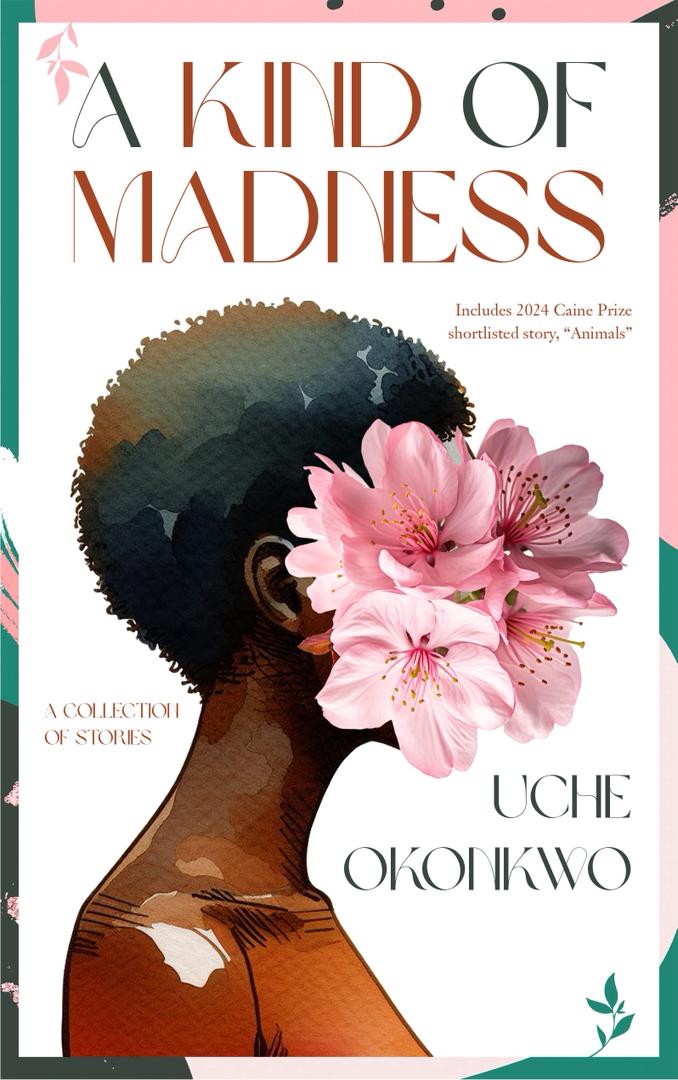
Uche Okonkwo’s debut story collection, A Kind of Madness, which was released by Tin House in the US in 2024, has enjoyed critical success. The Nigerian edition was published in March this year by Narrative Landscape Press. In this interview with Afrocritik, she speaks majorly on the book as well as on related craft matters. 

A Kind of Madness
A Kind of Madness

I found the title of your book, A Kind of Madness, quite intriguing. Is this filled with gothic stories of mysterious lunacy? I wondered. At first, I thought it was the title of a short story in the book. It was only when I finished the book that I realised the title’s efforts at thematic cohesion. What inspired this title? 

Madness was never an organising principle for the stories while I was writing them; it’s a theme that emerged much later. The idea of “madness” came late in the process, when I was thinking about a title for the book, and it felt fitting because all the stories in the collection have to do with some kind of flawed thinking. At least one of the stories deals with literal madness, but for most, the madness is more figurative. Specifically, the title came from a line in the first story in the collection, “Nwunye Belgium.”

Most of the ten stories in this collection revolve around children and adolescents. In short, the world of children and adolescents litter your stories, whether as main characters, which is most of the time—from stories such as “Eden”, “Debris”, “Animals”, “Milk and Oil”, “Burning”, etc—or as peripheral ones. Why really young characters?

There’s something magical about childhood, and I sometimes think that my affinity for child characters might be a way of dealing with my nostalgia for my own childhood. 

When I write child characters, I think about how big some of my childhood moments felt and I try to channel those moments as much as possible. Writing child characters also makes me more aware of the illusions of control that we hold on to as adults, and puts me back in that space where the adults in charge of you basically shape your life. 

Also, I feel like the innocence of childhood, and the ways in which children try to mimic the adult world, renders the strangeness and hypocrisies of adulthood starkly. 

A Kind of Madness
A Kind of Madness

It’s interesting that you say that about childhood. Perhaps that was why I was more often than not thrown off by the distinctly adult-like thoughts of child characters in stories such as “Milk and Oil”, “Burning”, “Shadow”, etc. Do you genuinely believe children think like adults?

A piece of advice that I have heard about writing child characters, and that I have observed from stories that do justice to child characters, is to take their concerns—no matter how whimsical or how much you know better from an adult perspective—seriously. Children may not have the language for everything they see or feel, but they are capable of complex reasoning, perhaps more than we often give them credit for. 

One consistent theme that seems to feature in many stories here is mother-daughter relationships and its complexities. In “Nwunye Belgium”, it takes the guise of a comic-tragic pursuit of a fortuitous marriage ambition; in others, it seems to be predicated on the respective religious or attention-seeking compulsions of madness. What is it about mothers and daughters that fascinates you as a fiction writer?

I am drawn to the emotionally complex dynamics between families and close friends because I think that through the lens of these interpersonal relationships, we’re able to capture the wider structures and politics and hypocrisies of the societies we live in. I also really enjoy reading mother-daughter stories because I find them compelling; I think there’s an inherent tension that mother-daughter relationships often hold. 

Mother-daughter relationships can be at once tender and sensuous, while also being fraught with contradictions and power struggles as the mother seeks to shape the daughter. I’ve been inspired by books I’ve read about mothers and daughters recently, including The School for Good Mothers by Jessamine Chan, Comfort Woman by Nora Okja Keller, Transcendent Kingdom by Yaa Gyasi, and many others. 

This may be partly why your stories work strongly as irony. The plots stretch ironies to their limits. This may be due to the contrasting effect of your matter-of-fact prose on stories with comic or satirical themes. It has led me to wonder, in a general sense, what your writing process is like. How do you begin a story? What comes first? Image, plot, character? Do you think about themes when you write?

I try to never think of themes while I write. This quote from Rick DeMarinis’s The Art and Craft of the Short Story rings true to me: “the term ‘theme’ is part of the critic’s vocabulary, not the writer’s.Don’t analyze a work in progress for its deepest meanings. Don’t think of your work as having a major theme before you’ve produced a draft. You might hamstring your imagination if you do. 

Remember this: You don’t begin with meaning, you end with it”(61, 62). Of course, during later drafts, and while revising and editing and considering feedback from trusted readers, I then give some thought to possible themes, but while writing early drafts I avoid thinking about theme. 

And it’s important to remember too that readers will bring all kinds of meaning to your work, uncovering themes and interpretations that you may not have considered yourself. I think that’s part of what makes writing and reading so rewarding. 

When thinking of a new story idea, the first thing that I start with is the situation, or an inciting event, or even the climax, and then I try to work my way through the rest of it: how do we get from A to B to C? Who are the characters? Where does this story take place? 

Uche Okonkwo
Uche Okonkwo

As a Nigerian, every detail in your stories—language, attitudes, consumer products, cities—is familiar. So close are they to the Nigerian reality that they may even be sometimes uncomfortable or even painful. That is what I felt with “The Harvest”, which for me is the best story in the book. It is the kind of unassuming satire of Nigerian Pentecostalism that is bound to elicit a certain touchiness if read to a Nigerian audience. What particularly stood out for you while working on the story?

I can see how “The Harvest” might cause feelings of touchiness. The world that Alfonso inhabits is one that I think is very recognisable to many Nigerian Christians. I’ve often wondered how it feels to be on the other side of the pulpit, but with “The Harvest,” I primarily wanted to dramatise the slow death of a dream. 

Sometimes I think that Nigerian Pentecostalism, and prosperity preaching more generally, encourages this view of faith as a kind of currency. But what happens when it fails? I wanted to explore that through Alfonso’s failures and resentments, and also through the breakdown of his relationship with his wife. 

Let’s talk about boarding schools, where a couple of stories in your book are set. As a boy, I did not find the boarding school experience a pleasant one. The girls in your boarding school stories would apparently agree with me, though they of course have very peculiar female experiences. The important thing in those stories seems to be the fact that they are not narrated by the protagonists. Do you think this device helps with your portrayal of the Nigerian girls boarding school experience?

I was not consciously thinking of specific narrative devices with regard to “Long Hair” and “The Girl Who Lied.” With each story, I try to figure out what I think would be the most interesting or effective lens from which to view the story’s events. 

My boarding school days were not particularly pleasant either, although there were fond moments sprinkled throughout. It was a very formative time, and a Nigerian boarding school is a great setting for all kinds of drama. 

Uche Okonkwo
A Kind of Madness

A lot of drama indeed. As a whole, how was the experience of writing A Kind of Madness and how long did it take to write it?

I did not start writing with the intention of putting together a short story collection, and so the experience of writing the book is not necessarily a cohesive one. I kept writing single stories until I had enough to put into a collection, and at that point, reading the stories together as a single text was an interesting experience—it let me see what obsessions and themes were recurring in my work, and how the stories speak to each other across a long span of time.

What next are we expecting from you? A novel? Another collection?

Without going into the details, I’ll just say that I have a few projects in the works. We’ll see how things go.  

Chimezie Chika is a staff writer at Afrocritik. His short stories and essays have appeared in or forthcoming from, amongst other places, The Weganda Review, The Republic, Terrain.org, Isele Magazine, Lolwe, Fahmidan Journal, Efiko Magazine, Dappled Things, and Channel Magazine. He is the fiction editor of Ngiga Review. His interests range from culture, history, to art, literature, and the environment. You can find him on X @chimeziechika1

The post “Readers Will Bring All Kinds of Meaning to Your Work”: Uche Okonkwo, In Conversation with Afrocritik first appeared on Afrocritik.

  • ✇Afrocritik
  • “Little Rot” Review: Akwaeke Emezi’s Novel Confronts The Performance of Morality
    Little Rot is an investigation into how society imposes rigid ideas of right and wrong, constructs we are expected to accept and embody without question. By Evidence Egwuono  Little Rot by Akwaeke Emezi is the story of Aima, a young Nigerian woman who returns home to New Lagos with her boyfriend, after years in the diaspora. She is reeling from a failing relationship with Kalu, whose reluctance to marry her has created a chasm between them. Their conflict is rooted in a clash of values: Aima,
     

“Little Rot” Review: Akwaeke Emezi’s Novel Confronts The Performance of Morality

16 juin 2025 à 07:17

Little Rot is an investigation into how society imposes rigid ideas of right and wrong, constructs we are expected to accept and embody without question.

By Evidence Egwuono 

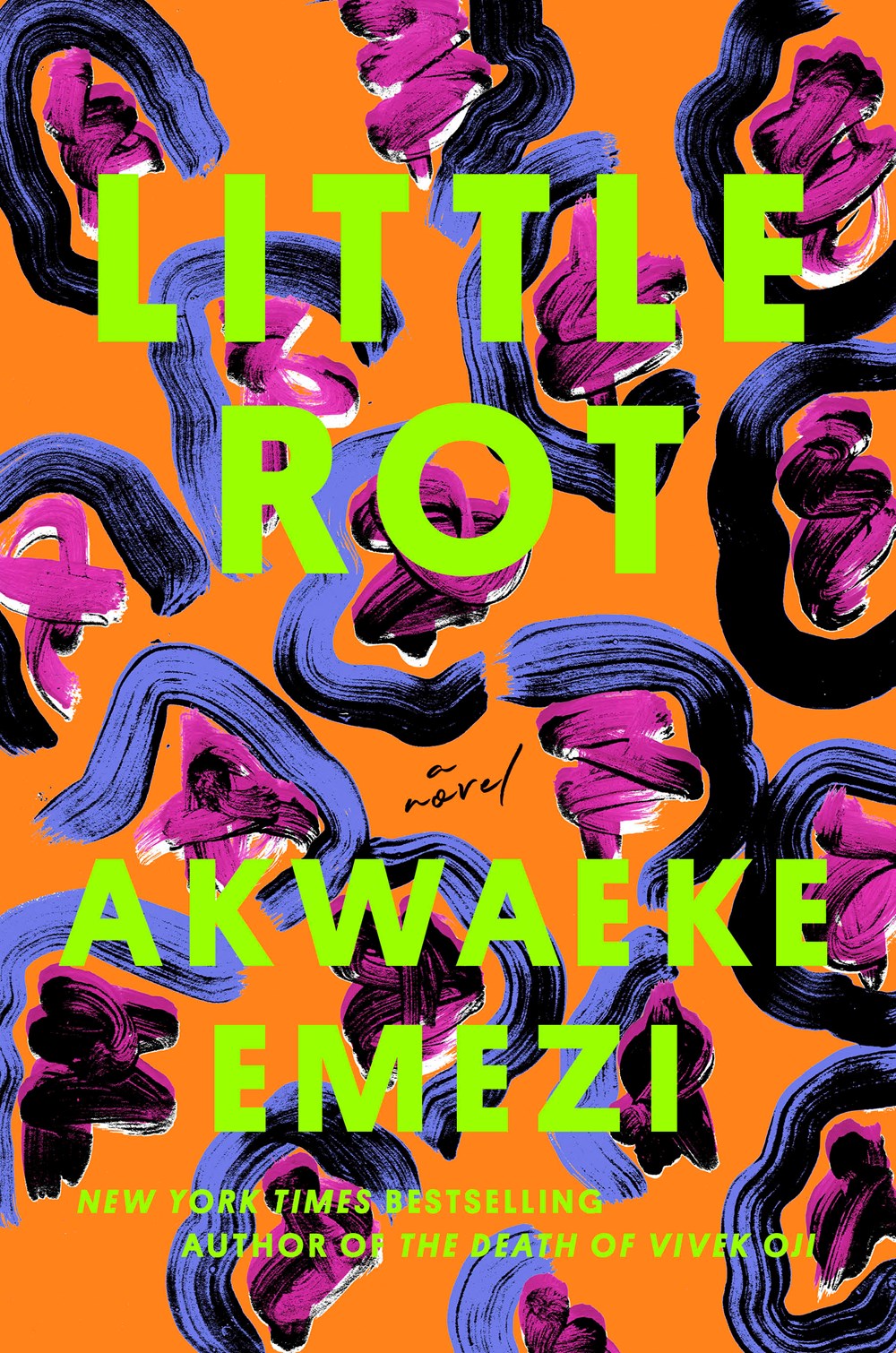
Little Rot by Akwaeke Emezi is the story of Aima, a young Nigerian woman who returns home to New Lagos with her boyfriend, after years in the diaspora. She is reeling from a failing relationship with Kalu, whose reluctance to marry her has created a chasm between them. Their conflict is rooted in a clash of values: Aima, awakening to a renewed Christian faith, sees their unmarried cohabitation as sinful and untenable. Kalu, by contrast, is rooted in a more liberal view of partnership, one that no longer satisfies Aima’s evolving sense of self.

What Emezi does so well here is showcase the psychological unraveling that happens when personal convictions collide with reality. Aima’s decision to leave Kalu is initially a kind of triumph of her faith over sin. She is happy to be freed from fornication and a boyfriend who has no intention of marrying her. However, when the gravity of her decision hits her, she succumbs to emotional grief, confusion, and loneliness. 

Unable to deal with the consequences of her journey from New Lagos back to London–a permanent cutting off of Kalu–she reroutes to her best friend’s house instead. This single decision becomes highly significant in the plot as it sets off a chain of events that affect Aima and every other person related to her, directly or indirectly.

Little Rot
Little Rot

In Little Rot, the setting, New Lagos, is not just a city but an organism; it breathes, it intoxicates, it kills, and it saves. Aima’s decision to stay with her best friend, Ijendu, pulls her into the heart of this city’s underbelly. Her first night party acts as a ritual, a threshold into the city’s rot where Aima is finally free to explore her queerness through her sexual encounter with Ijendu. But it is also a place of disillusionment, as Aima comes to see that Ijendu is not the person she imagined. Just like the city itself, Ijendu holds dark secrets.

Aima’s descent into the rot of New Lagos is not romanticised nor moralised. Instead, it is presented as a part of the complexity of being human: the yearning to break free from the constraints of personal convictions, societal expectations, and religious doctrine; the desire to escape the monotony of a prescribed life, to explore, to question: “What makes a fruit forbidden?” “What makes something a sin?” Aima’s intense sexual experience with Ijendu is described not as a transgression, but as a deep, long-suppressed hunger. Even when she later asks God for forgiveness, she cannot articulate what she’s sorry for, because it did not feel like sin.

Kalu’s storyline, on the other hand, explores the rot at the heart of masculinity, wealth, and power. After Aima leaves him, he attends one of his best friend Ahmed’s infamous masked parties, an orgiastic gatherings that cater to the elite’s every indulgence, mostly sexual, all hidden from the judgment of society. Here, Emezi juxtaposes the public image of New Lagos sophistication with the depraved secret lives of its powerful men. 

Kalu’s unease at the party, especially when he gets a hint of the presence of underage girls, shatters his illusions of control and moral neutrality. His horror is palpable, but also complicated. He is, after all, there. He becomes a mirror for many well-meaning men who, despite their self-perception as ‘not like the others’, remain complicit in the very systems they claim to disdain.

Kalu is not an innocent observer. His outrage, while seemingly noble, is interrogated. Ahmed, the orchestrator of the party, defends himself by claiming that he is providing underage sex workers like Machi with safer, better-paying work. It’s a disturbing justification, but one that Akwaeke Emezi does not resolve. Instead, readers are left to judge.

Akwaeke Emezi
Akwaeke Emezi

Even as Kalu wrestles with his revulsion and sense of betrayal, he is no stranger to rot himself. His messiah complex is undercut by his own desires and secrets. He loves Aima, but that love does not stop him from sleeping with other women. More importantly, he too harbours a queerness he cannot fully name, let alone accept. His attraction to Ahmed is a hidden truth he tries to bury under masculinity and responsibility, but which nonetheless simmers beneath the surface.

Little Rot is an investigation into how society imposes rigid ideas of right and wrong, constructs we are expected to accept and embody without question. To resist these expectations is seen as rebellion, even betrayal. Aima cannot fully embrace her sexual desire for Ijendu because she believes it is sinful, despite knowing other lesbians who are practicing Christians. Kalu, likewise, denies his love for Ahmed out of fear—of judgment, of societal norms, of deviating from what is expected of him as a man.

Queerness in this novel is presented not just as sexual orientation but as something spiritual, intimate, connective, and even transcendent. Kalu and Ahmed’s bond is portrayed as a form of completion. They are tethered to one another in a way that suggests neither can be fully whole without the other. A similar dynamic is revealed in the relationship between Aima and Ijendu. It is therefore no coincidence that they are best friends. 

The author’s refusal to frame any character as wholly good or evil is one of the novel’s greatest strengths. Aima is not simply a victim, and Kalu is far from a villain. They are two people trying—and failing—to love each other in a world that makes that love conditional on performance, conformity, and timing. There is a palpable tragedy in how close they come to understanding each other, and how far apart they end up anyway.

Little Rot
Little Rot

Still, Little Rot goes beyond personal desires. It is also a biting critique of Nigeria’s systemic decay. This theme finds a sharp embodiment in Pastor O, a figure who is both a religious leader and a godfather of New Lagos’ shadow world. He manages his church with ease while simultaneously controlling the city’s dark side. What sets him apart, however, is his lack of denial. Unlike the others, Pastor O has embraced his contradictions: his gender nonconformity and his dual identity. Ironically, he seems to be the most liberated character in the story.

Little Rot does not wait until its conclusion to reveal its central message (if such a thing exists). And it is that rot exists in every society. It is a constant in the human condition. And in the end, no one is truly better than another—only more practiced at living with their rot, their truth, their reality. By the end of the novel, one thing stands out: the explicit rawness of Little Rot is something that reminds one of the nature of humans– imperfect, dark, and full of rot. 

Evidence Egwuono Adjarho is passionate about African literature and dedicates her time to amplifying it through book reviews and video contents. She is currently undergoing training as a photographer. Connect with her on Instagram, X, Facebook, and LinkedIn: @evidence_egwuono.

The post “Little Rot” Review: Akwaeke Emezi’s Novel Confronts The Performance of Morality first appeared on Afrocritik.

  • ✇Afrocritik
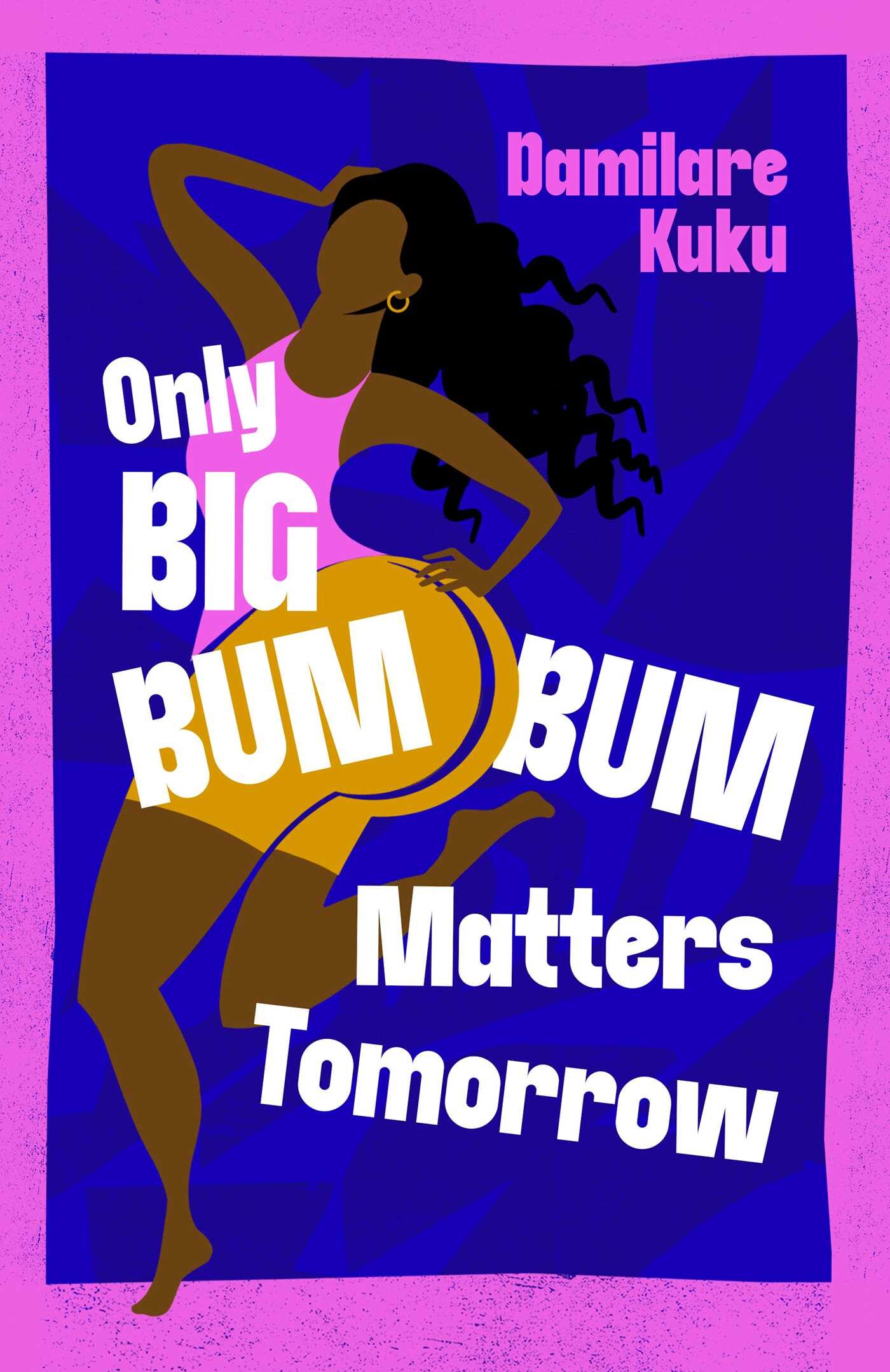
  • “Only Big Bumbum Matters Tomorrow” Review: Damilare Kuku’s Novel Addresses Body Politics, Biases, and Femininity
    Damilare Kuku’s Only Big Bumbum Matters Tomorrow is a novel that speaks clearly to a generation of women tired of being told how to behave, how to look, and how to live.  By Evidence Egwuono  “I plan to renovate my bumbum in Lagos, live there for some time, and hopefully meet the love of my life!”, Damilare Kuku begins her sophomore book, Only Big Bumbum Matters Tomorrow. Kuku rose to fame among readers after the publication of her 2021 debut book, Nearly All the Men in Lagos Are Mad. One reas
     

“Only Big Bumbum Matters Tomorrow” Review: Damilare Kuku’s Novel Addresses Body Politics, Biases, and Femininity

10 juin 2025 à 10:02

Damilare Kuku’s Only Big Bumbum Matters Tomorrow is a novel that speaks clearly to a generation of women tired of being told how to behave, how to look, and how to live. 

By Evidence Egwuono 

“I plan to renovate my bumbum in Lagos, live there for some time, and hopefully meet the love of my life!”, Damilare Kuku begins her sophomore book, Only Big Bumbum Matters Tomorrow.

Kuku rose to fame among readers after the publication of her 2021 debut book, Nearly All the Men in Lagos Are Mad. One reason why this book became a Roving Heights bestseller is because of its relatability, both in its title and its theme, to the many Lagosians who have had their fair share in the madness of Lagos men. 

As a writer with a bias for bandwagoning, I thought twice before purchasing this book to read due to its popularity, but was later intrigued by some stories in the collection, particularly how Damilare Kuku infuses humour while discussing grim issues in society. It does seem like this author has established her forte as a storyteller who is unafraid to tell stories of women’s struggles in society, sealing them with unconventional and curiosity-arousing titles.

Only Big Bumbum Matters Tomorrow

Only Big Bumbum Matters Tomorrow is built around the interconnected yet distinct lives of four women: Témì, Ládùn, Aunty Jummai, and Hassana. Each of these women grapples with different challenges, mostly shaped by the emotional residues of their past. Ládùn, the first child of Hassana and Titó, is the prodigal daughter who returns for her father’s burial after years of disappearance. Hassana, her mother, is the fierce matriarch who is trying to reconcile her own grief with the worry that she may be losing her second daughter as well. 

Aunty Jummai, Hassana’s sister, is the ever-present loudspeaker—opinionated, dramatic, and bitterly comic—who thrives on other people’s chaos and heartbreak, though rarely her own. And then there is Témì, the primary narrator, whose seemingly ridiculous proclamation to “renovate her bumbum in Lagos” sets the book’s central conflict in motion.

Kuku uses this cast of carefully crafted personalities to stage a multi-generational debate on beauty, desire, self-possession, and motherhood. In many ways, Témì’s desire to undergo a BBL becomes a cipher for everything these women have buried within themselves. Through the eyes of Témì, we see the implications of societal and familial expectations that women must always bend, if not their bodies, then their dreams, to fit someone else’s approval. 

From a place of observation, there is a lot to be said about the emotional honesty in Only Big Bumbum Matters Tomorrow, and by extension, about Kuku. She has a penchant for slipping heavy truths between bursts of humour, similar to what we find in her first book. One second, you’re laughing, the next, you’re swallowing a lump. It is this ability to switch tones, to balance the comedic with the tragic without losing the reader, that makes Damilare Kuku’s storytelling feel so alive. 

While Témì is the story’s compass, the novel refuses to flatten her into a Gen Z stereotype. Yes, she is bold, perhaps even reckless in some instances. But she’s also introspective, thoughtful, and aching to be seen. Her declaration to get a BBL is not just a cosmetic decision. As we discover while reading, it is a response to years of longing to be seen and frustration at being constantly body-shamed. It is not so much about becoming desirable as it is about reclaiming her body in a world that has used her shape as an emblem of deficiency.

Damilare Kuku
Damilare Kuku

However, what is interesting is how the other women in Only Big Bumbum Matters Tomorrow reflect their own insecurities onto Témì’s decision. Hassana, her mother, is haunted by her own body image, especially her sagging breasts. Aunty Jummai, in her obsession with decorum and control, hides the reality that her own life has been reduced to watching others live. And Ládùn, who fled the town years ago, sees Témì’s move to Lagos as a mirror of her own choices, perhaps even mistakes. This layering allows the novel to move beyond a singular storyline focused solely on the BBL.

What makes Only Big Bumbum Matters Tomorrow especially important is the space it creates for a different kind of African female protagonist, one who is not bound by moral perfection or respectability politics. Témì, the protagonist, is messy, impulsive, occasionally naive, and makes some foolish decisions and mistakes. 

But the author sends a powerful message through her protagonist. Temi is not perfect, nor is she elevated or given a super-human status. She is not punished for her choices, nor is she sanctified. She is simply allowed to be and exist on her own terms. Damilare Kuku emphasises in Only Big Bumbum Matters Tomorrow that the African woman has a fundamental right to be as complex as she desires.

Beyond the central theme of body politics, the novel is also a study of the relationships that exist between women and the importance of communication. Hassana and Aunt Jummai, who were once inseparable as kids, drift apart as adults; Ladun and Temi’s sisterhood bonding becomes messy after the former leaves her parents’ home; Hassana struggles with parenting Ladun because she believes her daughter hates her. But at the root of these rifts is not malice, but misunderstanding born from years of carrying burdens society teaches women to endure without protest. And in choosing not to speak, they become strangers to one another.

Only Big Bumbum Matters Tomorrow

It is important to point out that Only Big Bumbum Matters Tomorrow employs multiple points of view. Each of the women get to tell their story and readers have a nuanced perspective of their lives. 

However, this began to feel overindulgent, especially in the latter half of the book. The chapter shifts were jarring, with some voices sounding too similar in cadence. The plot also occasionally leaned on exposition rather than action, slowing the pace. However, these are forgivable imperfections considering what the author achieves in this novel. 

Damilare Kuku’s Only Big Bumbum Matters Tomorrow is a novel that speaks clearly to a generation of women tired of being told how to behave, how to look, and how to live. And for that reason alone, this is a story worth reading.

Evidence Egwuono Adjarho is passionate about African literature and dedicates her time to amplifying it through book reviews and video contents. She is currently undergoing training as a photographer. Connect with her on Instagram, X, Facebook, and LinkedIn: @evidence_egwuono

The post “Only Big Bumbum Matters Tomorrow” Review: Damilare Kuku’s Novel Addresses Body Politics, Biases, and Femininity first appeared on Afrocritik.

❌