Vue normale

Reçu avant avant-hier
  • ✇Afrocritik
  • Nigeria’s Class Problem and the Nepotism Debate
    Nigeria has a serious class problem. As with all such societies, the controlling oligarchy is only actively involved in pursuing self-centred policies. By Chimezie Chika  I Let us begin with a familiar story. Nnamdi grew up in a big house in Ikoyi, Lagos, owned by his dad, who is the CEO/MD of a 55-year-old family-owned company. His mum is a member of the House of Representatives, in her second tenure. Between June and August every year, and sometimes in December, the family goes
     

Nigeria’s Class Problem and the Nepotism Debate

28 juillet 2025 à 09:13

Nigeria has a serious class problem. As with all such societies, the controlling oligarchy is only actively involved in pursuing self-centred policies.

By Chimezie Chika 

I

Let us begin with a familiar story. Nnamdi grew up in a big house in Ikoyi, Lagos, owned by his dad, who is the CEO/MD of a 55-year-old family-owned company. His mum is a member of the House of Representatives, in her second tenure. Between June and August every year, and sometimes in December, the family goes on vacation to Europe or America, or any other place around the world that welcomes bankable tourists. 

Nnamdi’s parents established an investment account for him as soon as he was born, which is expected to grow to millions of dollars by the time he clocks eighteen. Nnamdi started driving at puberty. He takes whatever car he likes from the luxury fleet in his parents’ garage. In his earlier years, he attended a British school. 

Within Nigeria, his visits outside Lagos are either to Abuja or to his village in Anambra, where his father has another big 30-room mansion. Nnamdi has never seen a bad road in his life except on the internet or in the news (at least not in the sense in which most of his fellow Nigerians do). Nnamdi has never known power cuts in his life, except on the internet or the news. Nnamdi’s circle is close. 

His friends are the sons and daughters of an industrialist, a real estate mogul, high-ranking politicians, and businessmen with hefty investment portfolios; his uncles and aunts are either wealthy gentrified immigrants in Western countries or the selfsame fathers and mothers of his friends. 

Nigeria
Civic Centre at night, Lagos

After secondary school, Nnamdi insists he wants to further his education at an Ivy League university, and his parents agree too, since that has been their plan all along. He finds the Ivy League school he chose fascinating because of what his cousin Aderonke, who is studying there on scholarship, tells him. 

But Nnamdi is an average student and therefore cannot get a scholarship like his brilliant cousin, Aderonke, who herself has a Dad that owns a private university in Nigeria. Nnamdi’s dad subsequently makes a handsome donation to the Ivy League school in millions of dollars, to be used for research purposes and, soon, Nnamdi gains admission into the school to study Business Administration and Management, a course his dad considers fitting for his future role. 

Nnamdi takes all these for granted. Nnamdi thinks most people either live like he does or are not that far off. “It can’t be all that bad for Nigerians, is it? Not sure why they always complain”. Nnamdi consequently attends the school, goes through his undergraduate studies as softly as he considers appropriate to his classy tastes. 

Upon his return to Lagos, Nnamdi marries Stella, the daughter of his father’s industrialist friend, who had had a gentleman’s agreement with his father that their children would marry each other. Later on, he takes over the family company, struggles sometimes with government policies that affect business; these prove to be scalable hurdles with the right connections and pecuniary support for incumbent politicians in the ruling party, especially during elections. 

In his later years, flush with achievement and about to hand over management to his own children, Nnamdi writes a book titled, My Struggle for Success (actually ghostwritten for him). And so and so forth; you get the drift.

II

The hypothetical story above illustrates the reality of a different world, which many Nigerians will only ever be acquainted with through the internet, some society weddings, or through the conduit of glamorous plots in Nollywood movies. 

Rarely does an average Nigerian come into direct contact with members of these exotic individuals, who make up one percent of the population or less. This is because their lives have been conditioned in such a way as to insulate them entirely from the rest of the country. 

And when such contact happens, the one percent individual is sometimes incredibly confused, unable to understand the motivations and aspirations of his less-privileged countryman. 

The fawning and attention which aspirational Nigerians unwittingly accord to the wealthy is worthy of painstaking psychological study. Such attention is not given to any significant virtue other than the reality of their being extremely privileged in a society where most of the rest are severely handicapped economically. But this condition allows for two things to fester: admiration, on the one hand, and hatred, on the other. 

The former elicits ambition, which can sometimes throw the moral groundings behind the inordinate pursuit of wealth into stark relief; the latter creates revolutionary anger or exposes the wealth inequalities that have been perpetuated for long in this country, from the inception of the colonial divide-and-rule system to sycophant reward systems that subsequently emerged out of it. But also, in circumspect, both can also be the impulse for crime.

It is all too familiar, as far as this country goes…

III

A week ago on X, the seeds of this reflection were sown when a user, who goes by the name of Uncle Ayo, made a series of posts highlighting the problem of a man like Femi Otedola announcing the forthcoming publication of his memoir titled, Making it Big: Lessons from a Life in Business. 

Femi Otedola
Fela Otedola’s new book, Making it Big: Lessons from a Life in Business.

In those posts, Uncle Ayo makes a compelling argument that Otedola and the likes of him achieved success, not through hard work alone, but through privilege, access, and leveraging family wealth and connections. 

The telling examples he gives trace the deep-seated connections and generational wealth that run through the families of people who occupy strategic positions of influence in all spheres of this country. In light of this, Uncle Ayo accuses the upper class of romanticizing struggle for the benefit of their self-image and their desire to be seen as a generational inspiration to all and sundry. 

Nigeria

“No let anybody write book for you oo”, Uncle Ayo writes in pidgin, noting the foolhardiness of a less-privileged Nigerian trying to draw inspiration from people who had never had to struggle for anything most of their lives, people who, by virtue of their birth alone, was always going to be “3000 steps” ahead in the race toward success.

It is easy to understand the motivations behind the added glamour of laundering one’s success story as that of scaling over high walls, defeating insurmountable obstacles, and achieving goals via a road filled with struggles. 

For one, it makes for a more riveting tale (there is certainly nothing more boring than a story that is devoid of struggle or any form of pain); and it enhances the image of an individual to that of a heroic persona. This is nothing more than the classic noblesse oblige. In Nigeria or elsewhere, class problems have always resulted from coded class attitudes—that of the rich always paying calculated lip-service to the poor.

Nigeria

The fallout from Uncle Ayo’s indictments seems to have established a remarkable cultural moment in which already existing metaphors are further entrenched into the fabric of social relations to describe the different economic and social states, worlds, and conditions in which Nigerians exist. 

The group, labelled “Nepo babies” (after the word Nepotism), are the extremely privileged, trust-fund backed individuals who constitute less than 1% of the Nigerian population and occupy a soft bubble of plenty and ease where the daily struggles of the majority of their countrymen are a far distant tinkling bell; the other group, labelled “Lapo babies” (after the notorious loan sharks, LAPO) conjures up images of unending debt, want, extreme deprivation, illiteracy, and perpetual struggle to make ends meet.

IV

What I would refer to as the Nigerian Social Other is one of the worst states to exist in. In its barest offerings, there is nothing to gain; there is no sign of respite, no comfort, no peace, no way to meet even the most basic needs to sustain life (one wonders whether our governments and their anchors under the acronym HDI). 

It is often easy, when one lives a kind of life in which feeding is taken for granted, to forget that there are dozens of millions in this country for whom to do that just once a day is a mammoth struggle. It might sound outlandish even, but this reality stares at us every day in this country outside the insular environments of gated communities. 

Wealth disparity in Nigeria is not a matter of frivolity. It is fomented by a negligent government that insidiously apportions rewards through an established nepotistic system. This is why a historical analysis of some of the most important positions in the land in the last 60 to 70 years would show that they mostly rotate among the same closed circle of people, their children, their grandchildren, and their lineages. 

The reality of this is that Nigeria has a serious class problem. As with all such societies, the controlling oligarchy is only actively involved in pursuing self-centred policies. The good news is that oligarchies are not completely sustainable in developing societies with geometrically expanding populations unless they find insidious ways to acquire mutative abilities (which many have done successfully, by the way). 

Class blindness in Nigeria immensely affects government policies. Instead of investing in education, health, and other indices of human development, what we often see are unattainable white elephants posed strategically to enhance reputations just so far enough as to influence the tribal and religious prejudices that seem to win elections in Nigeria.

The solution to class-motivated wealth disparities is usually social welfare policies. The socialist democracies of Europe diagnosed and understood this problem in the post-WWII years and now enjoy the dividends of the policies that were formulated at that time. 

Several tools such as taxation, universal health and educational reliefs, and social security, often help to alleviate these social extremes, for no society will get anywhere with such stark disparity in the comparative comfort of the majority of its citizens and therefore of the country itself, since a country’s being and image is nothing without its people.

V

A few Nepo babies did come at Uncle Ayo for his posts, arguing that some of the wealthy work harder than many of the poor who accuse them of privilege. This is true, in a sense, but it is also true that the hard work of the connected is crowned with access and wealth, so that it becomes easy to achieve goals. 

For individuals within the Nigerian Social Other, hard work is not at all a guarantee of success. As many have argued, millions have broken their back with the most grueling hard work and still died without experiencing even the simplest comforts. There is nothing more insensitive, more affirming of privilege than calling the Other lazy. 

It highlights the nuances that exist in any straightforward argument regarding the injustice of a system that encourages the ever-widening gap between the rich and the poor. The system conditions the former to achieve with maximum or minimal effort; for the latter, there are no guarantees that any kind of effort—maximal or otherwise—would lead to any kind of success.

The psychological effects of a long-entrenched situation in the province of lack and deprivation are damaging. Studies have shown that the long stay of poverty in the life of an individual leads to anxiety, all kinds of depression, mental illness, emotional instability, violence, and even brain regression. 

This is part of the reason why some of the sanest, mentally stable, and sensible people out there are still people from wealthy, or at least comfortable, backgrounds (Why? For the simple fact of the opportunity scale. They are so far high up on the opportunity ladder that their interests are not the mentally draining squabbles of necessity but the bliss of health, well-being, and innovation). 

In other words, these kinds of over-wide income disparity we see in Nigeria are too costly in human terms to be allowed. And as I have noted previously, many countries in the West and East have understood this and have moved regulations and policies in the right direction to varying degrees of success. 

It is in this sense that the inordinate craze for wealth in Nigeria—especially among the Other in a more overt way, but also for the upper echelon, in a more covert, state-sanctioned way—is detrimental to the country’s moral and social well-being. People want to achieve wealth—not even comfort—by all means. 

We have seen its fallout in spikes in ritual killings, greed, and corruption in high and low places, in the Yahoo culture, in the inability of successive governments in this country to achieve meaningful development over long periods. 

A society where criminals with questionable sources of income are eulogised and admired for their wealth is headed towards a bleak horizon. A society in which wealth, regardless of moral standing, has more purchase than notions of right and wrong, will have its systems of accountability—if any exist at all—completely eroded. 

It is what we have seen with the Nigerian judiciary and other institutions that were mandated with upholding this country’s ethical foundations. Where there are no funerals, vultures become revered citizens.

Chimezie Chika is a staff writer at Afrocritik. His short stories and essays have appeared in or forthcoming from, amongst other places, The Weganda Review, The Republic, Terrain.org, Isele Magazine, Lolwe, Fahmidan Journal, Efiko Magazine, Dappled Things, and Channel Magazine. He is the fiction editor of Ngiga Review. His interests range from culture, history, to art, literature, and the environment. You can find him on X @chimeziechika1

The post Nigeria’s Class Problem and the Nepotism Debate first appeared on Afrocritik.
  • ✇Afrocritik
  • “Readers Will Bring All Kinds of Meaning to Your Work”: Uche Okonkwo, In Conversation with Afrocritik
    “When I write child characters, I think about how big some of my childhood moments felt and I try to channel those moments as much as possible” – Uche Okonkwo.  By Chimezie Chika The Nigerian writer, Uche Okonkwo, has been quietly building up her reputation for the better part of a decade, especially for her short stories. Over the years, these stories have appeared in many prestigious literary magazines and anthologies, includ
     

“Readers Will Bring All Kinds of Meaning to Your Work”: Uche Okonkwo, In Conversation with Afrocritik

5 juillet 2025 à 06:16

“When I write child characters, I think about how big some of my childhood moments felt and I try to channel those moments as much as possible” – Uche Okonkwo. 

By Chimezie Chika

The Nigerian writer, Uche Okonkwo, has been quietly building up her reputation for the better part of a decade, especially for her short stories. Over the years, these stories have appeared in many prestigious literary magazines and anthologies, including A Public Space, Zyzzyva, Kenyon Review, One Story, Ploughshares, The Best American Nonrequired Reading 2019, Lagos Noir, Ellipsis, Saraba, and others. 

Her accolades include residencies, scholarships, and grants from MacDowell, Elizabeth George Foundation, Virginia Center for the Creative Arts (VCCA), Kimmel Harding Nelson Center for the Arts, Art Omi Writers’ Residency, Anderson Center, Tin House, and Bread Loaf; a 2020-2021 George Bennett Fellowship at Phillips Exeter Academy and a 2021-2022 Steinbeck Fellowship. 

Uche Okonkwo also has an MFA in Fiction from Virginia Tech, a master’s in Creative Writing from the University of Manchester, and is presently a Ph.D. student in English at the University of Nebraska, Lincoln. 

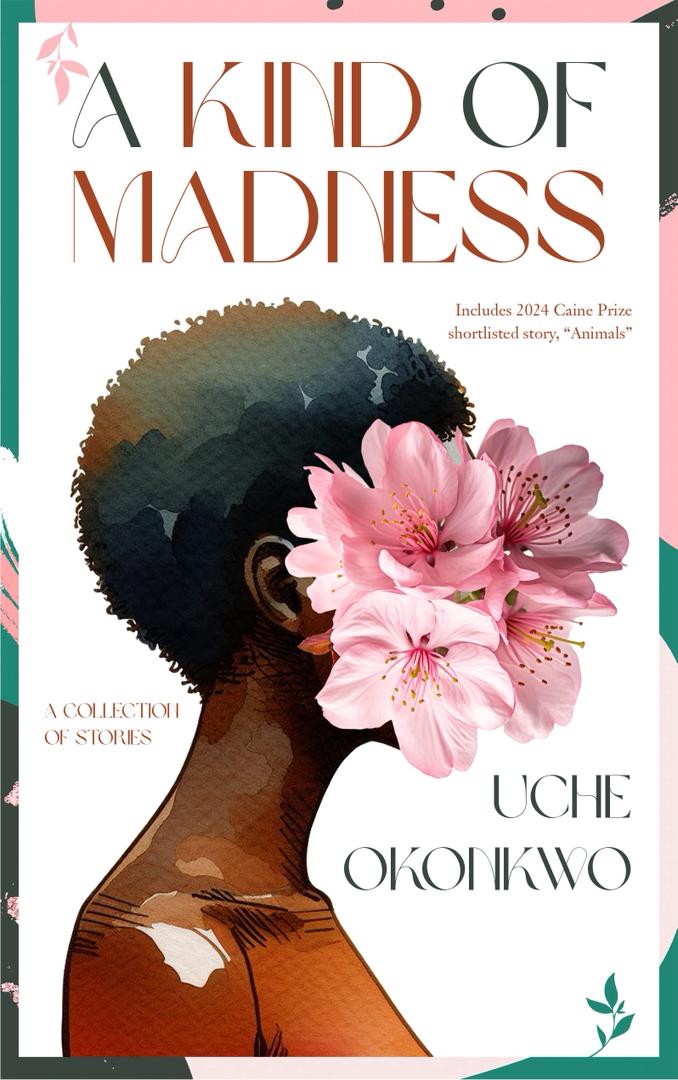
Uche Okonkwo’s debut story collection, A Kind of Madness, which was released by Tin House in the US in 2024, has enjoyed critical success. The Nigerian edition was published in March this year by Narrative Landscape Press. In this interview with Afrocritik, she speaks majorly on the book as well as on related craft matters. 

A Kind of Madness
A Kind of Madness

I found the title of your book, A Kind of Madness, quite intriguing. Is this filled with gothic stories of mysterious lunacy? I wondered. At first, I thought it was the title of a short story in the book. It was only when I finished the book that I realised the title’s efforts at thematic cohesion. What inspired this title? 

Madness was never an organising principle for the stories while I was writing them; it’s a theme that emerged much later. The idea of “madness” came late in the process, when I was thinking about a title for the book, and it felt fitting because all the stories in the collection have to do with some kind of flawed thinking. At least one of the stories deals with literal madness, but for most, the madness is more figurative. Specifically, the title came from a line in the first story in the collection, “Nwunye Belgium.”

Most of the ten stories in this collection revolve around children and adolescents. In short, the world of children and adolescents litter your stories, whether as main characters, which is most of the time—from stories such as “Eden”, “Debris”, “Animals”, “Milk and Oil”, “Burning”, etc—or as peripheral ones. Why really young characters?

There’s something magical about childhood, and I sometimes think that my affinity for child characters might be a way of dealing with my nostalgia for my own childhood. 

When I write child characters, I think about how big some of my childhood moments felt and I try to channel those moments as much as possible. Writing child characters also makes me more aware of the illusions of control that we hold on to as adults, and puts me back in that space where the adults in charge of you basically shape your life. 

Also, I feel like the innocence of childhood, and the ways in which children try to mimic the adult world, renders the strangeness and hypocrisies of adulthood starkly. 

A Kind of Madness
A Kind of Madness

It’s interesting that you say that about childhood. Perhaps that was why I was more often than not thrown off by the distinctly adult-like thoughts of child characters in stories such as “Milk and Oil”, “Burning”, “Shadow”, etc. Do you genuinely believe children think like adults?

A piece of advice that I have heard about writing child characters, and that I have observed from stories that do justice to child characters, is to take their concerns—no matter how whimsical or how much you know better from an adult perspective—seriously. Children may not have the language for everything they see or feel, but they are capable of complex reasoning, perhaps more than we often give them credit for. 

One consistent theme that seems to feature in many stories here is mother-daughter relationships and its complexities. In “Nwunye Belgium”, it takes the guise of a comic-tragic pursuit of a fortuitous marriage ambition; in others, it seems to be predicated on the respective religious or attention-seeking compulsions of madness. What is it about mothers and daughters that fascinates you as a fiction writer?

I am drawn to the emotionally complex dynamics between families and close friends because I think that through the lens of these interpersonal relationships, we’re able to capture the wider structures and politics and hypocrisies of the societies we live in. I also really enjoy reading mother-daughter stories because I find them compelling; I think there’s an inherent tension that mother-daughter relationships often hold. 

Mother-daughter relationships can be at once tender and sensuous, while also being fraught with contradictions and power struggles as the mother seeks to shape the daughter. I’ve been inspired by books I’ve read about mothers and daughters recently, including The School for Good Mothers by Jessamine Chan, Comfort Woman by Nora Okja Keller, Transcendent Kingdom by Yaa Gyasi, and many others. 

This may be partly why your stories work strongly as irony. The plots stretch ironies to their limits. This may be due to the contrasting effect of your matter-of-fact prose on stories with comic or satirical themes. It has led me to wonder, in a general sense, what your writing process is like. How do you begin a story? What comes first? Image, plot, character? Do you think about themes when you write?

I try to never think of themes while I write. This quote from Rick DeMarinis’s The Art and Craft of the Short Story rings true to me: “the term ‘theme’ is part of the critic’s vocabulary, not the writer’s.Don’t analyze a work in progress for its deepest meanings. Don’t think of your work as having a major theme before you’ve produced a draft. You might hamstring your imagination if you do. 

Remember this: You don’t begin with meaning, you end with it”(61, 62). Of course, during later drafts, and while revising and editing and considering feedback from trusted readers, I then give some thought to possible themes, but while writing early drafts I avoid thinking about theme. 

And it’s important to remember too that readers will bring all kinds of meaning to your work, uncovering themes and interpretations that you may not have considered yourself. I think that’s part of what makes writing and reading so rewarding. 

When thinking of a new story idea, the first thing that I start with is the situation, or an inciting event, or even the climax, and then I try to work my way through the rest of it: how do we get from A to B to C? Who are the characters? Where does this story take place? 

Uche Okonkwo
Uche Okonkwo

As a Nigerian, every detail in your stories—language, attitudes, consumer products, cities—is familiar. So close are they to the Nigerian reality that they may even be sometimes uncomfortable or even painful. That is what I felt with “The Harvest”, which for me is the best story in the book. It is the kind of unassuming satire of Nigerian Pentecostalism that is bound to elicit a certain touchiness if read to a Nigerian audience. What particularly stood out for you while working on the story?

I can see how “The Harvest” might cause feelings of touchiness. The world that Alfonso inhabits is one that I think is very recognisable to many Nigerian Christians. I’ve often wondered how it feels to be on the other side of the pulpit, but with “The Harvest,” I primarily wanted to dramatise the slow death of a dream. 

Sometimes I think that Nigerian Pentecostalism, and prosperity preaching more generally, encourages this view of faith as a kind of currency. But what happens when it fails? I wanted to explore that through Alfonso’s failures and resentments, and also through the breakdown of his relationship with his wife. 

Let’s talk about boarding schools, where a couple of stories in your book are set. As a boy, I did not find the boarding school experience a pleasant one. The girls in your boarding school stories would apparently agree with me, though they of course have very peculiar female experiences. The important thing in those stories seems to be the fact that they are not narrated by the protagonists. Do you think this device helps with your portrayal of the Nigerian girls boarding school experience?

I was not consciously thinking of specific narrative devices with regard to “Long Hair” and “The Girl Who Lied.” With each story, I try to figure out what I think would be the most interesting or effective lens from which to view the story’s events. 

My boarding school days were not particularly pleasant either, although there were fond moments sprinkled throughout. It was a very formative time, and a Nigerian boarding school is a great setting for all kinds of drama. 

Uche Okonkwo
A Kind of Madness

A lot of drama indeed. As a whole, how was the experience of writing A Kind of Madness and how long did it take to write it?

I did not start writing with the intention of putting together a short story collection, and so the experience of writing the book is not necessarily a cohesive one. I kept writing single stories until I had enough to put into a collection, and at that point, reading the stories together as a single text was an interesting experience—it let me see what obsessions and themes were recurring in my work, and how the stories speak to each other across a long span of time.

What next are we expecting from you? A novel? Another collection?

Without going into the details, I’ll just say that I have a few projects in the works. We’ll see how things go.  

Chimezie Chika is a staff writer at Afrocritik. His short stories and essays have appeared in or forthcoming from, amongst other places, The Weganda Review, The Republic, Terrain.org, Isele Magazine, Lolwe, Fahmidan Journal, Efiko Magazine, Dappled Things, and Channel Magazine. He is the fiction editor of Ngiga Review. His interests range from culture, history, to art, literature, and the environment. You can find him on X @chimeziechika1

The post “Readers Will Bring All Kinds of Meaning to Your Work”: Uche Okonkwo, In Conversation with Afrocritik first appeared on Afrocritik.

  • ✇Afrocritik
  • The Legend of Area Scatter: Enigmatic Musician or Misunderstood Individual?
    Area Scatter’s life is proof that history has been replete with personalities operating on the minority margins of societal conventions about gender and sexuality, no matter how we try to deny their existence.  By Chimezie Chika Owerri in the postwar years was a melting pot of all kinds of Highlife—the bongo-rhumba blend popularized by the Oriental Brothers’ band. The city’s joints and speakeasies teemed with musicians and aspiring musicians, as distinct in their appearance as they were in the
     

The Legend of Area Scatter: Enigmatic Musician or Misunderstood Individual?

14 juin 2025 à 07:29

Area Scatter’s life is proof that history has been replete with personalities operating on the minority margins of societal conventions about gender and sexuality, no matter how we try to deny their existence. 

By Chimezie Chika

Owerri in the postwar years was a melting pot of all kinds of Highlife—the bongo-rhumba blend popularized by the Oriental Brothers’ band. The city’s joints and speakeasies teemed with musicians and aspiring musicians, as distinct in their appearance as they were in their vocals. For if there was one thing especially notable about the eventful ‘70s it was the bold, flamboyant trouser flares and Afros of the fashion zeitgeist. 

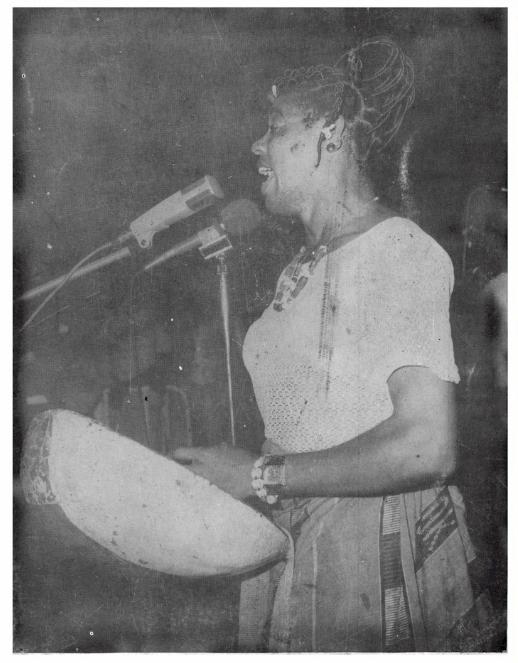
As far as fashion went—to the extent that anyone can make a judgment on what is visible—one Owerri musician, Uzoma Odimara, took things even further by dressing—not in the flared bongo trousers and wide-collared shirts as all male musicians did at the time—entirely in female attires (wrapper, plaited hair, blouse, heels), complete with coiffed hair and makeup. 

For this reason, he was called—or called himself—Area Scatter, for his appearance purportedly drew stares and caused some commotion and confusion. From evidence of the word of mouth, however, Area Scatter’s enigmatic personage was in general accepted and admired.

The only extant documentary video of Area Scatter’s musical performance, a YouTube clip, shows calm enunciation of melody before a peaceful, attentive audience. His voice was masculine, and his song, which has a spiritual lilt, is an eulogy (Ochie Dike nwere ekele, one line went). Their appearance did not seem to be the focus from a musical point of view, yet a figure such as that called attention to themselves by their very unusual appearance. 

Thus, much of their contemporary and posthumous reputation is rife with speculations about what Area Scatter really meant or represented by such a bold sally in fashion. Needless to say, Area Scatter’s disruptive fashion choices have caused considerable bewilderment. The general implication in Nigerian media has been that Area Scatter’s female attire was a ploy to draw attention to his music. 

They therefore lump them into the collective register of weird fads—essentially and, in the most simplistic manner, pasting the label of ‘cross-dresser’ upon the figure. To wit, a basic Google search today brings up article captions along the lines of “Nigeria’s First Crossdresser”.

A first glance through images of Area Scatter would reveal that this is a far more complex figure than the media was willing to investigate. Area Scatter’s persona was neither simplistic nor categorised as a mere fashion strategy? This enigmatic personality presents many scenarios for simultaneously obvious and unanswered questions.

The cipher that is Area Scatter’s life remains mostly constructed out of speculations. If video evidence had not been in existence, perhaps it would even have been more mythical. Not much is known about his date of birth or the conditions of his upbringing. Nevertheless, limited information available reveals interesting career trajectories, beginning with his male first life (hence he). 

His hometown was Akwakuma, one of the communities that make up Owerri, the Imo State capital. Before the civil war, he was said to have been a male civil servant in the Eastern Region government, as the documentary clip on YouTube reveals. During the war, he disappeared into the forest for seven years, emerging after the war as a woman and a musician. 

Area Scatter
Area Scatter

The mythical angle of Area Scatter’s mystery was also greatly enhanced, it seems, by their striking appearance. An imposing height, towering over most people, a talent for music, which seemed to come out of nowhere for a former humble civil servant, distinct female mannerisms—the character of Area Scatter appeared to be a cross between male and female. 

The mystery is enhanced by the spiritual dimension of Igbo Odinani, which believes in the kind of spiritual metamorphosis that could cause a total change in a human’s trajectory. Many priests and priestesses in Igboland, according to the dictates of the deities they serves, may have an aspect of non-gendered or even animalistic persona: many priestesses are seen as men, in a spiritual sense, and male priests are seen as transcending human notions of gender binaries, making them closer to gods than men. But the complex world of Igbo cosmology also clearly delineates male and female gods, as well as genderless gods.

Upon Area Scatter’s re-emergence, they assumed the dual role of priestess and musician. They were said to have returned with bones and skulls used in ritualistic practices and divination, and therefore became a dibia as well. Most significantly, the principal item of attraction was the Ụbọ Aka—an instrument some people incorrectly anglicise as ‘thumb piano’—with which he accompanied most of his performances. And they did enjoy relative success in the convalescent society of the postwar ‘70s Owerri. 

One of Area Scatter’s most consistent patrons was the traditional ruler of the Akwakuma community, at whose place he had performed regularly (the YouTube documentary clip shows this). Beyond that, they were performing gigs all across the old Eastern region. Sometime in the late 1970s, Area Scatter began to perform in an NTA programme on TV known as Ukonu’s Club, from where most people knew about them. For much of Area Scatter’s career, however, Area Scatter led their own band, known as Ugwu Anya Egbulam Musical Group. 

Area Scatter
Area Scatter

The manner of Area Scatter’s death has been an object of debate. While some stories claimed they died in an accident sometime in the 1980s, others claimed they disappeared. It reveals an interesting divide between Nigerian societies of forty to fifty years ago and the present. The former seems to be more accepting of deviations from norms and conventions, which could have been a result of any number of factors, ranging from the spiritual penetration of traditional religions and spiritualities, civil war fatigue, and the economic activity bolstered by the incipient oil boom. 

In contrast, the latter Nigerian societies of today, with access to mob-like information trends in digital spaces and religious conservatism led by radical religious movements, have excised and disparaged the nuances that punctuate dominant normative patterns. Area Scatter would not have been spared the intense hostility that their kind feels today, which is not to say that any vestige of that hostility did exist in his time.

We must acknowledge that we are speculating about Scatter’s life after almost half a century. Certainly, there are things we do not know, since information on them has remained—and perhaps will remain—scarce. The society of the past may not have been what we make it to be in our retrophilic imagination; Area Scatter may have been the victim of a hate crime or some other act. The point is that so much here is in the grey. 

One thing is clear: those in the media labeling Area Scatter as a transvestite cross-dresser are clearly wrong. Area Scatter’s reinvention and spiritual and physical transformation reveal a depth far more comprehensive than the physical proclivities to which they have been boxed into. 

The length to which Scatter went with his new-fangled selfhood went beyond the dramatic choreographies of drag fetes; it appears to have been the final embracing of their truest self, as it were. Area Scatter assumed his personality in the interstitial space between the conventional descriptions of the human self and its more spiritual emanations.

Nothing can be said today about such a personality except in that sense: as both an artiste and clearly gender non-conforming individual. Area Scatter’s life is proof that history has been replete with personalities operating on the minority margins of societal conventions about gender and sexuality, no matter how we try to deny their existence. 

Chimezie Chika is a staff writer at Afrocritik. His short stories and essays have appeared in or forthcoming from, amongst other places, The Weganda Review, The Republic, Terrain.org, Isele Magazine, Lolwe, Fahmidan Journal, Efiko Magazine, Dappled Things, and Channel Magazine. He is the fiction editor of Ngiga Review. His interests range from culture, history, to art, literature, and the environment. You can find him on X @chimeziechika1

The post The Legend of Area Scatter: Enigmatic Musician or Misunderstood Individual? first appeared on Afrocritik.

❌