
Vue normale

Reçu aujourd’hui — 13 juin 2026
  • ✇Afrocritik
  • Should We Actually Celebrate June 12 As Nigeria’s Democracy Day?
    If June 12 means anything, it cannot simply be that Nigerians once demanded democracy. It must also mean that democracy remains answerable to those demands. By Joseph Jonathan Nations are, among other things, memory management projects. They cannot function on unresolved history. The friction of a painful, contested, genuinely unfinished past is incompatible with the civic cohesion that states require, so they do what institutions have always done with uncomfortable material: they process it,
     

Should We Actually Celebrate June 12 As Nigeria’s Democracy Day?

11 juin 2026 à 07:39

If June 12 means anything, it cannot simply be that Nigerians once demanded democracy. It must also mean that democracy remains answerable to those demands.

By Joseph Jonathan

Nations are, among other things, memory management projects. They cannot function on unresolved history. The friction of a painful, contested, genuinely unfinished past is incompatible with the civic cohesion that states require, so they do what institutions have always done with uncomfortable material: they process it, package it, and return it to the public in a form that is easier to live with.

The French celebrate Bastille Day on July 14; a revolution whose actual violence, whose terror, whose guillotines and factional massacres, is largely absent from the ceremonial version. What survives is Liberté, Égalité, Fraternité: the aspiration, stripped of the bloodshed that accompanied it. The United States of America marks Independence Day on July 4, 1776, a date whose declaration that all men are created equal coexisted without apparent contradiction with the institution of chattel slavery. The founding myth is preserved by carefully managing what it is allowed to mean. South Africa built the Rainbow Nation (one of the twentieth century’s most powerful post-conflict narratives) on a truth and reconciliation process that, for all its genuine moral courage, ultimately produced acknowledgement without restitution. The trauma was processed. The structural inheritance of apartheid was not.

The pattern is consistent enough to constitute a principle: states prefer commemorative certainty to historical ambiguity. A holiday is not a reckoning. It is a replacement for reckoning. It takes the volatile, unresolved energy of a historical wound and converts it into something annual, predictable, and safe; a ceremony that marks the wound’s existence without requiring that it be healed.

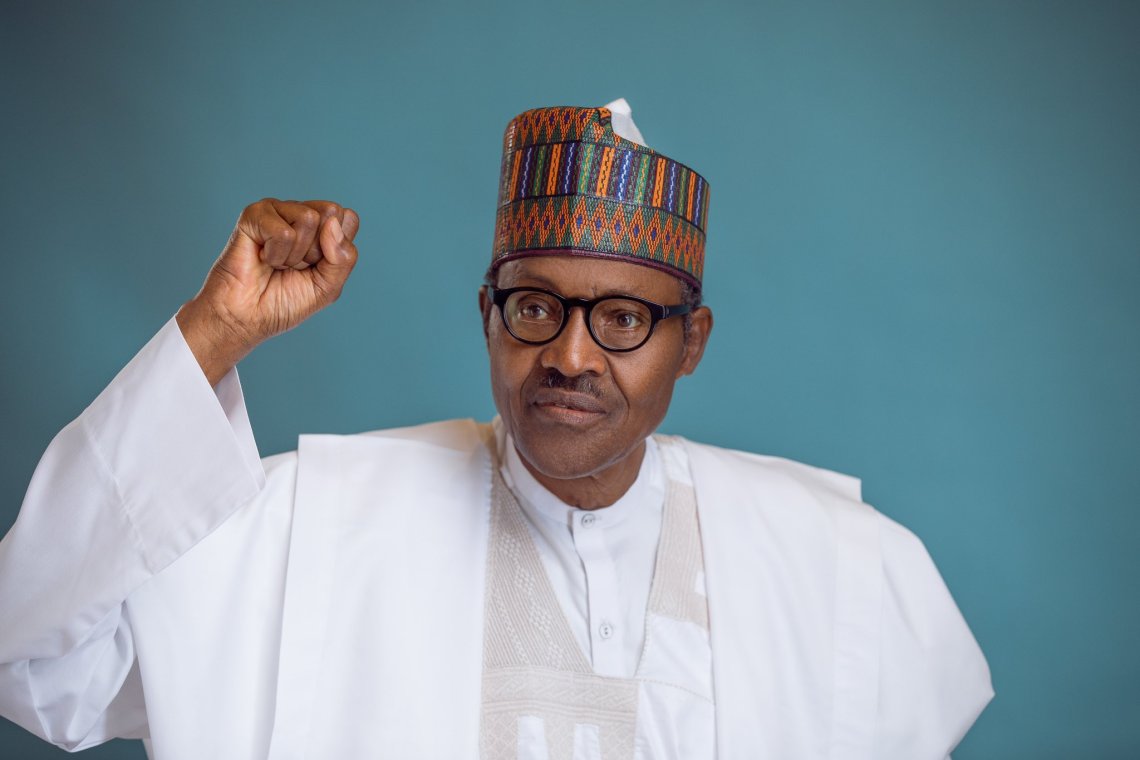
This is what Nigeria did with June 12 in 2018, when President Muhammadu Buhari announced the date change of Democracy Day from May 29 and conferred a posthumous GCFR on Moshood Kashimawo Olawale (MKO) Abiola. Many Nigerians received the announcement as an act of long-delayed justice. For the families of the dead, for the activists who had been detained and beaten across years of struggle, for ordinary citizens who had stood in queues only to have their choice erased, the official recognition carried genuine emotional weight. To dismiss that weight entirely would be dishonest.

June 12
Muhammadu Buhari

Like all successful national narratives, this one contains a great deal of truth. It also leaves something out. The election of June 12, 1993, was not a democratic triumph. It was a democratic catastrophe. Votes were cast but never allowed to reach their conclusion. The winner was never sworn in. The mandate was never restored. The struggle that followed consumed lives, produced years of repression, and ended with Abiola himself dying in detention. If June 12 represents anything, it represents the violent interruption of democracy by the state.

Which raises an awkward question. Why does Nigeria commemorate a democratic failure as Democracy Day?

This is not an argument against remembering June 12. Quite the opposite. The date deserves remembrance. The activists who were detained, exiled, beaten, and killed deserve remembrance. The ordinary Nigerians whose votes were nullified deserve remembrance. The question is what kind of remembrance is taking place.

Because memory and commemoration are not the same thing. Memory preserves discomfort. It keeps old arguments alive. It refuses easy closure. Commemoration, by contrast, often organises the past into usable stories. It selects heroes, identifies villains, and transforms complicated histories into civic lessons. States do this constantly. Every national holiday is, in some sense, an argument about history disguised as ritual.

For twenty-five years, one of the most consequential events in modern Nigerian history (duly represented in popular culture) had existed in an uneasy space between public memory and official silence. State acknowledgement mattered. But acknowledgement is not the same thing as reckoning. And that distinction is what makes June 12 worth revisiting today.

The Election That Never Became Government

To fully understand the weight and significance of June 12, let’s take a trip back in time. On June 12, 1993, Nigerians participated in what is still widely regarded as the freest and fairest election in the country’s history. The contest pitted MKO Abiola of the Social Democratic Party against Bashir Tofa of the National Republican Convention. It unfolded under the supervision of General Ibrahim Babangida’s military government, which had spent years managing an elaborate and repeatedly delayed transition programme.

Abiola won, but more importantly, he won in a way that seemed to challenge many assumptions about Nigerian politics. He performed strongly across regional and ethnic lines, securing support in parts of the country that conventional wisdom suggested should have been inaccessible to him. For a brief moment, the election appeared to offer something rare in Nigerian political life: evidence that a genuinely national democratic mandate was possible.

That possibility lasted eleven days. On June 23, Babangida annulled the election. The decision was justified through legal technicalities and bureaucratic language, but its political meaning was unmistakable. Millions of Nigerians had participated in an election organised by the state, only to discover that the state reserved the right to reject the outcome.

What followed was not the neat morality tale that commemorative speeches often imply. Babangida eventually stepped aside, handing power to an Interim National Government headed by Ernest Shonekan. The arrangement collapsed within months. General Sani Abacha seized power in November 1993 and established a dictatorship that would become synonymous with repression, censorship, political assassinations, and the systematic destruction of dissent.

June 12
General Sani Abacha

Abiola declared himself president in 1994 and was arrested. He remained in detention for four years. His wife, Kudirat Abiola, emerged as one of the most prominent voices of resistance. In 1996, she was assassinated in Lagos. Her murder became one of the defining symbols of the violence that accompanied the struggle. Abiola himself died in detention in July 1998. He was never sworn in. The election was never restored. The mandate was never recovered.

This matters because contemporary commemorations often compress the history into a story of democratic perseverance. Yet what happened in 1993 was, first and foremost, a democratic failure. The state organised an election, voters participated in good faith, and the outcome was nullified. The most remarkable thing about June 12 is not that democracy succeeded. It is that democracy was denied.

Which is precisely what makes its later transformation into Democracy Day so interesting. Nations do not merely remember the past. They interpret it. They decide which events become symbols, which symbols become rituals, and which rituals become part of national identity. The question, then, is not whether June 12 deserves remembrance. The question is why this particular memory was eventually elevated into a national holiday, and what happened to its meaning in the process.

The Strongest Case for June 12

Before interrogating the cost of the date change, it is worth seriously engaging with what it was trying to honour, because the case for June 12 as Democracy Day is not exactly a weak one.

Its most compelling form goes something like this: democracies are not born in transitions. They are born in struggle. May 29, 1999, was not a democratic achievement; it was a negotiated elite settlement. The constitution Nigerians currently operate under was drafted not by elected representatives but by a military government preparing its own exit. The man who won the 1999 election was a former military head of state whose democratic credentials were, at the point of his election, entirely theoretical. The handover was real. But it was a handover between elites, on terms set by the departing military, ratified by an electorate that had been given no meaningful alternative.

June 12, by contrast, represents something the Nigerian political process has rarely produced: a genuine expression of democratic will that crossed ethnic and regional lines, that was not managed or manufactured by any incumbent power, that emerged from the people rather than being administered to them. If democracy is, at its root, the idea that political legitimacy derives from the consent of the governed, then June 12 is Nigeria’s most democratic moment. May 29 is when the soldiers went home. June 12 is when the people spoke.

More than that, the people who fought to keep June 12 alive (who were arrested, exiled, killed for it) deserve to have their sacrifice located in the national calendar. NADECO’s members who went underground. Kudirat Abiola was shot in her car in broad daylight. Beko Ransome-Kuti, imprisoned. Gani Fawehinmi, harassed across decades. Their struggle was specifically for the mandate of June 12. To commemorate a different date would be to erase the specific content of what they fought for.

The date embodies an idea of citizenship that extends beyond elections and governments. It speaks to the willingness of ordinary people to defend political rights even when doing so carries significant risks. The years that followed the annulment produced some of the most sustained democratic resistance in Nigeria’s modern history. Journalists endured censorship and harassment. Activists were detained and exiled. Civil society organisations continued operating under increasingly hostile conditions. Some paid for their commitments with their lives.

To many Nigerians, it is this broader struggle, not merely the election itself, that June 12 commemorates. The argument is difficult to dismiss. Indeed, one could plausibly contend that May 29 always suffered from a symbolic weakness. It celebrated the arrival of democracy without adequately acknowledging the sacrifices that made that arrival possible. It focused attention on the settlement rather than the struggle. In doing so, it risked presenting democracy as something granted from above rather than demanded from below. June 12 corrected that imbalance. It shifted the emphasis from institutions to citizens, from transitions to movements, from government decisions to popular resistance.

This is a serious argument. It deserves a serious response.

The response is this: everything the argument says about June 12 is true, and none of it is what the 2018 date change was actually about. The date change honoured the struggle in name while performing a very different operation in substance. To see what that operation was, you have to look not at what the ceremony claims to remember, but at what it requires you to forget.

The Ideological Operation

When Buhari moved Democracy Day to June 12, his government accomplished something worth describing precisely. It took a date that represents democracy’s violent interruption — the beginning of an annulment, the opening of a wound — and reframed it as democracy’s foundation. June 12 in the official version is no longer the day Nigerian democracy was destroyed. It is the day Nigerian democracy began. This reframing is not neutral. It is load-bearing.

If June 12 is where Nigerian democracy begins, then 1999 is where it arrives. The May 29 handover, for all its compromises and limitations, became the vindication of the June 12 struggle; the moment the wound finally healed, the mandate finally honoured, the people’s will finally ratified. And the democracy that has existed since 1999 (with its rigged elections, its looted treasuries, its dynasty politics, its legislature of rentiers, its executive impunity) inherits the moral authority of a movement it did not complete and has, in structural terms, consistently betrayed.

The elegance of the operation is worth admiring, even as you resist it. By adopting June 12, the post-1999 Nigerian state claimed the legacy of a pro-democracy struggle while remaining institutionally continuous with the forces that the struggle was fighting against. Many of the politicians who have governed Nigeria since 1999 were participants in or beneficiaries of the military system that produced the annulment. The transition did not remove them. It reabsorbed them, gave them new titles, new electorates, and the same impunity. The date change allowed this class to drape itself in the symbolism of a resistance it had, in many cases, actively opposed.

Buhari himself is almost incidental to this argument, a vessel through which the operation was performed, but not its author. The operation belongs to the state. Any government seeking to manage the memory of June 12 would have faced the same temptation and the same choice: genuine reckoning, which is costly and destabilising, or commemorative theatre, which is cheap and consolidating. The theatre won. It usually does.

Consider what genuine reckoning would have required. It would have meant asking what happened to the specific democratic demands of the pro-democracy movement, not merely civilian rule, but accountable governance, press freedom, the protection of citizens from state violence. It would have meant accounting for the fact that many figures from the Abacha era transitioned seamlessly into the civilian order. It would have meant sitting with EndSARS (which happened in 2020, two years after the date change, twenty-one years into Nigerian democracy) and acknowledging that a government which massacres protesters at a toll plaza is not the inheritor of a democratic struggle. It is its repudiation.

A holiday cannot hold all of this. It is not designed to. The holiday is designed to make these questions unnecessary, to replace the restlessness of unresolved history with the comfort of annual remembrance. The danger of June 12 as Democracy Day is not that it makes Nigerians remember. It is that it convinces them that remembering alone is enough.

The Myth Needs a Hero

There is another cost to the commemorative version of June 12 that runs deeper than politics, and it has to do with what national myths require. Myths require heroes. Not men, heroes. The distinction matters because men are complicated: contradictory, morally mixed, shaped by the same structures they sometimes oppose. Heroes are simpler. Heroes are what myths need.

MKO Abiola, in life, was a man. He was one of the wealthiest businessmen in Nigeria, a fortune built substantially on proximity to military power. He had been a close ally of Babangida’s government before becoming Babangida’s most prominent victim, a relationship that is not incidental to understanding the political economy of the 1993 crisis. None of this cancels the wrong done to him or to the twelve million Nigerians whose votes were erased. But the commemorative version of June 12 cannot accommodate this complexity. It requires Abiola the hero, and so Abiola the man, with all his contradictions intact, has been quietly retired.

June 12
MKO Abiola

The more serious cost of this simplification is what it does to everyone else. The pro-democracy movement that formed around June 12 was larger, more radical, and more politically coherent than Abiola himself. NADECO contained voices whose democratic commitments were not personal to Abiola, who were fighting for a principle, not a patron. Fawehinmi had been a democratic agitator long before 1993 and would remain one long after. And Kudirat Abiola, whose assassination in 1996 is among the most brazen acts of political murder in Nigerian history, was not simply a loyal wife. She was an independent political actor who chose to continue a struggle she could have abandoned, under conditions of genuine physical danger.

These figures have received their posthumous honours. But in the commemorative architecture of June 12, they remain supporting cast. The myth has one protagonist, and everyone else orbits him. What is lost in that arrangement is the most important thing the pro-democracy struggle actually demonstrated: that democratic commitment does not require a candidate. That the principle is larger than any individual who embodies it.

A commemoration that genuinely honoured the June 12 struggle would put the movement at its centre, not the man. It would ask what the movement demanded (beyond Abiola’s inauguration) and hold the present accountable to those demands. Instead, the holiday gives Nigeria a martyr. Martyrs are easier. They do not make demands of the living.

May 29 and the Accountability It Kept

Something was lost when May 29 was retired as Democracy Day, and it is worth naming it.

May 29 was an imperfect date. The 1999 transition was rushed and military-designed, the constitution undemocratically produced, the leading candidate a former general. These criticisms are valid. But May 29 marked something specific and traceable: the moment from which the current democratic order is directly descended. It was the institutional origin of the republic Nigerians actually live in, with all its specific failures and all its identifiable architects.

Keeping May 29 would have maintained a form of accountability that June 12 dissolves. The problems of Nigerian democracy (the INEC manipulation, the godfatherism, the legislative capture, the executive impunity) are not betrayals of some pure democratic ideal. They are the direct, traceable consequences of specific choices made in 1999 and after, by specific people who are mostly still alive and, in some cases, still in office. May 29 kept those people in the frame. June 12 lets them exit it, replacing their accountable faces with the untouchable image of a martyred candidate.

By relocating democracy’s origin to a wound rather than a transition, the date change made the failures of Nigerian democracy feel like the continuation of an old theft rather than the result of new ones. The annulment is now always already the explanation. The soldiers are always to blame. The civilians who have governed for twenty-five years recede into the background as inheritors of a damaged system rather than agents of its continued deterioration.

The Question the Holiday Forecloses

June 12 deserves to be remembered. The people who suffered for it deserve to be honoured. The election of 1993 deserves its place in the national consciousness as evidence of what Nigerian democracy can be at its best: multiethnic, voluntary, legitimate in a way that subsequent elections have rarely matched. None of that requires a public holiday that does the work of settlement rather than reckoning.

That possibility is what makes June 12 worth revisiting, not because the date is unworthy of commemoration, but because commemoration should never exempt a society from asking whether the promises attached to that memory have actually been fulfilled. For if June 12 means anything, it cannot simply be that Nigerians once demanded democracy. It must also mean that democracy remains answerable to those demands.

Democracy Day
General Ibrahim Babangida

The most honest thing you can say about June 12 is that the wound it marks has not healed. The democratic deficit the annulment created (the sense that elections in Nigeria are ultimately subject to the veto of power) has not been resolved by twenty-seven years of civilian governance. The political class that manages Nigerian democracy emerged from the same system that produced the annulment and has demonstrated, repeatedly, that it shares that system’s fundamental instinct: that power, once held, is not surrendered to the will of the electorate without a fight.

The holiday does not say this. It cannot. Its function is precisely to say something else, to provide a moment of national consensus around a shared wound, to transform political failure into cultural memory, to make Nigerians feel that they have reckoned with something when they have, in fact, only remembered it.

Nations do this. It is one of their oldest and most reliable operations. The question is whether citizens are obliged to participate in the performance, or whether they are permitted, required, even to ask what the ceremony costs.

What June 12, as Democracy Day, costs Nigeria is the restlessness the date should produce. The annulment of 1993 should make every subsequent election feel provisional, every abuse of democratic process feel like a continuation of the original crime, every moment of state impunity feel like evidence that the wound has not closed. That restlessness is not comfortable. But it is honest. And it is, arguably, the only political disposition adequate to the actual condition of Nigerian democracy.

The holiday offers something easier: pride, mourning, solidarity, the warm shared feeling of a people who have suffered and survived. These are not nothing. But they are not enough. And the day Nigeria decides that the feeling is enough is the day the state wins the argument it has been making since Babangida picked up his pen in June 1993.

The election was stolen. The mandate was never restored. The holiday arrived twenty-five years later, and called the debt paid. It is not. 

Joseph Jonathan is a historian who seeks to understand how film shapes our cultural identity as a people. He believes that history is more about the future than the past. When he’s not writing about film, you can catch him listening to music or discussing politics. He tweets @Chukwu2big

The post Should We Actually Celebrate June 12 As Nigeria’s Democracy Day? first appeared on Afrocritik.

Reçu avant avant-hier
  • ✇Afrocritik
  • Nigeria’s Class Problem and the Nepotism Debate
    Nigeria has a serious class problem. As with all such societies, the controlling oligarchy is only actively involved in pursuing self-centred policies. By Chimezie Chika  I Let us begin with a familiar story. Nnamdi grew up in a big house in Ikoyi, Lagos, owned by his dad, who is the CEO/MD of a 55-year-old family-owned company. His mum is a member of the House of Representatives, in her second tenure. Between June and August every year, and sometimes in December, the family goes
     

Nigeria’s Class Problem and the Nepotism Debate

28 juillet 2025 à 09:13

Nigeria has a serious class problem. As with all such societies, the controlling oligarchy is only actively involved in pursuing self-centred policies.

By Chimezie Chika 

I

Let us begin with a familiar story. Nnamdi grew up in a big house in Ikoyi, Lagos, owned by his dad, who is the CEO/MD of a 55-year-old family-owned company. His mum is a member of the House of Representatives, in her second tenure. Between June and August every year, and sometimes in December, the family goes on vacation to Europe or America, or any other place around the world that welcomes bankable tourists. 

Nnamdi’s parents established an investment account for him as soon as he was born, which is expected to grow to millions of dollars by the time he clocks eighteen. Nnamdi started driving at puberty. He takes whatever car he likes from the luxury fleet in his parents’ garage. In his earlier years, he attended a British school. 

Within Nigeria, his visits outside Lagos are either to Abuja or to his village in Anambra, where his father has another big 30-room mansion. Nnamdi has never seen a bad road in his life except on the internet or in the news (at least not in the sense in which most of his fellow Nigerians do). Nnamdi has never known power cuts in his life, except on the internet or the news. Nnamdi’s circle is close. 

His friends are the sons and daughters of an industrialist, a real estate mogul, high-ranking politicians, and businessmen with hefty investment portfolios; his uncles and aunts are either wealthy gentrified immigrants in Western countries or the selfsame fathers and mothers of his friends. 

Nigeria
Civic Centre at night, Lagos

After secondary school, Nnamdi insists he wants to further his education at an Ivy League university, and his parents agree too, since that has been their plan all along. He finds the Ivy League school he chose fascinating because of what his cousin Aderonke, who is studying there on scholarship, tells him. 

But Nnamdi is an average student and therefore cannot get a scholarship like his brilliant cousin, Aderonke, who herself has a Dad that owns a private university in Nigeria. Nnamdi’s dad subsequently makes a handsome donation to the Ivy League school in millions of dollars, to be used for research purposes and, soon, Nnamdi gains admission into the school to study Business Administration and Management, a course his dad considers fitting for his future role. 

Nnamdi takes all these for granted. Nnamdi thinks most people either live like he does or are not that far off. “It can’t be all that bad for Nigerians, is it? Not sure why they always complain”. Nnamdi consequently attends the school, goes through his undergraduate studies as softly as he considers appropriate to his classy tastes. 

Upon his return to Lagos, Nnamdi marries Stella, the daughter of his father’s industrialist friend, who had had a gentleman’s agreement with his father that their children would marry each other. Later on, he takes over the family company, struggles sometimes with government policies that affect business; these prove to be scalable hurdles with the right connections and pecuniary support for incumbent politicians in the ruling party, especially during elections. 

In his later years, flush with achievement and about to hand over management to his own children, Nnamdi writes a book titled, My Struggle for Success (actually ghostwritten for him). And so and so forth; you get the drift.

II

The hypothetical story above illustrates the reality of a different world, which many Nigerians will only ever be acquainted with through the internet, some society weddings, or through the conduit of glamorous plots in Nollywood movies. 

Rarely does an average Nigerian come into direct contact with members of these exotic individuals, who make up one percent of the population or less. This is because their lives have been conditioned in such a way as to insulate them entirely from the rest of the country. 

And when such contact happens, the one percent individual is sometimes incredibly confused, unable to understand the motivations and aspirations of his less-privileged countryman. 

The fawning and attention which aspirational Nigerians unwittingly accord to the wealthy is worthy of painstaking psychological study. Such attention is not given to any significant virtue other than the reality of their being extremely privileged in a society where most of the rest are severely handicapped economically. But this condition allows for two things to fester: admiration, on the one hand, and hatred, on the other. 

The former elicits ambition, which can sometimes throw the moral groundings behind the inordinate pursuit of wealth into stark relief; the latter creates revolutionary anger or exposes the wealth inequalities that have been perpetuated for long in this country, from the inception of the colonial divide-and-rule system to sycophant reward systems that subsequently emerged out of it. But also, in circumspect, both can also be the impulse for crime.

It is all too familiar, as far as this country goes…

III

A week ago on X, the seeds of this reflection were sown when a user, who goes by the name of Uncle Ayo, made a series of posts highlighting the problem of a man like Femi Otedola announcing the forthcoming publication of his memoir titled, Making it Big: Lessons from a Life in Business. 

Femi Otedola
Fela Otedola’s new book, Making it Big: Lessons from a Life in Business.

In those posts, Uncle Ayo makes a compelling argument that Otedola and the likes of him achieved success, not through hard work alone, but through privilege, access, and leveraging family wealth and connections. 

The telling examples he gives trace the deep-seated connections and generational wealth that run through the families of people who occupy strategic positions of influence in all spheres of this country. In light of this, Uncle Ayo accuses the upper class of romanticizing struggle for the benefit of their self-image and their desire to be seen as a generational inspiration to all and sundry. 

Nigeria

“No let anybody write book for you oo”, Uncle Ayo writes in pidgin, noting the foolhardiness of a less-privileged Nigerian trying to draw inspiration from people who had never had to struggle for anything most of their lives, people who, by virtue of their birth alone, was always going to be “3000 steps” ahead in the race toward success.

It is easy to understand the motivations behind the added glamour of laundering one’s success story as that of scaling over high walls, defeating insurmountable obstacles, and achieving goals via a road filled with struggles. 

For one, it makes for a more riveting tale (there is certainly nothing more boring than a story that is devoid of struggle or any form of pain); and it enhances the image of an individual to that of a heroic persona. This is nothing more than the classic noblesse oblige. In Nigeria or elsewhere, class problems have always resulted from coded class attitudes—that of the rich always paying calculated lip-service to the poor.

Nigeria

The fallout from Uncle Ayo’s indictments seems to have established a remarkable cultural moment in which already existing metaphors are further entrenched into the fabric of social relations to describe the different economic and social states, worlds, and conditions in which Nigerians exist. 

The group, labelled “Nepo babies” (after the word Nepotism), are the extremely privileged, trust-fund backed individuals who constitute less than 1% of the Nigerian population and occupy a soft bubble of plenty and ease where the daily struggles of the majority of their countrymen are a far distant tinkling bell; the other group, labelled “Lapo babies” (after the notorious loan sharks, LAPO) conjures up images of unending debt, want, extreme deprivation, illiteracy, and perpetual struggle to make ends meet.

IV

What I would refer to as the Nigerian Social Other is one of the worst states to exist in. In its barest offerings, there is nothing to gain; there is no sign of respite, no comfort, no peace, no way to meet even the most basic needs to sustain life (one wonders whether our governments and their anchors under the acronym HDI). 

It is often easy, when one lives a kind of life in which feeding is taken for granted, to forget that there are dozens of millions in this country for whom to do that just once a day is a mammoth struggle. It might sound outlandish even, but this reality stares at us every day in this country outside the insular environments of gated communities. 

Wealth disparity in Nigeria is not a matter of frivolity. It is fomented by a negligent government that insidiously apportions rewards through an established nepotistic system. This is why a historical analysis of some of the most important positions in the land in the last 60 to 70 years would show that they mostly rotate among the same closed circle of people, their children, their grandchildren, and their lineages. 

The reality of this is that Nigeria has a serious class problem. As with all such societies, the controlling oligarchy is only actively involved in pursuing self-centred policies. The good news is that oligarchies are not completely sustainable in developing societies with geometrically expanding populations unless they find insidious ways to acquire mutative abilities (which many have done successfully, by the way). 

Class blindness in Nigeria immensely affects government policies. Instead of investing in education, health, and other indices of human development, what we often see are unattainable white elephants posed strategically to enhance reputations just so far enough as to influence the tribal and religious prejudices that seem to win elections in Nigeria.

The solution to class-motivated wealth disparities is usually social welfare policies. The socialist democracies of Europe diagnosed and understood this problem in the post-WWII years and now enjoy the dividends of the policies that were formulated at that time. 

Several tools such as taxation, universal health and educational reliefs, and social security, often help to alleviate these social extremes, for no society will get anywhere with such stark disparity in the comparative comfort of the majority of its citizens and therefore of the country itself, since a country’s being and image is nothing without its people.

V

A few Nepo babies did come at Uncle Ayo for his posts, arguing that some of the wealthy work harder than many of the poor who accuse them of privilege. This is true, in a sense, but it is also true that the hard work of the connected is crowned with access and wealth, so that it becomes easy to achieve goals. 

For individuals within the Nigerian Social Other, hard work is not at all a guarantee of success. As many have argued, millions have broken their back with the most grueling hard work and still died without experiencing even the simplest comforts. There is nothing more insensitive, more affirming of privilege than calling the Other lazy. 

It highlights the nuances that exist in any straightforward argument regarding the injustice of a system that encourages the ever-widening gap between the rich and the poor. The system conditions the former to achieve with maximum or minimal effort; for the latter, there are no guarantees that any kind of effort—maximal or otherwise—would lead to any kind of success.

The psychological effects of a long-entrenched situation in the province of lack and deprivation are damaging. Studies have shown that the long stay of poverty in the life of an individual leads to anxiety, all kinds of depression, mental illness, emotional instability, violence, and even brain regression. 

This is part of the reason why some of the sanest, mentally stable, and sensible people out there are still people from wealthy, or at least comfortable, backgrounds (Why? For the simple fact of the opportunity scale. They are so far high up on the opportunity ladder that their interests are not the mentally draining squabbles of necessity but the bliss of health, well-being, and innovation). 

In other words, these kinds of over-wide income disparity we see in Nigeria are too costly in human terms to be allowed. And as I have noted previously, many countries in the West and East have understood this and have moved regulations and policies in the right direction to varying degrees of success. 

It is in this sense that the inordinate craze for wealth in Nigeria—especially among the Other in a more overt way, but also for the upper echelon, in a more covert, state-sanctioned way—is detrimental to the country’s moral and social well-being. People want to achieve wealth—not even comfort—by all means. 

We have seen its fallout in spikes in ritual killings, greed, and corruption in high and low places, in the Yahoo culture, in the inability of successive governments in this country to achieve meaningful development over long periods. 

A society where criminals with questionable sources of income are eulogised and admired for their wealth is headed towards a bleak horizon. A society in which wealth, regardless of moral standing, has more purchase than notions of right and wrong, will have its systems of accountability—if any exist at all—completely eroded. 

It is what we have seen with the Nigerian judiciary and other institutions that were mandated with upholding this country’s ethical foundations. Where there are no funerals, vultures become revered citizens.

Chimezie Chika is a staff writer at Afrocritik. His short stories and essays have appeared in or forthcoming from, amongst other places, The Weganda Review, The Republic, Terrain.org, Isele Magazine, Lolwe, Fahmidan Journal, Efiko Magazine, Dappled Things, and Channel Magazine. He is the fiction editor of Ngiga Review. His interests range from culture, history, to art, literature, and the environment. You can find him on X @chimeziechika1

The post Nigeria’s Class Problem and the Nepotism Debate first appeared on Afrocritik.

  • ✇Afrocritik
  • The Legend of Area Scatter: Enigmatic Musician or Misunderstood Individual?
    Area Scatter’s life is proof that history has been replete with personalities operating on the minority margins of societal conventions about gender and sexuality, no matter how we try to deny their existence.  By Chimezie Chika Owerri in the postwar years was a melting pot of all kinds of Highlife—the bongo-rhumba blend popularized by the Oriental Brothers’ band. The city’s joints and speakeasies teemed with musicians and aspiring musicians, as distinct in their appearance as they were in the
     

The Legend of Area Scatter: Enigmatic Musician or Misunderstood Individual?

14 juin 2025 à 07:29

Area Scatter’s life is proof that history has been replete with personalities operating on the minority margins of societal conventions about gender and sexuality, no matter how we try to deny their existence. 

By Chimezie Chika

Owerri in the postwar years was a melting pot of all kinds of Highlife—the bongo-rhumba blend popularized by the Oriental Brothers’ band. The city’s joints and speakeasies teemed with musicians and aspiring musicians, as distinct in their appearance as they were in their vocals. For if there was one thing especially notable about the eventful ‘70s it was the bold, flamboyant trouser flares and Afros of the fashion zeitgeist. 

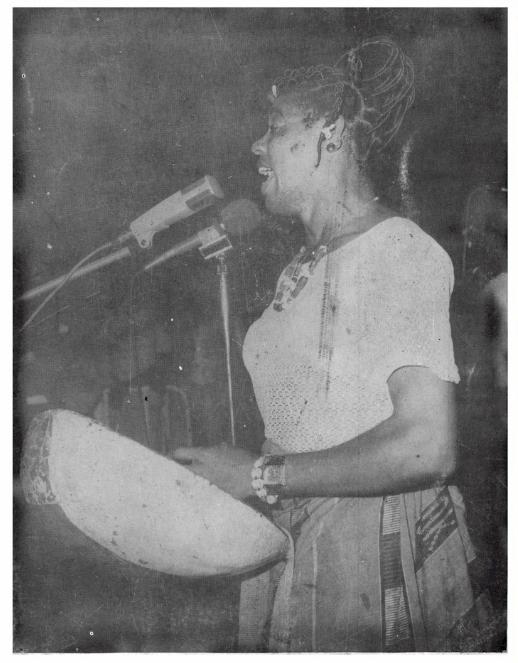
As far as fashion went—to the extent that anyone can make a judgment on what is visible—one Owerri musician, Uzoma Odimara, took things even further by dressing—not in the flared bongo trousers and wide-collared shirts as all male musicians did at the time—entirely in female attires (wrapper, plaited hair, blouse, heels), complete with coiffed hair and makeup. 

For this reason, he was called—or called himself—Area Scatter, for his appearance purportedly drew stares and caused some commotion and confusion. From evidence of the word of mouth, however, Area Scatter’s enigmatic personage was in general accepted and admired.

The only extant documentary video of Area Scatter’s musical performance, a YouTube clip, shows calm enunciation of melody before a peaceful, attentive audience. His voice was masculine, and his song, which has a spiritual lilt, is an eulogy (Ochie Dike nwere ekele, one line went). Their appearance did not seem to be the focus from a musical point of view, yet a figure such as that called attention to themselves by their very unusual appearance. 

Thus, much of their contemporary and posthumous reputation is rife with speculations about what Area Scatter really meant or represented by such a bold sally in fashion. Needless to say, Area Scatter’s disruptive fashion choices have caused considerable bewilderment. The general implication in Nigerian media has been that Area Scatter’s female attire was a ploy to draw attention to his music. 

They therefore lump them into the collective register of weird fads—essentially and, in the most simplistic manner, pasting the label of ‘cross-dresser’ upon the figure. To wit, a basic Google search today brings up article captions along the lines of “Nigeria’s First Crossdresser”.

A first glance through images of Area Scatter would reveal that this is a far more complex figure than the media was willing to investigate. Area Scatter’s persona was neither simplistic nor categorised as a mere fashion strategy? This enigmatic personality presents many scenarios for simultaneously obvious and unanswered questions.

The cipher that is Area Scatter’s life remains mostly constructed out of speculations. If video evidence had not been in existence, perhaps it would even have been more mythical. Not much is known about his date of birth or the conditions of his upbringing. Nevertheless, limited information available reveals interesting career trajectories, beginning with his male first life (hence he). 

His hometown was Akwakuma, one of the communities that make up Owerri, the Imo State capital. Before the civil war, he was said to have been a male civil servant in the Eastern Region government, as the documentary clip on YouTube reveals. During the war, he disappeared into the forest for seven years, emerging after the war as a woman and a musician. 

Area Scatter
Area Scatter

The mythical angle of Area Scatter’s mystery was also greatly enhanced, it seems, by their striking appearance. An imposing height, towering over most people, a talent for music, which seemed to come out of nowhere for a former humble civil servant, distinct female mannerisms—the character of Area Scatter appeared to be a cross between male and female. 

The mystery is enhanced by the spiritual dimension of Igbo Odinani, which believes in the kind of spiritual metamorphosis that could cause a total change in a human’s trajectory. Many priests and priestesses in Igboland, according to the dictates of the deities they serves, may have an aspect of non-gendered or even animalistic persona: many priestesses are seen as men, in a spiritual sense, and male priests are seen as transcending human notions of gender binaries, making them closer to gods than men. But the complex world of Igbo cosmology also clearly delineates male and female gods, as well as genderless gods.

Upon Area Scatter’s re-emergence, they assumed the dual role of priestess and musician. They were said to have returned with bones and skulls used in ritualistic practices and divination, and therefore became a dibia as well. Most significantly, the principal item of attraction was the Ụbọ Aka—an instrument some people incorrectly anglicise as ‘thumb piano’—with which he accompanied most of his performances. And they did enjoy relative success in the convalescent society of the postwar ‘70s Owerri. 

One of Area Scatter’s most consistent patrons was the traditional ruler of the Akwakuma community, at whose place he had performed regularly (the YouTube documentary clip shows this). Beyond that, they were performing gigs all across the old Eastern region. Sometime in the late 1970s, Area Scatter began to perform in an NTA programme on TV known as Ukonu’s Club, from where most people knew about them. For much of Area Scatter’s career, however, Area Scatter led their own band, known as Ugwu Anya Egbulam Musical Group. 

Area Scatter
Area Scatter

The manner of Area Scatter’s death has been an object of debate. While some stories claimed they died in an accident sometime in the 1980s, others claimed they disappeared. It reveals an interesting divide between Nigerian societies of forty to fifty years ago and the present. The former seems to be more accepting of deviations from norms and conventions, which could have been a result of any number of factors, ranging from the spiritual penetration of traditional religions and spiritualities, civil war fatigue, and the economic activity bolstered by the incipient oil boom. 

In contrast, the latter Nigerian societies of today, with access to mob-like information trends in digital spaces and religious conservatism led by radical religious movements, have excised and disparaged the nuances that punctuate dominant normative patterns. Area Scatter would not have been spared the intense hostility that their kind feels today, which is not to say that any vestige of that hostility did exist in his time.

We must acknowledge that we are speculating about Scatter’s life after almost half a century. Certainly, there are things we do not know, since information on them has remained—and perhaps will remain—scarce. The society of the past may not have been what we make it to be in our retrophilic imagination; Area Scatter may have been the victim of a hate crime or some other act. The point is that so much here is in the grey. 

One thing is clear: those in the media labeling Area Scatter as a transvestite cross-dresser are clearly wrong. Area Scatter’s reinvention and spiritual and physical transformation reveal a depth far more comprehensive than the physical proclivities to which they have been boxed into. 

The length to which Scatter went with his new-fangled selfhood went beyond the dramatic choreographies of drag fetes; it appears to have been the final embracing of their truest self, as it were. Area Scatter assumed his personality in the interstitial space between the conventional descriptions of the human self and its more spiritual emanations.

Nothing can be said today about such a personality except in that sense: as both an artiste and clearly gender non-conforming individual. Area Scatter’s life is proof that history has been replete with personalities operating on the minority margins of societal conventions about gender and sexuality, no matter how we try to deny their existence. 

Chimezie Chika is a staff writer at Afrocritik. His short stories and essays have appeared in or forthcoming from, amongst other places, The Weganda Review, The Republic, Terrain.org, Isele Magazine, Lolwe, Fahmidan Journal, Efiko Magazine, Dappled Things, and Channel Magazine. He is the fiction editor of Ngiga Review. His interests range from culture, history, to art, literature, and the environment. You can find him on X @chimeziechika1

The post The Legend of Area Scatter: Enigmatic Musician or Misunderstood Individual? first appeared on Afrocritik.

❌