WAFCON 2024 hosts Morocco powered through a penalty shootout to make it into their second consecutive final match. Anissa Lahmari scored the decisive penalty kick as the Atlas Lionesses squeezed past Ghana. All four penalty takers for Morocco scored, while the Black Queens missed their last two penalties after scoring the first two.
Ghana took the lead during regulation, through Stella Nyamekye’s strike halfway through the first half. Sakina Ouzraoui pulled Morocco level shortly into the second half, setting up a tense atmosphere as the match went all the way through extra time. The Black Queens won their quarterfinal match against Algeria on penalties, but they couldn’t repeat the same feat against Morocco, and will now attempt to earn a third-place finish on Friday versus South Africa.
Morocco entered this year’s WAFCON as one of the strongest contenders, as the Atlas Lionesses have emerged as a growing force in African women’s football. They cruised past Mali in the quarterfinals, winning 3-1 and conceding only a late consolation goal.
Morocco boasts two of the highest goalscorers in the tournament so far, including last WAFCON’s Player of the Tournament Ghizlane Chebbak, who scored four goals in the group stage but is yet to find the back of the net in the knockout phase. Forward Ibitsam Jraïdi scored twice against Mali and was among the penalty scorers in the semifinal match. There will be no lack of firepower on Saturday, as the hosts will look to win their first WAFCON title against record holders Nigeria.
A late, chaotic goal was the definitive moment as Nigeria’s Super Falcons edged their way past South Africa to the final. Michelle Alozie’s long ball forward from close to the halfway line flew by two of her chasing teammates and crawled past Banyana Banyana’s onrushing goalkeeper, just over two minutes before the final whistle for regulation time was due to be blown.
Nigeria edged the defending champions out 2-1. Super Falcons’ captain Rasheedat Ajibade opened the scoring from the penalty spot at the end of the first half; however, Linda Motlhalo leveled things up on the hour mark. Alozie’s auspicious strike closed things, leaving South Africa to now compete in Friday's third-place match.
The Super Falcons will be playing for a tenth WAFCON title and a twelfth overall continental title on Saturday. The team has had a remarkable run to the final, with Motlhalo’s strike being the only goal it has conceded all tournament.
Over the weekend, they trounced the Zambia women’s team 5-0, a surprise result considering it was expected to be a tight affair. Instead, Nigeria impressively shut off Zambia’s usually prolific forward pair of Barbra Banda and Racheal Kundananji, on their way to a victory that symbolizes their dominance throughout the tournament.
Through the group stage and the knockout phase, Nigeria has demonstrated that they have the firepower and grit to win, either by overwhelming opponents or grinding out difficult wins, which are strong signs that they’ll be prepared to win it all on Sunday.
The winners of WAFCON 2024 will go home with an all-new trophy and a prize of $1 million. Second- and third-place teams will receive $500,000 and $300,000, respectively.
This story was originally posted July 22 at 3:37 p.m. and has been updated.
July 23, 10:53 a.m. Updated to include semifinal results and finals updates.
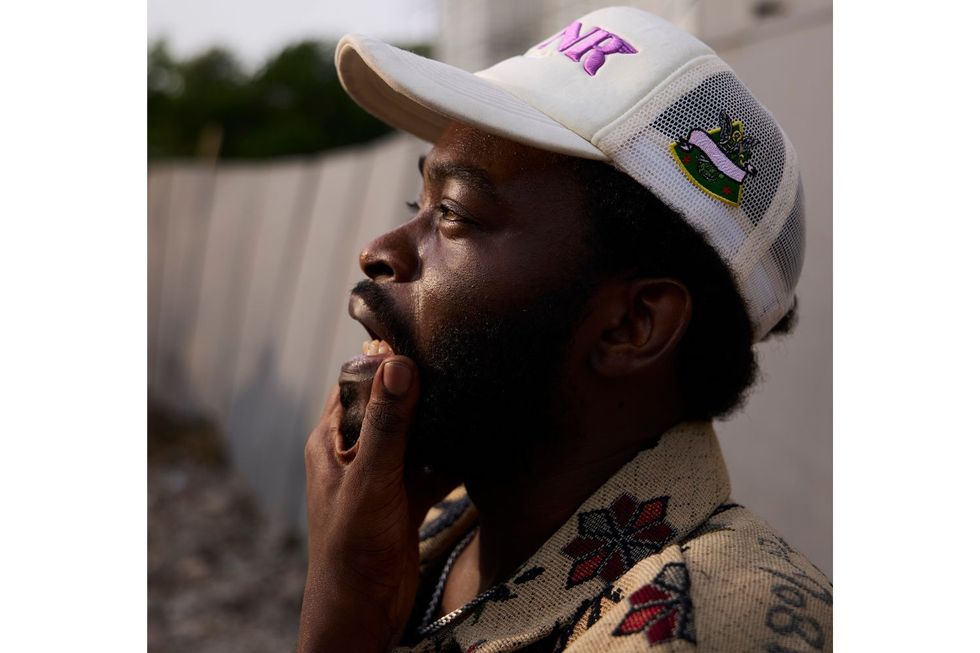
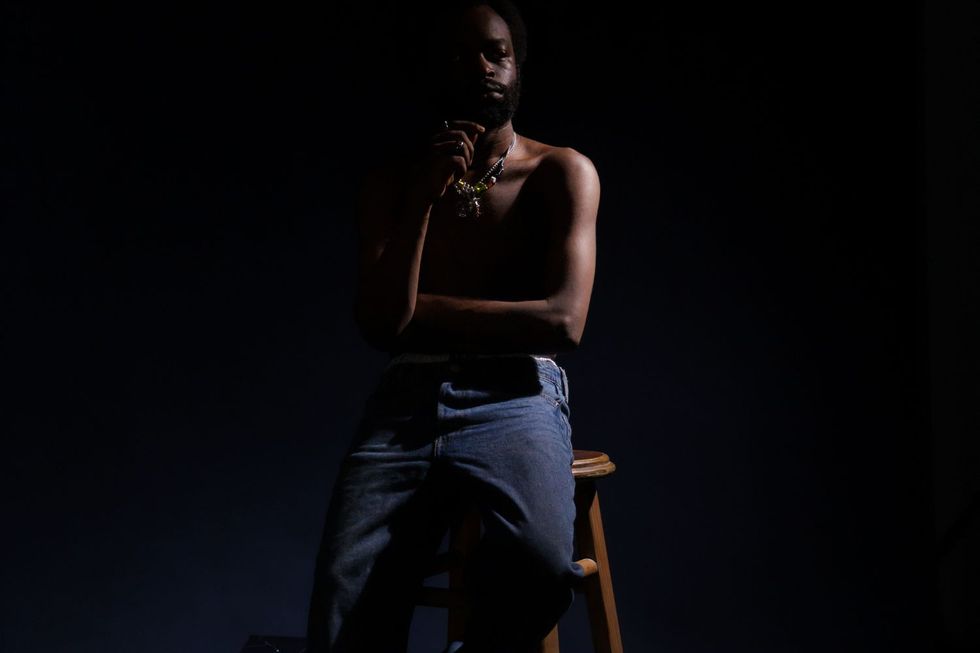
Lyre’s whole embrace of the process and dedication to creating music that can be appreciated for its singular vision is apparent in its output. Earlier this month, he released his third album,SPIRAL, a balmy soundscape featuring lilting neo-soul cuts, gently smoldering pop tunes, and smooth rap-indented highlights. The genre-hopping, now a trademark, is tied together by profound expressions of longing, loving, personal joys and anxiety, the constant search for self-fulfillment, and more.
Where his previous albums,Worry < andMASTA, were snappy affairs with runtimes hovering around the half-hour mark, Lyre’s latest is a double-sided effort that runs a few minutes shy of an hour. That extension doesn’t translate into any adverse effects; if anything, SPIRAL is a seamless listen that is effortlessly engaging. It’s an opus that reflects the accrued refinement and mastery Lyre has earned over the years, with some of his earliest releases dating back nearly a decade.
Lyre was among the dozens of young Nigerian artists who took to SoundCloud as their preferred platform for spontaneous drops, spurred by the need to create music outside what was popular in the mainstream. Across his early catalogue, Lyre ran through styles of music with a sometimes scattered twitch, to regularly strong results, if not wholly compelling.
“I think it was around that Covid-19 period,†he says, referring to the lockdown months as the period things clicked into place for him as a versatile artist. “I guess everybody just had enough time to reflect in general, myself included. I was in the studio as well, so I had time to think about how I wanted to sound. I’m someone who likes to try different things, and I had a lot of time to figure out what I wanted to take on and put all these things together. I’m someone who always just wants to improve constantly.â€
The early 2022 release of Worry < was a remarkable showcase of Lyre as an artist with an elevated grasp of his abilities as a versatile artist, a streak that extended to MASTA and is foundational to the excellence curated on SPIRAL. The Tim Lyre experience since his first album has shown an artist comfortable with spotlighting his romantic scars, laying bare his yearnings, openly exploring his ambitions, and giving voice to his fears. Along with his ability to croon soulfully, rap with poise, and even dip into patois, these thematic threads make for a deeply relatable artist.
“[Introspection] is a very key part of what I’m trying to do as a musician,†Lyre says. “My favorite artists that I listen to, my best quality about them is the fact that they’re just so honest and vulnerable in their music, a lot of the time. There’s no shame when they’re talking about certain things. People can relate to that as well because we are all human beings; we all kind of go through the same things, you know, even if your circumstances are different. So I try to make it a point to keep that honesty about myself as much as I can.â€
On “Rocketship,†the second song on SPIRAL, Lyre shares a heady portrait of the aftermath of a breakup where anxiety intertwines with an overreliance on weed. On the similarly forlorn “Storytime†with UK-based indie soul singer BINA, he asks, “What’s the worth of a love/that never gave you any peace of mind/until the day that it died?†It’s the kind of lingering thought that remains when you sit long enough to sift through an experience properly.
The first side of the album, largely self-produced, is heavy-hearted, filled with ruminative songs about finding perspective through the difficult weight of being jilted while also fighting for your dreams. The second side is lighter and more jovial without losing emotional lustre, from the devotional confessions on the house-infused “OMD†to the money-minded, highlife-pop swing of “Economy†with rap duo Show Dem Camp.
SPIRAL earns cohesion from being purposefully broad, a distinction that extends to the dozen featured artists, all well-placed and integral to the listening experience. “I’m lucky because I now get to work with more artists, and I’ve always been a collaborative type of artist,†Lyre says. “I’m also someone that just listens to a lot of music in general, so I feel like I know where things should go in terms of who should be on the feature.â€
The collaborative spirit is aided in part by Lyre’s longstanding tilt towards community; MOJO AF, DAP the Contract, and Joyce Olong are frequent collaborators dating back several years. Meanwhile, Lyre credits a handful of the features to connections made by Outer South, the London and Johannesburg-based indie record label Lyre has been working with since his first album.
SPIRAL is “the biggest thing†Lyre and Outer South have done yet, putting more resources behind this album than his previous releases, seeing the traction the artist has slowly built up with a growing catalogue of quality releases. Those increased efforts include a headline show in late September at London’s Camden Assembly.
“I definitely want to perform my music as far as I possibly can, and just keep making good, quality music and collaborating with artists,†Lyre says as a ballpark answer for what he’s looking forward to next. He obviously wouldn’t mind scoring the kind of huge hit song(s) that vaults him from rising niche favorite to popular star, but it’s not an achievement he’s looking to force.
“With enough momentum and consistency, we can definitely get there. These things take time. It might happen one day, and people will think I’m an overnight sensation. I’m genuinely interested in making great music, and as long as that’s working out, I’m happy with life.â€
In the 1980s, arguably the largest theft of ancestral artifacts occurred in Kenya. Hundreds of Vigango statues, wooden totem poles sacred to the Mijikenda people, were stolen from hallowed forests to be sold to western art collectors and museums. These statues, carved from trees within the very forests where they held spiritual significance, bore intricate markings that embodied the identities and preserved the memories of revered elders and healers that have passed away.
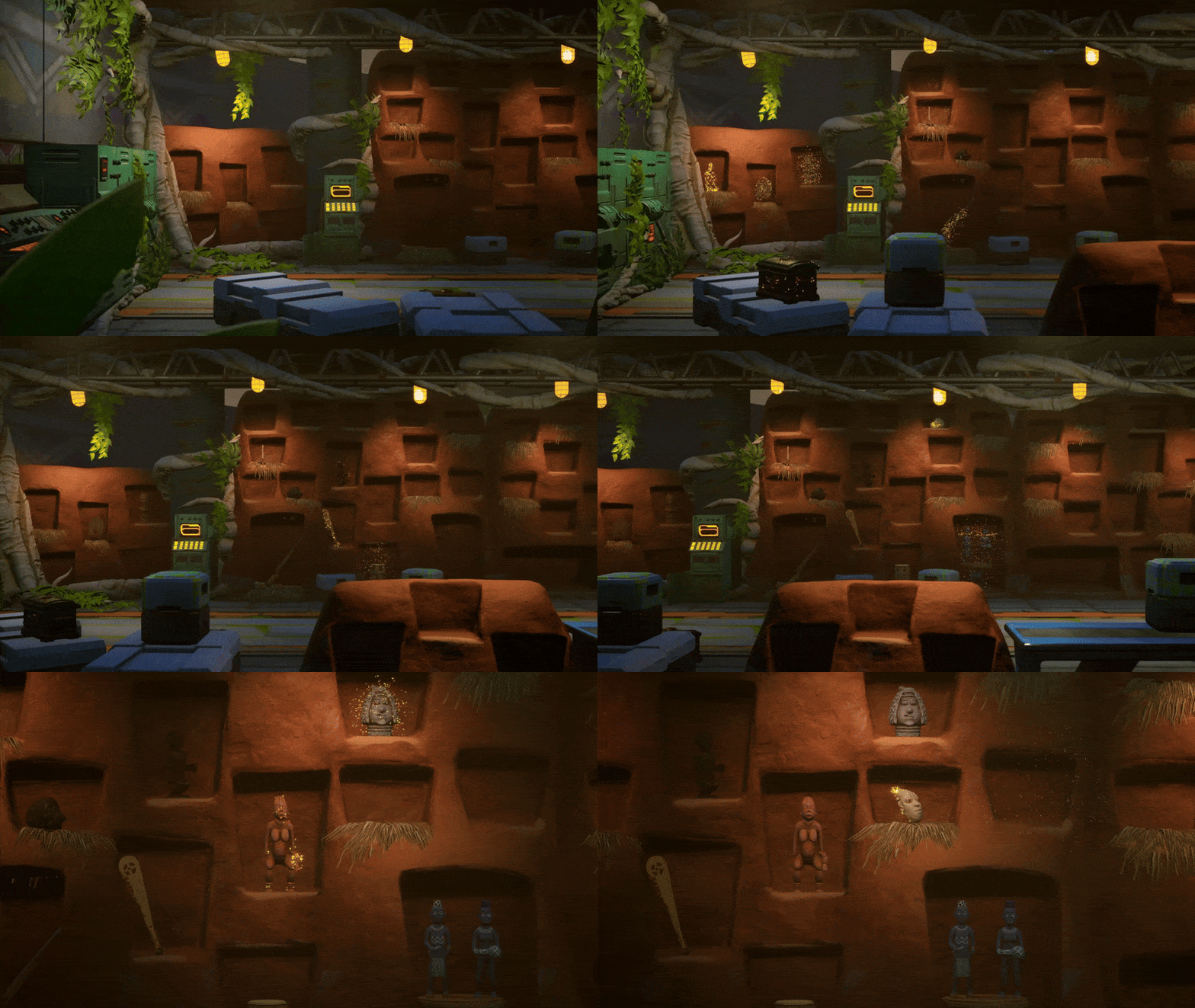
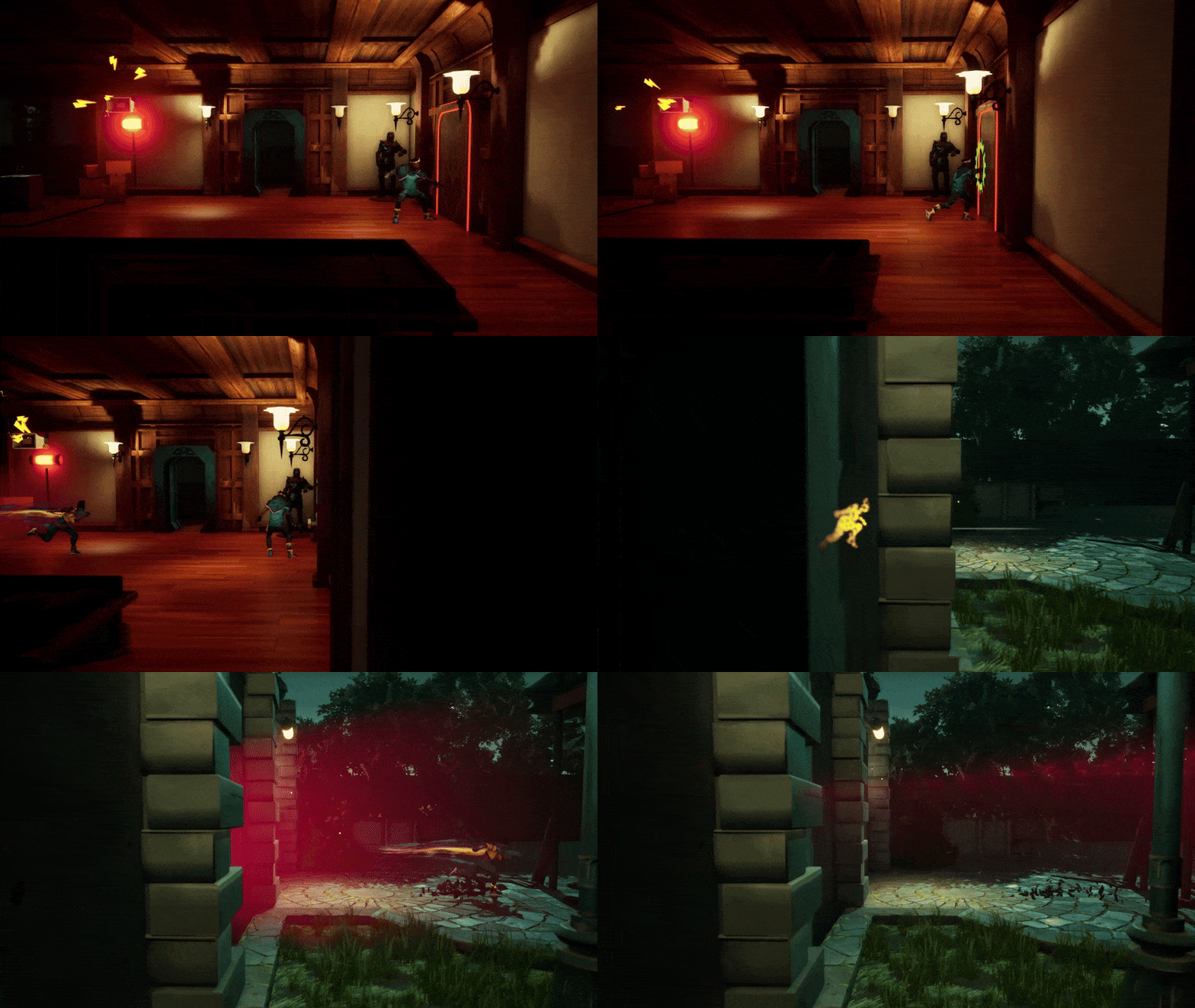
While some of the looted statues have been returned, many of them are still hundreds of miles away from their culturally significant homestead. In Relooted, the upcoming game created by South Africa-based Nyamakop Studios, players will have the chance to retake stolen Vigango statues and dozens of other ancestral artifacts forcibly taken from Africa over the centuries.
Relooted is coming at a time when the discussions for repatriation of stolen artifacts are increasingly loud and absolute, not just by Africans but also by concerned people all over the world. The game itself is a radical jump for Nyamakop following its first published game, Semblance, a puzzle-platform game where players squish, push, deform, and reshape a playdough world. Semblance was positively received for its innovative art style and satisfying puzzles.
For its second game, Nyamakop had to up the level of execution to match its much higher ambitions. “I think it’s just that the concept itself felt so important,†Ben Myres, CEO and Creative Director at Nyamakop, tells OkayAfrica. “Obviously, with African artifacts, repatriation is a huge deal, so it felt really important to make the game as high production value and high quality as possible.â€
To ensure that Relooted hit the high marks the studio set for itself, the number of people who worked on the game was just over ten times more than the three full-time staff it took to put together Nyamakop’s debut game. This time around, a high level of coherence and coordination was needed to balance narrative depth with strong gameplay, in its attempt to create an Africanfuturist heist game.
Mohale Mashigo, a writer referred to by Myres as “the queen of Africanfuturism,†was approached to helm the game’s storyline, situating the relooting of artifacts within the context of an engaging game. “It’s a heist game, right? So I spent a long time watching heist films and also understanding what heisting is, like hacking buildings basically, and I realized that this has got to be a team [effort],†Mashigo says. “Heists are always great because everybody’s got a role to play in the heist. The best part of the heist is when you see the mastermind go and recruit different people and their different personalities and how they work together.â€
Led by the character Nomali, the motley crew in Relooted includes a delinquent brother obsessed with cracking safes, an ex-MMA champion, a sports scientist, and a grandma. “This may be the first family heist that includes a grandmother,†Mashigo says with ample cheer in her voice. All characters in the game are from different parts of Africa, operating from a hideout in a futuristic version of Johannesburg.
Myres, Mashigo, and their colleagues had to iterate and build their own playbook for Relooted, spending years experimenting to arrive at a game that’s unique within the canon of heist games, which are usually based on a single character and often violent.
“There are not a lot of heist games that are more like Ocean’s Eleven than anything else, and it just made sense for us to make a sort of nonviolent game because of the themes,†Myres says. “Trying to find a reference for nonviolent heist games was tricky, so it was a lot of back-and-forth between all departments – art, narrative, gameplay – just trying to make it all work. There are compromises in some places that we had to figure out. It meant there were often things the narrative and the art departments had to change, or there were certain things we knew we couldn’t change narratively, so we just had to figure it out gameplay-wise.â€
Myres is conservative about sharing an exact timeline for the release of Relooted, with behind-the-scenes developments underway to bring the game to the Xbox console and to PCs, platforms where representation for African-inspired games remains very low. Last year, Cameroonian studio Kiro’o Games debuted the first African role-playing game on Xbox with Aurion: Legacy of the Kori-Odan, which had been previously released for Microsoft Windows several years earlier.
While Africa is projected to have a gaming audience of over 400 million, the growing numbers haven’t really translated into a strong base of Africans playing games by African studios, which will be a key factor in improving the visibility of African-inspired games. Myres makes the point that the artforms that have seen crossover success, from afrobeats and amapiano to fringe film successes, started with a high level of acceptance at home.
Several factors currently hinder the continental success of games by African studios, primarily due to the fragmentation of African countries. In addition to the challenges of purchasing power, the difficulty in paying for games across countries due to differences in regulations and mobile money services is a significant challenge. Consoles are luxury items in many parts of the continent, which means that a significant amount of gaming in Africa is done on mobile devices, limiting the scope of what studios can deploy for Africans, and monetization will continue to be a challenge.
“Someone’s going to have to make a lot of money from one game,†Myres says as a possible solution to the low adoption of African games among Africans, as well as the global visibility of African-inspired games. “If that happens, it fundamentally changes who can make games about what and for whom, not just in Africa but across the gaming industry worldwide. I think once you have a reasonably-sized hit, people are like, ‘Oh my God, we can make games like that and there is an audience for it.’â€
Nyamakop hopes Relooted will become very successful upon release within the next year, which would amplify the cultural significance of the game, particularly in relation to artifacts stolen from Africa. Myres mentions the Maqdala Crown as one of his favorite artifacts curated in the game, citing its significance in “how deliberate the European attempts were to make African civilization look uncivilized,†even though Africans had been creating beautiful and deeply intricate metalwork pieces centuries ago.
For Mashigo, the recency of the Vigango statues being stolen is striking. “We think about colonial times for artifacts, but this happened in the 1980s. They just went into the forest and took many of these Vigango statues, and then they were being sold in the West, and it was like a fashionable thing to have.â€
Relooted turns the dynamic on its head, with the hope that it resonates with many people worldwide, including Africans and the diaspora community. “It is very much a power of fantasy because I don’t think Africans very often get to see themselves set in the future and joyfully,†Mashigo says. “So, dreaming of this beautiful utopian future continent, hopefully it inspires people and makes them feel proud, both of their heritage in the past and the possibility of the future. The game is very much about the artifacts, but it is so many different things at the same time.â€
The stakes have been raised at the ongoing Women’s African Cup of Nations (WAFCON), as the competition enters its knockout stages this weekend. Four of the initial twelve teams have been eliminated, following a competitive round of matches in the group stage that produced an average of two-and-a-half goals per match.
Only one of the eight teams in the quarterfinals has never made it to this stage of the tournament: Algeria put up a resolute fight to make it past the group stage for the first time ever, winning Botswana by a lone goal in its only win so far, while forcing goalless draws in the other two matches. Six of the other seven teams have advanced to the final four of the competition, with Senegal hoping to move at least one step from their last WAFCON outing.
Below are brief primers for all four quarterfinal matches.
Nigeria vs Zambia (July 18, 6 PM GMT)
A rematch of last edition’s third-place match, the quarterfinal between Nigeria and Zambia will be a battle of wills. Nigeria’s Super Falcons are one of two teams that haven’t conceded a goal at WAFCON 2024, while the Copper Queens boast two of the most prolific strikers in African women’s football, Barbra Banda and Racheal Kundananji – both have scored three goals each already.
Nigeria qualified at the top of its group, as expected, and will aim to leverage its defensive solidity and cohesion to get into the final four. Zambia came second in Group A after scoring one goal less than hosts Morocco. Still, they’ve already distinguished themselves as top-tier contenders and will be keen on beating out an opponent they edged out back in 2022.
Morocco vs Mali (July 18, 9 PM GMT)
Hosts Morocco played through the group stage with a mix of poise, force, and discipline, earning the top spot in its group. The Atlas Lionesses are led by joint top scorer Ghizlane Chebbak, who has already scored four goals, one more than her total tally at the last WAFCON, where she was joint top scorer and voted the competition’s best player. Chebbak, like her team, has only improved in the years since, and Morocco will be the favorites to advance.
However, Mali will be looking to cause an upset, following a disappointing end to its group stage run. The female eagles were overrun 4-0 by South Africa, a result that dropped the Female Eagles to third in their group. In their first two matches, though, they showed toughness, earning a lone goal win against Tanzania and coming back to secure a 1-1 draw against Ghana. Facing the hosts and perhaps tournament favorites will be an uphill battle; expect Mali not to back down from the challenge.
Algeria vs Ghana (July 19, 6 PM GMT)
Although they only scored one goal in all three group stage matches, Algeria’s Fennecs have made scoring against them as hard as a camel passing through the eye of a needle. Meanwhile, the Black Queens of Ghana finally found the scoring punch in their final group stage game, putting four goals past Tanzania.
The contrasts between the two sides could play a key role, also taking into account their incredibly differing histories: this is Algeria’s quarterfinals debut, while the Black Queens have been WAFCON runners-up on three different occasions but haven’t reached the semifinals since 2016. One country will be looking to fight through novelty, while the other will want to reassert its slipping mettle as a force in African women’s football.
South Africa vs Senegal (July 19, 9 PM GMT)
Defending champions South Africa were on the verge of a flawless group stage run, having won two matches and drawn the other. All seven goals were scored by seven different players, encapsulating the collective attacking threat of Bayana Banyana. However, their defense will have to account for Nguenar Ndiaye, the Senegalese striker who has already scored four goals at WAFCON 2024. For the Teranga Lionesses to pull off a great upset, Ndiaye will most likely need to be at her best against a defense that has conceded one goal, while Senegal’s defense must keep a muzzle on the multitude of weapons South Africa has in its ranks.
Nigerian singer Ayra Starr is officially on the artists' clientele list of Roc Nation, the boutique music label, entertainment, and sports services company founded by iconic American rapper and mogul JAY-Z. Rumors of the deal intensified after Roc Nation posted a snippet of Starr's soon-to-be-released single, "Hot Body," on its social media pages late last week. Confirmation came with the singer's dedicated page on the company's website.
Still signed to Mavin, the Don Jazzy-founded Nigerian label that discovered and helped drive her breakout, Starr's deal with Roc Nation is a strategic partnership that's expected to improve her already formidable global popularity, particularly in the U.S. and across Europe.
"Ayra Starr's signing with Roc Nation is a fantastic gambit by the team at Mavin/Universal to give her capable hands to match her ambition,"Afrobeats Intelligence hostJoey Akan says, describing the singer as "an 'IT' pop girl" with high ambitions.
Starr will now be managed internationally by Roc Nation, a move designed to leverage her star power and momentum. The singer is currently on a stadium tour with British rock band Coldplay. She will make her full acting debut in the highly anticipated film adaptation of Tomi Adeyemi'sChildren of Blood and Bone and has won BET and MOBO awards in recent months.
"Having been funneled into Universal Music Group, via the deal with Mavin, what this simply means is, with Roc Nation, she becomes part of another family that prides itself on execution," Akan adds. "America is Roc Nation's market. And they've worked that region enough to have blueprints, deep connections, and the pockets to sway."
Roc Nation boasts an expansive client list of successful artists across management, distribution, and publishing, including rappers Megan Thee Stallion and Lil Uzi Vert, R&B singers Alicia Keys and Snoh Aalegra, and Latin pop superstar J Balvin, among many others.
"With this deal, Ayra and the team at Mavin signify her commitment to succeeding in the West by operating deep in the US market," Akan says. "The aim is to produce another global star from Nigeria. And they're well on their way."
Mainland Block Party, the organization behind some of Nigeria's biggest parties, will host its New York event for the second consecutive year later this month. Tagged The Machine and The Big Apple, the event is scheduled for July 26. It will merge the vibrant energy of Nigeria's most celebrated party with the thrum of the city that never sleeps, with OkayAfrica joining as a collaborator as part of its 15th-anniversary celebrations.
This year’s block party will be headlined by Nigerian superstar ODUMODUBLVCK, continuing a fruitful partnership between the rap artist and the organizers. Earlier this year, the Mainland Block Party was the main collaborator as Odumodu embarked on the “Greatest School Tour Ever,†of about a dozen universities in Nigeria, a rare feat in a country where extensive touring has nearly gone extinct due to economic and security reasons.
Arguably the biggest rap artist in Nigeria, with viral hits like “Declan Rice†and “Cast†with Shallipopi, Odumodu has built his bonafides in recent years as an irreverent hit-maker, combining grimy lyricism and slang with groovy beats and a melodic bent. He’s also an energetic performer, giving concert attendees and partygoers something to look forward to. The New York event will be an opportunity to take his synergy with the Mainland Block Party to higher heights.
Mainland Block Party is known for setting up charged atmospheres, featuring lively DJ sets, raucous hypeman-led chants, and memorable live performances. Superstar artists like Seyi Vibez, Ruger, and Victony, as well as South African DJ Tyler ICU, have headlined events. Last summer’s New York event had Zlatan and BOJon the bill.
This year’s collaboration with OkayAfrica represents a significant milestone as the platform commemorates 15 years of curating and covering African music and culture, bringing together two solid organizations committed to elevating culture and connecting the diaspora to the motherland.
“Bringing The Machine to New York is special for us as a celebration of how far the culture has come," says Tobi Mohammed, founder of the Mainland BlockParty series and managing partner at The Plug. "Mainland BlockParty has always been about connection, and doing this with OkayAfrica, a platform that’s been pushing the culture globally, makes it even more powerful. It’s about bringing our homegrown energy to a city that knows all about movement and momentum.â€
In addition to Odumodu, the event will feature New York’s top DJs, MCs, and special surprise guests.
A year after it was initially scheduled to take place, the 15th edition of the Women's African Cup of Nations (WAFCON) will be kicking off in Morocco this weekend. Over the course of three weeks, twelve teams will vie for supremacy in what is expected to be a keenly contested and entertaining competition.
Better financial rewards and new silverware
This year's edition also comes with a handful of notable improvements that show an increasing commitment to elevating women's football on the continent by the Confederation of African Football (CAF). Before the 2022 edition, CAF announced a 150 percent increase in the prize fund as an investment in the advancement of African women's football. This year's WAFCON also sees asubstantial increase in the prize fund, a 45 percent raise that puts the total amount at nearly $3.5 million.
The winning prize has been increased by 100 percent; this year's winning team will walk away with $1 million, while the runners-up and third-place teams will receive $500,000 and $350,000, respectively. All participating teams have been allotted amounts from the prize fund, the least amount being $125,000 to the three teams that place fourth after the group stage.
Earlier this week, CAFunveiled a stunning new WAFCON trophy. With a design rooted in symbolism and purpose, the new trophy features stunning details like identical petals spiraling upwards to form a blooming flower, which represents each participating team and the growth of African women's football through the vibrant strength of its athletes. The trophy also features a golden football-patterned sphere on top, adorned with the map of Africa, and a silver and matte gold body, with a base crafted with white marble.
"When I started, we played to exist. Today, young people play to win," former South African women's football team captain, Amanda Dlamini,said. "This trophy is the symbol of this transition. The dream continues, but it is now within reach."
Morocco returns as host
In recent years, Morocco has emerged as a powerhouse in African football, on and off the pitch. This will be the second consecutive time Morocco will be hosting WAFCON, and it is also scheduled to host the next edition. That's in addition to hosting the men's AFCON in December and co-hosting the 2030 World Cup with Spain and Portugal.
At the 2022 WAFCON, over 60,000 people attended the final match between the host and eventual champions, South Africa, at the Stade Moulay Abdellah in Rabat. Those crowd levels will be impossible to replicate this time around, as games will be played on smaller-capacity pitches in Rabat and Casablanca. All three big stadiums used last time are being renovated ahead of the men's AFCON.
Six stadiums across five Moroccan citieswill host matches this year, with Mohammedia, Oujda, and Berkane joining Rabat and Casablanca as host cities. Despite theuncertainties surrounding the schedule of this WAFCON edition, postponed due to Nigeria and Zambia's participation at the summer Olympics in Paris last year, Morocco's readiness mirrors its commitment to investing in the growth of its women's football structure, and the results are apparent.
A strong cast of contenders
Before reaching the final of the last WAFCON, Morocco hadn't participated in the competition since 2000, and it had never advanced past the group stage. If last time out was a surprise, the Atlas Lionesses are firmly among the top contenders heading into this edition.
Although there's been a coaching change, with Jorge Vilda, who led Spain to the 2023 World Cup, now at the helm, there's continuity in the Moroccan side. Led by mercurial captain Ghizlane Chebbak, joint top scorer at WAFCON 2022, Morocco's squad primarily consists of players who ply their club trades locally. This will give them an edge, chemistry-wise, and the added impetus of completing unfinished business will no doubt play a role in the team's performance.
Meanwhile, South Africa will be looking to defend its title as champions. Banyana Banyana finally became champions after coming in as runners-up five times, and they will have to defend their title without a key player. Former African Women's Player of the Year winner Thembi Kgatlana will bemissing out on the competition due to undisclosed personal reasons.
Kgatlana also missed much of South Africa's triumphant outing in 2022 due to a ruptured achilles sustained in the group, but she's been a mainstay in this golden generation. The majority of the South African squad are returnees from the last WAFCON winning team, including prolific goalscorer Hildah Magaia and longtime talisman Jermaine Seopoesenwe.
As far as contenders, it's customary to include Nigeria's Super Falcons, the record 11-time champions. Last time out, Nigeria lost to the hosts in the semi-finals via penalty shootouts, marking the first time in a decade that the West African country's female team did not leave the competition with the trophy. The Super Falcons will be leaning on experience, with a side that includes 6-time African Women's Player of the Year winner Asisat Oshoala, WAFCON 2022 joint top scorer Rasheedat Ajibade, 4-time WAFCON winner Francisca Ordega, and other members of the team that took 2023 Women's World Cup finalist, England, to penalty shootouts in their second-round matchup.
The last WAFCON also marked the second time Nigeria had participated in the competition and left without a medal. In 2022, they were defeated in the third-place match by Zambia, a rising team in African women's football. This time around, the Copper Queens will be getting a much-needed boost, as phenomenal striker Barbra Banda will be joining the team, hoping to win it all in Morocco.
The reigning African Women's Player of the Year was controversially omitted from the Zambian squad in 2022, due tostringent testosterone testing that ruled her out. Banda, who refused to undergo hormone suppression treatment, has since played in the World Cup and, last summer, became the first woman toscore three hat-tricks at the Olympics.
Banda will be looking to finally open her WAFCON account as a goalscorer. On her radar will be former Nigerian striker Perpetua Nkwocha's record of 11 goals scored in a single edition of the tournament; if there's any player who can get near or probably surpass that record, it's Banda. More importantly, the Copper Queens' captain will be leading Zambia alongside strike partner Racheal Kundananji, to its first football continental title.
"I feel like we are coming back victorious. I believe that because Zambia is a special team," Kundananjisaid recently. "We have broken so many records in this generation - I feel like it's a chosen generation for Zambia's women's national team. We are ready to go there and shine free."
The next great African rap battle may be upon us. In late June, Nigerian rap artistBlaqboneztook aim at colleagueODUMODUBLVCK on "Who's Really Rapping," a joint track with mentor A-Q, who has been in his fair share of rap beefs. Odumodu has fired off a litany of posts on X (formerly Twitter) and talked about it on podcasts, but it would take an official response for things to get interesting.
As far as hip-hop goes, fans love a spectacle, and passion is a potent selling tool. Where can there be greater delivery of passion than in diss tracks, rude and immediately beside you. At the chagrin of critics and less-than-pleased curators, diss tracks are peak moments for the culture, for fan bases, and consequently, a powerful PR tool.
FromM.I Abaga and Vector toAKA andCassper Nyovest, there's a solid history of rap beefs in African rap, and they've produced some truly memorable diss songs. Below are 10 essential diss tracks in that canon.
M.anifest – "godMC"
When years of sneak disses culminated in a lyrical sparring between two of Ghana's most revered rappers, it was everything the audience had expected. Rappers are known for talking the mean talk, and betweenSarkodieandM.anifest, there has been a lot of that over the years, with their battle taking on even more importance considering they represent unique styles within the soundscape. On "godMC," M.anifest banks on the purist sensibilities that have won him the adulation of peers and listeners, pulling out a wide range of references as he sought to sink the Sark into hip-hop's hell. From Greek mythology to the Fela-invoking production, the rapper spared no punches as he cautioned the opposition "don't measure your pen to mine, you pantomime and asinine / And you wanna be king, get your ass in line."
Ruggedman – "Ehen"
Nigerian hip-hop has arguably never seen a rapper as magnetic as Ruggedman. At the start of the 2000s, he took gleeful swings at any and everybody, critiquing the establishment with the same vim he had for rappers. "Ehen" is undoubtedly his centerpiece as a troubadour, with Ruggedman wielding a flamethrower potent enough to torch anyone.
Dissing top English-speaking acts like Eedris Abdulkareem, Black Reverendz, and Rasqui for their lack of street material, he would set the precedent for a lingual and cultural conversation that would echo years later in "Local Rappers." Even at the time of its release, "Ehen" was remarkably impactful, succeeding as a commercial darling with its radio jingle-like harmony, a cadence that rings familiar to the average Nigerian on the street.
Cassper Nyovest – "Dust To Dust"
Going personal in diss records is one way to stun the opponent into submission, but even by that logic, "Dust To Dust" is a devastating record. Over five minutes of thumping bass and drums, Cassper Nyovest suggests several things about his chief rival, the now-departed AKA, with whom South Africa's biggest beef was shared. Its origin dates back to 2014, which would stretch and loosen back and forth for the next half-decade, resulting in a few jabs here and there. But AKA went direct with the phenomenal "Composure," and Cassper had to reply with equal ferocity and tact, which understandably led him down the personal route. "I'm writing this at the crib shooting free throws / You stayed in a town house that was owned by Oskido," raps Cassper on the third verse, audibly sounding agitated, breathing down the beat with a style that recalls the quintessential 2Pac flow.
M.I Abaga - “The Viper”
Intricacy has always been a defining quality in M.I's art. With his early projects in the 2000s, he redefined the scope of the Nigerian rap album, successfully blending pop runs with the sweet essence of rhyming. "The Viper," his diss record aimed at longtime competitor Vector, was as harrowing a cadaver inspection as it was an olive branch extended.
Swinging at the edges of mercy and punishment, he employs biblical allegory to dissect the history between himself and Vector, ranging from their handling of the BET cypher to what M.I. considers Vector's inability to "put anybody in position." It's a fine display of M.I.'s incredible arsenal as a rapper, from his production of the song to the social commentary he successfully incorporates in his scathing attack.
Vector – "The Purge" feat. Vader & Payper Corleone
On "The Purge," Vector assembled one of the most compact diss records that the Nigerian rap scene has witnessed. Tensions were stoking between his and M.I's camp, fuelled mainly by the rap cyphers that both veteran rappers steered. By the time of release, it was no secret that both rappers' cliques didn't like each other, and "The Purge" took things up a notch by standing on business (and crucially, on wax). Vader takes shots at Blaqbonez, Payper swings on everyone from Loose Kaynon to A-Q, and Vector expectedly goes for M.I. "Africa rapper number one my ass, boy the flavor left," he rapped, referencing the latter's 2010 hit song, while swinging other sharp personal jabs.
Modenine - "Elbow Room"
For many, Modenine represents the pinnacle of lyricism in Nigerian rap. At his peak, which was much of the 2000s, he often rapped with the cold force of an unsullied, his barrage of punchlines slicing through boom bap beats with the sharpness of Valyrian steel. That unsparing lyrical precision is the hallmark of "Elbow Room," a speculative diss that remains as scathing as it was nearly two decades ago.
Amidst industry rumors of a beef with Ruggedman, and whispers of an already recorded diss song that eventually didn't see the light of day, Modenine got preemptive with "Elbow Room," sonning his adversary before things got heated. From the first line where he threatens to run over foes, every line is unfurled with a focused fury. By the time he delivered the death knell with "Talking to You," it was a potent sequel to the unsparing tone set by "Elbow Room."
Sarkodie - “Kanta”
Sarkodie takes umbrage at any question that casts doubt on the credibility of his pen and his greatness as a rapper. Those things were at stake when M.anifest called him out on the thinly veiled, subliminal-packed "godMC." While the beef itself never really boiled over into a protracted back-and-forth, "Kanta" was Sarkodie's unfazed reply. Taking sonic cues from American rapper Desiigner's viral hit, "Panda," Sarkodie swings for the fences and hits a home run.
Sark's trademark rat-tat-tat, machine gun flow is the vehicle for barbed lines that simultaneously extol his greatness and dismiss M.anifest as credible competition. "Sark no go diss you for nothing/nigga, already you suffering," he quips in utter disgust. Sidestepping punchlines for heft, Sarkodie raps every line like he's trying to set off the Richter scale, going a cappella with some words of advice when the beat switches off. "Kanta" didn't necessarily hand M.anifest an L, considering cooler heads prevailed after, but it proved Sarkodie's bona fides at a time when his prominence made him an easy target.
Khaligraph Jones - "Best Rapper in Nigeria"
ForKhaligraph Jones, being hostile on the mic is a way of life. Even on his groovier songs, the Kenyan rapper makes it a point of duty to be a hulking presence. That's why he relished the opportunity to go at Blaqbonez, immediately after the Nigerian rapper said Jones wasn't worthy of winning the award for Best Hip-Hop at the 2023 edition of the Soundcity Music Video Awards. Within a day of Blaq's statements, Jones declared himself the "Best Rapper in Nigeria," a reference to his foe's assertions of being Africa's best a few years prior.
Some of the best diss songs in rap history have a blatant level of toxic masculinity, and it felt like Jones had been waiting for a while to unleash some of that energy on an adversary. Over an ominous beat, Jones sounds like a predator chomping on hapless prey; he doesn't just address Blaqbonez like he's well above him, he raps at him like a disgusted OG. The bloodletting is so effective that, in hindsight, Blaqbonez's jibes on his response, "Green Blaq Green," come off as tantrums.
Tony Tetuila - "Omode Meta"
The beginning of modern Nigerian pop music, also known as Afrobeats, was primarily shaped by groups, particularly boy bands. Closing out the 1990s, the Remedies, comprising Eedris Abdulkareem, Eddy Remedy, and Tony Tetuila, were one of the scene's definitive acts, but they soon splintered, and out of that emerged "Omode Meta," arguably one of the top three greatest diss songs in Nigerian music history. The initial shock factor was that it was headlined by Tetuila, widely regarded as the least important member of the Remedies.Twenty-five years later, the significance of "Omode Meta" is impossible to understate, partly because it was ultra-effective in setting up Tetuila's seminal solo career, and also because it was a flat-out hit song that continues to be eternal. Featuring rap group Ruff Rugged N Raw, alongside 2Face Idibia and Blackface of Plantashun Boiz, Tetuila assembled a bunch of lyrical assassins to do the dirty work of tearing into his former groupmates, Abdulkareem especially, while he sang an immortal hook, aided by wonderful adlibs by Idibia, that instantly garnered public affection.
AKA - "Composure"
The beef between AKA and Cassper Nyovest had everything! There were tweets – a lot of tweets – and social media posts; there was drama, from a slap to allegations of a gun being pulled; and of course, there were diss tracks. After a couple of disses lobbed by Nyovest, AKA finally pulled up with the most potent words of the situation with "Composure," an ultra-assured slapper that's the audio equivalent of handing out a can of whoop-ass.
As soon as AKA opens his mouth on the glitzy beat, his level of confidence is preposterous. He's authoritative without the need for aggressive posturing; this is AKA in his element as a rap artist with Teflon swagger. He knows his opponents "hates me with a passion" but he comes off cool as ice under all that heat, issuing a raft of unforgettable quotables like "My niggas in position when they ring the bell/ They gonna get your pony tail like a Holy Grail." By the time Nyovest went personal with his reply, "Dust to Dust," you could smell the desperation on him – a sign that AKA's damage was indelible.
U.S. President Donald Trump has publicly expressed his excitement over the signing of a peace deal between the Democratic Republic of Congo and Rwanda, saying his administration has secured “a lot of the mineral rights from the Congo.” This has raised eyebrows among those critical of the potentiallyexploitative effects of a proposed mineral security deal between the U.S. and the DRC.
The shaky and sometimes testy relations between the Congo and Rwanda already complicate the implementation of this deal; however, Trump is optimistic that the agreement will hold. “If anyone violates this agreement, there will be consequences,” he said.
Some of the terms of the deal, which include the repatriation of refugees in both countries and the “social reintegration” of former rebels who lay down their arms, will most likely stretch the limits of Congo-Rwanda relations. With Trump keen on ensuring things happen, however, the economic emphasis may take precedence over proper justice. This aligns with the history of the Congo as a country that has consistently been exploited by external forces due to its abundance of natural minerals.
Government officials from the Democratic Republic of Congo and Rwanda signed a peace deal in Washington, D.C. on Friday, June 27, a culmination of a U.S.-led mediation effort aimed at reducing tensions between the two nations. It is expected that this agreement will serve as a concrete step toward ending hostilities in the region. The deal will also benefit the U.S. government and American companies by improving access to critical mineral mining operations in Congo.
Hostilities between the neighboring African countries resumed earlier this year after the M23 rebels took over cities in the mineral-rich eastern region of Congo with purported assistance from Rwanda. The armed group is reportedly backed financially by Rwanda, while thousands of soldiers from the Rwandan army are alleged to have assisted M23’s march into eastern Congo.
The U.S.-backed deal could be a major accomplishment, considering that both countries have been at odds for over two decades. However, peace is not yet guaranteed. M23 has repeatedly stated its preference to negotiate with the Congolese government, meaning the group could interpret this deal as not binding on its interests. In March, the group boycotted planned peace talks, protesting sanctions placed on some of its high-ranking officials.
Speaking to the Associated Press earlier this week, M23 spokesman Oscar Balinda stated that the U.S.-facilitated deal doesn’t concern the rebels. Without assurances that the armed group will vacate the eastern region, the effectiveness of the deal is highly uncertain, meaning the Congo will have to rely even more on its potentially momentous mining-for-security agreement with the U.S., which has been criticized for its long-term imbalance and extractive nature.
The U.S. had initially set the exit of all Rwandan troops from Congo as a condition for the deal to be signed; however, the demand had not been met and was subsequently dropped. While Rwanda has consistently denied arming and supporting M23, it says operations in Congo are an act of self-defense, as it considers armed groups domiciled in its neighbor an existential threat, especially the Democratic Forces for the Liberation of Rwanda (FDLR), which carried out the Rwandan genocide over 30 years ago.
Uncertainties remain with this deal; both Rwanda and Congo have yet to put on a friendly facade. Just yesterday, the African Court on Human and Peoples’ Rights (AfCHPR) dismissed Rwanda’s objection that it could not hear a case in which the Congolese government accuses Rwanda of grave human rights abuses in Congolese territory.
Congo is accusing Rwanda of mobilizing its troops and working with proxies to commit atrocities, including massacres, sexual violence, and forced displacement of civilians.
Earlier this month, Rwanda announced that it is withdrawing from the Economic Community of Central African States (ECCAS) due to ongoing complaints by the Congo, which have resulted in international sanctions. Rwanda’s foreign affairs minister, Olivier Nduhungirehe, said Congo was “still whining around in all regional and international organizations accusing Rwanda of its turpitudes, not to mention crying out for sanctions.”
Considering the shaky nature of relations between both countries, it remains to be seen how effective the U.S.-backed deal will be. “The heart of this peace agreement is the decision to establish a standing Joint Security Coordination Mechanism between Rwanda and the DRC,” Nduhungirehe said at the signing ceremony, an optimistic stance without much evidence to support it for now.
This story was originally posted June 27 at 4:03 p.m. and has been updated.
July 2, 11:12 a.m. Updated to include U.S. President Donald Trump mineral deal statements
Paris Fashion Week continued last week with the Men's Spring/Summer collections taking center stage. Some notable designers who showcased their work included Emeric Tchatchoua, the Cameroonian French Canadian founder of 3.Paradis, and Daquisiline Gomis, the French-Senegalese designer behind Jah Jah.
Both designers drew inspiration from their African heritage. Tchatchoua's 3.Paradis collection, titled "Steps to Nowhere," featured earth tones like beige and dark brown as a tribute to the Sahara desert. Meanwhile, Gomis' "A Silent March" collection celebrated his Caribbean and African roots through West African tailored suits and Jamaican crochet patterns. The show also included previews of an upcoming Adidas collaboration and custom sneakers inspired by the Ethiopian flag.
As usual, African stars were out and about in Paris, spotting flamboyant outfits.
Davido in Avant-Garde Street Style
Davido was spotted in two different fits in Paris, but this ensemble he wore to the 3.Paradis' showcase is what really catches the eye. The 5ive singer's look consisted of a white tank top, fur shorts, a cream net top, and a decorated blazer.
AG Baby, the Style Icon
Adekunle Gold was all smiles throughout last week, a befitting demeanor to match his fit choices. In this look, he pairs a dark brown trench coat with a white shirt and a pair of dark green, baggy pants. He completes the swaggering look with loafer shoes and several accessories, including gemstone rings, dark sunglasses, and a dark green tote bag.
Aya Nakamura Giving Sheer Elegance
French Malian pop superstarAya Nakamura looked like a fairy, as many social media users would say. The singer wore a sheer, off-white halter-neck gown designed with embroidered patterns. A folding hand fan and minimal jewelry complemented her simple and stunning look.
Stormzy in Monochrome
British Ghanaian rap superstarStormzy attended Jacquemus' show in a sharp and uncomplicated look. His dark olive green ensemble consisted of a long-sleeved, pointed-collar shirt and a pair of wide-leg pants.
Rema’s All-Black Ensemble
Rema consistently exudes an undeniable aura, whether he's rocking maximalist street style outfits or, in this case, an all-black, loose-fitting look. He's the picture of comfortable swagger in a buttoned jacket, loose pants, and leather shoes. His dreads are neatly let down, and dark sunglasses complete the getup.
As OkayAfrica marks our 15th anniversary, we're taking a look back at 15 defining African moments of the past 15 years that deserve to be remembered, and the impact they've had. Here's Moment No. 14. Click here for more OkayAfrica15 stories.
Africa’s financial technology revolution didn’t happen overnight, but its speed and general impact in the past 15 years has been – and continues to be – nothing short of inspiring. Over the last decade and a half, the breadth of financial services Africans have access to has been greatly widened, from digital payments processing and seamless global remittances to accessible premium banking services and even crypto investments.
At the start of the 2010s, using debit cards to withdraw cash from Automated Teller Machines (ATMs) was arguably the most impactful financial advancement in many African countries. However, in Kenya, the mobile money revolution was in full swing with M-PESA, which launched a few years earlier and fundamentally affected the landscape of financial inclusion.
With just T9 keyboard phones, Kenyans could deposit, send, receive and withdraw money through a network of agents and retail outlets, services that would typically require trips to bank branches. Targeted at the unbanked population, M-PESA, fronted by telecommunication giant Safaricom, was immediately popular and lauded as “the most successful mobile phone‐based financial service in the developing world.”
The blistering success of M-PESA was an indicator that Africa’s financial services system was in need of inventive approaches to widen possibilities. It also showed that widespread trust – a longtime issue in the sector – was attainable. “What M-PESA really did was to put some doubt into that idea that many of Africa’s unbanked did so because they didn’t trust banks,” economic consultant Gregory Hunpiyah tells OkayAfrica. “It takes a lot of boldness to get people to buy into having a wallet on phones that aren’t smartphones and it paid off.”
Although their contexts are different, there’s correlation between the explosion of M-PESA in Kenya to the breakouts of Fawry in Egypt and TymeBank in South Africa, and the fairly recent ultra-ubiquity of Opay in Nigeria. The premise of making financial services available to unbanked and underbanked populations represents an opportunity that has led to the launch of dozens of products across the continent, while traditional banks have also had to evolve accordingly.
Leveraging the internet as the ultimate technological advancement and coinciding with the rise of smartphone technology, fintech in Africa quickly diversified and has grown more effective over the years.
When Interswitch started operations in Nigeria in 2002, its ambitions as an integrated payment processing platform for businesses and banks was lofty. The process itself was cumbersome, requiring upfront payment and filling of multiple forms. In its evolution, Interswitch offered digital and data solutions to banks, was key to the ATM revolution, launched its own payments card company Verve, and ran the popular payment platform Quickteller. By 2019, Interswitch became the first African fintech company to be valued at $1 billion and earn the unicorn status.
“Interswitch obviously paved the way for Flutterwave, Paystack, HUB2 and these other payments companies,” Hunpiyah says. Late last year, HUB2 closed its Series A investment round, securing $8.5 million in funding as it looks to expand its payment solutions services across French-speaking African countries. Founder Ashley Gauzeresaid his company is “creating infrastructure and unifying payments in the region like a Stripe-like platform,” referencing the well-known American payments unicorn.
In October 2020, Stripe acquired Nigerian startup Paystack, which had been referred to as “the Stripe of Africa.” The merger and acquisition deal, which was reportedly worth about $200 million, was momentous, further proof that African fintech companies are creating world class products.
“That was the second deal that year that everyone went, ‘Wow!’ It was a little surreal,” Hunpiyah says. Two months before the Stripe-Paystack deal, cross-border payments company WorldRemit announced it was acquiring Sendwave, a remittance-focused company, in a deal worth over $500 million. “Granted, Sendwave operates from the U.S. but its focus is in Africa, and that’s what made the deal possible in the first place.”
During the COVID-19 pandemic, dozens of African tech companies received millions of dollars in investments, a show of optimism in a growing ecosystem. That funding spree has slowed down as the limitations of operating fintech startups in Africa have surfaced over the years, including low but growing level of internet penetration, stiff competition and oversaturation, regulatory obstacles, and a few cases of financial mismanagement. With investors, mainly outside the continent, being more selective about who to back, the question of scale and profitability have become more prominent than ever.
“A lot was made out of potential during COVID,” Hunpiyah says. “I think hard lessons were learnt after that and, to be positive, I think it’s shown that African startups can be resilient. Many companies have scaled back and tried new execution strategies to figure out what can work, which is something to write home about.”
Even amidst the market correction, the number of fintech companies in Africa almost tripled between 2020 and 2024, according to a report by the European Investment Bank. It signals a positive future outlook for fintech growth across the continent, as new unicorns are minted and more join the club. Last year, TymeBank and Nigeria’s Moniepoint joined the billion-dollar valuation list, stamping their impact on retail commerce and their role in improving the accessibility of banking services.
In its report, ‘Redefining Success: A New Playbook for African Fintech Leaders,’ McKinsey suggests that fintech revenues could reach up to $47 billion, depending on penetration across the continent reaching 15%. The report also shared six dynamics shaping trends in the ecosystem, including the acceleration of product innovation and fintechs integrating into other verticals. Opay is a great example of the latter, it evolved from the popular browser Opera into a superapp where users can open a bank account just with their phone numbers and carry out a myriad of transactions.
“It’s impossible to miss the impact of fintech companies that have proven themselves by just growing,” Hunpiyah says, referencing MNT-Halan, Egypt’s first fintech unicorn that started as a digital lending service. MNT-Halan has expanded into e-commerce and also offers buy now, pay later solutions.
Hunpiyah concludes that as much as it is about profits, the social aspect of African fintech will always be relevant because “these products are clearly improving quality of life for many Africans.”
Kenya’s Independent Policing Oversight Authority (IPOA) has applied to detain a police officer for 21 days as it investigates the death of blogger, teacher, and activist Albert Ojwang. Police Constable James Mukhwana was arraigned in court today, June 13, as the first primary suspect in the crime. The IPOA’s application, if granted, will postpone a bail hearing currently scheduled for next week.
According to the oversight body, Mukhwana was in charge of the jail cell keys at the police station on the night Ojwang was allegedly tortured to death. “Investigations also revealed that Mukhwana and other suspects at large were likely involved in a deliberate cover-up by tampering with CCTV footage at Central Police Station,” the IPOA said in its application to the court.
A total of three people are now in custody, including the Officer Commanding Station (OCS) at Nairobi Central Police Station, Samson Talaam, who was arrested earlier today after a search that lasted just over a day. Talaam was fingered as a prime suspect by investigators after the Director of Criminal Investigations, Mohamed Amin, told the Kenyan Senate on Wednesday that the police OCS refused to book Ojwang. Talaam immediately rejected Amin’s claims and stuck to the now-debunked statement that his officers found Ojwang with self-inflicted injuries in his cell.
Per local media, 23 people have been interrogated in connection with the case, including 17 police officers. One of the interrogated civilians is a technician who admitted to being paid Ksh3,000 ($23) to delete and format footage from the night Ojwang died.
Meanwhile, a group of petitioners has applied for the removal of Deputy Inspector General of Police EliudLagat as investigations continue. “DIG Lagat, being the initial complainant in the cybercrime case, should be a person of interest in the resulting death, and that his continued presence in office poses a serious conflict of interest and could lead to interference with investigations,” the petitioners stated.
Police Inspector General Douglas Kanja recently said Lagat doesn’t need to step aside unless the IPOA adversely mentions him. However, the petitioners expressed fears that a cover-up could be in play “if the status quo” persists.
Kenyan President William Ruto has acknowledged that Albert Ojwang died “at the hands of the police,” directly contradicting earlier police claims that the blogger and teacher fatally injured himself in custody. In a statement yesterday, June 11, Ruto called the incident “heartbreaking and unacceptable,” marking a rare presidential admission in a country where police brutality cases often go unresolved.
The shift comes after Police Inspector General Douglas Kanja publicly retracted the original explanation, admitting during a Senate hearing that Ojwang did not die by suicide. The Independent Policing Oversight Authority is leading the ongoing investigation and has named five officers involved in Ojwang’s arrest.
Interior Minister Kipchumba Murkomen told senators that those responsible would face justice without interference. "We are committed to ensuring that everyone who was involved in the crime is brought to justice expeditiously and that no interference from any quarter is brought to bear on the investigation," he said.
Protests intensified in Nairobi today as hundreds of demonstrators took to the streets, demanding justice for Ojwang and the resignation of Deputy Inspector General of Police EliudLagat. At least two vehicles were set on fire as police dispersed the crowds with tear gas. International pressure is mounting, with the European Union and the U.S. both calling for a transparent investigation into the death.
Many Kenyans are demanding the arrest and prosecution of the police officers alleged to be complicit in the death of Ojwang, who died in their custody last weekend. The calls for accountability and justice have intensified after autopsy reports showed that Ojwang died from serious bodily assault, contrary to initial claims by the police that his death was caused by self-inflicted injuries.
The autopsy was conducted on Tuesday, June 10, and pathologist Dr. Bernard Midia told the press that Ojwang sustained injuries consistent with assault, not self-harm. “The cause of death is very clear — a head injury, neck compression, and other injuries pointing toward assault,” Midia said, adding that “multiple soft tissue injuries were spread all over the body.”
Kenya’s National Police Service (NPS) released a statement on Sunday, June 8, saying Ojwang “sustained head injuries after hitting his head against a cell wall” while in custody, and police officers on duty rushed him to a hospital, “where he was pronounced dead on arrival.” However, the results of the autopsy contradict the police’s statement and strengthen the case of many who believe Ojwang died from torture.
On Monday, June 9, dozens of protesters marched to the Central Police Station in the capital city, Nairobi, calling for transparency over the circumstances that led to Ojwang’s death. Police officers responded with tear gas.
On Friday, June 6, Ojwang was arrested in Homa Bay while visiting his rural home. The Voi-based teacher, who became a father earlier this year, was moved at night over 350km to Nairobi, where he was booked under the charge of false publication.
Speaking to reporters on Monday, Kanja stated that Ojwang and several others were arrested by officers of the Criminal Investigation Department (DCI) following a complaint filed by Lagat, who alleged that his name was being “tarnished.” Ojwang was arrested over a post on X that allegedly criticized Lagat.
Kevin Moinde, who was also arrested on Thursday, June 5, for alleged critical social media posts about Lagat, was released on Tuesday due to a lack of “sufficient evidence” to charge him, according to a statement by the public prosecution office. Moinde’s whereabouts sparked outrage online after police took him away while he was at Milimani Law Courts to be charged yesterday.
Calls are mounting for the arrest and prosecution of Lagat for the death of Ojwang. “Albert Ojwang was killed on the instructions of Eliud Lagat. He is the principal suspect, and it does not matter whether the killing was made by him, by others in his presence, or absence. Eliud Lagat should be arrested and charged with murder. Anything else is nothing but a cover-up,” former President of the Law Society of Kenya, Nelson Havi, wrote in a post on X.
The Independent Policing Oversight Authority (IPOA) has launched investigations into Ojwang’s death. In a statement signed by IPOA Chairperson Ahmed Issack Hassan, the agency says it has recorded statements from five DCI officers, adding that it is committed “to conducting investigations that are independent, impartial, fair and free from influence.”
However, there are long-standing worries about the effectiveness and efficiency of the IPOA’s proceedings. Following the late April release of BBC Africa Eye’s ‘Blood Parliament,’ an investigative documentary centered on the protesters shot outside Kenya’s parliament during last year’s anti-finance bill protests, the Law Society of Kenya (LSK) raised concerns over the slow pace of investigations into police brutality.
“Nearly a year after cases of police brutality were registered, only six have been completed and escalated for prosecution. The Independent Policing Oversight Authority (IPOA) must take immediate action to address these delays and ensure justice for the victims of police brutality,” LSK President Faith Odhiambo said in a press conference. “This statistic is not only underwhelming; it is well-nigh proof of dereliction of duty.”
Ojwang’s death is the latest marquee event in a pattern of police repression, dating back to the fatal murders and injuries of Kenyan citizens during last year’s protests. There have also been many reports of activists being kidnapped by state forces, a trend Kenyan President William Ruto vowed to stop.
The IPOA is now under pressure to properly escalate its proceedings to ensure justice for those responsible for Ojwang’s death. “The relevant institutions, particularly IPOA, must ensure individual officers who are involved in this particular incident are brought to book,” Hussein Khalid, CEO of activist group Vocal Africa, said.
“And we are talking of everyone, from the individual who gave the orders for his arrest, those who went for him, and those who were present during his detention in the police cells. All these individuals must be brought to book.”
Additional reporting by Lihle Z. Mtshali
This story was originally posted June 10 at 4:22 p.m. and has been updated.
June 12, 12:08 p.m. Updated to include President William Ruto's statement.
June 13, 1:55 p.m. Updated to include arrest of Police Constable James Mukhwana
The African Union (AU) has finally expressed concerns over a new travel ban imposed by the U.S. government under the leadership of Donald Trump following a prolonged period of silence. Ten of the 19 countries affected are African countries, including seven whose citizens have been banned from traveling to the U.S.
In its statement, the AU lamented “the potential negative impact of such measures on people-to-people ties, educational exchange, commercial engagement, and the broader diplomatic relations that have been carefully nurtured over decades.” The commission also called on the U.S. government to engage in a constructive dialogue with the affected African countries; however, that appeal may fall on deaf ears considering Trump’s stance on immigration and general attitude towards Africa.
The order prevents citizens from 12 countries from entering the U.S. entirely, while those from nine countries are subject to heightened visa scrutiny and entry restrictions. Eritrea, the Democratic Republic of the Congo, Equatorial Guinea, Libya, Somalia, and Chad are the six African countries with outright bans on immigrants.
Trump’s order statement alleges visa overstay rates from these countries, inadequate passport systems, and disregard for U.S. immigration laws. Chad was implicated for having “one of the highest overstay rates,” with nearly 50 percent of tourists and 55 percent of students alleged to be offenders. In return, Chad’s President Mahamat Idriss Déby has announced the suspension of visa issuances to U.S. citizens “in accordance with the principles of reciprocity.”
Somalia and Libya were also included on the ban list for facing ongoing terrorism threats, while Eritrea is accused of refusing to accept deportees.
Intending travelers from Togo, Burundi, and Sierra Leone will face heightened visa screening and restrictions, with visa overstays cited as the main reason for these countries’ inclusion on the list. Laos, Cuba, Turkmenistan, and Venezuela are also on the restricted list, while an outright ban extends to Haiti, Iran, Afghanistan, and several other countries.
Several exceptions have been made, such as competing athletes, as the U.S. is set to host next year’s soccer World Cup, and Los Angeles will be the host for the 2028 Olympics. Exceptions also apply to Green card holders, dual citizens, those granted asylum, and individuals from banned countries who are applying for visas through family members who are American citizens.
The number of affected African countries is lower than the initially speculated 22 African countries that could be affected, based on an initial draft list from earlier this year. However, some countries not on this ban list are already being affected by the Trump administration’s antagonizing stance towards immigrants from Africa and the global south.
In April, the U.S. government announced that it had revoked the visas of all South Sudaneseimmigrants, saying its government was unwilling to accept its deported citizens, despite the U.S. not being certain of the nationality of the person deported. The Department of Homeland Security also said it would not renew the temporary protected status (TPS) of nearly 8,000 Cameroonians who came to the U.S. as asylum seekers.
A plane carrying the first batch of white South Africans granted refugee status by the U.S. government landed near Washington, D.C. today, Monday May 12, 2025. The 49 Afrikaner refugees are entering the U.S. at a time when the Trump administration is bent on dismantling most of the country’s refugee resettlement programs and generally laying siege on immigrants and immigration rights.
Earlier this year, U.S. President Donald Trump claimed that South Africa’s government is persecuting its minority white population and proceeded to sign an executive order stopping all financial aid to South Africa. Trump also offered resettlement to white South Africans, and about 70,000 people reportedly indicated interest in relocating to the U.S. as refugees.
The first batch of refugees is part of a “much larger-scale relocation effort,” according to White House Deputy Chief of Staff Stephen Miller. The Trump administration’s acceptance of Afrikaner refugees is the latest escalation of its strained relationship with South Africa, even though its stance is partly based on gross misinformation.
Earlier this year, South African President Cyril Ramaphosa signed a land expropriation bill that gives the government the power to take over lands that haven’t been used for long periods and lands not being adequately utilized. Following loud complaints by the Afrikaner-representing civil group Afriforum, Trump went on to state that land is being arbitrarily taken away from white South Africans and also claimed that the Afrikaner population is being targeted through racist policies.
While many white South Africans have ridiculed the idea that they need to be rescued and seek asylum in the U.S., the Trump administration has made the refugee program for Afrikaners a priority. This is happening at a time when refugees and protected immigrants are having their rights to remain in the U.S. revoked.
Last month, the U.S. Department of Homeland Security (DHS) announced that it would not renew the temporary protected status (TPS) of some 7,900 Cameroonians. TPS, granted to people from countries dealing with armed conflicts and other dire circumstances, is routinely renewed every 18 months. The decision to end the TPS designation for the thousands of affected Cameroonians could lead to forced removals from the U.S. by late June.
Over half a million migrants from Afghanistan, Cuba, Haiti, Nicaragua, and Venezuela have had their TPS designation revoked.
Also, last month, the U.S. government announced that it had revoked the visas of all South Sudanese and placed travel restrictions on the East African country. It cited South Sudan’s unwillingness to accept the return of its citizens in “a timely manner.” South Sudan’s government had initially rejected the deportation of an individual from the U.S., stating that the person was from Congo.
However, following strong words from U.S. Secretary of State Marco Rubio, South Sudan accepted the deported individual, hoping to undo the visa revocation announcement, which didn’t happen. South Sudan, the world’s youngest country, is in danger of plunging into another civil war, and the visa revocation endangers the lives of those who successfully sought asylum in the U.S. and could be forcefully deported.
Trump’s stance towards Africa (and the global south) has mainly been antagonistic. He infamously referred to African countries as “shithole” countries during his first term. This makes the extension of refugee status to white South Africans a curious case, if not disturbing.
South Africa’s former ambassador to the U.S., Ebrahim Rasool, was expelled by the American government after he suggested that white supremacy plays a role in Trump’s relationship with South Africa.
According to a draft list, 22 of the 43 countries that could face travel restrictions to the U.S. are African countries. Libya, Somalia, and Sudan are among eight countries that could face an outright travel ban. Eritrea, South Sudan, and Sierra Leone would face travel restrictions, and citizens from 16 other African countries would need two months to clear serious security checks.
Nigerian superstar Joeboy tells his truth on Afrobeats Intelligence, going in-depth on his journey from being a record label signee to now running his own imprint. In a candid, free flowing conversation with award-winning journalist and podcast host Joey Akan, Joeboy shares the spontaneous origin of his imprint’s name, Young Legend, his still-developing vision, and embracing structure to balance being an artist and an executive.
The singer also discusses the intent behind his recent album, Viva Lavida, the importance of consistency to his growth and staying power as a relatable star, and creating from a place of love.
The New York edition of this year’s 1-54 Contemporary African Art Fair activities will be open to the public this weekend. Held in Marrakech, New York, and London, 1-54 is dedicated to showcasing art from Africa and its diaspora at thoughtfully curated events across multiple continents.
Months after this year’s Marrakech edition, all eyes turn to New York, where the fair will be hosted in Halo – at Manhattan’s iconic 28 Liberty Street – for the first time, a 30,000 square foot venue. The fair will spotlight a sprawling list of galleries and artists from Africa, Europe, the U.S., and more, along with captivating special projects.
“We’re eager to make our return to New York as we continue to grow our annual edition,” Touria El Glaoui, founding director of 1-54, said in a press release. “It’s been wonderful to see the positive response from our U.S. audience over the last decade, as well as a shared passion for expanding visibility for contemporary African art. We’re excited for visitors to see the incredible artwork and programming from this year’s gallerists and fair partners.”
Below, OkayAfrica spotlights five things to look forward to at 1-54 New York this year.
A typically diverse lineup of galleries and artists
As is now customary of 1-54, this year’s New York edition will feature 30 exhibiting galleries. Fifteen of those galleries will make their 1-54 fair debuts, while 18 will be showing in New York for the first time. The diverse selection of galleries is based across 17 countries and five continents, with exhibitors from everywhere, from Tokyo, Japan, and Lagos, Nigeria, to Geneva, Switzerland, and Johannesburg, South Africa.
The first exhibitor from the Democratic Republic of Congo
KUB’Art Gallery will be the first 1-54 fair exhibitor from the DR Congo. The Kinshasa-based gallery was founded in 2020 to showcase Congolese contemporary art and make the work of artists accessible to the international market. Its curatorial focus centers on heritage, identity, and preserving ancestral knowledge while challenging the erasure of indigenous narratives through painting, photography, and mixed media.
KUB’Art will be exhibiting works by Rachel Malaïka and Prisca Munkeni Monnier. Malaïka is a multidisciplinary artist who challenges ideological narratives and highlights the resilience of collective identity through photography, painting, and installation. Brussels-born, Kinshasa-raised Monnier explores memory and heritage through photography, film, and performance, and has been exhibiting internationally since 2007.
Gallery 1957’s special installation by Yaw Owusu
Ghanaian artist Yaw Owusu has consistently used his art as a form of political critique. His 2017 installation piece, Back to the Future, which coincided with Ghana’s 60th independence anniversary, was a portrait of the Ghanaian flag using pesewa coins, reflecting the country’s unyielding inflation and general economic situation.
At 1-54 New York, Owusu created an interpretation of the U.S. flag using American pennies to explore liberty as an American symbol and what that means with respect to current political and economic conditions.
The ‘Art Comes First’ special project
Art Comes First (ACF) is a global collective dedicated to preserving and reinterpreting African craftsmanship through contemporary fashion and design. “Textile Language,” its special project at 1-54 New York, delves into the ancient art of weaving, linking cotton cultivation in Sudan and indigo-dying techniques from Mali, to the legacy of a Black-owned cotton farm in Alabama, which has been operational since 1877. The project merges traditional techniques with modern designs as a medium of storytelling, heritage, and empowerment.
A special spotlight on Caribbean art
ATLANTIC ARTHOUSE, a hybrid collective of artists, designers, creatives, and galleries from the Caribbean Mid-Atlantic, curates this year’s 1-54 Caribbean Spotlight. Through thoughtfully curated group exhibitions, which combine culturally specific e-commerce with dynamic programming, the collective creates space for underrepresented creatives from Caribbean, LatinX, Indigenous, and Afro-descendant communities. ATLANTIC ARTHOUSE will be exhibiting works by 11 artists during its spotlight.
Also, the TERN Gallery will debut as the first exhibitor in the Bahamas. The Nassau-based gallery celebrates the region’s rich artistic contributions while fostering the international expansion of the contemporary Caribbean art market. At 1-54 New York, TERN will show works by ceramic artist Anina Major and visual artist Leasho Johnson.
Currently, no African head of state is more popular and beloved than Burkina Faso’s Captain Ibrahim Traoré. Last Wednesday, in Ouagadougou, thousands of Burkinabes poured out into the streets for rallies in support of Traoré, who came into power in September 2022 through the second coup in the country that year.
The rallies followed the announcement of a foiled coup plan and statements by General Michael Langley, commander of U.S. Africa Command, critical of Traoré and his governing style. At a Senate Armed Services Committee hearing in early April, Langley accused Traoré of misusing Burkina Faso’s substantial gold reserves to protect his military regime, rather than benefiting his country’s citizens.
Always spotted in his army fatigues, with a gun at his waist, Traoré is widely valorized as a living revolutionary, an ideal figure in times when Africa’s leadership crisis has only deepened. Since ousting Lieutenant Colonel Paul-Henri Damiba, Traoré - who, at just 37, is the world’s youngest head of state - has presented himself as a leader guided by his dedication to transforming Burkina Faso, while taking a stance against neocolonialism.
Similar to Mali and Niger, both junta-ruled allies and co-founding members of the Alliance of Sahel States, Traoré has severed Burkina Faso’s ties with former colonial rulers France, and has publicly denounced Western imperialism. His primary missions are to stabilize the country’s dire security concerns due to Islamist insurgency and improve his country’s economic fortunes, where over 60 percent of the population is multidimensionally poor.
To achieve his goals for economic growth, Traoré’s government has nationalized two gold mines, stopped the exportation of unrefined gold, and started work on a refinery expected to process 150 tonnes of gold annually. In addition to gold, Burkina Faso is rich in minerals, including zinc, manganese, copper, and phosphate, as well as untapped reserves of diamonds and bauxite.
Between his charisma as a self-proclaimed revolutionary, noble intentions, and defiant stance towards Western powers, it’s not surprising that Traoré has attracted the adulation of millions of Africans, despite being an autocratic ruler.
Shortly after Langley’s comments, Traoré bluntly stated that democracy was out of the question in Burkina Faso’s near future as far as he’s concerned. “If we have to say it loud and clear here, we are not in a democracy, we are in a popular, progressive revolution,” he said, adding that freedom of expression in this system is “[how] we end up with a society of disorder.” While these statements, which seem despotic, should drum up loud criticisms, Traoré is immune due to being placed on the revolutionary pedestal.
The zeal behind the support for Traoré is also tied to the many accusations and conspiracies of Western powers antagonizing African and Global South leaders, heralded as revolutionaries. For instance, Traoré has been hailed as the reincarnation of Captain Thomas Sankara, the revered Burkinabe military leader and revolutionary killed in a coup allegedly sponsored by France and the West.
From Ghana’s Kwame Nkrumah to DR Congo’s Patrice Lumumba, the role of Western and former colonial powers in removing beloved leaders and potentially destabilizing African countries has made many disillusioned and defensive when it comes to beloved leaders. That’s why criticisms instantly trailed Langley’s comments, especially as they were framed within the context of U.S. interests in West Africa and junta-ruled states allying with Russia and China.
Traoré is inching towards three years in power, and has about four years left as Burkina Faso’s military president. Last year, he upended his initial promise to return the country to democracy in July 2024, and a national dialogue, which civil society groups largely boycotted, recommending that he remain in power for five more years. The recommendation cites the country’s security situation and allows Traoré to run for election after the transition period.
The Islamist insurgency in Burkina Faso, which was cited as the main reason for both 2022 coups, has yet to get any better since the military came into power. About 40 percent of the country is still out of government control, and the army has barely gained ground in recovering areas taken by insurgents. Damningly, military forces have allegedly contributed to the deaths and rights abuses of civilians.
A Human Rights Watch report alleged that over 200 people were summarily executed by security forces based on accusations of collaborating with Islamist groups. In the last decade, tens of thousands have been killed, and over two million people have been displaced due to the insurgency. Traoré and his military government have yet to find a solution to the security concerns, and there’s no stated timeline against which to measure his performance.
For the most part, the adulation and acclaim for Traoré are primarily ideological, which raises skepticism about what he can achieve on a tangible scale. History also shows that African military leaders and revolutionaries tend to reveal a darker side as they spend more time in power. In Uganda, long-term President Yoweri Museveni came into power as a revolutionary and is now known as a strongman despite the East African country nominally operating as a democracy. It’s similar to Zimbabwe’s Robert Mugabe, who was forced to step down after decades of bad economic policies that continue to haunt the southern African country.
Generally, military governments in Africa have failed to yield positive outcomes. Even when they start with widespread support, they often leave citizens disillusioned. Across the continent, the second half of the 20th century was defined by militarism, an “ideology of rule by soldiers,” according to Samuel Fury Childs Daly in his bookSoldier’s Paradise, which examines the patterns of African military governments. “Nearly all militaries wanted to transform their countries, even though they didn’t always spell out exactly what they wanted them to become,” Daly writes.
The last thing Africa needs is leaders who can’t be held accountable and can lord their power over citizens without checks, even if they present themselves as crusaders. Having that level of power can corrupt, as the past has shown.
Traoré could very well be the type of leader who breaks the wheel, but he’s dabbling in established behaviors typical of military governments, especially restricting the country’s social and political atmosphere. Media in the country is also tightly controlled; the junta suspended a handful of media outlets for reporting on the alleged massacre, as published in the Human Rights Watch report.
In 2023, Traoré signed a general mobilization decree that allows the government to randomly conscript people aged 18 and above to fight against insurgents. Critics have decried the implementation of the decree as a way to target independent voices, such as journalist and activist Daouda Diallo, who was abducted and held to be conscripted for four months.
Amidst celebrating his anti-Western stance and autocratic leadership, the jury is still out on Captain Traoré’s legacy as an African leader. The next few years will show whether he’s truly earned the revolutionary tag or is in the same lineage as his predecessors across the continent over the decades.
Following February's senatorial election, Togo has finally transitioned into a parliamentary government system, in which the ruling party, Union for the Republic (UNIR), won 34 of the 41 available seats. Over the weekend, Faure Gnassingbé, president for two decades, was inaugurated as the President of the Council of Ministers, now the highest executive office in the country. The presidency is nowa ceremonial role.
UNIR continues to hold the overwhelming majority across both chambers of the national legislature, giving the party and Gnassingbé a firmer grip on power for the foreseeable future. Opposition and civil society leaders have denounced the constitutional reform that changed the country’s government system, terming it a political coup, as Gnassingbé can now continue to hold power indefinitely without directly seeking votes.
No term limit is assigned to the President of the Council of Ministers, a role reserved for the leader of the majority party in parliament.
Togo’s parliamentary elections, which were postponed twice due to a controversial constitutional reform, trigger an effective change from the presidential system of governance to a parliamentary one. Over the weekend, the head of the country’s electoral commission, Dago Yabre, announced on a national broadcast that the ruling Union for the Republic (UNIR) party won 108 of the 113 seats in the national assembly, following the April 29 polls. Yabre also stated that 61 percent of registered voters participated in the elections.
With the UNIR retaining its dominance in the legislative house, long-term President Faure Gnassingbé gets a runway to stay in power, should his party continue to remain in the majority in parliament.
In accordance with the newly approved constitutional reform, parliament now has the power to elect the president for a single four-year term. This means Gnassingbé can remain in office when his current term ends next year, continuing on till 2029, without facing voters. Even as his approval ratings have plummeted, Gnassingbé has been in office since 2005, after the death of his father who ruled Togo for almost four decades.
The reforms also intend to make the presidency more of a ceremonial post, which would significantly strip the incumbent of his powers. However, Gnassingbé is also eligible to slip into the newly created office, president of the council of ministers — a post akin to that of a prime minister — which is meant to be occupied by the leader of the majority party in parliament.
There are no term limits to being the president of the council of ministers, a role that will command executive power under the constitution change. Gnassingbé is expected to continue ruling Togo, a move the UNIR and its loyalists claim is better representative of the public’s mandate.
Opposition groups and many citizens denounced the constitutional changes, with planned protests banned by the government. After boycotting the 2018 parliamentary elections, citing irregularities in the candidate registration process and the country’s history with generally unreliable elections, opposition parties were hoping to wrestle a significant number of parliament seats, but could only muster wins in five.
Regional observers from the Economic Community of West African States said that they were satisfied with how the election was conducted, but opposition parties have alleged irregularities in the vote. Leading up to the elections, authorities banned foreign media from covering the elections following the arrest and deportation of French journalist Thomas Dietrich — who was reportedly assaulted by government security agents.
The UNIR will now control the national assembly, the newly created senate, which political opposition believes to be a rubber stamp apparatus for President Gnassingbé’s continued rule.
OkayAfrica will be co-presenting a post-screening Q&A with acclaimed filmmaker Abderrahmane Sissako at this year’s New York African Fill Festival (NYAFF). The session will take place after the New York Premiere of Sissako’s latest feature film, Black Tea, which was nominated for the Golden Bear award at last year’s Berlin Film Festival.
Black Tea tenderly unfolds the experiences of Aya (Nina Mélo), a young woman who ditches getting married on her wedding day and leaves Cȏte d’Ivoire for the “Chocolate City” of Guangzhou, China. Cai (Chang Han) hires Aya to work in a tea boutique, and the friendship between the two warms into romance as he initiates Aya into the tea ceremony.
Over the film’s near-two-hour runtime, Chinese culture and ancient art meet African diaspora, as the two main characters intertwine in poetic ways, facing their pasts and letting go of their burdens to give their feelings a wholesome chance.
Black Tea is another remarkable addition to Sissako’s filmography; the Malian Mauritanian director has been celebrated as one of the most distinct auteurs in African cinema, with notable films like La Vie Sur Terre (1998) and Bamako (2006). Considered his opus, his 2014 film Timbuktu is an enveloping portrayal of a community’s resistance to religious extremism and a deft criticism of the hypocrisy of jihadists.
At the Q&A session, Sissako will discuss the distinct elements of Black Tea and the unique traits that have made him an acclaimed filmmaker. Also at this year’s NYAFF, Sissako will be one of four African filmmakers discussing the creative shifts and enduring themes shaping African cinema during a panel discussion co-hosted by OkayAfrica.
You can get tickets to the Q&A session on May 8 here.
Update: This story has been updated with the most recent information as of Sept. 17, 2024 at 8:00 p.m. WAT.
The governments of Mali, Niger and Burkina Faso, under the recently-formed Alliance of Sahel States (AES), are set to launch new biometric passports to facilitate travel among the three countries, as they drift further from the Economic Community of West African States (ECOWAS).
The three West African countries, led by military regimes, see the new passport as a means of “harmonizing travel documents in our common area.” This development is despite concerns from ECOWAS that their withdrawal from the regional body could “undermine the freedom of movement and common market.”
The new passport reiterates the hardline stance of confederation with regards to its relationship with ECOWAS.
In July, ECOWAS tasked Senegalese President Bassirou Diomaye Faye with leading negotiations that might bring Mali, Niger and Burkina Faso back into the regional bloc. This was around the same time the three junta-led countries held the first summit of the new AES confederation, five months after its leaders announced they would be pulling out of ECOWAS.
“Our people have turned its back irrevocably to ECOWAS, it’s now up to us to create AES,” Niger’s head of state, Abdourahamane Tchiani, said during the summit in Niamey, capital of Niger. “[AES] is an alternative to any artificial regional grouping, by building a sovereign community of peoples.”
Adding to Tchiani’s remarks, Burkina Faso PresidentIbrahim Traoré stated that ECOWAS was subject to imperialism from the West, especially as the member states of the newly-formed AES have severed ties with their former colonizers, France, and is bent on not being associated with anything French-adjacent.
The formation of AES symbolically strengthens the alliance between Mali, Niger and Burkina Faso, and continues a collective coldness towards ECOWAS. All three countries experienced coups between 2021 and 2023, with the regional bloc suspending each country and imposing sanctions after every coup. Last year’s hardline stance by ECOWAS against the coup in Niger was integral in the three countries coming together for common purposes.
Chaired by Nigerian PresidentBola Tinubu, ECOWAS threatened Niger with military intervention if overthrown PresidentMohamed Bazoum wasn’t reinstated. The country’s assets in ECOWAS banks were frozen, 70 percent of its electricity, from neighboring Nigeria, was cut off, and a no-fly zone on commercial flights to and from Niger was instituted. Shortly after, Niger allied itself with Mali and Burkina Faso, who already had their gripes with ECOWAS.
In late February, ECOWAS lifted several financial and economic sanctions placed on the three countries, as well as Guinea, which had been suspended following the 2021 coup. However, coming a month after Mali, Niger and Burkina Faso announced their exit from ECOWAS, the removal of the sanctions was seen as a move to placate the three countries, which the regional bloc said were “important members of the Community.”
During the ECOWAS summit held in Nigeria's capital, Abuja, on Sunday, a day after the AES summit, ECOWAS Commission President Omar Touray reiterated the strategic importance of reintegrating the withdrawn states. A big part of that is the armed insurgency that has rocked parts of West Africa, of which thousands have been killed and millions displaced between the three countries and beyond.
“Our region is also faced with the risks of disintegration,” Touray said, adding that the suspended member states were allowed to join in on meetings related to quelling insecurity in the region.
Touray also noted that the withdrawal of Mali, Niger and Burkina Faso would have diplomatic and economic consequences, saying that ECOWAS would be forced to stop economic projects in these countries worth over $500 million. “When you get out of an agreement, certainly you don’t become part of that agreement. If it is about free trade, free movement of people, the risk of losing those concessions remains,” Touray said.
Meanwhile, officials from the AES member states have continued to double down on their ECOWAS exit. “Our heads of state were very clear in Niamey when they said the withdrawal of the three countries from ECOWAS is irrevocable and was done without delay, and from now on we must stop looking in the rear-view mirror,” Mali’s foreign minister, Abdoulaye Diop, said in an interview with state broadcaster ORTM on Monday evening.
“I don’t really think the current regimes will consider rejoining ECOWAS, which they see as connected to Western interest,” military reporter and Janes journalist Erwan de Cheriseytold Al Jazeera’s Inside Story. None of the three countries is on track for a regime change or a return to democracy. Earlier this year, Mali extended the stay of its junta for three years and Burkina Faso extended its transition period for a further five years, while Niger’s proposed return to democracy is set for 2026.
According to analysts, however, Senegal’s Faye is the best possible candidate for ECOWAS’s negotiation with the three countries. Faye’s recent, gilded entrance into office came on the back of an election that was widely regarded as credible, an important factor in a region where elections aren’t generally known to be free and fair and democratic institutions are malleable to the whims of presidents.
Faye is expected to do the heavy lifting and, beyond his credibility as the youngest elected African president, his pan-African stance and active measures to remove the exploitation of Western imperialism from Senegal is expected to resonate with the leaders of Mali, Niger and Burkina Faso.
“Like the other [AES] heads of state, [Faye] claims sovereignty and a break with the old order,” Seidik Abba, a Sahel specialist and president of the International Center for Reflection for Studies, told AP News.
Currently, the standoff between ECOWAS and the three withdrawn states is playing a role in the Niger-Benin oil pipeline dilemma, and Mali’s government has already hinted at the possibility of nationals of AES members needing visas to move around other West African countries, and vice versa. This is reflective of the level of diplomatic problems that could continue if a working cordiality isn’t reached soon.
According to Touray, “disintegration will not only disrupt the freedom of movement and settlement of people, but it will also worsen insecurity in the region.”

 Connexion