For three years, FlexPay sold Kenyans a fintech fairy tale, offering a save-now-buy-later platform built on the promise that Kenyans did not need more debt, only more discipline, and that the company holding their money in the meantime could be trusted with it.
That promise collapsed on 1 September when detectives from the Directorate of Criminal Investigations walked into Roysambu and walked out with two of Flexitech Group Limited’s own directors in handcuffs. Martin Kariu
For three years, FlexPay sold Kenyans a fintech fairy tale, offering a save-now-buy-later platform built on the promise that Kenyans did not need more debt, only more discipline, and that the company holding their money in the meantime could be trusted with it.
That promise collapsed on 1 September when detectives from the Directorate of Criminal Investigations walked into Roysambu and walked out with two of Flexitech Group Limited’s own directors in handcuffs. Martin Kariuki Maina and Johnson Gituma Mwangi, the latter a co-founder and the company’s long-serving chief operating officer, are accused of stealing over KES 30 M (nearly a quarter of a million dollars) belonging to an unnamed major retail chain.
According to the DCI, the pair were acting as collection agents for the retailer, receiving funds from customers who had purchased and picked up goods from several branches. Instead of forwarding this money to the company, they allegedly diverted it for personal use.
FlexPay’s entire model relies on trust. The platform offers a digitised version of the old East African lay-by system, letting shoppers pay for a fridge or a school uniform in instalments and collect it once the balance is cleared. It identified as a payment facilitation and savings platform, not a lender. The company offers goal-based savings products and a group savings feature known as FlexPay Chama.
That framing did real work for FlexPay. It let the company sit outside the perimeter that usually catches deposit-takers and digital lenders in Kenya, even as its products did precisely what banks and saccos do: collect money from ordinary Kenyans and promise to give it back at a later date.
By September 2023 the company was telling TechCrunch it had signed more than 600 merchant partners and served over 200,000 customers, part of the pitch that carried it into TechCrunch’s Startup Battlefield 200 and, later, into the second cohort of Safaricom’s Spark Accelerator in October 2025.
Long before the DCI arrived, customers were already expressing their frustrations. In July, one customer reached out to a Kenyan blogger, desperate for assistance after waiting six weeks for a KES 13 K (USD 100.00) refund. He had contacted the company repeatedly, but was continually met with promises that his refund was being processed without any clear timeline. By August, another customer shared a similar experience: KES 24.7 K (USD 190.00) had not been returned since July. Because of this delay, she was unable to send her child back to school.
These breakdowns in trust became evident through customer reviews on Google Play, especially leading up to mid-2026. Feedback consistently mentioned withdrawal requests taking much longer than anticipated, and customer support being noticeably lacking. One customer shared their experience of waiting for a KES 15 K (USD 115.00) refund from June, which still hadn’t arrived by July. According to FlexPay’s terms, refunds are supposed to be processed within 14 working days, yet many customers reported waiting for months without any resolution.
FlexPay is not the first Kenyan buy-now-pay-later alternative to run into trouble. The sector has seen some turbulence and also been under pressure over alleged predatory lending, fueling the push for regulation. But this case is less about aggressive lending practices or high interest rates, and more about a company that positioned itself as a trustworthy steward of customer savings, a platform that promised financial empowerment without debt, and whose founders now stand accused of simply taking money that was never theirs to keep.
On Sunday, August 30, a message began circulating across Nigerian social media and messaging platforms, quickly getting serious mileage. It looked official, an “Official Note†from OPay Digital Services announcing that the company would suspend all transactions and account-related services from September 1, 2026, for a “long indefinite break.â€Â Customers were advised to withdraw their funds “as
On Sunday, August 30, a message began circulating across Nigerian social media and messaging platforms, quickly getting serious mileage. It looked official, an “Official Note†from OPay Digital Services announcing that the company would suspend all transactions and account-related services from September 1, 2026, for a “long indefinite break.â€Â Customers were advised to withdraw their funds “as soon as possible.â€
Within hours, panic set in and withdrawals spiked. A fintech that serves an estimated 46 to 50 million users across Nigeria, supports over one million merchants and employs more than 7,000 people, was suddenly facing something that looked alarmingly like a bank run.
OPay moved fast. On Monday, it took to X to declare the notice false and inserted app banners notifying users of the falsehood. By Tuesday, it had released a video debunking the rumour. On Wednesday, the company held a press conference in Lagos, its top executives flanked by lawyers, making it abundantly clear that OPay was not going anywhere.
“Dem say we dey shut down September 1, today na September 2, we still dey veri active and transactions still dey go on normal,†said Dotun Adekunle, OPay’s chief operating officer and chief technology officer, speaking in Pidgin. “We dey here, we no dey run wit your money, we dey gidigba.â€
But the company’s response went beyond reassurance. OPay has engaged the Department of State Services and the Nigeria Police Force to investigate the source of the false information. It has already commenced legal action against at least one individual.
“Anyone who deliberately engages in similar conduct should expect decisive legal action and the full consequences provided by the law,†said Akinfolabi Rokosu, OPay’s chief legal counsel.
This is not an isolated incident. OPay has faced similar rumours before, in 2024 and again in November 2025, when false claims circulated that it had shut down or that customer deposits had been wiped out. Other major Nigerian corporations, including MTN, Wema Bank and pharmaceutical company May & Baker, have also been targeted by fake shutdown announcements in recent months.
***
Earlier this year, the Central Bank of Nigeria upgraded OPay’s operating licence to national status, along with those of Moniepoint, Kuda Bank and other major fintechs. The upgrade formally recognised that these companies had expanded far beyond their original licence scopes and now operate across all 36 states. OPay, backed by SoftBank and Sequoia Capital and valued at USD 2 B, is preparing for a potential US initial public offering, while also weighing a secondary listing in Nigeria.
Yet for all its regulatory validation and institutional backing, a single piece of fabricated information shared across WhatsApp and X was enough to send millions of customers rushing to withdraw their money.
Olalekan Disu, executive at eTranzact and financial secretary of the Association of Licensed Payment Operators of Nigeria, said the threat goes beyond OPay. “Trust is the foundation of digital payments,†pointing out that when false information about a major player spreads, it does not just undermine one company but discourages adoption of digital payments across the board.
OPay has spent the years since its 2018 launch building a platform that helped millions of Nigerians navigate everything from daily transfers to the cash crisis of 2022 and 2023. Its green agent terminals have become a ubiquitous sight across the country. That infrastructure, and the trust it represents, is now being tested, not by usual regulatory or competitor adversity, but by the speed and reach of misinformation.
The company’s response, involving both state security agencies and the courts, signals that it views this as an existential threat. Rokosu said the action was necessary to ensure accountability and customer protection. But the deeper question is whether any amount of legal enforcement can keep pace with how easily fake news can be manufactured and spread.
OPay is still standing. The false shutdown date has passed, and transactions are flowing. But the episode has exposed a vulnerability that no amount of venture capital or regulatory approval can fully insulate against. In a country where digital finance has become essential infrastructure, the rumour mill is a systemic risk that the industry has only begun to confront.
PalmPay has launched ‘PalmPay Dey For You,’ a customer-focused campaign reinforcing its commitment to secure, reliable, and accessible banking for millions...
The post PalmPay Launches ‘PalmPay Dey For You’ with New Security Features appeared first on TechTrends Africa.
PalmPay has launched ‘PalmPay Dey For You,’ a customer-focused campaign reinforcing its commitment to secure, reliable, and accessible banking for millions...
For many young Nigerians, the path to building a career does not always begin with a traditional 9 to 5....
The post From a POS Agent to Data Professional: How PalmPay Became Part of Hakeem’s Growth appeared first on TechTrends Africa.
As rising living costs continue to place pressure on household budgets, Nigerians are becoming more deliberate about how they spend,...
The post PalmPay Expands Opportunities for Nigerians to Earn More appeared first on TechTrends Africa.
Africa’s young population is becoming an increasingly important force in the continent’s creative economy, as photography, filmmaking, digital storytelling and...
Source
Africa’s young population is becoming an increasingly important force in the continent’s creative economy, as photography, filmmaking, digital storytelling and...
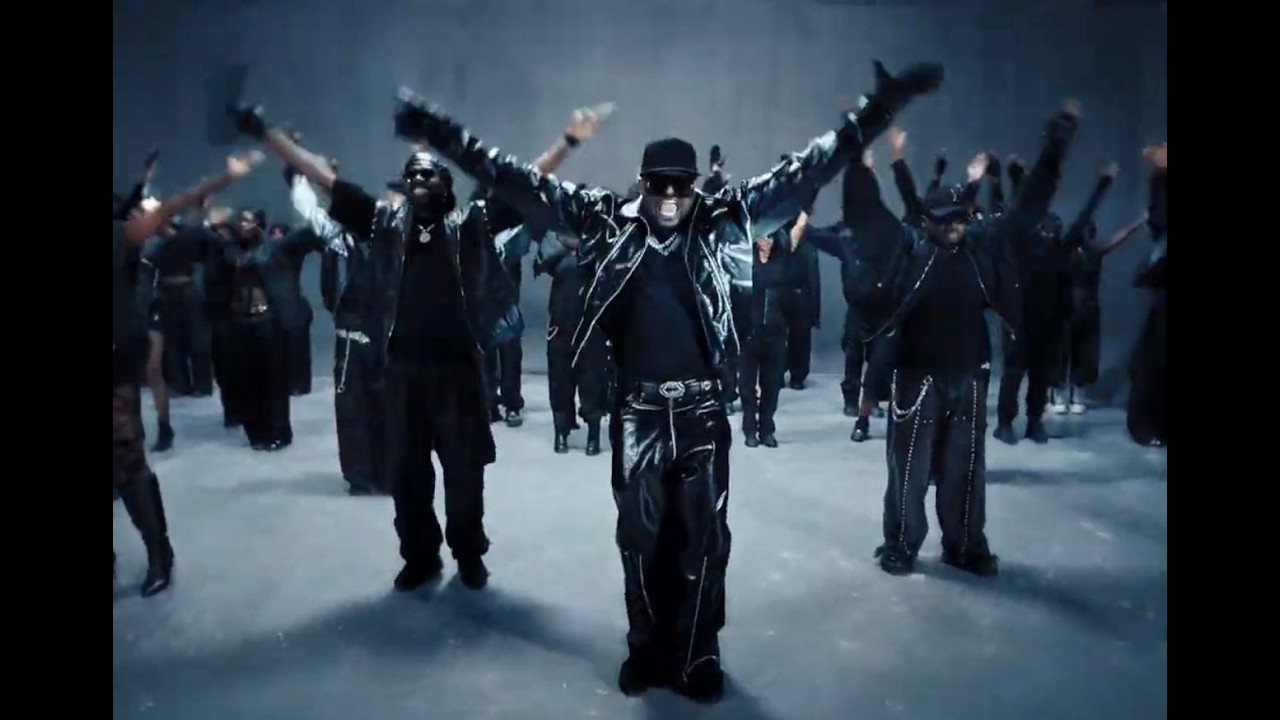
Mr P and back-up dancers dressed in matching black leather outfits performing synchronised break dance choreography.
Have you missed those dance steps that give you goosebumps like you’re watching Michael Jackson on stage? Then you already know we’re talking about Mr P’s latest video for “I Can’t Look Away.â€
Such a fitting title too. In the song, Mr P sings about a woman whose beauty has
Mr P and back-up dancers dressed in matching black leather outfits performing synchronised break dance choreography.
Have you missed those dance steps that give you goosebumps like you’re watching MichaelJackson on stage? Then you already know we’re talking about Mr P’s latest video for “I Can’t Look Away.â€
Such a fitting title too. In the song, Mr P sings about a woman whose beauty has him completely locked in, to the point where he just can’t take his eyes off her. It’s that familiar line you’ve probably heard — or even said yourself — “you’re so beautiful, I can’t look away.â€
The video leans into that feeling and then takes us straight into choreography mode. Mr P and his dance crew show up with routines that pull from the kind of steps fans have long associated with the Psquare era, the same movement-heavy style that defined so many of their performances.
There’s also a nostalgic feel running through it, the kind that makes you pause for a second just to take it all in.
So whether you’re stuck in Lagos traffic or getting ready for a night out, “I Can’t Look Away†slides easily into that rotation of songs you keep playing back to back.
And if you can pick up those moves like Mr P? Even better.
Dxtiny, Shoday and Blaqbonez Lyrics
Arizona by Dxtiny, Shoday, and Blaqbonez is a romantic Afro-fusion song that explores intense attraction, desire, and infatuation. The lyrics focus on the artists' admiration for a woman they find irresistible, expressing a strong emotional and physical connection while emphasizing their reluctance to let her go. Through playful references, flirtatious lines, and affectionate declarations, the song captures the excitement, passion, and obsession that can c
Arizona by Dxtiny, Shoday, and Blaqbonez is a romantic Afro-fusion song that explores intense attraction, desire, and infatuation. The lyrics focus on the artists' admiration for a woman they find irresistible, expressing a strong emotional and physical connection while emphasizing their reluctance to let her go. Through playful references, flirtatious lines, and affectionate declarations, the song captures the excitement, passion, and obsession that can come with being deeply drawn to someone.
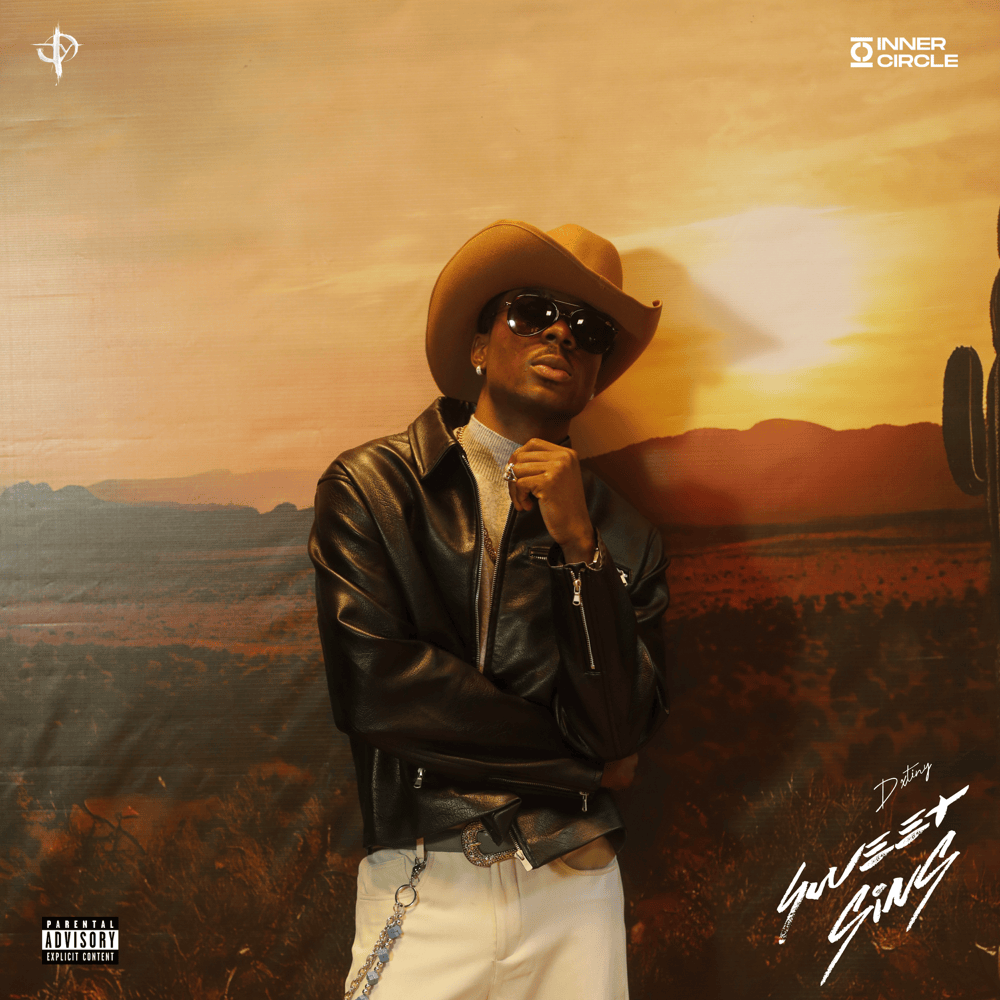
Sweet Sins EP Cover Art
Dxtiny, Shoday & Blaqbonez - Arizona Lyrics
I too dey reason I dey burn Arizona If you dey find me baby I dey California Cause your bum bum bigger than something way dey for solar oh Bisola your bum bum dey attack all of my persona
I no wan let you go (Uhh yea yea yea yea, I no wan let you go oh) I no wan let you go (Uhh yea yea yea yea) Pharaoh leg my people go (Uhh yea yea yea yea) How I wan take believe you? (Uhh yea yea yea yea, If you no let them go) I no wan let u go wo wo wo (Uhh yea yea yea yea, Uhh yea yea yea yea)
Who′s gat the key to the pool Bum bum large when I'm paying my due When I shop it′s for two 'Cause no one dey turn me on like you do Mami, gbejo Your bum bum gbejo Fagbo, koyo It's one like you know So I say Yeah yeah yeah yeah yeah yeah yeah yeah Thank God wey bring you come my way way Mami oh way way way way way waist Make me wan dey mental Move to the center Jo
I no wan let you go (Uhh yea yea yea yea, I no wan let you go oh) I no wan let you go (Uhh yea yea yea yea) Pharaoh leg my people go (Uhh yea yea yea yea) How I wan take believe you? (Uhh yea yea yea yea, If you no let them go) I no wan let u go wo wo wo (Uhh yea yea yea yea, Uhh yea yea yea yea)
Nibi ni ma ku si Boya lo ma dele When I′m in her pussy Tatata she no fit believe it In the morning Mor rrr morning (ahhh yeah) Wake her up with backshots She know that′s a good morning (ay) She feel sir stalli Sir stalli feeling you back Girl back it up on me Make we go to Paris Make I see the sun kiss on your pretty face baby This no be imagination Girl me I garrit Girl me I garrit baby Wake her up with backshot She knows that's a good morning
I no wan let you go (Uhh yea yea yea yea, I no wan let you go oh) I no wan let you go (Uhh yea yea yea yea) Pharaoh leg my people go (Uhh yea yea yea yea) How I wan take believe you? (Uhh yea yea yea yea, If you no let them go) I no wan let u go wo wo wo (Uhh yea yea yea yea, Uhh yea yea yea yea) (Tension)
Check Lyrics of latest songs here, and get fresh updates as they drop via X and Facebook
Mr P and back-up dancers dressed in matching black leather outfits performing synchronised break dance choreography.
Have you missed those dance steps that give you goosebumps like you’re watching Michael Jackson on stage? Then you already know we’re talking about Mr P’s latest video for “I Can’t Look Away.â€
Such a fitting title too. In the song, Mr P sings about a woman whose beauty has
Mr P and back-up dancers dressed in matching black leather outfits performing synchronised break dance choreography.
Have you missed those dance steps that give you goosebumps like you’re watching MichaelJackson on stage? Then you already know we’re talking about Mr P’s latest video for “I Can’t Look Away.â€
Such a fitting title too. In the song, Mr P sings about a woman whose beauty has him completely locked in, to the point where he just can’t take his eyes off her. It’s that familiar line you’ve probably heard — or even said yourself — “you’re so beautiful, I can’t look away.â€
The video leans into that feeling and then takes us straight into choreography mode. Mr P and his dance crew show up with routines that pull from the kind of steps fans have long associated with the Psquare era, the same movement-heavy style that defined so many of their performances.
There’s also a nostalgic feel running through it, the kind that makes you pause for a second just to take it all in.
So whether you’re stuck in Lagos traffic or getting ready for a night out, “I Can’t Look Away†slides easily into that rotation of songs you keep playing back to back.
And if you can pick up those moves like Mr P? Even better.
Omah Lay on Instagram
After the success of his debut album, “Boy Alone“, Omah Lay took a long break before releasing another project. It’s been four years since Omah Lay released his debut album, and now he’s back with his second, “Clarity of Mind,†a 12-track album.
“Clarity of Mind†arrives as a bold, deeply personal body of work which captures Omah L
After the success of his debut album, “Boy Alone“, Omah Lay took a long break before releasing another project. It’s been four years since Omah Lay released his debut album, and now he’s back with his second, “Clarity of Mind,†a 12-track album.
“Clarity of Mind†arrives as a bold, deeply personal body of work which captures Omah Lay in a state of awareness. From previous releases, Omah Lay’s songs have always sounded deeply personal and spiritual, reaching into the deepest of his heart to make music. This new album feels like a confession of an artist who has found clarity of mind.
If June 12 means anything, it cannot simply be that Nigerians once demanded democracy. It must also mean that democracy remains answerable to those demands.
By Joseph Jonathan
Nations are, among other things, memory management projects. They cannot function on unresolved history. The friction of a painful, contested, genuinely unfinished past is incompatible with the civic cohesion that states require, so they do what institutions have always done with uncomfortable material: they process it,
If June 12 means anything, it cannot simply be that Nigerians once demanded democracy. It must also mean that democracy remains answerable to those demands.
By Joseph Jonathan
Nations are, among other things, memory management projects. They cannot function on unresolved history. The friction of a painful, contested, genuinely unfinished past is incompatible with the civic cohesion that states require, so they do what institutions have always done with uncomfortable material: they process it, package it, and return it to the public in a form that is easier to live with.
The pattern is consistent enough to constitute a principle: states prefer commemorative certainty to historical ambiguity. A holiday is not a reckoning. It is a replacement for reckoning. It takes the volatile, unresolved energy of a historical wound and converts it into something annual, predictable, and safe; a ceremony that marks the wound’s existence without requiring that it be healed.
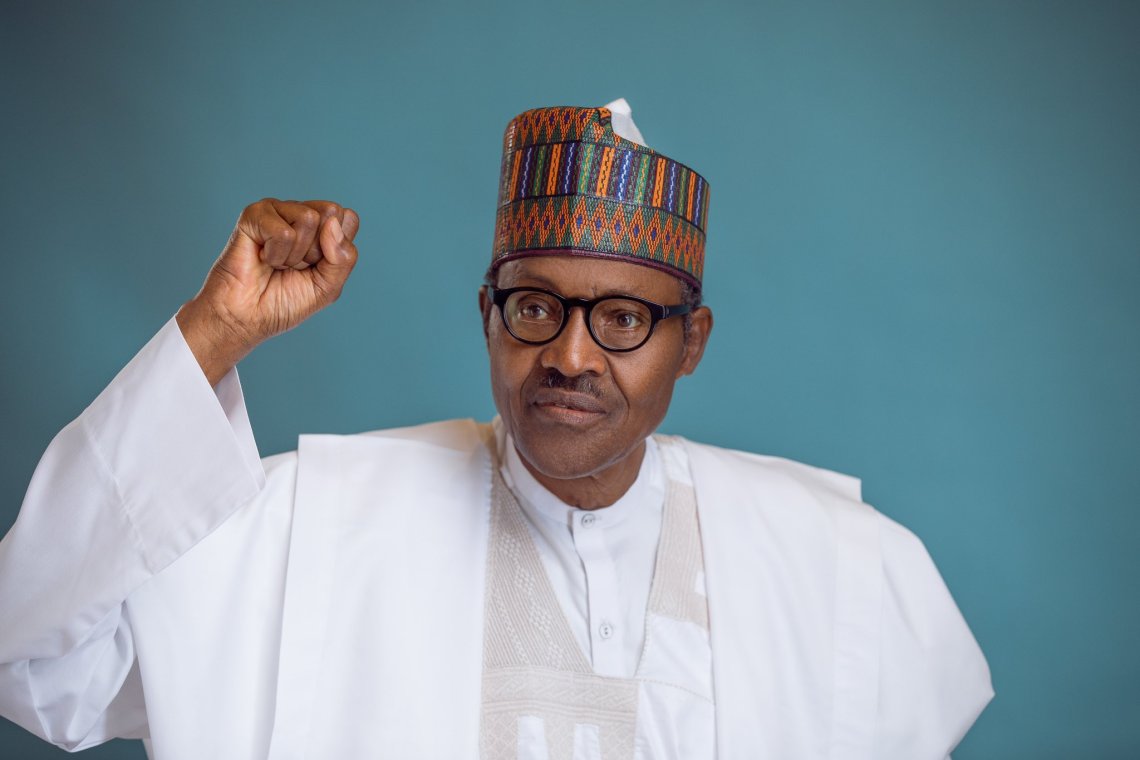
This is what Nigeria did with June 12 in 2018, when President Muhammadu Buhari announced the date change of Democracy Day from May 29 and conferred a posthumous GCFR on Moshood Kashimawo Olawale (MKO) Abiola. Many Nigerians received the announcement as an act of long-delayed justice. For the families of the dead, for the activists who had been detained and beaten across years of struggle, for ordinary citizens who had stood in queues only to have their choice erased, the official recognition carried genuine emotional weight. To dismiss that weight entirely would be dishonest.
Muhammadu Buhari
Like all successful national narratives, this one contains a great deal of truth. It also leaves something out. The election of June 12, 1993, was not a democratic triumph. It was a democratic catastrophe. Votes were cast but never allowed to reach their conclusion. The winner was never sworn in. The mandate was never restored. The struggle that followed consumed lives, produced years of repression, and ended with Abiola himself dying in detention. If June 12 represents anything, it represents the violent interruption of democracy by the state.
Which raises an awkward question. Why does Nigeria commemorate a democratic failure as Democracy Day?
This is not an argument against remembering June 12. Quite the opposite. The date deserves remembrance. The activists who were detained, exiled, beaten, and killed deserve remembrance. The ordinary Nigerians whose votes were nullified deserve remembrance. The question is what kind of remembrance is taking place.
Because memory and commemoration are not the same thing. Memory preserves discomfort. It keeps old arguments alive. It refuses easy closure. Commemoration, by contrast, often organises the past into usable stories. It selects heroes, identifies villains, and transforms complicated histories into civic lessons. States do this constantly. Every national holiday is, in some sense, an argument about history disguised as ritual.
For twenty-five years, one of the most consequential events in modern Nigerian history (duly represented in popular culture) had existed in an uneasy space between public memory and official silence. State acknowledgement mattered. But acknowledgement is not the same thing as reckoning. And that distinction is what makes June 12 worth revisiting today.
The Election That Never Became Government
To fully understand the weight and significance of June 12, let’s take a trip back in time. On June 12, 1993, Nigerians participated in what is still widely regarded as the freest and fairestelection in the country’s history. The contest pitted MKO Abiola of the Social Democratic Party against Bashir Tofa of the National Republican Convention. It unfolded under the supervision of General Ibrahim Babangida’s military government, which had spent years managing an elaborate and repeatedly delayed transition programme.
Abiola won, but more importantly, he won in a way that seemed to challenge many assumptions about Nigerian politics. He performed strongly across regional and ethnic lines, securing support in parts of the country that conventional wisdom suggested should have been inaccessible to him. For a brief moment, the election appeared to offer something rare in Nigerian political life: evidence that a genuinely national democratic mandate was possible.
That possibility lasted eleven days. On June 23, Babangida annulled the election. The decision was justified through legal technicalities and bureaucratic language, but its political meaning was unmistakable. Millions of Nigerians had participated in an election organised by the state, only to discover that the state reserved the right to reject the outcome.
What followed was not the neat morality tale that commemorative speeches often imply. Babangida eventually stepped aside, handing power to an Interim National Government headed by Ernest Shonekan. The arrangement collapsed within months. General Sani Abacha seized power in November 1993 and established a dictatorship that would become synonymous with repression, censorship, political assassinations, and the systematic destruction of dissent.
General Sani Abacha
Abiola declared himself president in 1994 and was arrested. He remained in detention for four years. His wife, Kudirat Abiola, emerged as one of the most prominent voices of resistance. In 1996, she was assassinated in Lagos. Her murder became one of the defining symbols of the violence that accompanied the struggle. Abiola himself died in detention in July 1998. He was never sworn in. The election was never restored. The mandate was never recovered.
This matters because contemporary commemorations often compress the history into a story of democratic perseverance. Yet what happened in 1993 was, first and foremost, a democratic failure. The state organised an election, voters participated in good faith, and the outcome was nullified. The most remarkable thing about June 12 is not that democracy succeeded. It is that democracy was denied.
Which is precisely what makes its later transformation into Democracy Day so interesting. Nations do not merely remember the past. They interpret it. They decide which events become symbols, which symbols become rituals, and which rituals become part of national identity. The question, then, is not whether June 12 deserves remembrance. The question is why this particular memory was eventually elevated into a national holiday, and what happened to its meaning in the process.
The Strongest Case for June 12
Before interrogating the cost of the date change, it is worth seriously engaging with what it was trying to honour, because the case for June 12 as Democracy Day is not exactly a weak one.
Its most compelling form goes something like this: democracies are not born in transitions. They are born in struggle. May 29, 1999, was not a democratic achievement; it was a negotiated elite settlement. The constitution Nigerians currently operate under was drafted not by elected representatives but by a military government preparing its own exit. The man who won the 1999 election was a former military head of state whose democratic credentials were, at the point of his election, entirely theoretical. The handover was real. But it was a handover between elites, on terms set by the departing military, ratified by an electorate that had been given no meaningful alternative.
June 12, by contrast, represents something the Nigerian political process has rarely produced: a genuine expression of democratic will that crossed ethnic and regional lines, that was not managed or manufactured by any incumbent power, that emerged from the people rather than being administered to them. If democracy is, at its root, the idea that political legitimacy derives from the consent of the governed, then June 12 is Nigeria’s most democratic moment. May 29 is when the soldiers went home. June 12 is when the people spoke.
More than that, the people who fought to keep June 12 alive (who were arrested, exiled, killed for it) deserve to have their sacrifice located in the national calendar. NADECO’s members who went underground. Kudirat Abiola was shot in her car in broad daylight. Beko Ransome-Kuti, imprisoned. Gani Fawehinmi, harassed across decades. Their struggle was specifically for the mandate of June 12. To commemorate a different date would be to erase the specific content of what they fought for.
The date embodies an idea of citizenship that extends beyond elections and governments. It speaks to the willingness of ordinary people to defend political rights even when doing so carries significant risks. The years that followed the annulment produced some of the most sustained democratic resistance in Nigeria’s modern history. Journalists endured censorship and harassment. Activists were detained and exiled. Civil society organisations continued operating under increasingly hostile conditions. Some paid for their commitments with their lives.
To many Nigerians, it is this broader struggle, not merely the election itself, that June 12 commemorates. The argument is difficult to dismiss. Indeed, one could plausibly contend that May 29 always suffered from a symbolic weakness. It celebrated the arrival of democracy without adequately acknowledging the sacrifices that made that arrival possible. It focused attention on the settlement rather than the struggle. In doing so, it risked presenting democracy as something granted from above rather than demanded from below. June 12 corrected that imbalance. It shifted the emphasis from institutions to citizens, from transitions to movements, from government decisions to popular resistance.
This is a serious argument. It deserves a serious response.
The response is this: everything the argument says about June 12 is true, and none of it is what the 2018 date change was actually about. The date change honoured the struggle in name while performing a very different operation in substance. To see what that operation was, you have to look not at what the ceremony claims to remember, but at what it requires you to forget.
The Ideological Operation
When Buhari moved Democracy Day to June 12, his government accomplished something worth describing precisely. It took a date that represents democracy’s violent interruption — the beginning of an annulment, the opening of a wound — and reframed it as democracy’s foundation. June 12 in the official version is no longer the day Nigerian democracy was destroyed. It is the day Nigerian democracy began. This reframing is not neutral. It is load-bearing.
If June 12 is where Nigerian democracy begins, then 1999 is where it arrives. The May 29 handover, for all its compromises and limitations, became the vindication of the June 12 struggle; the moment the wound finally healed, the mandate finally honoured, the people’s will finally ratified. And the democracy that has existed since 1999 (with its rigged elections, its looted treasuries, its dynasty politics, its legislature of rentiers, its executive impunity) inherits the moral authority of a movement it did not complete and has, in structural terms, consistently betrayed.
The elegance of the operation is worth admiring, even as you resist it. By adopting June 12, the post-1999 Nigerian state claimed the legacy of a pro-democracy struggle while remaining institutionally continuous with the forces that the struggle was fighting against. Many of the politicians who have governed Nigeria since 1999 were participants in or beneficiaries of the military system that produced the annulment. The transition did not remove them. It reabsorbed them, gave them new titles, new electorates, and the same impunity. The date change allowed this class to drape itself in the symbolism of a resistance it had, in many cases, actively opposed.
Buhari himself is almost incidental to this argument, a vessel through which the operation was performed, but not its author. The operation belongs to the state. Any government seeking to manage the memory of June 12 would have faced the same temptation and the same choice: genuine reckoning, which is costly and destabilising, or commemorative theatre, which is cheap and consolidating. The theatre won. It usually does.
Consider what genuine reckoning would have required. It would have meant asking what happened to the specific democratic demands of the pro-democracy movement, not merely civilian rule, but accountable governance, press freedom, the protection of citizens from state violence. It would have meant accounting for the fact that many figures from the Abacha era transitioned seamlessly into the civilian order. It would have meant sitting with EndSARS (which happened in 2020, two years after the date change, twenty-one years into Nigerian democracy) and acknowledging that a government which massacres protesters at a toll plaza is not the inheritor of a democratic struggle. It is its repudiation.
A holiday cannot hold all of this. It is not designed to. The holiday is designed to make these questions unnecessary, to replace the restlessness of unresolved history with the comfort of annual remembrance. The danger of June 12 as Democracy Day is not that it makes Nigerians remember. It is that it convinces them that remembering alone is enough.
The Myth Needs a Hero
There is another cost to the commemorative version of June 12 that runs deeper than politics, and it has to do with what national myths require. Myths require heroes. Not men, heroes. The distinction matters because men are complicated: contradictory, morally mixed, shaped by the same structures they sometimes oppose. Heroes are simpler. Heroes are what myths need.
MKO Abiola, in life, was a man. He was one of the wealthiest businessmen in Nigeria, a fortune built substantially on proximity to military power. He had been a close ally of Babangida’s government before becoming Babangida’s most prominent victim, a relationship that is not incidental to understanding the political economy of the 1993 crisis. None of this cancels the wrong done to him or to the twelve million Nigerians whose votes were erased. But the commemorative version of June 12 cannot accommodate this complexity. It requires Abiola the hero, and so Abiola the man, with all his contradictions intact, has been quietly retired.
MKO Abiola
The more serious cost of this simplification is what it does to everyone else. The pro-democracy movement that formed around June 12 was larger, more radical, and more politically coherent than Abiola himself. NADECO contained voices whose democratic commitments were not personal to Abiola, who were fighting for a principle, not a patron. Fawehinmi had been a democratic agitator long before 1993 and would remain one long after. And Kudirat Abiola, whose assassination in 1996 is among the most brazen acts of political murder in Nigerian history, was not simply a loyal wife. She was an independent political actor who chose to continue a struggle she could have abandoned, under conditions of genuine physical danger.
These figures have received their posthumous honours. But in the commemorative architecture of June 12, they remain supporting cast. The myth has one protagonist, and everyone else orbits him. What is lost in that arrangement is the most important thing the pro-democracy struggle actually demonstrated: that democratic commitment does not require a candidate. That the principle is larger than any individual who embodies it.
A commemoration that genuinely honoured the June 12 struggle would put the movement at its centre, not the man. It would ask what the movement demanded (beyond Abiola’s inauguration) and hold the present accountable to those demands. Instead, the holiday gives Nigeria a martyr. Martyrs are easier. They do not make demands of the living.
May 29 and the Accountability It Kept
Something was lost when May 29 was retired as Democracy Day, and it is worth naming it.
May 29 was an imperfect date. The 1999 transition was rushed and military-designed, the constitution undemocratically produced, the leading candidate a former general. These criticisms are valid. But May 29 marked something specific and traceable: the moment from which the current democratic order is directly descended. It was the institutional origin of the republic Nigerians actually live in, with all its specific failures and all its identifiable architects.
Keeping May 29 would have maintained a form of accountability that June 12 dissolves. The problems of Nigerian democracy (the INEC manipulation, the godfatherism, the legislative capture, the executive impunity) are not betrayals of some pure democratic ideal. They are the direct, traceable consequences of specific choices made in 1999 and after, by specific people who are mostly still alive and, in some cases, still in office. May 29 kept those people in the frame. June 12 lets them exit it, replacing their accountable faces with the untouchable image of a martyred candidate.
By relocating democracy’s origin to a wound rather than a transition, the date change made the failures of Nigerian democracy feel like the continuation of an old theft rather than the result of new ones. The annulment is now always already the explanation. The soldiers are always to blame. The civilians who have governed for twenty-five years recede into the background as inheritors of a damaged system rather than agents of its continued deterioration.
The Question the Holiday Forecloses
June 12 deserves to be remembered. The people who suffered for it deserve to be honoured. The election of 1993 deserves its place in the national consciousness as evidence of what Nigerian democracy can be at its best: multiethnic, voluntary, legitimate in a way that subsequent elections have rarely matched. None of that requires a public holiday that does the work of settlement rather than reckoning.
That possibility is what makes June 12 worth revisiting, not because the date is unworthy of commemoration, but because commemoration should never exempt a society from asking whether the promises attached to that memory have actually been fulfilled. For if June 12 means anything, it cannot simply be that Nigerians once demanded democracy. It must also mean that democracy remains answerable to those demands.
General Ibrahim Babangida
The most honest thing you can say about June 12 is that the wound it marks has not healed. The democratic deficit the annulment created (the sense that elections in Nigeria are ultimately subject to the veto of power) has not been resolved by twenty-seven years of civilian governance. The political class that manages Nigerian democracy emerged from the same system that produced the annulment and has demonstrated, repeatedly, that it shares that system’s fundamental instinct: that power, once held, is not surrendered to the will of the electorate without a fight.
The holiday does not say this. It cannot. Its function is precisely to say something else, to provide a moment of national consensus around a shared wound, to transform political failure into cultural memory, to make Nigerians feel that they have reckoned with something when they have, in fact, only remembered it.
Nations do this. It is one of their oldest and most reliable operations. The question is whether citizens are obliged to participate in the performance, or whether they are permitted, required, even to ask what the ceremony costs.
What June 12, as Democracy Day, costs Nigeria is the restlessness the date should produce. The annulment of 1993 should make every subsequent election feel provisional, every abuse of democratic process feel like a continuation of the original crime, every moment of state impunity feel like evidence that the wound has not closed. That restlessness is not comfortable. But it is honest. And it is, arguably, the only political disposition adequate to the actual condition of Nigerian democracy.
The holiday offers something easier: pride, mourning, solidarity, the warm shared feeling of a people who have suffered and survived. These are not nothing. But they are not enough. And the day Nigeria decides that the feeling is enough is the day the state wins the argument it has been making since Babangida picked up his pen in June 1993.
The election was stolen. The mandate was never restored. The holiday arrived twenty-five years later, and called the debt paid. It is not.Â
Joseph Jonathan is a historian who seeks to understand how film shapes our cultural identity as a people. He believes that history is more about the future than the past. When he’s not writing about film, you can catch him listening to music or discussing politics. He tweets @Chukwu2big
M-TIBA, a mobile health platform run by Kenya-based healthtech startup CarePay, is shutting down its My Health Funds (MHF) wallet that lets customers set aside money specifically for healthcare.
On April 8, users began receiving refunds directly into their M-PESA wallets without initiating withdrawals, indicating payouts are already underway. Five M-TIBA users confirmed to TechCabal that they had received the funds.
The decision marks a shift in M-TIBA’s model, from a co
M-TIBA, a mobile health platform run by Kenya-based healthtech startup CarePay, is shutting down its My Health Funds (MHF) wallet that lets customers set aside money specifically for healthcare.
On April 8, users began receiving refunds directly into their M-PESA wallets without initiating withdrawals, indicating payouts are already underway. Five M-TIBA users confirmed to TechCabal that they had received the funds.
The decision marks a shift in M-TIBA’s model, from a consumer health savings wallet to an insurance management platform. The move, however, leaves users who depended on the service to set aside small amounts for care without a clear alternative for planning or paying for treatment.
CarePay declined to comment for this story.
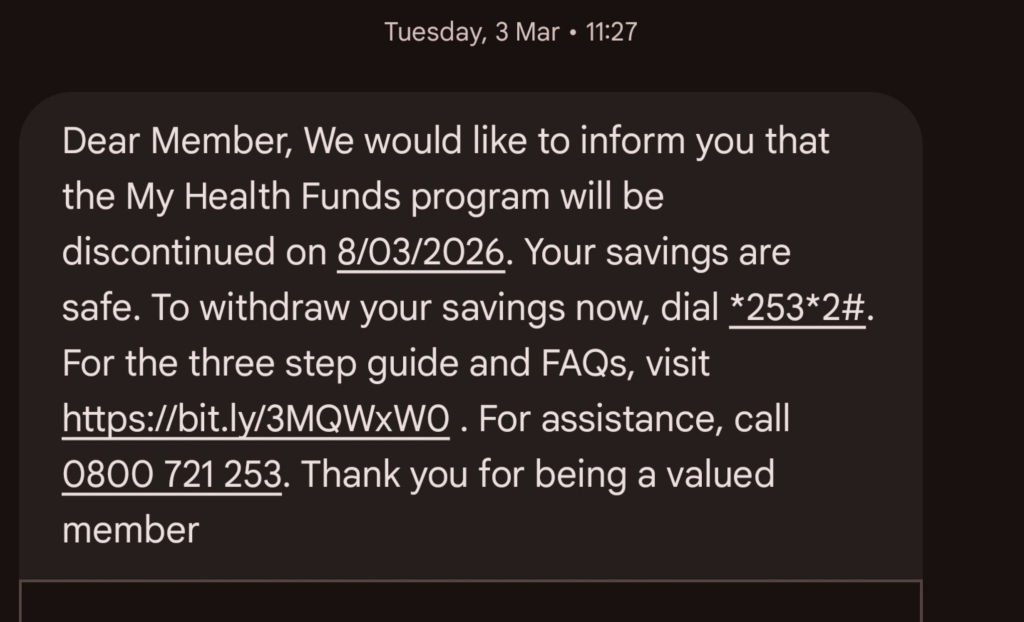
M-TIBA first informed users on March 3 via SMS and its website that the MHF wallet would be discontinued, stating that access to insurance benefits on the platform would remain unchanged.
An SMS from M-TIBA notifying users about the discontinuation of the MHF wallet. Source: Screenshot from an M-TIBA user
Users were asked via SMS to withdraw their balances via USSD or receive M-PESA refunds by March 8, 2026. M-TIBA also said it would process refunds using verified details, with any unresolved balances sent to the Unclaimed Financial Assets Authority, the government agency that holds unclaimed funds until owners come forward.
Refunds began on April 8, and users who had not withdrawn their balances by the March 8 deadline received their wallet savings automatically.
On its website, CarePay said withdrawals would be free, and funds would remain safe, but did not fully explain why the savings product is being retired.
“M-TIBA has some exciting updates on how we’re evolving to better serve you and millions of others,†the company said on its website, without providing further detail.
Launched in 2015, M-TIBA built its early momentum on the idea of ringfencing healthcare funds so they cannot be spent elsewhere. The MHF wallet allowed individuals, employers, and donors to allocate money strictly for medical use across a network of providers. It provided an option for users who could not afford insurance but wanted a structured way to save for care.
CarePay said on its website it will focus on “improving health insurance management,†pointing to a model where insurers and partners drive usage rather than individual savings.
“Since we launched the M-TIBA wallet, we’ve helped many people save and access healthcare, and thanks to your trust, we’re growing into something even bigger and better,†CarePay said on its website. “That’s why we aim to focus on improving health insurance management to ensure more people get access to more affordable healthcare and a better experience.â€
CarePay has not disclosed how many users are affected, the total value of refunds, or how many accounts may be transferred to the Unclaimed Financial Assets Authority due to failed verification. It has not outlined clear alternatives for users who cannot transition to insurance products. The shutdown follows scrutiny in 2025 after a cyber attack exposed user data, as reported by TechCabal. M-TIBA said it will delete personal data once MHF accounts are closed, in line with its privacy policy. It has yet to disclose whether the decision is linked to security, compliance, or cost pressures.
Carter IV, DoouShii & Senjay – Di Pelo ft. Moholo
Carter IV, DoouShii & Senjay — Di Pelo (ft. Moholo): A Groove-Driven Blend of Emotion and Energy
Carter IV, DoouShii, and Senjay link up on Di Pelo, featuring Moholo—a lively Amapiano collaboration that balances heartfelt expression with undeniable groove.
From the outset, the track pulls you in with a rich, rhythmic foundation. It carries that modern Amapiano feel—d
Carter IV, DoouShii & Senjay – Di Pelo ft. Moholo
Carter IV, DoouShii & Senjay — Di Pelo (ft. Moholo): A Groove-Driven Blend of Emotion and Energy
Carter IV, DoouShii, andSenjay link up on Di Pelo, featuring Moholo—a lively Amapiano collaboration that balances heartfelt expression with undeniable groove.
From the outset, the track pulls you in with a rich, rhythmic foundation. It carries that modern Amapiano feel—danceable at its core, but layered with enough melody and emotion to give it depth. There’s a natural flow to the record that keeps it engaging without ever feeling forced.
The production is polished and full-bodied, built on deep log drums, rolling percussion, warm basslines, and textured melodic layers. Carter IV and DoouShii’s chemistry is evident in how smoothly the instrumental moves, while Senjay adds finesse through clean transitions and rhythmic balance. The groove stays consistent throughout, giving the track a steady bounce that’s easy to lock into.
Moholo’s contribution brings the song to life on another level. His vocals add warmth, personality, and emotional weight, helping shape the track’s identity. Rather than overpowering the beat, his delivery blends seamlessly into it, creating a cohesive and immersive sound.
Di Pelo stands out for its balance—it’s energetic without losing feeling, and expressive without sacrificing groove. The result is a track that feels complete, replayable, and deeply in tune with the evolving Amapiano sound.
You can listen to Carter IV, DoouShii & Senjay – Di Pelo ft. Moholo here.
Omah Lay Bald Look
Omah Lay Names His Musical “Mount Rushmore†as He Reveals the Artists He Looks Up To
Omah Lay has opened up about the artists who have shaped his sound and inspired his journey, naming a strong lineup of global and African heavyweights as his musical idols.
Speaking in an interview with Kiss Xtra, the singer highlighted names like Wizkid and Burna Boy, alongside international stars including Drake, The Weeknd, Bruno Mars, and Ha
Omah Lay Names His Musical “Mount Rushmore†as He Reveals the Artists He Looks Up To
Omah Lay has opened up about the artists who have shaped his sound and inspired his journey, naming a strong lineup of global and African heavyweights as his musical idols.
Speaking in an interview with Kiss Xtra, the singer highlighted names likeWizkid and Burna Boy, alongside international stars including Drake,The Weeknd, Bruno Mars, and Harry Styles.
“I have my idols,†he said. “Wizkid is my idol. Burna Boy, Drake, The Weeknd, Bruno Mars, Harry Styles… these are people I look up to musically.â€
The list reflects the blend of influences that can be heard in Omah Lay’s music—ranging from Afrobeats to R&B and global pop. It also shows his awareness of both local pioneers and international stars who have defined modern sound at the highest level.
Beyond naming his inspirations, Omah Lay also made a bold statement about his future:
 I’m going to be the wealthiest African artiste ever in a few years. I’m going to build things that would change the world.
It’s a confident declaration, but one that aligns with the trajectory he’s been on. From breakout hits to global recognition, Omah Lay has steadily positioned himself as one of the most introspective and ambitious voices in the new generation.
â I’m going to be the wealthiest African artiste ever in a few years, I’m gonna build things that would change the world➠— Omah Lay
Your mountrushmore name me 4 artistes who at the top
â I have my idols: Wizkid, Burna Boy, Drake, The Weeknd, Bruno Mars, Harry Styles is my… pic.twitter.com/bSrOD8UZKk
Omah Lay on Instagram
After the success of his debut album, “Boy Alone“, Omah Lay took a long break before releasing another project. It’s been four years since Omah Lay released his debut album, and now he’s back with his second, “Clarity of Mind,†a 12-track album.
“Clarity of Mind†arrives as a bold, deeply personal body of work which captures Omah L
After the success of his debut album, “Boy Alone“, Omah Lay took a long break before releasing another project. It’s been four years since Omah Lay released his debut album, and now he’s back with his second, “Clarity of Mind,†a 12-track album.
“Clarity of Mind†arrives as a bold, deeply personal body of work which captures Omah Lay in a state of awareness. From previous releases, Omah Lay’s songs have always sounded deeply personal and spiritual, reaching into the deepest of his heart to make music. This new album feels like a confession of an artist who has found clarity of mind.
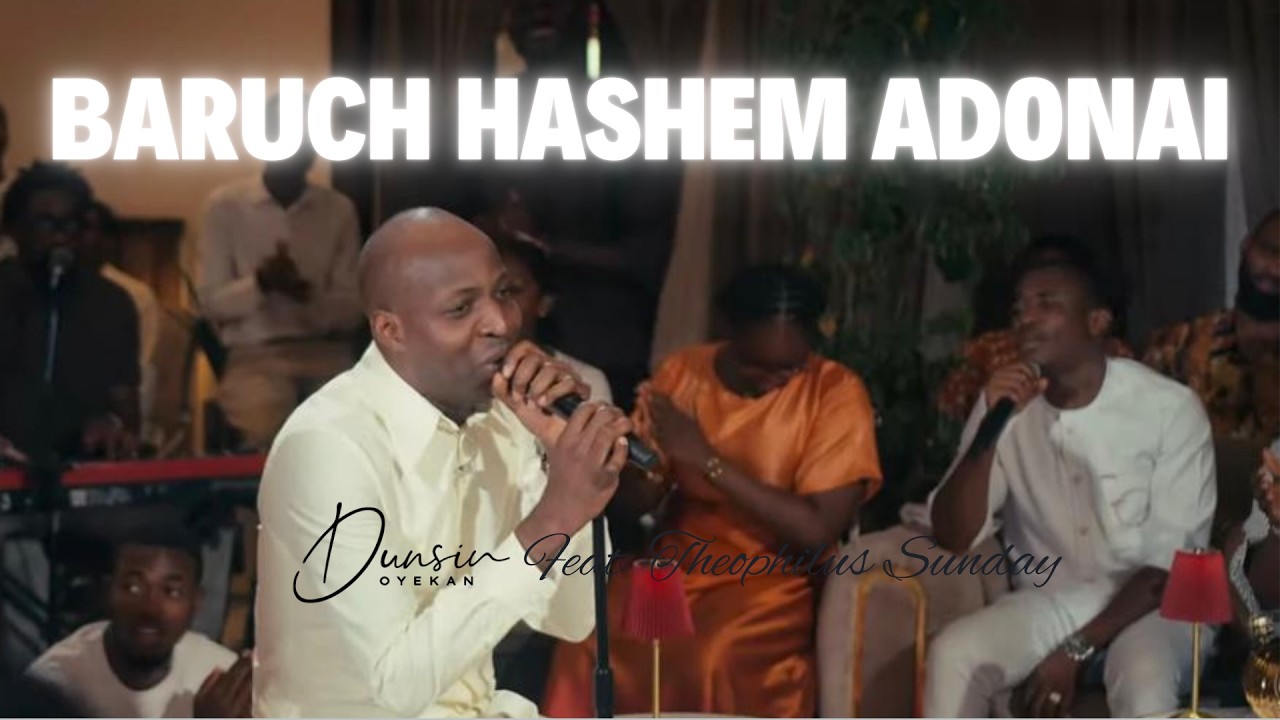
If you have been following Nigerian gospel music for any length of time, you already know that when Dunsin Oyekan and Theophilus Sunday get into a room together, something special tends to come out of it. These two have built a body of collaborative work that covers a lot of ground, from spontaneous worship moments to deeply intentional recordings, and every single one of them is worth your time.
With their latest release “Baruch Hashem Adonai†giving the go
If you have been following Nigerian gospel music for any length of time, you already know that when DunsinOyekan and TheophilusSunday get into a room together, something special tends to come out of it. These two have built a body of collaborative work that covers a lot of ground, from spontaneous worship moments to deeply intentional recordings, and every single one of them is worth your time.
With their latest release “Baruch Hashem Adonai†giving the gospel music community plenty to talk about, now feels like the perfect moment to go back through what they have built together. Here are five collaborations to add to your playlist immediately.
OgoÂ
“Ogo†means glory in Yoruba, and this song delivers exactly that from start to finish. Released in 2023, this was one of the earlier collaborations between the two ministers and it set the tone for everything that came after. Dunsin has shared that the song was born out of a spontaneous moment of worship during a recording session, when he felt a portal open in the spirit and called Theophilus on stage to declare it over the nations. The result is a song built around a simple, repetitive declaration — “Ogo, ogo, hallelujah, to the Lamb†— that somehow gets more compelling every time it loops. Put it on and see how long it takes before your hands go up.
Emperor of the UniverseÂ
Released in January 2024 as part of Dunsin Oyekan’s album “The Great Commission,†“Emperor of the Universe†is the kind of collaboration that reminds you why both of these ministers carry the weight they do. At over sixteen minutes long, it is not a song you put on in passing. It is a song you sit with, and it rewards every minute of that attention. Theophilus Sunday’s contribution on this track adds a layer that makes the whole thing feel like a full worship experience rather than just a recorded song.
You Are Worthy
This collaboration is a masterclass in lead-and-response worship. “You Are Worthy†captures a raw, unscripted essence where Dunsin and Theophilus trade verses that center entirely on the sovereignty of God. It is a song that doesn’t rely on complex production, instead leaning into the vocal strength and spiritual conviction of both men. It has become a staple for those looking to deep-dive into a focused atmosphere of reverence.
Who Is Like You Oh Lord
In “Who Is Like You Oh Lord,†the two ministers lean into a scriptural declaration of God’s incomparable nature. This track highlights the chemistry between Dunsin’s high-energy delivery and Theophilus’s deep, prophetic chants. The song builds steadily, moving from a quiet acknowledgement to a loud, triumphant shout. It is one of those tracks that feels just as fresh on the fiftieth listen as it did on the first.
Baruch Hashem AdonaiÂ
Their most recent collaboration and the one that has the gospel music community talking right now. “Baruch Hashem Adonai,†which means “Blessed is He who comes in the Name of the Lord†in Hebrew, draws from the cry that welcomed Jesus during His triumphant entry into Jerusalem and presents it as a present-day declaration. Dunsin described it as a prophetic sound meant to echo from family altars to nations, and with both their voices on it, the song carries every bit of that intention. A fitting addition to a collaborative catalogue that just keeps growing.
If you have been looking for a worship song to play on repeat this week, Dunsin Oyekan and Theophilus Sunday have something for you — and it is called “Baruch Hashem Adonai.â€
The track brings together two of gospel music’s most powerful voices for a release that arrives as more than just another worship song. Rooted in Scripture and built around the declaration “Blessed is He who comes in the Name of the
If you have been looking for a worship song to play on repeat this week, Dunsin Oyekan and Theophilus Sunday have something for you — and it is called “Baruch Hashem Adonai.â€
The track brings together two of gospel music’s most powerful voices for a release that arrives as more than just another worship song. Rooted in Scripture and built around the declaration “Blessed is He who comes in the Name of the Lord,†the song draws from the same cry that welcomed Jesus during His triumphant entry into Jerusalem, the moment that announced the arrival of the King. Dunsin Oyekan and Theophilus Sunday take that ancient declaration and make it feel urgent and present, a call for voices everywhere to lift the Name of the Lord and prepare their hearts for His presence.
The song does not frame this as something to wait for in the future. It speaks of the Lord coming again and again into homes, families, churches, cities and nations until His will is done on earth as it is in heaven. It is a declaration meant to echo everywhere, from family altars to town halls, from one nation to another, from the rising of the sun to its setting.
Sharing the release, Dunsin Oyekan encouraged listeners to gather in worship and expectation. “Let’s gather around the family altar tonight and prepare to receive this prophetic sound that heralds the Lord’s coming. When He enters, joy invades,†he said.
The song echoes the words recorded in Mark 11:9–10: “Hosanna! Blessed is He who comes in the name of the Lord! Blessed is the kingdom of our father David that comes in the name of the Lord! Hosanna in the highest!†It stands as an invitation for people everywhere to once again lift the same cry. Baruch Hashem Adonai.
Listen to “Baruch Hashem Adonai†by Dunsin Oyekan featuring Theophilus Sunday below.
 Global stars King Promise and Mr Eazi reunite on “That Way†a smooth, emotionally driven Afrofusion single that blends millennial pop nostalgia with contemporary African sound.
Produced by GuiltyBeatz and JAE5, the track serves as the second release from their joint project,â€See What You’ve Done“, and highlights the effortless chemistry between two of West Africa’s most di
 Global stars King Promise and Mr Eazi reunite on “That Way†a smooth, emotionally driven Afrofusion single that blends millennial pop nostalgia with contemporary African sound.
Produced by GuiltyBeatz and JAE5, the track serves as the second release from their joint project,â€See What You’ve Done“, and highlights the effortless chemistry between two of West Africa’s most distinctive voices.
Rooted in nostalgia, “That Way†draws direct inspiration from the Backstreet Boys’ iconic hit “I Want It That Way,†reimagined through a modern African lens. The result is a record that feels instantly familiar yet refreshingly current. King Promise’s silky melodies pair seamlessly with Mr Eazi’s laid-back confidence, creating a relaxed, emotionally resonant sound where feeling leads over formula.
The official music video for “That Way†was released on the 6th of February 2026. Directed by Charlie Rees and produced by Oculens, the London-shot visual amplifies the song’s nostalgic yet modern tone, translating its warmth and intimacy into a compelling on-screen narrative that complements the record’s emotional core.
With “That Way,†King Promise and Mr Eazi continue to expand the emotional and cultural depth of “See What We’ve Doneâ€, reinforcing the project’s themes of reflection, connection, and evolution.
“That Way†is now available on all major streaming platforms.
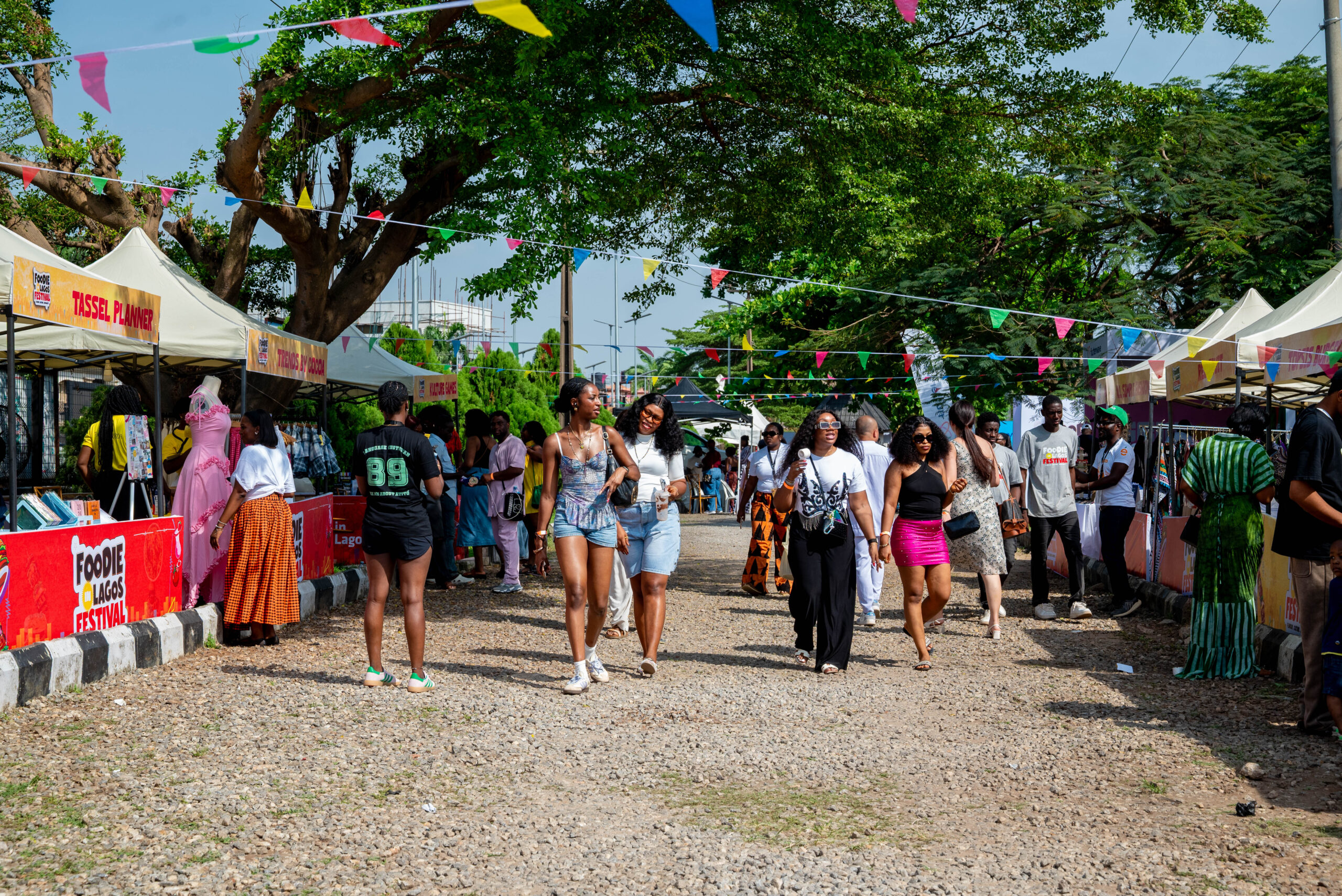
Lagos’ food and lifestyle scene came alive on December 17 and 18, 2025, as thousands of guests gathered for the Foodie in Lagos Festival. A two-day celebration of food, drinks, music, and family-friendly experiences. Curated by Foodie in Lagos, the festival brought together 53 carefully selected vendors spanning food, lifestyle, and creative brands, alongside families and creators, for an immersive end-of-year experience that captured the true spirit of Detty December.Â
Lagos’ food and lifestyle scene came alive on December 17 and 18, 2025, as thousands of guests gathered for the Foodie in Lagos Festival. A two-day celebration of food, drinks, music, and family-friendly experiences. Curated by Foodie in Lagos, the festival brought together 53 carefully selected vendors spanning food, lifestyle, and creative brands, alongside families and creators, for an immersive end-of-year experience that captured the true spirit of Detty December.Â
Hosted in a vibrant open-air setting at Encourage Park, Ikoyi, the festival transformed the venue into a bustling hub of flavour, colour, and sound — offering guests the opportunity to eat, explore, shop, connect, and unwind. Over the course of two days, the festival welcomed over 3,000 attendees, underscoring its growing status as a key fixture on Lagos’ Detty December lifestyle calendar.
Watch highlights from the Foodie in Lagos Festival below.Â
A Thoughtfully Curated Food Experience
At the heart of the festival was food and plenty of it. Across two days, the festival’s food vendors delivered a diverse range of offerings spanning Nigerian classics, grills, desserts, street food favourites, cocktails, and contemporary fusion dishes. From familiar crowd favourites to exciting new discoveries, attendees were spoilt for choice as they moved from stall to stall sampling flavours and discovering new brands.
The festival’s layout encouraged exploration, with clearly defined vendor zones and relaxed communal seating that made it easy for guests to enjoy meals with friends and family. Many vendors reported sell-outs across both days, reinforcing the festival’s reputation as a key platform for food businesses looking to connect directly with their audience.
More Than a Food Festival
While food was the star, the Foodie in Lagos Festival delivered much more than just great meals. Live DJ sets by DJ Slymn & Guest DJ Lolahstic kept the energy high throughout the day, while a DJ battle and artiste performances turned the evenings into a lively celebration. A live band performance added a soulful touch, giving guests moments to slow down, sing along, dance, and soak in the atmosphere. The Festival was anchored by Deji Osikoya on Day One, with MC Obinna taking over hosting duties on Day Two, while Oludamee hosted the festival’s red carpet — ensuring seamless flow, high energy, and engaging moments throughout the event on both days.
Interactive brand activations dotted the venue, creating engaging experiences that blended seamlessly into the festival environment. From kids’ play areas and game zones to experiential brand spaces and garden-style seating, brands connected meaningfully with guests without disrupting the flow of the event.
Family-Friendly Fun at the Christmas Village
One of the standout attractions was the Christmas Village, curated in partnership with Tinsel Town and thoughtfully integrated into the festival experience. Designed with families in mind, the village offered a range of festive and creative activities for children, making the festival a truly inclusive event.
Young guests enjoyed bead-making workshops, cookie decorating classes, a Santa Grotto experience, and performances at the Elf Play House Theatre. Pamper sessions by Dermaspace added a gentle wellness element, ensuring both kids and parents could relax and enjoy the moment.
The Christmas Village reflected the festival’s commitment to creating a space where families could participate fully, rather than feeling like an afterthought.
Media partners BellaNaija, Olori Supergal, and My Lagos App helped amplify the festival’s reach, ensuring moments from the event travelled far beyond the venue.
A Defining Moment for Foodie in Lagos
For Foodie in Lagos, the festival marked a defining milestone, translating over a decade of digital food storytelling into a shared, real-world experience. Founded in 2013, Foodie in Lagos has grown into one of the city’s most trusted voices in food and lifestyle, consistently shaping conversations around where and how Lagos eats.
As the platform’s second festival, the Foodie in Lagos Festival reflected both the depth of its community and the strength of the trust it has built with audiences, vendors, and brands over the years. What began as an online dining guide has evolved into a platform capable of curating large-scale, community-driven experiences that celebrate Lagos’ ever-evolving food culture.
Held on December 17 and 18, 2025, the Foodie in Lagos Festival firmly established itself as a standout on Lagos’ Detty December calendar. Its inclusion in CNN’s 2025 Detty December line-up further underscored the festival’s growing cultural relevance, placing it among the season’s most anticipated food and lifestyle events.
If you missed out on the experience, highlights from the Foodie in Lagos Festival are available to view across Foodie in Lagos’ digital platforms.
For more information, please visit the Website. Instagram: @foodieinlagos | @foodieinlagosfest Threads: @foodieinlagos

 Connexion