
 Connexion
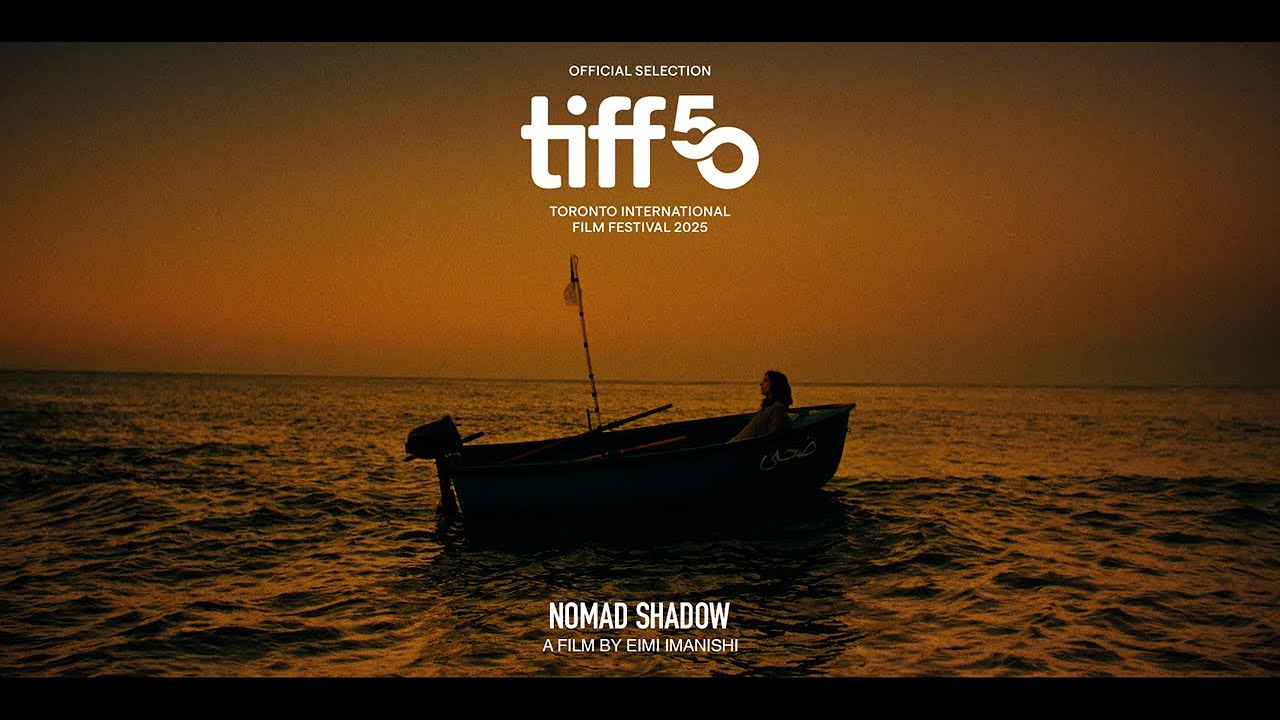

TIFF 2025: Eimi Imanishi’s “Nomad Shadow” Deftly Navigates the Intricacies of Exile
Nomad Shadow excavates the personal costs of political displacement with an intimacy that cuts through the abstractions of geopolitical discourse.
By Jerry Chiemeke
In the contested territory of Western Sahara, where Moroccan occupation has displaced populations and shattered communities for nearly half a century, displacement becomes both literal and metaphorical. Eimi Imanishi’s feature debut, Nomad Shadow, takes this fraught geopolitical reality as its backdrop. It follows Mariam (Nadhira Mohamed), a young Sahrawi woman forcibly deported from Spain, who must navigate the treacherous waters between two worlds that no longer feel like home.
We witness the brutal velocity with which belonging can be stripped away in Nomad Shadow’s opening montage. One moment, Mariam is lost in the euphoric throngs of a Spanish nightclub; the next, she’s bundled to Western Sahara, her expired visa the scythe that severs her from the life she knew. It’s a jarring transition that establishes the film’s central preoccupation: what happens when home becomes the most foreign place of all?

Imanishi, whose previous short, Battalion to My Beat (2016), demonstrated a keen eye for social fractures, manifests an acute understanding of how political displacement manifests in intimate, domestic spaces. Mariam’s mother, convinced her daughter has been corrupted by European values, suggests she is “possessedâ€, a diagnosis that carries particular weight in a community already grappling with cultural erasure under occupation. The film’s most potent moments emerge from these micro-aggressions of rejection, where family becomes another site of exile rather than refuge.
Mariam returns to find Western Sahara transformed by drought. “It hasn’t rained in three yearsâ€, her friend, Sidahmed (Omar Salem), informs her during a visit to a dry riverbed. This environmental devastation serves as both literal context and poetic metaphor for the spiritual aridity she encounters. Her brother, Alwali (Suleiman Filali), has descended into the drug trade, and her sister, Selka (Khadija Najem Allal), harbours silent resentment for Mariam’s abandonment during their father’s illness.
Nomad Shadow’s greatest strength lies in Mohamed’s ferocious central performance. She embodies Mariam’s displacement not through histrionics, but through a carefully calibrated sense of disconnection: the way she holds her body like borrowed clothing, the manner in which familiar spaces seem to reject her presence.Â
When her mother criticises her “decadence†or her brother refuses to involve her in his illegal enterprise, Mohamed registers each rejection as a small death, accumulating layers of alienation that eventually threaten to suffocate her entirely.
The friendship between Mariam and Sidahmed, involving two outcasts finding solace in their shared estrangement from social norms, provides Nomad Shadow’s most tender moments. Salem brings a delicate vulnerability to Sidahmed, a man who faces homophobic persecution. Their scenes together achieve a naturalistic intimacy that contrasts sharply with Mariam’s stilted interactions with family members.
Cinematographer Frida Marzouk’s camera work demonstrates remarkable intimacy, employing close-ups to capture Mohamed’s emotional geography: the tension in her jaw, the vulnerability in her neck and wrists (particularly loaded given Mariam’s history of self-harm). The recurring sailboat dream sequences, shot with disorienting urgency, serve as an effective visual metaphor for Mariam’s psychological drift between two shores of belonging.
Noelia R. Deza’s editing deserves particular recognition for its restraint. In less capable hands, Mariam’s psychological fragmentation could have been rendered through flashy montages or obvious symbolism, but Deza allows the emotional weight to accumulate through sustained observation rather than editorial manipulation.Â
Nomad Shadow breathes in the spaces between cuts, allowing Mohamed’s performance to carry the narrative burden without unnecessary embellishment.
Where Nomad Shadow falters is in its reluctance to fully engage with the political context that shapes its characters’ lives. While the Moroccan occupation looms over every frame, Imanishi treats it primarily as atmospheric pressure rather than examined reality. The film gestures toward larger questions of cultural survival and political resistance, but never commits to exploring how these macro-forces shape individual consciousness.Â
The glimpses of female agency—a woman celebrating her divorce, Mariam’s mother expressing desires for remarriage—feel underdeveloped, promising explorations that the 81-minute runtime doesn’t allow space to pursue. These moments suggest a richer investigation of how women navigate patriarchal inhibitions in a society already constrained by colonial occupation, but Imanishi pulls back just as these themes begin to deepen.
The choice to centre the narrative around three forms of resistance (anti-colonial struggle, feminist rebellion, and queer visibility via Sidahmed) creates a compelling triptych of marginalisation.Â
Yet, this ambitious thematic architecture sometimes threatens to overwhelm the plot. While the inclusion of Sidahmed’s character adds necessary complexity to Nomad Shadow’s exploration of otherness, his subplot feels underdeveloped, serving more as punctuation than fully-realised narrative thread.
Nomad Shadow succeeds most when it resists the temptation to romanticise exile or transform suffering into easy political allegory. Imanishi understands that displacement’s true violence lies not in dramatic confrontation but in the quiet erosion of belonging: the way familiar places become foreign, and the way identity fractures across geographical and cultural boundaries.
In its exploration of what happens when neither departure nor return offers genuine resolution, Nomad Shadow captures something essential about the contemporary experience of displacement.Â
For Mariam, and for countless others caught between worlds, home exists not as a place to be recovered, but a concept to be continually negotiated. Imanishi’s debut suggests that sometimes the most radical act is simply learning to live in the space between shores.
Nomad Shadow screened at the 2025 Toronto International Film Festival.
Jerry Chiemeke is a Nigerian-born writer, film critic, journalist, and lawyer based in the United Kingdom. His writing has appeared in Die Welt, The I Paper, The Africa Report, The British Blacklist, Berlinale Press, The Johannesburg Review of Books, Culture Custodian, Olongo Africa, and elsewhere. Chiemeke’s work has won or been nominated for the Pushcart Prize, Ken Saro Wiwa Prize, Diana Woods Memorial Award for Creative Nonfiction, Best Small Fictions, and the Quramo Writers Prize. He is the author of the critically-acclaimed short story collection, Dreaming of Ways to Understand You.
The post TIFF 2025: Eimi Imanishi’s “Nomad Shadow†Deftly Navigates the Intricacies of Exile first appeared on Afrocritik.
