Vue normale

Reçu avant avant-hier
  • ✇Afrocritik
  • In Conversation: Achille Ronaimou on “Diya”, Confronting Tradition, Justice, and Forgiveness in Chad
    “I am the one who takes the little stories from friends in the neighborhood and adds my own twists to make them more captivating, more hilarious, or more dramatic”. – Achille Ronaimou By Jerry Chiemeke In his feature debut, Diya (Le Prix Du Sang), Achille Ronaimou crafts a morally complex drama that interrogates the collision between ancient customs and modern realities in contemporary Chad.  The film follows Dane Francis (Ferd
     

In Conversation: Achille Ronaimou on “Diya”, Confronting Tradition, Justice, and Forgiveness in Chad

17 septembre 2025 à 07:38

“I am the one who takes the little stories from friends in the neighborhood and adds my own twists to make them more captivating, more hilarious, or more dramatic”. – Achille Ronaimou

By Jerry Chiemeke

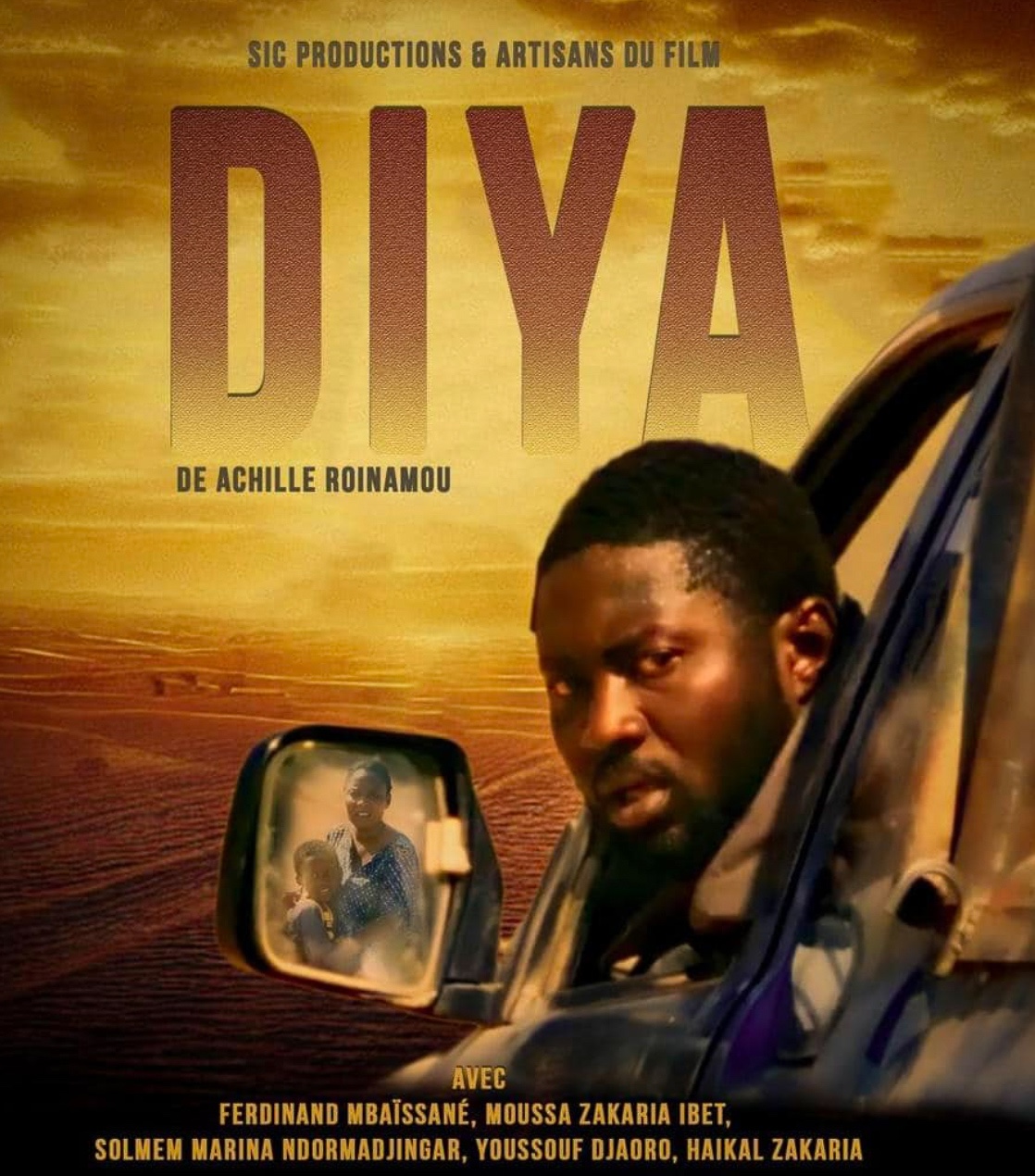
In his feature debut, Diya (Le Prix Du Sang), Achille Ronaimou crafts a morally complex drama that interrogates the collision between ancient customs and modern realities in contemporary Chad. 

The film follows Dane Francis (Ferdinand Mbaïssané), a working-class driver whose accidental knockdown of a schoolboy named Younous plunges him into a labyrinthine system of traditional justice that threatens to consume his family’s future. 

Dismissed from his job, stripped of his licence, and unable to secure employment due to his criminal record, Dane becomes a study in systemic failure. Ronaimou resists easy moralising, instead presenting a society where corruption, poverty, and rigid adherence to custom create seemingly impossible choices. 

Ferdinand Mbaïssané delivers a compelling performance as Dane, his weathered features mapping the psychological toll of a man caught between worlds. The actor’s restraint proves particularly effective in conveying the quiet desperation of someone whose moral compass is being systematically dismantled by circumstance. 

The film’s exploration of the Diya system proves particularly valuable in contemporary African cinema, where traditional justice mechanisms are often portrayed in simplistic terms. Achille Ronaimou avoids both romanticising and demonising the practice, instead presenting it as one element in an intricate web of social, economic, and political relationships that determine individual fate. 

Diya
Diya

While the film occasionally overreaches in its ambitions, its commitment to moral complexity and its refusal to provide comfortable resolutions mark it as a noteworthy first feature. 

In an exclusive interview with Afrocritik, Achille Ronaimou reflects on the events that inspired writing Diya, locations as characters in film, rigid traditional practices, and the use of cinema to alter perceptions of the African continent.

Diya, in the context of this story, translates to “the price of blood”. Can you walk us through your decision to render this concept both as your film’s title and its central moral dilemma? 

Interestingly, I never thought of any title other than Diya. I found this title even before I started writing the script. The first versions of my script tackled the subject from a rather violent angle, to the point of offending the sensitivities of some readers who believed that the film could provoke strong emotions in the Muslim community, which is very sensitive to religious issues, and label me as an anti-Islam filmmaker. 

That’s because, indeed, Diya in Chad is a poor translation of the surah ‘Al-Nissat’ from the Quran. Therefore, for me, Diya, the price of blood, is exactly the title that will resonate best for this film. Even though the script was revised several times to produce this current version, the depth of the content has remained the same.

Achille Ronaimou
Achille Ronaimou

How did you first encounter this story that would become your feature debut?

During a family ceremony, a cousin of mine, long consumed by guilt, decided to confide in me. He told me that he killed a 10-year-old child. Several years later, he was scammed and ruined by the latter’s family, in the name of the Diya. In Chad, 7 out of ten people are directly or indirectly victims of this practice called Diya or blood money. 

Hence, it’s a practice known to all, but the story of this cousin in particular touched me so much because it is the death of a child, an innocent person who pays a high price. One morning in January 2015, I set out to write the first draft of the script.

This is your first feature after directing shorts and documentaries. How did your documentary work on Minors in Prison (2013) and Kanoun (2012) inform your approach to bringing Diya to life?

My initiation to cinema through documentary was very decisive for the continuation of my career. Before that, I wrote short stories that, unfortunately, never got published; I love imaginative creation. I am the one who takes the little stories from friends in the neighborhood and adds my own twists to make them more captivating, more hilarious, or more dramatic. I have always loved writing, and documentary filmmaking has equipped me with another narrative channel because I can now combine both in my narratives, which are mostly scripted real events.

N’Djamena and Northern Chad almost become characters themselves in this story. How did you use geography and location to reflect the cultural and economic divides at play?

Diya is primarily a story of geography and religious confession. The setting and attire are characters in their own right. Following a civil war in 1979 in Chad, pitting southern Christians against northern Muslims, the population remained divided and dispersed according to their geographic and religious affiliations. 

Thus, in N’Djamena, there are northern neighborhoods inhabited by Muslims, characterised by religious austerity, where one can hear the calls of the muezzin for the 5am daily prayers. 

Women are all veiled and covered from head to toe, and men wear long boubous. However, in the southern neighborhoods inhabited by Christians, one will find bars, nightclubs, churches, and men and women proudly strolling the streets in Western attire. Therefore, one can never speak of Diya without referencing these very important details.

Diya
Still from Diya

Ferdinand Mbaïssané’s portrayal of Dane moves from guilt through frustration to desperation. What did you look for in casting this role, and how did you guide him through this emotional arc?

I was looking for a broken man, a sober man, intelligent but crushed under the weight of society. Ferdinand was that young man among others who reflected this image a bit. He was recommended to me by my first assistant, Cyril Danina, for whom he acted in one of his films over 15 years ago. We still had to work on him a little bit, especially with his acting. For almost a year, we worked with him so that he would be more comfortable in the character of Dane. 

Working with (cinematographer) Cyrille (Hubert) and (editor) Guillaume (Talvas), how did you create the tension, dread, and chaos that mirror Dane’s psychological state?

Cyrille Hubert is a gem. I would say that the gods of cinema were with me (laughs). They sent me Cyrille from Heaven. I did not expect to have such a young, brilliant, and brave director of photography on set. It was his first time filming in Africa and in Chad where it’s over 40 degrees celsius in the shade. 

Just like me, it was also his first feature film as a director of photography, but he had more field experience than I did. He fell in love with the script from the first reading and committed to shooting it by my side. He followed the script to the letter, and it hurt him every time I had to modify or remove a scene. He continually proposed a thousand angles for each shot, giving us multiple options in the editing room. 

By having Ferdinand rehearse the scenes repeatedly, we ended up exhausting him, which sometimes isn’t a bad thing because that’s exactly when he can express the tension, fear, or chaos we’re looking for. I learned a lot from Cyril, and I would like to work with him again on my upcoming projects.

Guillaume Talvas is a very meticulous, rigorous, and creative editor; with him, we rewrote the script, focusing more on the psychology of the characters. He was the one who succeeded in bringing out Dane’s chaotic side on screen. I agreed with almost all his editing suggestions. Starting with a 150-minute rough cut, Guillaume did a remarkable job meticulously combing through every sequence to achieve a final film of 96 minutes, which is more fluid and dynamic.

The film poses questions about what really passes for good and evil. Without spoiling the ending, how do you want audiences to grapple with Dane’s ultimate choices?

I want the public to rise to the level of Dane’s spiritual maturity. After all he has endured in the name of Diya, it would have been legitimate for him to take revenge or to denounce his captors to the authorities. Instead, he chooses forgiveness. By handing little Younous back to his father, Dane breaks the chain of violence and vendetta. He rises above human baseness.

The ancient law of retaliation meets modern legal systems in your film. What does this collision reveal about justice in contemporary African societies?

Most Chadians and Africans wonder how such a practice can survive in the current era, where justice and human rights are known even to children. Diya is normalised, and Chadian authorities agree to concessions for its application. A practice that was originally intended to reconcile communities and avoid reprisals has today become a means of fraud and domination of the strong over the weak. 

Thus, a murderer can pay the Diya to the family of the deceased and be free from any legal pursuit. It is a true social tragedy that outrages new African societies.

Diya
Still from Diya

Diya is distributed by Canal+ and produced by Sic Productions and Artisans Du Film. How important was this partnership in bringing authentic Chadian stories to wider audiences?

It is a beautiful collaboration that opens a global window on Chadian cinema, which is still unknown to the international public. I believe that I will be able to collaborate with Sic Productions for a long time; it’s one of the few Chadian production companies that has the vision of a revolutionary African cinema.

Looking beyond Diya, how has this feature debut shaped your vision for future projects? What stories are you burning to tell next?

This first feature film, recently praised by the public at TIFF, made me realise that there are things worth discussing. Where politicians have failed and tarnished the image of Africans, cinema can correct this by shedding light on it. 

Thus, I want to continue along the same lines by addressing a topic as burning as the Diya. It concerns the conflict between farmers and herders, which is a conflict skillfully perpetuated by African leaders to keep the populations divided. 

Livestock and agriculture have been the two nourishing pillars of Africans since time immemorial; they must be nurtured and energised, not hindered in their development through an endless conflict.

Diya screened in the Centrepiece section at the 2025 Toronto International Film Festival.

Jerry Chiemeke is a Nigerian-born writer, film critic, journalist, and lawyer based in the United Kingdom. His writing has appeared in Die Welt, The I Paper, The Africa Report, The British Blacklist, Berlinale Press, The Johannesburg Review of Books, Culture Custodian, Olongo Africa, and elsewhere. Chiemeke’s work has won or been nominated for the Pushcart Prize, Ken Saro Wiwa Prize, Diana Woods Memorial Award for Creative Nonfiction, Best Small Fictions, and the Quramo Writers Prize. He is the author of the critically-acclaimed short story collection, Dreaming of Ways to Understand You.

The post In Conversation: Achille Ronaimou on “Diya”, Confronting Tradition, Justice, and Forgiveness in Chad first appeared on Afrocritik.
  • ✇Afrocritik
  • TIFF 2025: In Conversation With Zamo Mkhwanazi, Director Of “Laundry”
    “The notion of resistance always having to be loud, glorious, and heroic comes from the fantasies of people who have never actually had to fight for anything. Effective resistance is often quiet, careful, and requires a delicate balance.” – Zamo Mkhwanazi By Jerry Chiemeke Drawing from personal history, South African filmmaker, Zamo Mkhwanazi, transforms intimate memories into powerful cinema with her feature debut, Laundry (Uhlanjululo),
     

TIFF 2025: In Conversation With Zamo Mkhwanazi, Director Of “Laundry”

16 septembre 2025 à 06:30

“The notion of resistance always having to be loud, glorious, and heroic comes from the fantasies of people who have never actually had to fight for anything. Effective resistance is often quiet, careful, and requires a delicate balance.” – Zamo Mkhwanazi

By Jerry Chiemeke

Drawing from personal history, South African filmmaker, Zamo Mkhwanazi, transforms intimate memories into powerful cinema with her feature debut, Laundry (Uhlanjululo), which premiered at this year’s Toronto International Film Festival (TIFF). 

The film emerges from the painful story of Mkhwanazi’s grandfather, whose thriving laundry business in Durban was seized when the apartheid government consolidated its grip on power. This gaping wound becomes the foundation for a quietly devastating portrait of a Black family navigating the precariousness of operating within, but never truly belonging to, the violently stratified world of 1960s South Africa.

Set against the backdrop of apartheid’s tightening noose, Laundry centres on the Sithole family’s laundry business, granted rare permission to operate in a whites-only area of town. Patriarch Enoch (Siyabonga Shibe) walks a careful line between protecting his family’s fragile foothold and contending with his son Khuthala’s (Ntobeko Sishi) dreams of musical stardom. 

When Enoch faces imprisonment, the family’s survival depends on choices that pit pragmatic endurance against creative freedom.

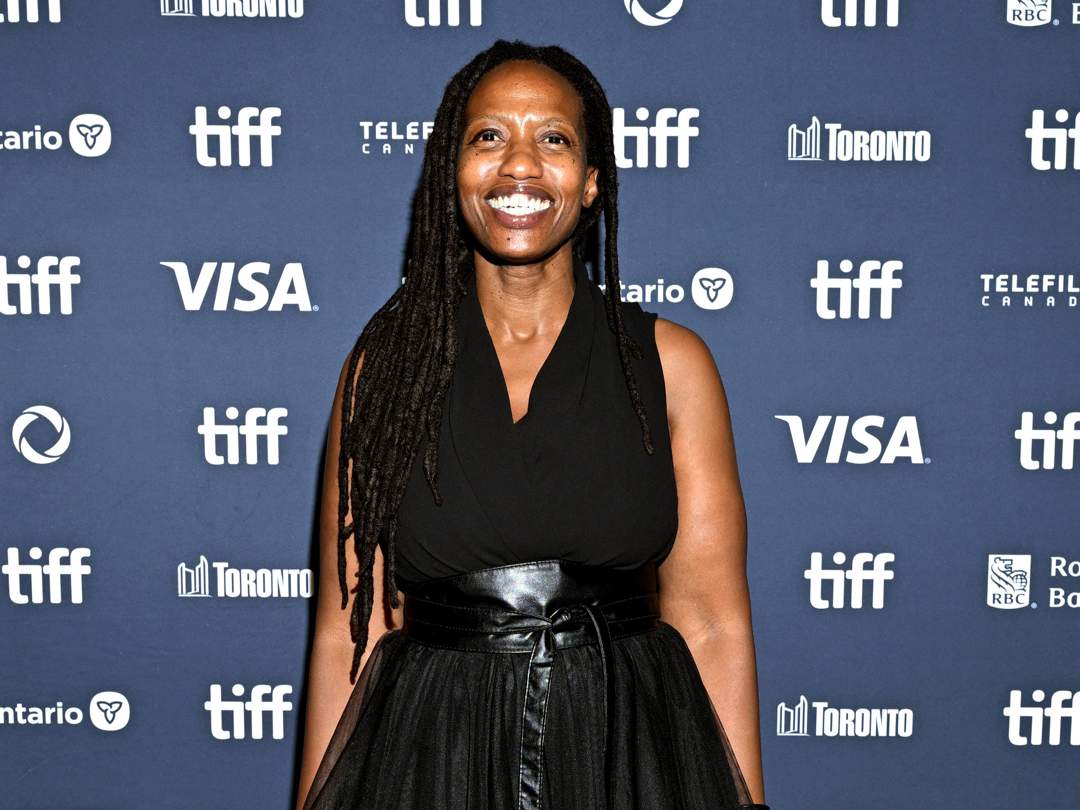
Zamo Mkhwanazi
Zamo Mkhwanazi at the premiere of “Laundry” at the 2025 Toronto International Film Festival

“Prosperous black men like my grandfather were an unwelcome challenge to the myths of white superiority”, says Mkhwanazi. “This film is my way of not being silent. It is the story rarely told in the glorification of the struggle heroes. It is about the smaller moments that take place in the midst of the great injustices”.

Building on her extensive background in South African television and her internationally acclaimed short films, Mkhwanazi brings both intimate knowledge and artistic sophistication to this project. Her approach treats the laundry itself as a character: the steam-filled back rooms reflecting confusion and uncertainty, while the incandescent front space embodies the family’s determination to maintain control.

In an exclusive conversation, Afrocritik caught up with Mkhwanazi during the Festival to discuss stylistic choices, Black joy, the deployment of music in filmmaking, creating story worlds, and the exploration of resistance in African cinema.

Where does this film come from? Describe the combination of ideas and/or real-life experiences that culminated in the birth of Laundry as a screenplay.

My grandfather owned a laundry in Durban, South Africa, and when the apartheid government came into power, the laundry was taken from him. 

Laundry
Laundry

What conversations, if any, did you have with surviving family members about their experiences during Apartheid, and how did those inform the authenticity of this film?

Many. The choices of my mother’s family members were limited after these events, and I made sure to place some of these limitations on the characters in the film. Some of the phrases used by white characters are direct quotes that have been said to my family members. 

Music is very important to South Africans, and the stories around how music was made, the places it was played, and the characters that inhabited that world filled out a lot of people for me. The limitations placed on African women that essentially relegated them to the status of children were something my mother navigated directly. 

Laundry captures the perennial shadow of oppression that pervaded that era while maintaining moments of joy and hope. How do you navigate showing systemic brutality without letting the film fall into some sort of “joylessness”?

It is surprisingly not difficult for me as a South African. Black rebellion in South Africa has always had an element of the joyful. In the words of Steve Biko, “The most potent weapon in the hands of the oppressor is the mind of the oppressed”. 

There is an understanding that not allowing the enemy to hijack your joy is the first weapon we can wield against oppression. If we can find joy in the fight, we can endure it. 

From a character perspective, how does Khuthala’s musical ambition function as both personal expression and political act in the context of 1968?

I do not believe anyone wakes up in the morning wishing to fight a system or to fight oppression. What people wake up wanting to do is to fight for their dreams. I chose a commonplace dream. Not particularly admirable like being a doctor, or realistic like running a laundry or noble like being a teacher. Just an ordinary, somewhat selfish, possibly foolish dream. 

In the context of a world where black bodies were actively being turned into industrial fodder, a dream that does not create goods and services is the antithesis of a body that is meant to be an input of production. 

Laundry
Still from Laundry

Music serves as both escape and resistance in this film. Can you discuss how you developed the musical elements and what specific South African musicians or musical traditions influenced the soundtrack?

The music was mostly created by Tracy September, Tshepang Ramoba, and Mpumi Mcata who are the musicians seen in the film. They have all been making music for decades and are some of my favourite musicians from my country. 

These are musicians who are not afraid to experiment with the traditional to create wholly unique sounds. I did not want the music to sound too ‘familiar’. It needed to have an edge, a feeling that they could have added something significant to the musical cannon of the time. 

The film draws parallels to real musicians like Miriam Makeba and Hugh Masekela, who had to flee South Africa. Was there a conscious decision to explore the stories of those who couldn’t escape?

Yes, there are many more who never had a chance to share their talents with the world, who never had a chance to escape the circumstances and the iron fist of a fascist regime. 

This feature focuses on the intimate textures of family life rather than grand historical events. What influenced your decision to tell this story through such a domestic lens?

There are more of those ordinary folk who quietly fought the system daily in their lives. Most films are not made by people who have had to survive any kind of oppression. The notion of resistance always having to be loud, glorious, and heroic comes from the fantasies of people who have never actually had to fight for anything. Effective resistance is often quiet, careful, requires a delicate balance, and can even seem illogical. 

For example, when you read South African history from the 1980s, you will hear much about the burning of schools – which were indoctrinating black children into willing slavery (called Bantu Education). But you will not hear about the resulting effect because to this day, that history is being told by people who think struggle is only valid when it’s highly visible. Mothers stayed home with their children, who had no classrooms to attend and were in danger of being on those burning streets where apartheid police were shooting us from Israeli-designed tankers. 

The government didn’t care about us burning our schools, but they could not continue without the labour of so many black mothers. Stayaways became even more effective as a tool than burning down those schools. 

We could be outgunned in the arena of violence; however, staying home and withholding labour was even more crippling for the regime. But I think when we look for drama, we look at the burning of schools and the faces of manufactured heroes shouting slogans. I wanted to look at the home front, where real resistance is held down. 

Laundry is a period piece. Tell us more about how the world for this story came to be, from the visual design to the fashion and verbiage.

Production design is what we started with; creating these environments to reflect both the times as well as class and lifestyle differences. This was also a family that owned a laundry and had access to the best seamstresses and fabrics. 

The family was not rich, but it was important that they be well turned out, especially compared to a character like Albert, who was a street urchin surviving on the margins. The wardrobe for Lillian was important, as she was the character who linked the world of the father and son. 

The actors had much work to do, and we had to place each character within context. Enoch, the father, was a missionary school product who had a strong command of the English language and would pepper his speech more with English, but his wife did not have the same education and was less confident in her speech in general, especially with regard to figures of authority. 

His children were already victims of the Bantu Education system and were far more stimulated by their home life, which included a musical, mechanical, and business education. The younger sister retained a certain innocent curiosity about the world, while Khuthala was more single-minded. Therefore, they all spoke a little differently from each other to reflect those historical and personal realities.

Laundry
Still from Laundry

How did you work with your actors, particularly Ntobeko Sishi and Siyabonga Shibe, to capture the complex father-son dynamic at the heart of the story?

Both Ntobeko and Siyabonga are fairly experienced actors. I am a fan of stillness in performance as it forefronts emotion over action. With Ntobeko, it sometimes felt unnatural to the character, and so I was selective about using the moments of stillness as a punctuation mark in the story. 

Ntobeko was truly a collaborator in creating his character, and sometimes, instead of directing him, I would ask him questions as his character and let him answer with his performance. Siyabonga is an actor with a phenomenal physical presence, and sometimes his stillness could be right down intimidating, which was useful in certain moments with his son. 

But it was important to find the warmth of the character while maintaining the stoic dignity required for the storyline. For this, Siyabonga mastered the micro-expressions of the steady Enoch. 

The concept of “uneasy privileges” that your characters experience – being granted limited rights within an oppressive system – feels relevant beyond apartheid South Africa. Was this universality intentional?

Oh absolutely. In South Africa, we have the concept of the ‘the better black’, in the USA it is the house negro. Latin America is replete with examples of differential privilege. I am a middle-class person in the most unequal society in the world. These uneasy privileges are very much part of my life. And I am fully aware that as long as these systems of oppression thrive, those privileges are only borrowed. 

Zamo Mkhwanazi
Zamo Mkhwanazi (Credit: Gareth Cattermole)

The laundry business becomes a gathering place for the Black community in the film. How important was it to show these spaces of connection and mutual support within the oppressive system?

The laundry is a place where they are served according to when they arrive, as opposed to most places where whites would always be served first. This is never explicitly mentioned, but is clear in the way customers line up when Enoch is present. It is also important to make it clear that while the area is declared white, most of the people given patronage or working in the area are black. 

Apartheid was incredibly nonsensical; a capitalist system that thought it could thrive by keeping the majority of consumers without any buying power. So places like this laundry show that these laws were nigh to impossible to maintain. 

After exploring your family’s past so intimately in Laundry, how has this experience changed your approach to storytelling and what stories you want to tell next?

What changed the most for me was when I had the screening here (in Toronto). Honestly, putting the work in front of an audience that connected so strongly with the work assured me that the issues that interest me remain relevant, even as I feel that political storytelling from Africa, particularly stories that challenge white supremacy, are being strongly discouraged both locally and in the international festival space. 

Having an audience that responded to the story with enthusiastic appreciation of the difficult themes was a blessing. My next project retains a strongly political point of view, with feminist themes. It’s set in the future and concerns bodily autonomy.

Laundry screened in the Discovery section of TIFF.

Jerry Chiemeke is a Nigerian-born writer, film critic, journalist, and lawyer based in the United Kingdom. His writing has appeared in Die Welt, The I Paper, The Africa Report, The British Blacklist, Berlinale Press, The Johannesburg Review of Books, Culture Custodian, Olongo Africa, and elsewhere. Chiemeke’s work has won or been nominated for the Pushcart Prize, Ken Saro Wiwa Prize, Diana Woods Memorial Award for Creative Nonfiction, Best Small Fictions, and the Quramo Writers Prize. He is the author of the critically-acclaimed short story collection, Dreaming of Ways to Understand You.

The post TIFF 2025: In Conversation With Zamo Mkhwanazi, Director Of “Laundry” first appeared on Afrocritik.

  • ✇Afrocritik
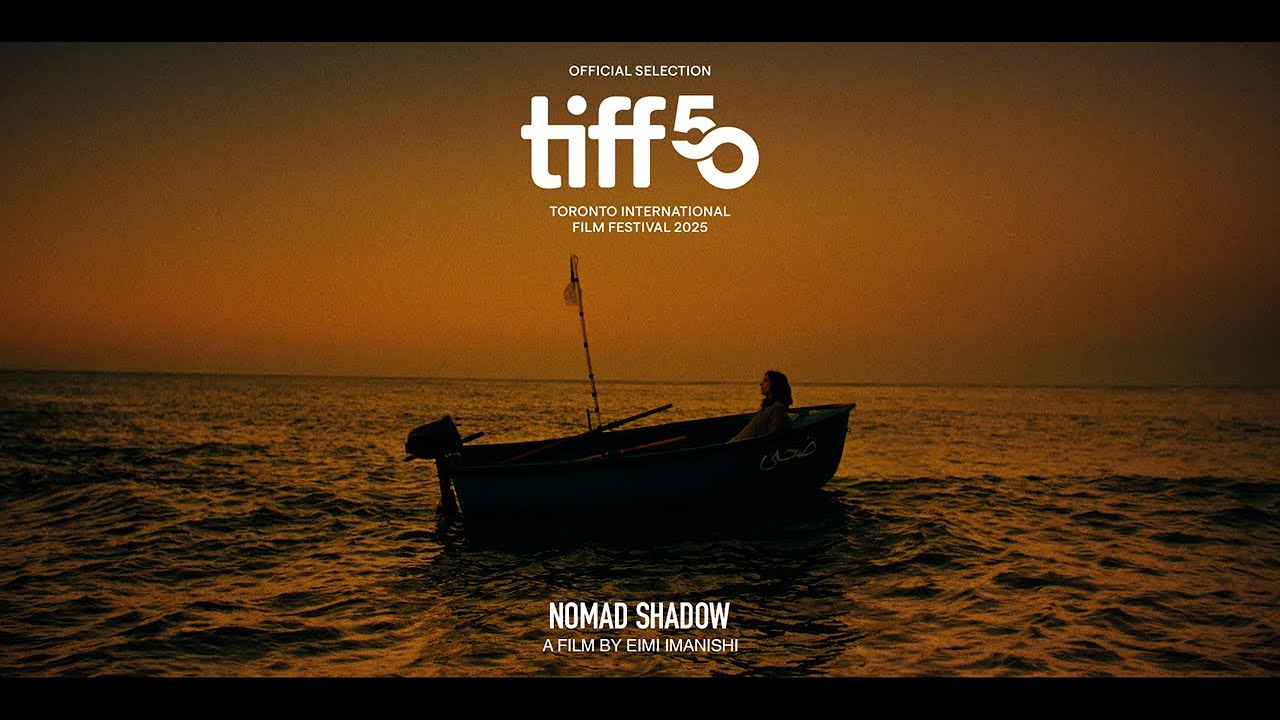
  • TIFF 2025: Eimi Imanishi’s “Nomad Shadow” Deftly Navigates the Intricacies of Exile
    Nomad Shadow excavates the personal costs of political displacement with an intimacy that cuts through the abstractions of geopolitical discourse. By Jerry Chiemeke In the contested territory of Western Sahara, where Moroccan occupation has displaced populations and shattered communities for nearly half a century, displacement becomes both literal and metaphorical. Eimi Imanishi’s feature debut, Nomad Shadow, takes this fraught geopolitical reality as its backdrop. It follow
     

TIFF 2025: Eimi Imanishi’s “Nomad Shadow” Deftly Navigates the Intricacies of Exile

13 septembre 2025 à 07:41

Nomad Shadow excavates the personal costs of political displacement with an intimacy that cuts through the abstractions of geopolitical discourse.

By Jerry Chiemeke

In the contested territory of Western Sahara, where Moroccan occupation has displaced populations and shattered communities for nearly half a century, displacement becomes both literal and metaphorical. Eimi Imanishi’s feature debut, Nomad Shadow, takes this fraught geopolitical reality as its backdrop. It follows Mariam (Nadhira Mohamed), a young Sahrawi woman forcibly deported from Spain, who must navigate the treacherous waters between two worlds that no longer feel like home.

We witness the brutal velocity with which belonging can be stripped away in Nomad Shadow’s opening montage. One moment, Mariam is lost in the euphoric throngs of a Spanish nightclub; the next, she’s bundled to Western Sahara, her expired visa the scythe that severs her from the life she knew. It’s a jarring transition that establishes the film’s central preoccupation: what happens when home becomes the most foreign place of all?

Nomad Shadow
Nomad Shadow

Imanishi, whose previous short, Battalion to My Beat (2016), demonstrated a keen eye for social fractures, manifests an acute understanding of how political displacement manifests in intimate, domestic spaces. Mariam’s mother, convinced her daughter has been corrupted by European values, suggests she is “possessed”, a diagnosis that carries particular weight in a community already grappling with cultural erasure under occupation. The film’s most potent moments emerge from these micro-aggressions of rejection, where family becomes another site of exile rather than refuge.

Mariam returns to find Western Sahara transformed by drought. “It hasn’t rained in three years”, her friend, Sidahmed (Omar Salem), informs her during a visit to a dry riverbed. This environmental devastation serves as both literal context and poetic metaphor for the spiritual aridity she encounters. Her brother, Alwali (Suleiman Filali), has descended into the drug trade, and her sister, Selka (Khadija Najem Allal), harbours silent resentment for Mariam’s abandonment during their father’s illness.

Nomad Shadow’s greatest strength lies in Mohamed’s ferocious central performance. She embodies Mariam’s displacement not through histrionics, but through a carefully calibrated sense of disconnection: the way she holds her body like borrowed clothing, the manner in which familiar spaces seem to reject her presence. 

When her mother criticises her “decadence” or her brother refuses to involve her in his illegal enterprise, Mohamed registers each rejection as a small death, accumulating layers of alienation that eventually threaten to suffocate her entirely.

The friendship between Mariam and Sidahmed, involving two outcasts finding solace in their shared estrangement from social norms, provides Nomad Shadow’s most tender moments. Salem brings a delicate vulnerability to Sidahmed, a man who faces homophobic persecution. Their scenes together achieve a naturalistic intimacy that contrasts sharply with Mariam’s stilted interactions with family members.

Cinematographer Frida Marzouk’s camera work demonstrates remarkable intimacy, employing close-ups to capture Mohamed’s emotional geography: the tension in her jaw, the vulnerability in her neck and wrists (particularly loaded given Mariam’s history of self-harm). The recurring sailboat dream sequences, shot with disorienting urgency, serve as an effective visual metaphor for Mariam’s psychological drift between two shores of belonging.

Nomad Shadow
Still from Nomad Shadow

Noelia R. Deza’s editing deserves particular recognition for its restraint. In less capable hands, Mariam’s psychological fragmentation could have been rendered through flashy montages or obvious symbolism, but Deza allows the emotional weight to accumulate through sustained observation rather than editorial manipulation. 

Nomad Shadow breathes in the spaces between cuts, allowing Mohamed’s performance to carry the narrative burden without unnecessary embellishment.

Where Nomad Shadow falters is in its reluctance to fully engage with the political context that shapes its characters’ lives. While the Moroccan occupation looms over every frame, Imanishi treats it primarily as atmospheric pressure rather than examined reality. The film gestures toward larger questions of cultural survival and political resistance, but never commits to exploring how these macro-forces shape individual consciousness. 

The glimpses of female agency—a woman celebrating her divorce, Mariam’s mother expressing desires for remarriage—feel underdeveloped, promising explorations that the 81-minute runtime doesn’t allow space to pursue. These moments suggest a richer investigation of how women navigate patriarchal inhibitions in a society already constrained by colonial occupation, but Imanishi pulls back just as these themes begin to deepen.

The choice to centre the narrative around three forms of resistance (anti-colonial struggle, feminist rebellion, and queer visibility via Sidahmed) creates a compelling triptych of marginalisation. 

Yet, this ambitious thematic architecture sometimes threatens to overwhelm the plot. While the inclusion of Sidahmed’s character adds necessary complexity to Nomad Shadow’s exploration of otherness, his subplot feels underdeveloped, serving more as punctuation than fully-realised narrative thread.

Nomad Shadow
Nomad Shadow

Nomad Shadow succeeds most when it resists the temptation to romanticise exile or transform suffering into easy political allegory. Imanishi understands that displacement’s true violence lies not in dramatic confrontation but in the quiet erosion of belonging: the way familiar places become foreign, and the way identity fractures across geographical and cultural boundaries.

In its exploration of what happens when neither departure nor return offers genuine resolution, Nomad Shadow captures something essential about the contemporary experience of displacement. 

For Mariam, and for countless others caught between worlds, home exists not as a place to be recovered, but a concept to be continually negotiated. Imanishi’s debut suggests that sometimes the most radical act is simply learning to live in the space between shores.

Nomad Shadow screened at the 2025 Toronto International Film Festival.

Jerry Chiemeke is a Nigerian-born writer, film critic, journalist, and lawyer based in the United Kingdom. His writing has appeared in Die Welt, The I Paper, The Africa Report, The British Blacklist, Berlinale Press, The Johannesburg Review of Books, Culture Custodian, Olongo Africa, and elsewhere. Chiemeke’s work has won or been nominated for the Pushcart Prize, Ken Saro Wiwa Prize, Diana Woods Memorial Award for Creative Nonfiction, Best Small Fictions, and the Quramo Writers Prize. He is the author of the critically-acclaimed short story collection, Dreaming of Ways to Understand You.

The post TIFF 2025: Eimi Imanishi’s “Nomad Shadow” Deftly Navigates the Intricacies of Exile first appeared on Afrocritik.

  • ✇Afrocritik
  • TIFF 2025: Achille Ronaimou’s “Diya” Confronts The Brutal Arithmetic Of Justice And Retribution
    Diya is a morally complex drama that interrogates the collision between ancient customs and modern realities in contemporary Chad.  By Jerry Chiemeke In the opening frames of Achille Ronaimou’s feature debut, Diya (Le Prix Du Sang), we are confronted with an ancient equation: life for life, blood for blood. Yet what unfolds across this 96-minute moral labyrinth is far more complex than the stark mathematics of retribution might suggest.  Ronaimou, who
     

TIFF 2025: Achille Ronaimou’s “Diya” Confronts The Brutal Arithmetic Of Justice And Retribution

12 septembre 2025 à 07:15

Diya is a morally complex drama that interrogates the collision between ancient customs and modern realities in contemporary Chad. 

By Jerry Chiemeke

In the opening frames of Achille Ronaimou’s feature debut, Diya (Le Prix Du Sang), we are confronted with an ancient equation: life for life, blood for blood. Yet what unfolds across this 96-minute moral labyrinth is far more complex than the stark mathematics of retribution might suggest. 

Ronaimou, whose previous work includes the documentaries: Minors in Prison (2013) and Kanoun (2012), brings an ethnographer’s eye to this fictional excavation of Chadian justice, tradition, and the crushing weight of circumstance.

Set against the dusty backdrop of N’djamena, the film transforms a traffic accident into something approaching Greek tragedy. When Dane Francis (Ferdinand Mbaïssané), a blue-collar driver from Moundo, strikes and kills schoolboy, Younous, the machinery of traditional justice begins its inexorable grind. The boy’s father, Béchir Salam (Youssouf Djaoro), invokes the diya, the blood price that must be paid to prevent further bloodshed. What begins as an accident becomes debt, debt becomes desperation, and desperation becomes something far darker.

Diya
Diya

Ronaimou’s direction displays the confident hand of someone who understands that the most powerful dramas emerge not from grand gestures but from the accumulation of small indignities. Dane’s dismissal from work, his wife’s humiliating attempts to bribe police for the return of his license, the community’s grudging collection of funds—each detail adds another stone to the mountain of pressure threatening to crush his protagonist. 

It’s precisely this attention to the bureaucratic machinery of oppression that elevates Diya beyond simple moral fable into something more uncomfortably recognisable. Ronaimou resists easy moralising, instead presenting a society where corruption, poverty, and rigid adherence to custom create seemingly impossible choices. 

Ferdinand Mbaïssané anchors the film with a performance of remarkable restraint. His Dane is no noble sufferer but a man whose decency is slowly eroded by circumstance. Mbaïssané’s face becomes a map of mounting desperation: the way his shoulders hunch as each door closes, the particular weariness that settles around his eyes as time runs short. It’s a performance that understands how ordinary men become capable of extraordinary things, for better and worse.

Equally impressive is Moussaka Zakaria Ibet as Oumarou, Dane’s cynical cellmate whose fluid ethics ultimately precipitate the film’s most dramatic revelations. Ibet brings a magnetic unpredictability to the role, embodying the kind of moral pragmatist who thrives in systems where traditional justice meets modern corruption. His performance suggests depths that Ronaimou, to the film’s credit, refuses to fully plumb, leaving us to grapple with the implications ourselves.

Diya
Still from Diya

Solmem Marina Ndormadingar provides the film’s emotional anchor as Delphine, Dane’s pregnant wife, whose loyalty remains unwavering even as danger escalates. Ndormadingar brings a grounded humanity to scenes that might otherwise devolve into melodrama, particularly in moments where Delphine must achieve a balance between consternation and empathy.

The film’s visual elements serve its moral complexity. Cyrille Hubert’s cinematography captures both the suffocating heat of N’djamena’s streets and the cooler expanses of Chad’s north, while Guillaume Talvas’s editing maintains the mounting tension without sacrificing clarity. The score by Afrotronix adds layers of foreboding that never overwhelm the performances, understanding that the film’s greatest power lies in its human moments rather than its mythic resonances.

Yet, Diya is not without its limitations. While Djaoro brings appropriate gravity to Béchir, the character remains somewhat underexplored, functioning more as an embodiment of tradition than as a fully realised individual grappling with his own moral choices. 

Similarly, certain plot mechanics, particularly the film’s climactic heist involving what appears to be an entirely unsuitable vehicle, strain credibility in ways that threaten to undermine the careful moral ambiguity Ronaimou has constructed throughout the film. 

But these are minor quibbles with a film that succeeds admirably in its larger ambitions. Diya uses the specificity of Chadian culture to examine universal questions about justice, morality, and the ways in which good people can find themselves doing terrible things. Ronaimou understands that the most interesting existential questions are not those with clear answers but those that force us to confront the uncomfortable ambiguity of human behaviour under pressure.

Diya
Still from Diya

The film’s final act delivers a twist that reframes everything that has come before, forcing both Dane and the audience to reckon with the true cost of the choices made. It’s a bold narrative gambit that works precisely because Ronaimou has earned our investment in these characters’ fates. We may not approve of Dane’s ultimate decisions, but we understand them, and that understanding is perhaps more troubling than simple condemnation would be.

Diya succeeds most completely as a character study of a man whose principles are tested by circumstances beyond his control. While the film occasionally overreaches and stumbles, its refusal to provide comfortable resolutions marks it as a noteworthy debut. Ronaimou has crafted a film that trusts audiences to grapple with difficult posers about tradition and survival in contemporary Africa, even if his technical execution doesn’t always match his thematic ambitions.

Diya screened at the 2025 Toronto International Film Festival.

Jerry Chiemeke is a Nigerian-born writer, film critic, journalist, and lawyer based in the United Kingdom. His writing has appeared in Die Welt, The I Paper, The Africa Report, The British Blacklist, Berlinale Press, The Johannesburg Review of Books, Culture Custodian, Olongo Africa, and elsewhere. Chiemeke’s work has won or been nominated for the Pushcart Prize, Ken Saro Wiwa Prize, Diana Woods Memorial Award for Creative Nonfiction, Best Small Fictions, and the Quramo Writers Prize. He is the author of the critically-acclaimed short story collection, Dreaming of Ways to Understand You.

The post TIFF 2025: Achille Ronaimou’s “Diya” Confronts The Brutal Arithmetic Of Justice And Retribution first appeared on Afrocritik.

❌