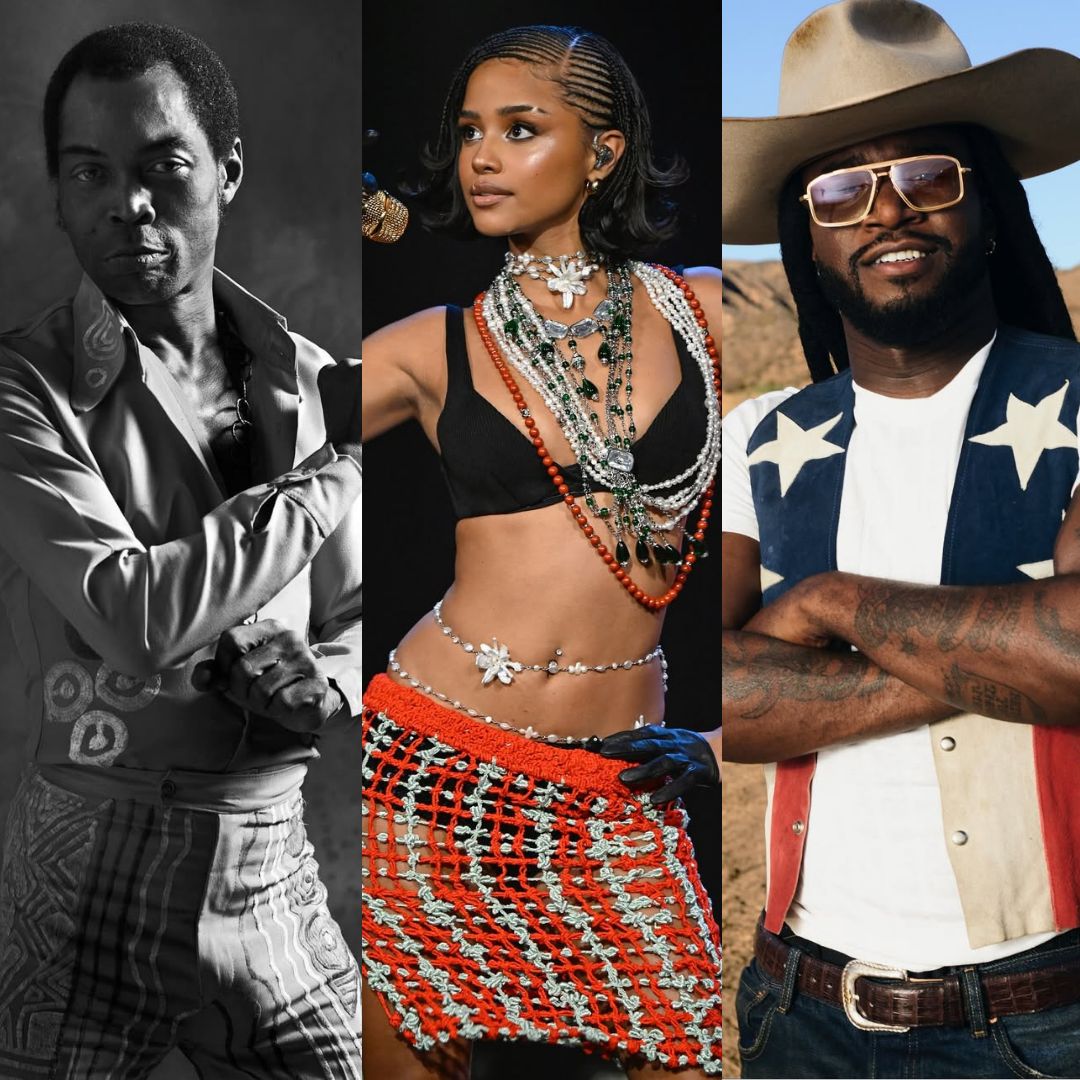
The 68th Annual Grammy Awards in Los Angeles was a weekend of high emotions, historic firsts, and a reminder of Africaâs influence on the global stage. While many of our favourites were in the building, the weekend belonged to those who broke new ground and carried the culture with pride.
The weekend kicked off on a legendary note as the late Fela Anikulapo Kuti became the first African artist to receive a Lifetime Achievement Award from the Recording Academy. During the Spec
The 68th Annual Grammy Awards in Los Angeles was a weekend of high emotions, historic firsts, and a reminder of Africaâs influence on the global stage. While many of our favourites were in the building, the weekend belonged to those who broke new ground and carried the culture with pride.
The weekend kicked off on a legendary note as the late Fela Anikulapo Kuti became the first African artist to receive a Lifetime Achievement Award from the Recording Academy.During the Special Merit Awards on Saturday, his childrenâYeni, Kunle, Shalewa, and Femi Kutiâaccepted the honour on his behalf.Yeni shared a touching moment, saying, âIâm sure my father is smiling down on us,â as they celebrated the Afrobeat pioneerâs monumental legacy.
On Sunday night, the celebrations moved to the Crypto.com Arena, where South Africaâs Tyla officially became a two-time Grammy winner.She clinched the award for Best African Music Performance for her single âPush 2 Start,â marking her second win in the category since its 2024 debut.It was a tightly contested category, with Tyla edging out an incredible lineup of talent: Burna Boy (âLoveâ), Davido featuring Omah Lay (âWith Youâ), Ayra Starr featuring Wizkid (âGimme Datâ), and Eddy Kenzo & Mehran Matin (âHope & Loveâ).
Nigerian-American sensation Shaboozey also had a massive night, winning Best Country Duo/Group Performance for the hit âAmenâ alongside Jelly Roll.In an emotional acceptance speech, Shaboozey, who is of Igbo-Nigerian descent, paid tribute to his mother and addressed the current climate in the United States, reminding the audience that âimmigrants literally built this country.â
A few weeks ago, Davido made a bold claim that Lagos probably has the best nightlife in the world. The Afrobeats superstar expanded on that sentiment, saying, "There are so many things to do in Lagos … there are crazy parties everywhere, we have good restaurants, the private beaches … everything is there in Lagos."It's a grand statement, but one that Lagos has been building toward for over a decade. Back in 2008, Banky W sang of the city like a dreamland in "Lagos Party," where everything is pos
A few weeks ago,Davido made a bold claim that Lagos probably has the best nightlife in the world. The Afrobeats superstar expanded on that sentiment, saying, "There are so many things to do in Lagos … there are crazy parties everywhere, we have good restaurants, the private beaches … everything is there in Lagos."
It's a grand statement, but one that Lagos has been building toward for over a decade. Back in 2008,Banky W sang of the city like a dreamland in "Lagos Party," where everything is possible and the fun never stops. Sixteen years later, Lagos has mostly justified its top-tier placement as an Afrobeats destination, and the numbers prove it.
When the sun sets in the city, something electric happens. The beats drop, bottles pop, and Lagos transforms into Africa's party capital. But beneath the pulsing rhythms and flashing lights lies a massive economic engine powered entirely by Afrobeats.
According to a recent report by Lagos-based advisory and investment management firm TAG, titled Uncharted Waters: Nigeria's Afrobeats Economy, the genre doesn't just soundtrack the city's nightlife; it powers it. From superstars visiting clubs and splurging cash to the drinks at every table, Afrobeats drives everything from beverage sales to food service, smoking accessories, and more.
The numbers are huge. Drinks contribute to 90 percent of sales at upscale venues, with most recording an average consumer spend of N617,000 ($394) per table. With clubs averaging about 20 tables each and factoring in variables like club days and venue capacity, the annual gross revenue hits approximately N1.9 billion.
One can barely keep track of the hot spots. Names like Hotbox, Quilox, and Secrets Palace dominate conversations and even get referenced in Afrobeats records. These venues have become more than entertainment spaces; they're cultural institutions where Nigeria's top artists naturally gravitate, drawn by Lagos's longtime status as the preferred residence for the country's music elites.
But the scene extends beyond traditional clubs. Raves have carved out their own space, championed by young people seeking more inclusive spaces and outdoor activities. Events like Element House and Group Therapy have popularized subgenres like gqom, Afro House, and EDM, generating revenue through table sales and merchandise while pushing sonic boundaries.
This nightlife ecosystem creates waves throughout Lagos's economy. Informal economic activities spring up around these venues, hotels, transportation services, and food vendors, all catering to the steady stream of party-seekers. The impact is so significant that house rents on the Island command premium prices, with these areas considered high-value specifically because of their nightlife appeal and affluent clientele.
As more Africans in the diaspora return home, Lagos and Accra have emerged as top destinations; their established nightlife systems create memorable experiences that keep people coming back. Brand sponsorships also naturally follow, with alcoholic companies particularly interested in events that coincide with the most consumption of their products - a good night out.
Just last week, this cultural influence reached a new milestone when businesswoman and film producerMo Abudu opened Lagos's first restaurant "dedicated to the iconic genre of Afrobeat" on Victoria Island. While technically honoringFela's original Afrobeat, the venue captures the broader musical movement that evolved from those roots, proof of how this sonic lineage serves as a unifying force, binding Lagos's diverse demographics together.
Yet Lagos nightlife faces serious challenges that temper its success. Government-driven issues like inadequate security and poor road networks create incessant traffic that can turn a night out into an ordeal. The high-stress levels that come with navigating Lagos ironically fuel the very music the city inspires, a cycle of tension and release that keeps the creative energy flowing.
What Davido understands, and what data from this report confirms, is that Lagos hasn't just built great nightlife. It's created a cultural-economic ecosystem where music, money, and midnight converge into something approaching magic.
« Zombie », l’album du créateur de l’afrobeat Fela Ransome Kuti et « Reasonable Doubt », celui de Jay-Z, seront intronisés le 25 mai prochain au GRAMMY Hall of Fame. Un pont entre le passé et le présent « Le Grammy Hall Of Fame sert de pont essentiel entre le passé et le présent de la musique, en honorant les enregistrements qui ont laissé une empreinte durable sur notre paysage culturel », a expliqué Michael Sticka, président-directeur général du GRAMMY Museum. « Nous sommes fiers de préserv
« Zombie », l’album du créateur de l’afrobeat Fela Ransome Kuti et « Reasonable Doubt », celui de Jay-Z, seront intronisés le 25 mai prochain au GRAMMY Hall of Fame. Un pont entre le passé et le présent « Le Grammy Hall Of Fame sert de pont essentiel entre le passé et le présent de la musique, en honorant les enregistrements qui ont laissé une empreinte durable sur notre paysage culturel », a expliqué Michael Sticka, président-directeur général du GRAMMY Museum. « Nous sommes fiers de préserver et de partager ces œuvres influentes lors du gala annuel du GRAMMY Hall Of Fame ce printemps. » « La musique a le pouvoir unique de façonner la culture et de marquer les moments dans le temps. Chaque enregistrement intronisé reflète cet esprit, et nous sommes ravis de célébrer ces œuvres marquantes, en veillant à ce que leur héritage continue d’inspirer les générations à venir », a ajouté Harvey Mason Jr., PDG de la Recording Academy, dans un communiqué. Ainsi le choix de cette année s’est portée sur plusieurs albums et titres qui ont marqué leur temps. Reasonable Doubt (1996) de Jay-Z, Zombie (1976) de Fela & Afrika 70, Never Too Much (1981) de Luther Vandross, Supernatural (1999) de Santana, le titre conga (1985) de Gloria Estefan et Miami Sound Machine, parmi tant d’autre. Lire aussi : Jay-Z devient le premier rappeur à être intronisé au Rock & Roll Hall of Fame de son vivant Reasonable Doubt, un album iconique Reasonable Doubt, le premier album de Jay-Z, sera reconnu par le GRAMMY Museum et le GRAMMY Hall Of Fame Gala de la Recording Academy le 16 mai 2025, au Beverly Hilton de Beverly Hills, en Californie. Sorti en 1996, l’album featuring Memphis Bleek, Mary J. Blige, Jaz-O et l’incontournable DJ Premier, Ski, Knobody et Clark Kent, a été salué comme l’un des plus grands chefs-d’œuvre du hip-hop. selon Vibe Lire aussi : Tony Allen, le co-créateur de l’Afrobeat avec Fela, est mort. Fela, le chantre anti-militariste Le titre « Zombie » a laissé une empreinte indélébile dans la vie du défenseur de la lutte contre la corruption du régime. Sorti en 1976, Zombie est un album emblématique du roi de l’Afrobeat et de son groupe qu’il a créé, Afrika 70. Fela, comme d’habitude, critique le système militaire aveugle et décrit ses officiers comme des morts-vivants dans le titre éponyme de l’album. Cela conduira à une rétorsion brutale et désastreuse de l’armée, qui finira par éliminer sa mère, l’activiste et pionnière du féminisme nigérian, Funmi Kuti. La maison de Fela, bastonnée et emprisonnée, sera incendiée et rasée, et son matériel d’enregistrement sera complètement détruit par le pouvoir.