Nomba, a Nigerian fintech founded in 2016 by Yinka Adewale and Pelumi Aboluwarin, has raised a USD 3 M debt facility from CardinalStone Finance to expand its cross-border payments infrastructure in the Democratic Republic of Congo (DRC).
Headquartered in Lagos, Nigeria, Nomba provides payment and banking infrastructure that helps businesses accept payments, manage money and move funds across borders. The facility will provide more USD liquidity through Nomba’s banking relat
Nomba, a Nigerian fintech founded in 2016 by Yinka Adewale and Pelumi Aboluwarin, has raised a USD 3 M debt facility from CardinalStone Finance to expand its cross-border payments infrastructure in the Democratic Republic of Congo (DRC).
Headquartered in Lagos, Nigeria, Nomba provides payment and banking infrastructure that helps businesses accept payments, manage money and move funds across borders. The facility will provide more USD liquidity through Nomba’s banking relationships in Hong Kong and Singapore, supporting trade between Central Africa and Asia.
Nomba currently processes over USD 480 M monthly in cross-border payments and is targeting USD 1 B. It plans to raise another USD 20 M–USD 50 M, while looking to expand into Zambia and Uganda next.
Uber officially shut down its ride-hailing operations in Nigeria today, September 2, ending a 12-year presence in Africa’s most populous nation. The company also exited Uganda on the same day, part of a global restructuring that will cut roughly 3,300 jobs, or about 10 percent of its workforce. In a statement, Uber said the decision followed “a thorough review of our business†and thanked Nigerians for trusting the platform since it launched
Uber officially shut down its ride-hailing operations in Nigeria today, September 2, ending a 12-year presence in Africa’s most populous nation. The company also exited Uganda on the same day, part of a global restructuring that will cut roughly 3,300 jobs, or about 10 percent of its workforce. In a statement, Uber said the decision followed “a thorough review of our business†and thanked Nigerians for trusting the platform since it launched in Lagos in 2014.
It is the latest in a pattern of retreat from African markets where the economics of ride-hailing have become increasingly untenable. In January, Uber shut down in Tanzania after nearly a decade, citing a regulatory environment that made profitability difficult. Last year, it closed operations in Côte d’Ivoire. The withdrawals come as Uber pivots aggressively toward autonomous vehicles, planning to invest more than USD 10 B in robotaxis and aiming to offer driverless rides in 15 cities by the end of 2026.
For Nigeria, the departure is a significant blow to a digital economy that had developed with the platform in an often fraught landscape. Uber estimated in 2023 that it generated an additional NGN 6.1 B (USD 9.6 M) in annual income for Nigerian drivers compared to traditional alternatives.
Yet drivers have long complained that the math does not work in their favour. They face rising fuel costs, vehicle maintenance expenses, and commissions as high as 25 to 30 percent. In March, hundreds of drivers in Lagos went on a three-day strike over low fares and high commissions, logging off platforms including Uber, Bolt, and inDrive. “Drivers operating on platforms such as Uber, Bolt, inDrive, and Lagride face rising operational costs, including high fuel prices and vehicle maintenance,†one union leader said at the time.
The tensions have fuelled a conversation about local alternatives. After the March strike, drivers began discussing the creation of homegrown apps to regain control over pricing and commissions. Those conversations now take on new urgency. Bolt, which has overtaken Uber as Nigeria’s most downloaded mobility app, remains the dominant player. InDrive and local platform Lagride also continue to operate. But Uber’s exit leaves a gap that’s now up for grabs.
Regulatory friction has also mounted. In August, the Federal Airports Authority of Nigeria suspended Uber and Bolt from operating at airports, causing fares to surge and passengers to face long delays. The ban was later partially resolved, but it underscored the uneasy relationship between global platforms and local authorities.
Uber says it remains committed to Sub-Saharan Africa and that the withdrawals from Nigeria and Uganda will not affect its operations elsewhere on the continent. But the company is also reducing fully remote roles to about 1 percent of its workforce and flattening its corporate structure. CEO Dara Khosrowshahi has said the rapid expansion over the past five years created organisational complexity that slowed decision-making. The restructuring is meant to redirect resources toward areas with greater growth potential, including autonomous mobility.
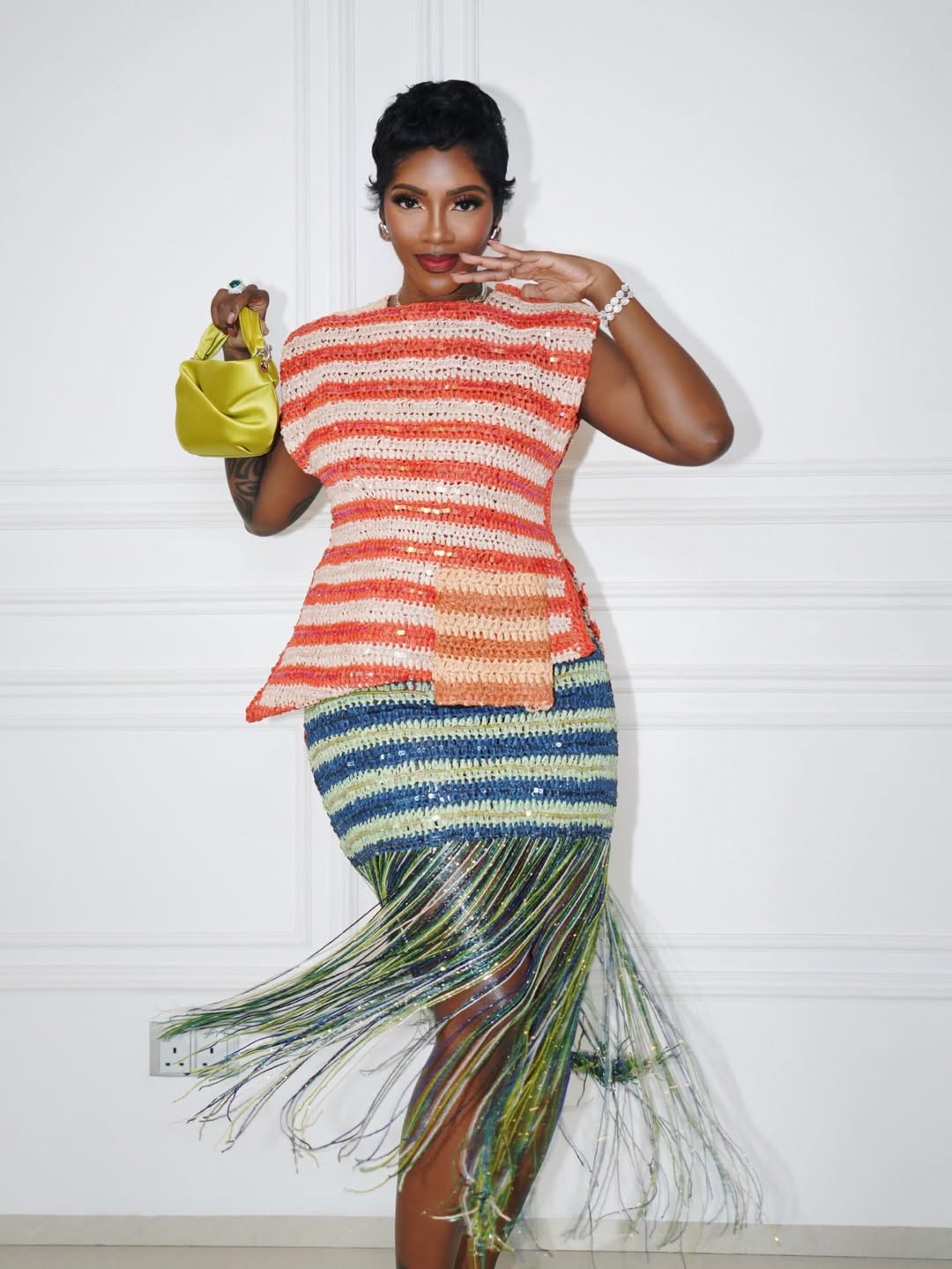
Tiwa Savage in a Lisa Folawiyo Studio crochet top and crystal-fringed skirt at the Tiwa Savage Music Foundation’s Berklee in Nigeria Grand Finale Concert. Photo Credit: Tiwa Savage/Instagram
Tiwa Savage can be in the studio giving us hit after hit, and in the very next moment remind everyone that when it comes to style, she knows her way around that too. This look from the Tiwa Savage Music Foundation’s Berklee in Nigeria Grand Finale Concert at the National
Tiwa Savage in a Lisa Folawiyo Studio crochet top and crystal-fringed skirt at the Tiwa Savage Music Foundation’s Berklee in Nigeria Grand Finale Concert. Photo Credit: Tiwa Savage/Instagram
Tiwa Savage can be in the studio giving us hit after hit, and in the very next moment remind everyone that when it comes to style, she knows her way around that too. This look from the Tiwa Savage Music Foundation’s Berklee in Nigeria Grand Finale Concert at the National Theatre Lagos is proof.
She stepped out in a two-piece set by Lisa Folawiyo Studio, styled by Ade Owolabi. The top is a one-shoulder crochet design in stripes of coral, orange, cream, and pink. The texture alone draws you in, then the asymmetrical cut leaves one arm bare, placing her tattoo sleeve right at the centre of the look.
Then the skirt shifts the conversation. The fitted upper half carries navy, olive, and yellow stripes, but from the knee downward it opens into long crystal-beaded fringe that falls to the floor and parts at the front with a high slit. Every angle gives you something else to notice, from the contrast in texture to the movement built into the design.
Side profile of Tiwa Savage at the Tiwa Savage Music Foundation’s Berklee in Nigeria event, featuring Lisa Folawiyo Studio craftsmanship and a ruched yellow bag. Photo Credit: Tiwa Savage/Instagram
She carried a soft yellow ruched shoulder bag that picks up the yellow running through the skirt, while yellow satin mules with floral detail at the toe kept the colour story going. Silver drop earrings, stacked bracelets, and rings on both hands added another layer of detail. Her pixie cut stayed sleek and close, while warm-toned makeup and a full lip held their place against all the colour.
As for the occasion itself, the Tiwa Savage Music Foundation’s Berklee in Nigeria programme brought together the Class of 2026 for their Grand Finale Concert at the National Theatre Lagos, a celebration of young Nigerian musical talent trained under a programme that has become one of the most significant investments in African music education in recent years. That Tiwa chose to show up to this one dressed with this much intention says everything about how seriously she takes the work the foundation is doing.
Tiwa Savage in a Lisa Folawiyo Studio crochet top and crystal-fringed skirt at the Tiwa Savage Music Foundation’s Berklee in Nigeria Grand Finale Concert. Photo Credit: Tiwa Savage/Instagram
Tiwa Savage can be in the studio giving us hit after hit, and in the very next moment remind everyone that when it comes to style, she knows her way around that too. This look from the Tiwa Savage Music Foundation’s Berklee in Nigeria Grand Finale Concert at the National
Tiwa Savage in a Lisa Folawiyo Studio crochet top and crystal-fringed skirt at the Tiwa Savage Music Foundation’s Berklee in Nigeria Grand Finale Concert. Photo Credit: Tiwa Savage/Instagram
Tiwa Savage can be in the studio giving us hit after hit, and in the very next moment remind everyone that when it comes to style, she knows her way around that too. This look from the Tiwa Savage Music Foundation’s Berklee in Nigeria Grand Finale Concert at the National Theatre Lagos is proof.
She stepped out in a two-piece set by Lisa Folawiyo Studio, styled by Ade Owolabi. The top is a one-shoulder crochet design in stripes of coral, orange, cream, and pink. The texture alone draws you in, then the asymmetrical cut leaves one arm bare, placing her tattoo sleeve right at the centre of the look.
Then the skirt shifts the conversation. The fitted upper half carries navy, olive, and yellow stripes, but from the knee downward it opens into long crystal-beaded fringe that falls to the floor and parts at the front with a high slit. Every angle gives you something else to notice, from the contrast in texture to the movement built into the design.
Side profile of Tiwa Savage at the Tiwa Savage Music Foundation’s Berklee in Nigeria event, featuring Lisa Folawiyo Studio craftsmanship and a ruched yellow bag. Photo Credit: Tiwa Savage/Instagram
She carried a soft yellow ruched shoulder bag that picks up the yellow running through the skirt, while yellow satin mules with floral detail at the toe kept the colour story going. Silver drop earrings, stacked bracelets, and rings on both hands added another layer of detail. Her pixie cut stayed sleek and close, while warm-toned makeup and a full lip held their place against all the colour.
As for the occasion itself, the Tiwa Savage Music Foundation’s Berklee in Nigeria programme brought together the Class of 2026 for their Grand Finale Concert at the National Theatre Lagos, a celebration of young Nigerian musical talent trained under a programme that has become one of the most significant investments in African music education in recent years. That Tiwa chose to show up to this one dressed with this much intention says everything about how seriously she takes the work the foundation is doing.
Tems is no stranger to big moves. Going from alt-leaning darling to multiple Grammy winner, the artist has been delving deeper into the rich crater of business choices that will undoubtedly solidify her as one of the most forward-thinking minds of her generation. But even by Tems' high standards as a musician and celebrity, her latest investment has the potential to become an industry gamechanger, spawning an impact that will surely outlive the 30-year-old artist.As part of her efforts to democr
Temsis no stranger to big moves. Going from alt-leaning darling to multiple Grammy winner, the artist has been delving deeper into the rich crater ofbusiness choices that will undoubtedly solidify her as one of the most forward-thinking minds of her generation. But even by Tems' high standards as a musician and celebrity, her latest investment has the potential to become an industry gamechanger, spawning an impact that will surely outlive the 30-year-old artist.
As part of her efforts to democratize the music industry, Tems will launch the Leading Vibe Initiative, a platform dedicated to championing women within the scene. According toreports, women are significantly underrepresented in the music industry, with only 22 percent of musicians worldwide being women. Tems, who's one of the most successful artists of the new generation, definitely has a lot of tips and tools that will prove crucial to any emerging woman artist.
"Across Africa, I've seen firsthand how much talent exists, and how many female musical talents still face barriers at every stage. The Leading Vibe Initiative is my commitment to changing that reality," she tells OkayAfrica.
Debuting this August, Leading Vibe will be a purposeful initiative that showcases the intricacies of the music industry to rising artists, producers, and songwriters, drawing on the rich experience base of Tems and her managers,Muyiwa Awoniyiand Wale Davies. It will start from Tems' hometown of Lagos and expand to other African cities throughout the year, and eventually to other major cities across the globe.
"My goal with the Leading Vibe Initiative is to help discover and support talented young women who have the potential to redefine the industry," she says. "By opening doors and building a real community, we can equip more women with the tools, resources, and networks they need to break barriers, amplify their voice, and shape the future of the global music industry."
The inaugural program is scheduled to take place between August 8 and 9, with an intimate event followed by a comprehensive day-long event that will include workshops, masterclasses, and panel discussions, all designed to provide participants with a multidimensional perspective on the music industry. Afterwards, the Leading Vibe will continue to support and counsel on the creative and business aspects of music.
"It's a movement, it's a network. It's a wave built for women by women, from the continent to the world."
No doubt a groundbreaking initiative, this reveals an incredible practicality from Tems as she takes action towards leveling the entry base for women artists. As we've seen from her success and that of other women stars likeAyra Starrand Uncle Waffles, the sound and perspective ofwomen artists have all it takes to propel Afrobeats into a greater future.
By taking on this exciting and no doubt challenging task, Tems has again taken the lead, proving that she'll always put her money and resources where her mouth is. Or in this case, where her heart is.
In Day 1–1000, we follow founders through the raw, unfiltered journey of company-building: the early scrambles, the quiet breakthroughs, the painful pivots, and the milestones that shape what a business becomes.
When Lagos-based football club, Sporting Lagos launched its brand new identity—jersey, typography, campaign—the internet exploded. Strangers tweeted: “I think I’ve found my new club.” Others asked, “Where can I buy this jersey?”
I was determined to seek out the designer or creative
In Day 1–1000, we follow founders through the raw, unfiltered journey of company-building: the early scrambles, the quiet breakthroughs, the painful pivots, and the milestones that shape what a business becomes.
When Lagos-based football club, Sporting Lagos launched its brand new identity—jersey, typography, campaign—the internet exploded. Strangers tweeted: “I think I’ve found my new club.” Others asked, “Where can I buy this jersey?”
I was determined to seek out the designer or creative studio that had made the club jerseys some of the most desirable pieces of clothing in Lagos. For the first time since I was born, I saw Nigerians wear a local football jersey with pride and style. My quest led to Jordan Belonwu.
It did not surprise me to learn that his studio, Belonwus, was behind other outstanding branding of some of Nigeria’s prominent tech startups, including Zap by Paystack, Grey, JuicyWay and Casava.
Belonwu is my guest today on Day 1–1000. We spoke for nearly two hours—the longest interview I’ve done for this column—and the conversation felt like a masterclass on taste, identity, and proving yourself again and again. During our conversation, Belonwu takes me from his Blackberry Messenger (BBM) logo days to nearly being fired by fintech company, Bamboo, and running a studio that now chooses who to work with.
Act I — The making of taste
“I think I’ve been designing since I was a teenager,” Belonwu says when I ask where it all started, a mix of happy accidents. He grew up in Lagos, the child of a fine art–appreciating mother. In their home was a computer with illustration software. “I was redrawing the Superman logo on Microsoft Paint before I even knew what design was.” In secondary school, he tried science and failed nearly every subject. “At some point, I realised: I’m not a science student. I’m just not.” He switched to arts and eventually studied Fine Art at the University of Benin.
But even there, he didn’t fit neatly into the system. While his peers painted or sculpted, Belonwu was already using Illustrator and Photoshop, teaching himself software the department dismissed. “We were told to do assignments in CorelDRAW. I was using Illustrator. And the lecturers hated that,” he says.
Get the best African tech newsletters in your inbox
He clashed with teachers. He fought for relevance in a system that prized hand-painted poster boards over digital precision. “You’d be asked to paint a Close-Up ad by hand. It wasn’t design education, it was nostalgia training.”
He never stopped designing, though. On BBM, he posted logos he had made for friends. More friends reached out: campus makeup artists, photographers, fashion entrepreneurs. Soon everyone in school knew someone who had a ‘Jordan logo’. “I didn’t know it was brand identity at the time. I just thought I was designing logos.”
What he had—even then—was taste. “Because of my mum, and the artists she knew, I had early exposure to what great art looked like.” That early calibration of the eye, the sense of refinement still anchors his work today.
Act II — The battle for belief
After school, Belonwu didn’t spend a week job-hunting. He texted a designer friend just to say he was open to opportunities and got called in the next day. He was hired immediately. He worked at GampSport, then freelanced, then got pulled into an advertising agency— Image & Time—where he finally saw what real design teams looked like. “It was the first time I realised I wasn’t that good,” he tells me. “Everyone was faster, sharper. That place taught me to work under pressure.”
But it was his next move that almost broke him. Two months into a design role at Bamboo, his output almost got him fired. “I was designing a pitch deck for an investor,” he recalls. “It was terrible. Not good enough. I hadn’t done anything that high-stakes before.” The founder called him in and showed him a better deck: “This was done by someone we didn’t hire. And we hired you.”
He left that meeting unsure if he still had a job. Seeing as he wasn’t asked to leave, he launched a secret redemption plan which he called “Project 27.”
“I messaged everyone—Ope from Paystack, people from Cowrywise, Facebook. I asked for help. I watched YouTube tutorials like my life depended on it.” For two months, he redesigned Bamboo’s branding at night while doing his actual job during the day.
The work paid off. Bamboo kept him. Eventually, they raised a round, expanded into Ghana, and gave him full creative control. “I was creative director. I was the photographer. I was managing decks for Helium Health, designing Money Africa’s visuals every morning, managing Bamboo’s social accounts, and hiring designers. It was insane.”
In 2021, after nearly two years, Bamboo offered him stock options and a bigger role. He turned them down to start his own studio. “I didn’t want to be tied down,” he told me. “I knew I wanted to build something of my own.”
Get the best African tech newsletters in your inbox
Days 1–100: Crafting culture beyond the logo
Belonwu didn’t walk out into uncertainty. He had already built enough reputation that projects were lining up. His first client came before the studio had a name. Taeillo, a furniture company, was first. Then cross-border remittance startup, JuicyWay, followed shortly after.
He hired his first employee, Mayowa, who had previously applied for an internship at Bamboo but didn’t get in. Mayowa, joined part-time then became a full-time hire. There was no pitch deck. No org chart. The model was simple: do the work; when it gets too much, hire someone else. The team grew one overwhelmed day at a time.
But the work was undeniable. Series A startups started calling. Zap. Juicy Way. Grey. Bamboo again. And Lagos-based football club, Sporting Lagos. One by one, he became the visual architect of Nigeria’s most design-forward startups.
In the first few months, the studio moved fast. Belonwu and his lean team worked on brand identities, merchandise design, and production design. Soon, he began noticing a trend: the brands that reached out weren’t just interested in design, they wanted distinctiveness. They wanted branding strategy. They wanted to work with a studio that made them feel different.
It was around this time the studio began defining values. What would they say yes to? More importantly, what would they say no to?
That answer showed up when two betting companies reached out. Belonwu says he didn’t decide alone. He asked his team. “I ran a poll. I said: “If you had full autonomy, would you work with a betting company?” Only one person said yes. Everyone else said no. The answer became clear.
He tells me now, almost casually: “Gambling is too dangerous to have great identity.” That line stayed with me.
The make or break Sporting Lagos project
One of his most euphoric—and painful—projects was Sporting Lagos. Midway through the rebrand, the client almost pulled the plug. “They said they might stick with the old identity.”
Belonwu and his team had already worked on it for five months. “I wasn’t even thinking about the money,” Jordan said. “I just couldn’t imagine all this work—the detail, the cultural nuance—not being seen.” He fought for it. He can’t even remember exactly how it got resolved, but the project got back on track. They resumed. And what came out of that work changed everything.
When Sporting Lagos finally launched the new identity—jersey, typography, campaign, everything—the internet exploded. Strangers tweeted: “I think I’ve found my new club.” Others asked, “Where can I buy this jersey?”
Belonwu’s studio built everything from scratch—the pattern inspired by road markings and Nigerian truck art. The bird motif on the away jersey symbolised migration—a metaphor for fans flocking to this new team.
“We put so much into that identity,” he says, pulling up photos of the moodboards, “the stitched sleeves, the custom typography. Seeing strangers wear it was the highest validation.”
The jerseys sold out. The football club’s social media followers jumped from 4,000 to 17,000. And Jordan, who fought to keep the project alive, finally got to see his work on people. “That’s when I knew. People don’t just want brands. They want brands that feel like them,” he says.
The Sporting Lagos project would later earn Belonwu a referral for the Paystack project.
Get the best African tech newsletters in your inbox
Day 1000
It’s been four years since Belonwu walked away from Bamboo and launched his eponymous studio. Today, the studio employs 12 people. The team has branded some of the most recognisable startups in Nigeria. They’ve made merch, rebranded apps, art directed commercials, built sets, designed exhibition pieces, and made fans fall in love with football jerseys.
“I don’t think we have a style,” he tells me. “Our style is: it must not look like the last thing we did.”
But the company’s proudest shift is that they don’t chase clients anymore. Clients chase them. They don’t run ads. They don’t send pitch decks. Every single client—from Zap to Grey to JuicyWay to Bamboo—has come through referrals. “It’s not about scale. We’re not trying to be Uber. We’re trying to be unforgettable,” he says.
If a startup doesn’t care about design, they politely say no. If they don’t share values—like those betting companies—they walk away.
“Some people don’t understand design,” he said. “And if you don’t, I can’t convince you. Especially when I know it’ll cost you money.”
Present Day
At a talk last year, Belonwu titled his keynote: “We’re Finally Good Enough.” The name came from a moment of vindication when design agency, Wieden+Kennedy London rebranded Upwork using a layout system nearly identical to what his studio had built for Bamboo a year earlier. “I don’t think they copied us. I think we just arrived at the same truth,” he says.
That moment convinced him they were no longer “local” designers. They were global in thought, execution, and ambition. They just happened to be based in Lagos.
When I ask if he feels like they’ve made it, he pauses then smiles. “We used to dream of global relevance. But now we know: we’re already here.”
I ask him what’s next. A bigger studio? Global clients? A product line? He shrugs. “Honestly, I just want to keep proving that Nigerian design can be world-class and still be rooted in culture.”
Mark your calendars! Moonshot by TechCabal is back in Lagos on October 15–16! Join Africa’s top founders, creatives & tech leaders for 2 days of keynotes, mixers & future-forward ideas. Early bird tickets now 20% off—don’t snooze! moonshot.techcabal.com
As he closed his set at Tottenham Stadium in July 2023, Wizkid stood for a moment, shirtless, amidst a sea of over 62,000 people, as the projection of an eagle with wings of fire stood majestically over him on a large screen. The moment was symbolic, dense with meaning. Wizkid had just made history as the first African artist ever to sell out Tottenham Stadium. Here stood one of Afrobeats' biggest cultural exports, breaking another record and paving the way for those coming behind him. It was a
As he closed his set at Tottenham Stadium in July 2023,Wizkid stood for a moment, shirtless, amidst a sea of over 62,000 people, as the projection of an eagle with wings of fire stood majestically over him on a large screen.
The moment was symbolic, dense with meaning. Wizkid had just made history as the first African artist ever to sell out Tottenham Stadium. Here stood one of Afrobeats' biggest cultural exports, breaking another record and paving the way for those coming behind him. It was a moment to relish.
But what did it take to pull off such a feat? How did the expansive and structurally ambitious stage set-up come to life? What burdens or anxieties plagued him on the day of the event or during rehearsals? And, most importantly, what did that moment mean for his fans and the people who look up to him?
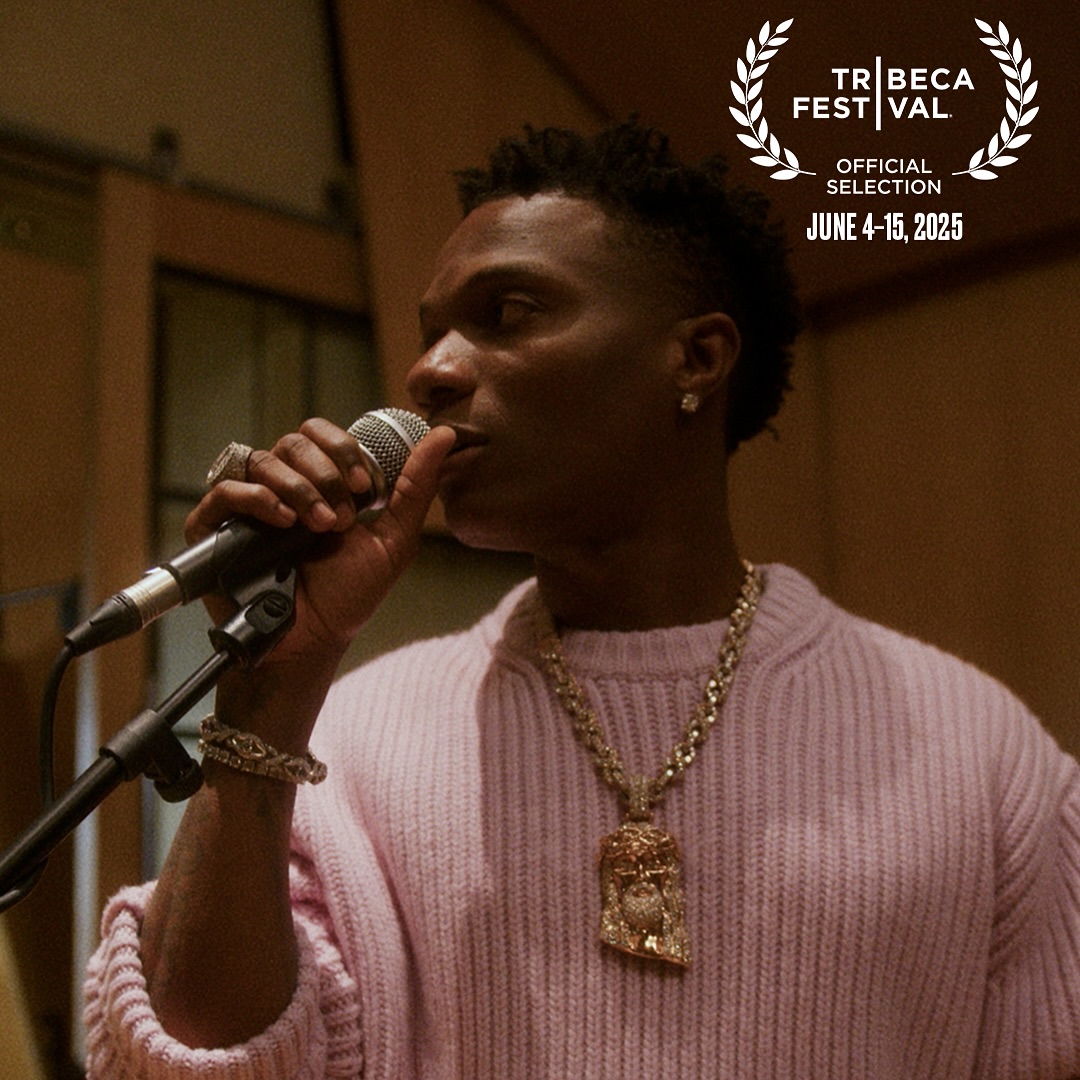
Wizkid: Long Live Lagos, a new documentary on Wizkid and his journey to performing at Tottenham Stadium, answers those questions. The documentary is set to premiere at the Tribeca Film Festival this Friday, June 6. It is directed by American filmmaker Karam Gill, who is also known for directing Lil Baby's documentary Untrapped: The Story of Lil Baby. Wizkid: Long Live Lagos is a deeply vulnerable look at a cultural figure navigating global stardom while staying true to his roots and trying to fulfill the promises he made to himself.
"It's the most intimate view of Wizkid I've ever seen," Seni Saraki, who co-produced the project, tells OkayAfrica. In 1 hour and 23 minutes, viewers will follow Wizkid from London to Surulere, the Lagos neighborhood that shaped him and remains his most crucial creative springboard. The documentary also takes the opportunity to examine the rise of Nigerian music, what it means to be a global star from the African continent, and the many burdens that come with that.
Cross-cultural movement
For Saraki, this documentary is a full-circle moment.
Towards the end of 2020, the same year Wizkid released his fourth album, one of the most culturally significant albums in global music history,Made In Lagos, Native Magazine, under Saraki's editorial guidance, did something simultaneously honorific and consequential.
Dedicating four different covers and an entire magazine to Wizkid, Native chronicled the rise and reach of Wizkid's impressive global stardom through an extensive profile of the man himself and also through the eyes of his managers, producers, visual artists, and the people his music has touched at one point or another. Called the Wizmag, it was a befitting celebration of a generational artist whose project was already piloting the rise of Afrobeats music in the late 2010s.
More than five years later, that editorial project helped provide a thorough, on-ground perspective of Wizkid for the documentary. It is through the cultural insight provided by that editorial project that the documentary was able to accurately contextualize and frame Wizkid through the eyes of the people who know him best. Having a Nigeria-based media outfit involved in the production of an important film about one of its brightest stars was also a necessary step in telling a culturally resonant story.
"I see how it would look like a full circle moment," Saraki tells OkayAfrica. "I think for us, it's a testament to what we tried to do when we started Native. When [Karam] was working on the film, he saw that Native kept coming up in the research, and then he stumbled on Wizmag."
Saraki says that the documentary is a candid look at the grueling work that goes into maintaining the level of excellence for which Wizkid's artistry is known. "You can't do that stuff by mistake," Saraki says. "There's a certain level of process and preparation and dedication to a craft to get to that level. I think this film shows, probably, the most intimate view we've seen from Nigeria to date in terms of this new generation of artists."
The way Saraki sees it, Wizkid: Long Live Lagos will come to be an important cultural artifact for emerging voices in the Nigerian music industry.
Examining the culture
As a storyteller himself, Seni Saraki has worked across print, music, and now film in a bid to understand and thoroughly examine the flow and bends of culture. With his magazine, for instance, Saraki sought to engage with Nigerian music on a cerebral level at a time when many were simply consuming it without contextualizing it. The central theme in his work and one of the key forces that drew him to the project Wizkid: Long Live Lagos is an appetite for stories or artists who can get people to care about something.
"Getting people to care, to have an opinion about something in this day and age, when there's such an impression on people's time, that means a lot, and that's how I pick a lot of my projects," he says.
With Long Live Lagos, Saraki says he is most excited about the scope of the project. The documentary also looks at the rise of stan culture in Nigeria, focusing on how Wizkid's massive fan base helped pioneer a movement of rallying around Nigerian artists and building entire ecosystems around fandom. This documentary takes the opportunity to delve into the psyche of that movement.
"What this film encapsulates is that the love of these figures [like Wizkid] has shifted to being about talent and what you're good at, and these guys are offering their music to the world. That's why stanship now feels bigger. It's not about how rich they are. There's still a section of society that loves them because they're rich, but it's now about 'I love Wizkid because this song did this for me at this time in my life,' Saraki explains.
As viewers get a peek into Wizkid's life and the technicalities that make him Wizkid, Saraki hopes that this project allows people to slow down and appreciate how far Afrobeats music and the Nigerian music industry have come.
"I hope people first see it as a celebration of Wizkid and the celebration of the genre and the movement as a whole. There's a lot of conversation around how Afrobeats is doing, whether we're making progress, and if the story has ended. But there's still a long way to go, and there's still stuff to do," Saraki says. "Sometimes we get so insular, but are there a lot of countries apart from America that have six potential stadium artists in another country? I don't know if five artists from Spain could sell out the Tottenham Stadium. That's not to say rest on your laurels and think you've made it, but some people have done some incredible things. I think that's one thing I want people to take away from the film."
Young Jonn has been one of the most penetrating voices in Afrobeats these past few years. With several hits under his belt and the commercially successful Jiggy Forever album, the Chocolate City man has earned the right to flex his laurels and talk about how great he is, which is the main theme behind “Che Che,” his new record. On “Che Che,” he’s joined by Asake, another artist who constructed his acclaim upon such rocky ground. Both artists are in scintillating form as they reflect their distin
Young Jonn has been one of the most penetrating voices in Afrobeatsthese past few years. With several hits under his belt and the commercially successful Jiggy Forever album, the Chocolate City man has earned the right to flex his laurels and talk about how great he is, which is the main theme behind “Che Che,” his new record.
On “Che Che,” he’s joined byAsake, another artist who constructed his acclaim upon such rocky ground. Both artists are in scintillating form as they reflect their distinct styles; the sweet-tongued bounce of Young Jonn floats in cheerful cadences, complemented by the swagger-driven rhythms of Asake, whose recent music has reflected his hip-hop influences even more vividly. All these nuances of delivery take on a searing form in this new single.
The song is co-produced by Jaytunes and Young Jonn himself, recalling the 2000s when, as a YBNL-affiliated producer, he soundtracked the uptempo direction of the era’s street pop. Perhaps that’s where his distinct interpretation of amapiano comes from, blending its hypnotic percussion with a flair that echoes the nightlife of Lagos.
In his verse, Young Jonn affirms that “I get am before no be property…deliver me from my frenemies,” the lyrics are sung with an almost religious earnestness, seeing as spaces as the ones he enjoys are exclusively accessed by money and influence. Assured in his place, Asake paints the other side of the picture, asserting that he feels good, "mehn I’m too fly / praying, Alubarika, everywhere good, agba baller.”
“Che Che” would resonate with those who hit the road often and stake it all on the promise of a good time. Its anchor on divine help will do its bit among Nigerians, who are famously prayerful, except here it’s delivered with fiery pomp rather than solemn admonition. Following the upbeat direction of Young Jonn’s music, “Che Che” proves the natural follow-up to records like “Wetego,” on which he contributed a verse for his label mateBlaqbonez, and “Only Fans,” which had been Young Jonn’s first release of the year.
Once again, Young Jonn proves himself a force on the dance floor.
A few weeks ago, Davido made a bold claim that Lagos probably has the best nightlife in the world. The Afrobeats superstar expanded on that sentiment, saying, "There are so many things to do in Lagos … there are crazy parties everywhere, we have good restaurants, the private beaches … everything is there in Lagos."It's a grand statement, but one that Lagos has been building toward for over a decade. Back in 2008, Banky W sang of the city like a dreamland in "Lagos Party," where everything is pos
A few weeks ago,Davido made a bold claim that Lagos probably has the best nightlife in the world. The Afrobeats superstar expanded on that sentiment, saying, "There are so many things to do in Lagos … there are crazy parties everywhere, we have good restaurants, the private beaches … everything is there in Lagos."
It's a grand statement, but one that Lagos has been building toward for over a decade. Back in 2008,Banky W sang of the city like a dreamland in "Lagos Party," where everything is possible and the fun never stops. Sixteen years later, Lagos has mostly justified its top-tier placement as an Afrobeats destination, and the numbers prove it.
When the sun sets in the city, something electric happens. The beats drop, bottles pop, and Lagos transforms into Africa's party capital. But beneath the pulsing rhythms and flashing lights lies a massive economic engine powered entirely by Afrobeats.
According to a recent report by Lagos-based advisory and investment management firm TAG, titled Uncharted Waters: Nigeria's Afrobeats Economy, the genre doesn't just soundtrack the city's nightlife; it powers it. From superstars visiting clubs and splurging cash to the drinks at every table, Afrobeats drives everything from beverage sales to food service, smoking accessories, and more.
The numbers are huge. Drinks contribute to 90 percent of sales at upscale venues, with most recording an average consumer spend of N617,000 ($394) per table. With clubs averaging about 20 tables each and factoring in variables like club days and venue capacity, the annual gross revenue hits approximately N1.9 billion.
One can barely keep track of the hot spots. Names like Hotbox, Quilox, and Secrets Palace dominate conversations and even get referenced in Afrobeats records. These venues have become more than entertainment spaces; they're cultural institutions where Nigeria's top artists naturally gravitate, drawn by Lagos's longtime status as the preferred residence for the country's music elites.
But the scene extends beyond traditional clubs. Raves have carved out their own space, championed by young people seeking more inclusive spaces and outdoor activities. Events like Element House and Group Therapy have popularized subgenres like gqom, Afro House, and EDM, generating revenue through table sales and merchandise while pushing sonic boundaries.
This nightlife ecosystem creates waves throughout Lagos's economy. Informal economic activities spring up around these venues, hotels, transportation services, and food vendors, all catering to the steady stream of party-seekers. The impact is so significant that house rents on the Island command premium prices, with these areas considered high-value specifically because of their nightlife appeal and affluent clientele.
As more Africans in the diaspora return home, Lagos and Accra have emerged as top destinations; their established nightlife systems create memorable experiences that keep people coming back. Brand sponsorships also naturally follow, with alcoholic companies particularly interested in events that coincide with the most consumption of their products - a good night out.
Just last week, this cultural influence reached a new milestone when businesswoman and film producerMo Abudu opened Lagos's first restaurant "dedicated to the iconic genre of Afrobeat" on Victoria Island. While technically honoringFela's original Afrobeat, the venue captures the broader musical movement that evolved from those roots, proof of how this sonic lineage serves as a unifying force, binding Lagos's diverse demographics together.
Yet Lagos nightlife faces serious challenges that temper its success. Government-driven issues like inadequate security and poor road networks create incessant traffic that can turn a night out into an ordeal. The high-stress levels that come with navigating Lagos ironically fuel the very music the city inspires, a cycle of tension and release that keeps the creative energy flowing.
What Davido understands, and what data from this report confirms, is that Lagos hasn't just built great nightlife. It's created a cultural-economic ecosystem where music, money, and midnight converge into something approaching magic.
La superstar de l’Afrobeats, Wizkid, a toujours eu la certitude de son succès, une vision qu’il a partagée lors d’une interview au Festival du film de Tribeca. L’artiste s’exprimait à l’occasion de la première de son documentaire très attendu, « Wizkid : Longue vie à Lagos ». Pour Wizkid, sa renommée actuelle est le fruit …
L’article Wizkid : de Lagos à la gloire, une vision inébranlable est apparu en premier sur Africa Top Success.
La superstar de l’Afrobeats, Wizkid, a toujours eu la certitude de son succès, une vision qu’il a partagée lors d’une interview au Festival du film de Tribeca. L’artiste s’exprimait à l’occasion de la première de son documentaire très attendu, « Wizkid : Longue vie à Lagos ». Pour Wizkid, sa renommée actuelle est le fruit …
Photo Credit: Wizkid/Instagram
Wizkid is bringing Lagos to New York this June. His new documentary, “Long Live Lagos,” will premiere at the 2025 Tribeca Film Festival, which runs from June 1 to 15.
Directed by Karam Gill and produced with Daniel Malikyar, the film shares a personal look at Wizkid’s story — from his early days in Surulere to performing on some of the world’s biggest stages. It reflects the energy of Lagos and the experiences that have shaped his sound and career.
Sharing a note o
Wizkid is bringing Lagos to New York this June. His new documentary, “Long Live Lagos,” will premiere at the 2025 Tribeca Film Festival, which runs from June 1 to 15.
Directed by KaramGill and produced with DanielMalikyar, the film shares a personal look at Wizkid’s story — from his early days in Surulere to performing on some of the world’s biggest stages. It reflects the energy of Lagos and the experiences that have shaped his sound and career.
Sharing a note on Instagram, Wizkid wrote: “We made this documentary when life got crazy for me. Playing Tottenham Hotspur Stadium while dealing with life! Glad I get to have my amazing fans and family on this journey with me. This is love! From a real place!”
Screening details are still to come, but the documentary is expected to be a key part of this year’s festival.

 Connexion