A total of 24 short films are lined up to compete for the Best Short Film (Oscar-qualifying award) and the Best South African Short Film Award at DIFF 2026.
By Adedamola Jones AdedayoÂ
The 47th Durban International Film Festival (DIFF) has unveiled its official selection of short films for the latest edition, set to take place from 23rd July to 2nd August, 2026. The presentation was done by the Centre for Creative Arts at the University of KwaZulu-Natal.Â
A total of 24 s
A total of 24 short films are lined up to compete for the Best Short Film (Oscar-qualifying award) and the Best South African Short Film Award at DIFF 2026.
By Adedamola Jones AdedayoÂ
The 47th Durban International Film Festival (DIFF) has unveiled its official selection of short films for the latest edition, set to take place from 23rd July to 2nd August, 2026. The presentation was done by the Centre for Creative Arts at the University of KwaZulu-Natal.Â
A total of 24 short films are lined up to compete for the Best Short Film (Oscar-qualifying award) and the Best South African Short Film Award at DIFF 2026. All short films are expected to present themes bordering on authentic cultural perspectives, systemic struggles and human advancement.
10 of the total selection are South African productions, while the remaining 14 are either Pan-African or Diaspora titles. Dian Weys’s Vultures (2025) is the only South African co-production (in partnership with France) selected, having previously premiered at the 78th Cannes Film Festival, where it competed for the Palme d’Or Best Short Film and also won the Unifrance Short Film Grand Prix.Â
The other African countries that make it to the spotlight are Uganda and Senegal through Jonathan Curtiss’ Boy No Fear (2025) and Aida Captijn’s Dëmm (2025), respectively.Â
Commenting on the development, Sakhile Gumede, DIFF Festival Manager, described short films as the vanguard of cinema.
“They are a materialised embodiment of risk-taking, technical success and the true telling of its reality, respectfully; this is beautifully captured or translated in every frame,†Gumede said. “This year’s curated shorts offer an extraordinary global dialogue, bridging deeply moving local South African realities with visionary narratives from across the world.â€
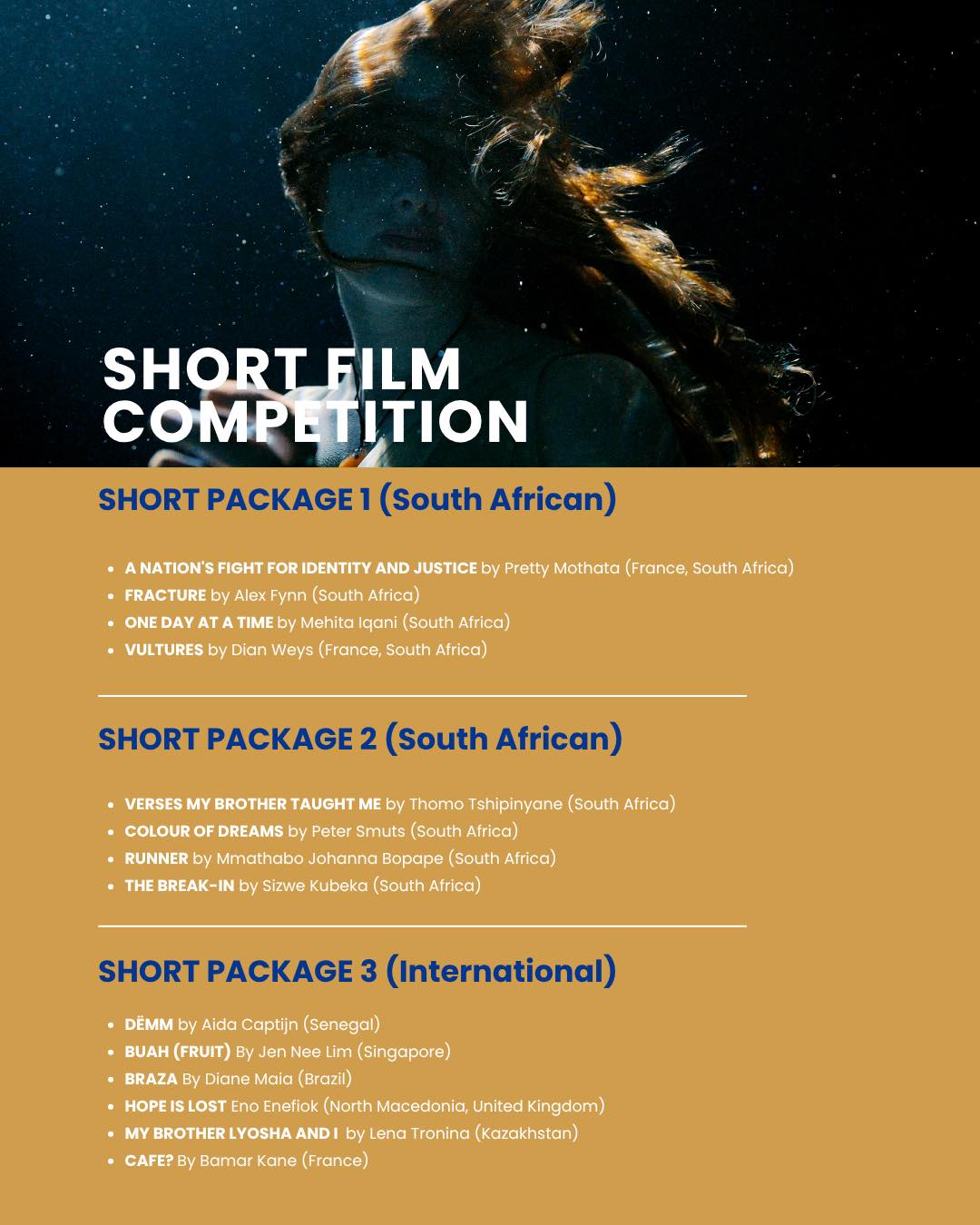
See below the full lineup of short films (with their directors) that will be screening at the 47th Durban International Film Festival:
South African Films:
A Nation’s Fight for Identity and Justice – Pretty Mothata (South Africa)
Colour of Dreams – Peter Smuts (South Africa)
Fracture – Alex Fynn (South Africa)
One Day at a Time – Mehita Iqani (South Africa)
Perception – Miselwa “Missy†Ngamlana (South Africa)
Runner – Mmathabo Johanna Bopape (South Africa)
The Break-In – Sizwe Kubeka (South Africa)
Verses My Brother Taught Me – Thomo Tshipinyane (South Africa)
Lagos’ food and lifestyle scene came alive on December 17 and 18, 2025, as thousands of guests gathered for the Foodie in Lagos Festival. A two-day celebration of food, drinks, music, and family-friendly experiences. Curated by Foodie in Lagos, the festival brought together 53 carefully selected vendors spanning food, lifestyle, and creative brands, alongside families and creators, for an immersive end-of-year experience that captured the true spirit of Detty December.Â
Lagos’ food and lifestyle scene came alive on December 17 and 18, 2025, as thousands of guests gathered for the Foodie in Lagos Festival. A two-day celebration of food, drinks, music, and family-friendly experiences. Curated by Foodie in Lagos, the festival brought together 53 carefully selected vendors spanning food, lifestyle, and creative brands, alongside families and creators, for an immersive end-of-year experience that captured the true spirit of Detty December.Â
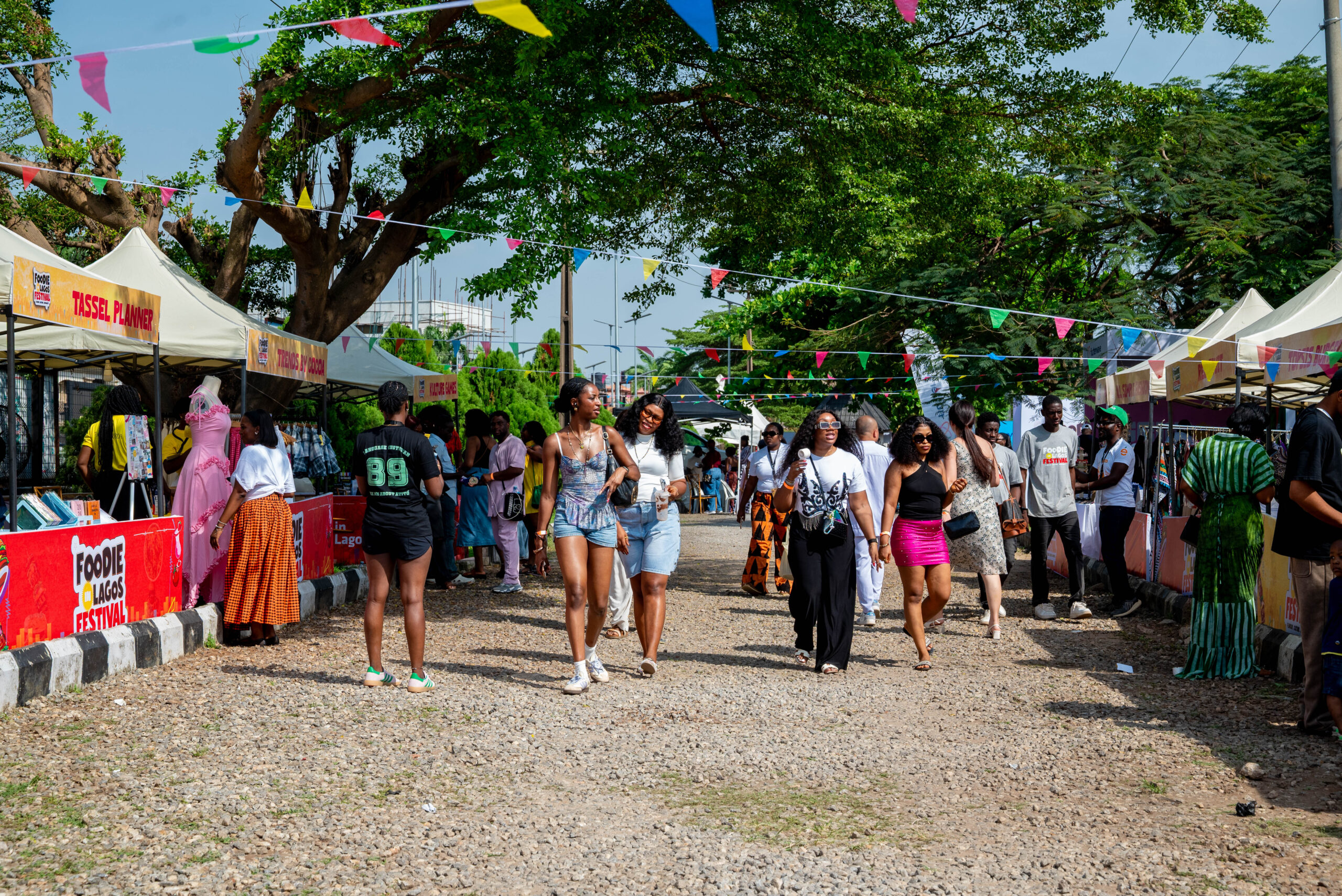
Hosted in a vibrant open-air setting at Encourage Park, Ikoyi, the festival transformed the venue into a bustling hub of flavour, colour, and sound — offering guests the opportunity to eat, explore, shop, connect, and unwind. Over the course of two days, the festival welcomed over 3,000 attendees, underscoring its growing status as a key fixture on Lagos’ Detty December lifestyle calendar.
Watch highlights from the Foodie in Lagos Festival below.Â
A Thoughtfully Curated Food Experience
At the heart of the festival was food and plenty of it. Across two days, the festival’s food vendors delivered a diverse range of offerings spanning Nigerian classics, grills, desserts, street food favourites, cocktails, and contemporary fusion dishes. From familiar crowd favourites to exciting new discoveries, attendees were spoilt for choice as they moved from stall to stall sampling flavours and discovering new brands.
The festival’s layout encouraged exploration, with clearly defined vendor zones and relaxed communal seating that made it easy for guests to enjoy meals with friends and family. Many vendors reported sell-outs across both days, reinforcing the festival’s reputation as a key platform for food businesses looking to connect directly with their audience.
More Than a Food Festival
While food was the star, the Foodie in Lagos Festival delivered much more than just great meals. Live DJ sets by DJ Slymn & Guest DJ Lolahstic kept the energy high throughout the day, while a DJ battle and artiste performances turned the evenings into a lively celebration. A live band performance added a soulful touch, giving guests moments to slow down, sing along, dance, and soak in the atmosphere. The Festival was anchored by Deji Osikoya on Day One, with MC Obinna taking over hosting duties on Day Two, while Oludamee hosted the festival’s red carpet — ensuring seamless flow, high energy, and engaging moments throughout the event on both days.
Interactive brand activations dotted the venue, creating engaging experiences that blended seamlessly into the festival environment. From kids’ play areas and game zones to experiential brand spaces and garden-style seating, brands connected meaningfully with guests without disrupting the flow of the event.
Family-Friendly Fun at the Christmas Village
One of the standout attractions was the Christmas Village, curated in partnership with Tinsel Town and thoughtfully integrated into the festival experience. Designed with families in mind, the village offered a range of festive and creative activities for children, making the festival a truly inclusive event.
Young guests enjoyed bead-making workshops, cookie decorating classes, a Santa Grotto experience, and performances at the Elf Play House Theatre. Pamper sessions by Dermaspace added a gentle wellness element, ensuring both kids and parents could relax and enjoy the moment.
The Christmas Village reflected the festival’s commitment to creating a space where families could participate fully, rather than feeling like an afterthought.
Media partners BellaNaija, Olori Supergal, and My Lagos App helped amplify the festival’s reach, ensuring moments from the event travelled far beyond the venue.
A Defining Moment for Foodie in Lagos
For Foodie in Lagos, the festival marked a defining milestone, translating over a decade of digital food storytelling into a shared, real-world experience. Founded in 2013, Foodie in Lagos has grown into one of the city’s most trusted voices in food and lifestyle, consistently shaping conversations around where and how Lagos eats.
As the platform’s second festival, the Foodie in Lagos Festival reflected both the depth of its community and the strength of the trust it has built with audiences, vendors, and brands over the years. What began as an online dining guide has evolved into a platform capable of curating large-scale, community-driven experiences that celebrate Lagos’ ever-evolving food culture.
Held on December 17 and 18, 2025, the Foodie in Lagos Festival firmly established itself as a standout on Lagos’ Detty December calendar. Its inclusion in CNN’s 2025 Detty December line-up further underscored the festival’s growing cultural relevance, placing it among the season’s most anticipated food and lifestyle events.
If you missed out on the experience, highlights from the Foodie in Lagos Festival are available to view across Foodie in Lagos’ digital platforms.
For more information, please visit the Website. Instagram: @foodieinlagos | @foodieinlagosfest Threads: @foodieinlagos
Lagos’ food and lifestyle scene came alive on December 17 and 18, 2025, as thousands of guests gathered for the Foodie in Lagos Festival. A two-day celebration of food, drinks, music, and family-friendly experiences. Curated by Foodie in Lagos, the festival brought together 53 carefully selected vendors spanning food, lifestyle, and creative brands, alongside families and creators, for an immersive end-of-year experience that captured the true spirit of Detty December.Â
Lagos’ food and lifestyle scene came alive on December 17 and 18, 2025, as thousands of guests gathered for the Foodie in Lagos Festival. A two-day celebration of food, drinks, music, and family-friendly experiences. Curated by Foodie in Lagos, the festival brought together 53 carefully selected vendors spanning food, lifestyle, and creative brands, alongside families and creators, for an immersive end-of-year experience that captured the true spirit of Detty December.Â
Hosted in a vibrant open-air setting at Encourage Park, Ikoyi, the festival transformed the venue into a bustling hub of flavour, colour, and sound — offering guests the opportunity to eat, explore, shop, connect, and unwind. Over the course of two days, the festival welcomed over 3,000 attendees, underscoring its growing status as a key fixture on Lagos’ Detty December lifestyle calendar.
Watch highlights from the Foodie in Lagos Festival below.Â
A Thoughtfully Curated Food Experience
At the heart of the festival was food and plenty of it. Across two days, the festival’s food vendors delivered a diverse range of offerings spanning Nigerian classics, grills, desserts, street food favourites, cocktails, and contemporary fusion dishes. From familiar crowd favourites to exciting new discoveries, attendees were spoilt for choice as they moved from stall to stall sampling flavours and discovering new brands.
The festival’s layout encouraged exploration, with clearly defined vendor zones and relaxed communal seating that made it easy for guests to enjoy meals with friends and family. Many vendors reported sell-outs across both days, reinforcing the festival’s reputation as a key platform for food businesses looking to connect directly with their audience.
More Than a Food Festival
While food was the star, the Foodie in Lagos Festival delivered much more than just great meals. Live DJ sets by DJ Slymn & Guest DJ Lolahstic kept the energy high throughout the day, while a DJ battle and artiste performances turned the evenings into a lively celebration. A live band performance added a soulful touch, giving guests moments to slow down, sing along, dance, and soak in the atmosphere. The Festival was anchored by Deji Osikoya on Day One, with MC Obinna taking over hosting duties on Day Two, while Oludamee hosted the festival’s red carpet — ensuring seamless flow, high energy, and engaging moments throughout the event on both days.
Interactive brand activations dotted the venue, creating engaging experiences that blended seamlessly into the festival environment. From kids’ play areas and game zones to experiential brand spaces and garden-style seating, brands connected meaningfully with guests without disrupting the flow of the event.
Family-Friendly Fun at the Christmas Village
One of the standout attractions was the Christmas Village, curated in partnership with Tinsel Town and thoughtfully integrated into the festival experience. Designed with families in mind, the village offered a range of festive and creative activities for children, making the festival a truly inclusive event.
Young guests enjoyed bead-making workshops, cookie decorating classes, a Santa Grotto experience, and performances at the Elf Play House Theatre. Pamper sessions by Dermaspace added a gentle wellness element, ensuring both kids and parents could relax and enjoy the moment.
The Christmas Village reflected the festival’s commitment to creating a space where families could participate fully, rather than feeling like an afterthought.
Media partners BellaNaija, Olori Supergal, and My Lagos App helped amplify the festival’s reach, ensuring moments from the event travelled far beyond the venue.
A Defining Moment for Foodie in Lagos
For Foodie in Lagos, the festival marked a defining milestone, translating over a decade of digital food storytelling into a shared, real-world experience. Founded in 2013, Foodie in Lagos has grown into one of the city’s most trusted voices in food and lifestyle, consistently shaping conversations around where and how Lagos eats.
As the platform’s second festival, the Foodie in Lagos Festival reflected both the depth of its community and the strength of the trust it has built with audiences, vendors, and brands over the years. What began as an online dining guide has evolved into a platform capable of curating large-scale, community-driven experiences that celebrate Lagos’ ever-evolving food culture.
Held on December 17 and 18, 2025, the Foodie in Lagos Festival firmly established itself as a standout on Lagos’ Detty December calendar. Its inclusion in CNN’s 2025 Detty December line-up further underscored the festival’s growing cultural relevance, placing it among the season’s most anticipated food and lifestyle events.
If you missed out on the experience, highlights from the Foodie in Lagos Festival are available to view across Foodie in Lagos’ digital platforms.
For more information, please visit the Website. Instagram: @foodieinlagos | @foodieinlagosfest Threads: @foodieinlagos
Legend Extra Stout partnered with Palmwine Music Festival this December to deliver two nights of carefully curated live music across Abuja and Lagos. Both cities delivered memorable performances, but the Lagos edition added a layer of unpredictability when Tems and Odumodu Blvck made unannounced appearances.
The festival moved through two cities, starting in Abuja on December 12 at Jabi Boat Club before heading to Lagos on December 21 at The Fidelity Ground in Oniru. Across both nights, Legend
Legend Extra Stout partnered with Palmwine Music Festival this December to deliver two nights of carefully curated live music across Abuja and Lagos. Both cities delivered memorable performances, but the Lagos edition added a layer of unpredictability when Tems and Odumodu Blvck made unannounced appearances.
The festival moved through two cities, starting in Abuja on December 12 at Jabi Boat Club before heading to Lagos on December 21 at The Fidelity Ground in Oniru. Across both nights, Legend Extra Stout’s signature was evident – bold, unapologetic and rooted in the culture it celebrates.
Abuja set the tone with performances from Ladipoe, BOJ, Ajebutter and Moelogo, among others. The night leaned into intimacy, with relaxed, assured sets that allowed the music to breathe. Legend Extra Stout flowed naturally through the evening, from backstage moments to shared conversations in the crowd, reinforcing the festival’s unhurried, communal atmosphere.
By the time the festival reached Lagos a week later, anticipation had built. The Fidelity Ground became a hub for Nigeria’s alternative music community, powered by Legend Extra Stout, hosting performances from Show Dem Camp, BOJ, Ladipoe, Tay Iwar, Lady Donli, Prettyboy D-O, Moonchild Sanelly and others. Each act brought a distinct energy, with performances unfolding seamlessly and the crowd responding in kind.
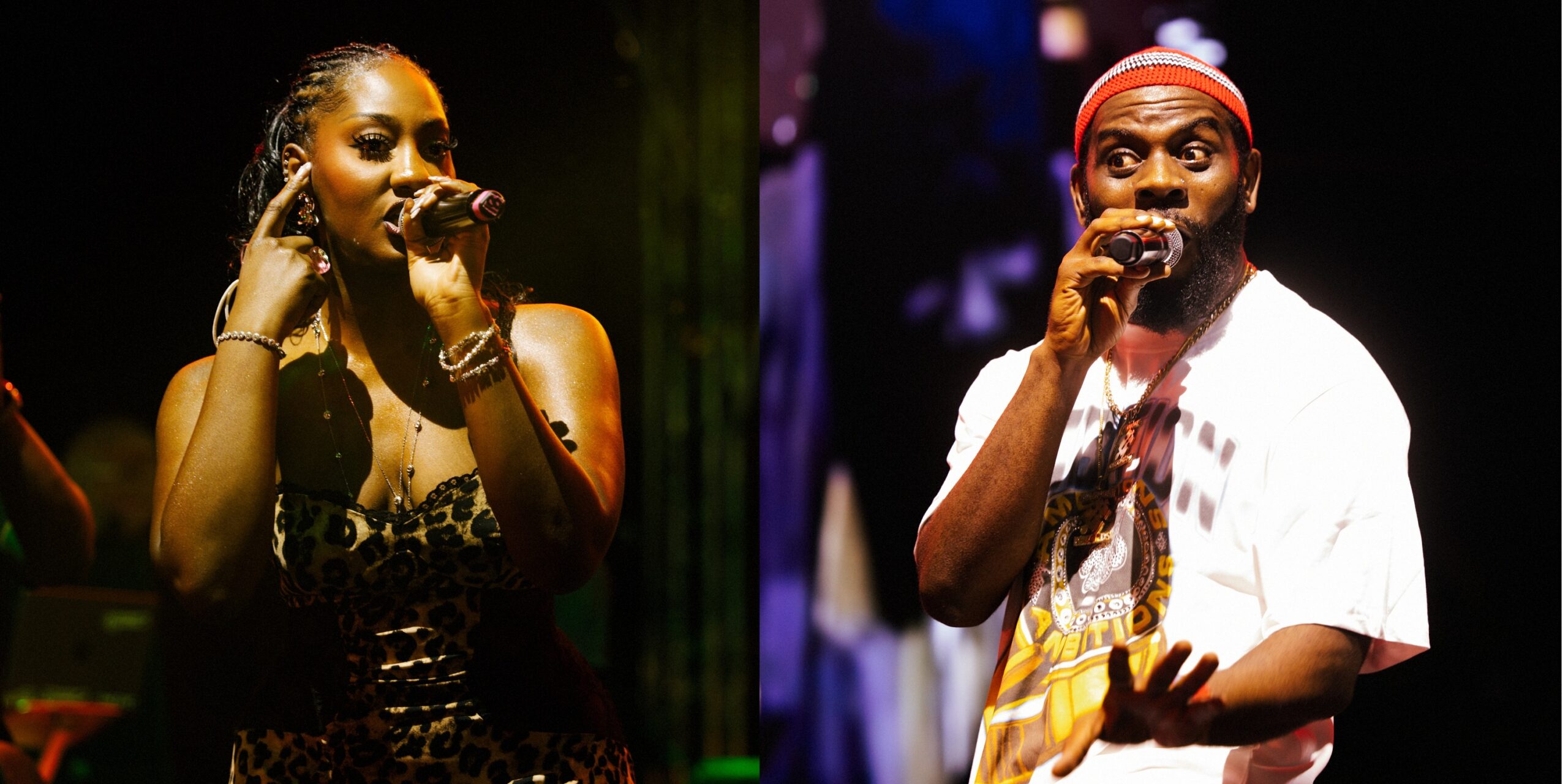
Midway through the night, the momentum shifted. As Show Dem Camp settled into their set, Tems stepped onto the stage without introduction. The response was instant – a surge of excitement that marked one of the festival’s defining moments. The night pushed further as Odumodu Blvck followed, another surprise that sent energy through the crowd and kept the atmosphere escalating.
Palmwine Music Festival occupies a distinct space within Nigeria’s live music circuit, spotlighting artists and sounds just outside the mainstream while shaping contemporary culture. The Abuja and Lagos editions proved the strength of that approach through strong line-ups, intimate environments and well-timed spontaneity. The takeaway was clear: Palmwine Fest is less about spectacle and more about experience. Legend Extra Stout’s partnership across both cities reflected a natural alignment with a festival built on authenticity, creative expression and cultural connection.
Legend Extra Stout partnered with Palmwine Music Festival this December to deliver two nights of carefully curated live music across Abuja and Lagos. Both cities delivered memorable performances, but the Lagos edition added a layer of unpredictability when Tems and Odumodu Blvck made unannounced appearances.The festival moved through two cities, starting in Abuja on December 12 at Jabi Boat Club before heading to Lagos on 21st December at The Fidelity Ground in Oniru. Across both
Legend Extra Stout partnered with Palmwine Music Festival this December to deliver two nights of carefully curated live music across Abuja and Lagos. Both cities delivered memorable performances, but the Lagos edition added a layer of unpredictability when Tems and Odumodu Blvck made unannounced appearances.
The festival moved through two cities, starting in Abuja on December 12 at Jabi Boat Club before heading to Lagos on 21st December at The Fidelity Ground in Oniru. Across both nights, Legend Extra Stout’s signature was evident – bold, unapologetic and rooted in the culture it celebrates.
Abuja set the tone with performances from Ladipoe, BOJ, Ajebutter and Moelogo among others. The night leaned into intimacy with relaxed assured sets that allowed the music to breathe. Legend Extra Stout flowed naturally through the evening from backstage moments to shared conversations in the crowd, reinforcing the festival’s unhurried, communal atmosphere.
By the time the festival reached Lagos a week later, anticipation had built. The Fidelity Ground became a hub for Nigeria’s alternative music community, powered by Legend Extra Stout, hosting performances from Show Dem Camp, BOJ, Ladipoe, Tay Iwar, Lady Donli, Prettyboy D-O, Moonchild Sanelly and others. Each act brought a distinct energy with performances unfolding seamlessly and the crowd responding in kind.
Midway through the night, the momentum shifted. As Show Dem Camp settled into their set, Tems stepped onto the stage without introduction. The response was instant – a surge of excitement that marked one of the festival’s defining moments. The night pushed further as Odumodu Blvck followed another surprise that sent energy through the crowd and kept the atmosphere escalating.
Palmwine Music Festival occupies a distinct space within Nigeria’s live music circuit, spotlighting artists and sounds just outside the mainstream while shaping contemporary culture. The Abuja and Lagos editions proved the strength of that approach through strong line-ups, intimate environments and well-timed spontaneity. The takeaway was clear; Palmwine Fest is less about spectacle and more about experience. Legend Extra Stout’s partnership across both cities reflected a natural alignment with a festival built on authenticity, creative expression and cultural connection.
“The notion of resistance always having to be loud, glorious, and heroic comes from the fantasies of people who have never actually had to fight for anything. Effective resistance is often quiet, careful, and requires a delicate balance.†– Zamo Mkhwanazi
By Jerry Chiemeke
Drawing from personal history, South African filmmaker, Zamo Mkhwanazi, transforms intimate memories into powerful cinema with her feature debut, Laundry (Uhlanjululo),
“The notion of resistance always having to be loud, glorious, and heroic comes from the fantasies of people who have never actually had to fight for anything. Effective resistance is often quiet, careful, and requires a delicate balance.†– Zamo Mkhwanazi
The film emerges from the painful story of Mkhwanazi’s grandfather, whose thriving laundry business in Durban was seized when the apartheid government consolidated its grip on power. This gaping wound becomes the foundation for a quietly devastating portrait of a Black family navigating the precariousness of operating within, but never truly belonging to, the violently stratified world of 1960s South Africa.
Set against the backdrop of apartheid’s tightening noose, Laundry centres on the Sithole family’s laundry business, granted rare permission to operate in a whites-only area of town. Patriarch Enoch (Siyabonga Shibe) walks a careful line between protecting his family’s fragile foothold and contending with his son Khuthala’s (Ntobeko Sishi) dreams of musical stardom.Â
When Enoch faces imprisonment, the family’s survival depends on choices that pit pragmatic endurance against creative freedom.
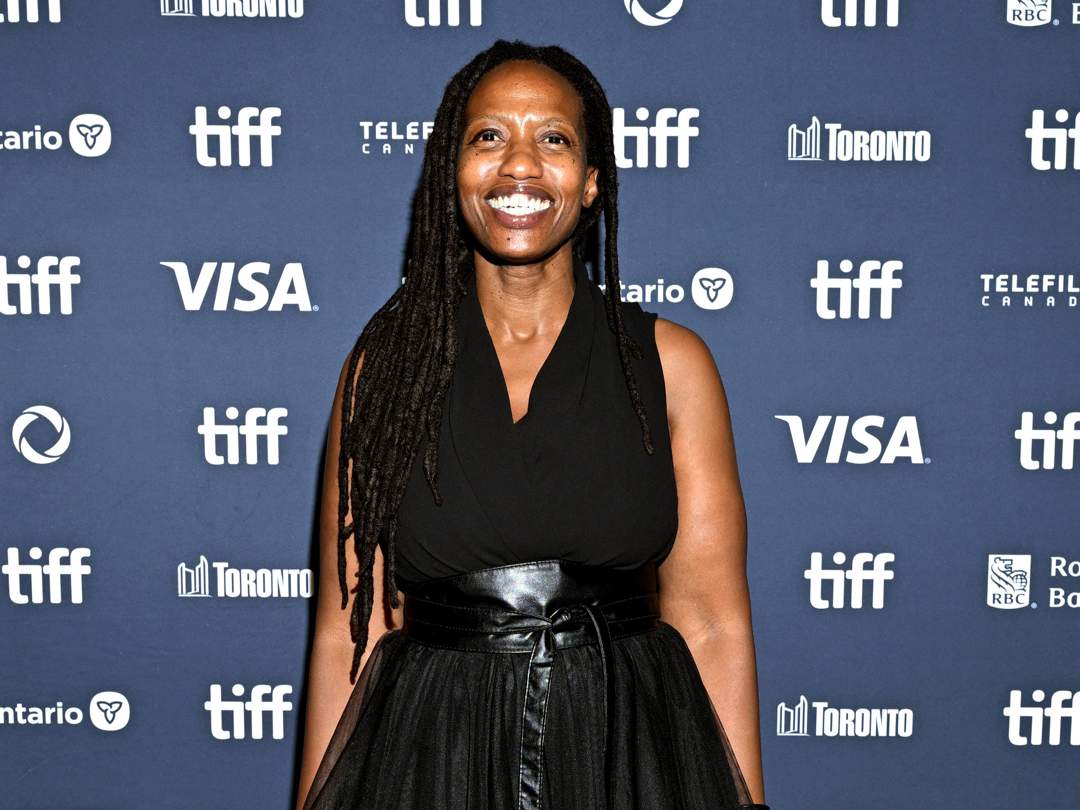
Zamo Mkhwanazi at the premiere of “Laundry†at the 2025 Toronto International Film Festival
“Prosperous black men like my grandfather were an unwelcome challenge to the myths of white superiorityâ€, says Mkhwanazi. “This film is my way of not being silent. It is the story rarely told in the glorification of the struggle heroes. It is about the smaller moments that take place in the midst of the great injusticesâ€.
Building on her extensive background in South African television and her internationally acclaimed short films, Mkhwanazi brings both intimate knowledge and artistic sophistication to this project. Her approach treats the laundry itself as a character: the steam-filled back rooms reflecting confusion and uncertainty, while the incandescent front space embodies the family’s determination to maintain control.
In an exclusive conversation, Afrocritik caught up with Mkhwanazi during the Festival to discuss stylistic choices, Black joy, the deployment of music in filmmaking, creating story worlds, and the exploration of resistance in African cinema.
Where does this film come from? Describe the combination of ideas and/or real-life experiences that culminated in the birth of Laundry as a screenplay.
My grandfather owned a laundry in Durban, South Africa, and when the apartheid government came into power, the laundry was taken from him.Â
Laundry
What conversations, if any, did you have with surviving family members about their experiences during Apartheid, and how did those inform the authenticity of this film?
Many. The choices of my mother’s family members were limited after these events, and I made sure to place some of these limitations on the characters in the film. Some of the phrases used by white characters are direct quotes that have been said to my family members.Â
Music is very important to South Africans, and the stories around how music was made, the places it was played, and the characters that inhabited that world filled out a lot of people for me. The limitations placed on African women that essentially relegated them to the status of children were something my mother navigated directly.Â
Laundry captures the perennial shadow of oppression that pervaded that era while maintaining moments of joy and hope. How do you navigate showing systemic brutality without letting the film fall into some sort of “joylessness�
It is surprisingly not difficult for me as a South African. Black rebellion in South Africa has always had an element of the joyful. In the words of Steve Biko, “The most potent weapon in the hands of the oppressor is the mind of the oppressedâ€.Â
There is an understanding that not allowing the enemy to hijack your joy is the first weapon we can wield against oppression. If we can find joy in the fight, we can endure it.Â
From a character perspective, how does Khuthala’s musical ambition function as both personal expression and political act in the context of 1968?
I do not believe anyone wakes up in the morning wishing to fight a system or to fight oppression. What people wake up wanting to do is to fight for their dreams. I chose a commonplace dream. Not particularly admirable like being a doctor, or realistic like running a laundry or noble like being a teacher. Just an ordinary, somewhat selfish, possibly foolish dream.Â
In the context of a world where black bodies were actively being turned into industrial fodder, a dream that does not create goods and services is the antithesis of a body that is meant to be an input of production.Â
Still from Laundry
Music serves as both escape and resistance in this film. Can you discuss how you developed the musical elements and what specific South African musicians or musical traditions influenced the soundtrack?
The music was mostly created by Tracy September, Tshepang Ramoba, and Mpumi Mcata who are the musicians seen in the film. They have all been making music for decades and are some of my favourite musicians from my country.Â
These are musicians who are not afraid to experiment with the traditional to create wholly unique sounds. I did not want the music to sound too ‘familiar’. It needed to have an edge, a feeling that they could have added something significant to the musical cannon of the time.Â
The film draws parallels to real musicians like Miriam Makeba and Hugh Masekela, who had to flee South Africa. Was there a conscious decision to explore the stories of those who couldn’t escape?
Yes, there are many more who never had a chance to share their talents with the world, who never had a chance to escape the circumstances and the iron fist of a fascist regime.Â
This feature focuses on the intimate textures of family life rather than grand historical events. What influenced your decision to tell this story through such a domestic lens?
There are more of those ordinary folk who quietly fought the system daily in their lives. Most films are not made by people who have had to survive any kind of oppression. The notion of resistance always having to be loud, glorious, and heroic comes from the fantasies of people who have never actually had to fight for anything. Effective resistance is often quiet, careful, requires a delicate balance, and can even seem illogical.Â
For example, when you read South African history from the 1980s, you will hear much about the burning of schools – which were indoctrinating black children into willing slavery (called Bantu Education). But you will not hear about the resulting effect because to this day, that history is being told by people who think struggle is only valid when it’s highly visible. Mothers stayed home with their children, who had no classrooms to attend and were in danger of being on those burning streets where apartheid police were shooting us from Israeli-designed tankers.Â
The government didn’t care about us burning our schools, but they could not continue without the labour of so many black mothers. Stayaways became even more effective as a tool than burning down those schools.Â
We could be outgunned in the arena of violence; however, staying home and withholding labour was even more crippling for the regime. But I think when we look for drama, we look at the burning of schools and the faces of manufactured heroes shouting slogans. I wanted to look at the home front, where real resistance is held down.Â
Laundry is a period piece. Tell us more about how the world for this story came to be, from the visual design to the fashion and verbiage.
Production design is what we started with; creating these environments to reflect both the times as well as class and lifestyle differences. This was also a family that owned a laundry and had access to the best seamstresses and fabrics.Â
The family was not rich, but it was important that they be well turned out, especially compared to a character like Albert, who was a street urchin surviving on the margins. The wardrobe for Lillian was important, as she was the character who linked the world of the father and son.Â
The actors had much work to do, and we had to place each character within context. Enoch, the father, was a missionary school product who had a strong command of the English language and would pepper his speech more with English, but his wife did not have the same education and was less confident in her speech in general, especially with regard to figures of authority.Â
His children were already victims of the Bantu Education system and were far more stimulated by their home life, which included a musical, mechanical, and business education. The younger sister retained a certain innocent curiosity about the world, while Khuthala was more single-minded. Therefore, they all spoke a little differently from each other to reflect those historical and personal realities.
Still from Laundry
How did you work with your actors, particularly Ntobeko Sishi and Siyabonga Shibe, to capture the complex father-son dynamic at the heart of the story?
Both Ntobeko and Siyabonga are fairly experienced actors. I am a fan of stillness in performance as it forefronts emotion over action. With Ntobeko, it sometimes felt unnatural to the character, and so I was selective about using the moments of stillness as a punctuation mark in the story.Â
Ntobeko was truly a collaborator in creating his character, and sometimes, instead of directing him, I would ask him questions as his character and let him answer with his performance. Siyabonga is an actor with a phenomenal physical presence, and sometimes his stillness could be right down intimidating, which was useful in certain moments with his son.Â
But it was important to find the warmth of the character while maintaining the stoic dignity required for the storyline. For this, Siyabonga mastered the micro-expressions of the steady Enoch.Â
The concept of “uneasy privileges†that your characters experience – being granted limited rights within an oppressive system – feels relevant beyond apartheid South Africa. Was this universality intentional?
Oh absolutely. In South Africa, we have the concept of the ‘the better black’, in the USA it is the house negro. Latin America is replete with examples of differential privilege. I am a middle-class person in the most unequal society in the world. These uneasy privileges are very much part of my life. And I am fully aware that as long as these systems of oppression thrive, those privileges are only borrowed.Â
Zamo Mkhwanazi (Credit: Gareth Cattermole)
The laundry business becomes a gathering place for the Black community in the film. How important was it to show these spaces of connection and mutual support within the oppressive system?
The laundry is a place where they are served according to when they arrive, as opposed to most places where whites would always be served first. This is never explicitly mentioned, but is clear in the way customers line up when Enoch is present. It is also important to make it clear that while the area is declared white, most of the people given patronage or working in the area are black.Â
Apartheid was incredibly nonsensical; a capitalist system that thought it could thrive by keeping the majority of consumers without any buying power. So places like this laundry show that these laws were nigh to impossible to maintain.Â
After exploring your family’s past so intimately in Laundry, how has this experience changed your approach to storytelling and what stories you want to tell next?
What changed the most for me was when I had the screening here (in Toronto). Honestly, putting the work in front of an audience that connected so strongly with the work assured me that the issues that interest me remain relevant, even as I feel that political storytelling from Africa, particularly stories that challenge white supremacy, are being strongly discouraged both locally and in the international festival space.Â
Having an audience that responded to the story with enthusiastic appreciation of the difficult themes was a blessing. My next project retains a strongly political point of view, with feminist themes. It’s set in the future and concerns bodily autonomy.
Laundry screened in the Discovery section of TIFF.
Jerry Chiemekeis a Nigerian-born writer, film critic, journalist, and lawyer based in the United Kingdom. His writing has appeared in Die Welt, The I Paper, The Africa Report, The British Blacklist, Berlinale Press, The Johannesburg Review of Books, Culture Custodian, Olongo Africa, and elsewhere. Chiemeke’s work has won or been nominated for the Pushcart Prize, Ken Saro Wiwa Prize, Diana Woods Memorial Award for Creative Nonfiction, Best Small Fictions, and the Quramo Writers Prize. He is the author of the critically-acclaimed short story collection, Dreaming of Ways to Understand You.
South African star Tyla and Nigerian pop sensation Ayra Starr will join a high-profile lineup at this year's Global Citizen Festival, set to take place on September 27 in New York City's Central Park. The event will be headlined by The Weeknd and Shakira, and hosted by long-time Global Citizen ambassador Hugh Jackman.The festival continues Global Citizen's mission to end extreme poverty and drive action on global issues. This year, the campaign is focused on providing energy access for one mill
South African starTyla and Nigerian pop sensationAyra Starr will join a high-profile lineup at this year's Global Citizen Festival, set to take place on September 27 in New York City's Central Park. The event will be headlined by The Weeknd and Shakira, and hosted by long-time Global Citizen ambassador Hugh Jackman.
The festival continues Global Citizen's mission to end extreme poverty and drive action on global issues. This year, the campaign is focused on providing energy access for one million people on the African continent, ensuring quality education for 30,000 children worldwide, and protecting 30 million hectares of the Amazon rainforest. The festival will also push to recruit 40,000 volunteers across New York City.
Tyla, who recently won a Grammy Award for Best African Music Performance, is riding high after a breakout year that saw her single "Water" become a global hit. Her appearance at the Global Citizen Festival marks another significant milestone in her growing international career.
Ayra Starr, one of Nigeria's most prominent voices in the new wave of Afrobeats, will also take the stage. Known for her chart-topping hits like "Rush" and her boundary-pushing style, the artist continues to gain traction across global markets. Both artists represent a younger generation of African talent reaching broader audiences while staying grounded in their cultural roots.
Their participation in the festival reflects Global Citizen's growing attention to Africa as a central part of its advocacy. One of the campaign's core goals this year is to help bring clean and affordable energy to communities across the continent. Through its Scaling Up Renewables in Africa campaign, Global Citizen plans to raise $1.5 billion to train 50,000 young workers in solar installation, grid maintenance, and other essential energy services. The initiative could provide reliable electricity to over a million people, while also supporting jobs and reducing emissions.
In a statement, Global Citizen CEO Hugh Evans said: "Ending extreme poverty is within our reach – but only if we come together to ensure governments and corporations deliver on their promises: scaling up renewable energy, protecting the Amazon, and investing in education for the next generation."
Tickets to the festival are free and can be earned by taking action on Global Citizen's app or website. These include signing petitions, emailing world leaders, or volunteering time to local causes.
Since its inception, Global Citizen has helped secure $49 billion in commitments, positively impacting the lives of more than a billion people. With artists like Tyla and Ayra Starr on board, the 2025 edition brings Africa even closer to the heart of this global movement.
Mothers of Chibok, a US, Australian and Nigerian production directed by Nigerian filmmaker, Joel Kachi Benson, took home the Encounters Al Jazeera Award for Best African Feature Documentary.
By Vivian Nneka Nwajiaku
The winners of the 27th edition of Encounters South African International Documentary Film Festival have been announced, following the conclusion of the festival on Sunday, 29th June 2025.
Mothers of Chibok (2024), a US, Australian and Nigerian production directed by Nigerian filmm
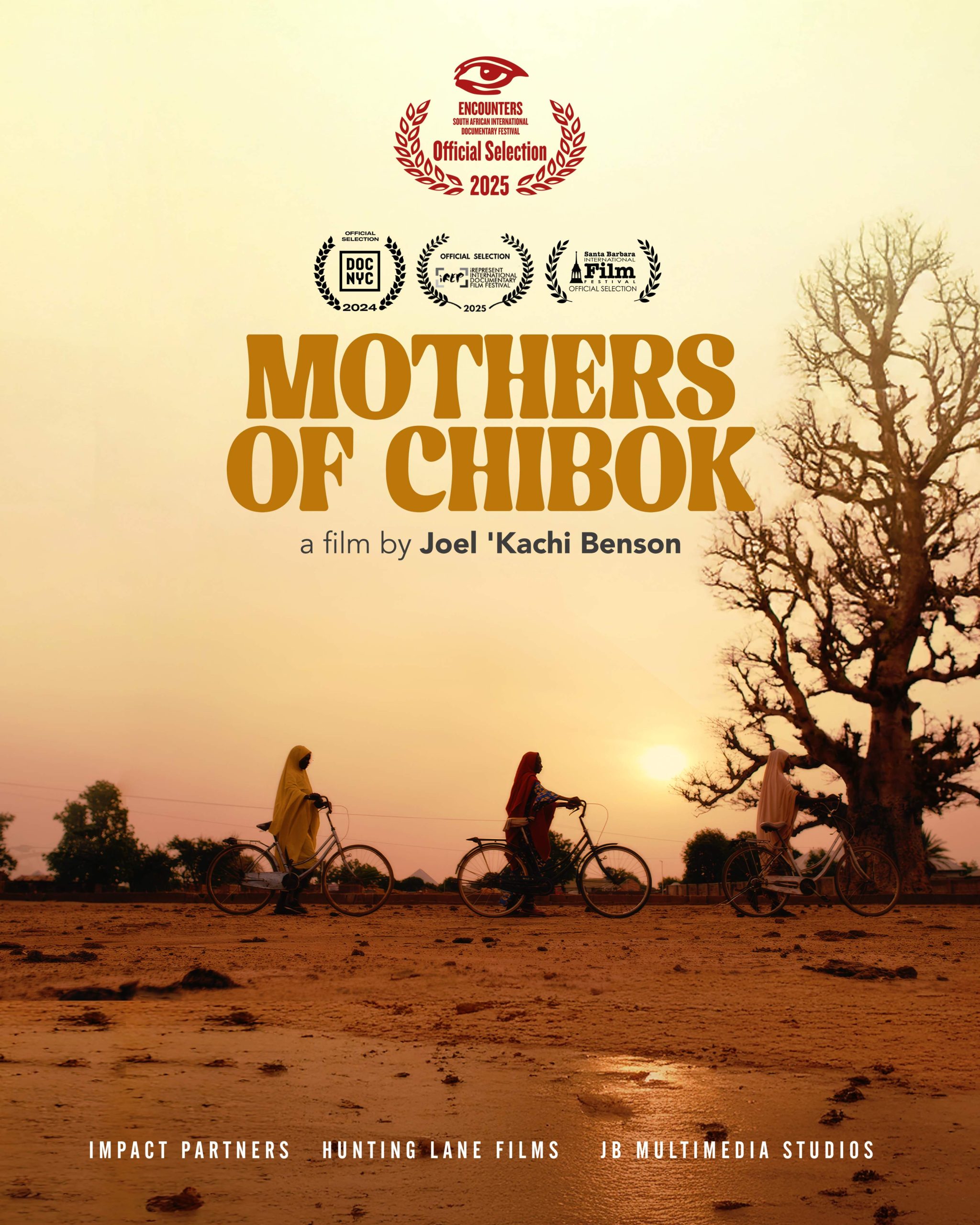
Mothers of Chibok, a US, Australian and Nigerian production directed by Nigerian filmmaker, Joel Kachi Benson, took home the Encounters Al Jazeera Award for Best African Feature Documentary.
By Vivian Nneka Nwajiaku
The winners of the 27th edition of Encounters South African International Documentary Film Festival have been announced, following the conclusion of the festival on Sunday, 29th June 2025.
Mothers of Chibok(2024), a US, Australian and Nigerian production directed by Nigerian filmmaker, Joel ‘Kachi Benson, took home the Encounters Al Jazeera Award for Best African Feature Documentary. Only three days before, Benson received the Outstanding Arts and Culture Documentary Emmy at the 46th Annual News & Documentary Emmy Awards, for his 2024 Disney original documentary, Madu.
Mothers of Chibok
Mothers of Chibok is the sequel to Benson’s 2019 documentary short, Daughters of Chibok, which won “Best Virtual Reality Story” at the 2019 Venice International Film Festival. The sequel follows a group of mothers in Chibok as they deal with loss and the struggle to educate their children in the wake of the 2014 Chibok Schoolgirls Kidnapping.
And She Didn’t Die(2025), a South African and UK production directed by South African filmmaker, Kethiwe Ngcobo, was recognised as the runner-up for Best African Feature Documentary and also won the Ronelle Loots Award for Best Edited South African Feature.
Ngcobo’s documentary is a tribute to the filmmaker’s mother, Lauretta Ngcobo, who was a renowned author, political activist, and parliamentarian. And She Didn’t Die chronicles the activist’s journey from a rural storyteller to a revolutionary, political exile, and celebrated feminist writer.
In the international documentary category, Put Your Soul on Your Hand and Walk(2025), a production of France and Palestine by Iranian director, Sepideh Farsi, won the Encounters Al Jazeera Award for Best International Feature Documentary.
Put Your Soul on Your Hand and Walk
Farsi’s film documents life under bombardment in Gaza through the perspective of the 25-year-old Palestinian journalist, Fatima Hassouna, who was unfortunately killed by an Israeli missile strike that targeted her family’s residence in April 2025 shortly before the film’s screening in the independent ACID sidebar of the 2025 Cannes Film Festival.
Union (2024), a US documentary by American director, Stephen Maing and Canadian director, Brett Story, was declared runner-up in the Best International Feature Documentary category. Union had its world premiere at the 2024 Sundance Film Festival andfollows a group of Amazon workers in Staten Island as they take on the powerful Amazon in the fight to unionise.
Union
In the shorts category, The Rock Speaks (2024), a South African and UK documentary directed by Francois Knoetze, Amy Louise Wilson and Joe-Yves Salankang Sa-Ngol, was awarded the Ster-Kinekor Encounters Youth Experience Award for Best African Short Documentary, with Guardian of the Well (2025), a Chadian film by directors Bentley Brown and Tahir Ben Mahamat Zene as runner-up.
The Rock Speaks is a hybrid AI documentary which navigates the trans-global technological production supply chain, from the perspective of a piece of cobalt, while Guardian of the Well explores the climate emergency through conversations that take place around a well in a local community.
Jessie Ayles’ Never Come Fetch Me(2024), a South African and UK collaboration about a young boy’s life on the streets of Cape Town’s ganglands, won the Ronelle Loots Award for Best Edited South African Short.
Never Come Fetch Me
Miki Redelinghuys, whose 2024 documentary, Mother City, won the Best African Documentary Award at the 2024 Africa International Film Festival, was awarded the Liezel Vermeulen Award for Service to the Documentary Sector.
Encounters South African International Documentary Film Festival is Africa’s premier documentary film festival. The festival, which was held in Cape Town and Johannesburg, South Africa, featured a diverse slate of documentaries, celebrating the best in documentary filmmaking from Africa and beyond.
As he closed his set at Tottenham Stadium in July 2023, Wizkid stood for a moment, shirtless, amidst a sea of over 62,000 people, as the projection of an eagle with wings of fire stood majestically over him on a large screen. The moment was symbolic, dense with meaning. Wizkid had just made history as the first African artist ever to sell out Tottenham Stadium. Here stood one of Afrobeats' biggest cultural exports, breaking another record and paving the way for those coming behind him. It was a
As he closed his set at Tottenham Stadium in July 2023,Wizkid stood for a moment, shirtless, amidst a sea of over 62,000 people, as the projection of an eagle with wings of fire stood majestically over him on a large screen.
The moment was symbolic, dense with meaning. Wizkid had just made history as the first African artist ever to sell out Tottenham Stadium. Here stood one of Afrobeats' biggest cultural exports, breaking another record and paving the way for those coming behind him. It was a moment to relish.
But what did it take to pull off such a feat? How did the expansive and structurally ambitious stage set-up come to life? What burdens or anxieties plagued him on the day of the event or during rehearsals? And, most importantly, what did that moment mean for his fans and the people who look up to him?
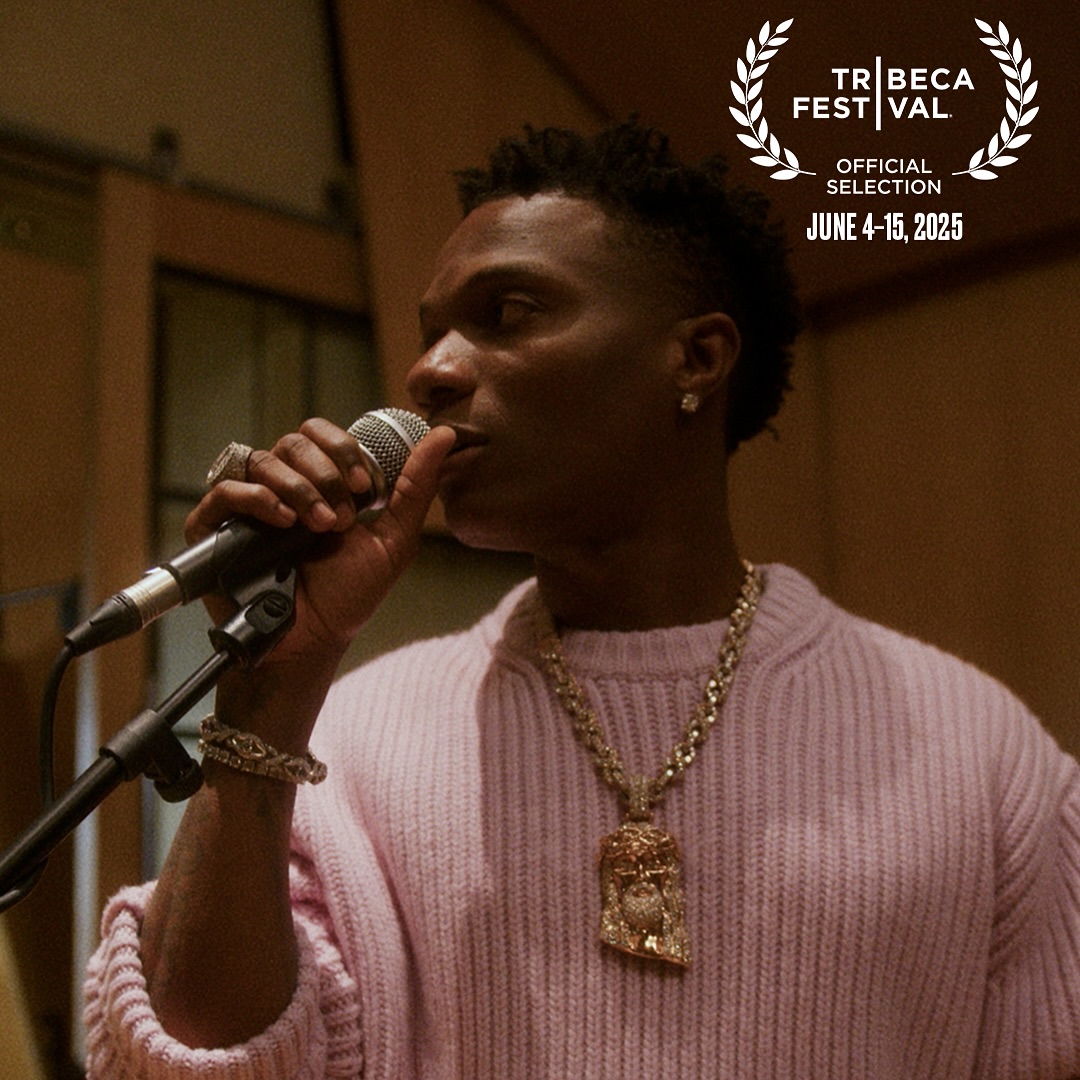
Wizkid: Long Live Lagos, a new documentary on Wizkid and his journey to performing at Tottenham Stadium, answers those questions. The documentary is set to premiere at the Tribeca Film Festival this Friday, June 6. It is directed by American filmmaker Karam Gill, who is also known for directing Lil Baby's documentary Untrapped: The Story of Lil Baby. Wizkid: Long Live Lagos is a deeply vulnerable look at a cultural figure navigating global stardom while staying true to his roots and trying to fulfill the promises he made to himself.
"It's the most intimate view of Wizkid I've ever seen," Seni Saraki, who co-produced the project, tells OkayAfrica. In 1 hour and 23 minutes, viewers will follow Wizkid from London to Surulere, the Lagos neighborhood that shaped him and remains his most crucial creative springboard. The documentary also takes the opportunity to examine the rise of Nigerian music, what it means to be a global star from the African continent, and the many burdens that come with that.
Cross-cultural movement
For Saraki, this documentary is a full-circle moment.
Towards the end of 2020, the same year Wizkid released his fourth album, one of the most culturally significant albums in global music history,Made In Lagos, Native Magazine, under Saraki's editorial guidance, did something simultaneously honorific and consequential.
Dedicating four different covers and an entire magazine to Wizkid, Native chronicled the rise and reach of Wizkid's impressive global stardom through an extensive profile of the man himself and also through the eyes of his managers, producers, visual artists, and the people his music has touched at one point or another. Called the Wizmag, it was a befitting celebration of a generational artist whose project was already piloting the rise of Afrobeats music in the late 2010s.
More than five years later, that editorial project helped provide a thorough, on-ground perspective of Wizkid for the documentary. It is through the cultural insight provided by that editorial project that the documentary was able to accurately contextualize and frame Wizkid through the eyes of the people who know him best. Having a Nigeria-based media outfit involved in the production of an important film about one of its brightest stars was also a necessary step in telling a culturally resonant story.
"I see how it would look like a full circle moment," Saraki tells OkayAfrica. "I think for us, it's a testament to what we tried to do when we started Native. When [Karam] was working on the film, he saw that Native kept coming up in the research, and then he stumbled on Wizmag."
Saraki says that the documentary is a candid look at the grueling work that goes into maintaining the level of excellence for which Wizkid's artistry is known. "You can't do that stuff by mistake," Saraki says. "There's a certain level of process and preparation and dedication to a craft to get to that level. I think this film shows, probably, the most intimate view we've seen from Nigeria to date in terms of this new generation of artists."
The way Saraki sees it, Wizkid: Long Live Lagos will come to be an important cultural artifact for emerging voices in the Nigerian music industry.
Examining the culture
As a storyteller himself, Seni Saraki has worked across print, music, and now film in a bid to understand and thoroughly examine the flow and bends of culture. With his magazine, for instance, Saraki sought to engage with Nigerian music on a cerebral level at a time when many were simply consuming it without contextualizing it. The central theme in his work and one of the key forces that drew him to the project Wizkid: Long Live Lagos is an appetite for stories or artists who can get people to care about something.
"Getting people to care, to have an opinion about something in this day and age, when there's such an impression on people's time, that means a lot, and that's how I pick a lot of my projects," he says.
With Long Live Lagos, Saraki says he is most excited about the scope of the project. The documentary also looks at the rise of stan culture in Nigeria, focusing on how Wizkid's massive fan base helped pioneer a movement of rallying around Nigerian artists and building entire ecosystems around fandom. This documentary takes the opportunity to delve into the psyche of that movement.
"What this film encapsulates is that the love of these figures [like Wizkid] has shifted to being about talent and what you're good at, and these guys are offering their music to the world. That's why stanship now feels bigger. It's not about how rich they are. There's still a section of society that loves them because they're rich, but it's now about 'I love Wizkid because this song did this for me at this time in my life,' Saraki explains.
As viewers get a peek into Wizkid's life and the technicalities that make him Wizkid, Saraki hopes that this project allows people to slow down and appreciate how far Afrobeats music and the Nigerian music industry have come.
"I hope people first see it as a celebration of Wizkid and the celebration of the genre and the movement as a whole. There's a lot of conversation around how Afrobeats is doing, whether we're making progress, and if the story has ended. But there's still a long way to go, and there's still stuff to do," Saraki says. "Sometimes we get so insular, but are there a lot of countries apart from America that have six potential stadium artists in another country? I don't know if five artists from Spain could sell out the Tottenham Stadium. That's not to say rest on your laurels and think you've made it, but some people have done some incredible things. I think that's one thing I want people to take away from the film."
La superstar de l’Afrobeats, Wizkid, a toujours eu la certitude de son succès, une vision qu’il a partagée lors d’une interview au Festival du film de Tribeca. L’artiste s’exprimait à l’occasion de la première de son documentaire très attendu, « Wizkid : Longue vie à Lagos ». Pour Wizkid, sa renommée actuelle est le fruit …
L’article Wizkid : de Lagos à la gloire, une vision inébranlable est apparu en premier sur Africa Top Success.
La superstar de l’Afrobeats, Wizkid, a toujours eu la certitude de son succès, une vision qu’il a partagée lors d’une interview au Festival du film de Tribeca. L’artiste s’exprimait à l’occasion de la première de son documentaire très attendu, « Wizkid : Longue vie à Lagos ». Pour Wizkid, sa renommée actuelle est le fruit …
May is gearing up to be an eventful month for African cinema across the continent and diaspora. With Egyptian and Tunisian directors presenting at Cannes, theatrical releases across Ghana, Nigeria, South Africa, and Senegal, plus streaming premieres from Kenya and Tanzania, filmmakers across the continent showcase their talents.Meanwhile, the New York African Film Festival brings 100 films from Africa and its diaspora to international audiences. Here's OkayAfrica’s guide to what's showing where
May is gearing up to be an eventful month for African cinema across the continent and diaspora. With Egyptian and Tunisian directors presenting at Cannes, theatrical releases across Ghana, Nigeria, South Africa, and Senegal, plus streaming premieres from Kenya and Tanzania, filmmakers across the continent showcase their talents.
Meanwhile, the New York African Film Festival brings 100 films from Africa and its diaspora to international audiences. Here's OkayAfrica’s guide to what's showing where this month.
North Africa — By Amuna Wagner
Cairo Cinema Days (Egypt)
Until the end of May, downtown Cairo's independent Zawya Cinema invites audiences to enjoy the eighth edition of the Cairo Cinema Days. The program showcases the latest Arab productions across the region to highlight acclaimed works from filmmakers shaping contemporary Arab cinema. One of the Egyptian must-watch films in this year's selection is Laila Abbas' Thank you for banking with us: After finding out that their father left a huge sum of money behind after his death, Mariam and Noura come up with an elaborate scheme to abscond with the money before their brother — who is legally entitled to half the inheritance — finds out about their father's death.
Where to watch: Zawya Cinema Cairo
Fanon (France, Tunisia)
Filmed in Tunisia but set in 1950s Algeria, Fanon is inspired by the life of the revolutionary psychiatrist Frantz Fanon, author of the seminal works "Black Skin, White Masks" and "The Wretched of the Earth." Fanon moved to Algeria when it was still a French colony and dedicated himself to the anti-colonial struggle. Directed by Jean-Claude Flamand Barny and starring Alexandre Bouyer, the film's storyline follows him and his wife Josie as they join Algeria's fight for independence.
Where to watch: Moroccan cinemas and other French-speaking countries in Africa
L'BUZZ (Morocco)
This comedy, directed by and starring Moroccan actor Dimna Bounaylat, tells the story of young people's desire to enter the world of celebrity through social media, by way of showcasing real or fictional talents and taking advantage of any opportunity to make money against the backdrop of a harsh, unstable life.
Where to watch: Moroccan cinemas
East Africa — By Paula Adhis
'The Mommy Club Tanzania' (Tanzania)
The hit South African reality series The Mommy Club expands east with The Mommy Club Tanzania, bringing the franchise's signature glamour and drama to Dar es Salaam. This new chapter follows five influential moms — actress and entrepreneur Rose Ndauka, comedian Pili Kitimtim, brand ambassador Marry Mtemi, humanitarian Riyama Ally, and fashion mogul Mwanahamisi Mziray — as they juggle parenting, power, and prestige in one of East Africa's most vibrant cities.
Where to watch: Showmax, new episodes on Fridays
'MTV Shuga Mashariki' (Kenya)
The iconic MTV Shuga franchise returns to Kenya with MTV Shuga Mashariki, a powerful new season that dives deep into the raw, unfiltered realities of campus life. Set at Enkare University, the series follows a group of students navigating love, betrayal, identity, mental health, and sexuality while balancing family expectations, social media pressures, and economic struggles. A wild night at Club Baze sets off a chain reaction of secrets, heartbreak, and life-altering choices, forcing each character to confront who they are when no one is watching.
With a stellar young cast of rising talent, the vision of well-respected Kenyan directors June Ndinya, Mkaiwawi "Mkay" Mwakaba, andLikarion Wainaina, and production by acclaimed producerReuben Odanga, MTV Shuga Mashariki blends compelling drama with urgent social commentary, tackling issues like consent, sexual health, gender norms, and financial independence.
Where to watch: Citizen TV, BET, and globally on YouTube from May 13.
West Africa — By Nelson C.J
My Mother Is A Witch (Nigeria)
My Mother Is A Witch follows the rupturing of a relationship between a woman and her daughter and the world of misremembering and hurt that follows. After an ailing woman tricks her estranged daughter into returning home to see her, the painful history between them unfurls into a return to the past and its complicated impact on the present. It's a film about memories, moving places, and finding new demons in old places. Set between London and Benin, Nigeria, the film stars Efe Irele (Hey you!, The House of Secrets, Farmer's Bride, 2 Weeks in Lagos), Mercy Aigbe (Ada Omo Daddy, 77 Bullets, Lagos Real Fake Life, Palavah!), Timini Egbuson (Big Love, A Tribe Called Judah, Breaded Life), and others.
Where to watch: Now showing in cinemas
Check-In (Ghana)
Welcome to a day at Adinkra Hotel, a quaint hotel in Ghana, home to a world of hilarious and intriguing stories unfolding over 24 hours. This comedy flick follows the stories of different people who check into the hotel and the various troubles and situations they get into. The film stars Bella Agyeman, Clemento Suarez, Clinton Odoi, Felicia Osei, Fiifi Jefferson Pratt, Gideon Kojo, Priscilla Okpoku Agyeman, and others.
Where to watch: Silverbird Cinema Accra
Timpi Tampa (Senegal)
Adama Bineta Sow's latest film is a startlingly gorgeous satire that makes bold statements on beauty standards and socio-cultural pressures. Timpi Tampa follows a young man whose mother poisons herself after years of using bleaching creams and forcefully lightening her skin. With a sordid view of how punishing Western beauty standards can be, the man enrolls in a beauty pageant disguised as a woman to make a statement. Timpi Tampa is darkly funny, frank about the weight of its subject, and socially aware. The film examines the many ways beauty can be interpreted while training its eye on the cost of making a statement. The film stars Pope Aly Diop, Yacine Sow Dumon, Awa Djiga Kane, Jean Pierre Coly, and others.
Where to watch: Pathé Cinema
Southern Africa — By Tseliso Monaheng
Unseen Season 2 (South Africa)
One of the most streamed shows on the African continent when it debuted two years ago, Unseen is back for an action-packed second season that will leave your seat's edges in tatters. Based on the Turkish series Fatma, the show follows Zenzi (played by Gail Mabalane), an isolated prisoner who must navigate harsh conditions by forging uneasy alliances. Following a betrayal, she escapes prison in search of freedom and vengeance.
Where to watch: Netflix
'Sabbatical (South Africa)
Sabbatical is a film about the emotional cost of success. Lesego, played by Mona Monyane, is a fast-rising executive on track to become CEO at the company she works for. A night out ends up with her back in her mother's place. Dazed, she wakes up to a series of calls and messages from her workplace. There is a scandal that threatens to destroy all that she has worked for. Will she sink or swim? Sabbatical is writer and director Karabo Lediga's debut feature film, and it received rave reviews when it premiered at the International Film Festival Rotterdam in February. Produced by Diprente (Catching Feelings, Matwetwe), the film also stars Clementine Mosimane as Lesego's mother, Doris, and renowned comedian Loyiso Gola, who plays the shrewd detective Percy Mthimkhulu.
The New York African Film Festival (NYAFF) returns for its 32nd edition, running from May 7 under the theme "Fluid Horizons: A Shifting Lens on a Hopeful World." This year's festival celebrates the resilience of African youth and young filmmakers, with 100 African and diaspora films being screened.
The festival opens with Afolabi Olalekan's fast-paced thriller Freedom Way, while Ntare Guma Mbaho Mwine's Memories of Love Returned is the centerpiece film. Other noteworthy films include Black Tea by Abderrahmane Sissako, Juju Factory by Balufu Bakupa-Kanyinda, and Furu by Fatou Cissé.
The festival closes with "In the Arms of the Mother," a shorts program highlighting films by or about African women, including the world premiere of Kounkou Hoveyda's We Will Be Who We Are and the U.S. premiere of Zoé Cauwet's Le Grand Calao.
OkayAfrica will be co-presenting a post-screening Q&A with acclaimed filmmaker Abderrahmane Sissako at this year’s New York African Fill Festival (NYAFF). The session will take place after the New York Premiere of Sissako’s latest feature film, Black Tea, which was nominated for the Golden Bear award at last year’s Berlin Film Festival.Black Tea tenderly unfolds the experiences of Aya (Nina Mélo), a young woman who ditches getting married on her wedding day and leaves Cȏte d’Ivoire for the “
OkayAfrica will be co-presenting a post-screening Q&A with acclaimed filmmaker Abderrahmane Sissako at this year’s New York African Fill Festival (NYAFF). The session will take place after the New York Premiere of Sissako’s latest feature film, Black Tea, which was nominated for the Golden Bear award at last year’s Berlin Film Festival.
Black Tea tenderly unfolds the experiences of Aya (Nina Mélo), a young woman who ditches getting married on her wedding day and leaves Cȏte d’Ivoire for the “Chocolate City” of Guangzhou, China. Cai (Chang Han) hires Aya to work in a tea boutique, and the friendship between the two warms into romance as he initiates Aya into the tea ceremony.
Over the film’s near-two-hour runtime, Chinese culture and ancient art meet African diaspora, as the two main characters intertwine in poetic ways, facing their pasts and letting go of their burdens to give their feelings a wholesome chance.
Black Tea is another remarkable addition to Sissako’s filmography; the Malian Mauritanian director has been celebrated as one of the most distinct auteurs in African cinema, with notable films like La Vie Sur Terre (1998) and Bamako (2006). Considered his opus, his 2014 film Timbuktu is an enveloping portrayal of a community’s resistance to religious extremism and a deft criticism of the hypocrisy of jihadists.
At the Q&A session, Sissako will discuss the distinct elements of Black Tea and the unique traits that have made him an acclaimed filmmaker. Also at this year’s NYAFF, Sissako will be one of four African filmmakers discussing the creative shifts and enduring themes shaping African cinema during a panel discussion co-hosted by OkayAfrica.
You can get tickets to the Q&A session on May 8 here.
Photo Credit: Wizkid/Instagram
Wizkid is bringing Lagos to New York this June. His new documentary, “Long Live Lagos,” will premiere at the 2025 Tribeca Film Festival, which runs from June 1 to 15.
Directed by Karam Gill and produced with Daniel Malikyar, the film shares a personal look at Wizkid’s story — from his early days in Surulere to performing on some of the world’s biggest stages. It reflects the energy of Lagos and the experiences that have shaped his sound and career.
Sharing a note o
Wizkid is bringing Lagos to New York this June. His new documentary, “Long Live Lagos,” will premiere at the 2025 Tribeca Film Festival, which runs from June 1 to 15.
Directed by KaramGill and produced with DanielMalikyar, the film shares a personal look at Wizkid’s story — from his early days in Surulere to performing on some of the world’s biggest stages. It reflects the energy of Lagos and the experiences that have shaped his sound and career.
Sharing a note on Instagram, Wizkid wrote: “We made this documentary when life got crazy for me. Playing Tottenham Hotspur Stadium while dealing with life! Glad I get to have my amazing fans and family on this journey with me. This is love! From a real place!”
Screening details are still to come, but the documentary is expected to be a key part of this year’s festival.

 Connexion