
Vue normale

Reçu avant avant-hier

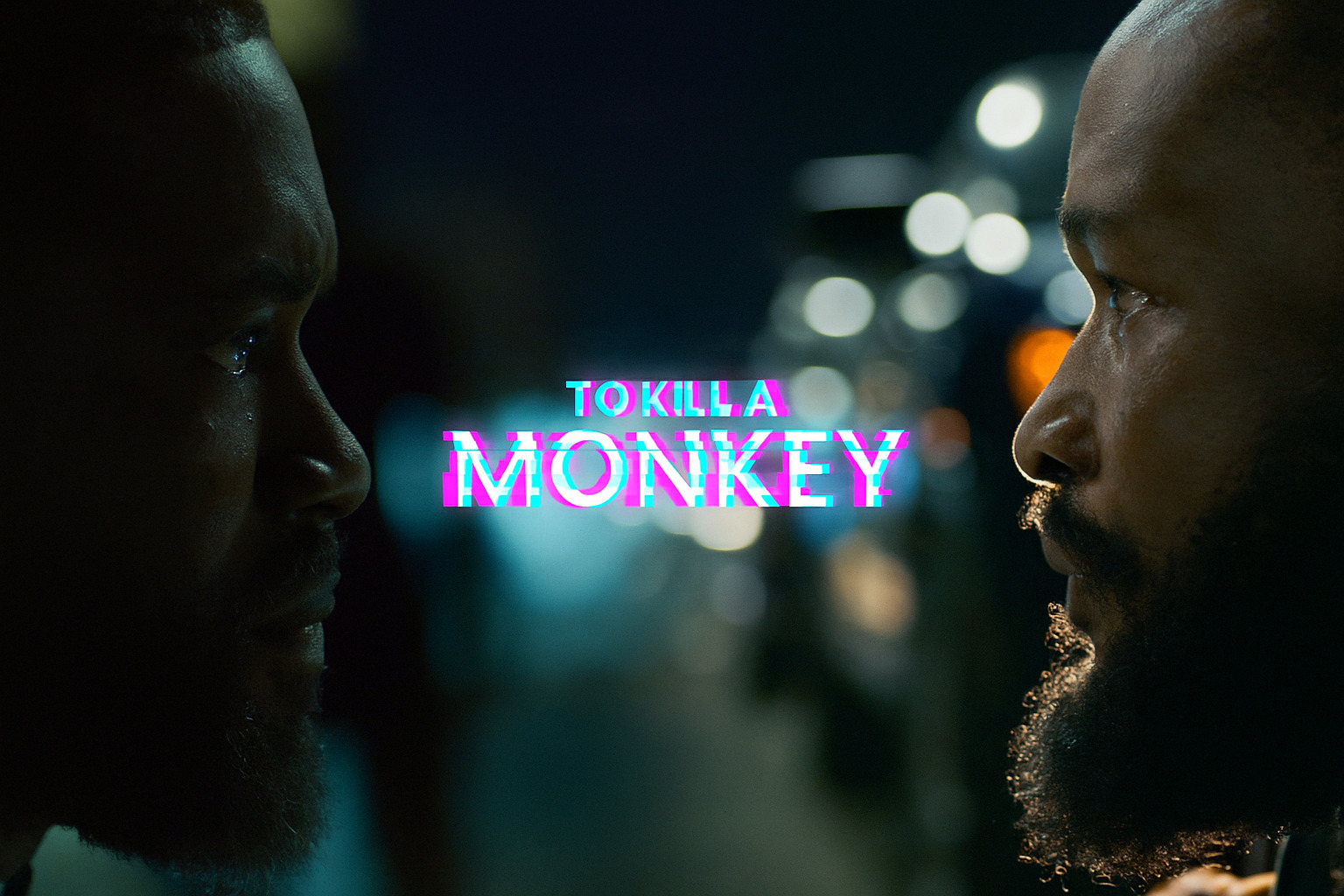
“To Kill a Monkey” Review: Kemi Adetiba’s Exciting Crime Thriller Series Is a Lesson in How Not to Tell a Story

26 juillet 2025 à 08:12

For all the fuss about cybercrime and money in this show, the crime world of To Kill a Monkey is bland, feeble, and visually non-existent.

By Vivian Nneka Nwajiaku

There is more than one way to kill a monkey. But one way that certainly doesn’t work is by talking about how to do it. If there are areas in life where that rule does not apply, screen culture is not one of them. Because in film and TV, the rule is almost sacrosanct: you don’t tell a story by telling it, you tell it by showing.

And this is the primary failure of Kemi Adetiba Visuals’ hotly anticipated Netflix-commissioned crime thriller limited series: To Kill a Monkey (2025) talks so much that if you only listened without watching, you would not miss a lot. 

There’s an opening sequence with an occult ambience, but To Kill a Monkey begins properly with a voiceover narration. The show’s lead, Efemini “Efe” Edewor (a remarkable William Benson, with a steady grip on his character’s range), husband, father and poverty-stricken first class graduate who once hated his own poor father and now feels empathy for him after having himself experienced raising a child in poverty, is stealing Wi-Fi from a facility to improve on his programming skills. We know these because he tells us, in so many words.

His wife, Nosa (Stella Damasus), is pregnant with triplets, news that makes his supervisor (Emeka Okoye) at the restaurant where he works tell him that God doesn’t like him. When only two of the triplets survive because they were severely underweight, Efe weeps, and though we can perceive that his tears are triggered partly by the pain of losing a child to poverty and partly by relief that he has one less child to provide for, Efe helps explain to us (by explaining to the doctor in the first episode, and to a law enforcement officer later on) that he in fact feels relief and guilt.

But his luck changes when he re-encounters an old acquaintance. Played by a larger-than-life Bucci Franklin who owns the screen every time, the brash Obozuhiomwem, simply called “Oboz”, offers Efe a life-changing job. But Oboz runs a cyber fraud organisation, so Efe is initially hesitant to take up the offer. He doesn’t have the liver for it, he says.

However, when his poverty becomes unbearable, including incidents of workplace sexual harassment by a superior (a superb Constance Owoyomi), domestic sexual harassment experienced by his older daughter (Teniola Aladese) at the hands of a relative, and newborn babies who are hungry because their mother is too malnourished to produce milk, Efe returns to Oboz with a counter-offer. With his tech knowledge, and this amazing new tech called artificial intelligence—it’s certainly amazing to Oboz—they can exploit cybersecurity weaknesses and game the system, he explains.

To Kill a Monkey
To Kill a Monkey

Of course, the idea that you can steal a person’s physical appearance to defraud their loved ones blows the mind of the streetwise Oboz. It blows our minds, too. It’s an early highlight in the series and a timely plug-in for the real-life questions about digital safety and wellbeing in the AI era, especially in light of the internet fraud (aka “yahoo”) menace in Nigeria. Who wouldn’t want to watch it play out? 

Except, we don’t get to. To Kill a Monkey jumps four years into a future where Efemini’s family is now comfortable in wealth, and Oboz is now so much wealthier that he can easily afford a yacht. After two episodes of romanticising Efe’s poverty and hyping him up as a tech wiz, we don’t get to see him start to touch money. Neither do we get even one scene out of eight episodes where we see Oboz’s fraudulent empire actually take advantage of the almighty AI.

As a matter of fact, we don’t see how Oboz’s criminal empire operates beyond the one dramatised sequence in the first episode where Oboz makes his initial offer to Efe. For all the fuss about cybercrime and money in this show, the crime world of To Kill a Monkey is bland, feeble, and visually non-existent.

In the one plot point where To Kill a Monkey cares about showing, we are introduced to Inspector Mo Ogunlesi (Bimbo Akintola), an agent of the Nigeria Cyber Crime Commission who suffers from post traumatic stress disorder after losing her entire family in an accident. We don’t see the accident happen, but at least we know when it does, and we see how it affects her.

Returning to work after the time jump, Inspector Mo spends the rest of the show trying to manage her mental health and to prove that she can still do the work. She forms an alliance with Inspector Onome (Michael O. Ejoor), and together, they offer some of the more refreshing interactions in the series, and even more insight into the workings of the cybercrime world than the show’s cybercriminals themselves.

But her investigation is delivered inadequately and incoherently, with the screenplay hyperfocused on painting her as unreliable, at least to her direct superior (Ireti Doyle). In her scenes, the series attempts to take on a psychological thriller atmosphere, and it’s laid on so thick and so repetitively that it’s easier to be exhausted by her than to empathise with her.

At least, a good deal of Inspector Mo’s story is shown, which is more than we can say for others. The characters of To Kill a Monkey recite away actions, motivations, backstories, and even their behaviours. We’re supposed to believe that one character habitually neglects her children not because the series establishes a pattern—it does not—but because another character accuses her of it. And we have to accept that important events have taken place, like the raiding of clandestine cells that we did not even know still existed, just because characters report that they happened.

Even To Kill a Monkey’s most explicit villain, an old taker called Teacher (Chidi Mokeme, doing his best to render a villain that’s nothing more than fodder), who spends most of the series brooding over his losses and repeating the same threats, is introduced via dialogue, interspersed with sprinkles of his family life that only serve as a quick setup for the next grand event of gangsterism that Kemi Adetiba, the series’ creator, is eager to pull off.

To Kill a Monkey
Bucci Franklin in a Still from To Kill a Monkey

And oh, Adetiba loves her grand events. Her references, too. Little details that do get shown, like envies and rivalries, are abandoned halfway in favour of bombastic moments that are often middling versions of foreign cult classics—some are KAV originals, though—and are barely established.

Adetiba cannot let us forget that this show comes from the same source as the King of Boys franchise, Nollywood’s answer to The Godfather. So, she lines up big gangster moments from the earliest point that she can to the last moment of the show, most of which, like many of the plot twists in this show, are manufactured and then explained away with some grandiose speech.

Don’t even get me started on the stressful Tarantino-esque monologues and dialogues that the characters in this show love to deliver, except that, unlike Quentin Tarantino, Adetiba’s monologues and dialogues are only mildly interesting, low stakes, and often end with no immediate consequences.

In one annoying instance, a character called Sparkles, played by Sunshine Rosman, delivers a lengthy monologue about her life’s story in a bid to make a point that she spends the rest of the show deviating from. And in another, Mokeme’s Teacher spends minutes outlining his supposedly intense plans for vengeance, only for us to watch so many of those plans fail.

In fact, there is so much yapping in To Kill a Monkey that in the finale, after a little speech that dampens what should have been a more interesting start to the final showdown, Efemini tells Inspector Mo, “This talking thing has truly now gone too far”. He could not be more right. And yet, his words are soon followed by a closing sequence that uses another voiceover narration to abruptly tie up major plot points.

For a film, that would be haphazard writing, but for an eight-episode TV series with all the space in the world for a story this simple to unfold properly, it’s even more egregious. Adetiba, who serves as the sole writer and director on all eight episodes of To Kill a Monkey, while also producing and editing, exhibits an overreliance on herself so much so that she doesn’t appear to have consultants of the type who can tell her that divorce agreements are not a thing in Nigeria, or that writing for TV is quite different from writing for film.

And that is indeed a part of the writing problem of To Kill a Monkey, that it isn’t structured like a TV series in the first place. Granted, TV in the streaming era is now skewed towards the binge model, but even with that evolution, good television still values the essence of the episodic format for a project with such lengthy duration.

To Kill a Monkey
William Benson in a Still from TKAM

Television typically distills the overall narrative into smaller, purposeful beats and breaks its story into tighter arcs with episodic climaxes. When rightly done, the result is storytelling that is effective and also maintains suspense. Not To Kill a Monkey, though. This one is a series that plays like one unending film with an inconsistent rhythm and barely any suspense.

Because To Kill a Monkey is focused not on unfolding the story but on exciting audiences with big thrills—and it is, in fact, exciting—characters are whoever the plot needs them to be at any point in time. And so, they feel more like plot devices than characters. Efemini is expectedly the most complex, and Oboz the most interesting, albeit underdeveloped, but the appeal of both and practically all the characters is less in their characterisation and more in the performances of the actors who portray them.

It’s a delight to watch Bucci Franklin and William Benson onscreen together, and scenes that have Oboz and Efe sparring are just spellbinding. Lilian Afegbai is fascinating as Idia, Oboz’s wife, and the contrast between her character and that of Nosa, played by the more experienced and appropriately moderate Stella Damasus, is entertaining to watch.

The unsung heroes here are the costume and set design departments, how they give finishing to the characters, especially the nouveaux riches, or the money-miss-road as we call them in these parts. But the element more likely to get praise is the original score by Oscar Heman-Ackah, the acclaimed music producer whose upcoming political musical drama, Finding Messiah, is also highly anticipated.

To Kill a Monkey
Bucci Franklin and William Benson in a Still from To Kill a Monkey

Unfortunately, having watched the viral Finding Messiah teaser, it’s not difficult to see how the atmosphere of that film may have seeped into the music of To Kill a Monkey. It really is a brilliant composition. But instead of propping up the film, it’s distracting, and its volume is in competition with the diegetic sound.

It’s saddening that To Kill a Monkey is nowhere near the excellence we hoped for. Sure, it’s exciting TV, but it’s also a lesson in bad storytelling. For a reference-heavy, Netflix-commissioned series, clearly, aspiration is not in scarce supply. And for a project from the stables of Kemi Adetiba Visuals, I don’t believe that it is talent or capacity that is missing. Perhaps, we are just content with excitement and spectacle. Hoorah, I guess?

Rating: 2.8/5

*To Kill a Monkey is streaming on Netflix.

Vivian Nneka Nwajiaku is a writer, film critic, TV lover, and occasional storyteller writing from Lagos. She has a master’s degree in law but spends most of her time watching, reading about and discussing films and TV shows. She’s particularly concerned about what art has to say about society’s relationship with women. Connect with her on X @Nneka_Viv

The post “To Kill a Monkey” Review: Kemi Adetiba’s Exciting Crime Thriller Series Is a Lesson in How Not to Tell a Story first appeared on Afrocritik.

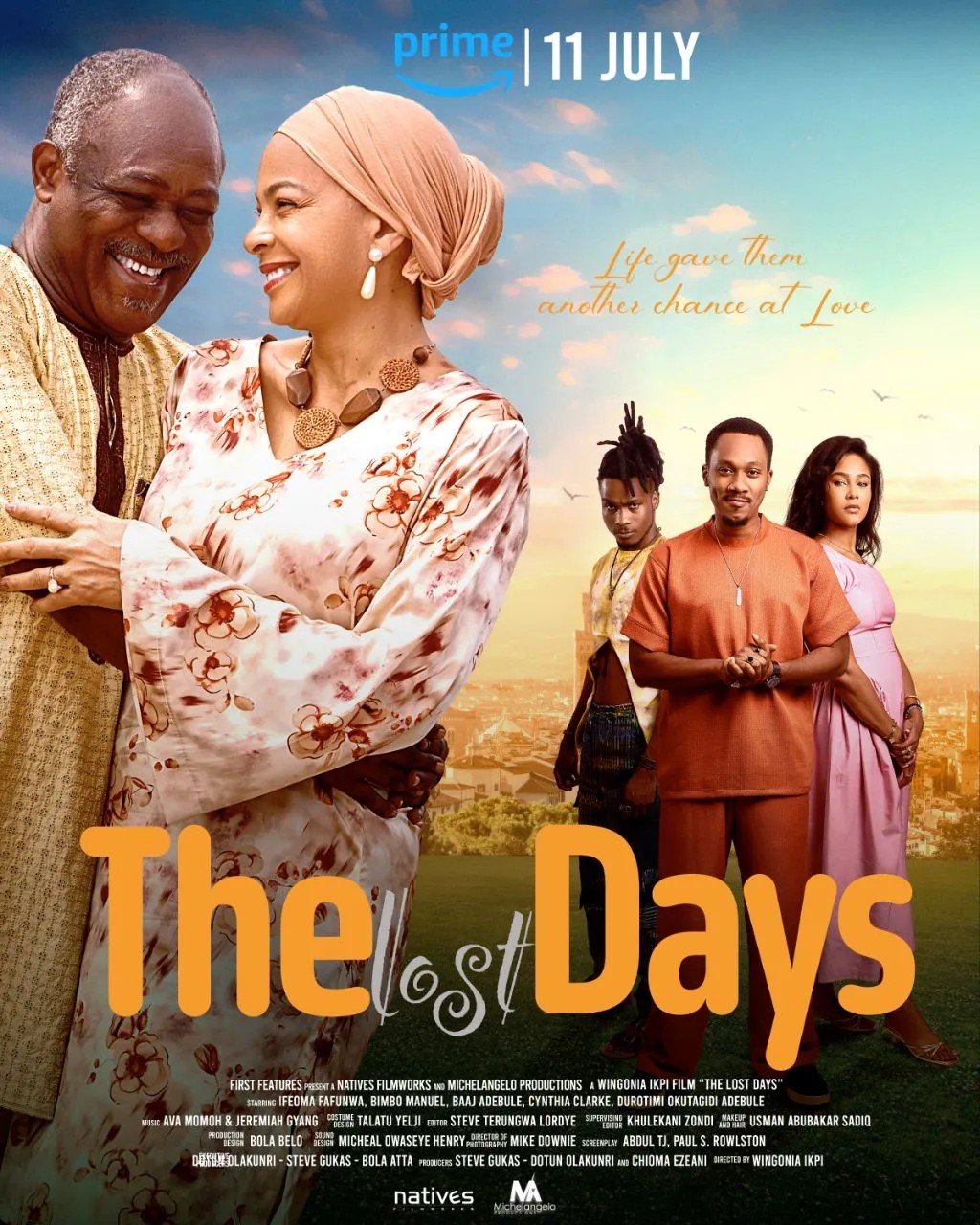
“The Lost Days” Review: Wingonia Ikpi’s First Feature Starts Strong but Crashes Halfway into the Journey

25 juillet 2025 à 07:46

There’s a lot of communication via body language in this film, and for the most part, it’s the actors, under Wingonia Ikpi’s direction, who give The Lost Days its heart and emotional heft.

By Vivian Nneka Nwajiaku

The first half of Wingonia Ikpi’s slow burn debut feature, The Lost Days (2025), is solid. That it features an older couple in what looks like a second chance romance trope already sells it to anyone who likes a good romance. That it takes place predominantly in a small town that looks alive sets it apart from most of mainstream Nollywood. And with familial frictions and tensions of the past as its conflict, it sounds like a perfect recipe for an interesting drama.

The Lost Days is about a wealthy woman on a journey of recovery and reconnection. Chisom Agu, a business magnate and widow, has just been informed that she’s in remission after an arduous battle with Hodgkin lymphoma. As people are wont to do when they face death and make it out alive, Chisom takes her second chance seriously, eager to confront her past regrets.

Confronting her past means going home, so she embarks on a trip. Her daughter assumes she means their hometown in Nsukka. And though Chisom allows her daughter to hold that impression, she leaves Lagos for a different kind of home, one that’s situated in Siun village, Ogun State, where she hopes to reconnect with the man she loved in her youth and the son she left behind.

The Lost Days
The Lost Days

In an immaculate debut screen performance, seasoned theatre professional, Ifeoma Fafunnwa stars in the lead as Chisom. Bimbo Manuel plays her past lover, Kolawole, aka Baba Kola, a widowed father of two men. Baba Kola comes onscreen without fanfare, a curious introduction for a character who is a physical manifestation of Chisom’s past and regrets. But it’s easy to forgive once interaction, laden with awkwardness and tension, between Chisom and Kola kicks off.

Fafunnwa carries a natural warm presence, but she’s also a skilled performer, deeply emotive but very controlled. And Manuel remains that veteran actor you can rely on to be modest in his deliveries but always effective. When they interact, the appeal is not so much what they say but how they say it. There’s a lot of communication via body language in this film, and it works so well in saying what’s left unsaid, in hinting at secrets harboured, regrets suppressed, and grief masked.

Ikpi has a good eye for directing, aided by her background in production, and it’s evident in how she uses everything onscreen to tell the film’s story and establish its characters, from the choice of locations to the production design, to the casting choices, and even down to the colour of clothing on the characters’ backs. But for the most part, it’s the actors, under Ikpi’s direction, who give The Lost Days its heart and emotional heft.

Fafunwa’s Chisom is at the centre of this film, and Manuel’s Baba Kola is at the very least the male lead, but the cast of The Lost Days feels like an ensemble. Chisom’s daughter, Nkem (played by Cynthia Clarke, gorgeous and well-suited to the role, but considerably lacking in acting range), is certainly a supporting character through and through, but Baba Kola’s sons, Moses (Baaj Adebule) and Kola (Durotimi Okutagidi), take up plenty of space in the story, with strong enough performances to match.

The Lost Days
Still from The Lost Days

Baba Kola’s sons know some parts of their father’s secret past, at least as much as their late mother shared with them. So, of course, they have notes on the re-emergence of this woman he calls his old friend. But where one son is receptive, the other is not. Kola, the younger son and apparent black sheep who doesn’t mind that his father has his sights set on a woman for the first time in the decade since their mum’s passing, very much minds that the new woman is the woman his father would have preferred to marry over their mother.

As a result, the dynamics between each son and Chisom, and by extension Baba Kola, are far apart, with one end offering reprieve to balance out the agitation on the other end. But both parallels have an allure to them that could have provided valuable support for the film’s main plot, especially in light of the very early revelation that she birthed one of those sons, if Abdul Tijani-Ahmed’s screenplay had just let the story tell itself.

Okutagidi is an undeniable talent, embodying the entirety of Kola, arguably the most complex of the characters: his anger, his hurt, his grief, his love, and even his little joys. And Adebule holds his own, doing his very best to sell an underdeveloped and perplexing character, despite the excesses in his performance in the film’s second half.

Which brings me to the film’s second half, and I mean half both literally and conceptually. Midway into The Lost Days, the plot takes a detour into an unwarranted crime subplot and becomes a thriller of sorts, anchored by a kidnapping incident that plunges both the film and its characters into utter confusion. 

The Lost Days
Still from The Lost Days

While the subplot manages to maintain the pace of the first half, at least as much as it can as a thriller, it derails the main plot, distracts from the heart of the film, and fundamentally undermines the emotional base that the first half laboured to establish. Not only is it a subplot that stunts the development of the primary plot, it’s not even mildly developed or logical. Characters’ actions are beyond far-fetched, motivations are thoroughly unconvincing, and the dialogue is just flimsy, all to serve a plot twist that isn’t shocking enough to have shock value.

And so, what could have been an easy ninety-minute watch that makes a soft statement about family, love and life ends up being a two-hour watch that says too little, despite its preachiness. The Lost Days does signal a promising future for Wingonia Ikpi in the director’s chair. Hopefully, that future comes with better material to work with.

Rating: 3/5

*The Lost Days is streaming on Prime Video.

Vivian Nneka Nwajiaku is a writer, film critic, TV lover, and occasional storyteller writing from Lagos. She has a master’s degree in law but spends most of her time watching, reading about and discussing films and TV shows. She’s particularly concerned about what art has to say about society’s relationship with women. Connect with her on X @Nneka_Viv

The post “The Lost Days” Review: Wingonia Ikpi’s First Feature Starts Strong but Crashes Halfway into the Journey first appeared on Afrocritik.

  • ✇Afrocritik
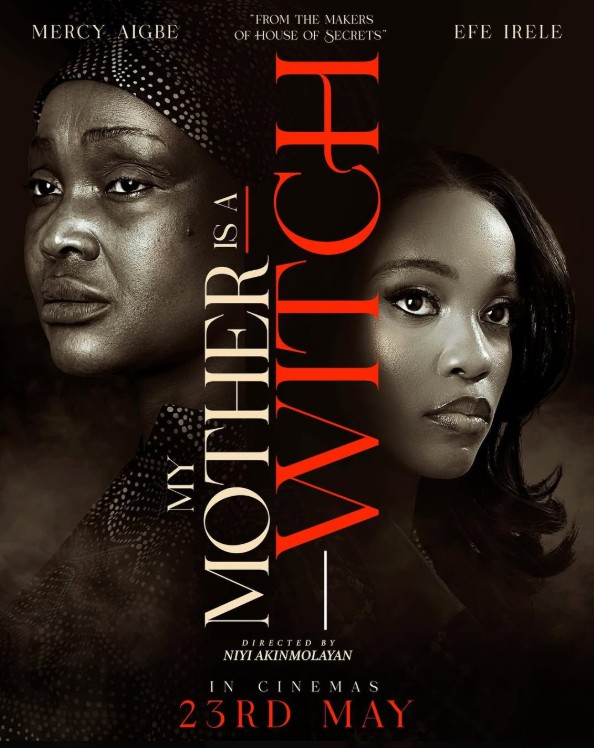
  • “My Mother Is a Witch” Review: Niyi Akinmolayan Explores Intergenerational Trauma in Provocative Drama
    My Mother Is a Witch is one of Niyi Akinmolayan’s most decent endeavours, with strong performances from a leading cast that carries the emotional weight of the film, aided by the film’s sombre tone. By Vivian Nneka Nwajiaku When I first heard of Niyi Akinmolayan’s latest release, My Mother Is a Witch (2025), I was reminded of a comment made by Oge Obasi during an Afrocritik interview after the C. J. “Fiery” Obasi-directed Mami Wata (2023), which she produced and premiered at Sundance. She’d be
     

“My Mother Is a Witch” Review: Niyi Akinmolayan Explores Intergenerational Trauma in Provocative Drama

14 juin 2025 à 09:22

My Mother Is a Witch is one of Niyi Akinmolayan’s most decent endeavours, with strong performances from a leading cast that carries the emotional weight of the film, aided by the film’s sombre tone.

By Vivian Nneka Nwajiaku

When I first heard of Niyi Akinmolayan’s latest release, My Mother Is a Witch (2025), I was reminded of a comment made by Oge Obasi during an Afrocritik interview after the C. J. “Fiery” Obasi-directed Mami Wata (2023), which she produced and premiered at Sundance.

She’d been asked about challenges that came up while shooting the film, and she responded: “We were making a film about Mami Wata. Typically, in Nigeria, we got a lot of ‘God forbid. Are you people Christians? Don’t you believe in God?’” And I immediately felt guilty about how difficult I was finding it to say the title of Akinmolayan’s film.

Yet, being a Nigerian with Nigerian sensibilities, it was a first instinct to dissociate from a title that is essentially a negative statement with such personal phrasing. And it obviously wasn’t just me. When I made a call to a cinema to confirm showtimes for My Mother Is a Witch, the respondent’s first reply was “Your mother” before course-correcting. And when I got to the cinema, both the attendant and I dropped the “My” and avoided the title as much as possible.

But that’s the essence of My Mother Is a Witch, a film that is intended to provoke both thought and discomfort, confronting intergenerational trauma and the weight of familial dysfunction with a complicated mother-daughter relationship at its centre. Mercy Aigbe and Efe Irele bring the mother and daughter to life, leading an appropriately small cast that serves the story effectively.

Aigbe plays the mother, Adesuwa, and Irele the daughter. Her mother calls her Imuetiyan, but she prefers Jess, short for Jessica. When the film opens, we see her first—in the UK where she’s spent twelve years and has built a career in fashion, working with British Vogue. But on the day we meet her, she gets a video message from a doctor back home in Benin, Nigeria. Her mother has passed on, and her last wish was for her daughter’s forgiveness and for a decent burial.

My Mother Is a Witch

As she lights a smoke in the balcony of her near-lifeless UK flat that she now calls home, you can immediately tell that Jess’ feelings about the matter are much more complicated than grief; that grief might not even be in the picture. Yet, Jess packs a bag to return to the country she once swore she’d never come back to, where condoling neighbours whom she distrusts hover around her and an unpleasant surprise awaits her, and where she’ll eventually take us—and Doctor Ayo (Timini Egbuson)—through her past and the events that damaged both her and her mother.

Writer-director Niyi Akinmolayan (The Man for the Job (2022); The House of Secrets (2023); Lisabi: The Uprising (2024)) has said that My Mother Is a Witch comes from a personal place for him. And you can very easily tell from how intimately he approaches the story, how contained he keeps it, how tenderly he directs it, and how affectionately he captures the dichotomy of home.

Despite the damage that weighs down  the characters’ hometown, in Benin, the town is photographed through a loving lens, even if Jess is too preoccupied with the torturous memories to admire it with us. Home in Benin is alive, populated and brimming with personality (although unusually lacking in evidence of catholicism which the film later relies on in its message of confession and reconciliation), a stark contrast to the orderliness and flatness of the UK home she’s desperate to get back to.

But before she can return, Jess—and the film itself—must resolve the internal and external conflicts. So, complications arise that keep Jess stranded in Benin, providing her with opportunities to hash things out and find closure, including confrontations with her mother that she had not expected when she boarded her flight at Manchester.

All familial relationships are complex, but mother-daughter relationships are complex in a way that is fundamentally different from the complexity of, say, father-daughter or mother-son relationships. There’s often a specific layer of tension, informed by gendered expectations, that tends to create a rift between a mother who knows the reality of womanhood in a very gendered society and a daughter who just wants to live.

My Mother Is a Witch
Stills from My Mother Is a Witch

My Mother Is a Witch has glimpses of that dynamic. Adesuwa’s cruelty and insecurities are triggered by a fear of the possibility that her daughter could end up an inadequately-educated single mother like her, with the accompanying abuse and other gendered disadvantages.

But My Mother Is a Witch does not go beyond glimpses. Instead, it crafts a generic parent-child conflict that is only devastating because it features the worst possible form of parental cruelty. Then, it wraps the conflict in Hollywood teen-speak. While Adesuwa is credible as a Nigerian mother, teenage Imuetiyan (as Jess is called at home) feels like she’s ripped out of a Ginny & Georgia (2021) episode. And so, the conflict, as important as it is and as relatable as it tries to be, sometimes feels too out-of-touch with reality, pulling you out of a film that is supposedly steeped in reality.

It doesn’t help that the opportunities for confrontation that My Mother Is a Witch painstakingly creates are not utilised beyond rehashing the conflict itself. Mother and daughter are put on screen only to remind us that they once loved each other very much and now can’t be in the same room together. And when they’re both finally at a place where resolution and healing can start to happen, the film leap frogs past the stages of reconciliation, moving from deep-seated, decade-old, completely valid anger and hurt to forgiveness and closure in one fell swoop.

There is a beautiful memory montage and an evocative mirror scene which serve, together, as the vehicle through which the conflict comes to a head and is resolved. It’s a sequence that is as tender as it is moving. But it’s also a reflection of the defining problem of this film. My Mother Is a Witch handles its resolution in a way that men think women handle conflict, with one big emotional outburst.

My Mother Is a Witch

There is no conversation, no real baring of souls, no hashing-out. Just an emotional song anchored by tears from a mother whom her daughter ordinarily believes to be manipulative and self-centred. My Mother Is a Witch forgets that it is a film that deals with women, and women talk.

Still, My Mother Is a Witch is one of Akinmolayan’s most decent endeavours, with strong performances from a leading cast that carries the emotional weight of the film, aided by the film’s sombre tone—at least, until the film undergoes a jarring tonal shift and devolves into a tonal seesaw.

Jess’ internal battles are glaring because of Irele’s demeanour and mannerisms, and Aigbe’s Adesuwa is near-terrifying as a mother projecting her own trauma and insecurities on her naive teenage daughter. Irele and Aigbe clearly prove themselves to be capable of digging into the nuances of the relationship that a film such as this one seeks to explore. Pity that My Mother Is a Witch does not quite succeed in navigating those nuances.

Rating: 3.2/5

(My Mother Is a Witch opened in Nigerian cinemas on 23rd May 2025)

Vivian Nneka Nwajiaku is a writer, film critic, TV lover, and occasional storyteller writing from Lagos. She has a master’s degree in law but spends most of her time reading about and discussing films and TV shows. She’s particularly concerned about what art has to say about society’s relationship with women. Connect with her on X @Nneka_Viv

The post “My Mother Is a Witch” Review: Niyi Akinmolayan Explores Intergenerational Trauma in Provocative Drama first appeared on Afrocritik.

❌