❌

Vue normale

Reçu avant avant-hierAfrocritik
  • ✇Afrocritik
  • Afrocritik Music Spotlight: Storytelling Songwriting
    Afrocritik Music Spotlight: Storytelling Songwriting By Yinoluwa Olowofoyeku Hey everyone, and welcome back to another edition of the Afrocritik Music Spotlight! How are we doing? We’re already well into Q3, and we hope the year has been treating you kindly so far. How’s everything going on your end? We hope you’re staying positive, making the most of your time, and finding little reasons to keep moving, whether that’s th
     

Afrocritik Music Spotlight: Storytelling Songwriting

28 août 2026 à 09:49

Afrocritik Music Spotlight: Storytelling Songwriting

By Yinoluwa Olowofoyeku

Hey everyone, and welcome back to another edition of the Afrocritik Music Spotlight!

How are we doing? We’re already well into Q3, and we hope the year has been treating you kindly so far. How’s everything going on your end? We hope you’re staying positive, making the most of your time, and finding little reasons to keep moving, whether that’s through work, love, creating, resting, or simply taking things one day at a time.

And of course, if you’ve been making music, don’t keep it from us. We’ve been discovering so much amazing music lately, and we’d love to hear what you’ve been working on. Send your latest releases our way at yinoluu@afrocritik.com for a chance to be featured in a future edition of our Music Spotlight.

Addressing the elephant in the room, unfortunately, technical difficulties kept us from bringing you our delectable selection two weeks ago. Thankfully, they have been resolved, and now you get to enjoy a stacked, long, and moving curation. You know I don’t like being away from you guys for too long, so consider this a soft apology from me.

This batch was particularly special to discover because the storytellers really came out to play. From beautiful songs carrying deeply personal narratives to records built around vivid themes, heartfelt reflections, and lyrics that stay with you long after the music stops, this edition is all about Storytelling Songwriting. These are songs that give your mind something to chew on and your heart something to feel, while still getting your feet moving.

So settle in, turn the volume up, and let’s get into this week’s discoveries in the form of…

SOUL & BALLADS

Some artists let the music speak softly, leaning into soulful melodies, vulnerable performances, and stories that linger long after the song ends. This selection brings together some of the week’s most heartfelt offerings, where rhythm meets reflection and emotion takes centre stage.

Somi explores different shades of emotion across What Does It Take to Bloom?, with “Throw Something”, “Aiwah”, and “Sugar” showcasing her melodic versatility and expressive songwriting. Ṣẹ̀wà expands Detox (Deluxe) with “Àlàké”, “Cautionary Tale”, and “I.p.b.y.h”, adding new perspectives to an already deeply personal body of work. Odeal brings his smooth, intimate approach to For A Good Time…, where “Bluey Vitton”, “Coming Home”, “After The Club”, and “Trying Things” pair polished production with reflective songwriting. 95ANTNY looks inward on IN-HINDSIGHT, with “SLiDE”, “BROWN EYES”, and “DEEP SH*T” featuring Azekel exploring different shades of contemporary Alternative expression.

The singles continue that soulful thread, with Libianca’s “I Know” featuring ZeeBoy, Lusanda’s “By The Time I Wake Up”, Nasty C and Tellaman’s “Natural”, and Marcus Harvey’s “Waters” each offering their own take on intimacy, vulnerability, and emotional expression.

NARRATIVE FUSIONS

Some artistes find their stories in the spaces between genres, folding different rhythms, textures, and influences into songs that remain deeply personal. This selection brings together a broad spectrum of Afro-fusions, where movement and melody work alongside storytelling, emotion, and distinctive artistic voices.

Moelogo leans into identity, heritage, and emotional expression on Yorùbá Healer, with “Broke and Mighty”, “Eledùà”, “For Us”, and “You Know” forming a deeply personal collection. Lodù explores intimacy and atmosphere on Wine & Honey, where “lolufé”, “follow”, and “ífémí”, featuring DOTTi The Deity, form a warm and melodic collection. Kemuel embraces his roots on Borokiri Boy, delivering “FINI”, “Seki” with DJ Tunez, and “YOLO”, a melodic project that blends personal expression with contemporary Afro-Pop. ru. explores a range of moods on SILK, bringing together “Entertainer”, “Colours”, and “Falling” in a concise project built around smooth melodies and expressive songwriting. 

Valee YVE introduces the LITBOY WAVE v1 aesthetic through “Purple hibiscus”, “Sb boys!”, and “Vacay!”, blending youthful energy with an unmistakably modern sound, while Llona takes listeners through the highs and lows of the journey on On The Road, where “Monster or Not”, “Cry” featuring Black Sherif, “Masculine Love”, and “Look At Me” pair introspective songwriting with emotionally charged performances.

That same blend of rhythm and narrative continues through ginius’ “Love Me Softly”, Ms Gideon and Not3s’ “All My Luv”, Darkoo and Asake’s “THAT GIRL!”, and YKB’s “BOOBO”, each bringing a different energy and perspective to the playlist.

STORIED ENERGY

Some stories do not have to slow the music down. There is plenty of room for emotion and narrative when the beat is thumping, the rhythm is infectious, and the energy demands movement. This selection finds that balance, pairing strong songwriting with grooves built to get the body moving.

Zhus Jdo brings a playful, contemporary energy to Wahala Pikin, with “Kai Cenat”, “Opium Amapiano”, and “USDT” offering three distinct flavours across the project. Zen Universe taps into a hazier headspace on #flowstate, with “#toomuchswag”, “margiela baby”, and “2am in Elegushi” capturing its laidback, atmospheric character. MOLIY captures a playful, vibrant energy on BADDIES <3 MOLIY, where “TOMETO”, “PARTYGYAL”, and “ACCRA GIRLS” bring together catchy melodies and lively collaborative chemistry. Anabel Rose reflects on love, growth, and emotional complexity across How Do The Flowers Bloom?, with “Peace of Mind”, “How I Want It Too”, and “Monsters” showcasing her intimate songwriting.

The momentum carries through Phina’s “Ambulance”, HEVI’s “Dance”, and Liquideep’s “For The Night”, bringing more movement and rhythmic energy without losing sight of the stories and emotions at the heart of the music.

ELECTROPULSE

The final stretch takes us into the electronic heart of South Africa, where rhythm, atmosphere, and texture can carry a story just as vividly as words. These projects turn pulse into their own language, building immersive worlds through layered production, emotive melodies, and grooves that keep the narrative moving.

Royal Music brings together “iThemba”, “Umoya” featuring Q Bonke, and “Drain My Energy” for SZEID, a collaborative project steeped in contemporary African sounds and emotive vocal performances. Chronical Deep delivers another atmospheric electronic statement on H.O.P.E, with “Hope”, “Zizwe”, “Pulse”, and “Aura” building a cohesive, immersive listening experience. De Mthuda turns up the energy on Noise, bringing together “Sasingengjena”, “High Hills”, and “Baleka” featuring Nobuhle and Notkzin for a vibrant Amapiano-driven experience. 

ShaunMusiq explores soulful Amapiano textures on MISSING PIECE, with “Magama” featuring Thatohatsi, “Maseko” featuring Rory DiamonDz, and “Imizamo Yami” featuring Mashudu. MÖRDA expands his sonic world on Asante IV, bringing together “Nightlife Scats” featuring Napelion, “We Are Samba” featuring Meguel, and “Craving Corners” featuring 2Me10 for a richly textured electronic-leaning experience, while DJ Zinhle keeps the momentum moving on ZINHLE, pairing “Uthando”, “Njengemali”, and “Bestie” with energetic production and collaborative vocal performances.

As ever, what we’ve featured here is only a small part of everything waiting for you across this week’s playlist. There are plenty more gems tucked between these selections, so keep exploring beyond the tracks we’ve highlighted. Revisit the projects that caught your attention, follow the threads that lead you somewhere new, and you might find an artist or song that becomes a lasting favourite.

That remains at the heart of Music Spotlight. Every edition gives us another chance to celebrate the incredible range of African music, from established artists continuing to evolve to emerging voices finding new ways to express themselves. We’re committed to digging through the noise, finding the records that might have slipped past you, and bringing them into the conversation.

And we’d love to know what you’ve been listening to as well. Tell us which releases have been on repeat, what you’ve discovered recently, and which artists or projects you think deserve a little more attention. If you’re an artiste with new music to share, send your work to yinoluu@afrocritik.com for a chance to be featured in a future edition of the Music Spotlight. And keep up with Afrocritik across our social platforms for more reviews, interviews, playlists, and cultural conversations.

As we proceed into September, we hope the month brings you fresh inspiration, meaningful progress, good moments with the people you love, and plenty of music to soundtrack it all. Take care of yourself, keep looking out for those around you, and make the most of whatever the new month has in store.

And there’s more on the way. The next edition will also be a really big one, so please stay tuned for that! We’re always so excited to keep you up to date with the music we’ve been discovering across the continent. Until then, keep your ears open, keep supporting the artists shaping African music, and never be afraid to follow a new sound down the rabbit hole. We’ll be back in two weeks with another collection of brilliant discoveries. Happy listening.

Yinoluwa ”Yinoluu” Olowofoyeku is a multi-disciplinary artist and creative who finds expression in various media. His music can be found across all platforms, and he welcomes interaction on his social media @Yinoluu.

https://music.apple.com/ng/playlist/afrocritik-music-spotlight/pl.u-LdbqE75I21vAkDK

The post Afrocritik Music Spotlight: Storytelling Songwriting first appeared on Afrocritik.

  • ✇Afrocritik
  • What the Headies Awards Keep Getting Wrong: A Cursory Look at the 18th Edition Nominees List
    If a category can be reopened and reshuffled hours after publication, what confidence does anyone have that it won’t happen again? By Emmanuel “Waziri” Okoro There is a particular kind of fatigue that comes with covering the Headies Awards year after year. It is the fatigue of watching an institution that positions itself as “Africa’s biggest and most prestigious music award show” fumbl
     

What the Headies Awards Keep Getting Wrong: A Cursory Look at the 18th Edition Nominees List

27 août 2026 à 07:28

If a category can be reopened and reshuffled hours after publication, what confidence does anyone have that it won’t happen again?

By Emmanuel “Waziri” Okoro

There is a particular kind of fatigue that comes with covering the Headies Awards year after year. It is the fatigue of watching an institution that positions itself as “Africa’s biggest and most prestigious music award show” fumble the basics with a consistency that would be almost impressive if it weren’t so exhausting. To be honest, this writer is frankly tired.

The 18th edition nominees list, released a couple of days ago, is the latest instalment in that fumble, a list that is already rife with shortcomings. Noted, every year comes with a fresh round of excitement, parsing of category lists, arguments over snubs, and maybe the quiet pride of seeing an artiste’s name where it belongs. And every year, somewhere underneath that excitement, sits the same set of structural problems the Headies has never quite bothered to fix.

This piece is an attempt to name them plainly, one more time, in the hope that naming them enough times eventually forces a correction.

A Year Under Review That Refuses to Be a Year

Let us start with the arithmetic, because the Headies never quite can. One of the most persistent and least interrogated problems with the awards over the last decade is its handling of the “year under review”, the eligibility window meant to determine which songs and projects qualify for a given edition. In theory, this should be a 12-month stretch. In practice, it has never once landed there.

The pattern, once you lay it out, tells its own story. At the 2018 Headies, the review period ran from July 2016 to December 2017 (seventeen months). There was no ceremony at all in 2019. The 2020 edition then stretched the window to a startling eighteen months: January 2018 to June 2019. The years that followed offered little correction: fourteen months at the 2021 Headies, fourteen again in 2022, and fourteen once more in 2023. The 2024 edition held the line at fourteen months too, despite promising two ceremonies that year and delivering only one.

Last year, nothing happened at all; Nigerian music went uncelebrated by the show meant to celebrate it. Now, at the 18th edition, the submission window spans from the 1st of August 2024 to the 30th of April 2026, twenty-one months, the widest gap in the award’s twenty-year history.

Headies
The year under review of the 18th Headies Awards

When a review period balloons past a year, it stops functioning as a snapshot of a single creative season and starts functioning as a grab bag, throwing projects from different years into direct competition with each other regardless of when they were actually released or how the conversation around them has already moved on. 

An album that dropped in the first month of the window and one that dropped in the last are, for all practical purposes, being asked to answer the same question, even though they were made for entirely different moments, competing against entirely different fields, and received by an audience whose tastes had shifted in the interim. 

That is not a fair contest. The consequences of this are not hypothetical; the Headies have lived them before. At the 2021 edition, both of Burna Boy’s African Giant (2019) and Twice As Tall (2020) were in contention, with their songs featuring in some of the categories, even as the two albums had already been assessed separately by the Grammys, with Twice As Tall going on to win Best Global Music Album at its own, distinctly bounded, edition.

It is worth pausing on that comparison, because it is instructive. The Grammys, BET Awards, Brit Awards all operate on eligibility windows that critics can argue over at the margins, but that never balloon to seventeen or twenty-one months. A defined year under review is not a bureaucratic nicety but the mechanism by which an award show tells a coherent story about a specific period in an industry’s life. 

Strip that mechanism away, and what you’re left with isn’t an award show so much as a periodic, loosely organised catalogue of whoever happened to release music since the last time anyone checked. If the Headies wants to be taken seriously as an arbiter of a given year in African music, it has to start behaving like one. That begins with committing, without exception, to a genuine twelve-month window, and holding itself to it the way every other major award show in the world manages to.

Home Is Always the Best Address

Then, there is also the matter of geography. The Headies has announced that its 18th edition, tagged “Africa to the World”, will be staged in Canada, a decision that, whatever the stated rationale, is bound to reopen a wound this publication and others have flagged before. Hosting an award show built around celebrating Nigerian and African music somewhere outside Nigeria or Africa is not a convention observed anywhere else. National and continental award shows tend to stay rooted in the places whose culture they claim to honour.

The 15th and 16th editions were held at the Cobb Energy Performing Arts Centre in Atlanta, and the complaints then were the same complaints now: what does it say about an industry when its most prestigious award show goes shopping for venues abroad rather than investing in the infrastructure to host its own moment at home?

Headies Awards
Headies Awards

The 17th edition, fittingly tagged “Back to Base”, returned to the Landmark Event Centre in Victoria Island, Lagos, a gesture that suggested the organisers understood the problem. That understanding appears to have been temporary. Some stakeholders will point to investment and collaboration opportunities as justification for the move to Canada, and those opportunities may well be real. Diaspora audiences matter, international visibility matters, and there is nothing wrong in principle with an African award show wanting a global stage.

But an award show’s first obligation is to the industry and audience it claims to represent, and there is no partnership abroad valuable enough to substitute for the simple act of celebrating African music on African soil. 

Every edition staged outside the continent is, whether intended or not, a small signal to the artistes, the fans, and the industry at home that the real audience worth impressing sits elsewhere. That signal accumulates. It shapes how seriously the show is taken by the very ecosystem it claims to serve, and it is a cost the Headies keeps paying without ever quite reckoning with it.

A Next Rated Category That Doesn’t Add Up

The unusually wide review window has also scrambled some of the individual categories, and nowhere is this more visible than in Next Rated, the award meant to spotlight the most promising emerging artiste “poised for superstardom”.

This year’s nominees include Mavo, Llona, FOLA, Shoday, and Fido, and even a cursory look at the list reveals an obvious mismatch: FOLA is not in the same tier as his fellow nominees.

His trajectory over the review period has already outpaced what “emerging” implies. He enters the 18th edition as its most nominated artiste, with ten nods in total, including placements in major categories like Album of the Year, Best Male Artiste, Best Recording of the Year, Best R&B Album, and Song Writer of the Year. An artiste with that breadth of recognition across the marquee categories has, by definition, “already arrived”. He does not belong in a category built for those still on their way. The same argument can also be made for Mavo, who is not only the go-to for collaborations, but has carved a niche for himself in the industry. 

FOLA
FOLA

The irony is that this dilutes the category rather than elevating it. Next Rated is supposed to function as a signal to the industry, a marker that says: watch this one, they are about to break through. 

When a nominee has already broken through several times over in the same awards cycle, the category stops doing that work. It becomes redundant, a formality attached to a name that has already collected its due recognition elsewhere on the ballot, at the expense of artistes for whom the nod might have actually meant something.

Editing After Releasing A Nominees List Is An Eyesore

Perhaps the most damning item on this list, though, is the least defensible: a few hours after the Headies published its nominees list across its website and social platforms, the organisers quietly began editing it. Davido has since been added to the Best Male Artiste category; and Olamide’s “99”, featuring Young Jonn, Asake, Seyi Vibez, and Daecolm, has been added to the Song of the Year lineup.

Headies
Davido was included in the Best Male Artiste category shortly after a list that didn’t feature his name

There is a broader culture of “anyhowness” that Nigerian institutions have normalised across public life, a tolerance for process that bends after the fact rather than holding before it, and the Headies has not been spared from it.

Headies
Olamide’s “99” has been included in the Song of the Year category.

A nominations list is not a rough draft but the output of a process that is supposed to have already happened, a committee that deliberated and finalised its categories before making anything public. To publish and then quietly revise raises real questions about how that process actually worked, and whether “finalised” means anything at the Headies at all. Calling it borderline criminal is not hyperbole so much as an accurate description of what it does to the credibility of the exercise.

It also raises an uncomfortable question about everyone who was already on the list before the edits. If a category can be reopened and reshuffled hours after publication, what confidence does anyone have that it won’t happen again, quietly, before the ceremony itself? The artistes who made the cut on merit deserve a process solid enough that their nomination isn’t contingent on who gets added, or removed, in the days that follow.

There is more that could be said, and more that probably will need to be said again after the award has been organised. But after seventeen editions, the question worth sitting with is not what else is wrong this time. It is what it says about the future of the Headies that, after all this time, we are still here.

Emmanuel “Waziri” Okoro is a Nigerian writer and journo with an insatiable knack for music and pop culture, with bylines on Afrocritik, PM News, Tribune, The Sun, ThisDay, Vanguard, and The Guardian. When he’s not writing, you will find him arguing why Arsenal FC is the best football club in the multiverse. Connect with him on Twitter, Instagram, and Threads: @BughiLorde.

The post What the Headies Awards Keep Getting Wrong: A Cursory Look at the 18th Edition Nominees List first appeared on Afrocritik.
  • ✇Afrocritik
  • Matt B: The Water Remembered Him First
    “When they found my living ancestral line, I said that it’s not enough for me to just know that information. I physically have to go there, and I have to meet them” – Matt B. By Emmanuel “Waziri” Okoro There is a peculiar kind of vertigo that comes with discovering you have been homesick for a place you have never been. I think of this often when I consider the millions of descendants o
     

Matt B: The Water Remembered Him First

26 août 2026 à 07:13

“When they found my living ancestral line, I said that it’s not enough for me to just know that information. I physically have to go there, and I have to meet them” – Matt B.

By Emmanuel “Waziri” Okoro

There is a peculiar kind of vertigo that comes with discovering you have been homesick for a place you have never been. I think of this often when I consider the millions of descendants of displacement scattered across the Americas, each carrying a blank space where a country’s name should be. For Matt B, that blank space had a shape long before it had a name. It just took a DNA kit, a Grammy, and a plane ticket to Owerri, Imo State, Nigeria, to fill it in.

I met Matt B – virtually, a few days before the release of his most personal work yet. But it didn’t feel like meeting a stranger. It felt like joining a man mid-sentence, in a story that started six years earlier and, as far as he’s concerned, has not ended. There’s an easy excitement in his voice when he says, “I’m excited for it to drop. I’m excited to see what people think about it. It’s all just so surreal”. 

We are there to talk about ALKEBULAN III: The Water Remembers, the closing chapter of a trilogy that began as curiosity and has become, over three albums, a pilgrimage. Over the course of the interview, we explore, among other things, the circumstances that led to his new project, how he makes music, what he looks for when selecting collaborators, and much more.

I: Where Do We Come From?

Matt B, born Matthew David Benson in Chicago, grew up singing alongside his two older brothers in church. The three of them later formed a family group called TriEnd in his teenage years. Over the past two decades, he has built a career that’s hard to categorise. He built an early audience in Asia with his 2014 album, Love & War, watched “Colour Blind” go viral in China, and found his way onto Billboard’s charts with the Trap-Soul-inflected 2021 project, Eden. But underneath the catalogue sat a question he had carried for longer than he’d been making music.

“I always wondered who I am and where I’ve come from”, he tells me, describing himself in the language he uses deliberately: not just African-American, but Freedman, Foundational Black American — a man aware that his identity had been interrupted somewhere along a coastline centuries ago. 

In 2019, he took an AncestryDNA test to try to answer it. The test told him he was majority Nigerian. It was, he says plainly, “not enough for me”. So he went looking for the answer the way he does best: inside a song. The search became his 2023 project, ALKEBULAN, then ALKEBULAN II released a year later. That second record won him a Grammy for Best Global Music Album in 2025, and handed the Royal Philharmonic Orchestra, founded 79 years ago, its first-ever Grammy in the process.

He is still, a year later, visibly stunned by that win. “To be recognised by my peers, and to be recognised as having the best album for that year, I’m lost for words every time I think about it. When they called my name, I was like, did they make a mistake? I had to pinch myself”.

It was in the wake of that win that AncestryDNA came back to him with something sharper than a percentage: a living bloodline, traced through records and genetic markers to the Igbo people of Owerri, Imo State. A certificate wasn’t going to cut it this time either. It wasn’t enough for him to just have that information. He knew he had to physically go there and reconnect with his people.

Thus, ALKEBULAN III: The Water Remembers did not begin as an album. It began as a documentary crew following Matt B and his wife, producer and manager, Angela V. Benson, through Ghana before they ever set foot in Nigeria. At Elmina Castle (a trading fortress built by the Portuguese in 1482, before evolving into a major hub for the Transatlantic slave trade), he stood before the Door of No Return. This was the passage through which captive Africans were marched onto ships bound for the Americas. At the Assin Manso Slave River — where, historical accounts hold, the enslaved were force-marched over fifty miles to the coast and bathed for the final time before that crossing — he took part in a traditional blessing ceremony.

Matt B
Matt B (photograph by Cecile Boko)

“Something very powerful was said to me”, he recalls, “that my walking through the Door of No Return was not my door of no return. It actually was my door of return. And that my going to the Assin Manso River, that was not my last bath, that was my first bath”. This was his re-introduction, as he puts it, to the continent, an act of honour paid to ancestral ties that had never technically been severed, only obscured.

II: Ikechukwu, Ahamefula, Nwanne Di na Mba

By the time Matt B landed in Owerri, Nigeria, the emotional register had already shifted from research to reunion. Looking out into the distance, he turned to his wife and told her it felt like he’d been there before, a feeling he still struggles to put into words, except to say that it felt like home. What followed were two elaborate homecoming ceremonies, staged by two separate kingdoms, each treating him as a son who has returned. 

He was received with a 12-gun salute he hadn’t anticipated, tribal drums, dancing and fanfare. “To be received in that way as a family member, as a brother, and welcomed back into the tribe, it just was heartwarming for me, because it felt like a sense of belonging that I just longed for, for such a long period of time”.

Then came a name. His Royal Majesty Eze Engr Chidume Okoro of  Amano, Obohia, Ahiazu Mbaise, conferred on him the Igbo name Ikechukwu (God’s Power) along with the chieftaincy title Ahamefula (May my name not be forgotten). A second monarch, His Royal Highness Eze Leo Nwokocha, Chairman of Mbaise Council of Traditional Rulers, later bestowed the title Nwanne Di na Mba (A brother in a foreign land). He admits none of it was expected. “I was like, what is going on right now? This is crazy”.

Matt B

Matt B named his entire trilogy after Alkebulan, which, according to some historical records, translates to “Mother of Mankind”. Being handed his own name back, in the region his ancestors were taken from, carries an obvious symmetry, and he draws the line himself. “There’s so much history, and there’s so much value in a name. It gives you your identity back”. He was taught, too, the etiquette of the kola nut, how it must be addressed in Igbo, because, as he was told, it does not speak English. A portion is carried home afterwards, proof to one’s own people that one was received and respected. 

III: Telling the Stories No One Else Will

Ask Matt B how he writes, and the answer changes depending on the assignment. Melody, he insists, usually comes first; a necessity, he says, when you’re singing in languages much of your audience won’t understand, because the emotion has to survive the translation gap through sound alone. But for this record, he reversed his own process. “I went into more of a historical dive before I started writing”, he explains, treating research as the foundation.

Two songs anchor the record’s emotional core, and both began as history before they became melody. “My Mother’s Song”, featuring the Malian vocalist, Fatoumata Diawara, is built around the true story of a nine-or-ten-year-old girl kidnapped from Sierra Leone in the 1700s who carried a song her mother had taught her across the Middle Passage. More than three centuries later, her descendants used the surviving lyrics and melody to trace their way back to their tribe. “When they made it back to their tribe, the lyrics and the melodies were almost the same”, he said, still visibly moved by it. “That is so powerful;  it just goes to show the importance of why those traditions matter”.

“Overboard”, an interlude built with the Kabusa Oriental Choir, draws from an account of a slave-ship rebellion in which captives who seized the vessel chose to jump overboard with their captors rather than live in bondage. “That was such a powerful story for me, so I put that into my lyrics, and that’s what I wrote around”. The choice to route this history through music rather than plain narration is deliberate. “If we aren’t telling the stories, then who will tell those stories? When you share it musically, then it could be digested a little easier” than it might in prose, where the same history risks landing as pure discomfort.

Across the album’s ten tracks, the Kabusa Oriental Choir functions as a structural device as much as a musical one, bookending the record and threading through its middle on songs like “At the End of the Door”, “Fertile Ground”, “Overboard”, and the title track. He confirms the placement was fully intentional. “They were a physical representation of the ancestors, the ancestral voice guiding me through that journey”. He walks me through the arc song by song. “At the End of the Door” doubles as both the record’s beginning and its end, an audible rendering of the Door of No Return itself. “Fertile Ground” is scored to footage of a plantation, where, despite the circumstances, there is a visible unity in people working the field together. “Overboard” carries the rebellion. And “The Water Remembers”, the closing track, is what he calls one of the most powerful interludes on the entire project.

ALKEBULAN III: The Water Remembers

The featured artistes on The Water Remembers: Diawara, Skales, Goya Menor, Boy Spyce, Camidoh, alongside the Kabusa Oriental Choir and an orchestral recording with the Royal Philharmonic at Abbey Road, were like archetypes assembled to complete a portrait. “It was important for me to work with West Africans for this project, because that’s where I descend from”. He notes that all of them “speak to the culture”, people who understand the music is not just about what is hot right now, but about creating longevity and something meaningful.

Assembling those voices around one project, largely without label infrastructure, came with its own friction, though perhaps not the kind one would expect. “As far as creative differences, I didn’t really experience that with anyone, honestly, from this project”, he said. “People were actually just very warm, very open-minded”. The real difficulty was technical: there was no blueprint to work from. “Even though this is my third time making a project like this, I have no blueprint”, he says, describing the search for a sound that could hold Afrobeats, Afrobeat, orchestral arrangement, and R&B together without flattening any of them. 

He worried, too, about singing convincingly in languages he doesn’t speak natively: Igbo, Yoruba, Swahili, and, on earlier records, Luganda and Zulu. And thus, he leaned on co-writers for diction and pronunciation, treating linguistic accuracy as inseparable from the respect the project was trying to pay.

That the whole thing was self-funded, without a major label, was, in his telling, not a limitation but a condition of the story surviving intact. “Some stories that are meant to be told, and they have to be told a certain way”, he says. “When you bring in too many powers that be, they want to control that narrative, which can water it down. It was really important, not only for me but my team, to ensure that we had the creative control of that narrative”. No expense, he was careful to note, was spared regardless; Abbey Road, The Royal Philharmonic Orchestra, Red cameras (some owned outright, others loaned in partnership) for the documentary and short film. Independence, for Matt B, was a creative firewall, not a budget cut.

IV: Homeward, Now for Others

Six albums and one Grammy win into a career that started in a college dorm room, Matt B’s hardest-won lesson isn’t about sound but trust. “Trusting yourself, trusting your process, knowing that you are unique, that you are creative, and that there’s no one else on this earth like you”, he says, before pivoting, characteristically, to the unglamorous mechanics behind the art. “Business is also really important. 90% of this industry is business, the other 10% is music”. He also notes that the people who eventually join an artiste’s momentum will rarely be the ones who built it. “They won’t necessarily do that journey for you. If you don’t put in that work yourself, why should anyone else trust what you’re doing?”

Matt B
Matt B

That philosophy extends, unsurprisingly, to who he still wants to work with. Careful not to pigeonhole himself, he rattles off a list that spans generations and geographies: Angélique Kidjo, whose voice he calls simply amazing; Nomcebo Zikode, a friend he has yet to collaborate with formally; and the Tanzanian star, Harmonise. Then come the Burna Boys, Davidos, and Temses of the industry. “I just love to create, and I love to make music. Anyone, big or small. If I love their sound and love what they represent, that’s a collaboration I want to do”.

As our conversation winds toward its close, I ask what advice he’d offer other African Americans chasing the same unanswered question he’d carried for years. He doesn’t hesitate. “I hope that I’m the blueprint for that”, he says, “That it isn’t as scary as what you think it’s going to be, that you will be well received when coming back to the continent, that you guys love us and that you want us to come home, and that the diaspora is stronger for it”.

There’s a particular irony in a man who once sang in languages he didn’t speak now being the one teaching others how to find their way home. But that, in the end, is what Matt B seems most at peace with; the fact that the question he carried for most of his life no longer belongs only to him. 

Somewhere in a lineage he didn’t know existed six years ago, there are cousins who now know his face. And somewhere, listening to The Water Remembers for the first time, there will be another Matt B — someone who has never set foot on the continent but has always, somehow, been homesick for it — hearing, in the choir’s opening notes, an invitation they didn’t know they’d been waiting for.

Emmanuel “Waziri” Okoro is a Nigerian writer and journo with an insatiable knack for music and pop culture, with bylines on Afrocritik, PM News, Tribune, The Sun, ThisDay, Vanguard, and The Guardian. When he’s not writing, you will find him arguing why Arsenal FC is the best football club in the multiverse. Connect with him on Twitter, Instagram, and Threads: @BughiLorde.

The post Matt B: The Water Remembered Him First first appeared on Afrocritik.

  • ✇Afrocritik
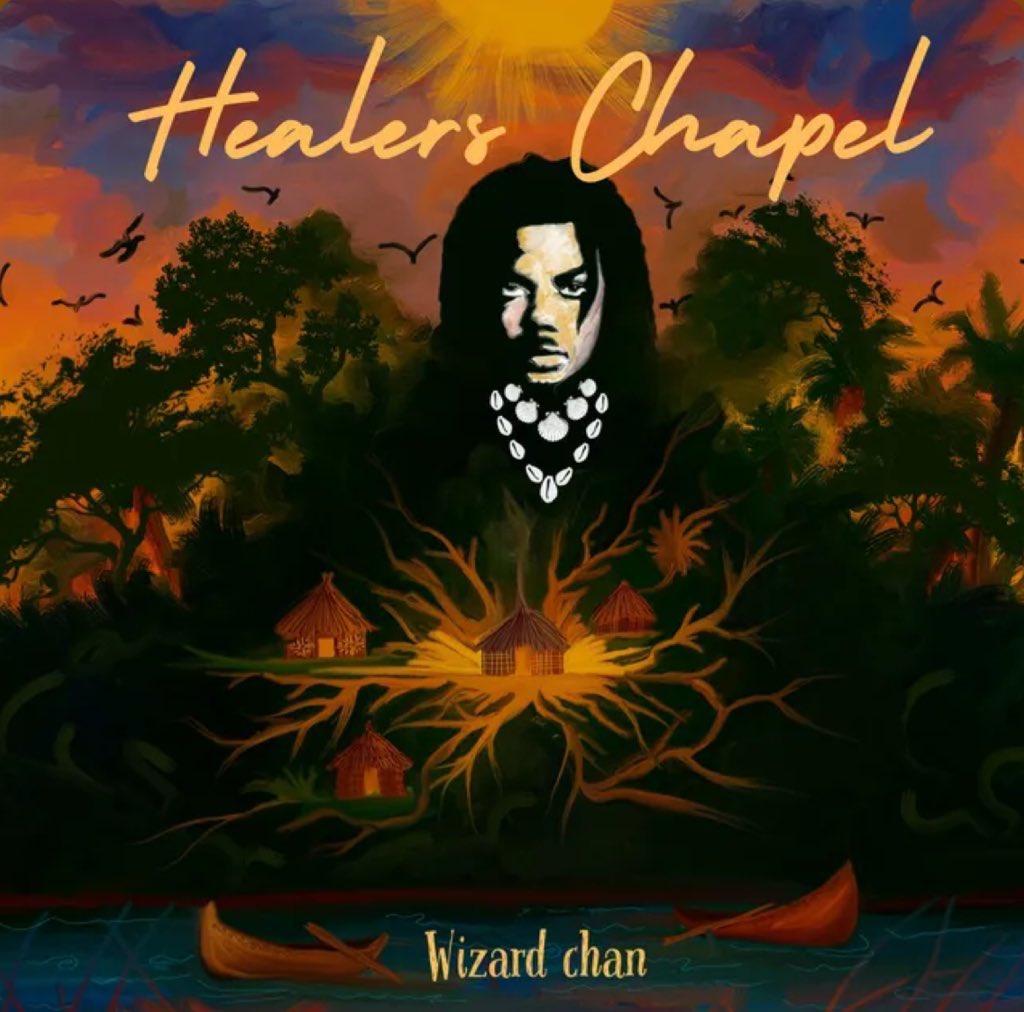
  • “Healers Chapel” Review: Wizard Chan’s Debut Is an Introspective and Soulful Sonic Balm
    With Healers Chapel, Wizard Chan invites listeners to experience a warmth of redemption and a sense of solace, even amid the turbulence and uncertainties of life. By Abioye Damilare Samson Afro-Pop’s global rise has not erased the truth that some of its most striking moments come from artistes who draw deeply from the roots of their immediate worlds. Whether it’s Rema and Shallipopi flipping Benin street slang into nationwide catchphrases, FirstKlaz experim
     

“Healers Chapel” Review: Wizard Chan’s Debut Is an Introspective and Soulful Sonic Balm

15 septembre 2025 à 08:41

With Healers Chapel, Wizard Chan invites listeners to experience a warmth of redemption and a sense of solace, even amid the turbulence and uncertainties of life.

By Abioye Damilare Samson

Afro-Pop’s global rise has not erased the truth that some of its most striking moments come from artistes who draw deeply from the roots of their immediate worlds. Whether it’s Rema and Shallipopi flipping Benin street slang into nationwide catchphrases, FirstKlaz experimenting with a Neo-Arewa sound in the north, or Adekunle Gold gesturing toward Fuji in his upcoming album, the pulse of home continues to shape what travels abroad. Wizard Chan, born Fuayefika Maxwell, stands within this current. His debut album, The Healer, is a purposeful extension of the journey to reimagine Ijaw language, elements, and spirituality within a modern fusion sound.

That sound, which he calls Afro-Teme, has always been the distinct marker that sets him apart. Since the meditative “Earth Song” put him on the map in 2022, his style—which recalled the depth of Reggae legend, Orits Wiliki, in the 80s and carried the communal energy of Gyration music—has since expanded far beyond what he displayed on that track.

The song became a career-defining moment, earning him two nominations at the 2023 Headies Awards—for Songwriter of the Year and Best Alternative Song—and ultimately winning the latter. It was proof that Wizard Chan’s music, stitched with gongs, bells, and other Ijaw music elements, alongside a fusion of Folk, Highlife, Hip-Hop, and Soul, could carve out a spiritual, almost ritualistic space in the mainstream, sustained by devoted listeners who now hail him as the “Big Masquerade” and “Native Doctor”.

Across projects like The Messenger and Time Traveller, both released in 2024, the Rastafarian-looking artiste has positioned himself as a conscious musician with a reflective approach. His new album, Healers Chapel, continues that trajectory by carrying his music into even more philosophical terrain, and offering a kind of songs to soothe, reflect, and restore. 

Healers Chapel
Healers Chapel

As a conscious artiste, it’s fitting that he chases transcendence for himself and his music on the soulful intro track, “I Want to Live Forever”.  “I want to live forever / My songs should live forever”, he quips passionately over soaring keyboard chords and a crowd vocal on the chorus.

The track “By The River” deepens this pursuit, drawing on the River Jordan as a biblical symbol of transition and purification, a motif of healing that aligns perfectly with the album’s title. The title track, “Healers Chapel”, features longtime collaborator, Boma Nime, a trio of women traditional healers, who infuse indigenous chants and prayers into the song’s chorus.

On the PDSTRN-assisted “Quick Report” and “Amen (God My Dealer)”, he shows his range on Drill. The former tells a raw story of police brutality and the chaos such systemic violence breeds, amplified by Lagos-based rapper PDSTRN’s gripping raps and fluid flow, while the latter situates God as his ultimate inspiration, integrating the familiar hymnal chorus, “Amen Amen Amen Amen Amen.”

The pre-released “Oliver” pushes his fusion instincts further: gyration percussion, dancehall basslines, and Highlife guitar lines intertwine. Yet it is the lyrics, which draw on Oliver Twist’s story of eternal longing for more, that ground its symbolism.

Wizard Chan
Wizard Chan

With “Oh My Home”, he reimagines a primary school rhyme into a nostalgic Highlife ballad, carried by warm guitar riffs and trumpet solos. On the Pumba Mix-produced “Flee Oh Sickness”, the intro stands as an emblem of his self-coined sub-genre Afro-Teme, while he assumes the role of healer, declaring, “Sickness flee from my body, I am speaking as a person of an almighty Jah”, and reflecting on his 2020 Covid-19 ordeal.

The Reggae-tinged “Promised Land” drifts toward visions of Nirvana, while “In My Defence”, “Yours Truly”, and “Sober” lay bare his vulnerabilities in moments of self-rumination. On “Heal”, featuring Joeboy, he resists the familiar trope of weed as a muse, instead singing about abstinence from substances he once turned to for comfort but never found healing in. The hymnal requiem “Dein Na Mu” closes the album. It’s a poignant dirge that pays homage to lost souls and laments the many vices that hindered his healing, set against a sombre bassline.

Throughout the 38-minute runtime of Healers Chapel, Wizard Chan never loses sight of his primary aim of creating music as a form of healing for the troubled soul while also channeling his lived experiences and inner battles as a compass for redemption. Healers Chapel is richly layered as it taps into a sense of mystique and higher consciousness, particularly in songs like “By The River” and “Healers Chapel” with Boma Nime, and is culturally remarkable in the way he infuses his native Ijaw language to convey emotion with profound intimacy and nuance.

Healers Chapel
Healers Chapel tracklist

Although he had already proven his artistry with two prior projects, this debut full-length heralds a new chapter for Wizard Chan as a representation of independence and confidence that he has no intention of bending his sound to fit the currents of popular taste or waves in the zeitgeist.

With Healers Chapel, Wizard invites listeners to experience a warmth of redemption and a sense of solace, even amid the turbulence and uncertainties of life. Of course, it’s not the kind of project you play to soundtrack revelry or party anthems, but ultimately, it is the kind you return to for grounding, reflection, and assurance that the good times are still within reach.

Lyricism – 1.8

Tracklisting – 1.4

Sound Engineering – 1.4

Vocalisation – 1.5

Listening Experience – 1.5

Rating – 7.6/10

Abioye Damilare Samson is a music journalist and culture writer focused on the African entertainment Industry. Reading new publications and listening to music are two of his favourite pastimes when he is not writing. Connect with him on Twitter and IG: @Dreyschronicle

The post “Healers Chapel” Review: Wizard Chan’s Debut Is an Introspective and Soulful Sonic Balm first appeared on Afrocritik.

  • ✇Afrocritik
  • “Èkó Groove” Review: Spinall Assembles Star-Studded Cast on New Album
    Èkó Groove is a fun listen. Its energy, its fluid mix of genres, and its vocal star power make it flow quickly despite its length. Spinall ties it all together with the presence and pacing of a live set, curating an experience that is both eclectic and cohesive in spirit if not in theme… By Yinoluwa Olowofoyeku Oluseye Desmond Sodamola, known simply as Spinall, is a Lagos-born DJ, producer, and label head whose career has evolved from mixtapes and
     

“Èkó Groove” Review: Spinall Assembles Star-Studded Cast on New Album

13 septembre 2025 à 09:04

Èkó Groove is a fun listen. Its energy, its fluid mix of genres, and its vocal star power make it flow quickly despite its length. Spinall ties it all together with the presence and pacing of a live set, curating an experience that is both eclectic and cohesive in spirit if not in theme…

By Yinoluwa Olowofoyeku

Oluseye Desmond Sodamola, known simply as Spinall, is a Lagos-born DJ, producer, and label head whose career has evolved from mixtapes and club nights into a defining voice in Afrobeats. He founded TheCAP Music in 2014 and began releasing full-length projects shortly afterwards. His debut studio album My Story: The Album arrived in 2015, followed by Ten in 2016, Dreams in 2017, Iyanu in 2018, Grace in 2020, and Top Boy in 2023. Each covers a range of styles, from dancefloor anthems to soulful Afro-Pop, consistently showcasing his ability to curate major collaborations and diverse sounds.

Across these albums, Spinall has built a reputation for blending Afrobeats with House, electronic textures, and global club influences, while remaining rooted in Lagos’s energy. Tracks like “Palazzo” with Asake and “Loju” with Wizkid highlight both his commercial reach and his knack for creating songs that resonate locally and beyond.

Now, with Èkó Groove, Spinall returns with a project designed to both reflect and expand his legacy. Èkó Groove is rooted in the rhythms, chaos, and vibrancy of Lagos, while also reaching outward, with features from artistes such as Tyla and Dre, and production that leans into the city’s grooves while embracing international colour. 

It stands as both a tribute and a statement: that after nearly a decade of steady growth and numerous high points, Spinall is still defining what it means to be a groove curator in Afrobeats, while pushing his sound further.

The album opens with the titular “Èkó Groove”, a thematic and sonic overture where rattling shakers and clacking triplet Afrobeats percussion merge with brass and bright guitars. A sample from Ayinde Bakare weaves the city’s history into the music, transforming the track into an ode to Lagos that establishes both the rhythm and the atmosphere shaping the entire project.

That energy carries seamlessly into “Want You”, which builds instrumentally on the same shakers, percussion, guitars, and horns, now joined by filtered key chords. Jayo delivers a loose, patois-inspired flow—sensual and full of whispered accents—while Destiny Conrad layers his soft R&B tone over the Afrobeat pulse. 

Èkó Groove
Èkó Groove

Together, their performances embody desire, teasing out intimacy in lyrics such as “Come on and tease and turn/ Watch how you make me freeze and twist and turn/ A little bit of eye contact turn me on”, carrying the song’s simplicity with a sensual intensity.

“Early” continues this mood but infuses it with an electronic edge, opening with thumping synths, floating hi-hats, and a groovy Afrobeats rhythm. Pulsing electronics support Victony’s airy vocals, while a sharp guitar riff links the chorus to string pads. 

His playful lyricism disguises raunch with sly wit, singing, “I just dey give am for ealy morn’/ Her bobo dey call am for early morn’/ Girlie no know say my ting e go reach her belly button/ Easy to shout, I go ta-na-na Selena”. The cheeky tone dances across the synthetic textures, pushing the record’s sensual arc further.

With “Struggle”, however, the mood shifts, adopting Reggae instrumentation with steady drums and a rich bass guitar that grounds the track in something spiritual. Buju Banton’s gravelly voice anchors the chorus with heft, while Summer Walker’s soft, solemn tones smooth the edges, harmonising delicately over hard truths. “One time for the hardworking/ You smile but your eyes are hurting/ The life all up your desert/ ‘Cause we wake to the sunset, no no,” they sing together, their contrasting energies uniting in the shared language of perseverance.

The Ghanaian Highlife tradition animates “Aunt Mary,” its triplet clavs, shakers, and lively rhythm guitars paired with a bassline that refuses to sit still. Shine TTW offers soft, airy vocals that glide across the melody, while Darkovibes provides deeper contrast, weaving Twi lyrics and playful effects through the track. Their interplay is buoyed by spirited ad-libs and backing vocals, forming a bright celebration of beauty as Shine sings, “Aunty Mary wey I see for tele/ She say her body be na o gbona feli/ Mo ti moti but I see you clearly”.

From there, Spinall pares back the instrumentation on “Forward”, leaving rattling shakers, percussion-heavy drums, and a restrained palette of guitars and bass synths to create space for Tay Iwar’s agile vocals. His layered delivery carries an uplifting message, urging resilience with lines such as, “One thing that I know is that I love my life/ Through the highs and lows, I survived/ No regrets, no looking back, only forward/ I know yeah, keep moving forward, I know yeah”. The positivity is heightened by sprightly rhythm guitars that dance through the groove, keeping the track buoyant.

“Waiting” sets its pulse with four-to-the-floor drums, syncopated percussion, and a brass section that cuts through smooth, jazzy piano chords. A lively bass guitar riff runs like an undercurrent, elevating Taves’ energetic vocals as he sings of longing for a lover to meet him halfway. His chorus, “I’ve been waiting for you/ Say me, and my patience can’t deal/ Your heart that I wan come steal/ Me I want love, love like nobody else’s love”, captures the impatience at the song’s core. Jayo reappears, versatile and insistent, contrasting Taves’ breezy lightness with a sung flow full of drive, their voices together amplifying the tension between yearning and impatience.

“Kerosene”, one of Èkó Groove’s earlier singles, rides on bright pianos and smooth drones, with shakers and syncopated percussion leaning into Street-Hop but hinting at Amapiano once the log drums drop in. Young Jonn’s playful lyricism and buoyant delivery carry lines such as, “Baby mi, let’s faaji tongolo/ Body magic, okoro/ Last night was fun, ololo … You dey high me, ogogoro”, his signature style burning bright over Spinall’s layered groove.

On “Loju”, another pre-released single, Wizkid slips back into his effortless zone, gliding over energetic Afrobeats drums, plucked synths, and subtle electric piano chords. He rides the rhythm with nonchalance, flexing lyrically rather than narrating, singing, “Na we the girls wan follow go oo / Make the girl change area code / Till you follow me I no go go / Follow bounce if you get stamina”. His flow is instinctive, the vibe undeniable—proof of his mastery at bending Afrobeats cadences to his will.

That energy escalates on “Excited”, where triplet claps and pulsating synths signal Afro-House terrain. Ami Faku opens with soft, subdued vocals, painting visions of joy and responsibility over rhythm guitars, brass passages, and pads. Her chorus lifts brightly: “I just want this money/ I’ve been saving, praying about it/ Taking care of family/ With Spinall we rounding/ Come on be honest. We we wo let’s jolly yo”. 

Niniola stamps her signature on the second verse with powerful Yoruba lyrics, agile melodies, and a unique timbre, adding vibrance and vocal force alongside Heavy-K’s steady Afro-House imprint.

Spinall
Spinall

“Miami” brings cinematic strings into collision with Street-Hop percussion and hard-hitting Afrobeats drums. Olamide plays both roles, softly crooning the refrain, “When you wake in the morning / When you be yawning, I’d be in Miami”, before switching into rapid Yoruba rap with commanding confidence. T.I. enters with his Southern flow, marrying his cadences to the Afrocentric production seamlessly, never missing a beat as the transatlantic collaboration blurs genre borders. 

“One Call” follows with tender guitar chords and light percussion ushering in Omah Lay’s drawn-out, emotive voice. He pours himself into the promise of closeness, singing, “I’m on my way to you/ But time is on the loose/ I will always fight for truth/ If I have the chance to choose … ‘Cause no me without us”, drawing intimacy from restraint. Tyla’s entrance lifts the energy, her bright ad-libs and group vocals layering over Omah’s more subdued tones. The thumping log drums risk overwhelming the track’s gentleness, but her melodies bring a contrasting vibrance that reshapes its mood.

Returning to South Africa, “Living” builds on Afro-House foundations with thumping kicks, riding shakers, and smooth chords augmented by subtle flutes and mallet runs. Murumba Pitch and Tony Duardo weave their expertise into the evolving instrumental, with filtered kicks and swelling percussion amplifying the track’s meditative dance energy. 

Their lyrics crave simple freedom: “I wanna dance, let me see the speakers blow now/ Liquor running fast inside my veins yeah/ I ain’t tryna get drunk, I’m just tryna live my life/ The power is yours now/ You could do greater things, the power lies in your mind”. The song’s dance break leans inward rather than towards climax—an introspective release before the outro affirms a joy in living.

Finally, “Psalm 23” closes Èkó Groove with a return to Street-Hop’s high voltage. Thumping kicks, log drums, rifling snares, a rich bassline, bright chords, and saxophone riffs set the stage for Teni, whose infectious energy bursts through every word. She ends Èkó Groove on a triumphant note, proclaiming, “I’m so thankful ‘cause I’m so blessed/ Got me shouting seven halleluja/ Psalm 23 for you haters, fuck y’all”, her defiance sealing Spinall’s Lagos-inspired vision with gratitude, resilience, and fire.

Èkó Groove plays less like a tightly bound thematic album and more like a well-curated collection of songs. The theme of Lagos, introduced in the opening track, feels nominal and is scarcely revisited, as most of the songs turn instead to the well-worn but effective subjects of love, life, and gratitude.

What the record lacks in narrative cohesion, however, it makes up for in breadth. The tracklist spans a wide range of genres, pulling together strands of Afrobeats, Afro-House, Reggae, Amapiano, and Street-Hop into a lively mix that reflects the multiplicity of contemporary African pop.

The production is strong and versatile, showcasing the craft of a talented team. Beats are energetic and genre-appropriate, bringing the right sonic palette to each song and tailoring the mood to the featured artistes. At times, the light touch works best, allowing vocalists the space to shine against leaner backdrops. 

At other moments, the layers verge on overproduction, creating clashes of tone and energy that slightly blur Èkó Groove’s balance. Still, the engineering remains sharp and professional, maintaining clarity and polish throughout, ensuring that even the busiest arrangements feel clean.

The featured artistes are Èkó Groove’s real stars. Spinall has assembled a cast that is not only stacked with heavyweights but also cleverly balanced. Most are kept within their comfort zones, delivering exactly the kind of performances that earned them their reputations. Others are nudged into new spaces, and those experiments enrich the record, adding surprise and variation. 

Èkó Groove
Èkó Groove tracklist

Across the board, the vocals are strong—as expected—but what stands out most is the cross-pollination. The contrasts and harmonies, the way artistes bounce off one another’s styles, create sparks that keep the album engaging. It is less about discovering something entirely new in them, and more about the pleasure of hearing them in dialogue, riffing off one another in a shared space.

As a whole, Èkó Groove is a fun listen. Its energy, fluid mix of genres, and vocal star power make it flow quickly despite its length. Spinall ties it all together with the presence and pacing of a live set, curating an experience that is eclectic yet cohesive in spirit, if not in theme. 

By pulling together a little of everything his audience loves, he delivers a project that—while uneven in places—remains a milestone in his career. It is a work that should be celebrated, one that underscores his longstanding influence in the industry, showcases his instincts as an A&R, and creates collaborative moments unlikely to be found anywhere else.

Lyricism – 1.4

Tracklisting – 1.3

Sound Engineering – 1.5

Vocalisation – 1.6

Listening Experience – 1.5

Rating – 7.3/10

Yinoluwa “Yinoluu” Olowofoyeku is a multi-disciplinary artist and creative who finds expression in various media. His music can be found across all platforms and he welcomes interaction on his social media @Yinoluu.

The post “Èkó Groove” Review: Spinall Assembles Star-Studded Cast on New Album first appeared on Afrocritik.

  • ✇Afrocritik
  • Afrocritik Weekly Music Spotlight: Detour Week
    Afrocritik Weekly Music Spotlight: Detour Week By Yinoluwa Olowofoyeku Greetings, my acoustic adventurers! We hope the past week has treated you kindly and that you’re staying grounded as we make our way through July. Can you believe how quickly the month has flown by? We’re already well into the second half of the year, and as the pace picks up, so does the music. This week, we’ve taken a slight detour, veering off the usual bridges and d
     

Afrocritik Weekly Music Spotlight: Detour Week

25 juillet 2025 à 07:43

Afrocritik Weekly Music Spotlight: Detour Week

By Yinoluwa Olowofoyeku

Greetings, my acoustic adventurers!

We hope the past week has treated you kindly and that you’re staying grounded as we make our way through July. Can you believe how quickly the month has flown by? We’re already well into the second half of the year, and as the pace picks up, so does the music.

This week, we’ve taken a slight detour, veering off the usual bridges and diving straight into some off-the-path highlights that carry their own spark and surprises. We’re swerving away from the obvious and embracing fresh delights.

As always, we’re here to keep your playlists vibrant and full of colour. If you haven’t already, be sure to follow us on social media so you never miss a drop. And while you’re at it, have you checked out our Monthly Spotlight for June?

It’s live now and absolutely worth your time. Got a song or project you think we should spotlight? Don’t hesitate to send it in to yinoluu@afrocritik.com; we’re itching to shine a light on your own work as well.

Now that the housekeeping is out of the way, here’s this week’s brilliant selection, which arrives in the form of:

SOFT AND HEARTFELT: We begin this week’s journey on a tender note, with songs that wear their hearts on their sleeves. Nigerian newcomer, Czin, sets the tone with “One For The Road”, a strikingly intimate acoustic moment and the opening track of his CNG project, which also includes the reflective title track “CNG”. 

South African talent, Mlindo The Vocalist, returns with Uhambo, The Journey, a record rich with heartfelt expression and vocal sensitivity. Highlights include “Dance Around You”, “Holy Father”, and “Noma Yini Bhoza Yam”, all of which showcase the breadth of his emotional storytelling. 

Kenyan songstress, Maya Amolo, floats gently into the mix with “Look The Other Way”, a soft, shimmering piece that lingers long after its final notes. Nigerian singer, Kunmie, brings new light to his earlier ballad with the remix of “Arike”, enlisting the expressive touches of Mabel and Simi. Rising Zimbabwean singer, M.I.L.E, crafts a heartfelt blend of R&B and Afrobeats on “Sunday”, while Ghanaian pair, MisterKay and Darkua, offer “Pick Up”, a gently woven duet about love, miscommunication, and all the things left unsaid.

PARTY STARTERS: We kick things up a notch with songs that were built for the dancefloor. Nigerian artiste, Minz, keeps things tight and punchy with his 444Play EP, filled with danceable bangers like “Ta Na”, “Agenda”, and “4×4”. Mavin’s own Mbryo and Magixx join forces on the fun and catchy “My Shayla”, a buoyant single that radiates collaborative energy. The always-brilliant Guchi teases her upcoming project with “Your Type”, a witty and sassy number full of playful charm. 

Jaywillz gives us both ends of the spectrum with the vibrant “Magic” and the gentler “Bumaye”, both off his new Ocean Echo project. Thutmose lets his range shine on Bad Boy Good Lover, delivering both the swaggering title track “Bad Boy Good Lover” and the slick, introspective “Sixth Sense”. 

Ghanaian legend, Sarkodie, teams up with Lasmid on “Lavida Loca”, an energetic and confident jam that refuses to slow down. Meanwhile, Lojay serves up “Tenner”, a high-octane banger that keeps the tempo racing forward.

DETOUR INTO RAP CITY: This week’s detour takes us deep into rap territory, where bold flows and vibrant cadences rule. South African DJ and curator DJ Speedsta drops 120 Ocean View Dr., a full-bodied rap album that gives us “All I Have”, “Come Right Back”, “Violate”, and “Unidentified”, each one layered with precise flows and rhythmic punch. 

Veteran rapper, Casper Nyovest, makes a bold return with “Guess Who’s Back”, a braggadocious statement piece that reminds us of his presence. 

Young South African emcee, Tony Dayimane, unleashes Big Boy II, a gritty and vibrant project with standout tracks like “Marco Polo”, “Balaclava”, and “Gemelli”, all rich with character and bounce. Olamide brings his unique energy to “Girl on Fya”, a playful collaboration with Ashidapo that draws creatively from Donae’o’s classic “Party Hard”.

SOUTH AFRICAN SIGN-OFF: As is tradition, we close out with a trip to South Africa, where the Amapiano keeps flowing strong in many shapes and moods. J&S Projects deliver a sleek and meditative cut in “Deeper 7”, while Bless offers soulful and melodic textures on Nkateko, with “Nkateko”, “Inganekwane”, and “Amaphupho” standing out as vocal-driven gems. Bean RSA leans fully into instrumental flair on Tshimologo, particularly on the hard-hitting “Glory” and “JD27”. 

Kammu Dee’s Vitamin Dee 2.0 brings high-energy fun with its Gqom-flavoured Amapiano blend, especially on “Heh He!”, “Bhanashilolo”, and “Siyay’dala”. Finally, Kabza De Small tugs at the heartstrings on Bab’Motha, a full-bodied and emotional project with deeply felt offerings like “Ngyozama”, “Siyabonga”, “Ukuthula”, and “Isthombe”.

These are just a few highlights from this week’s playlist. There are even more sonic gems waiting to be discovered on the full spotlight, so dive in and let your ears roam free. As always, send us your recent favourites, especially from the releases coming in this new week, and be sure to check out the June Monthly Spotlight if you haven’t already. We’ll be back again next week with more carefully curated picks just for you.

Until then, we wish you joy, clarity, and inspiration for the week ahead. Stay kind, stay open, and keep your music close.

Warm regards,

Yinoluwa “Yinoluu” Olowofoyeku is a multi-disciplinary artist and creative who finds expression in various media. His music can be found across all platforms, and he welcomes interaction on his social media @Yinoluu.

The post Afrocritik Weekly Music Spotlight: Detour Week first appeared on Afrocritik.

  • ✇Afrocritik
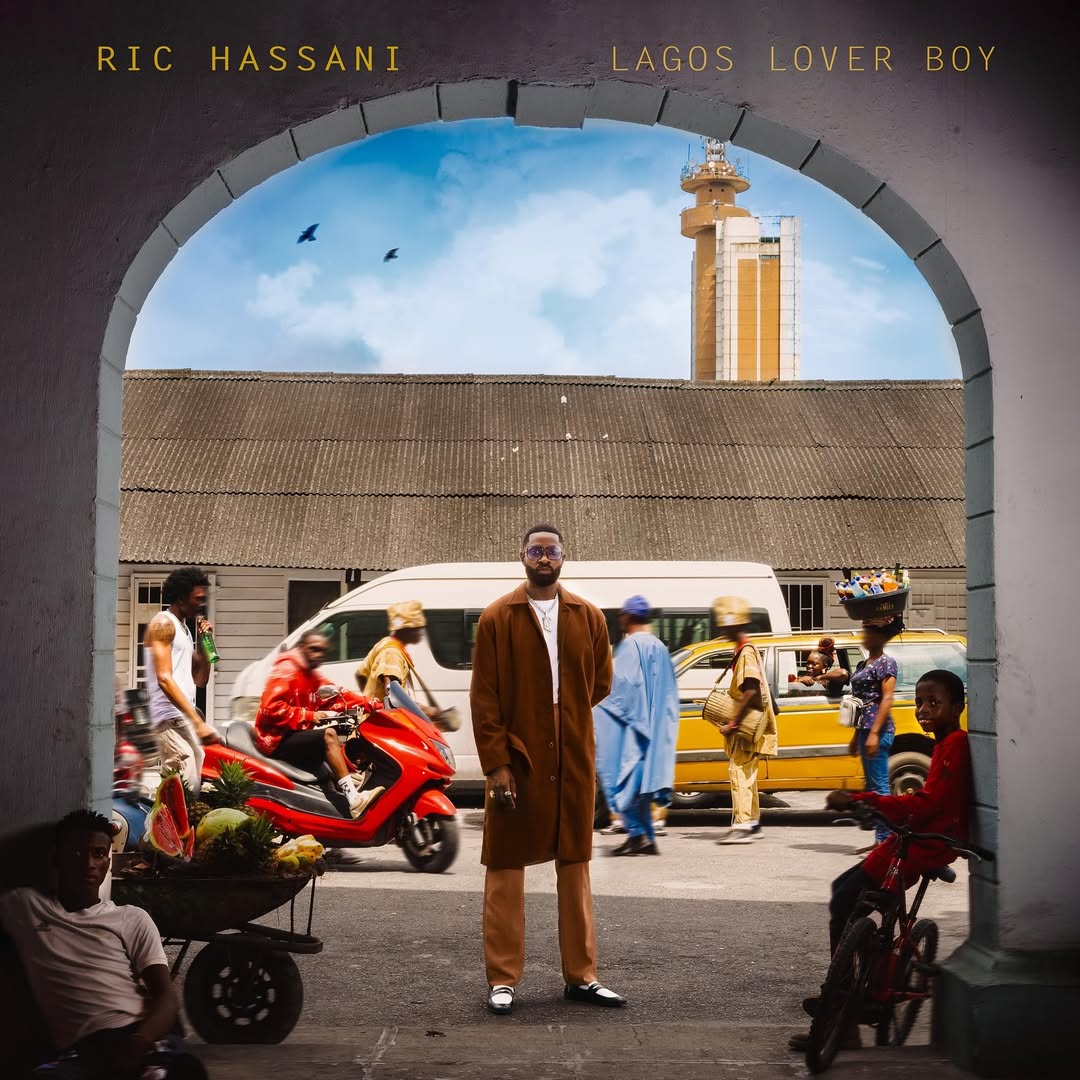
  • “Lagos Lover Boy” Review: Ric Hassani Crafts a Cohesive Portrait of Urban Romance
    Lagos Lover Boy is a coherent and thoughtfully constructed body of work. It shows an artiste who knows his strengths and is cautiously beginning to expand his range. By Yinoluwa Olowofoyeku Ikechukwu Eric (Ric) Ahiauzu, better known to fans as Ric Hassani, stands as one of Nigeria’s most emotive voices in modern R&B and Afro-Pop. Born in Port Harcourt in 1989 and educated both at Covenant University and the University of Surrey, he first broke through with his smooth debut, The African Gen
     

“Lagos Lover Boy” Review: Ric Hassani Crafts a Cohesive Portrait of Urban Romance

5 juillet 2025 à 06:13

Lagos Lover Boy is a coherent and thoughtfully constructed body of work. It shows an artiste who knows his strengths and is cautiously beginning to expand his range.

By Yinoluwa Olowofoyeku

Ikechukwu Eric (Ric) Ahiauzu, better known to fans as Ric Hassani, stands as one of Nigeria’s most emotive voices in modern R&B and Afro-Pop. Born in Port Harcourt in 1989 and educated both at Covenant University and the University of Surrey, he first broke through with his smooth debut, The African Gentleman, in 2017 after a smattering of singles and 2015’s The Acoustic EP. 

He followed it up with the socially conscious The Prince I Became in 2021, a project that weathered controversy yet earned critical acclaim, as well as the electronic collaborative EP Wish You Were Her(e) and the groove-filled Afro Love in 2023. Along the way, his heartfelt storytelling and soft, crooning tone have earned him nominations at The Headies, AFRIMA, and a growing reputation as a soulful crooner. 

Now, Ric Hassani returns with his boldest statement yet: Lagos Lover Boy. Clocking in at 21 tracks and just under an hour of music, Lagos Lover Boy centres its gaze on love, heartbreak, identity, and the complex emotional reputation of Lagos men, enlisting a wide array of collaborators such as Nonso Amadi, Ne-Yo, Joeboy, Odumodublvck, Phyno, Portable, and DOTTi The Deity for the journey. At once earnest and tongue-in-cheek, Lagos Lover Boy satirises the familiar tropes and contradictions of urban loving, interrogating the very myths that often define it.

The album opens with a cinematic intro ushered in by warm synth pads, scattered percussion, and Ric’s voice emerging in sombre song. He gives way to a spoken word performance that sets the narrative framework, casting Lagos as both setting and symbol, the chaotic, romantic city that shapes the Lagos lover boy archetype the album explores. The tone is cinematic and self-aware, immediately pulling listeners into the story.

Lagos Lover Boy
Lagos Lover Boy

“Wickedness” is a standout for its thematic clarity. Ric critiques the moral climate of society over punchy bass guitars, subtle claps, and steady kicks. The lyrics are delivered plainly but land with weight: “Too many times I wonder if na me wey get problem at all / Cuz people no want truth, they want make you lie for them / So guy man ee want to guy guy man no akuko”. The groove is tight but understated, letting the songwriting lead.

“Moving Train” shifts the energy with upbeat percussion, talking drums, and bright guitars, joined occasionally by brass stabs. It’s an ode to relentless love, captured in the line: “They can say what they wanna say/ Say love is a losing game/ Still, I’m on a moving train to you”. Ric’s performance is solid, with tight harmonies and lively group vocals that lift the chorus and give it a folk-leaning texture.

“Love of My Life (Interlude)” brings in Dotti the Deity for a humorous, sung skit over a rhythm of talking drums. It’s lighthearted and brief, serving as a comedic breather that still stays within the world Lagos Lover Boy is building.

“You Too Dey Lie” leans into Ric Hassani’s flair for conversational songwriting. Over a fun, amapiano-tinged production with log drums and animated backing vocals, he plays the betrayed lover confronting constant dishonesty. “Your 1 plus 1 no be 2, na 22/ E dey your body like tattoo/ You too dey lie, too dey lie, too dey lie lie o.” The delivery is witty and theatrical, adding to the song’s viral, memeable appeal.

“Moving On” sees Ric Hassani in his ballad bag, and it’s a strong showing. The acoustic guitar, soft percussion, and sparkly keys create a warm backdrop for his emotionally controlled vocals. “They say if I chase, you go be mine/ I don chase taya/ It was a waste of my time”. He makes a clever callback to 2021 song, “Thunder Fire You”, but the overall tone is more bittersweet than bitter. Choral harmonies and a well-timed key change round it out with elegance.

“Falling”, featuring Odumodublvck, tries something different. The soundscape is atmospheric and drenched in reverb, with Ric’s airy vocals floating above a bed of subtle drums. Odumodublvck’s verse adds presence, but the direction of the track feels a bit muddled. The mood is evocative, but the cohesion is questionable.

“Adamma, Asanwa, Asampete” falls into more familiar territory. Clattering Afrobeats percussion, a deep bass groove, and a melodic whistle synth provide the frame for lyrics that don’t quite rise above cliché: “The way I love you, if you be mineral I go drink you and chop the bottle/ If you give me your heart I go handle am softly like hottie kettle.” Phyno brings energy and confidence to his verse, lifting an otherwise average track.

“Holy Matrimony” is clearly angled at the wedding playlist. The rhythm section is bright and danceable, with log drums layered into the chorus. “See as we fine together like Beyonce and Jay Baby/ Like Simi and AG Baby/ You know we’ll make cute babies”. It’s light and polished, with a clean arrangement that hits its mark even if it plays it safe.

“My Cherry” pulls things back, allowing Ric Hassani’s voice and pen to take centre stage. Sparse guitars and light percussion leave space for falsetto lines, delicate harmonies, and intimate lyricism. “I no go leave you/ Na you be the reason I dey carry first for everything that I do/ My cherry, it is my obligation to benefit you”. The spoken outro sees an Igbo man showering his woman with adoration, ending the song on a charming moment.

“4x2x16”, featuring Street-Hop act, Portable, is one of the more experimental moments. The beat is simple and dance-driven, but Ric sounds slightly out of place in this more street-pop space. “3 by 4 by 19 baby go down/  Show me what I’m missing, baby go down/ Come and give me this thing, baby go down/ Dance to my music o”. Portable, on the other hand, sounds right at home and delivers with comfort and ease. The track has energy but lacks finesse and makes Ric feel like a guest on his own track.

“Island Boy” is preceded by a thematic but slightly over-acted interlude skit. Pianos and strummed guitars lead us into another ballad where Ric Hassani contrasts the player island boys with their mainland counterparts. “I know Ikeja nigga wey go ride for you/ Surulere nigga wey go die for you/ oh no, oh no/ But you see these island boys, them no get no joy/ They’ve been playing you for long.” Again, when the instruments step back and Ric Hassani’s pen and voice are given centre stage, the music is at its best.

Ric Hassani
Ric Hassani

“Canopy” carries amapiano energy with rattling shakers and synth chords. Ric Hassani takes inspiration from the popular praise song and covers his person with his love: “Omoge I cover you like canopy/ For you I turn lover boy like saint obi/ Oya sare wanbi, finish my money/ Under the canopy of love”. Thumping log drums and call-response group vocals make for a very danceable chorus that carries the song along.

“Sisemi” featuring Tolibian takes an Afro-Swing slant with firm drums and layered chords. Tolibian brings Afro-Adura styling and Street-Hop energy to this song about money and survival. One of the stronger cuts with Ric outside his comfort zone. The reliance on vocal work and lyrics as opposed to vibe means he can hold his own.

“Obara Jesus” sees Ric Hassani’s songwriting return to centre stage on this guitar-based supplication as he implores Jesus to take charge of his search for a partner, praying against certain traits: “Make karashika no see us/ Make enemies no wan press pause/ For every kind thing wey go unite us/ No just cause, Obara Jesus”. The song is packed with relatable lyrics that can be echoed by many.

“Best Of Me” rides on lovely synthetic guitar chords backed by subtle afrobeats drums and a rich bassline as Ric heaps admonition on the head of his lover. Nonso Amadi’s signature voice carries sweet lyrics so beautifully and complements the tone of the song perfectly: “Love the way ya build me like a Lego/ Dance for me let me spray you some ego/ She my queen she my girl, she got a halo”. The duo combine surprisingly well for a smooth and sweet new age love song.

“Love & Romance II” is an R&B-tinged song as Afro-Swing drums combine with velvet piano chords. Bolstered by big vocal performances, it is perhaps the best-sung song on Lagos Lover Boy, especially with Ne-Yo’s feature. “I rejoice when I think about/ You and I riding out/ Sunshine on your skin, no nothing else can compare/ I rejoice when I think of your kiss touching my lips”. Combined with Joeboy, the three singers combine for a heartfelt sequel to Ric’s 2024 “Love & Romance”.

“Lagos Lover Pledge (Interlude)” offers another interlude from DOTTi The Deity, a brief cinematic entry with catchy wit posing as the Lagos lover’s pledge to his partner.

“For You” is built around bright pianos, cinematic strings, and spacious drums framing this sweet ballad. “Girl I would go to the moon and back/ Just to prove my love to you/ I won’t be holding back/ Girl I go give you my all/ Cause it’s you I’ve been searching for”. Big vocals, bold declarations of love, and emotive, expressive singing make this song a high point. Expect lovers to share it with each other.

“Tuale” ends the album with an amapiano-influenced choir-led gospel song. “Lord I lift your name up/ You alone are worthy/ Lord I lift your name on high/ You alone are worthy”. Expect to hear this one in churches shortly. Catchy and definitely infused with the right energy, reverence, and danceability, it has all the ingredients to hit the market it is targeting.

Lagos Lover Boy is a study in commitment. Ric Hassani leans all the way into the concept and the album rewards that dedication. Every song ties back to the central theme, pulling the project into one continuous tale. The skits, interludes, voice notes, poems, and spoken word clips help drive the narrative forward, giving the album momentum and keeping the story alive across its lengthy runtime.

Still, that same runtime occasionally works against the music. Ric explores a wide range of styles, and while that ambition is admirable, it doesn’t always land. He steps out of his comfort zone on several tracks, with mixed results. 

On songs like the Portable collaboration, he sounds slightly out of place, but finds a more workable middle ground on tracks like “Sisemi”. Across the board, we get the Ric Hassani staples: the ballads, the folky acoustic cuts, the afrobeats rhythms, the amapiano-leaning grooves, the hopeful wedding anthems. However, there are moments on Lagos Lover Boy that feel like filler, songs that don’t quite justify their presence when another cut on the album does a better job of chasing the same idea. 

The songs work best when Ric’s strengths are allowed to shine. His songwriting remains his strongest suit. A quintessential Ric Hassani song is one that is almost comically relatable, with Ric using phrases that seem less like lyrics and more like talking to a friend. He and his co-writers are able to tackle a wide variety of topics with refreshing directness and wit. That looseness sometimes sacrifices rhyme or rhythmic precision, but what it adds in warmth, clarity, and tone more than makes up for it.

Lagos Lover Boy
Lagos Lover Boy tracklist

Ric is also an established singer and expressive vocalist. The emotion in his delivery is a big part of what makes these songs connect. He doesn’t need to over-sing to make a point, but when the moment calls for a falsetto, a run, a vocal swell, he knows how to deliver. 

His choral layering and use of group vocals add a distinct texture, giving some tracks a rich, communal warmth. And his choice of features is largely effective, with Ne-Yo’s contribution standing out as a highlight thanks to his polish and instinct.

Vocally and technically, Lagos Lover Boy is consistently engineered. The production does what it needs to do. There are a few cinematic flourishes here and there, but mostly serviceable backdrops for the writing and vocals to shine. The Afrobeats-oriented material doesn’t reinvent the wheel, but it serves Ric Hassani’s purposes. The collaboration with Odumodublvck is one of the more adventurous production moments on the project and stands out for that reason.

In the end, Lagos Lover Boy is a coherent and thoughtfully constructed body of work. It shows an artiste who knows his strengths and is cautiously beginning to expand his range. There’s enough emotional weight, musical range, and vocal quality to make the album land on first listen, even if not all of it sticks around after that. The songs targeted at weddings, churches, or dancefloors will likely find their audience. Others may fade quicker. But the intent, the craft, and the storytelling? Those will linger.

Lyricism – 1.5

Tracklisting – 1.5

Sound Engineering – 1.4

Vocalisation – 1.5

Listening Experience – 1.3

Rating – 7.2/10

Yinoluwa “Yinoluu” Olowofoyeku is a multi-disciplinary artist and creative who finds expression in various media. His music can be found across all platforms and he welcomes interaction on his social media @Yinoluu.

The post “Lagos Lover Boy” Review: Ric Hassani Crafts a Cohesive Portrait of Urban Romance first appeared on Afrocritik.

  • ✇Afrocritik
  • Afrocritik Weekly Music Spotlight: Easing In
    Afrocritik Weekly Music Spotlight: Easing In Yinoluwa Olowofoyeku Hello, family.  Welcome back to your favourite weekly ritual of sonic discovery. We hope you’re doing well and that you’ve had a beautiful week. Happy entry into the second half of the year! We’re easing into it gently, with sweet and intriguing sounds to usher you into H2. This week’s list is one of my favourites in recent memory, and there’s plenty of quality music coming your way. We’re also spotlighting a few fresh names you
     

Afrocritik Weekly Music Spotlight: Easing In

4 juillet 2025 à 07:51

Afrocritik Weekly Music Spotlight: Easing In

Yinoluwa Olowofoyeku

Hello, family. 

Welcome back to your favourite weekly ritual of sonic discovery. We hope you’re doing well and that you’ve had a beautiful week. Happy entry into the second half of the year! We’re easing into it gently, with sweet and intriguing sounds to usher you into H2.

This week’s list is one of my favourites in recent memory, and there’s plenty of quality music coming your way. We’re also spotlighting a few fresh names you’ll definitely want to add to your watchlist.

June’s monthly spotlight has been slightly delayed by the everyday realities of life, but keep your eyes on our socials so you’re the first to know when it drops. In the meantime, if you’re an artist creating something you think we should hear, send your music to yinoluu@afrocritik.com. We’re always listening, and the best gems will be spotlighted for all to see (and hear).

Without further ado, let’s dive into this week’s brilliant selection, which comes in the form of:

NICE AND EASY: Soft sounds to ease you into the playlist and into H2 of the year.

Tim Lyre kicks us off with the grungy “Way/2/Me”. His long-awaited, incredible Spiral album is finally here, and it also gives “Storytime”, “Glorybound”, and “Pot of Gold”, all packed with immersive textures. 

Emly cements her debut with the POV EP in collaboration with MBA For Africa, gifting us “More” and “Get Up”. She also lands a dreamy feature on the AfroHouse entry “Call On Me” by Damie and Dolapo Martins. From Awinnah’s Love at Home project, we find delicate gems like “I Touched Him”, “Tender Love”, and “Best Part”, a blend of new-age, soulful, folky gospel with poetic writing and serene production. 

Runtown makes a sleek return on Soundgod Fest IV, offering moody, smooth, R&B-tinged Afro-Fusion on “Mood Swings”, “The Dangerous Hearts”, and “Bebe”. Ghanaian-Nigerian pair Lasmid and TML Vibez team up on Sweet Songs 4 You, a warm, sensual afro project that gives “Abena”, “Ghana Jollof”, and “Need Your Love”, wrapping us in sweet and easy energy.

NOTABLE PROJECTS: A number of projects that deserve your time and attention. 

The Trifecta EP by London-based Dessireé gives us bold, cutting-edge, genre-fluid music with tracks like “Diamond in the Rough” and “Hell of a Show”. The We Are Lagos In Paris project introduces the Lagos In Paris collective, bringing electronic and Afro-electric fusions with tracks like “Afro G Western”, “Mali Spirit”, and “Sinatanale”. 

Ayo Maff’s long-awaited Prince of the Street album lands with versatility, weaving wide-ranging Afrobeats and Street-Hop into “Oshimiri”, “Remind Me”, and “Realness”. Darkoo’s $exy Girl $ummer Vol.1 EP uses nostalgic sampling and interpolation to give new life to classics with a modern afro twist on “Options”, “Psycho”, and “Your Number”. 

Jubed’s debut project From The Soil introduces interesting northern stylings and afrofusion, showcased beautifully on “Ruwa”, “Gabaya”, and “Kilode II”.

EAR-GRABBING SINGLES: Away from the projects, here are some single drops that caught the ear. “Be My Baby” by Adam Nabeel and MAUIMØON is a sensual, slow-burning love song that glows in its tenderness. Tanzania’s Harmonize teams up with Rudeboy for a Bongo Flava love song in “Best Couple”, blending melody and warmth with a soft touch. 

Bayanni tries something different with the Zouk-flavoured “Namipa”, featuring the ever-rising Qing Madi. “Faya” is an energetic afro groove powered by the trio of Khaney, Meaku, and Denzel Wilson. “So Much Sense” sees Gabzy enlist Fireboy DML for a smooth, emotionally resonant banger with bounce and clarity.

SOUTH AFRICAN SIGN-OFF: Closing out with our usual trip to South Africa.

Musa Keys and Murumba Pitch team up on “Cina”, an Afro-House-adjacent tune that glides on melody and groove. CowBoii’s This Ain’t A.I album gives us “Hape Le Hape”, “uHambo”, and “Kuyafana”, soft, vocal-led Amapiano that soothes as much as it stirs. Smooth, melodic amapiano continues on “Safa iPiano” by Shaunmusiq, Young Stunna, and Myztro, as well as “Bhampa” by Vigro Deep, Zee Nxumalo, and Ch’cco. 

Diamond Platnumz and Lintonto deliver bold Gqom energy on “Down”, a high-octane addition to the mix. We round off with emotive, pulsating Afro-House on “Naliya” by Batundi, Msaki, and Tresor, “Malaika” by Joki, Ruger, and Mugisho, and “Tholukuthu” by Jazzworx, GL_Ceejay, Thukuthela, and MaWhoo.

That’s a wrap on this week’s spotlight, but it’s only a glimpse of the full playlist. There’s much more waiting for you on the full list, so go take a dive. Hopefully, this playlist leads you gracefully into this new half of the year. 

Hopefully, it soundtracks some more great moments for you. If you’re a budding artist hoping to get featured, or if you’ve just stumbled across a sleeper hit that deserves more ears, don’t hesitate to drop me a line at yinoluu@afrocritik.com. Let’s keep the circle of discovery growing.

Wishing you an uplifting, fulfilling, and inspired week as we enter the second half of 2025 with joy and intention.

Warm regards,

Yinoluwa “Yinoluu” Olowofoyeku is a multi-disciplinary artist and creative who finds expression in various media. His music can be found across all platforms, and he welcomes interaction on his social media @Yinoluu.

https://music.apple.com/ng/playlist/afrocritik-weekly-music-spotlight/pl.u-LdbqE75I21vAkDK

The post Afrocritik Weekly Music Spotlight: Easing In first appeared on Afrocritik.

  • ✇Afrocritik
  • “The Prince of the Street” Review: Ayo Maff’s Strongly Themed Debut Still Needs More Range to Soar
    The Prince of the Street is a ground-setting debut positioning Ayo Maff as a leading voice of Street-Pop’s new wave. By Abioye Damilare Samson To truly appreciate the rise and evolution of Street-Pop within Nigerian mainstream music since the late 2010s, one must trace its sonic arc from the high-octane energy typified by Olamide’s “Wo” in 2017, to the slow-burning, hymnal emotion of Ayo Maff’s “Jama Jama”, one of the tracks off his two-pack release in 2023.  As a genre that was once defined b
     

“The Prince of the Street” Review: Ayo Maff’s Strongly Themed Debut Still Needs More Range to Soar

3 juillet 2025 à 05:11

The Prince of the Street is a ground-setting debut positioning Ayo Maff as a leading voice of Street-Pop’s new wave.

By Abioye Damilare Samson

To truly appreciate the rise and evolution of Street-Pop within Nigerian mainstream music since the late 2010s, one must trace its sonic arc from the high-octane energy typified by Olamide’s “Wo” in 2017, to the slow-burning, hymnal emotion of Ayo Maff’s “Jama Jama”, one of the tracks off his two-pack release in 2023. 

As a genre that was once defined by its frenetic pace and party-starting beats, Street-Pop is now birthing a new wave of artistes who wrap their pain, hustle, and hope into melodies laced with prayer and introspective messages that many now call “Afro-Adura”. At the center of this sound shift stands Ayo Maff, one of the new voices reshaping Street-Pop’s possibilities and confident enough to title his debut album, The Prince of the Street.

It’s a fitting setup for the dual symbolism behind the album’s title, Prince of the Street. On one hand, it signals Ayo Maff’s awareness of his role as a torchbearer for the current wave of Street-Pop. On the other hand, it shows reverence. By calling himself a prince, he implicitly acknowledges that there is still a king, a role he openly credits to Olamide, the genre’s undisputed trailblazer.

While Ayo Maff’s emotionally-charged, street-rooted style makes him nearly impossible to overlook in today’s Street-Pop conversation, it was his 2024 collaboration with Fireboy DML on “Dealer” that truly propelled him into wider public consciousness. That song, with its blend of vulnerability and emotional depth, became a defining moment that laid the foundation for the release of his first EP, Maffian, later that same year.

For the most part, Afro-Adura often carries the promise of better days, but its most potent expression lies in its honest portrayal of pain, lack, and longing. Ayo Maff taps into this well with near-devotional intensity. But it’s this very commitment to truth-telling that has drawn criticism. Some believe he leans too heavily into themes of suffering. A popular influencer, Social media content creator, Naijashimadun, once called him out for “singing about suffering too much”. Rather than shy away from the critique, Ayo Maff folds it into his art. 

Prince of the Street

On “Beginning”, Prince of the Street’s intro track, he samples that very voice to open the song, before launching into a heartfelt account of his journey: “Why must I say bye bye?/ Ṣo mọ pe o le fun mi?/ If say money dey I for no cry”, he hauntingly sings, holding nothing back as he reflects on a past he refuses to forget. He teams up with Chike on the log drum-inflected “Realness” to reflect on fake friendships and the price of staying true. Chike’s stirring contribution, anchoring the hook and delivering a smooth second verse, elevates the track melodically and adds a layer of soulful clarity to Ayo Maff’s raw expression. 

Ayo Maff leans into that same emotional territory on “Felony”, a soulful heartbreak ballad where he sings about being dumped for a richer man. It’s a candid reflection of modern relationships, where money often takes precedence over love. Yet, for all its emotional weight, the track lacks the spark needed to resonate truly. 

That changes with “Igbalode”, a Magicsticks-produced track that injects bounce into The Prince of the Street. The log drums and tightly engineered kicks breathe new life into the project, while Ayo Maff’s confident hook, “Igbalode la wan fi igbo meditate/ Oh amazing, Talo mo pe omo owo ma joba”, lands with the kind of presence that commands attention. 

As the new generation of Afrobeats artistes continues to honour their musical forebears through tribute songs—Ayra Starr with “Jazzy’s Song,” Fireboy DML with “Wande’s Bop,” and BahdBoi OML with “Wasiu Ayinde—Ayo Maff joins the lineage with “Baddo’s Song”. The track, a thrilling three-step Afro-House number featuring Jazzworx and Thukuthela, is a heartfelt homage to Olamide, the artiste he reveres, and rightfully so, as the king of Street-Pop. 

Beyond the title and energy, Ayo Maff deepens the tribute by sampling Olamide’s early hit “Yemi My Lover”, fusing nostalgia with new-age bounce in a way that bridges eras. 

Ayo Maff taps BNXN for “Oshimiri”, a Galala-inflected track that draws deeply from personal experience. When he sings, “For like six months, I no see money, I call mummy / She say make I no worry”, the vulnerability in his voice is palpable. BNXN rises to the moment on the second verse and delivers his signature soft nasal vocals with emotion. He even interpolates Original Stereoman’s iconic line, “E dey pain me Gaga o”, from the 2006 conscious classic “E Dey Pain Me Gaga”, which adds a touch of nostalgia and continuity to the song’s message of struggle. 

On the pre-released track “Panic”, he lays bare his inner turmoil and sings about the anxiety that shadows his rising fame: “I just start, make them no rush me/ I might be famous but I am somebody too/Yes, I am nothing/ I am working”. Over a production peppered with log drums and tight kicks, he chronicles the struggles he faced on his path to the spotlight. 

Ayo Maff
Ayo Maff

On the feel-good, pre-released track “Hello”, Ayo Maff draws from a mix of cultural references by interpolating Wasiu Ayinde’s line “Orin dowo, orin dola, lo jeun wa dupe” from his 2006 Fuji classic “Orin D’owo”, as well as Shakira’s infectious “Waka waka waka waka / Zamina mina ye ye” from her 2010 FIFA World Cup anthem “Waka Waka (This Time for Africa)”. 

These nods add a playful, familiar energy to the song. Still, despite its upbeat production and nostalgic charm, the song still lacks the kind of gripping verse or lyrical centerpiece that might have elevated it into a true standout. 

That same sense of underwhelming delivery carries into “9 Days” and “Lazy Baby”. Despite their log-drum-powered foundations, both tracks feel sonically flat, offering little in terms of vocal or lyrical spark to justify replay value. 

But the mood shifts dramatically with “Gang”, where Ayo Maff teams up with one of Street-Pop and Afro-Adura’s most commanding voices, Seyi Vibez. Their chemistry is undeniable, as both artistes bring heavy, swagger-filled verses that jolt The Prince of the Street back to life. Mara, a gritty offshoot of Street-Pop, continues to influence mainstream Afro-Pop in noticeable ways. Rema leans into it on “Ozeba”, Seyi Vibez wields it fully on “Shaolin”, and Ayo Maff channels it on “Crazy Kid”. 

He closes The Prince of the Street with the reflective track, “Remind Me”. “Somebody save me from myself/ But if I tell you say I love you no be lie/ If somebody tell you say na lie”, he sings. It’s a fitting end that humanises the voice behind all the struggle, hunger, and ambition that run through the album.

Still, as compelling as the album’s narrative is, The Prince of the Street is not without its flaws. One recurring issue is Ayo Maff’s delivery. Across the project, his vocals often stay locked in the same emotional register even when the songs beg for more range and more texture. That monotony makes certain tracks blur into each other which reveals an artiste still leaning heavily on formula rather than invention.

Prince of the Street
Prince of the Street tracklist

It’s telling, then, that his 2024 EP Maffian feels more sonically adventurous than this debut album. While The Prince of the Street carries more weight in theme and ambition, Maffian offered sharper production choices and a more cohesive listening experience. 

And yet, for a debut, there’s more promise than missteps. Ayo Maff may not have reinvented Street-Pop sound here, but he’s made a case for why his voice matters in it. The Prince of the Street is a ground-setting debut positioning him as a leading voice of Street-Pop’s new wave, and if he’s willing to expand his range and take more sonic risks, then this might just be the beginning of a reign worth watching.

Lyricism – 1.5

Tracklisting – 1.0

Sound Engineering – 1.2

Vocalisation – 1.5

Listening Experience – 1.4

Rating – 6.6/10

Abioye Damilare Samson is a music journalist and culture writer focused on the African entertainment Industry. Reading new publications and listening to music are two of his favourite pastimes when he is not writing. Connect with him on Twitter and IG: @Dreyschronicle

The post “The Prince of the Street” Review: Ayo Maff’s Strongly Themed Debut Still Needs More Range to Soar first appeared on Afrocritik.

  • ✇Afrocritik
  • “Workaholic” Review: Xbusta Flaunts His Artistic Strengths on New EP
    Workaholic is a fantastic EP that slots seamlessly into Xbusta’s growing catalogue, standing as a testament to the kind of artiste he is right now. His strengths are fully on display, and there are few, if any, weak points to note. By Yinoluwa Olowofoyeku Okafor Golden Chinedu, known professionally as Xbusta, has been steadily building his profile in Nigeria’s music scene since his breakout in 2020 with the album Discovery. A Lagos-born, Imo State-raised artiste who studied Estate Management a
     

“Workaholic” Review: Xbusta Flaunts His Artistic Strengths on New EP

13 juin 2025 à 05:58

Workaholic is a fantastic EP that slots seamlessly into Xbusta’s growing catalogue, standing as a testament to the kind of artiste he is right now. His strengths are fully on display, and there are few, if any, weak points to note.

By Yinoluwa Olowofoyeku

Okafor Golden Chinedu, known professionally as Xbusta, has been steadily building his profile in Nigeria’s music scene since his breakout in 2020 with the album Discovery. A Lagos-born, Imo State-raised artiste who studied Estate Management at Imo State University, Xbusta first gained attention as a battle rapper before transitioning to singing; blending Hip-Hop, Afrobeats, Highlife, and Juju into a smooth, versatile sound. For a time, he was even signed to the Five Star Music Group but left in 2018 in the wake of departures by Skiibi and Harrysong. 

Following Discovery, his early singles like 2022’s “Big Body Benz” and “Every Girl’s Boyfriend” helped establish his melodic style, later receiving a high-profile remix featuring Ice Prince in 2023. That same year, he self-released his full-length sophomore album, Xuper Xtar Xtatus (XXX), a 13-track spread of Afro-Pop and Rap that featured guest spots from Majeeed, Lynox, Singah, Jaywillz, Lyta, Duncan Mighty, and Slowdog, showcasing his growth as both a lyricist and collaborator. 

Along the way, he has performed alongside heavyweight acts including Olamide, Phyno, MI, Davido, and 2Baba, sharpening his stage presence and cementing his versatility.

2024 saw him release standalone singles in “Work” and “Ma Pami” and now, Xbusta makes a pointed return in 2025 with his latest EP, Workaholic, a tightly packed four-track project clocking in at just over nine minutes.

Workaholic opens with “First Class”, a triumphant declaration of ambition underscored by bright gospel-style keys and rich, melancholic rhythm guitars. The sonic texture expands with synth flourishes and Afro-Piano percussion, an energetic fusion of Afrobeats’ clacking elements and Amapiano’s signature log drums and rattling shakers. 

It is a genre-melding canvas that immediately captures the project’s themes: hustle, sacrifice, and relentless drive. “I been dey hustle like no man’s business/ I keep it strong and I show no weakness/ And I do many things wey I no proud of/ I attack and I still play defence”, Xbusta proclaims, detailing the duality of his grind, both commendable and, at times, morally conflicted. 

Workaholic
Workaholic

The strong songwriting is elevated by his colourful melodic phrasing and brilliant use of group vocals, harmonies, and carefully placed ad-libs. It is a strong opener, sinking its hooks in musically and thematically, while setting a tone that balances motivation with introspection.

“Budget” flips the narrative of ostentatious Afrobeats bravado on its head, opting instead for a refreshing realism. Lively guitars lead the charge, backed by percussive Afrobeats drums and a steady groove. Xbusta walks the line between wit and wisdom as he sings, “Calm down calm down hypeman calm down o/ I no wan spend pass my budget o/ No dey overhype me/ Where my money stop na where person money start/ I no go overdo cuz I dey spend with sense”. 

The concept is sharp, relevant, and grounded, but while the message is compelling, the execution falters slightly in moments where the flow feels clumsy and the rhymes uneven. Still, Xbusta’s signature breezy vocal charm carries the song forward, bolstered by yet another standout use of backing harmonies and expert vocal layering. It may not be the most refined composition lyrically, but its playful honesty and catchy hook give it staying power.

On “Pawon”, synthetic strings interpolate the haunting melody of Billie Eilish’s “lovely”, but the song wastes no time shifting into its own up-tempo lane. With pounding Afrobeats kicks, steady log drums, and driving percussive motion, this track is the EP’s certified dancefloor entry. 

It is a party song that does not feel like an interruption to the narrative, but rather an extension, offering a moment to celebrate even amidst the hustle. “Eyy make that dough” the chorus chants with unrelenting energy, as Xbusta cheerleads for listeners chasing their bag. His pitch-shifted, high-energy hook is infectious, and the group vocals return once again as a crucial component in keeping the song lifted. “Pawon” plays like the motivational montage scene in the story of Workaholic.

Workaholic ends with “Love Language”, a return to emotional intimacy that blends romantic vulnerability with the ongoing theme of work. Sparkling pianos and gently strummed guitars sit atop percussion-heavy drums, creating a heartfelt atmosphere as Xbusta tells his partner, “I need to get this money/ That’s why I’m always working/ If I no get this money/ Na hunger wey go kill me and you for here”. 

Xbusta
Xbusta

The emotional weight lands because the writing is simple but vivid, delivering a story that many listeners, especially breadwinners in tight economic systems, will find deeply relatable. His vocal performance and masterful layering are, again, a highlight, but it is the clarity of intention, the realism in the lyricism, and the cohesion of theme that make this closer such a compelling finish to the tape.

Quality over quantity is the watchword on Workaholic. Concise in runtime but deliberate and deep in its thematic exploration, the EP presents a cohesive dive into Xbusta’s understanding of the titular workaholic; the motivations, limitations, introspections, questions, sacrifices, and rewards—all packed into bite-sized, energetic songs that are as fun to listen to as they are revealing. Beneath the breezy production, Xbusta drops poignant gems and memorable lines with remarkable clarity.

What elevates this effort is the songwriting. Except for a few clumsy rhyme schemes on “Budget”, the writing remains sharp, focused, witty, and strikingly relatable. Xbusta manages to touch on different facets of the hustler’s reality, both internal and external, without veering into judgment or self-pity. He simply documents and expresses, and does so with a refreshing honesty that invites empathy.

Of course, none of this would land without the stellar production values that run through the project. While each instrumental is carved from a similar sonic cloth, they are still distinct enough to offer fitting canvases for Xbusta’s voice. These are rich, percussive, groove-laden backdrops that retain space for expression, and he makes full use of it with gentle, assured delivery and a knack for sweet, consistent melodies. 

Workaholic
Workaholic tracklist

There isn’t a dull melodic moment to be found. His understanding of tone, voice, and musicality shines throughout, and is greatly enriched by the tasteful use of harmonies, group vocals, and ad-libs, each one engineered to elevate the emotion without ever becoming overwhelming. The mix is clean, deliberate, and spacious, allowing the performances to sit with clarity and impact.

Altogether, Workaholic is a fantastic EP that slots seamlessly into Xbusta’s growing catalogue, standing as a testament to the kind of artiste he is right now. His strengths are fully on display, and there are few, if any, weak points to note. The compact length means each song gets the attention it deserves, and the payoff is a project that feels crafted rather than compiled. It’s a compelling statement of intent and a sharp reminder that Xbusta is one to watch.

Lyricism – 1.5

Tracklisting – 1.5

Sound Engineering – 1.7

Vocalisation – 1.5

Listening Experience – 1.5

Rating – 7.7/10

Yinoluwa “Yinoluu” Olowofoyeku is a multi-disciplinary artist and creative who finds expression in various media. His music can be found across all platforms and he welcomes interaction on his social media @Yinoluu.

The post “Workaholic” Review: Xbusta Flaunts His Artistic Strengths on New EP first appeared on Afrocritik.

  • ✇Afrocritik
  • “Starters” Review: Ice Prince and Chopstix’s Joint EP Leans On Legacy With Mixed Results
    Starters feels more like a placeholder; it reminds listeners of Ice Prince’s talent, but leaves them wishing for a more refined body of work.  By Emmanuel ‘Waziri’ Okoro If there was ever a Nigerian Hip-Hop talent who had one of the biggest breakout years of the 2010s, it wouldn’t be surprising if fingers pointed to Panshak Henry Zamani, popularly known as Ice Prince. Rarely do we see the trajectory of rappers from the West African nation take off the way his did. Ice Prince’s 2011 breakout hi
     

“Starters” Review: Ice Prince and Chopstix’s Joint EP Leans On Legacy With Mixed Results

13 juin 2025 à 05:30

Starters feels more like a placeholder; it reminds listeners of Ice Prince’s talent, but leaves them wishing for a more refined body of work. 

By Emmanuel ‘Waziri’ Okoro

If there was ever a Nigerian Hip-Hop talent who had one of the biggest breakout years of the 2010s, it wouldn’t be surprising if fingers pointed to Panshak Henry Zamani, popularly known as Ice Prince. Rarely do we see the trajectory of rappers from the West African nation take off the way his did. Ice Prince’s 2011 breakout hit, “Oleku”, was on the lips of Nigerians, both old and young, who memorised every verse. 

In fact, the single was so impactful that it sparked a wave of remixes, becoming one of the most remixed Nigerian songs of all time. By the time his debut album, Everybody Loves Ice Prince, was released later that year, he was already a household name.

The impact of his debut album was so instantaneous that conversations arose about whether his subsequent project would live up to the hype and match the standards that had been set. But that wasn’t a problem for Ice Prince, who, in 2013, released Fire of Zamani, a formidable work of art that not only scaled the sophomore slump but catapulted him to the summit of his career. Tracks from the project such as “Aboki”, “Jambo”, “Whiskey”, “Tipsy”, and “N Word” showcased Ice Prince’s versatility as a rapper who could effortlessly deliver Afro-Pop numbers when he pleased. 

After a long, illustrious career marked by a slew of national and even global recognitions, Ice Prince is back with his latest project, Starters, a joint effort with long-time producer and collaborator, Chopstix. 

His re-emergence on the scene comes at a time when Nigerian Hip-Hop has faced scrutiny over what truly constitutes rap as an art form. More so, there have been considerably fewer Hip-Hop projects breaking into mainstream consciousness, save for the likes of Odumodublvck and Shallipopi holding the fort. Starters, in some sense, shouldn’t be treated as a comeback, because it isn’t. Instead, it should be viewed as a deliberate extension of Ice Prince’s expansive discography. 

Starters
Starters

On its opener, “Shakur”, a wordplay on the legendary rap icon, Tupac Shakur, and a slang for being fly, Ice Prince coasts over a composition bolstered by mid-tempo drum rolls, sonic brass elements, and a bass guitar that makes the track worthwhile. His delivery is straightforward, yet carries hints of the brilliance that has defined his career. “99 problems, soldier go, soldier come/ But I still dey show them say old soldier nor dey run”, he spits, asserting his place in Naija Hip-Hop’s hall of fame. It’s the kind of song you want to play in your car as you cruise through midday traffic.

On “Only Son”, Ice Prince engages in an internal dialogue about his tumultuous beginnings before fame, juxtaposing them with his current status. His delivery is soft and sombre as he offers words of wisdom over gentle piano chords and drums. Chopstix, over the years, has remained a regal figure in producing some of the finest records out of Nigeria, and on “Slap The Ring”, it’s easy to see why. The drum rolls feel particularly nostalgic, echoing similar treatments on 2 Much’s 1988 track, “Wild Thang”, which is famously sampled on LL Cool J’s 1995 classic, “Doin’ It”. There’s a certain swagger to Ice Prince’s armchair Cuban cigar flow; almost as if he knows he doesn’t need to exert himself to get his point across.

Ice Prince
Ice Prince

The first feature on Starters comes in the form of Street-Pop acts, Bella Shmurda and TML Vibez on “Loke”. Over a mid-tempo, breezy tune, the trio offer thanks to the divine for how their lives have turned out. While Ice Prince and TML Vibez inject the song with dynamism, it’s difficult to outshine Shmurda’s stellar contribution. On “Roots”, Ice Prince once again offers a window into his life, reflecting on his personal journey in the first verse, and on his city, Jos, in the second. He raps about how the craft that brought him fame has transformed his life and earned him the respect of his hometown.

“Thinking About You” sees the rapper penning an emotional letter for a love gone sour, as a romantic relationship turns sour. His annoyance is palpable in these lines, “Lately, I’ve been thinking about a lot, and you’re not on the list/ Matter of fact, my top six just goes something like this/ More money, more cars, more house, more chicks/ More bangers and couple registered businesses”. Albeit, these lines and others, attempt to mask the hurt of losing her.

On Starters’ penultimate track, “Jekinla”, Chopstix once again proves why he’s a staple in Nigeria’s music scene, delivering a composition so textured and layered that Ice Prince’s flow doesn’t quite match up. Perhaps the project’s best offering comes in the Drill-infused “Red Lights”, produced by the late BeatsbyJayy. Featuring PsychoYP and Ajebo Hustlers, the track bursts with energy, powered by the dynamism of the featured acts.

Starters
Starters tracklist

Starters is a decent return for Ice Prince, offering glimpses of the lyrical finesse and charisma that have defined his career over the years. The project leans heavily on his strengths: measured flows and the occasional introspective cuts, delivered over well-crafted Chopstix’s compositions. 

Albeit, the project falls short in areas that could have elevated it from simply decent to truly remarkable. One of its obvious drawbacks is its lack of strong A&R supervision. Starters would have benefited from a more rigorous curation, as songs like “Roots”, “Slap The Ring”, and “Jekinla” show potential but ultimately suffer from verses that feel undercooked.

Moreso, the project rarely strays from familiar territory, and while it is understandable that a lyricist of Ice Prince’s calibre would want to remain in a lane he has mastered, there’s a missed opportunity to push the boundaries of what we’ve come to expect from him. Ultimately, Starters feels more like a placeholder; it reminds listeners of Ice Prince’s talent, but leaves them wishing for a more refined body of work. 

Lyricism – 1.2

Tracklisting – 1.3

Sound Engineering – 1.5

Vocalisation – 1.0

Listening Experience – 1.2

Rating – 6.2/10

Emmanuel ‘Waziri’ Okoro is a content writer and journo with an insatiable knack for music and pop culture, with bylines on Afrocritik, PM News Nigeria, Tribune, ThisDay Live, Vanguard, and The Guardian. When he’s not writing, you will find him arguing why Arsenal FC is the best football club in the multiverse. Connect with him on Twitter, Instagram, and Threads: @BughiLorde.

The post “Starters” Review: Ice Prince and Chopstix’s Joint EP Leans On Legacy With Mixed Results first appeared on Afrocritik.

  • ✇Afrocritik
  • Afrocritik’s Weekly Music Spotlight: Amapiano Party
    Afrocritik’s Weekly Music Spotlight: Amapiano Party. By Yinoluwa Olowofoyeku  Hey there, rhythm riders. I hope you’re doing well and that your week has been a smooth groove so far. Last week, we turned up the heat with an Afrobeats Summer. But while the northern half of the continent basks in sunshine, the southern half is easing into winter. With school breaks just around the corner down south, we’re turning up the warmth the best way we know how: with an Amapiano Party. We’ve lined up a sizz
     

Afrocritik’s Weekly Music Spotlight: Amapiano Party

13 juin 2025 à 05:24

Afrocritik’s Weekly Music Spotlight: Amapiano Party.

By Yinoluwa Olowofoyeku 

Hey there, rhythm riders.

I hope you’re doing well and that your week has been a smooth groove so far. Last week, we turned up the heat with an Afrobeats Summer. But while the northern half of the continent basks in sunshine, the southern half is easing into winter. With school breaks just around the corner down south, we’re turning up the warmth the best way we know how: with an Amapiano Party.

We’ve lined up a sizzling mix of mellow grooves, bouncy tunes, and signature log drums to soundtrack the season—wherever you are. Be sure to follow us and check out the Monthly Spotlight for May, now live and ready for you. And as always, if you’re an artist—or know someone with music worth hearing—don’t hesitate to send submissions to yinoluu@afrocritik.com. We’re always listening, and the best gems will be spotlighted for all to see (and hear).

Now, without further ado, let’s get into the tracks lighting up our week in the form of:

GENTLE WARM-UPS: We begin with gentle motions and a few soft, steady tracks to ease you in. 

“Ego” by Qing Madi is a beautifully powerful afro-inspired ballad that doubles as a soundtrack collaboration with Valorant; cinematic, elegant, and moving. On “How Do You?”, Amaeya pours heart into soft R&B-inspired afro-fusion, crafting a tender emotional bop. Ice Prince returns to form with “Only Son”, “Roots”, and “Shakur” from his new Starters album, a Hip-Hop homage laced with introspective bars and prime production from long-time collaborator, Chopstix.

Nairobi-based trio Brokoud offer “Kashata”, a groovy emotive Bongo Flava jam with just the right amount of dancefloor draw. And the Millymay World album from Sarz Academy graduate  Millymay_pod gives us “Right 4 U”, “Sleepover”, “Slack”, and “Fine Wine”, showcasing fine songwriting, fantastic beats, and melodies that refuse to sit still.

PARTY STARTERS: Things pick up from here! With the warm-up over these are the tracks that are going to get us moving. 

Spinall delivers “Want You” with help from Destin Conrad and JayO, a suggestive Afrobeats groove that brings bounce and mood. Crayon’s “Roju” keeps the dance pulse steady, while Tanzanian singer Abigail Chams impresses with “Hold Me”, a bright, energetic Afro-Swing-R&B fusion.

Dice Ailes gets the crowd moving with “One on One”, “Towa”, and “Oluwemawe” from the WIN EP,  pure Afro-Pop and Street-Hop energy, all hook, all heat. And Chocolate City artiste, Candy Bleakz, glides in with a slick, cocky effort on “Sinner”, basking in smooth Afrobeats attitude.

AMAPIANO PARTY: Now, the heart of the celebration. It’s Amapiano time! 

Cyfred & Sayfar deliver the goods with “Zimhlophe”, “Khumbule”, and “Thumela” off All I Wanted Was Love, coming across with mellow, emotional, soulful Amapiano backed by an all-star cast of vocal talent. Oskido’s Next Gen album gives us “Muntu Wam”, “I Belong To You”, “Izitha”, and “Mpulele”, each track driven by rich vocals and thick, textured beats. Vista’s Frequency project offers “Drive Me Crazy”, “Makukhanye”, and “Syacela Baba”, three expressive and addictive grooves.

Then we’ve got three soft, beautiful vocal tracks: “Wela Wela” by Caltonic, “Umusa” by Nobuhle, and “Izono Zami” by Rah Punzl, reminding us just how much soul the genre can carry. Rounding out the selection is The Parliament, a project by DrummeRtee924 and Deep 6, delivering “Next Game”, “Bassinet”, and “Mystery Project” which are instrumental-heavy, synth-driven, Gqom-touched Amapiano with deep club energy.

AFRO-HOUSE SPRINKLE: Before we wrap, we take a small but mighty dip into Afro-House. 

Mack Lean’s Mack Chapter 1 album shines with “Midnight Song”, “Messiah”, “Falling Down”, and “Heads Up”, blending spiritual lyricism with uplifting Afro-House energy. “Vuma Dlozi Lami” brings the meditative power of Issah Sisdoh and Ancestral Rituals, while Jazzworx and MaWhoo team up for “Uzizwa Kanjan”, a vibey, entrancing moment of Afro-House magic.

These are just a few standout moments from this week’s playlist — the full thing is stacked with gems, so make sure to dive in. We hope you enjoyed this genre-hopping departure from the usual, and we’d love to hear from you, especially if you have an Amapiano playlist of your own you’d like to share. 

If you’re a budding artist hoping to get featured, or if you’ve just stumbled across a sleeper hit that deserves more ears, don’t hesitate to drop me a line at yinoluu@afrocritik.com. Let’s keep the circle of discovery growing.

Wishing you a week filled with energy, joy, and all the music your soul can handle. Keep listening, keep dancing, and we’ll see you next week.

Warm regards,

Yinoluwa “Yinoluu” Olowofoyeku is a multi-disciplinary artist and creative who finds expression in various media. His music can be found across all platforms, and he welcomes interaction on his social media @Yinoluu.


The post Afrocritik’s Weekly Music Spotlight: Amapiano Party first appeared on Afrocritik.

  • ✇Afrocritik
  • “This Feels Like An Interlude” Review: Lady Donli Explores Fragile Love on Inventive EP
    This Feels Like An Interlude is a project built on feeling, crafted to be felt, and Donli ensures the listener is submerged in it. By Yinoluwa Olowofoyeku Zainab Elizabeth Donli, better known as Lady Donli, has quietly grown into one of Nigeria’s most confident and versatile artists. Born in Cleveland in 1996 and raised between Abuja, Kaduna, and later the UK, she holds a law degree from the University of Surrey. That cross-cultural upbringing shaped her genre-blending sound, which draws from
     

“This Feels Like An Interlude” Review: Lady Donli Explores Fragile Love on Inventive EP

11 juin 2025 à 11:17

This Feels Like An Interlude is a project built on feeling, crafted to be felt, and Donli ensures the listener is submerged in it.

By Yinoluwa Olowofoyeku

Zainab Elizabeth Donli, better known as Lady Donli, has quietly grown into one of Nigeria’s most confident and versatile artists. Born in Cleveland in 1996 and raised between Abuja, Kaduna, and later the UK, she holds a law degree from the University of Surrey.

That cross-cultural upbringing shaped her genre-blending sound, which draws from Alternative R&B, Neo-Soul, Alté, Afrobeat, Jazz, and Highlife. A key figure in Nigeria’s Alté movement, she first gained attention around 2014 before riding her newfound wave with her EP, Letters to Her, in 2017, and her critically acclaimed debut studio album, Enjoy Your Life, in 2019. That project fused Afro-Pop and retro soul into a confident, cosmopolitan sound that helped define the rising wave of self-styled Nigerian alternative music.

Lady Donli’s fearless collaborations with artists like Odunsi (The Engine), Tems, Amaarae, and her performance for COLORSxSTUDIOS have all demonstrated her ability to move fluidly between soulful ballads, jazzy experiments, and infectious Afro-inflected grooves. Following her 2023 album, Pan African Rockstar, and a globe-spanning tour that reached Europe, North America, and several African countries, she now returns with a new EP titled This Feels Like An Interlude. It is the first of three planned releases for 2025 and serves as both a continuation of her genre-fusing ethos and a moment of introspection within her evolving Alté-Indie framework.

This Feels Like An Interlude opens with “Keep On Loving Me (Biko Biko)”, a vibrant yet emotionally uncertain piece that blends reflective guitars with a genre-melting, groovy drum arrangement. The lyrics, “So many fish in the sea but I still choose you, I know you dey for me cause I dey for you”, establish a longing and committed tone, only for the vulnerability to surface through the repeated question, “Will you keep on loving me? Can you keep on loving me?”, as she recounts the instability of a waxing and waning romance.

This Feels Like An Interlude

Lady Donli’s reverbed vocal performance is soaked with feeling, supported by Yinka Bernie’s lush instrumental palette, which brings together Rock-style electric guitar power chords and bass synths, lively Afrobeat brass reminiscent of Fela’s arrangements, and rhythm guitars that trade melodies with her vocals. Metallic percussions are sprinkled across the stereo field, giving the track a vibrant sense of movement.

“Supposed 2 Do” follows with brevity and punch, opening with a thrilling drum barrage reminiscent of Amerie’s “1 Thing”. Lady Donli immediately presents the emotional thesis, singing, “Okay okay okay okay okay, you love me, now what? What am I supposed to do?”, cutting to the core of a post-breakup haze where love alone is no longer enough. The instrumental evolves to adopt a Dancehall-tinged groove with synthetic bass and warbled synth stabs, perfectly matching her detachment as she distances herself from a relationship that no longer serves her.

On “I No Know”, the energy shifts into a tender reflection, with Rock guitars and intricate, genre-defying syncopation charged with Afrobeats rhythms. Donli’s vocal delivery is gentle, sitting somewhere between singing and spoken word as she confesses uncertainty: “I no know if you still love me, oh baby, I see you in my dreams, I no know how e go be, oh baby, do you still love me?” The themes of emotional doubt echo the opener. While the melody remains on the safer side, the track’s impact comes from its narrative continuity and affective atmosphere, carried by layered harmonies and restraint.

Lady Donli
Lady Donli

The closing track, “Time Heals”, brings a sense of resolution. Here, Donli fully accepts the dissolution of the relationship, posing introspective questions over subdued Afro-tinged percussions and phasing synths. “Time heals all wounds, but I don’t see myself healing any time soon”, she admits, her vocals grounded in pain and clarity. Distorted guitar runs and a rumbling bassline build a darker sonic base, with her signature Alté sensibility saturating the arrangement. The track closes the emotional loop of This Feels Like An Interlude, moving from longing to detachment, confusion to resignation, and ultimately, emotional honesty.

The title This Feels Like An Interlude feels especially apt, with the project wrapping in just under seven minutes across four songs. Yet what it lacks in length, it more than makes up for in depth. Lady Donli dives headfirst into a tightly focused emotional arc, unravelling the uncertainty, self-doubt, and confusion often accompanying fragile love. 

Impressively, she achieves this without leaning on ornate lyricism or complex melodic structures; instead, she simplifies the emotional communication, allowing the atmosphere to shoulder the narrative weight. 

That atmosphere is crafted with surgical precision through rich, genre-blurring production and thoughtful engineering, yielding a soundscape soaked in the same tension, movement, and variation that mark the relationship she’s singing about. The sonic palette is a melting pot featuring Funk, Afrobeats, Rock, Dancehall, and Alté ingredients. 

This Feels Like An Interlude
This Feels Like An Interlude tracklist

Expertly combined by Yinka Bernie and JMS, it all simmers into one potent stew of tone and feeling, creating the ideal vessel for Donli’s voice. Her vocal delivery isn’t overly technical or showy; rather, it thrives in its honesty, its vulnerability, and its plainspoken emotional clarity. 

This Feels Like An Interlude is a project built on feeling, crafted to be felt, and Donli ensures the listener is submerged in it. Its brevity lends it the appearance of a singular continuous tale that can be conveniently looped and replayed, which is fitting for a story about a love caught in stasis. And true to its title, it plays like an interlude in a larger romantic journey. In this way, This Feels Like An Interlude lives up to its name, not only thematically, but perhaps structurally within Lady Donli’s discography too, serving as an evocative pause that hints at more to come, and leaves us eager for what that might be.

Lyricism – 1.4

Tracklisting – 1.5

Sound Engineering – 1.6

Vocalisation – 1.3

Listening Experience – 1.4

Rating – 7.2/10

Yinoluwa “Yinoluu” Olowofoyeku is a multi-disciplinary artist and creative who finds expression in various media. His music can be found across all platforms and he welcomes interaction on his social media @Yinoluu.

The post “This Feels Like An Interlude” Review: Lady Donli Explores Fragile Love on Inventive EP first appeared on Afrocritik.

❌