
 Connexion
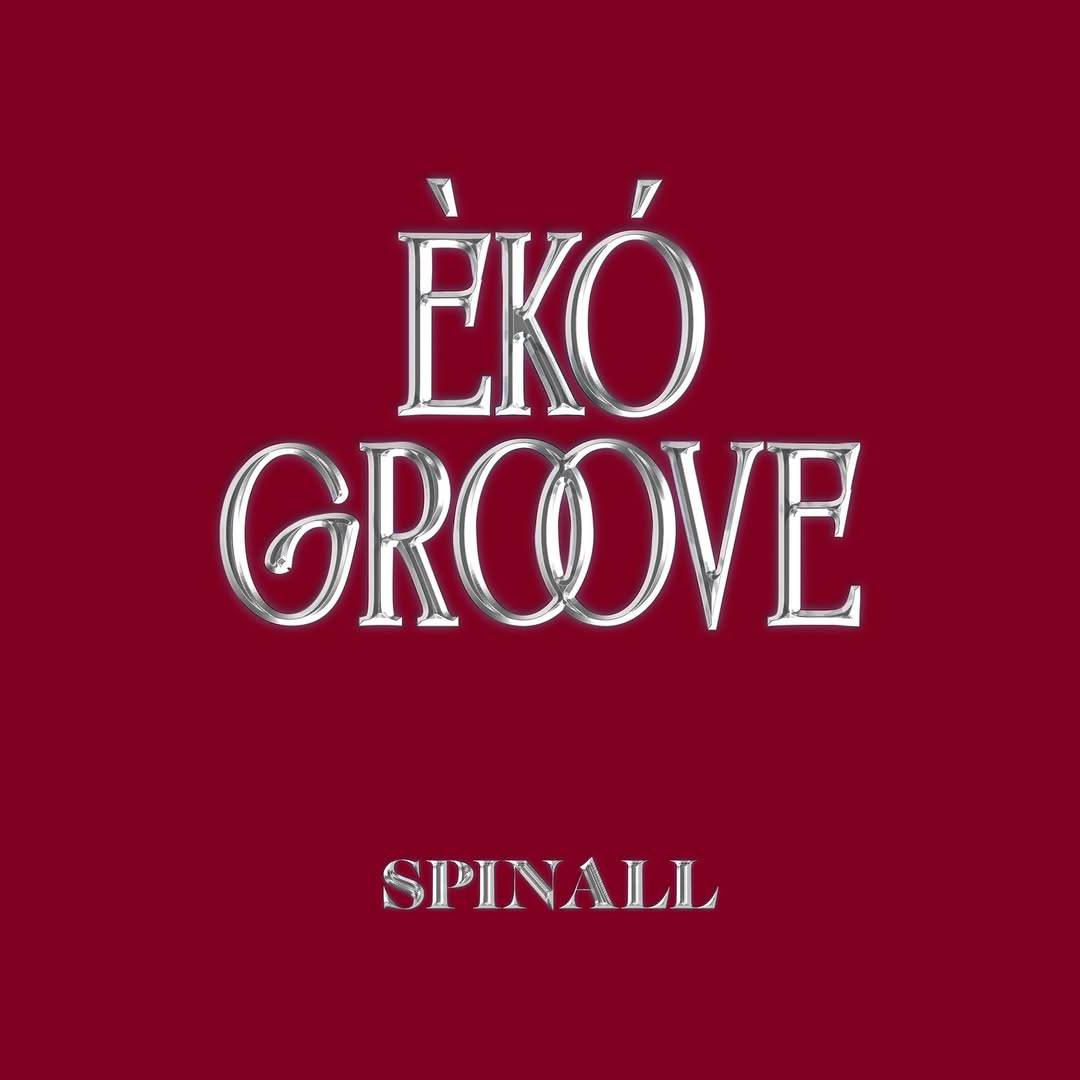

“Èkó Groove” Review: Spinall Assembles Star-Studded Cast on New Album
Èkó Groove is a fun listen. Its energy, its fluid mix of genres, and its vocal star power make it flow quickly despite its length. Spinall ties it all together with the presence and pacing of a live set, curating an experience that is both eclectic and cohesive in spirit if not in theme…
By Yinoluwa Olowofoyeku
Oluseye Desmond Sodamola, known simply as Spinall, is a Lagos-born DJ, producer, and label head whose career has evolved from mixtapes and club nights into a defining voice in Afrobeats. He founded TheCAP Music in 2014 and began releasing full-length projects shortly afterwards. His debut studio album My Story: The Album arrived in 2015, followed by Ten in 2016, Dreams in 2017, Iyanu in 2018, Grace in 2020, and Top Boy in 2023. Each covers a range of styles, from dancefloor anthems to soulful Afro-Pop, consistently showcasing his ability to curate major collaborations and diverse sounds.
Across these albums, Spinall has built a reputation for blending Afrobeats with House, electronic textures, and global club influences, while remaining rooted in Lagos’s energy. Tracks like “Palazzo†with Asake and “Loju†with Wizkid highlight both his commercial reach and his knack for creating songs that resonate locally and beyond.
Now, with Èkó Groove, Spinall returns with a project designed to both reflect and expand his legacy. Èkó Groove is rooted in the rhythms, chaos, and vibrancy of Lagos, while also reaching outward, with features from artistes such as Tyla and Dre, and production that leans into the city’s grooves while embracing international colour.Â
It stands as both a tribute and a statement: that after nearly a decade of steady growth and numerous high points, Spinall is still defining what it means to be a groove curator in Afrobeats, while pushing his sound further.
The album opens with the titular “Èkó Grooveâ€, a thematic and sonic overture where rattling shakers and clacking triplet Afrobeats percussion merge with brass and bright guitars. A sample from Ayinde Bakare weaves the city’s history into the music, transforming the track into an ode to Lagos that establishes both the rhythm and the atmosphere shaping the entire project.
That energy carries seamlessly into “Want Youâ€, which builds instrumentally on the same shakers, percussion, guitars, and horns, now joined by filtered key chords. Jayo delivers a loose, patois-inspired flow—sensual and full of whispered accents—while Destiny Conrad layers his soft R&B tone over the Afrobeat pulse.Â

Together, their performances embody desire, teasing out intimacy in lyrics such as “Come on and tease and turn/ Watch how you make me freeze and twist and turn/ A little bit of eye contact turn me onâ€, carrying the song’s simplicity with a sensual intensity.
“Early†continues this mood but infuses it with an electronic edge, opening with thumping synths, floating hi-hats, and a groovy Afrobeats rhythm. Pulsing electronics support Victony’s airy vocals, while a sharp guitar riff links the chorus to string pads.Â
His playful lyricism disguises raunch with sly wit, singing, “I just dey give am for ealy morn’/ Her bobo dey call am for early morn’/ Girlie no know say my ting e go reach her belly button/ Easy to shout, I go ta-na-na Selenaâ€. The cheeky tone dances across the synthetic textures, pushing the record’s sensual arc further.
With “Struggleâ€, however, the mood shifts, adopting Reggae instrumentation with steady drums and a rich bass guitar that grounds the track in something spiritual. Buju Banton’s gravelly voice anchors the chorus with heft, while Summer Walker’s soft, solemn tones smooth the edges, harmonising delicately over hard truths. “One time for the hardworking/ You smile but your eyes are hurting/ The life all up your desert/ ‘Cause we wake to the sunset, no no,†they sing together, their contrasting energies uniting in the shared language of perseverance.
The Ghanaian Highlife tradition animates “Aunt Mary,†its triplet clavs, shakers, and lively rhythm guitars paired with a bassline that refuses to sit still. Shine TTW offers soft, airy vocals that glide across the melody, while Darkovibes provides deeper contrast, weaving Twi lyrics and playful effects through the track. Their interplay is buoyed by spirited ad-libs and backing vocals, forming a bright celebration of beauty as Shine sings, “Aunty Mary wey I see for tele/ She say her body be na o gbona feli/ Mo ti moti but I see you clearlyâ€.
From there, Spinall pares back the instrumentation on “Forwardâ€, leaving rattling shakers, percussion-heavy drums, and a restrained palette of guitars and bass synths to create space for Tay Iwar’s agile vocals. His layered delivery carries an uplifting message, urging resilience with lines such as, “One thing that I know is that I love my life/ Through the highs and lows, I survived/ No regrets, no looking back, only forward/ I know yeah, keep moving forward, I know yeahâ€. The positivity is heightened by sprightly rhythm guitars that dance through the groove, keeping the track buoyant.
“Waiting†sets its pulse with four-to-the-floor drums, syncopated percussion, and a brass section that cuts through smooth, jazzy piano chords. A lively bass guitar riff runs like an undercurrent, elevating Taves’ energetic vocals as he sings of longing for a lover to meet him halfway. His chorus, “I’ve been waiting for you/ Say me, and my patience can’t deal/ Your heart that I wan come steal/ Me I want love, love like nobody else’s loveâ€, captures the impatience at the song’s core. Jayo reappears, versatile and insistent, contrasting Taves’ breezy lightness with a sung flow full of drive, their voices together amplifying the tension between yearning and impatience.
“Keroseneâ€, one of Èkó Groove’s earlier singles, rides on bright pianos and smooth drones, with shakers and syncopated percussion leaning into Street-Hop but hinting at Amapiano once the log drums drop in. Young Jonn’s playful lyricism and buoyant delivery carry lines such as, “Baby mi, let’s faaji tongolo/ Body magic, okoro/ Last night was fun, ololo … You dey high me, ogogoroâ€, his signature style burning bright over Spinall’s layered groove.
On “Lojuâ€, another pre-released single, Wizkid slips back into his effortless zone, gliding over energetic Afrobeats drums, plucked synths, and subtle electric piano chords. He rides the rhythm with nonchalance, flexing lyrically rather than narrating, singing, “Na we the girls wan follow go oo / Make the girl change area code / Till you follow me I no go go / Follow bounce if you get staminaâ€. His flow is instinctive, the vibe undeniable—proof of his mastery at bending Afrobeats cadences to his will.
That energy escalates on “Excitedâ€, where triplet claps and pulsating synths signal Afro-House terrain. Ami Faku opens with soft, subdued vocals, painting visions of joy and responsibility over rhythm guitars, brass passages, and pads. Her chorus lifts brightly: “I just want this money/ I’ve been saving, praying about it/ Taking care of family/ With Spinall we rounding/ Come on be honest. We we wo let’s jolly yoâ€.Â
Niniola stamps her signature on the second verse with powerful Yoruba lyrics, agile melodies, and a unique timbre, adding vibrance and vocal force alongside Heavy-K’s steady Afro-House imprint.
“Miami†brings cinematic strings into collision with Street-Hop percussion and hard-hitting Afrobeats drums. Olamide plays both roles, softly crooning the refrain, “When you wake in the morning / When you be yawning, I’d be in Miamiâ€, before switching into rapid Yoruba rap with commanding confidence. T.I. enters with his Southern flow, marrying his cadences to the Afrocentric production seamlessly, never missing a beat as the transatlantic collaboration blurs genre borders.Â
“One Call†follows with tender guitar chords and light percussion ushering in Omah Lay’s drawn-out, emotive voice. He pours himself into the promise of closeness, singing, “I’m on my way to you/ But time is on the loose/ I will always fight for truth/ If I have the chance to choose … ‘Cause no me without usâ€, drawing intimacy from restraint. Tyla’s entrance lifts the energy, her bright ad-libs and group vocals layering over Omah’s more subdued tones. The thumping log drums risk overwhelming the track’s gentleness, but her melodies bring a contrasting vibrance that reshapes its mood.
Returning to South Africa, “Living†builds on Afro-House foundations with thumping kicks, riding shakers, and smooth chords augmented by subtle flutes and mallet runs. Murumba Pitch and Tony Duardo weave their expertise into the evolving instrumental, with filtered kicks and swelling percussion amplifying the track’s meditative dance energy.Â
Their lyrics crave simple freedom: “I wanna dance, let me see the speakers blow now/ Liquor running fast inside my veins yeah/ I ain’t tryna get drunk, I’m just tryna live my life/ The power is yours now/ You could do greater things, the power lies in your mindâ€. The song’s dance break leans inward rather than towards climax—an introspective release before the outro affirms a joy in living.
Finally, “Psalm 23†closes Èkó Groove with a return to Street-Hop’s high voltage. Thumping kicks, log drums, rifling snares, a rich bassline, bright chords, and saxophone riffs set the stage for Teni, whose infectious energy bursts through every word. She ends Èkó Groove on a triumphant note, proclaiming, “I’m so thankful ‘cause I’m so blessed/ Got me shouting seven halleluja/ Psalm 23 for you haters, fuck y’allâ€, her defiance sealing Spinall’s Lagos-inspired vision with gratitude, resilience, and fire.
Èkó Groove plays less like a tightly bound thematic album and more like a well-curated collection of songs. The theme of Lagos, introduced in the opening track, feels nominal and is scarcely revisited, as most of the songs turn instead to the well-worn but effective subjects of love, life, and gratitude.
What the record lacks in narrative cohesion, however, it makes up for in breadth. The tracklist spans a wide range of genres, pulling together strands of Afrobeats, Afro-House, Reggae, Amapiano, and Street-Hop into a lively mix that reflects the multiplicity of contemporary African pop.
The production is strong and versatile, showcasing the craft of a talented team. Beats are energetic and genre-appropriate, bringing the right sonic palette to each song and tailoring the mood to the featured artistes. At times, the light touch works best, allowing vocalists the space to shine against leaner backdrops.Â
At other moments, the layers verge on overproduction, creating clashes of tone and energy that slightly blur Èkó Groove’s balance. Still, the engineering remains sharp and professional, maintaining clarity and polish throughout, ensuring that even the busiest arrangements feel clean.
The featured artistes are Èkó Groove’s real stars. Spinall has assembled a cast that is not only stacked with heavyweights but also cleverly balanced. Most are kept within their comfort zones, delivering exactly the kind of performances that earned them their reputations. Others are nudged into new spaces, and those experiments enrich the record, adding surprise and variation.Â
Across the board, the vocals are strong—as expected—but what stands out most is the cross-pollination. The contrasts and harmonies, the way artistes bounce off one another’s styles, create sparks that keep the album engaging. It is less about discovering something entirely new in them, and more about the pleasure of hearing them in dialogue, riffing off one another in a shared space.
As a whole, Èkó Groove is a fun listen. Its energy, fluid mix of genres, and vocal star power make it flow quickly despite its length. Spinall ties it all together with the presence and pacing of a live set, curating an experience that is eclectic yet cohesive in spirit, if not in theme.Â
By pulling together a little of everything his audience loves, he delivers a project that—while uneven in places—remains a milestone in his career. It is a work that should be celebrated, one that underscores his longstanding influence in the industry, showcases his instincts as an A&R, and creates collaborative moments unlikely to be found anywhere else.
Lyricism – 1.4
Tracklisting – 1.3
Sound Engineering – 1.5
Vocalisation – 1.6
Listening Experience – 1.5
Rating – 7.3/10
Yinoluwa “Yinoluu†Olowofoyeku is a multi-disciplinary artist and creative who finds expression in various media. His music can be found across all platforms and he welcomes interaction on his social media @Yinoluu.
The post “Èkó Groove†Review: Spinall Assembles Star-Studded Cast on New Album first appeared on Afrocritik.