

Vue normale

Reçu aujourd’hui — 22 avril 2026
  • ✇BellaNaija Music
  • 5 Dunsin Oyekan & Theophilus Sunday Collaborations You Need on Your Playlist Right Now
    If you have been following Nigerian gospel music for any length of time, you already know that when Dunsin Oyekan and Theophilus Sunday get into a room together, something special tends to come out of it. These two have built a body of collaborative work that covers a lot of ground, from spontaneous worship moments to deeply intentional recordings, and every single one of them is worth your time. With their latest release “Baruch Hashem Adonai” giving the go
     

5 Dunsin Oyekan & Theophilus Sunday Collaborations You Need on Your Playlist Right Now

24 mars 2026 à 13:38

A collage of two portraits: Dunsin Oyekan in a white jacket and brown hat (left) and Theophilus Sunday in a pinstriped navy suit (right).

If you have been following Nigerian gospel music for any length of time, you already know that when Dunsin Oyekan and Theophilus Sunday get into a room together, something special tends to come out of it. These two have built a body of collaborative work that covers a lot of ground, from spontaneous worship moments to deeply intentional recordings, and every single one of them is worth your time.

With their latest release “Baruch Hashem Adonai” giving the gospel music community plenty to talk about, now feels like the perfect moment to go back through what they have built together. Here are five collaborations to add to your playlist immediately.

Ogo 

“Ogo” means glory in Yoruba, and this song delivers exactly that from start to finish. Released in 2023, this was one of the earlier collaborations between the two ministers and it set the tone for everything that came after. Dunsin has shared that the song was born out of a spontaneous moment of worship during a recording session, when he felt a portal open in the spirit and called Theophilus on stage to declare it over the nations. The result is a song built around a simple, repetitive declaration — “Ogo, ogo, hallelujah, to the Lamb” — that somehow gets more compelling every time it loops. Put it on and see how long it takes before your hands go up.

Emperor of the Universe 

Released in January 2024 as part of Dunsin Oyekan’s album “The Great Commission,” “Emperor of the Universe” is the kind of collaboration that reminds you why both of these ministers carry the weight they do. At over sixteen minutes long, it is not a song you put on in passing. It is a song you sit with, and it rewards every minute of that attention. Theophilus Sunday’s contribution on this track adds a layer that makes the whole thing feel like a full worship experience rather than just a recorded song.

You Are Worthy

This collaboration is a masterclass in lead-and-response worship. “You Are Worthy” captures a raw, unscripted essence where Dunsin and Theophilus trade verses that center entirely on the sovereignty of God. It is a song that doesn’t rely on complex production, instead leaning into the vocal strength and spiritual conviction of both men. It has become a staple for those looking to deep-dive into a focused atmosphere of reverence.

Who Is Like You Oh Lord

In “Who Is Like You Oh Lord,” the two ministers lean into a scriptural declaration of God’s incomparable nature. This track highlights the chemistry between Dunsin’s high-energy delivery and Theophilus’s deep, prophetic chants. The song builds steadily, moving from a quiet acknowledgement to a loud, triumphant shout. It is one of those tracks that feels just as fresh on the fiftieth listen as it did on the first.

Baruch Hashem Adonai 

Their most recent collaboration and the one that has the gospel music community talking right now. “Baruch Hashem Adonai,” which means “Blessed is He who comes in the Name of the Lord” in Hebrew, draws from the cry that welcomed Jesus during His triumphant entry into Jerusalem and presents it as a present-day declaration. Dunsin described it as a prophetic sound meant to echo from family altars to nations, and with both their voices on it, the song carries every bit of that intention. A fitting addition to a collaborative catalogue that just keeps growing.

The post 5 Dunsin Oyekan & Theophilus Sunday Collaborations You Need on Your Playlist Right Now appeared first on BellaNaija - Showcasing Africa to the world. Read today!.
  • ✇BellaNaija Music
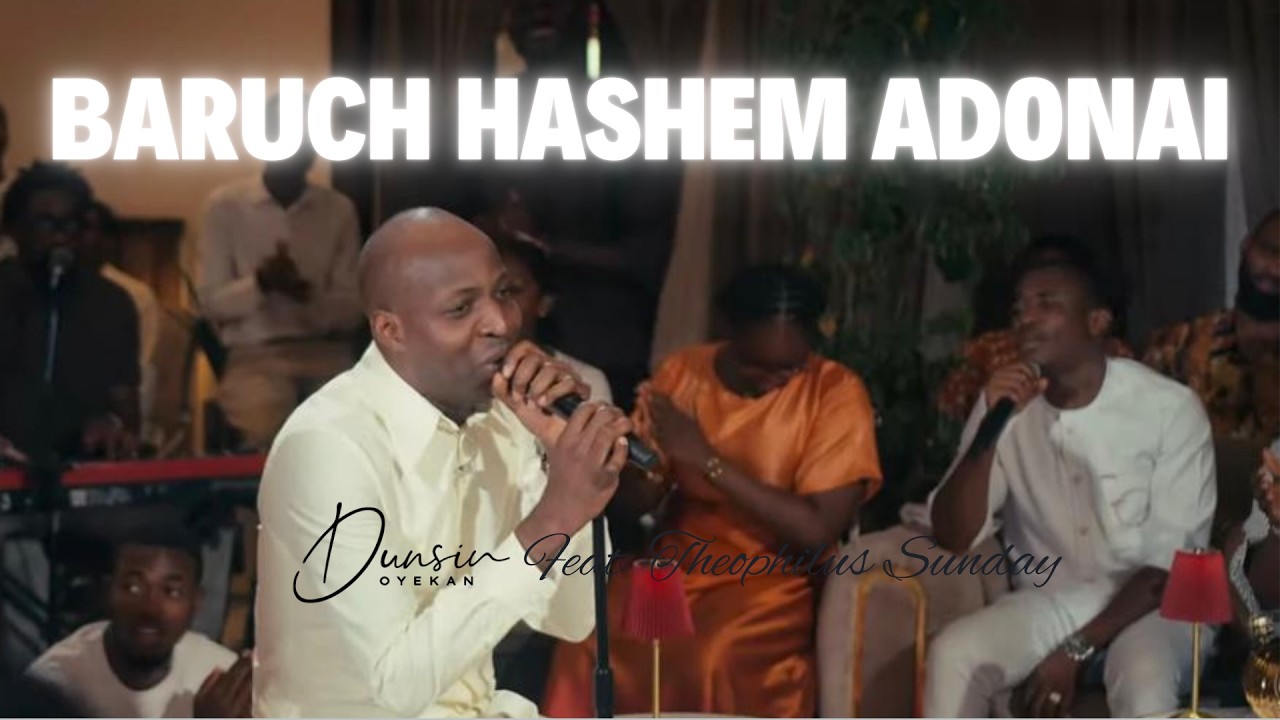
  • Dunsin Oyekan & Theophilus Sunday’s “Baruch Hashem Adonai” Is the Worship Song You Need
    If you have been looking for a worship song to play on repeat this week, Dunsin Oyekan and Theophilus Sunday have something for you — and it is called “Baruch Hashem Adonai.” The track brings together two of gospel music’s most powerful voices for a release that arrives as more than just another worship song. Rooted in Scripture and built around the declaration “Blessed is He who comes in the Name of the
     

Dunsin Oyekan & Theophilus Sunday’s “Baruch Hashem Adonai” Is the Worship Song You Need

8 mars 2026 à 10:10

If you have been looking for a worship song to play on repeat this week, Dunsin Oyekan and Theophilus Sunday have something for you — and it is called “Baruch Hashem Adonai.”

The track brings together two of gospel music’s most powerful voices for a release that arrives as more than just another worship song. Rooted in Scripture and built around the declaration “Blessed is He who comes in the Name of the Lord,” the song draws from the same cry that welcomed Jesus during His triumphant entry into Jerusalem, the moment that announced the arrival of the King. Dunsin Oyekan and Theophilus Sunday take that ancient declaration and make it feel urgent and present, a call for voices everywhere to lift the Name of the Lord and prepare their hearts for His presence.

The song does not frame this as something to wait for in the future. It speaks of the Lord coming again and again into homes, families, churches, cities and nations until His will is done on earth as it is in heaven. It is a declaration meant to echo everywhere, from family altars to town halls, from one nation to another, from the rising of the sun to its setting.

Sharing the release, Dunsin Oyekan encouraged listeners to gather in worship and expectation. “Let’s gather around the family altar tonight and prepare to receive this prophetic sound that heralds the Lord’s coming. When He enters, joy invades,” he said.

The song echoes the words recorded in Mark 11:9–10: “Hosanna! Blessed is He who comes in the name of the Lord! Blessed is the kingdom of our father David that comes in the name of the Lord! Hosanna in the highest!” It stands as an invitation for people everywhere to once again lift the same cry. Baruch Hashem Adonai.

Listen to “Baruch Hashem Adonai” by Dunsin Oyekan featuring Theophilus Sunday below.


The post Dunsin Oyekan & Theophilus Sunday’s “Baruch Hashem Adonai” Is the Worship Song You Need appeared first on BellaNaija - Showcasing Africa to the world. Read today!.
Reçu avant avant-hier
  • ✇TechTrends Africa
  • Fintech Innovation: The Role of AI and Blockchain in Financial Inclusion
    What do you think of when you hear “financial inclusion”, access to bank accounts? It’s more than that! Financial inclusion involves all-around financial services for everyone; however, over 1.3 billion adults worldwide remain unbanked, predominantly in emerging markets across Sub-Saharan Africa, South Asia, and parts of Latin America.? Emerging technologies, particularly Artificial Intelligence (AI) and... The post Fintech Innovation: The R
     

Fintech Innovation: The Role of AI and Blockchain in Financial Inclusion

16 septembre 2025 à 18:39

What do you think of when you hear “financial inclusion”, access to bank accounts? It’s more than that! Financial inclusion involves all-around financial services for everyone; however, over 1.3 billion adults worldwide remain unbanked, predominantly in emerging markets across Sub-Saharan Africa, South Asia, and parts of Latin America.? Emerging technologies, particularly Artificial Intelligence (AI) and...

The post Fintech Innovation: The Role of AI and Blockchain in Financial Inclusion appeared first on TechTrends Africa.

Why AI Can Speed Up Code But Not Thinking

28 juillet 2025 à 13:11

In a landscape flooded with AI hype – from low-code shortcuts to intelligent copilots -there’s growing pressure on engineering teams...

Source

Craft Silicon Unveils Voice AI For Financial Help In Local Languages

11 juillet 2025 à 08:37

Kenyan tech powerhouse Craft Silicon is set to revolutionize local banking with “Small Talk,” its groundbreaking generative artificial intelligence (AI)...

Source

  • ✇TechTrends Africa
  • Unleashing Possibilities: How Meta AI empowers everyday life
    In Nigeria, the phrase “I dey make am” is more than slang. It is a way of life fuelled by late nights, daily hustles, bold ideas and the determination to push through even when the odds don’t seem to add up. It’s this same mindset that powers ‘Make Am with Meta AI’, a new campaign by... The post Unleashing Possibilities: How Meta AI empowers everyday life appeared first on Tec
     

Unleashing Possibilities: How Meta AI empowers everyday life

16 juillet 2025 à 12:16

In Nigeria, the phrase “I dey make am” is more than slang. It is a way of life fuelled by late nights, daily hustles, bold ideas and the determination to push through even when the odds don’t seem to add up. It’s this same mindset that powers ‘Make Am with Meta AI’, a new campaign by...

The post Unleashing Possibilities: How Meta AI empowers everyday life appeared first on TechTrends Africa.

  • ✇Afrocritik
  • “Ms. Kanyin” Review: Jerry Ossaiʼs Wannabe Horror Flick is Forgettable
    Ms. Kanyin reflects the current state of Nollywood’s horror ambitions: bold ideas, impressive technical strides in some areas, but a lack of narrative discipline and thematic coherence. By Joseph Jonathan  Nigerian boarding school folklore has long been haunted by the whisper of high heels in dark hallways: Madam Koi Koi, the ghostly figure said to roam dormitories in the dead of night. It’s a tale passed from senior students to the juniors with equal parts fear and fascination, often whispere
     

“Ms. Kanyin” Review: Jerry Ossaiʼs Wannabe Horror Flick is Forgettable

5 juillet 2025 à 06:11

Ms. Kanyin reflects the current state of Nollywood’s horror ambitions: bold ideas, impressive technical strides in some areas, but a lack of narrative discipline and thematic coherence.

By Joseph Jonathan 

Nigerian boarding school folklore has long been haunted by the whisper of high heels in dark hallways: Madam Koi Koi, the ghostly figure said to roam dormitories in the dead of night. It’s a tale passed from senior students to the juniors with equal parts fear and fascination, often whispered under torchlight after lights-out.

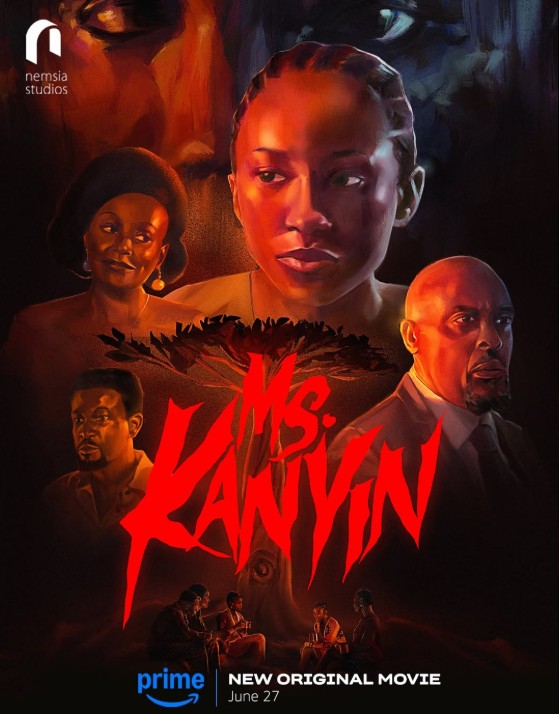
Ms. Kanyin, a supernatural thriller directed by Jerry Ossai, attempts to reimagine this infamous myth in cinematic form. But in doing so, it falls into a trap familiar to Nollywood’s forays into horror: a strong premise undercut by underdeveloped characters, choppy storytelling, and a baffling lack of internal logic.

Set in the 1990s at Sterling Academy, Ms. Kanyin introduces us to Amara (Temi Otedola), a high-achieving student whose dreams of attending Harvard are threatened when her French teacher, the titular Ms. Kanyin (Michelle Dede), gives her a grade she considers damning. 

Alongside her friends, Amara hatches a plan that involves breaking into Ms. Kanyin’s chalet, and the consequences unleash a sinister force that begins to consume the school and the surrounding community.

Ms. Kanyin
Ms. Kanyin

That description, while intriguing, reveals just a fraction of what the film throws at you. Ms. Kanyin is packed with subplots—some promising, others perplexing—that never quite cohere into a focused narrative. Instead of enriching the story, they muddy it. 

By the time the credits roll, you’re left asking not just “What happened?” but “Why did it happen that way?” and “To whom exactly?” The internal logic of the film collapses under its own supernatural weight. We’re told an ancient tree awakens after Ms. Kanyin’s blood is spilled upon it but the motivations of the spirit, the timeline of revenge, and even whether Ms. Kanyin is alive or dead, are never clearly established. 

In one scene she levitates and flips a car; in another, she’s almost thwarted by a teenage boy holding a door shut. It’s not fear that grips you, it’s confusion.

That confusion is amplified by uneven storytelling. The film wants to be a horror, but rarely feels horrifying. It relies heavily on gore—slashes, gashes, severed limbs—all delivered through surprisingly decent special effects makeup. 

The cinematography, particularly in the night scenes, helps to establish a mood that occasionally flirts with dread. But that mood never crystallises into real suspense, because the film skips the crucial steps of building tension and grounding character motivations. The jump scares are basic, the atmosphere undercooked, and the supernatural sequences feel more like detached set-pieces than integral parts of a lived-in world.

For a film that is eponymously titled, Ms. Kanyin tells us surprisingly little about its titular character. We’re offered vague allusions to trauma, and failed dreams, but none of it adds up to a fully-formed figure. What does she want? Is she the victim or the villain? Is she even alive? The film doesn’t seem sure, and as a result, neither are we.

The acting is equally uneven. Temi Otedola, who showed some promise in Citation (2020), seems to have regressed here, though that may be more a fault of the writing than her performance. Much of the dialogue feels like exposition delivered at the audience rather than conversations unfolding between people. The characters talk at each other, not to each other, with lines that lack emotional texture or realism. 

Ms. Kanyin
Still from Ms. Kanyin

The standout performances come from Ademola Adedoyin as Mr. Mustapha—despite his wavering Northern Nigerian accent—and Kalu Ikeagwu as the principal. Toluwani George also brings some heart to the role of Chisom. But they can only do so much with a script that seems more interested in plot devices than in people.

One of the film’s most troubling choices is the inclusion of a sexual assault scene involving Ms. Kanyin and a parent. The moment is presented without emotional weight or narrative consequence. It exists solely as a tool to justify later vengeance, reducing a serious issue to a disposable plot device. It’s a careless move, and one that highlights the film’s broader issue: its unwillingness to engage with its own themes in any meaningful way.

The characters’ motivations often make little sense. Amara, a prefect and overachieving student so morally upright that she must be blackmailed into breaking rules, suddenly becomes impulsive enough to mastermind a cheating scheme that involves breaking into a teacher’s home? 

The narrative leap is jarring and unsupported. Then there’s her friend, Uti (Natse Jemide), whose entire subplot feels like a strange non-sequitur: he’s training for a 100m swim in what looks like a short school pool with no coach and no clear competitor(s). It’s played completely straight, but you’re left wondering whether the film is in on the absurdity or completely unaware.

More frustratingly, there are visible continuity errors that betray a lack of attention to detail, including a diary with the year 2024 in a film supposedly set in the 1990s. Even worse, boom mics make multiple appearances in the frame, a distracting technical flaw that undermines the immersion entirely.

There are flashes of something more: an attempt to explore themes of power, ambition, love (through Ms. Kanyin and Mr. Mustapha’s relationship), friendship (through Amara and her clique), loyalty, and buried trauma. There’s a budding romance, a hint of intergenerational conflict, and the idea that trauma can haunt spaces just as much as spirits can. But these elements are barely developed. 

Instead, the film lingers on spectacle. Even that suffers from inconsistency, with poor editing, awkward cuts, and some amateur CGI effects that feel like a disservice to the solid work done by the makeup and costume departments.

Ms. Kanyin
Still from Ms. Kanyin

Set in a boarding school, the film does succeed in evoking a kind of nostalgia for those who’ve lived that experience: the strict routines, the friendships, the fear of punishment. There’s something universally eerie about schools after dark, and Ms. Kanyin captures that atmosphere well. But even this strength is undercut by the lack of narrative clarity and a consistent horror tone.

In many ways, Ms. Kanyin reflects the current state of Nollywood’s horror ambitions: bold ideas, impressive technical strides in some areas, but a lack of narrative discipline and thematic coherence. Writers Tobe Otuogbodor and Ayoyemi Adeyemi show flashes of imagination, but the story needed more time, more shaping, more logic, more heart. By the end, the film leaves you with raw ingredients of a compelling supernatural story, but no satisfying dish. 

Rating: 1.5/5

Joseph Jonathan is a historian who seeks to understand how film shapes our cultural identity as a people. He believes that history is more about the future than the past. When he’s not writing about film, you can catch him listening to music or discussing politics. He tweets @JosieJp3

The post “Ms. Kanyin” Review: Jerry Ossaiʼs Wannabe Horror Flick is Forgettable first appeared on Afrocritik.

  • ✇TechCabal
  • WhatsApp AI bot Xara wants to make banking in Nigeria as easy as chatting
    As mobile banking adoption surges across Nigeria, users demand faster and simpler ways to manage their money, without switching apps or dealing with clunky interfaces. Xara, a new WhatsApp-based AI assistant, is promising to change that. Xara, a multimodal artificial intelligence banking bot launched in June by Nigerian software engineer Sulaiman Adewale, allows people to send money, pay bills, and analyse spending as naturally as texting a friend. The bot is built entirely inside WhatsApp, u
     

WhatsApp AI bot Xara wants to make banking in Nigeria as easy as chatting

4 juillet 2025 à 13:33

As mobile banking adoption surges across Nigeria, users demand faster and simpler ways to manage their money, without switching apps or dealing with clunky interfaces. Xara, a new WhatsApp-based AI assistant, is promising to change that.

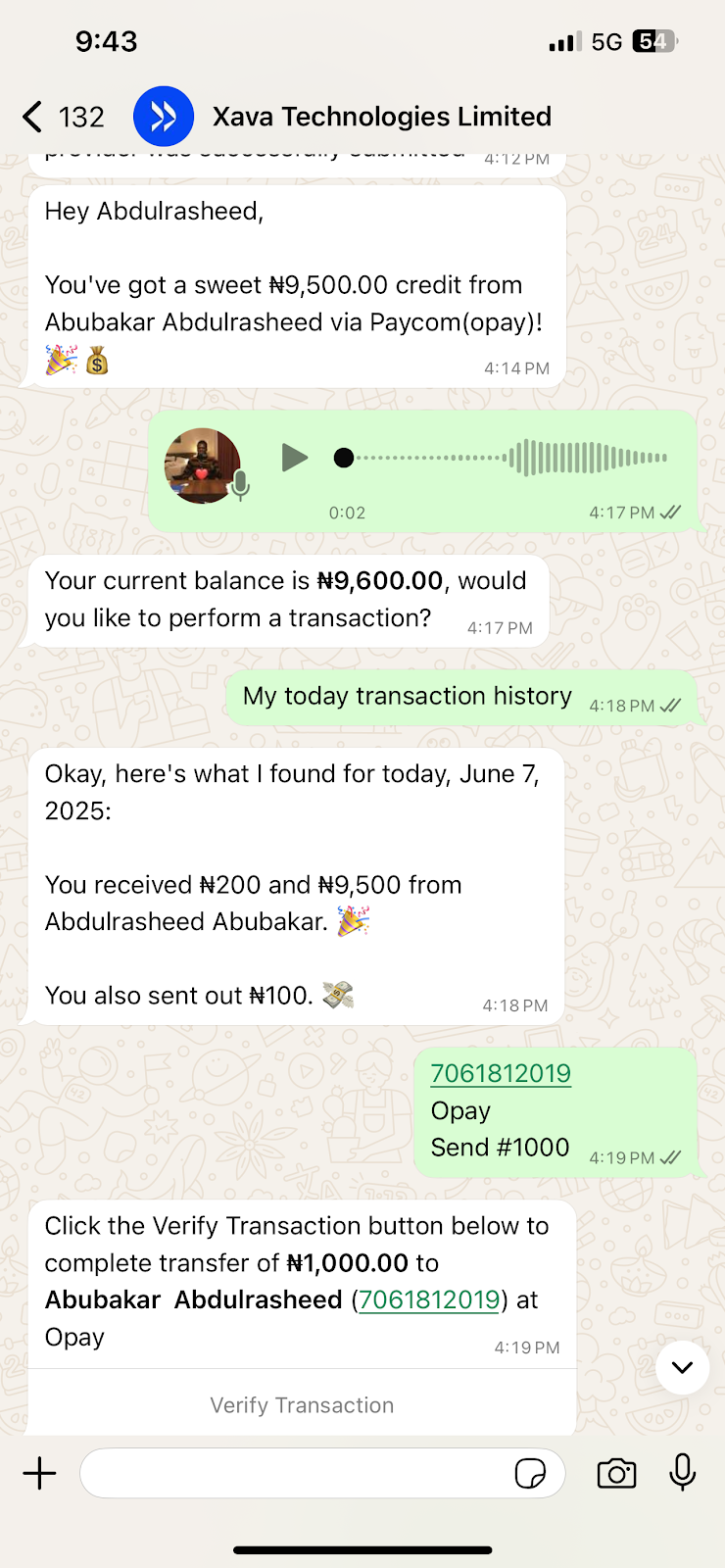
Xara, a multimodal artificial intelligence banking bot launched in June by Nigerian software engineer Sulaiman Adewale, allows people to send money, pay bills, and analyse spending as naturally as texting a friend. The bot is built entirely inside WhatsApp, used by 95% of Nigeria’s 31.6 million social media users. 

“I wanted an easier way that carries everybody along in banking, and if you look at it properly, you will see that WhatsApp is what even the oldest people among us use,” Adewale told TechCabal.

The product enters Nigeria’s crowded fintech space with a different approach: cut out the friction and build on top of what consumers already use. The company considers Owo, an AI managed by Mono and designed to facilitate payments on WhatsApp, as its closest competitor.

According to Adewale,  Xara is powered by an existing large language model (LLM), the same underlying technology behind generative AI tools like ChatGPT. It is also trained on images and voices, especially accented Nigerian speech patterns, using open-source data tailored to its specific use case.

The AI understands commands in natural language, interprets them appropriately to confirm details, and processes the transaction in real time. “Send ₦10,000 to Abubakar for breakfast,” a user might chat this with the AI, and it will process.

“We have focused on just pidgin and English, but we are currently working on it to make it even understand our local languages like Hausa and Yoruba,” said Adewale.

To make the AI a personal financial assistant, users add their WhatsApp number, and once onboarded, they are linked to a payment source, currently 9 Payment Service Bank (9PSB), which issues user account numbers. Adewale said the team is working on partnering with more banks, so users can choose their preferred bank.

TechCabal tested the AI bot for two weeks and found that it understands and can process transactions with images, voice notes, text, and can analyse user spending and schedule payments. It remembers conversions with users and is capable of saving recipients as beneficiaries.

About 10,000 users have been registered on the platform, and over ₦135 million ($88,200) worth of transactions have been recorded within the two weeks of its launch, Adewale claims. He added that his team is currently working on partnerships with other banks as its initial payment provider, 9PSB, could no longer handle the inflow of new users, causing it to pause new registrations

Stella Adeboye, a server at Kilimanjaro restaurant in Ilorin, said Xara could serve as an alternative for easy payment for customers who had to raise their heads multiple times to check account details on the wall to make transfers for bill payment.

“If this tool can take a picture of an account number and process the transfer instantly, I think it would help us and also make payments much easier for customers,” Adeboye said.

To its early users, how their personal and financial data are secured has been a major concern. “Being able to bank via WhatsApp without opening another app is convenient, since it works even on a low network connection,” said Babatunde Hassan, one of the users. “But I’m worried about how our information is secured, and I’m sure that doubt may also hold other people back.”

In response to how users’ data is secured, Adewale said that the AI is built to use WhatsApp’s existing end-to-end encryption to safeguard users’ data. This means that conversations are private and inaccessible to third parties. He also noted that it requires an optional 4-digit authentication PIN to authorise transactions to beat fraud or compromise accounts.         

“We don’t retain those personal banking details ourselves; the only data we log is related to payment transactions, just for tracking and resolution purposes, if any issues arise,” he said. “For extra security, we advise users to lock their WhatsApp using Face ID or a password, or even lock their chats with the AI to keep transactions private.”

Adewale explained that in case of a WhatsApp account breach or lost phone, users can visit its customer support to “request that your account be blocked instantly.” Accounts can be reinstated once identification is provided. 

When asked about the type of licensing governing their multimodal AI service, Adewale stated that they currently “rely on banking partners’ license” for regulatory cover, indicating functions through existing compliance frameworks held by its financial institution partners.

A game changer for financial inclusion?

According to the Central Bank of Nigeria (CBN), over 28 million Nigerians lack access to financial products and services, including money transfer services, despite the country’s financial exclusion rate dropping from 46.3% in 2010 to around 26% in 2023. 

Financial analyst Victor Daniel said leveraging WhatsApp for banking services could encourage even further financial inclusion, especially since the platform works on low-end smartphones despite poor network connections.

“In the past years, fintech innovations have helped reduce the financial exclusion in the country, but we need more innovations like this that can give us more alternatives to traditional systems to achieve more financial inclusion,” he said.  

Daniel added that tools like Xara may also offer a strong alternative to QR code payments, which have seen limited adoption in Nigeria due to technical know-how and fraud concerns. “By allowing users to simply snap an account number from a note or screen and initiate a transfer through natural language, that provides a simpler payment service.”

While the focus is currently on Nigeria, Adewale said he envisions Xara AI banking assistant reaching more African countries where WhatsApp is dominant and banking remains a challenge. He also bets that the tool will disrupt the fintech landscape and “replace a lot of fintechs, hopefully.”  

“We are still working on integrating additional services like savings plans, utility payment, and even e-commerce and logistics, like telling it to order food for you, and it will still do.” 

Mark your calendars! Moonshot by TechCabal is back in Lagos on October 15–16! Join Africa’s top founders, creatives & tech leaders for 2 days of keynotes, mixers & future-forward ideas. Early bird tickets now 20% off—don’t snooze! moonshot.techcabal.com

Tech Experts: Africa’s AI Future Starts At Home

30 juin 2025 à 12:12
Africa must take charge of its artificial intelligence (AI) future by investing in foundational infrastructure, data capacity, and local talent....

Source

Google For Start-ups Accelerator Africa Selects AI Innovators

25 juin 2025 à 11:52
Google today announced the selection of 15 promising tech start-ups for its Google for Startups Accelerator: Africa Class 9 programme....

Source

Research Shows C-Suite Misalignment Over GenAI Adoption

18 juin 2025 à 13:22
NTT DATA has launched its new report, “The AI Security Balancing Act: From Risk to Innovation,” highlighting the opportunities and...

Source

❌