 Connexion
NITDA Assumes Control Of NGEA Infrastructure
7 avril 2026 à 07:34
Nigeria has advanced its digital governance agenda after the National Information Technology Development Agency (NITDA) formally took over the Nigeria...



Nigeria has advanced its digital governance agenda after the National Information Technology Development Agency (NITDA) formally took over the Nigeria...
Kolawole Bekes is a Database Administrator, Database Reliability Engineer, and DevOps Engineer with over a decade of experience spanning multiple industries. He holds a Bachelor’s degree in Mathematics from the University of Abuja. Following his relocation to the United States in 2015 and subsequently to Canada in 2017, he has built a career working with organisations such as Microsoft, AppDirect, WorkJam, Sunwing Airlines, Agio, and Big Fish Games.Â
He is also the founder and chief executive officer of WakaMi, an on-demand errand service platform focused on delivering reliable and efficient errand solutions to Nigerians both locally and in the diaspora.
Once upon a time, there was a big fruit garden where fruits kept falling everywhere—apples here, bananas there, and oranges rolling all over the ground. Nobody could find what they wanted.
So I became the helper of the garden. I picked up all the fruits and put them into the right baskets; apples in one basket, bananas in another, and oranges in their own place.
I also made sure the fruits stayed fresh and safe. Whenever someone came looking for a fruit, I could quickly say, “I know exactly where it is,†and give it to them right away.
My job is to keep everything neat, safe, and easy to find, just like the fruit baskets in the garden.
I became a Database Administrator as part of a deliberate effort to improve my earning potential and build a more reliable career path. I joined a community of IT professionals in North America, where I was exposed to new ideas and opportunities.Â
Through that network, I discovered and enrolled in a bootcamp, completed several training sessions, and gained hands-on experience. I then applied to multiple roles, and eventually secured an opportunity that marked the beginning of my career as a Database Administrator.
The easiest part of my job is when systems are well-structured and everything is running smoothly. Tasks like monitoring, backups, and routine maintenance become very straightforward.
The most difficult part is handling unexpected issues, like performance bottlenecks or outages, especially under time pressure. But that’s also the most rewarding part, because it challenges me to think critically, troubleshoot quickly, and ensure systems are restored with minimal impact.
Warning: Unexpected issues may occur at any time. Requires patience, quick thinking, and a strong relationship with coffee.
Early in my career, I was involved in a deployment where a change was made directly in production without a proper rollback plan. Unfortunately, it caused a temporary disruption to a critical service.
Although we resolved it quickly, it highlighted the importance of change management. From that point on, I enforced stricter deployment processes introducing staging validation, rollback strategies, and better communication.
It significantly reduced risk for us in future deployments, critical because it now shapes how I approach database changes today.
One of the hardest parts of building a startup remotely while living in Canada and operating in Nigeria is maintaining strong team alignment and accountability when you are not physically present day to day.
Early on, I experienced challenges with staff management, particularly around consistency, ownership, and productivity. Some team members struggled with structure, and it became clear that the issue was not just about effort. It was about clarity, expectations, and systems.
To address this, I shifted my approach in a few ways. First, I implemented clear performance metrics and deliverables so everyone understands exactly what success looks like. Second, I introduced regular check-ins and reporting structures to improve visibility. Third, I focused more on hiring for accountability and cultural fit, not just technical skills.
I also make it a point to spend time in Nigeria periodically, which helps reinforce relationships, build trust, and reset expectations with the team.
Overall, the experience taught me that managing a remote team, especially across different environments, requires intentional structure, strong communication, and the right people in place. Once those are aligned, performance improves significantly.
The vision behind WakaMi came from a personal experience. While living in Canada, I needed someone to handle an errand for me in Nigeria. I tried finding help online, but unfortunately, I had a bad experience where I lost money.
That led me to dig deeper, and I realised this was not just my problem. Many people, especially those in the diaspora, face the same challenge. There is no reliable, structured way to get trusted services done remotely in Nigeria.
WakaMi was built to solve that. It is an on-demand managed services marketplace that connects people who need errands or services done with verified service providers. It also provides oversight by tracking progress and only releasing payment once the task is completed and confirmed.
I believe it can scale in Nigeria because it addresses a real and growing problem. As more Nigerians live and work abroad, and as urban life becomes busier locally, the demand for trusted on-demand services will continue to increase.
What makes it scalable is the combination of trust, structure, and technology, bringing accountability into an otherwise informal market. Once you solve trust at scale in a service marketplace, growth becomes a natural outcome.


TGIF.
Put a finger down if you experienced poor service with Nigerian telecom operators between November 2025 and January 2026.
The Nigerian Communications Commission (NCC), the country’s telecoms regulator, has said that subscribers will receive airtime refunds as compensation for poor service experienced within the said time.
In other news, Nigeria’s elections have a retention problem. A new Zikoko Citizen report predicts what participation in the 2027 election might look like, drawing on trends from previous cycles, and explores what could bring about a massive turnaround.
— Yemi
with Kolawole Bekes
Kolawole Bekes is a Database Administrator, Database Reliability Engineer, and DevOps Engineer with over a decade of experience spanning multiple industries. He holds a Bachelor’s degree in Mathematics from the University of Abuja. Following his relocation to the United States in 2015 and subsequently to Canada in 2017, he has built a career working with organisations such as Microsoft, AppDirect, WorkJam, Sunwing Airlines, Agio, and Big Fish Games.Â
He is also the founder and chief executive officer of WakaMi, an on-demand errand service platform focused on delivering reliable and efficient errand solutions to Nigerians both locally and in the diaspora.
Once upon a time, there was a big fruit garden where fruits kept falling everywhere—apples here, bananas there, and oranges rolling all over the ground. Nobody could find what they wanted.
So I became the helper of the garden. I picked up all the fruits and put them into the right baskets; apples in one basket, bananas in another, and oranges in their own place. My job is to keep everything neat, safe, and easy to find, just like the fruit baskets in the garden.
I became a Database Administrator as part of a deliberate effort to improve my earning potential and build a more reliable career path. I joined a community of IT professionals in North America, where I was exposed to new ideas and opportunities.Â
Through that network, I discovered and enrolled in a bootcamp, completed several training sessions, and gained hands-on experience. I then applied to multiple roles, and eventually secured an opportunity that marked the beginning of my career as a Database Administrator.
Warning: Unexpected issues may occur at any time. Requires patience, quick thinking, and a strong relationship with coffee.
The vision behind WakaMi came from a personal experience. While living in Canada, I needed someone to handle an errand for me in Nigeria. I tried finding help online, but unfortunately, I had a bad experience where I lost money.
That led me to dig deeper, and I realised this was not just my problem. Many people, especially those in the diaspora, face the same challenge. There is no reliable, structured way to get trusted services done remotely in Nigeria.
I believe it can scale in Nigeria because it addresses a real and growing problem. As more Nigerians live and work abroad, and as urban life becomes busier locally, the demand for trusted on-demand services will continue to increase.
Fincra connects your business to Africa’s payment rails without building market by market. For collection, payout, FX, and settlement through a single integration. See what this means for your business.
Awash Bank, Ethiopia’s second-largest commercial bank by assets—and largest privately-owned lender—has listed on the Ethiopian Stock Exchange (ESX), the country’s stock exchange. Launched in 2025, the ESX brought the total number of stock exchanges in Africa to 30 at the time. Awash’s listing is only the third since that launch.
State of play: Awash Bank listed 37.9 million shares by introduction, out of the 54 million which it previously registered with the Ethiopian Capital Market Authority (ECMA), the country’s capital markets regulator, in March.
The listing allows Awash to provide liquidity for its existing shareholders, while diversifying its shareholder base. The listing by introduction method is typically used by companies that have listed on other stock exchanges or have recently raised capital.
In Awash’s case, the bank previously raised its paid-up capital in 2022 to ETB 55 billion (about $1 billion), a few months after Ethiopia opened up its banking sector to foreign investors.
Why this matters: Awash Bank serves over 15 million customers, runs nearly 1,000 branches, and reported a record profit of ETB 25.67 billion ($163.9 million) last year. When a company of that size goes public, investors now have a heavyweight stock to trade. It also signals confidence. If a market leader is willing to show up, others are more likely to follow.
What happens next: Awash is only the third listing on the ESX, but it likely won’t be alone for long. Other major banks are already lining up to join, with more listings expected before mid-2026.Â
Africa’s Business Heroes is calling Africa’s boldest entrepreneurs, shaping the future today. If you’re building a high-impact business, this is your moment. Apply for a chance to win a share of the $1.5M prize pool, plus mentorship and access to a powerful pan-African network. Applications close April 28. Start your journey now.
South Africa’s Department of Communications & Digital Technologies, the government agency that regulates broadcasting and communications services, has put down a three-year plan to fix the State Information Technology Agency (SITA), the state-owned IT company responsible for managing IT resources for the government.Â
Why does it need a reset? If SITA were graded for its performance, it was doing very badly. In the 2024/2025 fiscal year, in its audit, the communications regulator found that the IT agency failed to deliver R12. 1 billion ($729 million) worth of projects. The operator was struggling to function properly; a lack of staff and leadership gaps stalled multiple projects.
Now, the regulator wants to make sure SITA has no excuses in the coming fiscal year.
Rebuilding it brick by brick: The restructuring will happen in three phases. First, SITA mustdefine the problem, then diagnose what happened before designing a new framework for its operation. The third phase is a consultation with stakeholders, and then a final draft of the new business model will be presented.
Planning is the easy part: This is not the first attempt to rejig the agency. Those plans were among the institutional reform priorities for the year ended 2025. So this plan is less about what needs to be done (they already know that) and more about whether it can actually be done this time.
In March 2013, TechCabal published its first article. Thousands of stories later, the work continues, and today, it goes deeper.
TechCabal has always been free. That’s not changing.
We’ve opened a new layer. Reporting that goes further, built on sources you won’t find anywhere else, and told in ways we haven’t tried before. You’re among the first to see it.
Getting in takes less than 15 seconds.
You’re one step away from the other side.
Click the button below to see what TechCabal 4.0 looks like and what it means for you.
AI Diagnostics, a South African healthtech startup, raised 5.2 million in a funding round led by The Steele Foundation for Hope, with participation from the iFSP Group, Global Innovation Fund, and angel investors. (Apr 17)
Here are the other deals for the week:
Follow us on Twitter, Instagram, and LinkedIn for more funding announcements. Before you go, how much did African tech raise at the end of Q1 2026? Find out here.
Source:
|
Coin Name |
Current Value |
Day |
Month |
|---|---|---|---|
| Bitcoin |
$77,596 |
– 0.51% |
+ 9.08% |
| Ether |
$2,304 |
– 1.96% |
+ 6.11% |
| XRP |
$1.42 |
+ 0.60% |
+ 0.53% |
| Solana |
$85.39 |
– 0.73% |
– 7.58% |
* Data as of 06.22 AM WAT, April 24, 2026.
There are more jobs on TechCabal’s job board. If you have job opportunities to share, please submit them at bit.ly/tcxjobs.
Written by: Success Sotonwa, Emmanuel Nwosu and Opeyemi Kareem
Edited by: Emmanuel Nwosu and Ganiu Oloruntade
Sign up for our insightful newsletters on the business and economy of tech in Africa.
P:S If you’re often missing TC Daily in your inbox, check your Promotions folder and move any edition of TC Daily from “Promotions†to your “Main†or “Primary†folder and TC Daily will always come to you.
Nigeria’s telecom subscribers will receive airtime refunds as compensation for poor service experienced between November 2025 and January 2026. The refunds will begin on Friday, April 24, according to the Nigerian Communications Commission (NCC).
The NCC said operators failed to meet required performance benchmarks in several parts of the country following a March 29, 2026, directive.
While this is not the first time the regulator has ordered compensation for service failures—MTN and Celtel (now Airtel) were fined in 2008—the latest directive signals a more assertive approach to holding telecom operators accountable.Â
The NCC said it has also directed tower companies responsible for many of the outages to channel their compensation obligations into upgrading tower infrastructure. These investments, separate from their annual capital plans, will be monitored by independent auditors to ensure compliance.
“It’s actually compensation for the quality of service experience you may have had,†NCC’s Executive Vice Chairman and chief executive officer, Aminu Maida, said at a press briefing on Thursday in Lagos, adding that subscribers will begin receiving alerts via SMS detailing the credits applied to their lines.
Unlike previous enforcement approaches, which assessed service quality at the state level, the NCC said it has shifted to a more granular system. Performance is now measured at the local government level, allowing the regulator to better capture variations in network experience across the country.
“What we have now adopted is to carry out the assessment at local government levels,†Maida said. “This ensures that whatever we measure is as close as possible to what subscribers actually experience.â€
Under this framework, operators are evaluated across multiple network layers—2G, 3G, and 4G—against key performance indicators set out in the commission’s quality of service regulations. Where operators fall short, penalties are imposed, part of which is now being redirected as compensation to affected users.
Maida acknowledged the gap between demand and current network capacity but pointed to ongoing investments by operators as a sign of progress. In 2025, the industry invested over $1 billion upgrading networks, importing equipment, and building new towers. According to Maida, one operator has already invested $1 billion in infrastructure this year.Â
“Things actually improve, but we need to be patient,†he said, noting that infrastructure expansion remains the primary driver of better service quality.
According to him, operators deployed just under 300 new sites last year. In contrast, they have committed to rolling out about 12,000 sites in 2026. So far, around 2,800 have been completed, including new builds, spectrum additions, and upgrades such as converting 3G sites to 4G and deploying 5G in select locations.
“You can see we’re already moving way ahead of what we did last year,†he said.
Operators say they are complying with the directive while continuing to invest in network improvements. MTN Nigeria said in a statement on Thursday that all affected customers will receive airtime compensation in line with the NCC framework, describing the directive as one that “places customers at the centre of regulatory decision-making.â€
Wazzup.
In the world of Kenyan elites, wristwatches are becoming the new real estate. Yes, instead of land plots, some of the crème de la crème are now putting money into pre-owned luxury watches, because apparently, you can wear your investment and flip it later for profit. What makes this wild is how much it makes sense. Unlike property, a watch doesn’t need permits or months to sell. It can be liquidated in days and carried across borders on your wrist.
If you were to invest in something unconventional, what would it be?
In other news, Nigeria’s elections have a retention problem. A new Zikoko Citizen report predicts what participation in the 2027 election might look like, drawing on trends from previous cycles, and explores what could bring about a massive turnaround.
— Yemi
After Nigeria’s largest telecom operators MTN and Airtel temporarily suspended airtime lending last week, new players have swooped in to take their place—at least temporarily.
On Wednesday, the Federal Competition and Consumer Protection Commission (FCCPC), Nigeria’s consumer protection watchdog, approved five companies to operate airtime and data lending services: Total TIM Nigeria Limited, Rane Interactive Medien CLS Limited, Mode NG Applications Nigeria Limited, Cloud Interactive Associate Limited, and Coverage Broadband Limited.
The move comes as Globacom and T2, which round up the four telcos operating in Nigeria, have also quietly paused their own lending services, according to our checks.
Will telcos resume airtime lending? Airtime lending has not been scrapped; it is being reorganised. Under the FCCPC’s 2025 regulations, services like MTN’s Xtratime are now classified as consumer credit, requiring proper licencing, disclosure of fees, and clearer accountability.
For users, the immediate question is what happens to existing debt. Telecom operators haven’t addressed this yet.
There is another wrinkle. The newly approved lenders, it is worth noting, do not yet have listed consumer-facing apps in the FCCPC’s disclosure, making it unclear how Nigerians can actually access these services for now.
Between the lines: This is opening the door to new competition. Telcos have long dominated airtime credit, but once they secure approval and return, they may find themselves sharing that space with licenced third-party lenders operating under stricter rules.
What is really happening? Airtime credit is being pulled into the formal lending system, where the business is clearer, and the players are easier to hold accountable.
Fincra connects your business to Africa’s payment rails without building market by market. For collection, payout, FX, and settlement through a single integration. See what this means for your business.
A curious little back story: In 2025, a cyberattack hit M-Tiba, a Kenyan healthtech platform, and went undetected for ten days. That attack exposed the personal and medical information of nearly five million Kenyans, including insurance claims, patient information, and clinical records.
What’s the news here? The same platform is now shutting down its My Health Funds (MHF) wallet, the feature that allowed people to set aside money strictly for healthcare. M-Tiba users have begun receiving refunds of the amount in the wallet into their M-PESA accounts without requesting withdrawals.
There is no confirmed link between the breach and the decision to shut down the wallet, but the timing raises eyebrows. Plus, the explanation that CarePay Limited, M-Tiba’s operator, gave is… thin. The official line is that it is evolving and will now shift its focus to “improving health insurance management.â€Â
Beyond that, there is very little detail on why the wallet is being retired, how many users were affected, no clarity on how affected users transition, and no real sense of what this new focus will look like. Will this mean deeper partnerships with insurers? A new insurance-led product? Or a full pivot away from individual users entirely? For now, it seems like a product shutdown wrapped in a vague strategy shift.Â
While one can make guesses about what might be happening behind the scenes, this is one of those moments where CarePay needs to spill a bit more tea.
In March 2013, TechCabal published its first article. Thousands of stories later, the work continues, and today, it goes deeper.
TechCabal has always been free. That’s not changing.
We’ve opened a new layer. Reporting that goes further, built on sources you won’t find anywhere else, and told in ways we haven’t tried before. You’re among the first to see it.
Getting in takes less than 15 seconds.
You’re one step away from the other side.
Click the button below to see what TechCabal 4.0 looks like and what it means for you.
Across Africa, walking into a bank branch is becoming a backup plan, as digital payments deepen. Absa Kenya, the country’s seventh-largest bank by assets, is leaning fully into that shift. The lender says it plans to spend up to KES 3 billion ($23.2 million) annually on technology as it pushes more customers toward mobile and self-service banking.
The investment is not new, but it is becoming routine. Absa spent KES 2.16 billion ($16.7 million) on technology in 2025, and now treats digital spend as a recurring cost of staying competitive. The payoff is already visible: 94% of all transactions now happen outside branches, a sharp jump from roughly 40–50% a decade ago.
This is less about innovation and more about survival. Kenya’s banking sector has long been shaped by mobile money, and customer expectations now revolve around speed, convenience, and always-on access. Traditional banks are adjusting or risking irrelevance.
What is really happening? Absa is rebuilding its retail strategy around digital channels, and leadership changes reflect that shift. The appointment of former M-Pesa Africa chief executive Sitoyo Lopokoiyit to lead personal and private banking signals where future growth is expected to come from.
The efficiency gains are starting to show. The bank’s cost-to-income ratio improved to 36.5% in 2025 from 46% a year earlier, while operating expenses dropped 21% to KES 7.35 billion ($56.9 million). At the same time, net profit rose 10% to KES 22.9 billion ($177.3 million), suggesting the digital push is not just about convenience, but also margins.
Zoom out: Kenyan banks are no longer just competing with each other. They are competing with the habits shaped by mobile money, where transactions are instant and physical branches are optional. Absa’s spending signals that keeping up now comes with a permanent technology bill.
Chery, South Africa’s best-selling Chinese car brand, is launching its first fully electric car in South Africa in 2026: the Chery Q.
All the technical ways to describe a cool car: The Chery Q comes with a 42.7kWh battery, up to 400km range, a peak power output of 90kW, a rear-mounted motor, and a cabin that leans heavily into screens and software, including a 15.6-inch infotainment display and a 360-degree panoramic camera.
The EV market is getting busy: South Africa’s new energy vehicles (NEV) growth was valued at R244 million ($14.3 million) in 2024, with about 3,800 units sold, as reported by Forbes Africa.
Competition in this sector is already there from Chinese automakers like BYD and Geely— which recently made its local debut at a starting price of R339,900 ($20,600). Though Chery claims some of the features of the Q car trumps those of the competitor (peak power output), its edge is that it has already built its reputation locally with its non-EV models.Â
A familiar name with a heavy past: If the Chery Q sounds familiar, it should. This is a modern reboot of the QQ3, one of the cheapest cars South Africa had seen when it first arrived in 2008. It was cheap, only going for R59,900 ($3,600) at the time.Â
However, these cars received a zero-star safety rating in a South African car safety campaign conducted by the Global New Car Assessment Programme (NCAP). While this new version has history, the Chery Q is now getting a second chance to meet a higher safety and car quality expectation.
Source:
|
Coin Name |
Current Value |
Day |
Month |
|---|---|---|---|
| Bitcoin |
$77,800 |
– 0.62% |
+ 10.90% |
| Ether |
$2,343 |
– 2.30% |
+ 10.01% |
| XRP |
$1.41 |
– 2.92% |
+ 0.35% |
| Solana |
$85.84 |
– 2.65% |
– 4.73% |
* Data as of 06.34 AM WAT, April 23, 2026.
The voices shaping Africa’s digital future are taking the stage. From AI and IoT to cloud, connectivity and smart infrastructure, IOT West Africa | Data Centre & Cloud Expo Africa 2026 brings together the leaders building the continent’s next digital chapter. This is where the ecosystem meets, and we’ll see you there. The event kicks off on April 28–30 at the Landmark Centre, Victoria Island, Lagos. Register here to attend.
Written by: Emmanuel Nwosu and Opeyemi Kareem
Edited by: Emmanuel Nwosu and Ganiu Oloruntade
Sign up for our insightful newsletters on the business and economy of tech in Africa.
P:S If you’re often missing TC Daily in your inbox, check your Promotions folder and move any edition of TC Daily from “Promotions†to your “Main†or “Primary†folder and TC Daily will always come to you.

Adekunle Gold marked a historic milestone in Nigerian cultural history as the first artist to headline the newly renovated Wole Soyinka Centre for Culture and Creative Arts (National Theatre Nigeria), Lagos, delivering a sold-out orchestral concert alongside the MUSON Orchestra and his band, The 79th Element.
Selling out within five days of announcement, the concert was both a testament to Adekunle Gold’s cultural stature and a powerful reintroduction of the Wole Soyinka Centre for Culture and Creative Arts (National Theatre) as a home for ambitious, world-class artistic expression. The evening unfolded as a masterful fusion of heritage and innovation, redefining what is possible for live music performances in Nigeria.
Across the night, Adekunle Gold performed selections from his critically acclaimed album Fuji, alongside defining works from his decade-long catalogue, all reimagined through sweeping orchestral arrangements, live instrumentation, and cinematic stage design. Fan favourites were transformed into grand, emotive compositions that elevated the audience experience, blurring the lines between popular music, classical performance, and theatrical storytelling.
Opening the National Theatre after its long-anticipated restoration places Adekunle Gold in direct lineage with the iconic artists who have shaped the venue’s legacy, while simultaneously ushering it into a new era. The performance represented a rare convergence of scale, symbolism, and sound, a moment never before witnessed on the Theatre’s stage.
Social media lit up throughout the night, with fans, critics, and industry figures describing the concert as “generational,†“historic,†and “a turning point for Nigerian live music.†Many hailed the show as proof that Nigerian artists can mount productions that rival the finest concert experiences anywhere in the world.
The Lagos performance follows Adekunle Gold’s trailblazing orchestral debut at the EFG London Jazz Festival on November 23, 2025, where he made history as the first Nigerian artist to headline an orchestral show at London’s Royal Festival Hall. That sold-out performance closed the festival and saw him collaborate with the Guildhall Session Orchestra, earning critical acclaim for its rich, genre-defying reinterpretations of fan favourites such as “Sade†and “Many People,†alongside selections from Fuji.
Together, the London and Lagos performances firmly establish Adekunle Gold as a defining artist of his generation, one who continues to expand the global perception of Nigerian music while honouring its roots. With this orchestral series, he has not only raised the bar for live performance but set a new benchmark for cultural ambition, artistic excellence, and global relevance.
Sponsored Content
The post Adekunle Gold Inaugurates the Newly Renovated National Theatre with a Sold-Out Orchestral Performance appeared first on BellaNaija - Showcasing Africa to the world. Read today!.
Exhibitors cite strong investor leads and international visibility as inaugural event brings in participants from 78 countries The debut of GITEX NIGERIA brought a global spotlight to Nigeria’s digital economy, with international exhibitors and investors confirming strong engagement and immediate business opportunities. Held under the patronage of H.E. Bola Ahmed Tinubu GCFR, President of the...
The post GITEX Nigeria Shines Global Spotlight on West Africa as Leaders Rally Behind Nigeria’s Digital Future appeared first on TechTrends Africa.
The inaugural GITEX NIGERIA concluded in a tremendous fashion this Thursday in Lagos, as West Africa’s largest tech, AI, and startup show cast a spotlight on the influence of emerging local and regional entrepreneurs. Held under the patronage of H.E. Bola Ahmed Tinubu GCFR, President of the Federal Republic of Nigeria, GITEX NIGERIA took place...
The post Lagos Deputy Governor: Nigerian Entrepreneurs Are Architects of the Digital Future as GITEX Nigeria Showcases Startup Ecosystems appeared first on TechTrends Africa.
Renewable energy platform Odyssey Energy Solutions has secured a USD 7.5 M funding facility from British International Investment (BII), the UK’s development finance institution. The investment will accelerate the deployment of solar mini-grids across Nigeria, tackling a critical energy access challenge where 90 million people lack reliable electricity.
The funding supports Nigeria’s DARES program—a government initiative backed by the World Bank—aiming to provide power to 17.5 million Nigerians via 1,500 solar mini-grids and 1.5 million solar home systems. Odyssey’s digital platform streamlines project management, equipment financing, and real-time monitoring for developers and the Rural Electrification Agency (REA).
“BII’s support helps us offer flexible financing to scale clean energy access,†said Piyush Mathur, Odyssey Co-Founder.
The post Odyssey Energy Secures USD 7.5 M From BII For Nigerian Solar Mini-Grids appeared first on WeeTracker.
Nigeria’s plan to grow tax and customs revenues to at least ₦17.85 trillion ($11.92 billion) in 2026 heavily depends on technology. With crude oil earnings shrinking, taxes have become one of the government’s most reliable funding legs.
Most of the collections will come from value-added tax, corporate income tax, customs levies, and the electronic money transfer levy, according to the 2025-2027 Medium Term Fiscal Framework and Fiscal Strategy Paper.
The government plans to raise ₦16.05 trillion ($10.72 billion) from these revenue sources in 2025. Before now, weak administration, low compliance, and manual, paper-based systems have left room for leakages, inefficiency, and corruption.
In 2025, Nigeria enacted new laws to address many of these issues, including multiple taxation of businesses. “We have opened the doors to a new economy, business opportunities,†said President Bola Tinubu. However, the real spotlight would be on its integration of digital tools.
“Technology adoption in tax administration has the potential to improve tax compliance, reduce the costs of tax collection, and increase revenue,†read a 2023 research paper on improving tax collection efficiency through technology.
To optimise collections, Nigeria plans to implement strategies that expand VAT collection agents, simplify compliance procedures, and cut tax expenditures. However, technology will be the main driver, according to the fiscal strategy paper.
Nigeria is looking to mirror the success of countries like Rwanda, which digitised its customs process through the Electronic Single Window, and Kenya, which uses its iTax platform.
Locally, the government is relying on platforms like TaxPro Max, launched in 2021, to enable taxpayers to register, file, pay, and download tax clearance certificates online. Large businesses with turnovers above ₦5 billion ($3.34 million) since August 1, 2025, are required to integrate their invoicing systems with the FIRS platform for real-time validation and reporting.
“Leveraging technology, such as the automated tax administration system (TaxPro Max and E-services) to further simplify tax processes, drive voluntary tax compliance, increase revenue collection, and create a tax environment that is conducive for taxpayers to fulfil their tax obligations,†the government explained in its policy paper.
The government also intends to automate VAT collection in supermarkets, hotels, and other retail outlets, utilising real-time portals to prevent leakages.
By employing a real-time online data mining portal, the Federal Inland Revenue Service (FIRS) will conduct desk reviews, audits, and investigations. This will enable it to “access data to validate information provided by taxpayers or reveal non-compliant taxpayers.â€
“Nigeria’s digital economy has experienced exponential growth, transforming how businesses operate and process transactions,†FIRS told TechCabal in July. “However, this expansion has outpaced traditional tax monitoring methods, creating gaps in transaction visibility and compliance.â€
The FIRS will also link its database to those of business or money-facing agencies such as the Nigeria Inter-Bank Settlement System Plc (NIBSS), the Nigeria Customs Service (NCS), the Nigerian Communications Commission (NCC), and the Corporate Affairs Commission (CAC) for third-party intelligence gathering to improve and enforce compliance.
NIBSS, Nigeria’s central payment gateway, processed over ₦1 quadrillion ($667.79 billion) in transactions in 2024. In July, TechCabal reported that the FIRS has developed a real-time portal to track all VAT-eligible electronic transactions and is mandating integration from banks, card schemes, fintechs, and payment service providers.
“Enhancing stakeholder collaboration and engagement to check leakages, evasion as well as enforce and improve compliance,†the government said.
Banks and financial institutions will also face tighter monitoring as FIRS reconciles remittances of the EMTL, a ₦50 charge on transfers of ₦10,000 and above.
On the customs side, the government aims to address issues with its $3.2 billion customs modernisation project, originally conceived in 2015, which will fully automate and simplify customs processes, including payments.
However, years of litigation have delayed progress. In 2024, the Federal High Court in Abuja dismissed a suit challenging the legality of the concession agreement related to the project.
For many businesses, integrating technology into tax administration means stricter compliance and fewer loopholes. “There is a positive relationship between firm digitalisation and domestic tax revenues. Countries with higher level of business digital adoption have larger tax-to-GDP ratios,†said the International Monetary Fund.
The Nigerian government is bullish about its revenue projections and has an even higher tax target of ₦19.73 trillion ($13.18 billion) for 2027. However, achieving these figures will depend on whether technology adoption can surpass well-known obstacles, including weak infrastructure, inconsistent implementation, and lack of political will.
As Taiwo Oyedele, chairman, Presidential Fiscal Policy and Tax Reforms Committee, said in July, better tax administration will depend on “modernisation and improved technology adoption.â€
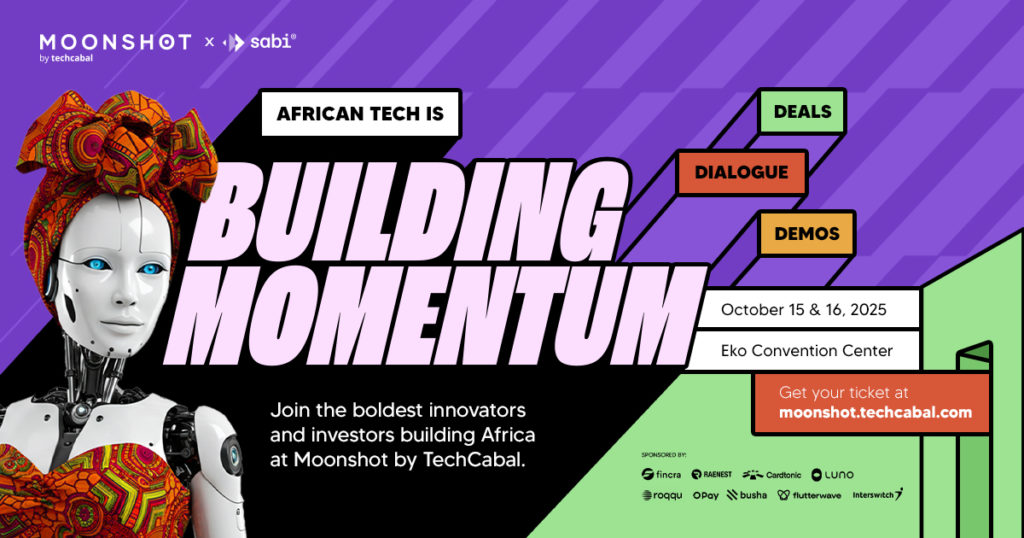
Mark your calendars! Moonshot by TechCabal is back in Lagos on October 15–16! Meet and learn from Africa’s top founders, creatives & tech leaders for 2 days of keynotes, mixers & future-forward ideas. Get your tickets now: moonshot.techcabal.com
The financial services sector is taking its first tentative steps on its journey into artificial intelligence (AI), with the technology...
The Cortex Hub has announced the launch of the MCP Hackathon Africa 2025, a continent-wide initiative designed to embed African...
Lagos officially opened its doors yesterday to West Africa’s largest tech, AI, and start-up show, GITEX NIGERIA, preceding the Government...
MTN Nigeria has stepped up its efforts to protect children in the digital environment, announcing new steps to combat online...
According to data from Kaspersky, a global cybersecurity company, Sub-Saharan Africa saw 42.4 million web attacks and 95.6 million on-device attacks detected...
As stablecoins continue to solve real-world challenges and improve efficiencies across a range of use-cases, Mastercard and Circle are deepening...
Kenya is among 11 countries set to benefit from $16.5 million (€15 million) that the European Union (EU) has committed...
Olatomiwa Williams has moved into a new leadership role at Microsoft as Chief Growth & AI Officer for Middle East...
As Netflix and Amazon Prime retreat from Nigeria’s original content scene, two of Nollywood’s biggest players, Inkblot Studios and Filmhouse Group, are betting that the time is finally right for a homegrown streaming service. Their joint venture, Kava, is set to launch in August 2025, promising a curated library of Nollywood films and series backed by scale, strategy, and a touch of realism.
At first glance, it’s an ambitious leap. Kava enters a streaming landscape littered with cautionary tales—iROKOtv chief among them—while global streamers pull back on African investments and creators increasingly pivot to YouTube in search of monetisation and autonomy.
But Kava’s founders insist they’ve learned from past failures. And rather than chase Netflix’s scale or Iroko’s first-mover status, they’re building for depth—with a model that leans on high-quality local content, diaspora appeal, and a sustainable, multi-platform ecosystem.
“We’re not just streaming films. We’re fueling careers and building an infrastructure for African storytelling,†says Kene Okwuosa, Kava’s co-CEO and head of Filmhouse Group.
Filmhouse boasts West Africa’s largest cinema chain and controls a vertically integrated studio-distribution network through FilmOne. Inkblot Studios, behind hits like The Set Up and Up North, was the first Nigerian production house to ink licensing deals with both Netflix and Amazon.
The platform launches with over 30 premium Nollywood titles and promises fresh drops weekly. Featured titles include Alakada Bad and Boujee, Owambe Thieves, What About Us, and House Job. Originals are in the pipeline, and Kava eventually plans to scale beyond Nigeria to tell stories across Africa.
But more than content, the founders say, Kava is a “digital infrastructure†project; a way to centralise Nollywood’s fractured monetisation channels, serve fans directly, and offer creators fairer economics than the ad-driven instability of YouTube or the bureaucratic lag of foreign licensing.
“When we deliver content at scale to audiences beyond ourselves, they’ll fall in love with the stories. They just don’t know it yet,†says Inkblot’s Chinaza Onuzo, who serves as Kava’s co-CEO.
Kava arrives at a transitional moment. Netflix and Prime Video have dialled back their local originals after a brief Nollywood shopping spree between 2020 and 2022. What’s hitting screens now, like Kemi Adetiba’s To Kill A Monkey, are the last remnants of that era. New commissions have slowed to a crawl.
This vacuum has driven creators to YouTube, where lighter, faster productions offer greater creative control and instant ad payouts. But the economics remain brutal. CPMs in Nigeria hover around USD 1.00, and a star actor might cost millions of naira, meaning millions of weekly views are required to break even, let alone profit.
Subscription platforms (SVODs) aren’t much better. iROKOtv, once hailed as the “Netflix of Africa,†spent over USD 100 M trying to crack the Nigerian market, only to retreat in 2023 and pivot to diaspora users in the U.S. and U.K. Its active user base peaked at under 200,000. Even its founder Jason Njoku now insists: “SVOD can’t work here.â€
Fresh attempts at wooing the diaspora indicate a push for untapped opportunities, however. Roughly five million Nigerians live abroad, sending more than USD 20 B home every year. They’re already used to subscriptions and hungry for high-quality content that reflects their culture. Kava, along with other newcomer rivals, such as EbonlyLife ON Plus, is chasing that niche.
Kava’s leadership sees itself less as a Netflix clone and more of a niche but deeply committed hub for loyal fans. Product chief Damola Ademola compares the model to anime or horror streaming services like Shudder: “African movies can easily be just like that,†he told TechCabal.
Funding is in motion. A friends-and-family round has already closed, with institutional backing from TLG Capital and VestedWorld. More capital will be instrumental in expanding Kava’s footprint across Africa and into the U.K. and Europe. Yet even with funding, no one is pretending this will be easy.
Feature Image Credits: BusinessDayNG
The post Nigeria’s Film Industry Has A Radical Plan To Save Itself From Streaming Giants appeared first on WeeTracker.
Nigeria’s bubbly fintech sector is under fresh scrutiny after the country’s anti-corruption agency uncovered a sprawling identity fraud scheme involving thousands of young Nigerians selling biometric data to digital finance platforms.
According to the Economic and Financial Crimes Commission (EFCC), over 12,000 individuals are allegedly harvesting and reselling critical identity information—including Bank Verification Numbers (BVNs) and National Identification Numbers (NINs)—to fintech companies for as little as NGN 5 K (~USD 3.33) per identity.
The illicit trade, described by the EFCC as a “threat to national security,†exposes a troubling weakness in the Know Your Customer (KYC) processes meant to secure Nigeria’s digital financial systems.
In some cases, scammers reportedly pay victims between NGN 1.5 K and NGN 2 K to surrender personal data, including ID photos, address details, and national ID slips. These details are then used to open accounts linked to fraudulent investment schemes, or to launder money via cryptocurrency and microfinance channels.
The alleged fraudsters, often referred to as “Account Suppliers†or “KYC Groups,†have created a black market for verified identities, exploiting the very infrastructure designed to enhance trust and access in the country’s digital economy.
While the EFCC did not publicly name the fintech companies implicated in the ongoing investigation, it confirmed that arrests have been made and that recovery efforts are underway.
The fallout has also reached Nigeria’s National Identity Management Commission (NIMC), which has moved to distance itself from the scandal. In a statement, NIMC’s spokesperson Kayode Adegoke denied institutional responsibility, stressing that the commission had repeatedly warned citizens against disclosing their NINs to unauthorised parties.
“The NIMC will not be held responsible for any personal information shared by an individual directly or by proxy for the purpose of financial gain,†the statement read. The agency encouraged the public to use its NINAuth mobile app to better control and protect their identity data.
Beyond the data-selling racket, the EFCC also flagged a parallel scheme involving malware and phishing. In one instance, victims were lured by a fake airline promo offering 50% off tickets in exchange for a NGN 500.00 “charity†donation. The scam prompted users to download a counterfeit app embedded with spyware capable of siphoning sensitive banking credentials.
Once accessed, victims’ funds were funneled into accounts, often opened with stolen identities, then converted to crypto to obscure the trail.
The revelations cast a shadow over Nigeria’s fintech boom, which has attracted billions in venture capital and positioned itself as a beacon of innovation and financial inclusion on the continent. The EFCC’s findings now raise urgent questions about compliance lapses and data protection standards in the sector.
The post Nigeria Probes Massive ID Fraud Black Market Invading Fintech Sector appeared first on WeeTracker.
