Vue lecture

Tyla Wins Best African Music Performance at the 68th Grammy Awards

It was a night of celebration for South Africa’s golden girl, Tyla, who officially clinched her second Grammy Award at the 68th Annual Grammy Awards in Los Angeles. Stepping onto the stage just days after her 24th birthday, the singer took home the trophy for Best African Music Performance for her hit, “Push 2 Start.”

This victory marks a significant milestone in Tyla’s career, as she becomes the first artist to win this specific category twice since its inception in 2024. The category was a star-studded affair this year, featuring a powerful lineup of Africa’s finest. Tyla emerged ahead of Nigeria’s Burna Boy (“Love”), Davido featuring Omah Lay (“With You”), and Ayra Starr featuring Wizkid (“Gimme Dat”), as well as Uganda’s Eddy Kenzo and Mehran Matin (“Hope & Love”).

“Push 2 Start” has been a standout track for the singer since its release on 11 October 2024. The song was introduced as a lead single for “TYLA +,” the deluxe edition of her self-titled debut album. Produced by Sammy Soso, Ari PenSmith, and Mocha, the track is a masterclass in the Popiano genre, a seamless fusion of Amapiano, Pop, and R&B that has become Tyla’s signature sound.

The song’s journey to the Grammy stage began with a viral tease at the 2024 MTV VMAs, followed by a high-profile music video directed by Aerin Moreno, which premiered in November 2024. Its success on the Billboard U.S. Afrobeats Songs chart and the UK Afrobeats Singles Chart throughout late 2024 and 2025 set the stage for this eventual Grammy recognition.


View this post on Instagram


A post shared by BellaNaija (@bellanaija)


View this post on Instagram


A post shared by BellaNaija (@bellanaija)

The post Tyla Wins Best African Music Performance at the 68th Grammy Awards appeared first on BellaNaija - Showcasing Africa to the world. Read today!.


  •  

Lagos Rocks: A Detty December Opening Lagos Will Never Forget

Lagos Rocks didn’t just kick off Detty December, it set the tone!

What began as a bold vision by Clout Africa, came to life as an electrifying cultural experience that brought together music, youth culture, celebrity energy, and the unmistakable spirit of Lagos. From the moment the doors opened, Lagos Rocks confirmed its place as the *official Detty December starter*, delivering an unforgettable night of sound, style, and celebration.

“As Nigeria’s leading creative hub for music, media, experiential events, and talent development, Clout Africa once again proved its ability to turn culture into moments that matter. Lagos Rocks was more than an event, it was a statement of intent: African creativity, done at the highest level,” said Joseph Adamu, COO Clout Africa.

A Night Powered by Music and Pure Energy

The stage came alive with thrilling performances from some of the most exciting names shaping the sound of now and next. Zinoleesky as the Show’s headliner, delivered a standout performance that sent the crowd into a frenzy, reminding everyone why he remains one of the most influential voices of his generation.

The energy level was high, due to preceding performances from Ashidapo, Oberz, Lovn, Noon Dave, Cupid SZN, Little Zino and a wave of rising artists who brought raw talent, passion, and originality to the Lagos Rocks stage. Each act added its own flavor, creating a seamless blend of established stars and emerging voices, a core part of Clout Africa’s mission to spotlight African talent.

DJs, Vibes, and Non-Stop Movement

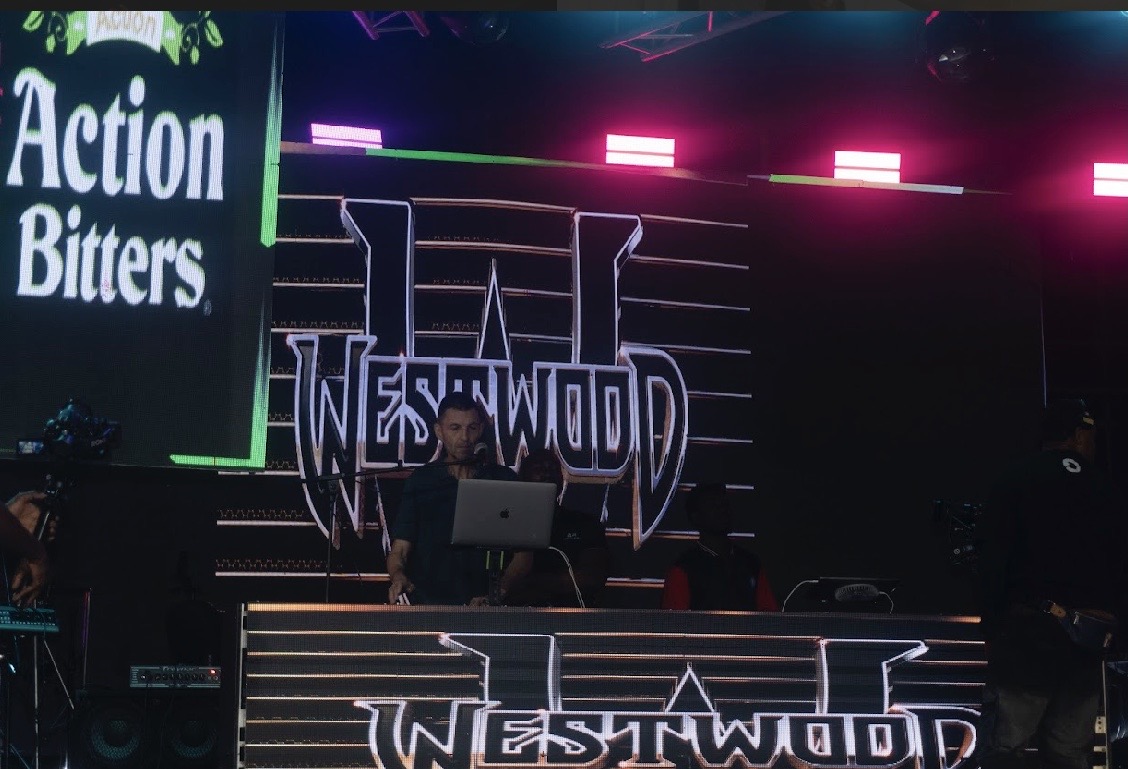
Sound curation was nothing short of elite. With a powerhouse DJ lineup including DJ Salt, DJ 808, DJ Rosco, DJ Keywe, DJ KO, DJ Tim Westwood, the atmosphere never dipped. From Afrobeats to global club anthems, every set kept the crowd moving and the energy sky-high from start to finish.

Culture, Community, and Star Power

Beyond the music, Lagos Rocks embraced the full spectrum of entertainment culture. The event saw special appearances from Big Brother Naija reality stars Rooboy and Doris, adding celebrity excitement and fan engagement to the night.

The presence of Clout Band, alongside a vibrant mix of creators, tastemakers, and up-and-coming artists, reinforced what Lagos Rocks truly represents – a *community-driven movement* where creativity, collaboration, and culture intersect.

In partnership with Action Bitters, Lagos Rocks officially ushered in the season’s “Oblee” energy, giving Lagos its first real taste of Detty December magic. It was a night where people connected, celebrated, and experienced Lagos in its purest form – bold, loud, creative, and unstoppable.

From the music to the crowd, from the performances to the atmosphere, Lagos Rocks captured the essence of what Detty December is meant to be.

This wasn’t just an event.

It was a moment.

A movement.

A reminder that Clout Africa sets the pace.

Here is one of the highlights from the event. Watch Zinoleeksy’s performance here

For more highlights, behind-the-scenes moments, and exclusive content from Lagos Rocks, visit Clout Africa on Instagram @cloutafrica and stay connected as we continue to shape culture, tell stories, and build platforms that move Africa forward.


BellaNaija is a Media Partner for Lagos Rocks

The post Lagos Rocks: A Detty December Opening Lagos Will Never Forget appeared first on BellaNaija - Showcasing Africa to the world. Read today!.

  •  

Asake Pulled Up to His South Africa Show in Tan Corduroy and Platform Boots

Photo Credit: Asake/Instagram

One of the many things to love about Asake is that his sense of style is just as intentional as his music. Yes, the music speaks for itself—hit records, Grammy nominations, sold-out stages—but when it comes to fashion, he refuses to be boxed in. He knows his lane, and he never overstays in one look.

One moment, he’s sharply dressed in a tailored grey two-piece for his Red Bull Symphonic performance. The next, he’s stepping out with electric blue hair, completely switching the mood.

That instinct was on full display in Johannesburg, where Asake stepped out for his first-ever South African performance at the Goldrush Dome. For a night that marked both a personal milestone and the closing chapter of his Africa tour, he chose a look that felt considered without trying too hard: a tan corduroy matching set that did the talking.

The outfit featured a collarless jacket detailed with contrast black piping along the edges, finished with statement white buttons and front patch pockets. The wide-leg trousers echoed the same piping down the sides, creating a clean visual line from top to bottom. Underneath, a crisp white shirt kept things grounded, while chunky tan platform boots added a practical, almost utilitarian touch that worked perfectly for a live performance setting. Dark rectangular sunglasses and stud earrings rounded things off without distraction.

What really works here is the balance. The boxy jacket and wide-leg trousers play with proportion in a way that feels both throwback and current. The tan palette does most of the talking, while the corduroy texture and black piping quietly sharpen the look.

The night itself had plenty going on. Johannesburg showed up as Asake took the stage, closing out his Africa tour on a high. The set moved smoothly between familiar favourites and moments that felt specially built for the room, with orchestral arrangements sitting comfortably alongside the Soweto Choir’s harmonies, and performances from Focalistic and Young Jonn.


View this post on Instagram


A post shared by @mrmoney

The post Asake Pulled Up to His South Africa Show in Tan Corduroy and Platform Boots appeared first on BellaNaija - Showcasing Africa to the world. Read today!.
  •  

WIFT South Africa Launches, Joining Global Network to Champion Gender Equity

WIFT South Africa becomes part of a sisterhood of more than 50 chapters worldwide, united in their mission to reshape industries and champion women’s creative contributions.

By Emmanuel ‘Waziri’ Okoro

Women in Film and TV South Africa (WIFT South Africa) has officially launched, marking a major step in empowering women across the country’s film, television, and creative sectors. 

The organisation joins the Women in Film and Television International (WIFTI) network, which spans more than 60 chapters across six continents, all working towards a common goal of achieving gender balance in the industry.

The South African chapter is led by writer and director, Athi Petela, who serves as its first president. She is supported by a founding leadership team that includes Actor Spaces Co-Founder, Felicia Naiwa Sithebe (Programmes Lead), Hayani Africa Managing Director, Tumelo Moema (Head of Communications), and business consultant and entrepreneur, Andile Mqwebu (Outreach Lead). 

Together, they are building a platform designed to foster opportunity, drive inclusivity, and create sustainable careers for women in the creative industries.

WIFT

“Our mission is to build bridges across the continent and beyond,” Petela said. “It is about creating pathways for women to thrive, telling stories that reflect our diverse realities, and ensuring women are not just part of the conversation but at the forefront of shaping the future of film and television.”

The chapter’s launch comes as Petela prepares to represent South Africa at the Women in Film and TV Conference, a flagship event of the Africa Creative Market. The conference, themed “Creative Bridge: Empowering Talent, Accessing Ecosystems, Unlocking Markets”, takes place on 16 September 2025 at the Landmark Event Centre in Lagos, Nigeria.

She will appear alongside influential WIFT leaders from across the continent, including:

  • Njoki Muhoho, President, WIFT Kenya
  • Joke Silva, President, Forum for Women in Film and TV Africa (FWIFT Nigeria)
  • Fatou Jupiter Toure, President, WIFT Senegal
  • Juliet Ibrahim, President, WIFT Ghana
  • Tatapong Bayela, Vice President, WIFT Cameroon

The session will be moderated by Inya Lawal, President of WIFT Africa. While WIFT South Africa will host its official launch event in November at the Africa Rising International Film Festival, its presence at the Africa Creative Market signals the start of a strategic programme aimed at empowering women through mentorship, training, and leadership development; advocating for equity and representation across the creative value chain; unlocking markets to help women creators access funding, platforms, and audiences, and more.

By joining WIFT International’s global network, WIFT South Africa becomes part of a sisterhood of more than 50 chapters worldwide, united in their mission to reshape industries and champion women’s creative contributions.

The post WIFT South Africa Launches, Joining Global Network to Champion Gender Equity first appeared on Afrocritik.

  •  

Mr Eazi Releases New Single and Video “Casanova”

Grammy-winning afropop star Mr Eazi returns today with “Casanova,” the new single from his forthcoming Maison Rouge EP, set for release this September via emPawa Africa.

“Casanova,” which was produced by Ghana’s TMXO and Nigerian super producer Kel-P, is a playful yet emotionally revealing track about love, temptation, and self-awareness. Inspired by real conversations and moments of vulnerability, the song explores the tension between loyalty and attraction, honesty and misunderstanding. It’s a confession, both cheeky and sincere, about being drawn to women but wanting to hold onto the one he truly loves.“Casanova is me being honest in the most unfiltered way,” Mr Eazi says.

I’m saying, ‘Yes, I love women, but my heart is with you.’ It’s about the reality of relationships and how we navigate our flaws, temptations, and the little things that can make or break love.

The track is supported by an artful music video shot in Spain by director Ademola Falomo (Tems, Davido, Joeboy). Packing a movie’s worth of plot and intrigue into its 2 1⁄2 minute run time, the “Casanova” visual follows the travails of a cab driver who finds himself in the crosshairs of a jealous wife after she catches him with another woman without knowing the full details behind their rendezvous. Blending humor, flirtation, and a hint of suspense with colorful urban backdrops, intimate close-ups, and a lighthearted storyline, the visuals bring the song’s cheeky and romantic spirit to life.“‘Casanova is a playful record but it’s also about that moment when someone catches you off guard” says Mr Eazi, who previously tapped Falomo to direct his “Patek” (2022) and “E Be Mad” (2021) videos. “I wanted the video to feel like a little movie with twists, laughs, and energy. Barcelona gave us the perfect mix of romance and chaos, and Demola captured that perfectly.”

“Casanova,” along with the rest of Eazi’s forthcoming Maison Rouge EP, was recorded in Cotonou, Benin, at the titular Hotel Maison Rouge, which became a creative oasis for Mr Eazi while working on his 2023 album slash art project, The Evil Genius.“Casanova” follows the July release of “Corny,” a mellow, emotionally honest love song which showcases Eazi’s signature blend of vulnerability and melody, and “Attention,” Eazi’s contribution to this summer’s blockbuster F1 movie soundtrack.

“Casanova” is OUT NOW on all DSPs and the vieo will be released today by 1 pm WAT on the below channel.

ABOUT MR EAZI
MR EAZI is a musical innovator, business leader and philanthropist. As a recording artist, the Nigerian multihyphenate is the voice behind afropop hits “Pour Me Water,” “Skin Tight” and “Leg Over,” as well as groundbreaking collaborations with the likes of Beyoncé and J Balvin, and the creator of Banku Music, a fusion of Ghanaian and Nigerian sounds and culture. A serial entrepreneur, he founded emPawa Africa in 2018 as a talent incubator program designed to accelerate the careers of African artists.

Hailed by CNN, Rolling Stone, Billboard and Forbes for its innovative approach to expanding African music’s global reach, emPawa Africa has since grown into one of Africa’s largest independent music companies. Mr Eazi has clocked over 4 billion of his songs across DSPs, making him one of the most streamed African artists worldwide. Instagram // Twitter // TikTok // Spotify


Sponsored Content

The post Mr Eazi Releases New Single and Video “Casanova” appeared first on BellaNaija - Showcasing Africa to the world. Read today!.

  •  

Dumochiii’s Jasi Is the Latest Entry to Afroadura, Releases Under emPawa Africa

emPawa Africa proudly announces its latest signee, Dumochiii (real name: Olufowora Michael Seun), a singer and songwriter hailing from Surulere, Lagos, as he makes his official debut with the heartfelt single, “Jasi.”

A fresh voice in Afropop and Afrobeats, Dumochiii brings a unique flair to the genre by fusing emotional honesty with rhythm-driven, street-rooted storytelling. His sound, often described as Afroadura, is deeply influenced by spiritual resilience and the lived realities of growing up in Lagos.

After two years of artist development under emPawa Africa, Dumochiii steps into the spotlight with “Jasi”, an anthem of resilience and quiet strength. The track serves as both a personal outcry and a universal message of hope. With melodic confidence and emotional vulnerability, Dumochiii reflects on his struggles and leans into divine strength, drawing inspiration from Psalm 121: “I lift up my eyes to the hills, where does my help come from? My help comes from the Lord.”

‘Jasi’ is me talking to God, asking for help when it feels like no one else gets what I’m going through,” says Dumochiii. “It’s believing that my time will come, even when it’s hard, and just staying thankful always.”

The debut single is accompanied by a striking visualizer shot in Tarkwa Bay, capturing the essence of a weekend escape in Lagos, a moment to unwind, reflect, and recharge for what lies ahead.

With roots in freestyle cyphers and music camps, Dumochiii steps forward ready to connect with Gen Z and new-wave Afrobeats audiences across Lagos, Africa, and beyond.

“Jasi” is now available on all major streaming platforms.


Sponsored Content

The post Dumochiii’s Jasi Is the Latest Entry to Afroadura, Releases Under emPawa Africa appeared first on BellaNaija - Showcasing Africa to the world. Read today!.

  •  

Circle Ventures Backs CV VC’s USD 20 M African Blockchain Fund

Circle Ventures, the investment arm of USDC stablecoin issuer Circle, has invested in the USD 20 M African Blockchain Fund run by CV VC (Crypto Valley Venture Capital), marking a pivotal bet on Africa’s growing stablecoin-driven digital asset ecosystem.

The Cayman-Islands–domiciled fund focuses on early-stage African startups using blockchain for fintech, payments, and data infrastructure. This shift towards infrastructure investment follows a wave of crypto exchange shutdowns across the continent, as capital now flows to startups tackling structural issues like currency volatility, cross-border payment friction, and financial exclusion.

Launched in 2022 by CV VC Africa Managing Partner Gideon Greaves, the African Blockchain Fund has previously backed ventures in Nigeria, Kenya, and South Africa. Circle’s participation signals growing confidence from global players that Africa’s digital asset future will be built on stablecoin-powered utility rather than speculative trading.

This comes as stablecoins now account for 43% of all crypto transaction volume in sub-Saharan Africa, according to Chainalysis, with Nigerians receiving UD 24 B in stablecoins in 2024 alone; the second highest globally.

The post Circle Ventures Backs CV VC’s USD 20 M African Blockchain Fund appeared first on WeeTracker.

  •  

Long-Standing Ghana’s mPharma Founder Steps Down, COO To Take Over

Gregory Rockson, founder and chief executive of Ghanaian health technology firm mPharma, is stepping down after 11 years, the founder has revealed. He will transition to the role of Chairman of the board, while Chief Operating Officer Kwesi Arhin will be promoted to CEO, effective Sept. 1, 2025.

The leadership change at one of Africa’s most prominent healthtech startups follows a period of significant restructuring, including a major round of layoffs and a strategic shift toward operational efficiency and new markets.

Arhin, who joined mPharma in 2021 and most recently served as COO, will take the helm. His background in finance and global consulting is seen as aligning with the company’s renewed focus on a disciplined growth model.

The move is a common transition for venture-backed startups, where founders move to a strategic board role as the company matures.

The CEO change caps a volatile period for the company. In September 2023, mPharma laid off approximately 150 employees, which Rockson at the time linked to macroeconomic challenges and a severe devaluation of Nigeria’s currency.

Months later, in January 2024, the company secured USD 13.6 M in new funding from investors, including the Sanofi Global Health Unit Impact Fund.

That capital has supported a strategic pivot, including a recent push into Francophone Africa, where the company reported an annualised revenue run rate of USD 1.5 M within seven months.

Founded in 2014, mPharma manages a network of pharmacies and clinics to improve access to affordable medicine. It has raised over USD 65 M to date and operates in several African countries, including Ghana, Nigeria, and Kenya.

The post Long-Standing Ghana’s mPharma Founder Steps Down, COO To Take Over appeared first on WeeTracker.

  •  

Kenya’s Communications Authority Cracks Down on 42 TV Stations in Licensing Blitz

The Communications Authority of Kenya (CA) has announced its decision to revoke the licenses of 42 television stations. Citing a persistent failure to comply with regulatory requirements, the move signals a continued effort by the CA to enforce the provisions of the Kenya Information and Communications Act (Cap. 411).

The stations have been given a seven-day notice to cease operations, with all broadcast resources reverting to the Authority. It is not clear when the licences will be revoked, because the statement was issued on August 22, but gazetted on September 12. So far, most of the TV stations listed are still in operation.

The revocation, announced by CA Director-General David Mugonyi, is the latest in a series of actions aimed at sanitising the broadcasting sector. This follows a similar crackdown in 2024, when the Authority revoked the licenses of 75 TV and radio stations.

The current list of affected broadcasters includes well-known outlets such as Mount Kenya TV, owned by politician Purity Ngirici and her husband; NAI TV, owned by renown media personality Jimmi Gathu; Wananchi TV, owned by Wananchi Group, which also owns ISP Zuku; Fanaka TV, owned by politician and former cabinet secretary Moses Kuria, and Metropol TV, owned by the parent company that also owns credit reference bureau Metropol.

According to a statement from the CA, the reasons for the revocations are wide-ranging but centre on critical regulatory breaches. These include the failure to pay license fees, non-compliance with licensing conditions, and in some cases, a complete cessation of operations. The Authority maintains that these measures are essential to uphold broadcasting standards and ensure a fair and transparent media environment.

The directive has raised concerns about the future of many smaller and independent media houses. For the affected stations, the immediate implication is a total shutdown of their operations, rendering them unable to broadcast or provide any services. For Zuku in particular, this will curtail one of their critical value-add services.

While the affected stations have the option to appeal, the CA’s stance indicates that the path to reinstatement will be challenging. This action underscores the CA’s commitment to holding all broadcasters accountable, regardless of their size or reach.

Here is the full list of affected stations:

Apple Truth Television owned by Apple Truth Television Network Limited
Metropol TV owned by Comprehensive Business Media Limited
Corporate Media TV owned by Corporate Media Communications
DG TV owned by Dominion Generation Limited
Doxa TV owned by Doxa Television
Dunamis KTV owned by Dunamis Television Network Limited
Masai TV owned by Enaang Maa TV Limited
Ezra Christian TV owned by Ezra Christian TV Limited
Fanaka TV owned by Fanaka Television Limited
Faith Estate TV owned by Fort Hall College Limited
Talent TV owned by Gates Africa Education Trust
Champion TV owned by Heroes Communications Limited
ILM TV owned by ILM Media Limited
NAI TV owned by JimmiGathu Incorporated Limited
The Mirror Television owned by Jmax Media Services Limited
Ziwa TV owned by Jusga Wanjira Construction Limited
Kingdom Ambassadors TV owned by Kingdom Ambassadors Media Group
Limited
Uboro TV owned by Kirinyaga Multimedia College
Kokwo Television owned by Kokwo Radio International Limited
Bulsho TV owned by Lufman Company Limited
Manifestation TV owned by Manifestation TV Limited
Mount Kenya TV owned by Mount Kenya Media Limited
Limited Pillar TV owned by Mt. Kenya Blessings Company
Tourism and Wildlife TV (Safari Channel) owned by Next Options Limited

Ongatet owned by Ongatet Television Network
Mbugi TV owned by Outcom Media Limited
Safina Television owned by Safina T.V Limited
Shakaal Television owned by Shakaal Media Network Limited
Sugan TV owned by Sugan Media Group
Tama TV owned by Tama Media Group Limited
Sawa Television owned by Tano Entertainment Network
The Word Music TV owned by The Word Music Limited
Soko TV owned by Thirties Media Limited
Thjiwe TV owned by Thstone Television Limited
Tem TV owned by Triple Edge Media Limited
Ukweli TV Kenya owned by Ukweli Sounds and Video Limited
Value TV owned by Valutel Limited
Wananchi TV owned by Wananchi Television Network Limited
009 TV owned by 009 Television Limited
Ability TV owned by Ability Channel Limited
Ace TV owned by Ace Television Limited
Superflex Television owned by Admerline Construction Limited

Featured Image Courtesy: New Frame

The post Kenya’s Communications Authority Cracks Down on 42 TV Stations in Licensing Blitz appeared first on WeeTracker.

  •  

JICA Invests USD 10 M In Novastar Ventures Africa Fund III With Impact Focus

The Japan International Cooperation Agency (JICA) has committed USD 10 M to the Novastar Ventures Africa People and Planet Fund III, managed by Novastar Ventures.

JICA is co-investing with British International Investment and other development finance institutions as well as financial and strategic investors in the private sector, including Japanese corporates.

The project will finance startups engaged in impactful businesses via investing in Novastar, a leader of the venture capital market and startup ecosystem in Africa. It aims to empower people through economic and social inclusion, promote sustainable and climate-positive economic activities, and thereby contribute to economic development and addressing social challenges in Africa.

The post JICA Invests USD 10 M In Novastar Ventures Africa Fund III With Impact Focus appeared first on WeeTracker.

  •  

UCL: Everything Enzo Maresca said ahead of Bayern Munich clash

The head coach of Chelsea, Enzo Maresca, has spoken ahead of his first UEFA Champions League game of his managerial career as his team faces Bayern Munich at the Allianz Arena.

The Italian was speaking in his pre-match press conference ahead of the game against the Bundesliga Champions. He spoke about the strength of Bayern Munich and also discussed Nicolas Jackson, who joined the club on loan during the summer transfer window of 2025.

He was asked what to expect from his team against Bayern.

"We try every game, even against Brentford, with our best 11. Game by game you manage different problems. Last game Cole wasn't fit to play 90 minutes, players like Estevao were out. Tomorrow we will try to put our best 11."

What did Maresca say about Nicolas Jackson?

He said,

"I said the other day, I'm grateful, thankful to Nico [Nicolas Jackson] because if we achieved what we achieved last year, it's because of all the players including Nicolas. I text him after he left the club telling him thanks for last season, wishing him all the best. He's a good guy, was working well. Nicolas Jackson left because] we bought two striker - Liam Delap and Joao Pedro. I think two is enough. Me with Nico [Nicolas Jackson]? Personally, I didn't have any kind of problem with Nico and I don't. He's a good guy, good professional who worked well with us."

He continued,

"There can be a small advantage [with Nicolas Jackson being in the Bayern Munich team after playing at #Chelsea], he [Vincent Kompany] can ask Nico how we work and play. He was with us for an entire season so knows how we approach games but at the end we will see."

Maresca will hope that Chelsea begins their Champions League career with a victory against Bayern following the disappointing result against Brentford.

Read the Latest Sports News and get fresh updates on X and Facebook

The post UCL: Everything Enzo Maresca said ahead of Bayern Munich clash appeared first on NotjustOk.

  •  

She left FIFA to build a low-fee school in South Africa.

Stacey Brewer’s journey into tech was anything but linear. A native of Johannesburg, she earned a BSc from Rhodes University and then spent time traveling overseas, working with high-net-worth individuals. She loved meeting new people, discovering new places, and immersing herself in new cultures. After returning to South Africa, she worked with FIFA during the World Cup and then pursued an MBA to secure a job abroad. 

During her MBA at Gibs Business School, her professors constantly highlighted the poor state of South Africa’s education system. Brewer was shocked to learn that while the country was spending a huge proportion of its budget on education, it ranked at the bottom of the world in various competitiveness reports. She was particularly struck by the 2016 Progress in International Reading Literacy Study assessment, which revealed that 80% of grade four students couldn’t read for meaning. Her thesis, inspired by this grim reality, focused on building a sustainable financial model for low-fee private schools.

The spark

Her research led her to Rocketship Education in the U.S., a pioneer in blended learning that used technology to drive cost efficiencies and create a data-rich environment for students’ understanding. Brewer was incredibly impressed by Rocketship’s ability to scale effectively and compete with more affluent schools while serving a community of second-language English speakers. She realised that technology wasn’t just an add-on; it was the core enabler for providing affordable, quality education.

Convinced that this model could work in South Africa, Brewer and her co-founder launched SPARK Schools. Two staff members from Rocketship Education, Bailey Thompson and Caitlin Burkholder, even moved from the U.S. to help get the venture off the ground. The first angel investor made an undisclosed investment without taking any shares, simply telling them to “go figure it out”. With additional capital from friends, family, and other high-net-worth individuals, they launched the first campus in 2013 with 160 students and 20 staff members.

The blended learning model

The biggest costs in any educational business are salaries and infrastructure. To address this, SPARK schools have a rotational system that staggers the use of physical space and personnel hours. Grade R to Grade 12 students rotate their school hours between physical classroom lessons and online lessons in a computer lab. SPARK Schools’ unique operational model allows the school to cut costs and still manage to keep it affordable enough for the students who need it the most. Unlike its competitors, predominantly Valenture Institute and Enko Education, which partner with existing schools to offer their services, SPARK Schools exists as a full entity on its own. 

Get the best African tech newsletters in your inbox

A mix of the best and the worst

Today, SPARK Schools states that it educates over 17,000 children across 26 campuses and employs approximately 1,500 people, the largest number among its competitors in the industry. Around 64% of their staff are youth, a fact Brewer is extremely proud of, given the country’s high youth unemployment rate. The model’s affordability and quality have been proven effective, with some learners advancing two years in a single academic year. The use of technology creates a data-rich environment that allows for differentiated instruction, helping to close the learning gap for students who arrive several grade levels behind.

Despite the immense success, the entrepreneurial journey has been a mix of highs and lows. Brewer  admits to having many days when she questioned her path, wondering why she hadn’t just pursued a “normal job.” 

Her lowest moment was during the COVID-19 pandemic, which was a “really, really, really tough” time. Many families lacked the necessary resources for online learning and struggled to pay fees. However, her unwavering commitment to the students and staff, coupled with a strong support network of family and mentors, has helped her build resilience over time.

The path forward

Being a woman in the tech space is challenging, but Brewer doesn’t see it as a constraint. She believes that leadership is hard regardless of gender, and she feels she has earned her seat at the table without needing to constantly justify herself. 

For Brewer, her dream is for SPARK to expand beyond South Africa and become a strong player across the continent. She wants to ensure that Africa gets a global voice as an innovator in education. With the recent appointment of Earl Sampson as CEO in April 2025, Brewer has shifted to a more supervisory role as the Chair and Strategic Advisor, focusing on product development, cross-border expansion, and new business models to ensure the organisation’s foundations are strong enough to serve more families, bridging the gap between Africa’s literacy and the rest of the world.

  •  

Updated: SASSA releases payment dates for October

In two weeks, October begins, and that means millions of South Africans will turn to digital systems to access their South African Social Security Agency (SASSA) grant payments. As new payment dates roll out in the coming month, it is crucial for recipients, especially older people and those in rural areas, to understand the digital tools for checking balances, updating banking details, and tracking grant disbursements.

SASSA grants are paid on specific dates to ensure a smooth process for recipients. For October 2025, the payment schedule is as follows:

  • Older Persons Grant: October 2, 2025
  • Disability Grant: October 3, 2025
  • Children’s and Other Grants: October 6, 2025

The October 6 date covers key grants such as the child support, foster care, care dependency, and more. SASSA stresses that funds remain available for collection even after these official dates; beneficiaries do not need to rush on the exact day.

How to change banking details for SASSA

Postbank’s contract with SASSA officially ends on 30 September 2025. This termination date was confirmed by SASSA and communicated to Parliament, with assurance that grant payments will continue for all beneficiaries without disruption after the contract expires. SASSA cards, if still active, work at all ATMs, but a personal bank account is necessary as Postbank support phases out. SASSA urges beneficiaries to migrate to a preferred bank or retailer payment option and update records using secure official methods, which are explored in detail below.

Online update (SRD and general grants)

The online process works for the SRD grant and standard or general grants like Old Age, Disability, Child Support, Foster Child, and Care Dependency grants. Beneficiaries of these grants can change their banking details quickly using SASSA’s website or online portal.

  • Go to the official SASSA portal: srd.sassa.gov.za 
  • Select the relevant option: “change my banking details”
  • Enter your South African ID number and registered mobile number.
  • You will receive an SMS with a secure link. Use it to update your new bank account details (bank name, account number, branch code, account type), and confirm via OTP.
  • Submit and wait for confirmation; future grant payments will be made to your new bank account.

In-person update (all grant types)

The in-person method at SASSA offices is available for every grant type, including those not covered by online systems or where special documentation or assistance is required. This method supports not only SRD and general grants, but also niche grants like Grant-in-Aid, War Veterans Grant, and cases where online channels cannot be used due to access, identity verification problems, or unique circumstances.

  • Go to your nearest SASSA office.
  • Take your ID, proof of your new bank account (stamped bank statement or letter from the bank), and complete the SASSA banking detail change form.
  • Fill out the form at the office, attach your supporting documents, and submit to a SASSA official.
  • The change will be processed, and you will receive confirmation; your next grant will be paid into your new account.

Verification for banking details typically takes 4 to 10 working days, and successful updates apply to future payments only.

How to check SASSA balance

Beneficiaries can check their SASSA grant balances using various methods. Also, now that Postbank will soon end its payment partnership, beneficiaries can use alternative methods. The most reliable options are:

USSD codes (mobile)

  • Dial 1203210# or 12069277# from the mobile number registered with SASSA, and follow prompts to see the balance. This method works on any basic cellphone and does not require airtime or data.

SASSA online portal

  • Log in at srd.sassa.gov.za or the official SASSA site, enter grant details, and view balance instantly if you have internet access.

WhatsApp support

  • Save SASSA’s WhatsApp number (082 046 8553). Send “SASSA” and then “STATUS” to receive step-by-step prompts, after which the current balance will be provided.

ATM and retail stores

  • If you have switched to a bank account or retailer card (e.g., Pick n Pay, Shoprite, Boxer, Checkers), use the card at any ATM or ask the cashier at participating retailers for a balance enquiry.

In-person at SASSA offices

  • Visit the nearest SASSA office for personalised balance assistance, using your ID and grant card.
  •  

Tanzania’s biggest bank overhauls core banking system to chase regional growth

CRDB Bank, Tanzania’s biggest bank by assets, has completed a migration of its core banking system from Fusion Banking Essence (FBE), owned by London-based Finastra, to Temenos T24, a move the lender says was necessary to keep pace with regional competitors and prepare for expansion outside East Africa.

CRDB’s chief executive, Abdulmajid Nsekela, told TechCabal that the system migration—which occurred in the first weekend of September—is crucial to the bank’s expansion plans. CRDB already operates in Burundi and the Democratic Republic of Congo (DRC), and is finalising arrangements to enter Dubai, where it expects to serve both diaspora and cross-border clients.

“You cannot provide services in all these countries without having a robust system that safeguards customer information and enables transactions with high efficiency,” Nsekela said.

CRDB joins a growing list of African lenders running on Temenos T24, the Swiss-built, front-to-back core banking platform used by institutions like Kenya’s  KCB Group and Stanbic Bank, which operate across multiple jurisdictions. Such systems are increasingly vital as regional banks integrate operations and compete for cross-border clients.

Nsekela said the upgraded platform now supports transactions in multiple languages and currencies, from Swahili and English in Tanzania to French, Kirundi, and Arabic in other markets.

Core banking migrations remain fraught exercises. Unlike front-end app upgrades, they involve the wholesale transfer of millions of sensitive customer records. In markets where trust in banks can be fragile, even short disruptions risk denting reputations.

CRDB’s 72-hour migration exercise experienced some glitches with customers reporting discrepancies in balances, which the bank attributed to large data transfers between the systems.

The bank’s investment is a continuation of East African lenders’ efforts to modernise their technology backbones. KCB, Equity Group, DTB, and NCBA Group already run multi-market operations on Temenos T24 or similar systems, enabling faster product rollouts across jurisdictions.

By joining their ranks, CRDB hopes to compete for corporate clients and cross-border business as it marks its 30th anniversary. The Dubai expansion is expected to target diaspora remittances and trade finance between the Gulf and East Africa.

The Bank of Tanzania (BoT) is also pushing local banks to upgrade their systems as part of wider financial sector reforms. 

Mark your calendars! Moonshot by TechCabal is back in Lagos on October 15–16! Meet and learn from Africa’s top founders, creatives & tech leaders for 2 days of keynotes, mixers & future-forward ideas. Get your tickets now: moonshot.techcabal.com

  •  

CEMAC bets on interoperability, but at what cost for startups?

16 septembre 2025

Welcome to The Next Wave: Francophone Africa, your weekly look at the tech ecosystem in French-speaking Africa. This newsletter is in French by default, but you can click the button below to read an English version.


Bonjour 👋,

La semaine dernière, j’ai évoqué comment l’interopérabilité au sein de l’Union économique et monétaire ouest-africaine (UEMOA), portée par la Banque centrale des États de l’Afrique de l’Ouest (BCEAO), marque un tournant historique pour la finance numérique ouest-africaine. Après des années d’innovation fragmentée, notamment portée par Wave, le lancement de la Plateforme interopérable pour le système de paiement instantané (PI-SPI) promet un marché plus inclusif et compétitif, qui redistribue les cartes en érodant les avantages initiaux des pionniers. Ce cadre illustre comment une réglementation proactive peut transformer un secteur dominé par quelques acteurs en un écosystème plus équilibré, au bénéfice des consommateurs.

Mais l’Afrique de l’Ouest n’est pas la seule à emprunter cette voie. En Afrique centrale, la BEAC (Union économique et monétaire de l’Afrique centrale) a été encore plus précoce dans son approche. En 2018, elle a posé les bases de l’interopérabilité régionale via le système GIMACPAY, désormais (relativement) opérationnel et adopté (quoique partiellement) par des dizaines d’acteurs. Contrairement à l’UEMOA, où l’adaptation a mis à mal les dirigeants établis, la Communauté économique et monétaire de l’Afrique centrale (CEMAC) a opté d’emblée pour une approche plus centralisée, offrant un environnement de jeu réglementé mais parfois moins agile.

En Afrique centrale, l’interopérabilité est devenue un élément clé de la transformation numérique du secteur financier. Elle désigne la capacité des différents acteurs – banques, opérateurs de téléphonie mobile, fintechs – à communiquer entre eux pour permettre aux utilisateurs d’échanger des valeurs, quel que soit leur fournisseur. Dans une région comme la CEMAC, caractérisée par une faible bancarisation et une forte dépendance aux espèces, cette réforme était attendue.

Discutons de l’approche de la CEMAC dans la newsletter d’aujourd’hui.

Le cadre réglementaire de la BEAC : GIMACPAY comme pivot

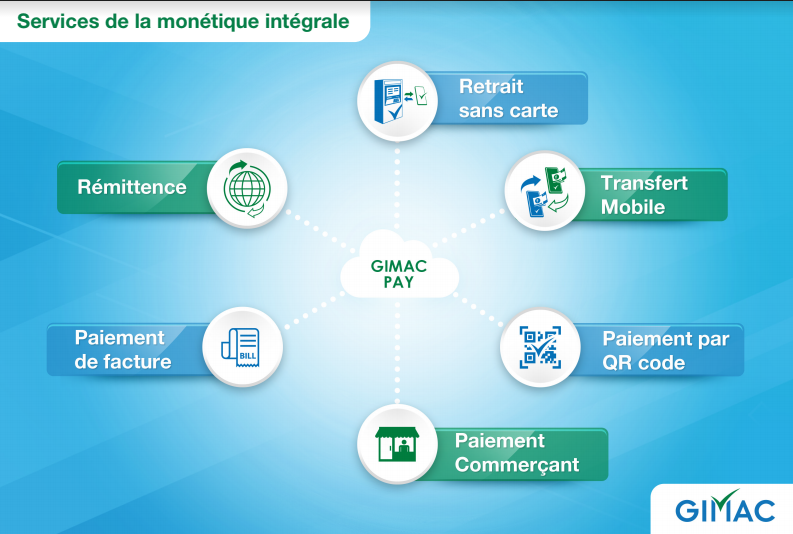
En 2018, la Banque des États de l’Afrique centrale (BEAC) a publié l’Instruction 001/GR/2018, définissant les principes d’interopérabilité (argent mobile, cartes bancaires, virements) via le système GIMAC. Deux ans plus tard, le gouverneur Abbas Mahamat Tolli a annoncé que l’interopérabilité mobile au sein de la zone CEMAC était désormais opérationnelle. Le lancement de GIMACPAY, une infrastructure intégrée de monnaie électronique gérée par le Groupe du Fonds monétaire interbancaire de l’Afrique centrale (GIMAC), a marqué un tournant.

La mise en œuvre de GIMACPAY permet désormais d’envoyer de l’argent entre utilisateurs de différents comptes (portefeuilles ou comptes bancaires), dans toute la zone CEMAC, ainsi qu’au sein de l’UEMOA. Contrairement à l’UEMOA, où Wave dominait, dans la CEMAC, ce cadre a été centralisé dès le départ via la BEAC, ce qui a structuré un environnement de jeu plus régulé dès le départ. Depuis 2020, plus de 70 acteurs – banques, opérateurs d’argent mobile et prestataires de services de paiement – ​​y ont été connectés.

Qu’est-ce qui a été réalisé d’ici 2025 ?

  • Fintechs : Contraintes strictes en matière de licences, mais accès à un marché plus vaste.
  • Banques et institutions de microfinance : Compétitivité accrue par rapport aux opérateurs télécoms.
  • E-commerce et marketplaces : Méthodes de paiement interopérables, frictions réduites.
  • Agritech et Healthtech : Paiements décentralisés, utiles en zones rurales. Insurtech et microassurance : Collecte simplifiée des primes.
  • Transferts de fonds de la diaspora : Réception fluide et multi-portefeuilles.

Le point de vue d’un fondateur de startup sur sa collaboration avec GIMACPAY

Image Source: iStock

Pour mieux comprendre la réalité à laquelle sont confrontées les startups, j’ai discuté avec un entrepreneur de la région qui a accepté de partager son expérience de manière anonyme, étant donné que l’entreprise est toujours en pourparlers réglementaires.

Cette interview a été légèrement modifiée pour plus de clarté.

Comment votre startup s’est-elle adaptée à l’obligation d’interopérabilité de la BEAC ?

D’un point de vue réglementaire et technique, nous n’avons pas eu beaucoup d’adaptations, car nos API étaient déjà conçues pour l’interopérabilité. Elles étaient utilisées par d’autres et vice versa. J’avais anticipé que l’interopérabilité arriverait tôt ou tard. Mais la réalité s’est avérée bien différente de ce que j’avais imaginé.

GIMACPAY a-t-il créé davantage d’opportunités ou davantage de défis ?

Les deux. Sur le papier, c’est une opportunité, mais sa mise en œuvre pose d’énormes défis.

Quels sont les principaux coûts et obstacles liés à l’intégration ?

Les frais réglementaires annuels sont élevés, notamment pour les acteurs locaux. Il y a aussi des coûts logistiques : l’envoi d’ingénieurs pour travailler sur l’intégration implique des frais de transport, d’hébergement, etc. Mais le véritable obstacle réside dans la capacité technique. L’infrastructure est encore immature et le niveau de compétences n’est pas toujours suffisant. Les serveurs sont parfois obsolètes au regard des exigences d’interopérabilité, et certains tests sont encore effectués manuellement, ce qui est lent et fastidieux.

Considérez-vous l’interopérabilité comme une menace ou un catalyseur d’innovation ?

Pour les acteurs historiques, c’est une menace, car ils préfèrent captiver leurs clients. Mais pour ceux qui souhaitent innover, c’est une opportunité. Il n’y a aucune raison que le paysage des paiements dans la CEMAC reste fragmenté. À terme, il y aura plusieurs acteurs, et seuls quelques-uns sortiront vainqueurs.

Comment voyez-vous l’écosystème fintech de la CEMAC dans cinq ans ?

Cinq ans, c’est trop court. Les choses évoluent lentement. Les opérateurs télécoms resteront dominants grâce à leurs ressources et à leur clientèle. Des acteurs comme Wave vont également bouleverser le marché, et il sera intéressant d’observer leur impact.

Conclusion : Un New Deal pour la finance numérique

La CEMAC a choisi d’emblée une voie centralisée et réglementée. Le système GIMACPAY, bien que limitant parfois l’agilité, crée un marché structuré, transparent et plus inclusif. Pour les startups, l’enjeu est désormais de se différencier non seulement par la fluidité des paiements, mais aussi par des services financiers à forte valeur ajoutée.

Mark your calendars! Moonshot by TechCabal is back in Lagos on October 15–16! Join Africa’s top founders, creatives & tech leaders for 2 days of keynotes, mixers & future-forward ideas. Early bird tickets now 20% off—don’t snooze! Get your tickets.

Revue des principaux titres

Avez-vous apprécié ? Partagez cette newsletter avec d’autres personnes.

Quelqu’un de génial t’a envoyé ça?

Abonnez-vous à cette newsletter

17, Eniyansoro Street, Ajao Road off Ogunlana Drive, Surulere, Lagos 101212, Nigeria

You received this because you signed up for our newsletter

Unsubscribe

  •