❌

Vue lecture

Afrocritik Music Spotlight: Storytelling Songwriting

Afrocritik Music Spotlight: Storytelling Songwriting

By Yinoluwa Olowofoyeku

Hey everyone, and welcome back to another edition of the Afrocritik Music Spotlight!

How are we doing? We’re already well into Q3, and we hope the year has been treating you kindly so far. How’s everything going on your end? We hope you’re staying positive, making the most of your time, and finding little reasons to keep moving, whether that’s through work, love, creating, resting, or simply taking things one day at a time.

And of course, if you’ve been making music, don’t keep it from us. We’ve been discovering so much amazing music lately, and we’d love to hear what you’ve been working on. Send your latest releases our way at yinoluu@afrocritik.com for a chance to be featured in a future edition of our Music Spotlight.

Addressing the elephant in the room, unfortunately, technical difficulties kept us from bringing you our delectable selection two weeks ago. Thankfully, they have been resolved, and now you get to enjoy a stacked, long, and moving curation. You know I don’t like being away from you guys for too long, so consider this a soft apology from me.

This batch was particularly special to discover because the storytellers really came out to play. From beautiful songs carrying deeply personal narratives to records built around vivid themes, heartfelt reflections, and lyrics that stay with you long after the music stops, this edition is all about Storytelling Songwriting. These are songs that give your mind something to chew on and your heart something to feel, while still getting your feet moving.

So settle in, turn the volume up, and let’s get into this week’s discoveries in the form of…

SOUL & BALLADS

Some artists let the music speak softly, leaning into soulful melodies, vulnerable performances, and stories that linger long after the song ends. This selection brings together some of the week’s most heartfelt offerings, where rhythm meets reflection and emotion takes centre stage.

Somi explores different shades of emotion across What Does It Take to Bloom?, with “Throw Something”, “Aiwah”, and “Sugar” showcasing her melodic versatility and expressive songwriting. Ṣẹ̀wà expands Detox (Deluxe) with “Àlàké”, “Cautionary Tale”, and “I.p.b.y.h”, adding new perspectives to an already deeply personal body of work. Odeal brings his smooth, intimate approach to For A Good Time…, where “Bluey Vitton”, “Coming Home”, “After The Club”, and “Trying Things” pair polished production with reflective songwriting. 95ANTNY looks inward on IN-HINDSIGHT, with “SLiDE”, “BROWN EYES”, and “DEEP SH*T” featuring Azekel exploring different shades of contemporary Alternative expression.

The singles continue that soulful thread, with Libianca’s “I Know” featuring ZeeBoy, Lusanda’s “By The Time I Wake Up”, Nasty C and Tellaman’s “Natural”, and Marcus Harvey’s “Waters” each offering their own take on intimacy, vulnerability, and emotional expression.

NARRATIVE FUSIONS

Some artistes find their stories in the spaces between genres, folding different rhythms, textures, and influences into songs that remain deeply personal. This selection brings together a broad spectrum of Afro-fusions, where movement and melody work alongside storytelling, emotion, and distinctive artistic voices.

Moelogo leans into identity, heritage, and emotional expression on Yorùbá Healer, with “Broke and Mighty”, “Eledùà”, “For Us”, and “You Know” forming a deeply personal collection. Lodù explores intimacy and atmosphere on Wine & Honey, where “lolufé”, “follow”, and “ífémí”, featuring DOTTi The Deity, form a warm and melodic collection. Kemuel embraces his roots on Borokiri Boy, delivering “FINI”, “Seki” with DJ Tunez, and “YOLO”, a melodic project that blends personal expression with contemporary Afro-Pop. ru. explores a range of moods on SILK, bringing together “Entertainer”, “Colours”, and “Falling” in a concise project built around smooth melodies and expressive songwriting. 

Valee YVE introduces the LITBOY WAVE v1 aesthetic through “Purple hibiscus”, “Sb boys!”, and “Vacay!”, blending youthful energy with an unmistakably modern sound, while Llona takes listeners through the highs and lows of the journey on On The Road, where “Monster or Not”, “Cry” featuring Black Sherif, “Masculine Love”, and “Look At Me” pair introspective songwriting with emotionally charged performances.

That same blend of rhythm and narrative continues through ginius’ “Love Me Softly”, Ms Gideon and Not3s’ “All My Luv”, Darkoo and Asake’s “THAT GIRL!”, and YKB’s “BOOBO”, each bringing a different energy and perspective to the playlist.

STORIED ENERGY

Some stories do not have to slow the music down. There is plenty of room for emotion and narrative when the beat is thumping, the rhythm is infectious, and the energy demands movement. This selection finds that balance, pairing strong songwriting with grooves built to get the body moving.

Zhus Jdo brings a playful, contemporary energy to Wahala Pikin, with “Kai Cenat”, “Opium Amapiano”, and “USDT” offering three distinct flavours across the project. Zen Universe taps into a hazier headspace on #flowstate, with “#toomuchswag”, “margiela baby”, and “2am in Elegushi” capturing its laidback, atmospheric character. MOLIY captures a playful, vibrant energy on BADDIES <3 MOLIY, where “TOMETO”, “PARTYGYAL”, and “ACCRA GIRLS” bring together catchy melodies and lively collaborative chemistry. Anabel Rose reflects on love, growth, and emotional complexity across How Do The Flowers Bloom?, with “Peace of Mind”, “How I Want It Too”, and “Monsters” showcasing her intimate songwriting.

The momentum carries through Phina’s “Ambulance”, HEVI’s “Dance”, and Liquideep’s “For The Night”, bringing more movement and rhythmic energy without losing sight of the stories and emotions at the heart of the music.

ELECTROPULSE

The final stretch takes us into the electronic heart of South Africa, where rhythm, atmosphere, and texture can carry a story just as vividly as words. These projects turn pulse into their own language, building immersive worlds through layered production, emotive melodies, and grooves that keep the narrative moving.

Royal Music brings together “iThemba”, “Umoya” featuring Q Bonke, and “Drain My Energy” for SZEID, a collaborative project steeped in contemporary African sounds and emotive vocal performances. Chronical Deep delivers another atmospheric electronic statement on H.O.P.E, with “Hope”, “Zizwe”, “Pulse”, and “Aura” building a cohesive, immersive listening experience. De Mthuda turns up the energy on Noise, bringing together “Sasingengjena”, “High Hills”, and “Baleka” featuring Nobuhle and Notkzin for a vibrant Amapiano-driven experience. 

ShaunMusiq explores soulful Amapiano textures on MISSING PIECE, with “Magama” featuring Thatohatsi, “Maseko” featuring Rory DiamonDz, and “Imizamo Yami” featuring Mashudu. MÖRDA expands his sonic world on Asante IV, bringing together “Nightlife Scats” featuring Napelion, “We Are Samba” featuring Meguel, and “Craving Corners” featuring 2Me10 for a richly textured electronic-leaning experience, while DJ Zinhle keeps the momentum moving on ZINHLE, pairing “Uthando”, “Njengemali”, and “Bestie” with energetic production and collaborative vocal performances.

As ever, what we’ve featured here is only a small part of everything waiting for you across this week’s playlist. There are plenty more gems tucked between these selections, so keep exploring beyond the tracks we’ve highlighted. Revisit the projects that caught your attention, follow the threads that lead you somewhere new, and you might find an artist or song that becomes a lasting favourite.

That remains at the heart of Music Spotlight. Every edition gives us another chance to celebrate the incredible range of African music, from established artists continuing to evolve to emerging voices finding new ways to express themselves. We’re committed to digging through the noise, finding the records that might have slipped past you, and bringing them into the conversation.

And we’d love to know what you’ve been listening to as well. Tell us which releases have been on repeat, what you’ve discovered recently, and which artists or projects you think deserve a little more attention. If you’re an artiste with new music to share, send your work to yinoluu@afrocritik.com for a chance to be featured in a future edition of the Music Spotlight. And keep up with Afrocritik across our social platforms for more reviews, interviews, playlists, and cultural conversations.

As we proceed into September, we hope the month brings you fresh inspiration, meaningful progress, good moments with the people you love, and plenty of music to soundtrack it all. Take care of yourself, keep looking out for those around you, and make the most of whatever the new month has in store.

And there’s more on the way. The next edition will also be a really big one, so please stay tuned for that! We’re always so excited to keep you up to date with the music we’ve been discovering across the continent. Until then, keep your ears open, keep supporting the artists shaping African music, and never be afraid to follow a new sound down the rabbit hole. We’ll be back in two weeks with another collection of brilliant discoveries. Happy listening.

Yinoluwa ”Yinoluu” Olowofoyeku is a multi-disciplinary artist and creative who finds expression in various media. His music can be found across all platforms, and he welcomes interaction on his social media @Yinoluu.

https://music.apple.com/ng/playlist/afrocritik-music-spotlight/pl.u-LdbqE75I21vAkDK

The post Afrocritik Music Spotlight: Storytelling Songwriting first appeared on Afrocritik.

  •  

What the Headies Awards Keep Getting Wrong: A Cursory Look at the 18th Edition Nominees List

If a category can be reopened and reshuffled hours after publication, what confidence does anyone have that it won’t happen again?

By Emmanuel “Waziri” Okoro

There is a particular kind of fatigue that comes with covering the Headies Awards year after year. It is the fatigue of watching an institution that positions itself as “Africa’s biggest and most prestigious music award show” fumble the basics with a consistency that would be almost impressive if it weren’t so exhausting. To be honest, this writer is frankly tired.

The 18th edition nominees list, released a couple of days ago, is the latest instalment in that fumble, a list that is already rife with shortcomings. Noted, every year comes with a fresh round of excitement, parsing of category lists, arguments over snubs, and maybe the quiet pride of seeing an artiste’s name where it belongs. And every year, somewhere underneath that excitement, sits the same set of structural problems the Headies has never quite bothered to fix.

This piece is an attempt to name them plainly, one more time, in the hope that naming them enough times eventually forces a correction.

A Year Under Review That Refuses to Be a Year

Let us start with the arithmetic, because the Headies never quite can. One of the most persistent and least interrogated problems with the awards over the last decade is its handling of the “year under review”, the eligibility window meant to determine which songs and projects qualify for a given edition. In theory, this should be a 12-month stretch. In practice, it has never once landed there.

The pattern, once you lay it out, tells its own story. At the 2018 Headies, the review period ran from July 2016 to December 2017 (seventeen months). There was no ceremony at all in 2019. The 2020 edition then stretched the window to a startling eighteen months: January 2018 to June 2019. The years that followed offered little correction: fourteen months at the 2021 Headies, fourteen again in 2022, and fourteen once more in 2023. The 2024 edition held the line at fourteen months too, despite promising two ceremonies that year and delivering only one.

Last year, nothing happened at all; Nigerian music went uncelebrated by the show meant to celebrate it. Now, at the 18th edition, the submission window spans from the 1st of August 2024 to the 30th of April 2026, twenty-one months, the widest gap in the award’s twenty-year history.

Headies
The year under review of the 18th Headies Awards

When a review period balloons past a year, it stops functioning as a snapshot of a single creative season and starts functioning as a grab bag, throwing projects from different years into direct competition with each other regardless of when they were actually released or how the conversation around them has already moved on. 

An album that dropped in the first month of the window and one that dropped in the last are, for all practical purposes, being asked to answer the same question, even though they were made for entirely different moments, competing against entirely different fields, and received by an audience whose tastes had shifted in the interim. 

That is not a fair contest. The consequences of this are not hypothetical; the Headies have lived them before. At the 2021 edition, both of Burna Boy’s African Giant (2019) and Twice As Tall (2020) were in contention, with their songs featuring in some of the categories, even as the two albums had already been assessed separately by the Grammys, with Twice As Tall going on to win Best Global Music Album at its own, distinctly bounded, edition.

It is worth pausing on that comparison, because it is instructive. The Grammys, BET Awards, Brit Awards all operate on eligibility windows that critics can argue over at the margins, but that never balloon to seventeen or twenty-one months. A defined year under review is not a bureaucratic nicety but the mechanism by which an award show tells a coherent story about a specific period in an industry’s life. 

Strip that mechanism away, and what you’re left with isn’t an award show so much as a periodic, loosely organised catalogue of whoever happened to release music since the last time anyone checked. If the Headies wants to be taken seriously as an arbiter of a given year in African music, it has to start behaving like one. That begins with committing, without exception, to a genuine twelve-month window, and holding itself to it the way every other major award show in the world manages to.

Home Is Always the Best Address

Then, there is also the matter of geography. The Headies has announced that its 18th edition, tagged “Africa to the World”, will be staged in Canada, a decision that, whatever the stated rationale, is bound to reopen a wound this publication and others have flagged before. Hosting an award show built around celebrating Nigerian and African music somewhere outside Nigeria or Africa is not a convention observed anywhere else. National and continental award shows tend to stay rooted in the places whose culture they claim to honour.

The 15th and 16th editions were held at the Cobb Energy Performing Arts Centre in Atlanta, and the complaints then were the same complaints now: what does it say about an industry when its most prestigious award show goes shopping for venues abroad rather than investing in the infrastructure to host its own moment at home?

Headies Awards
Headies Awards

The 17th edition, fittingly tagged “Back to Base”, returned to the Landmark Event Centre in Victoria Island, Lagos, a gesture that suggested the organisers understood the problem. That understanding appears to have been temporary. Some stakeholders will point to investment and collaboration opportunities as justification for the move to Canada, and those opportunities may well be real. Diaspora audiences matter, international visibility matters, and there is nothing wrong in principle with an African award show wanting a global stage.

But an award show’s first obligation is to the industry and audience it claims to represent, and there is no partnership abroad valuable enough to substitute for the simple act of celebrating African music on African soil. 

Every edition staged outside the continent is, whether intended or not, a small signal to the artistes, the fans, and the industry at home that the real audience worth impressing sits elsewhere. That signal accumulates. It shapes how seriously the show is taken by the very ecosystem it claims to serve, and it is a cost the Headies keeps paying without ever quite reckoning with it.

A Next Rated Category That Doesn’t Add Up

The unusually wide review window has also scrambled some of the individual categories, and nowhere is this more visible than in Next Rated, the award meant to spotlight the most promising emerging artiste “poised for superstardom”.

This year’s nominees include Mavo, Llona, FOLA, Shoday, and Fido, and even a cursory look at the list reveals an obvious mismatch: FOLA is not in the same tier as his fellow nominees.

His trajectory over the review period has already outpaced what “emerging” implies. He enters the 18th edition as its most nominated artiste, with ten nods in total, including placements in major categories like Album of the Year, Best Male Artiste, Best Recording of the Year, Best R&B Album, and Song Writer of the Year. An artiste with that breadth of recognition across the marquee categories has, by definition, “already arrived”. He does not belong in a category built for those still on their way. The same argument can also be made for Mavo, who is not only the go-to for collaborations, but has carved a niche for himself in the industry. 

FOLA
FOLA

The irony is that this dilutes the category rather than elevating it. Next Rated is supposed to function as a signal to the industry, a marker that says: watch this one, they are about to break through. 

When a nominee has already broken through several times over in the same awards cycle, the category stops doing that work. It becomes redundant, a formality attached to a name that has already collected its due recognition elsewhere on the ballot, at the expense of artistes for whom the nod might have actually meant something.

Editing After Releasing A Nominees List Is An Eyesore

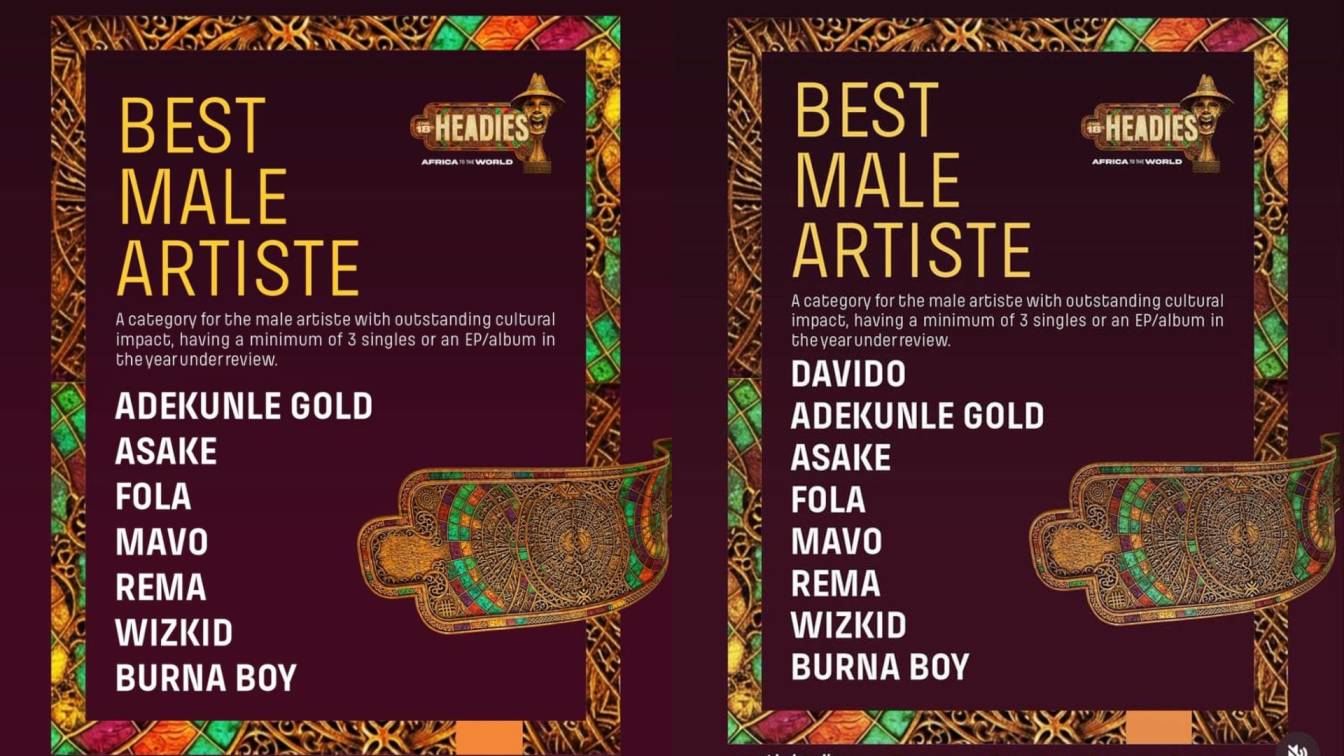
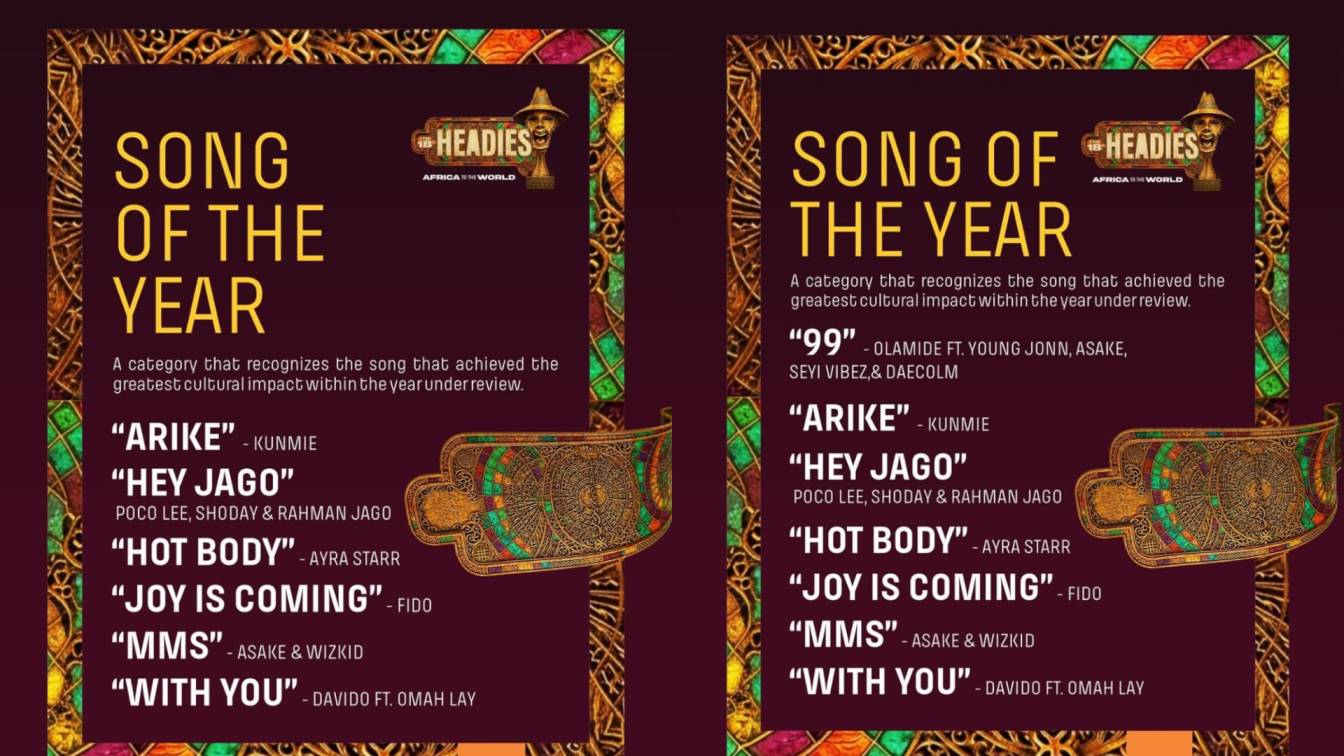
Perhaps the most damning item on this list, though, is the least defensible: a few hours after the Headies published its nominees list across its website and social platforms, the organisers quietly began editing it. Davido has since been added to the Best Male Artiste category; and Olamide’s “99”, featuring Young Jonn, Asake, Seyi Vibez, and Daecolm, has been added to the Song of the Year lineup.

Headies
Davido was included in the Best Male Artiste category shortly after a list that didn’t feature his name

There is a broader culture of “anyhowness” that Nigerian institutions have normalised across public life, a tolerance for process that bends after the fact rather than holding before it, and the Headies has not been spared from it.

Headies
Olamide’s “99” has been included in the Song of the Year category.

A nominations list is not a rough draft but the output of a process that is supposed to have already happened, a committee that deliberated and finalised its categories before making anything public. To publish and then quietly revise raises real questions about how that process actually worked, and whether “finalised” means anything at the Headies at all. Calling it borderline criminal is not hyperbole so much as an accurate description of what it does to the credibility of the exercise.

It also raises an uncomfortable question about everyone who was already on the list before the edits. If a category can be reopened and reshuffled hours after publication, what confidence does anyone have that it won’t happen again, quietly, before the ceremony itself? The artistes who made the cut on merit deserve a process solid enough that their nomination isn’t contingent on who gets added, or removed, in the days that follow.

There is more that could be said, and more that probably will need to be said again after the award has been organised. But after seventeen editions, the question worth sitting with is not what else is wrong this time. It is what it says about the future of the Headies that, after all this time, we are still here.

Emmanuel “Waziri” Okoro is a Nigerian writer and journo with an insatiable knack for music and pop culture, with bylines on Afrocritik, PM News, Tribune, The Sun, ThisDay, Vanguard, and The Guardian. When he’s not writing, you will find him arguing why Arsenal FC is the best football club in the multiverse. Connect with him on Twitter, Instagram, and Threads: @BughiLorde.

The post What the Headies Awards Keep Getting Wrong: A Cursory Look at the 18th Edition Nominees List first appeared on Afrocritik.

  •  

Matt B: The Water Remembered Him First

“When they found my living ancestral line, I said that it’s not enough for me to just know that information. I physically have to go there, and I have to meet them” – Matt B.

By Emmanuel “Waziri” Okoro

There is a peculiar kind of vertigo that comes with discovering you have been homesick for a place you have never been. I think of this often when I consider the millions of descendants of displacement scattered across the Americas, each carrying a blank space where a country’s name should be. For Matt B, that blank space had a shape long before it had a name. It just took a DNA kit, a Grammy, and a plane ticket to Owerri, Imo State, Nigeria, to fill it in.

I met Matt B – virtually, a few days before the release of his most personal work yet. But it didn’t feel like meeting a stranger. It felt like joining a man mid-sentence, in a story that started six years earlier and, as far as he’s concerned, has not ended. There’s an easy excitement in his voice when he says, “I’m excited for it to drop. I’m excited to see what people think about it. It’s all just so surreal”. 

We are there to talk about ALKEBULAN III: The Water Remembers, the closing chapter of a trilogy that began as curiosity and has become, over three albums, a pilgrimage. Over the course of the interview, we explore, among other things, the circumstances that led to his new project, how he makes music, what he looks for when selecting collaborators, and much more.

I: Where Do We Come From?

Matt B, born Matthew David Benson in Chicago, grew up singing alongside his two older brothers in church. The three of them later formed a family group called TriEnd in his teenage years. Over the past two decades, he has built a career that’s hard to categorise. He built an early audience in Asia with his 2014 album, Love & War, watched “Colour Blind” go viral in China, and found his way onto Billboard’s charts with the Trap-Soul-inflected 2021 project, Eden. But underneath the catalogue sat a question he had carried for longer than he’d been making music.

“I always wondered who I am and where I’ve come from”, he tells me, describing himself in the language he uses deliberately: not just African-American, but Freedman, Foundational Black American — a man aware that his identity had been interrupted somewhere along a coastline centuries ago. 

In 2019, he took an AncestryDNA test to try to answer it. The test told him he was majority Nigerian. It was, he says plainly, “not enough for me”. So he went looking for the answer the way he does best: inside a song. The search became his 2023 project, ALKEBULAN, then ALKEBULAN II released a year later. That second record won him a Grammy for Best Global Music Album in 2025, and handed the Royal Philharmonic Orchestra, founded 79 years ago, its first-ever Grammy in the process.

He is still, a year later, visibly stunned by that win. “To be recognised by my peers, and to be recognised as having the best album for that year, I’m lost for words every time I think about it. When they called my name, I was like, did they make a mistake? I had to pinch myself”.

It was in the wake of that win that AncestryDNA came back to him with something sharper than a percentage: a living bloodline, traced through records and genetic markers to the Igbo people of Owerri, Imo State. A certificate wasn’t going to cut it this time either. It wasn’t enough for him to just have that information. He knew he had to physically go there and reconnect with his people.

Thus, ALKEBULAN III: The Water Remembers did not begin as an album. It began as a documentary crew following Matt B and his wife, producer and manager, Angela V. Benson, through Ghana before they ever set foot in Nigeria. At Elmina Castle (a trading fortress built by the Portuguese in 1482, before evolving into a major hub for the Transatlantic slave trade), he stood before the Door of No Return. This was the passage through which captive Africans were marched onto ships bound for the Americas. At the Assin Manso Slave River — where, historical accounts hold, the enslaved were force-marched over fifty miles to the coast and bathed for the final time before that crossing — he took part in a traditional blessing ceremony.

Matt B
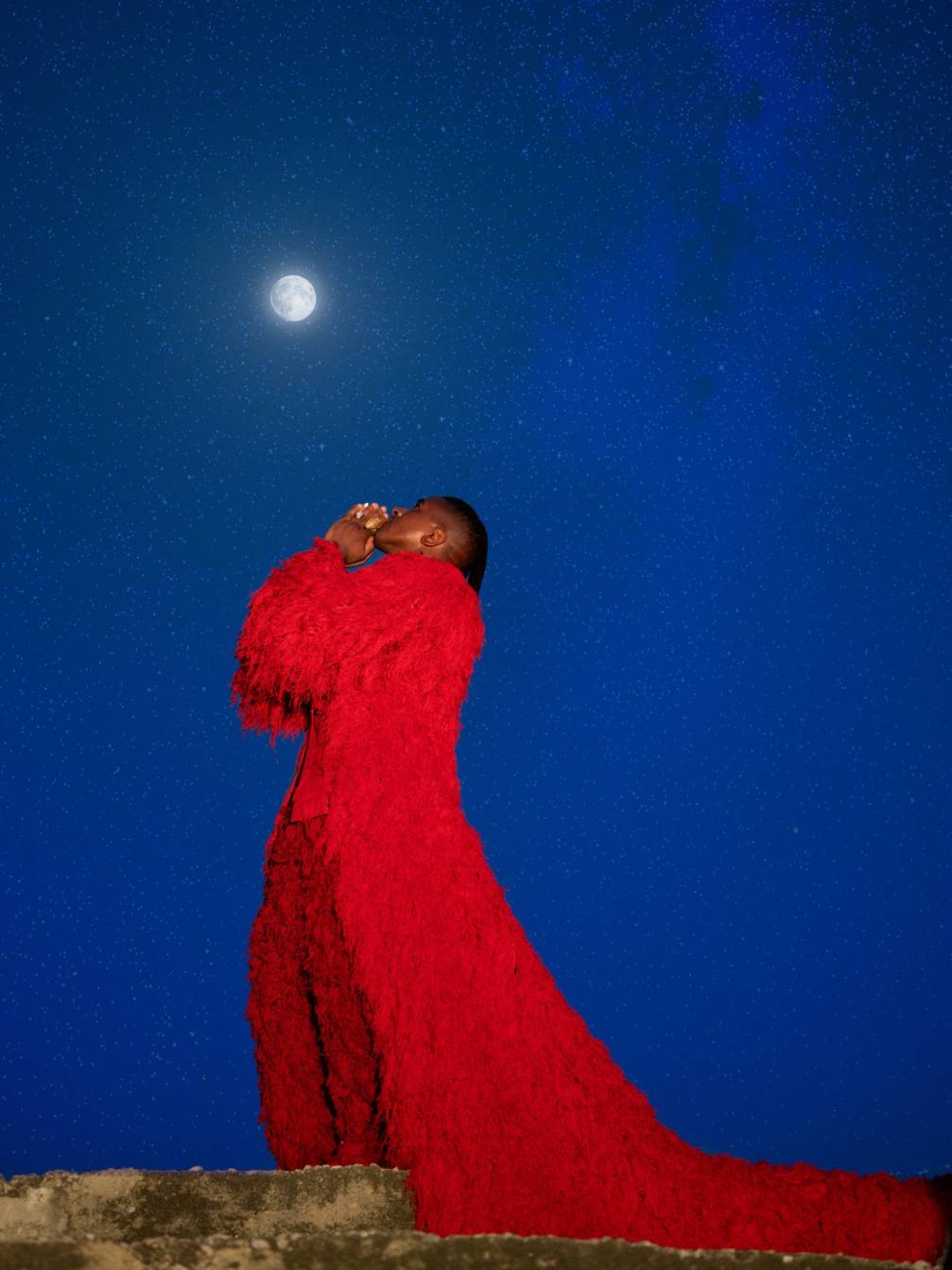
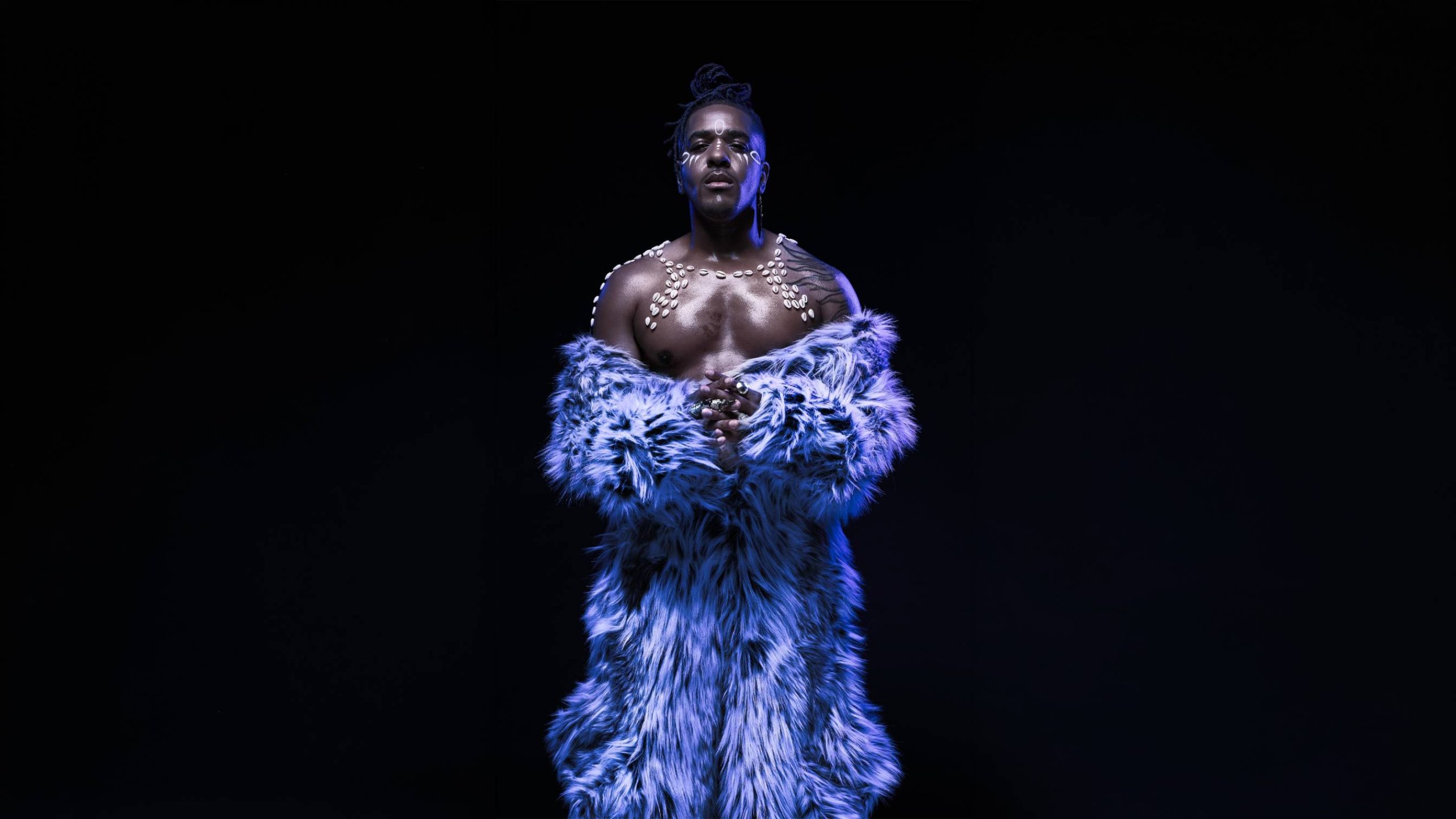
Matt B (photograph by Cecile Boko)

“Something very powerful was said to me”, he recalls, “that my walking through the Door of No Return was not my door of no return. It actually was my door of return. And that my going to the Assin Manso River, that was not my last bath, that was my first bath”. This was his re-introduction, as he puts it, to the continent, an act of honour paid to ancestral ties that had never technically been severed, only obscured.

II: Ikechukwu, Ahamefula, Nwanne Di na Mba

By the time Matt B landed in Owerri, Nigeria, the emotional register had already shifted from research to reunion. Looking out into the distance, he turned to his wife and told her it felt like he’d been there before, a feeling he still struggles to put into words, except to say that it felt like home. What followed were two elaborate homecoming ceremonies, staged by two separate kingdoms, each treating him as a son who has returned. 

He was received with a 12-gun salute he hadn’t anticipated, tribal drums, dancing and fanfare. “To be received in that way as a family member, as a brother, and welcomed back into the tribe, it just was heartwarming for me, because it felt like a sense of belonging that I just longed for, for such a long period of time”.

Then came a name. His Royal Majesty Eze Engr Chidume Okoro of  Amano, Obohia, Ahiazu Mbaise, conferred on him the Igbo name Ikechukwu (God’s Power) along with the chieftaincy title Ahamefula (May my name not be forgotten). A second monarch, His Royal Highness Eze Leo Nwokocha, Chairman of Mbaise Council of Traditional Rulers, later bestowed the title Nwanne Di na Mba (A brother in a foreign land). He admits none of it was expected. “I was like, what is going on right now? This is crazy”.

Matt B

Matt B named his entire trilogy after Alkebulan, which, according to some historical records, translates to “Mother of Mankind”. Being handed his own name back, in the region his ancestors were taken from, carries an obvious symmetry, and he draws the line himself. “There’s so much history, and there’s so much value in a name. It gives you your identity back”. He was taught, too, the etiquette of the kola nut, how it must be addressed in Igbo, because, as he was told, it does not speak English. A portion is carried home afterwards, proof to one’s own people that one was received and respected. 

III: Telling the Stories No One Else Will

Ask Matt B how he writes, and the answer changes depending on the assignment. Melody, he insists, usually comes first; a necessity, he says, when you’re singing in languages much of your audience won’t understand, because the emotion has to survive the translation gap through sound alone. But for this record, he reversed his own process. “I went into more of a historical dive before I started writing”, he explains, treating research as the foundation.

Two songs anchor the record’s emotional core, and both began as history before they became melody. “My Mother’s Song”, featuring the Malian vocalist, Fatoumata Diawara, is built around the true story of a nine-or-ten-year-old girl kidnapped from Sierra Leone in the 1700s who carried a song her mother had taught her across the Middle Passage. More than three centuries later, her descendants used the surviving lyrics and melody to trace their way back to their tribe. “When they made it back to their tribe, the lyrics and the melodies were almost the same”, he said, still visibly moved by it. “That is so powerful;  it just goes to show the importance of why those traditions matter”.

“Overboard”, an interlude built with the Kabusa Oriental Choir, draws from an account of a slave-ship rebellion in which captives who seized the vessel chose to jump overboard with their captors rather than live in bondage. “That was such a powerful story for me, so I put that into my lyrics, and that’s what I wrote around”. The choice to route this history through music rather than plain narration is deliberate. “If we aren’t telling the stories, then who will tell those stories? When you share it musically, then it could be digested a little easier” than it might in prose, where the same history risks landing as pure discomfort.

Across the album’s ten tracks, the Kabusa Oriental Choir functions as a structural device as much as a musical one, bookending the record and threading through its middle on songs like “At the End of the Door”, “Fertile Ground”, “Overboard”, and the title track. He confirms the placement was fully intentional. “They were a physical representation of the ancestors, the ancestral voice guiding me through that journey”. He walks me through the arc song by song. “At the End of the Door” doubles as both the record’s beginning and its end, an audible rendering of the Door of No Return itself. “Fertile Ground” is scored to footage of a plantation, where, despite the circumstances, there is a visible unity in people working the field together. “Overboard” carries the rebellion. And “The Water Remembers”, the closing track, is what he calls one of the most powerful interludes on the entire project.

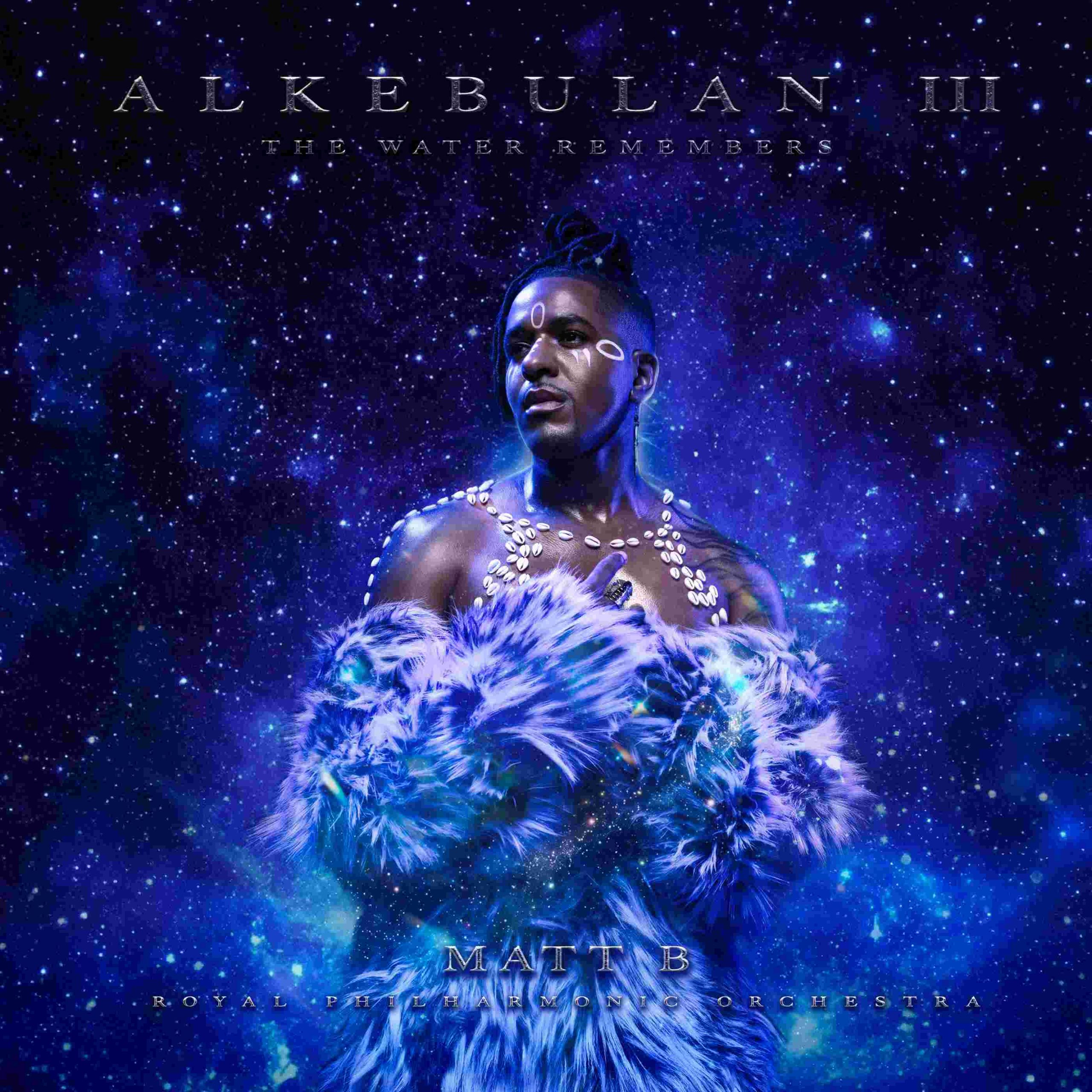
ALKEBULAN III: The Water Remembers

The featured artistes on The Water Remembers: Diawara, Skales, Goya Menor, Boy Spyce, Camidoh, alongside the Kabusa Oriental Choir and an orchestral recording with the Royal Philharmonic at Abbey Road, were like archetypes assembled to complete a portrait. “It was important for me to work with West Africans for this project, because that’s where I descend from”. He notes that all of them “speak to the culture”, people who understand the music is not just about what is hot right now, but about creating longevity and something meaningful.

Assembling those voices around one project, largely without label infrastructure, came with its own friction, though perhaps not the kind one would expect. “As far as creative differences, I didn’t really experience that with anyone, honestly, from this project”, he said. “People were actually just very warm, very open-minded”. The real difficulty was technical: there was no blueprint to work from. “Even though this is my third time making a project like this, I have no blueprint”, he says, describing the search for a sound that could hold Afrobeats, Afrobeat, orchestral arrangement, and R&B together without flattening any of them. 

He worried, too, about singing convincingly in languages he doesn’t speak natively: Igbo, Yoruba, Swahili, and, on earlier records, Luganda and Zulu. And thus, he leaned on co-writers for diction and pronunciation, treating linguistic accuracy as inseparable from the respect the project was trying to pay.

That the whole thing was self-funded, without a major label, was, in his telling, not a limitation but a condition of the story surviving intact. “Some stories that are meant to be told, and they have to be told a certain way”, he says. “When you bring in too many powers that be, they want to control that narrative, which can water it down. It was really important, not only for me but my team, to ensure that we had the creative control of that narrative”. No expense, he was careful to note, was spared regardless; Abbey Road, The Royal Philharmonic Orchestra, Red cameras (some owned outright, others loaned in partnership) for the documentary and short film. Independence, for Matt B, was a creative firewall, not a budget cut.

IV: Homeward, Now for Others

Six albums and one Grammy win into a career that started in a college dorm room, Matt B’s hardest-won lesson isn’t about sound but trust. “Trusting yourself, trusting your process, knowing that you are unique, that you are creative, and that there’s no one else on this earth like you”, he says, before pivoting, characteristically, to the unglamorous mechanics behind the art. “Business is also really important. 90% of this industry is business, the other 10% is music”. He also notes that the people who eventually join an artiste’s momentum will rarely be the ones who built it. “They won’t necessarily do that journey for you. If you don’t put in that work yourself, why should anyone else trust what you’re doing?”

Matt B
Matt B

That philosophy extends, unsurprisingly, to who he still wants to work with. Careful not to pigeonhole himself, he rattles off a list that spans generations and geographies: Angélique Kidjo, whose voice he calls simply amazing; Nomcebo Zikode, a friend he has yet to collaborate with formally; and the Tanzanian star, Harmonise. Then come the Burna Boys, Davidos, and Temses of the industry. “I just love to create, and I love to make music. Anyone, big or small. If I love their sound and love what they represent, that’s a collaboration I want to do”.

As our conversation winds toward its close, I ask what advice he’d offer other African Americans chasing the same unanswered question he’d carried for years. He doesn’t hesitate. “I hope that I’m the blueprint for that”, he says, “That it isn’t as scary as what you think it’s going to be, that you will be well received when coming back to the continent, that you guys love us and that you want us to come home, and that the diaspora is stronger for it”.

There’s a particular irony in a man who once sang in languages he didn’t speak now being the one teaching others how to find their way home. But that, in the end, is what Matt B seems most at peace with; the fact that the question he carried for most of his life no longer belongs only to him. 

Somewhere in a lineage he didn’t know existed six years ago, there are cousins who now know his face. And somewhere, listening to The Water Remembers for the first time, there will be another Matt B — someone who has never set foot on the continent but has always, somehow, been homesick for it — hearing, in the choir’s opening notes, an invitation they didn’t know they’d been waiting for.

Emmanuel “Waziri” Okoro is a Nigerian writer and journo with an insatiable knack for music and pop culture, with bylines on Afrocritik, PM News, Tribune, The Sun, ThisDay, Vanguard, and The Guardian. When he’s not writing, you will find him arguing why Arsenal FC is the best football club in the multiverse. Connect with him on Twitter, Instagram, and Threads: @BughiLorde.

The post Matt B: The Water Remembered Him First first appeared on Afrocritik.

  •  

Ayra Starr Steps Into a Surreal New World in Her “Tornado” Video | Watch

Ayra Starr in a black lace top against a purple sky, next to a surreal scene of a frozen crowd suspended above a miniature city skyline

A still from the “Tornado” video capturing a close-up of Ayra Starr alongside a surreal scene of a frozen crowd suspended above a miniature city.

If you’ve been jamming to Ayra Starr‘s “Tornado” since it dropped at midnight, the superstar has got something even better for you. The music video is finally here, and it abandons everyday reality for a completely stylized, surreal world where Ayra takes over a miniature city. Instead of a typical performance clip, she commands the screen as a towering, larger-than-life figure stepping over tiny apartment blocks and lounging across skyscraper skylines.

The video takes a clever swipe at hyper-fame and constant public scrutiny. In one memorable setup, she stands against a bright blue backdrop completely ringed by aggressive paparazzi lenses and vintage microphones. As storm clouds gather, the imagery gets wonderfully chaotic, featuring a winged figure blowing a trumpet into the camera and a child aiming a toy gun at birds in a dark sky.

Everything builds to a wild final act where a crowd of people—including suited businessmen—are left hanging mid-air, tangled up in a giant black web across the night sky. Ayra walks coolly underneath the chaos, with her own hair stretching up to weave directly into the threads holding the frozen crowd. It is a bold, artistic statement that gives a fantastic taste of what her new era looks like.

Watch below

The post Ayra Starr Steps Into a Surreal New World in Her “Tornado” Video | Watch appeared first on BellaNaija - Showcasing Africa to the world. Read today!.

  •  

Ayra Starr Begins Her Starr Girl Era With Tornado | Listen

Ayra Starr wearing a purple gele and a latex mini dress while shooting a pink laser beam from her hands on the official cover art for Tornado.

Official digital single cover artwork for Ayra Starr’s 2026 track “Tornado” from her upcoming studio album, Starr Girl. Photo credit: Ayra Starr/Instagram

For months, Ayra Starr has been teasing her fans with the prospect of new music, and fast forward to today, the superstar has released a new single, “Tornado“. Following a live preview of the unreleased record during her session at NPR’s Tiny Desk, the Mavin Records singer has officially delivered the single which serves as the primary glimpse into her highly anticipated forthcoming studio album, “Starr Girl.”

“Tornado” is a confident anthem centered on self-worth, high status, and owning your presence the moment you step into a room. Ayra Starr positions herself as the ultimate center of attention, using the track to celebrate her charisma and physical appeal with direct, unapologetic lyricism. Through lines like “I’m that girl they wanna be” and “My figure no be fable,” she reminds listeners that her global appeal is entirely real and unexaggerated. She even includes a playful nod to her rising value in the music industry with the boastful line, “Inflation, I’m the price they wanna beat.”

Co-produced by Skillies, Shizzi, and RiotUSA, the single captures a vibrant, celebratory mood of enjoying life and luxury with friends, summarised perfectly as she sings about being in the club with her girls and “treatin’ every day like e be a new year.”

See the photos from the exclusive listening party and stream the new track below.

Ayra Starr holding a microphone and singing in a metallic mesh jacket and embellished bikini top surrounded by a crowd at her listening party.

Ayra Starr performs her new single “Tornado” live for guests and media during an exclusive album listening session. Photo credit: Ayra Starr/Instagram

A wide shot of Ayra Starr performing on a dimly lit venue stage in front of a massive illuminated white star backdrop while fans hold up phones.

The main stage production at the “Tornado” single listening event, featuring the signature Starr Girl illuminated backdrop. Photo credit: Ayra Starr/Instagram

Ayra Starr from the back wearing a silver mesh top, interacting closely with an excited female fan who is cheering at the front of the crowd.

Ayra Starr shares a candid moment with attendees on the floor during her single premiere event. Photo credit: Ayra Starr/Instagram

A silhouette of Ayra Starr singing into a microphone, backlit by a large glowing white star on a dark stage.

A silhouette of Ayra Starr singing into a microphone, backlit by a large glowing white star on a dark stage. Photo credit: Ayra Starr/Instagram

The post Ayra Starr Begins Her Starr Girl Era With Tornado | Listen appeared first on BellaNaija - Showcasing Africa to the world. Read today!.

  •  

Watch Shakira & Burna Boy Perform “Dai Dai” at FIFA World Cup 2026 Opening Ceremony

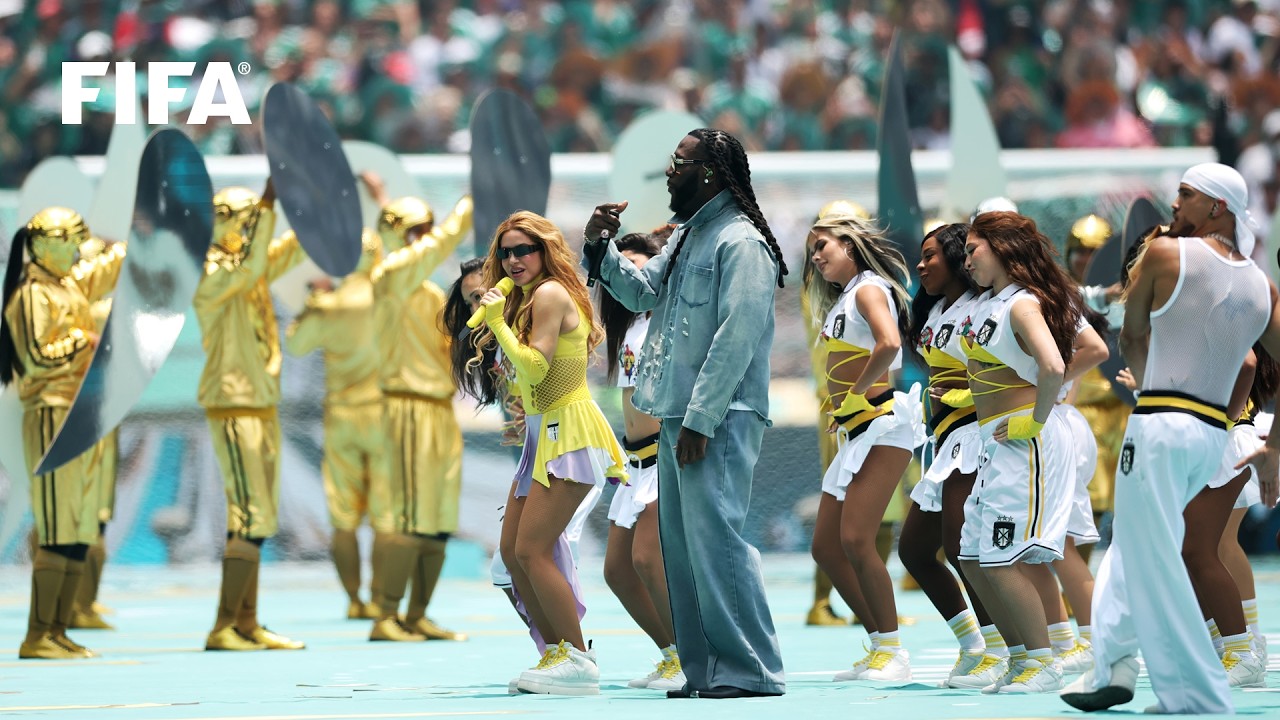
Burna Boy in a denim outfit and Shakira in a yellow dress singing together on stage with backup dancers at Estadio Azteca.

Burna Boy and Shakira perform the official anthem “Dai Dai” during the 2026 FIFA World Cup opening ceremony in Mexico City.

Burna Boy has officially performed at the 2026 FIFA World Cup opening ceremony — and the moment was everything Nigerian music fans have been waiting for. The Lagos-born Afrobeats star took the stage at the iconic Estadio Azteca in Mexico City on Thursday, 11 June, alongside Colombian superstar Shakira, in front of over 80,000 fans inside the stadium and millions watching around the world.

Shakira opened the performance, taking to the pitch and executing the choreography of “Dai Dai” — the official 2026 FIFA World Cup anthem — with her dancers before Burna Boy joined her on stage. The two danced together as the crowd roared, closing the song with “Dale, allez, let’s go!” Following the performance, plumes of red and green smoke erupted from the top of the stadium in a nod to the colours of the Mexican flag.

Shakira holding a yellow microphone while performing on a blue stage surrounded by dancers in white and yellow skirts.

Shakira performs the tournament anthem with her choreography team during the 2026 FIFA World Cup opening festivities in Mexico City. Photo Credit: FIFA/Instagram

For Shakira, the performance was a return to the World Cup stage 16 years after “Waka Waka” became the defining cultural moment of the 2010 South Africa tournament. For Burna Boy, it was one of the biggest stages any Nigerian artist has ever stood on — performing the official anthem of the most watched sporting event on the planet.

The ceremony also featured Tyla and Megan Thee Stallion, with Alejandro Fernández performing the Mexican national anthem and Tyla delivering the South African anthem. World Cup Ambassador Salma Hayek Pinault also welcomed fans from around the world before the opening match between Mexico and South Africa got underway.

Shakira in a black top and black leggings holding a microphone during an outdoor stadium choreography rehearsal with two dancers.

Shakira participates in the official on-field choreography rehearsal ahead of the 2026 FIFA World Cup opening ceremony at Estadio Azteca. Photo Credit: Shakira/Instagram

Shakira wearing a yellow outfit and sunglasses singing into a microphone on stage.

Global artist Shakira performs the official anthem “Dai Dai” with Burna Boy during the World Cup opening ceremony at Estadio Azteca. Photo Credit: Gianni Infantino/Instagram


The post Watch Shakira & Burna Boy Perform “Dai Dai” at FIFA World Cup 2026 Opening Ceremony appeared first on BellaNaija - Showcasing Africa to the world. Read today!.

  •  

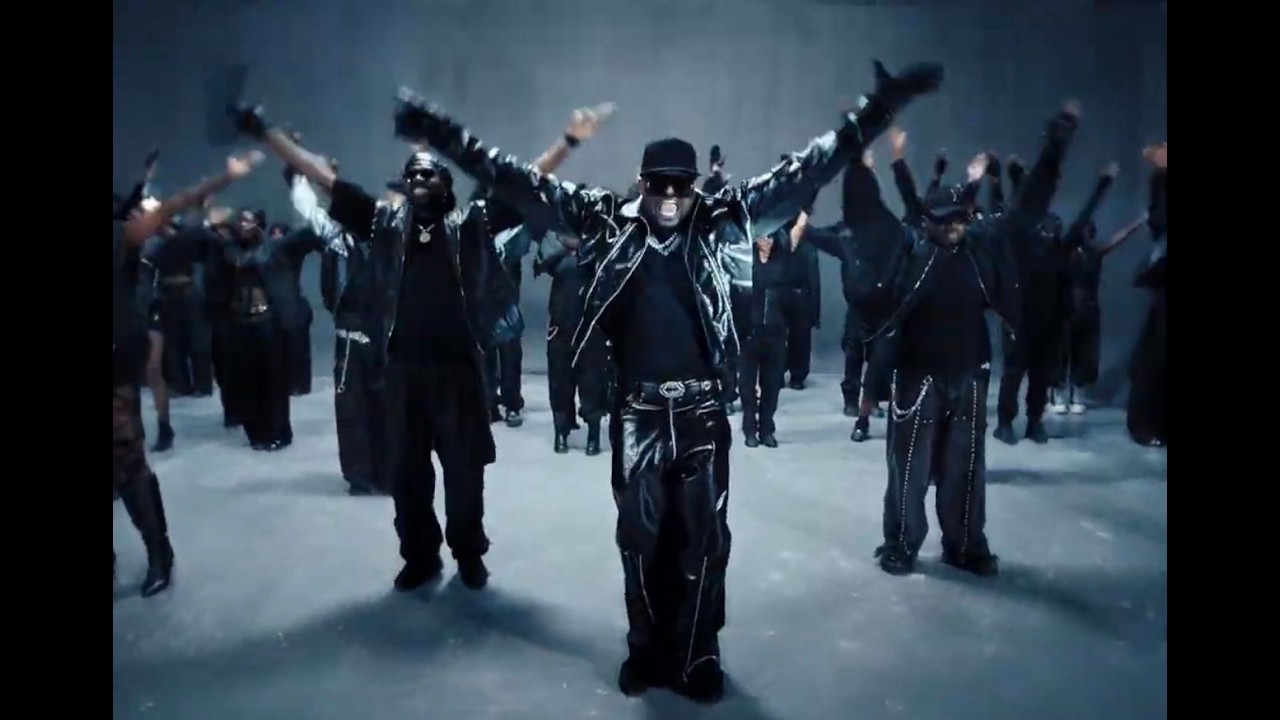
Mr P’s “I Can’t Look Away” Video Is All About Those Dance Moves

Mr P and back-up dancers dressed in matching black leather outfits performing synchronized break dance choreography.

Mr P and back-up dancers dressed in matching black leather outfits performing synchronised break dance choreography.

Have you missed those dance steps that give you goosebumps like you’re watching Michael Jackson on stage? Then you already know we’re talking about Mr P’s latest video for “I Can’t Look Away.”

Such a fitting title too. In the song, Mr P sings about a woman whose beauty has him completely locked in, to the point where he just can’t take his eyes off her. It’s that familiar line you’ve probably heard — or even said yourself — “you’re so beautiful, I can’t look away.”

The video leans into that feeling and then takes us straight into choreography mode. Mr P and his dance crew show up with routines that pull from the kind of steps fans have long associated with the Psquare era, the same movement-heavy style that defined so many of their performances.

There’s also a nostalgic feel running through it, the kind that makes you pause for a second just to take it all in.

So whether you’re stuck in Lagos traffic or getting ready for a night out, “I Can’t Look Away” slides easily into that rotation of songs you keep playing back to back.
And if you can pick up those moves like Mr P? Even better.

Watch below

The post Mr P’s “I Can’t Look Away” Video Is All About Those Dance Moves appeared first on BellaNaija - Showcasing Africa to the world. Read today!.

  •  

Falz Drops “Omoge” Music Video Featuring a Special Appearance by Sir Shina Peters

Full-length studio portrait of Nigerian musician Falz posing in a sleeveless olive green top, wide-leg trousers, and brown leather loafers.

Full-length studio portrait of Nigerian musician Falz posing in a sleeveless olive green top, wide-leg trousers, and brown leather loafers. Photo Credit: Falz/Instagram

Ever since Falz dropped the audio for his hit track, “Omoge“, back in March 2026, the song has been practically inescapable. The track achieved rapid viral status across TikTok and Instagram, where creators adopted the sound for everything from high-fashion outfit transitions to wedding guest diaries. It quickly became a prominent digital soundtrack for the modern West African lifestyle, driving massive engagement online as fans hooked onto the distinct retro bounce.

Now, just as those online transition videos reached their peak, Falz has delivered the official music video, anchoring the digital movement in a beautiful piece of visual art. Produced by Aykbeats, “Omoge” builds its entire foundation on a direct sample of Sir Shina Peters. Falz masterfully layers his sharp, witty lyricism over this iconic, repurposed Juju-Afrobeats rhythm, reintroducing the legendary sound of 1989 “Shinamania” straight to a new generation of listeners.

Legendary Juju musician Sir Shina Peters wearing a black graphic satin shirt alongside rapper Falz in a white jacket, sitting together on a leather sofa.

Legendary Juju musician Sir Shina Peters wearing a black graphic satin shirt alongside rapper Falz in a white jacket, sitting together on a leather sofa. Photo Credit: Falz/Instagram

The music video translates this nostalgic sonic foundation into a vibrant, meticulously curated visual experience. The director trades standard club backdrops for a brilliantly colourful presentation that mimics the style and tone of classic Nigerian television eras, updated with a modern, high-fashion sensibility. The choreography is a major focal point, executing synchronised routines that reference vintage dance movements while staying completely current.

The ultimate highlight of the video is a special appearance from Sir Shina Peters himself. Seeing the icon share the frame with Falz completely bridges the generational gap, turning the video into a genuine celebration of Nigerian pop culture history rather than a simple musical release.

Watch below

The post Falz Drops “Omoge” Music Video Featuring a Special Appearance by Sir Shina Peters appeared first on BellaNaija - Showcasing Africa to the world. Read today!.

  •  

Ayra Starr’s NPR Tiny Desk Debut Was Worth Every Bit of the Wait

A signed Polaroid photograph of Nigerian artist Ayra Starr posing in a black hoodie at the NPR studio with her signature at the bottom.

A signed Polaroid photograph of Nigerian artist Ayra Starr posing in a black hoodie at the NPR studio with her signature at the bottom. Photo Credit: NPR Music/Instagram

If you’ve been waiting for Ayra Starr‘s Tiny Desk Concert, consider this your sign to stop everything and press play.

The Nigerian superstar finally made her debut behind NPR’s iconic desk, and she gave us a version of herself we don’t get to see every day. Gone were the statement heels, the mini skirts, and the full glam. Instead, Ayra showed up in a simple black sweatsuit and let her voice take centre stage.

And it worked.

From the moment she launched into “Birds Sing of Money,” it was clear this wasn’t going to be just another performance. Backed by a phenomenal live band, Ayra floated through fan favourites like “Gimme Dat,” “Who’s Dat Girl,” “Rush,” and “Commas,” giving each song a fresh energy that made them feel brand new.

Nigerian singer Ayra Starr singing into a microphone during her NPR Tiny Desk Concert performance in a black sweatsuit with her live band in the background.

Nigerian singer Ayra Starr singing into a microphone during her NPR Tiny Desk Concert performance in a black sweatsuit with her live band in the background.

As if that wasn’t enough, she also surprised fans with the debut of “Tornado,” a previously unheard track from her upcoming album, “Starrgirl.”

But it was the closing moments that really got us. Performing “Amin” and “Orun,” Ayra leaned into vulnerability, gratitude, and faith. The songs felt like a thank-you note wrapped in melody—a reflection on everything it took to get here.

Fun fact: Ayra has been dreaming about performing at Tiny Desk since she was 14 years old. Watching her finally step behind that famous desk felt like witnessing a full-circle moment in real time.

Watch below

The post Ayra Starr’s NPR Tiny Desk Debut Was Worth Every Bit of the Wait appeared first on BellaNaija - Showcasing Africa to the world. Read today!.

  •  

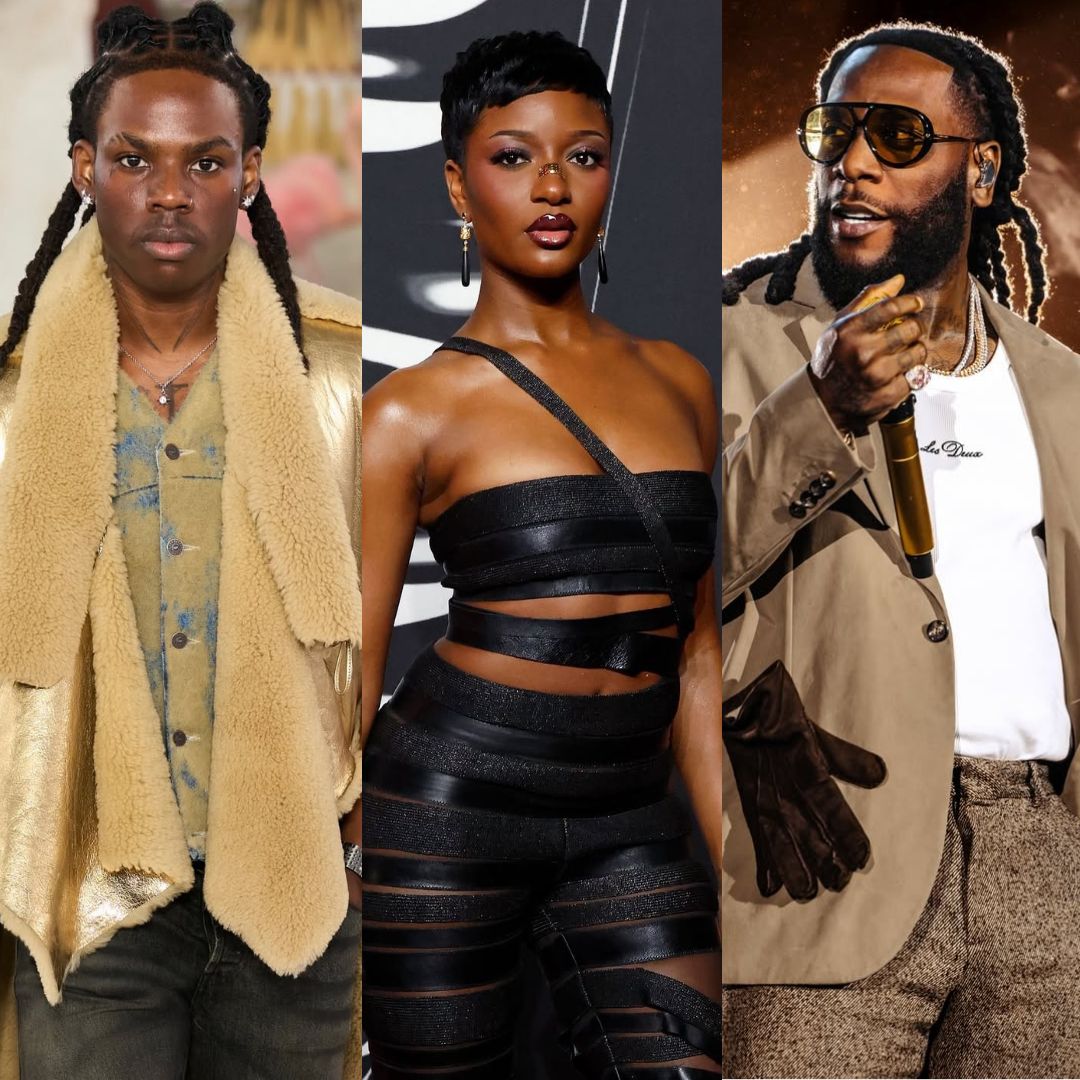
Rema, Davido, Burna Boy & Ayra Starr Fly Nigeria’s Flag on the FIFA World Cup 2026 Album

A three-panel portrait collage featuring Nigerian musicians Rema in a gold shearling vest, Ayra Starr in a black strapped outfit, and Burna Boy performing with a microphone.

A three-panel portrait collage featuring Nigerian musicians Rema in a gold shearling vest, Ayra Starr in a black strapped outfit, and Burna Boy performing with a microphone.

If you have been jamming to “Dai Dai” by Shakira and Burna Boy since it dropped on 15 May — and if you have watched the music video featuring Uganda’s Ghetto Kids — then we have some very good news for you. That song is just one piece of a much bigger project, and Nigeria did not stop at one feature. The Official FIFA World Cup 2026 Album drops tomorrow, 5 June, and it turns out four Nigerian artists made the cut on what FIFA has described as the most extensive multi-track music initiative ever created for a World Cup.

Burna Boy’s “Dai Dai” with Shakira serves as the official song of the tournament and the theme for the FIFA Education Fund, with songwriting credits that include Ed Sheeran among others. Rema follows with “Goals,” a collaboration with Thai rapper and singer Lisa and Brazilian singer Anitta that brings Afrobeats, K-pop, and Latin pop together on one track — released on 21 May and already doing numbers. Davido features on “No Place Like Home” alongside electronic music collective Major Lazer and Canadian pop icon Nelly Furtado, while Ayra Starr rounds off Nigeria’s representation with “Show Me,” alongside American rapper Latto.

The album’s full 18-track lineup also features the likes of Future and Tyla, Stormzy, The Rolling Stones, Daddy Yankee, and 21 Savage.

The Official FIFA World Cup 2026 Album is available to pre-save now across all major streaming platforms and releases in full tomorrow, 5 June 2026. Set your reminders.

The post Rema, Davido, Burna Boy & Ayra Starr Fly Nigeria’s Flag on the FIFA World Cup 2026 Album appeared first on BellaNaija - Showcasing Africa to the world. Read today!.

  •  

5 Things to Know About Uganda’s Ghetto Kids Ahead of Their 2026 World Cup Final Performance

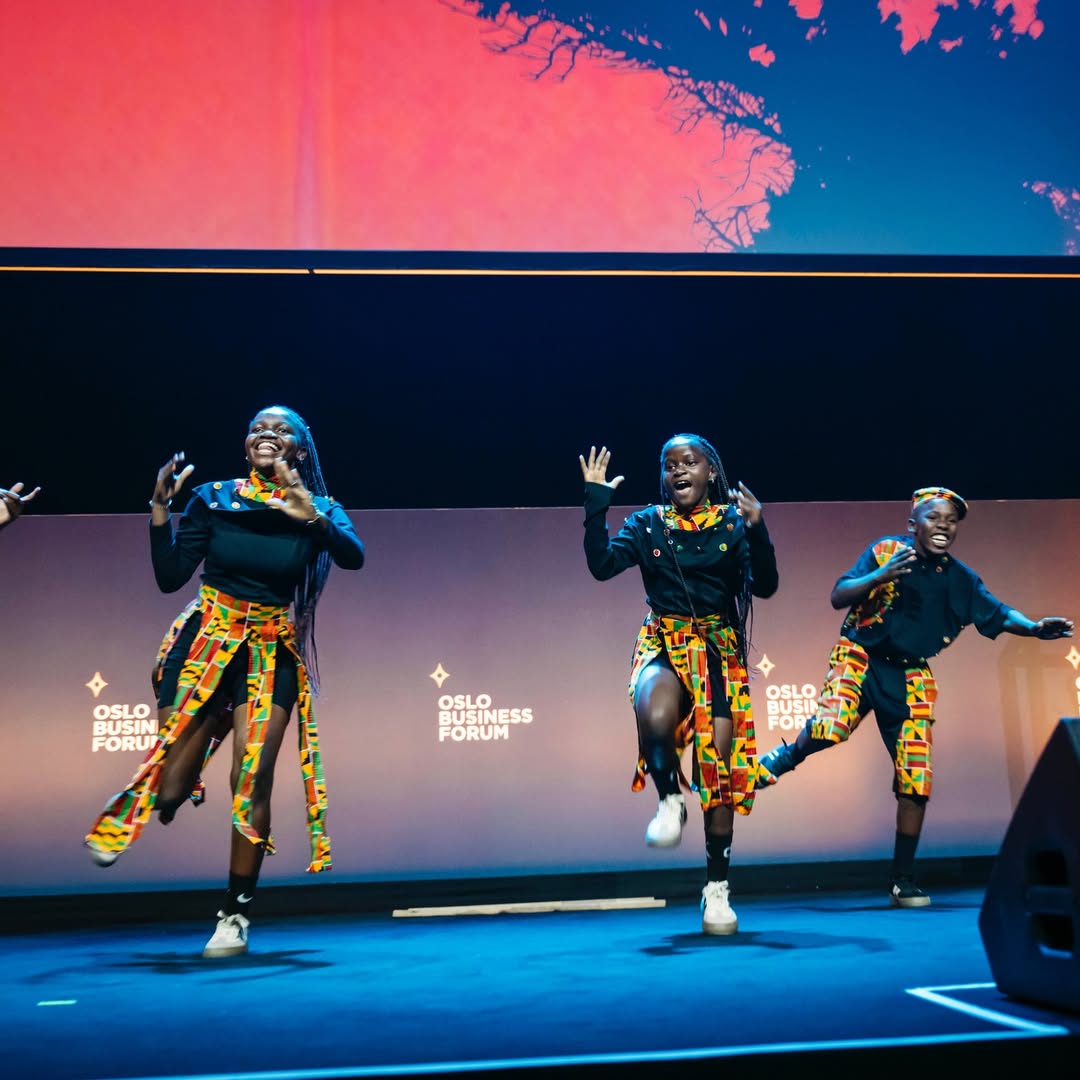
Three members of the Ugandan dance group Ghetto Kids executing a synchronised mid-air dance routine on stage at the Oslo Business Forum.

Three members of the Ugandan dance group Ghetto Kids executing a synchronised mid-air dance routine on stage at the Oslo Business Forum. Photo Credit: Triplets Ghetto Kids/Instagram

If you have spent any time on the internet over the last few years, chances are you have come across the Ghetto Kids. The Ugandan dance group’s high-energy performances have a definitive way of stopping people mid-scroll. Recently, the group brought their signature choreography to “Dai Dai,” the official 2026 FIFA World Cup anthem by Shakira and Burna Boy.

As the world prepares for their upcoming appearance alongside Shakira at the World Cup final halftime show at MetLife Stadium on 19 July, here are five essential facts about the Kampala creators who made it to football’s ultimate stage.

They grew up in the Katwe slums of Kampala

Founded in 2014 by Dauda Kavuma, the Ghetto Kids began in the Katwe slums of Kampala, Uganda. Kavuma’s foundation has provided shelter, nutrition, and education to street children since 2007, using music, dance, and drama as a sustainable pathway to a better life. The group currently supports 60 children between the ages of 4 and 16, all coming from underprivileged backgrounds.

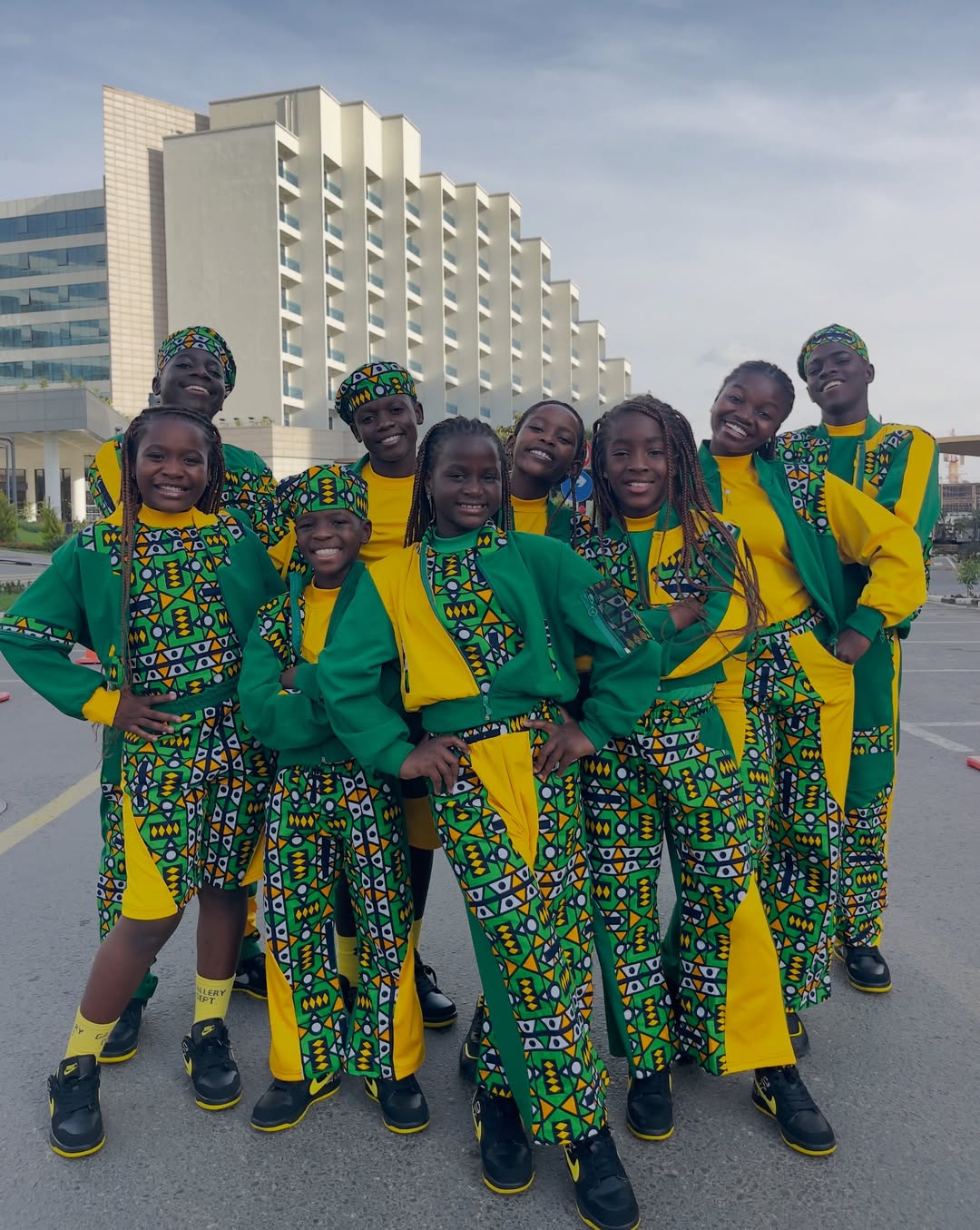
A group portrait of the Ghetto Kids dance group from Kampala posing outdoors in matching green, yellow, and black patterned tracksuits.

A group portrait of the Ghetto Kids dance group from Kampala posing outdoors in matching green, yellow, and black patterned tracksuits. Photo Credit: Triplets Ghetto Kids/Instagram

A viral 2014 video changed everything

The group first secured international attention after a homemade dance routine to Ugandan star Eddy Kenzo‘s hit track “Sitya Loss” went viral online. Their digital footprint expanded significantly in 2017 when they teamed up with Rwanda-born choreographer Sherrie Silver for a routine to Angolan musician Dotorado Pro’s Afro-house track “Marimba Rija,” gathering over 25 million views and establishing a permanent global audience.

They made Britain’s Got Talent history

The Ghetto Kids became a global talking point when they earned a Golden Buzzer mid-performance on Britain’s Got Talent—marking the first time in the franchise’s history that the buzzer was pressed before an act had even finished their routine. The moment introduced their story to a massive European audience and ultimately propelled them to the competition’s finals.

They have commanded global stages for years

Their upcoming stadium performance is part of a long history of high-profile appearances. The group famously featured in French Montana’s multi-platinum “Unforgettable” music video, performed at events during the 2022 World Cup in Qatar, and made their Norwegian debut at the Oslo Business Forum in September 2025. Their accolades include an AFRIMMA Award, a YouTube Creators Award, and official recognition from the Recording Industry Association of America (RIAA).

A member of the Ghetto Kids performing on stage at the Oslo Business Forum against a blue background, lifting a traditional calabash prop.

The Ghetto Kids delivering their debut performance in Norway at the Oslo Business Forum, incorporating traditional African props into their routine. Photo Credit: Triplets Ghetto Kids/Instagram

They are co-starring in the 2026 FIFA World Cup Final

The group’s relationship with Shakira evolved from a viral dance challenge they created for one of her tracks, eventually landing them a featured slot in the official Hannah Lux Davis-directed music video for “Dai Dai” alongside Burna Boy. Now, Shakira has confirmed the Ghetto Kids will join her live on stage at New Jersey’s MetLife Stadium for the halftime show on 19 July—placing the Kampala dancers in front of a global television audience expected to exceed one billion viewers


View this post on Instagram


A post shared by Shakira (@shakira)

The post 5 Things to Know About Uganda’s Ghetto Kids Ahead of Their 2026 World Cup Final Performance appeared first on BellaNaija - Showcasing Africa to the world. Read today!.

  •  

Tems Releases Official Music Video for “What You Need” Off ‘Love Is A Kingdom’

A close-up black and white music video still of Tems looking to the side against a dark background with a Vevo logo in the bottom left corner.

A portrait still of Tems from her official “What You Need” music video, reinforcing the track’s themes of isolation and personal reflection.

Have you ever found yourself in a situation where words are simple, but outside voices keep making everything feel complicated? That is the space Tems steps into with the official music video for “What You Need.”

The Grammy-winning singer has released the long-awaited visuals for the track, which originally appeared on her November 2025 project “Love Is A Kingdom.” While fans have had the song for a while, the new video adds a fresh emotional layer, bringing its themes of honesty, boundaries, and emotional clarity into sharper focus.

At its heart, “What You Need” is about choosing simplicity over confusion. Tems sings to a partner who is constantly swayed by external opinions, while she offers something steadier — reassurance, presence, and emotional grounding. The production stays minimal and unhurried, allowing the message to sit clearly without distraction.

The video reflects this tension through contrast. Wide, open architectural spaces sit beside intimate close-up frames, moving between distance and closeness as the story unfolds. Styled in structured silhouettes and muted tones, Tems keeps the visuals stripped back, letting emotion rather than spectacle carry the story forward.

The post Tems Releases Official Music Video for “What You Need” Off ‘Love Is A Kingdom’ appeared first on BellaNaija - Showcasing Africa to the world. Read today!.

  •  

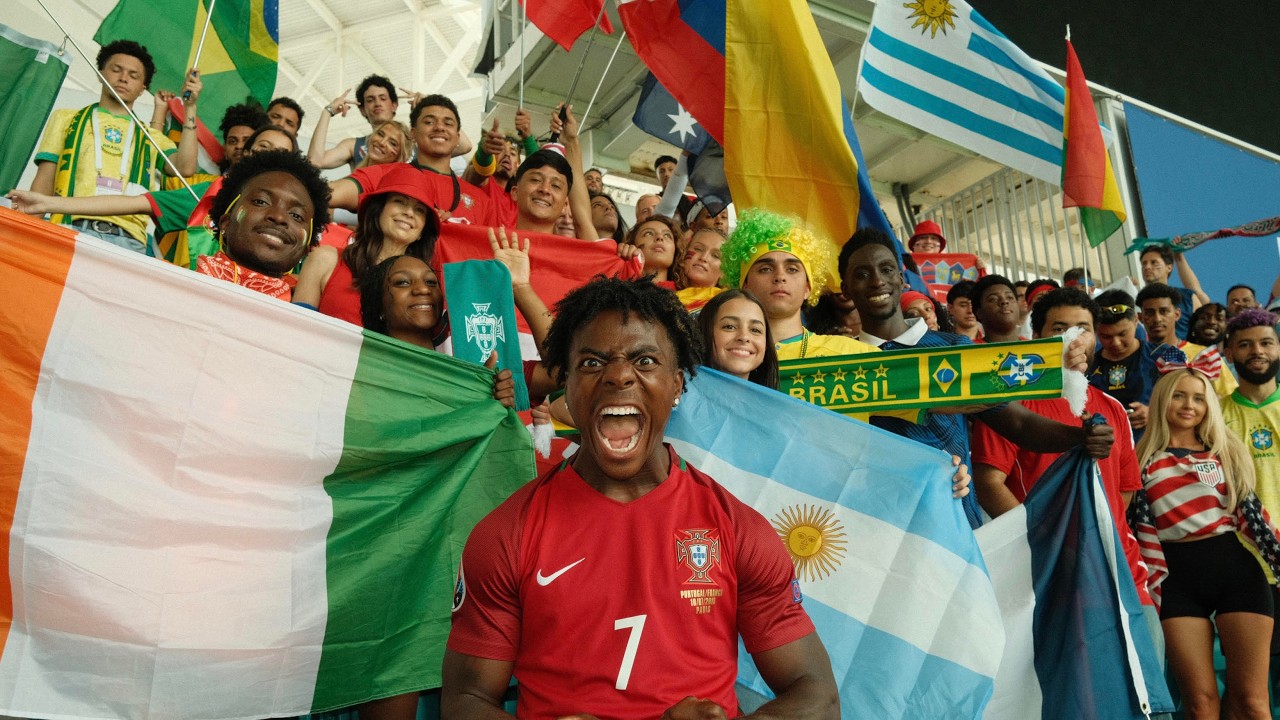
6 Million Views in 24 Hours! IShowSpeed’s Unofficial “World Cup” Anthem Goes Viral

IShowSpeed wearing a red Portugal jersey with number 7, shouting excitedly in a stadium surrounded by diverse football fans holding flags from Nigeria, Argentina, Brazil, and Uruguay.

IShowSpeed wearing a red Portugal jersey with number 7, shouting excitedly in a stadium surrounded by diverse football fans holding flags from Nigeria, Argentina, Brazil, and Uruguay.

The internet has officially found its favourite tournament hype track. Viral streaming sensation IShowSpeed has dropped the music video for his new track, “World Cup (Champions)”, and it is tearing up the global digital charts. In less than 24 hours, the high-energy visuals have exploded online, already racking up over 6 million views on YouTube.

Even though “World Cup (Champions)” is an unofficial anthem for the 2026 FIFA World Cup, it easily joins the ranks of major tournament tracks making waves this year. The global football playlist is already stacked with star power, from Shakira and Burna Boy’s vibrant track “Dai Dai“—which features the Ugandan Ghetto Kids—to Tyla and Future’s infectious anthem “Game Time“. Speed’s track brings a raw fan energy to this line-up, giving a shout-out to every single country participating across North America.

The visuals prominently feature stunning Ghanaian cultural displays, complete with traditional dancers and local choreography that brings a vibrant African rhythm straight to the global football stage. The fan campaign surrounding the release has been massive, with fans petitioning for the song to get official tournament backing. The internet went into absolute overdrive when the official FIFA account actually hit back with a cheeky reply, stating, “We will be in touch…”

With the tournament just around the corner, this track is exactly the burst of pure fun needed to get everyone in the mood. Experience the stadium-level energy, traditional choreography, and global team chants for yourself below.

The post 6 Million Views in 24 Hours! IShowSpeed’s Unofficial “World Cup” Anthem Goes Viral appeared first on BellaNaija - Showcasing Africa to the world. Read today!.

  •  

Dave Announces Lagos Dates For ‘The Boy Who Played The Harp’ Tour


History-making British-Nigerian rapper, producer, and songwriter Dave, also known as Santan Dave, will headline his first-ever shows in Nigeria on October 16 and 17 at Lagos’ Wole Soyinka Centre for Culture and Creative Arts (formerly the National Theatre), bringing his acclaimed The Boy Who Played the Harp tour to a close.

Presented by Live Nation and MASSIVE, the highly anticipated performances represent a significant moment for both Dave and Nigerian audiences. Long celebrated for its unmatched energy, creativity, and influence across music, fashion, nightlife, and art, Lagos continues to shape global culture through the worldwide impact of Afrobeats and a new generation of African creatives redefining entertainment on a global stage.

The shows bring one of the most important voices in contemporary British music to one of Africa’s most culturally influential cities.

The announcement also comes during a significant cultural moment for the city, following the reopening and renewed spotlight on the iconic Wole Soyinka Center for Culture and Creative Arts (formerly and commonly known as the National Theatre) in Lagos, a historic symbol of Nigeria’s artistic heritage and an important marker of the city’s evolving live entertainment landscape.

The performances further reinforce Lagos’ growing position as a global destination for music, entertainment, and large-scale cultural experiences.

The Lagos dates will serve as the closing shows of his global ‘The Boy Who Played the Harp‘ tour, which has included major stops across Europe and North America, as well as previously announced dates in South Africa, including a sold-out show at Grand Arena in Cape Town on October 6.

For the British-Nigerian artist, whose parents are Nigerian, the performances also carry a deeper cultural significance. At just 27 years old, Dave has become one of the most influential artists of his generation and recently made history as the first and only UK rap artist to debut three consecutive studio albums at No. 1 on the UK Albums Chart. With multiple BRIT Awards, an Ivor Novello Award, critically acclaimed projects, and sold-out shows around the world, he continues to connect with audiences across continents.

TICKETS:

Tickets will be available starting with the Artist Presale beginning on Monday, 8th June at 10 am local time. The general on-sale will begin on Tuesday, 9th June at 10 am local time exclusively via SANTANDAVE.COM.

PRESALE:

To participate in the artist presale on Monday, June 8, at 10 am local time,e you must sign up here.

The Boy Who Played The Harp Tour Dates:

Wed Jun 18 – Brisbane, AU – Brisbane Entertainment Centre
Fri Jun 20 – Sydney, AU – Qudos Bank Arena
Mon Jun 23 – Melbourne, AU – Rod Laver Arena
Fri Jun 27 – Perth, AU – RAC Arena
Thu Aug 07 – Skanderborg, DK – Smukfest
Fri Aug 29 – Reading, UK – Reading Festival
Sat Aug 30 – Leeds, UK – Leeds Festival
Fri Oct 03 – Pretoria, ZA – SunBet Arena
Mon Oct 06 – Cape Town, ZA – Grand Arena
Fri Oct 16 – Lagos, Nigeria – Wole Soyinka Center for Culture and Creative Arts NEW DATE
Sat Oct 17 – Lagos, Nigeria – Wole Soyinka Center for Culture and Creative Arts NEW DATE

About Dave:

The meteoric rise of the multi-award-winning musician Dave has been characterised by a series of boundary-breaking moments in his career. From becoming the youngest recipient of an Ivor Novello award in 2017, to earning the first No.1 by a sole writer and producer in 8 years in 2022 with ‘Starlight.’ Dave has continuously redefined what it means to be both a British rapper and a contemporary musician today.

On 24 October 2025, Dave released his third studio album, The Boy Who Played the Harp, to critical acclaim. With Dave’s previous albums both reaching No.1, alongside four No.1 singles to date (‘Funky Friday’, ‘Starlight’, ‘Sprinter’ and now ‘Raindance’ taken from TBWPTH), the 27-year-old has forged his own lane, where “better” is subjective and excellence is a pre-requisite for a starting point and every bar, rhyme, verse and chorus he constructs occupies its own place in his very own pantheon and a standard that has remained since his early YouTube freestyles at 16.

Few artists can harness that early promise and deliver upon expectations with their debut body of work as Dave did in 2019 with Psychodrama (578,942 UK Albums sold), hitting that rare combination of critically acclaimed and commercially successful album that few artists ever reach, as one of only two albums to ever win Best Album at The BRITS & Mercury’s. The album also coincided with Dave’s powerful acting debut, joining the cast of 2019’s cult Netflix series Top Boy.

The record-breaking release of We’re All Alone In This Together (July 2021) established Dave as one of the most exciting artists of our time. At the time of release, it became the biggest first week UK sales across all genres for 2 years (74,000+) and the biggest UK Rap record in over a decade.

Surpassing all his peers, it spent 2 weeks at #1, a feat only matched by Olivia Rodrigo & Drake that calendar year, achieving Gold Status (100,000 sales) within 3 weeks, and is now his second Platinum album (483,137 UK albums sold).

The title, taken from a conversation between himself & Hans Zimmer, encapsulates the themes of migration & heritage alongside his mother’s own story. With star-turns from Wizkid, Snoh Aalegra, BOJ & Oscar-winner Daniel Kaluuya, the album shot to #1 with first single ‘Clash’, a Stormzy-featuring behemoth peaking at #2 and becoming one of the anthems to a lockdown-lifted Summer.

With this peerless trajectory, The Boy Who Played the Harp marks a new chapter for the hitmaker, while continuing to redefine contemporary music and reaffirming that Dave is always in a league of his own.

Media Contacts:

Dave
Carl Fysh | Carl.Fysh@s-414.com

Live Nation Concerts
Genesis Salazar


Sponsored Content

The post Dave Announces Lagos Dates For ‘The Boy Who Played The Harp’ Tour appeared first on BellaNaija - Showcasing Africa to the world. Read today!.

  •  

Tiwa Savage Brought Nigerian Pride to Arsenal’s Trophy Parade in London

Nigerian singer Tiwa Savage posing against a red brick wall in London wearing a cropped red Arsenal football jersey, baggy wide-leg jeans, and holding a Nigerian flag.

Tiwa Savage styles a cropped Arsenal FC kit with relaxed utility denim for the London football parade. Photo Credit: Tiwa Savage/Instagram

When Arsenal took to the streets to celebrate their triumphant title parade, all eyes were on London—but it was our very own Afrobeats queen, Tiwa Savage, who brought a distinct flair to the historic trophy celebration.

The multi-award-winning singer stepped out to celebrate the team’s massive achievement, making sure to represent home while supporting her favourite club.

She cleverly reimagined a classic red-and-white Arsenal football jersey, styling it as a tight crop that sat perfectly above a pair of ultra-baggy, wide-leg utility jeans. The relaxed, light-wash denim featured large front patch pockets, creating a relaxed, floor-grazing street silhouette.

Proving that her patriotism travels everywhere with her, she draped the green-and-white Nigerian flag across her shoulders, making a bold statement amidst the sea of red. For accessories, she kept things functional yet high-fashion, fastening an off-white leather belt pouch at her waist, wearing neutral headwear, and stacking bracelets on her wrists.

Afrobeats artist Tiwa Savage smiling while holding open the green and white Nigerian flag over her shoulders during the Arsenal trophy celebration in London.

Tiwa Savage displays the green-and-white Nigerian flag during the club’s historic title celebrations. Photo Credit: Tiwa Savage/Instagram

The absolute talking point of the outfit was her choice of footwear. Poking out from beneath her sweeping denim cuffs was a pair of white Maison Margiela Tabi split-toe shoes, adding a major avant-garde element to a football-centered afternoon.

It is safe to say she found the ultimate sweet spot between sports culture and high-end street style.

Are you loving how she styled her jersey for the parade?


View this post on Instagram


A post shared by Tiwa Savage (@tiwasavage)

The post Tiwa Savage Brought Nigerian Pride to Arsenal’s Trophy Parade in London appeared first on BellaNaija - Showcasing Africa to the world. Read today!.

  •  

Tyla & Future Release New World Cup Anthem “Game Time”

Official promotional artwork for Future and Tyla’s FIFA World Cup 2026 anthem "Game Time," produced by Cirkut.

Official promotional artwork for Future and Tyla’s FIFA World Cup 2026 anthem “Game Time,” produced by Cirkut.

The Official FIFA World Cup 2026 Album is getting bigger, and its latest addition brings together two artists from very different corners of the music world. Tyla and Future have released “Game Time,” a new single from the project that pairs the South African star’s vocals with the Atlanta rapper’s unmistakable flow.

One thing listeners may not see coming is Tyla’s rap verse. Best known for her melodic delivery, she switches things up on “Game Time,” stepping into a faster, more rhythmic pocket that adds a different layer to the song. The accompanying video mirrors the scale of the tournament, weaving together performance scenes and football-inspired visuals that build anticipation for the months ahead.

For Tyla, the song is more than just another collaboration. She described being part of the Official FIFA World Cup 2026 Album as a full-circle moment, reflecting on South Africa’s hosting of the tournament in 2010. “I’m so excited to perform at the opening ceremonies. Let’s go Bafana Bafana,” she said. Future echoed the global significance of the event, describing the World Cup as a stage unlike any other and expressing his excitement about performing the track live in Los Angeles.

“Game Time” also joins a growing list of World Cup releases featuring African artists. Burna Boy recently teamed up with Shakira on “Dai Dai,” whose official video features Uganda’s renowned dance troupe, the Ghetto Kids. With Tyla, Burna Boy, Rema and others involved in this year’s musical rollout, African artists are helping shape the soundtrack to football’s biggest event.

Watch below

The post Tyla & Future Release New World Cup Anthem “Game Time” appeared first on BellaNaija - Showcasing Africa to the world. Read today!.

  •  

The Ghetto Kids Just Became the Best Part of Shakira & Burna Boy’s New Video for “Dai Dai”

Official single cover for "Dai Dai" featuring Shakira holding a football and Burna Boy in an open black suit jacket and diamond chains.

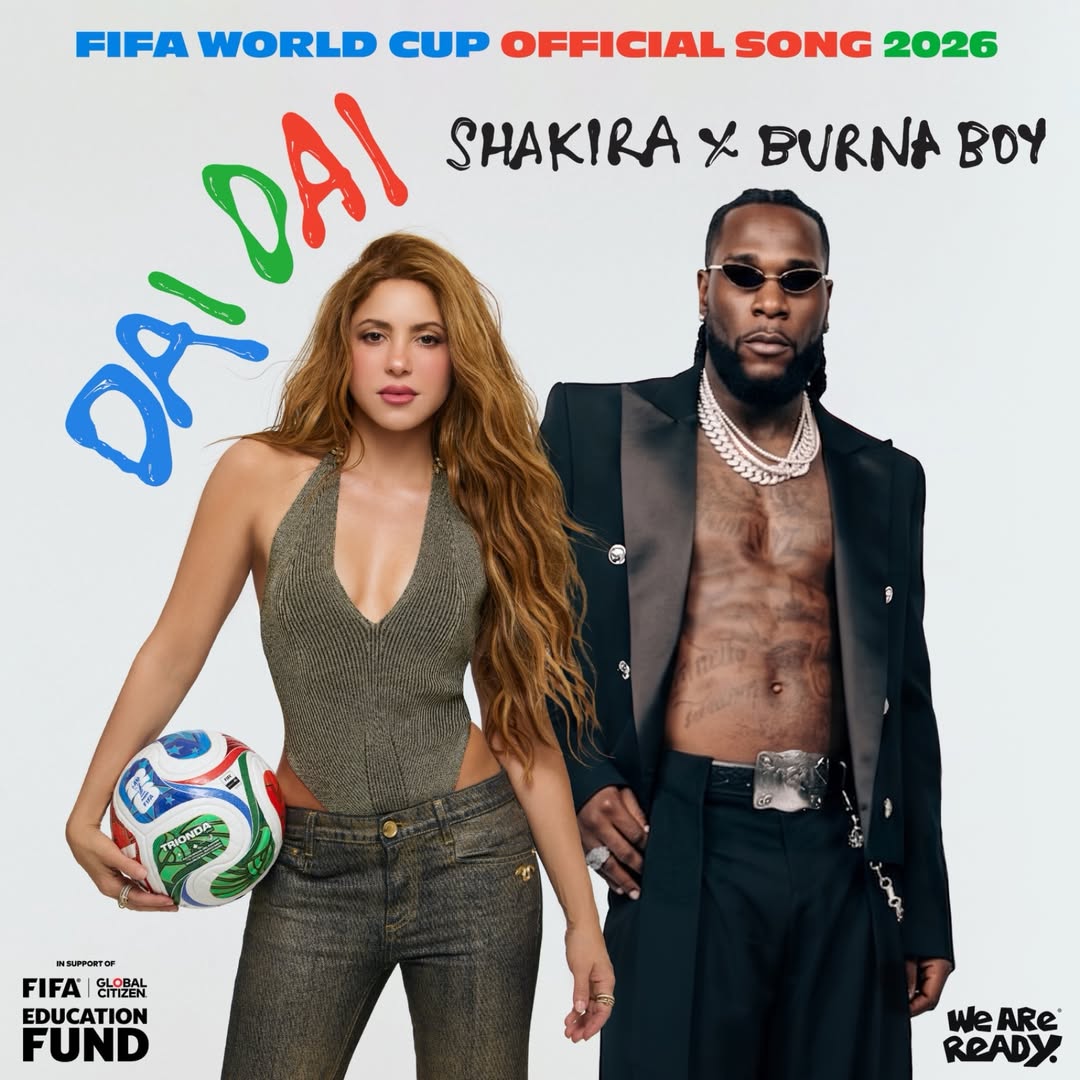
The official promotional artwork for the 2026 FIFA World Cup anthem “Dai Dai,” a historic cross-cultural track by Shakira and Afrobeats icon Burna Boy. Photo Credit: Shakira/Instagram 

If you have been counting down to the World Cup and listening to “Dai Dai” on repeat, the good news is that you can now head straight to Shakira’s YouTube channel to watch the official music video. The Colombian pop icon and Burna Boy have officially dropped the highly anticipated visuals for their mega-collaboration, and it is already pulling in massive numbers online. Directed by Hannah Lux Davis, the video splits its breathtaking scale between the sun-drenched streets of Miami and a stunning sequence with Shakira perched right on top of Mexico City’s iconic Angel of Independence.

While the track is a certified summer bop, the insane star power in this video has everyone talking. Serving as the official anthem for the tournament and the FIFA Global Citizen Education Fund, the visuals feature huge cameos from football royalty. Keep your eyes peeled because Lionel Messi, Kylian Mbappé, Erling Haaland, and Rodri all make major appearances, adding some serious sports authority to the global track.

Colombian singer Shakira smiling on a football pitch at night while holding four colorful FIFA World Cup match balls.

Shakira on set for the “Dai Dai” official music video, celebrating her historic return to the global football tournament stage. Photo Credit: Shakira/Instagram

Despite the multi-million dollar football roster, the absolute heart and soul of the video belongs to Uganda’s phenomenal Triplets Ghetto Kids. The dance troupe is featured heavily right from the opening frames, delivering their unmistakable pace alongside Shakira in a dramatic desert landscape set against a massive Baobab tree.

Their inclusion brings a raw African dance spirit to the screen, completely stealing the show and grounding the video’s theme of global unity. Burna Boy delivers his verses with effortless charisma, showing once again why he is a premier global performer.

Watch below

The post The Ghetto Kids Just Became the Best Part of Shakira & Burna Boy’s New Video for “Dai Dai” appeared first on BellaNaija - Showcasing Africa to the world. Read today!.

  •  

Watch Asake Perform “Gratitude” Alongside a Full Orchestra and Choir

Asake is keeping the momentum moving forward. Fresh off the release of his fourth studio album, “M$NEY,” the superstar has dropped the official music video for “Gratitude.”

Instead of the high-speed street scenes often found in contemporary Afro-fusion visuals, “Gratitude” opts for an intimate live studio-orchestra arrangement. Asake delivers the track from a vintage microphone setup, styled in a silver-studded black leather jacket, dark sunglasses, and a cap. Surrounding him, a group of musicians clad in uniform shades of off-white and cream anchor the layout. Classical violinists and a cellist provide the backing instrumentation alongside a live rhythm section, whilst a saxophonist delivers a solo while completely reclined on a studio mat.

As the track builds, a backing choir dressed in flowing white robes joins hands behind him, elevating the song’s choral Amapiano harmonies to a striking finish.

Lyrically, “Gratitude” serves as a deeply reflective anchor for the “M$NEY” album. Amidst his global success, the track offers a moment of pause—a sincere thank-you note for preservation, growth, and grounding. The acoustic elements of the live orchestra amplify this message, matching the introspective weight of the lyrics with rich instrumentation.

The release also serves as a major announcement. The video wraps up by rolling out the official dates and venues for Asake’s upcoming “In God We Trust World Tour” across North America and Europe, featuring Uncle Waffles as a special guest

Watch below

The post Watch Asake Perform “Gratitude” Alongside a Full Orchestra and Choir appeared first on BellaNaija - Showcasing Africa to the world. Read today!.

  •  

Uganda’s Ghetto Kids to Perform with Shakira at 2026 FIFA World Cup Final Halftime Show

Uganda’s Ghetto Kids dance group pose together in matching green, yellow, and patterned Ankara-inspired outfits. Photo Credit: @ghettokids_tfug/Instagram

Africa’s footprint on the 2026 FIFA World Cup just got even bigger! Colombian pop star Shakira has invited Uganda’s Triplet Ghetto Kids to perform with her at the tournament’s final halftime show.

Shakira shared the news in a video message to fans, explaining her vision to make the performance unique by bringing together different dance talents from around the world. She confirmed that the Ugandan dance group is among those officially invited to join her on stage.

During the show, Shakira is expected to perform “Dai Dai,” the official tournament anthem she recently released featuring our very own Burna Boy.

The Ghetto Kids, founded by Dauda Kavuma in Kampala, have gained international recognition over the past decade for their choreography. The dance group previously featured in French Montana’s “Unforgettable” music video, performed during festivities at the 2022 World Cup in Qatar, and reached the finals of Britain’s Got Talent.

The announcement adds to a strong lineup of African talent confirmed for the tournament. Alongside Burna Boy’s feature on the official anthem, Nigerian singer Rema and South African artist Tyla are scheduled to perform at the opening ceremony at SoFi Stadium in Los Angeles on 12 June.

The 2026 FIFA World Cup Final will take place on 19 July at the New York New Jersey Stadium, where Shakira will co-headline the halftime show alongside Madonna and BTS.


View this post on Instagram


A post shared by Shakira (@shakira)

The post Uganda’s Ghetto Kids to Perform with Shakira at 2026 FIFA World Cup Final Halftime Show appeared first on BellaNaija - Showcasing Africa to the world. Read today!.

  •  

Tems Leads Nigerian Artists in BET Awards 2026 Nominations Alongside Wizkid, Burna Boy & Asake

close-up red carpet portrait of Nigerian singer Tems featuring a voluminous wavy bob hairstyle, a dramatic winged eyeliner look, and a deep glossy ombré lip, wearing a textured black high-neck gown with silver jewelry.

Tems leads the African contingent at the 2026 BET Awards with three major nominations, including Best Female R&B/Pop Artist. Photo Credit: Tems/Instagram

BET has dropped the nominations for its 2026 ceremony and Nigerian music is, once again, all over the list. Tems, Wizkid, Burna Boy, and Asake have all secured nominations for this year’s show, which holds on Sunday, 28 June 2026 at the Peacock Theatre in Los Angeles, hosted by comedian Druski.

Tems leads the Nigerian contingent with three nominations, making her the most nominated African act this year. She is up for Best Female R&B/Pop Artist alongside SZA, Olivia Dean, Mariah the Scientist, Kehlani, Jill Scott, Ella Mai, Coco Jones, and Ari Lennox. She also picks up a BET Her Award nomination for her song “First,” and a Viewers’ Choice nomination for “Raindance,” her collaboration with British rapper Dave.

Wizkid and Asake earned a joint nomination in the Best Group category for their collaborative project and string of chart-topping releases together, including tracks from their joint Real EP. Burna Boy rounds out the Nigerian music nominations with a Best Collaboration nod for “WGFT,” his feature on Gunna’s hit single from the 2025 album “The Last Wun.” Beyond music, stars of Nigerian heritage also feature prominently in the acting categories — Ayo Edebiri and Cynthia Erivo are both nominated for Best Actress, while Damson Idris received a Best Actor nomination.

South African star Tyla earned two nominations: Video of the Year and Viewers’ Choice for her track “Chanel.” Leading the overall nominations is Cardi B with six nods, followed by Kendrick Lamar and Mariah the Scientist with five each. This year also introduces two new categories — the Fashion Vanguard Award and the Pulse Award. The 2026 BET Awards air live on 28 June at 8pm ET/PT on BET, with simulcast across BET HER, MTV, VH1, Comedy Central, and several other Paramount networks.

See the full nominees list below for the music category

Album of the Year

  • AM I THE DRAMA? — Cardi B
  • DON’T TAP THE GLASS — Tyler, the Creator
  • everything is a lot. — Wale
  • HEARTS SOLD SEPARATELY — Mariah the Scientist
  • Let God Sort Em Out — Clipse
  • MUTT Deluxe: HEEL — Leon Thomas
  • The Fall-Off — J. Cole
  • The Romantic — Bruno Mars

Best Female R&B/Pop Artist

  • Ari Lennox
  • Coco Jones
  • Ella Mai
  • Jill Scott
  • Kehlani
  • Mariah the Scientist
  • Olivia Dean
  • SZA
  • Tems

Best Male R&B/Pop Artist

  • Brent Faiyaz
  • Bruno Mars
  • Bryson Tiller
  • Chris Brown
  • Durand Bernarr
  • GIVÄ’ON
  • Leon Thomas
  • October London
  • Usher

Best Female Hip Hop Artist

  • Cardi B
  • Coi Leray
  • Doechii
  • Doja Cat
  • GloRilla
  • Latto
  • Megan Thee Stallion
  • Monaleo
  • YK Niece

Best Male Hip Hop Artist

  • A$AP Rocky
  • Baby Keem
  • BigXthaPlug
  • DaBaby
  • Don Toliver
  • Drake
  • J. Cole
  • Kendrick Lamar
  • T.I.

Best Group

  • 41
  • Clipse
  • De La Soul
  • FLO
  • French Montana & Max B
  • Metro Boomin & DJ Spinz
  • Nas & DJ Premier
  • Terrace Martin & Kenyon Dixon
  • Wizkid & Asake

Best Collaboration

  • “Chains & Whips” — Clipse & Kendrick Lamar
  • “Errtime Remix” — Cardi B feat. Jeezy & Latto
  • “Go Girl” — Summer Walker feat. Latto & Doja Cat
  • “Good Flirts” — Baby Keem feat. Kendrick Lamar & Momo Boyd
  • “Is It a Crime” — Mariah the Scientist & Kali Uchis
  • “It Depends (The Remix)” — Chris Brown feat. Bryson Tiller & Usher
  • “Take Me Thru Dere” — Metro Boomin feat. Quavo, Breskii, YK Niece & DJ Spinz
  • “wgft” — Gunna feat. Burna Boy

Best New Artist

  • Belly Gang Kushington
  • DESTIN CONRAD
  • JayDon
  • kwn
  • Miles Minnick
  • Monaleo
  • Olivia Dean
  • RAYE
  • Trap Dickey

Dr. Bobby Jones Best Gospel/Inspirational Award

  • “Able” — Kirk Franklin
  • “ABLE (REMIX)” — Darrel Walls, PJ Morton & Kim Burrell
  • “All to Thee” — BeBe Winans
  • “Already Good (Tasha Slide)” — Tasha Cobbs Leonard
  • “At the Cross” — CeCe Winans
  • “Church” — Tasha Cobbs Leonard & John Legend
  • “Do It Again” — Kirk Franklin
  • “Headphones” — Lecrae, Killer Mike & T.I.

BET Her

  • “Already Good (Tasha Slide)” — Tasha Cobbs Leonard
  • “Be Great” — Jill Scott feat. Trombone Shorty
  • “Beautiful People” — Jill Scott
  • “First” — Tems
  • “girl, get up.” — Doechii feat. SZA
  • “Go Girl” — Summer Walker feat. Latto & Doja Cat
  • “Gorgeous” — Doja Cat
  • “Lady Lady” — Olivia Dean

Viewers’ Choice

  • “Burning Blue” — Mariah the Scientist
  • “Chains & Whips” — Clipse feat. Kendrick Lamar
  • “Chanel” — Tyla
  • “Folded” — Kehlani
  • “I Just Might” — Bruno Mars
  • “It Depends” — Chris Brown feat. Bryson Tiller
  • “Man I Need” — Olivia Dean
  • “Outside” — Cardi B
  • “Raindance” — Dave & Tems
  • “Take Me Thru Dere” — Metro Boomin feat. Quavo, Breskii, YK Niece & DJ Spinz

Video of the Year

  • “100” — Ella Mai
  • “Anxiety” — Doechii
  • “Burning Blue” — Mariah the Scientist
  • “Chanel” — Tyla
  • “Escape Room (Short Film)” — Teyana Taylor
  • “Folded” — Kehlani
  • “LET ‘EM KNOW” — T.I.
  • “luther” — Kendrick Lamar & SZA

Video Director of the Year

  • A$AP Rocky & Dan Streit
  • Anderson .Paak
  • Benny Boom
  • Cactus Jack
  • Cardi B & Patientce Foster
  • Cole Bennett
  • Director X
  • Hype Williams
  • Teyana “Spike-Tey” Taylor

The post Tems Leads Nigerian Artists in BET Awards 2026 Nominations Alongside Wizkid, Burna Boy & Asake appeared first on BellaNaija - Showcasing Africa to the world. Read today!.

  •