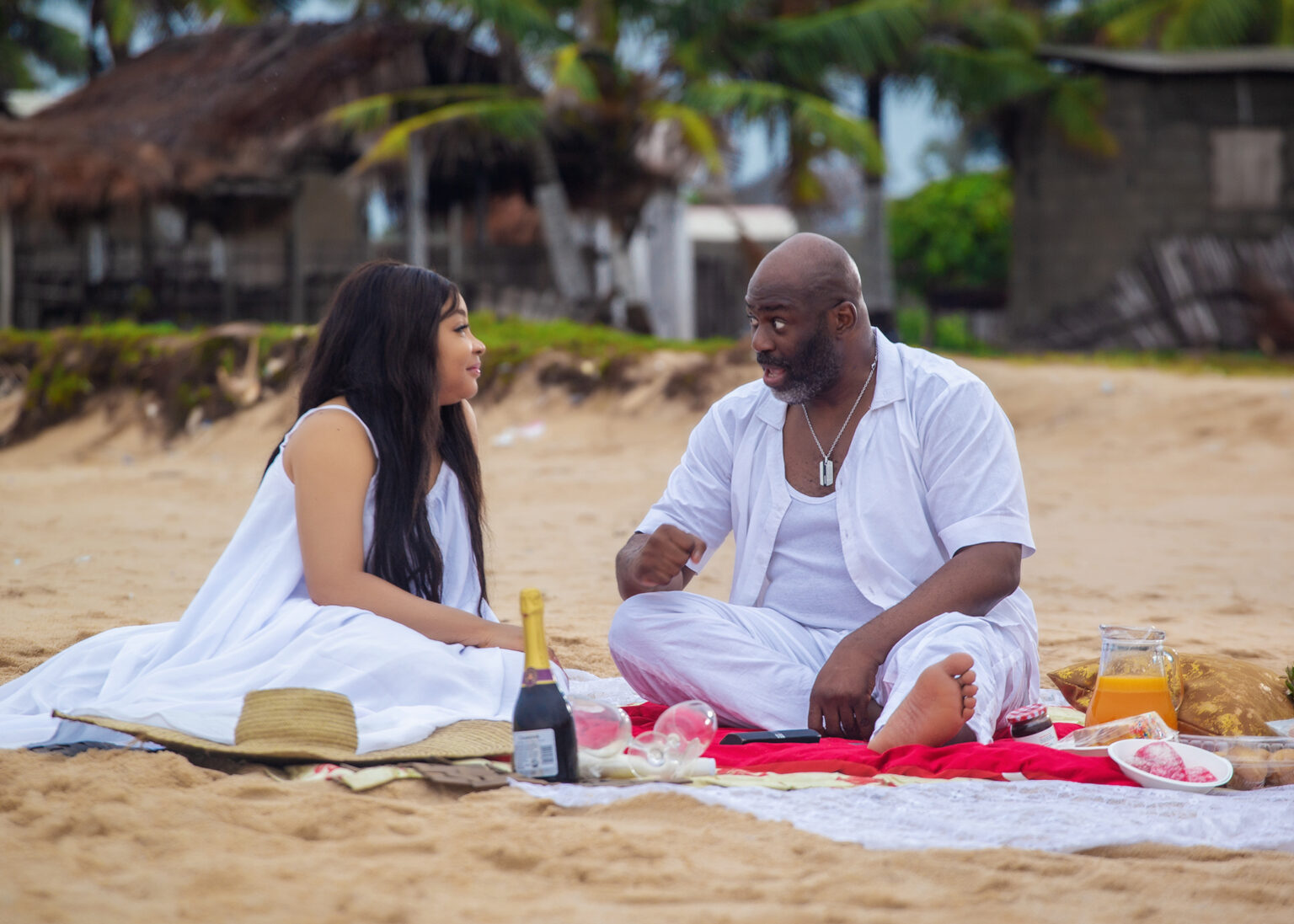
BANDE ANNONCE du film: Almost Cops Artistes: Jandino Asporaat, Werner Kolf, Florence Vos Weeda, Ferdi Stofmeel, Ergun Simsek, Juliette van Ardenne, Stephanie van Eer
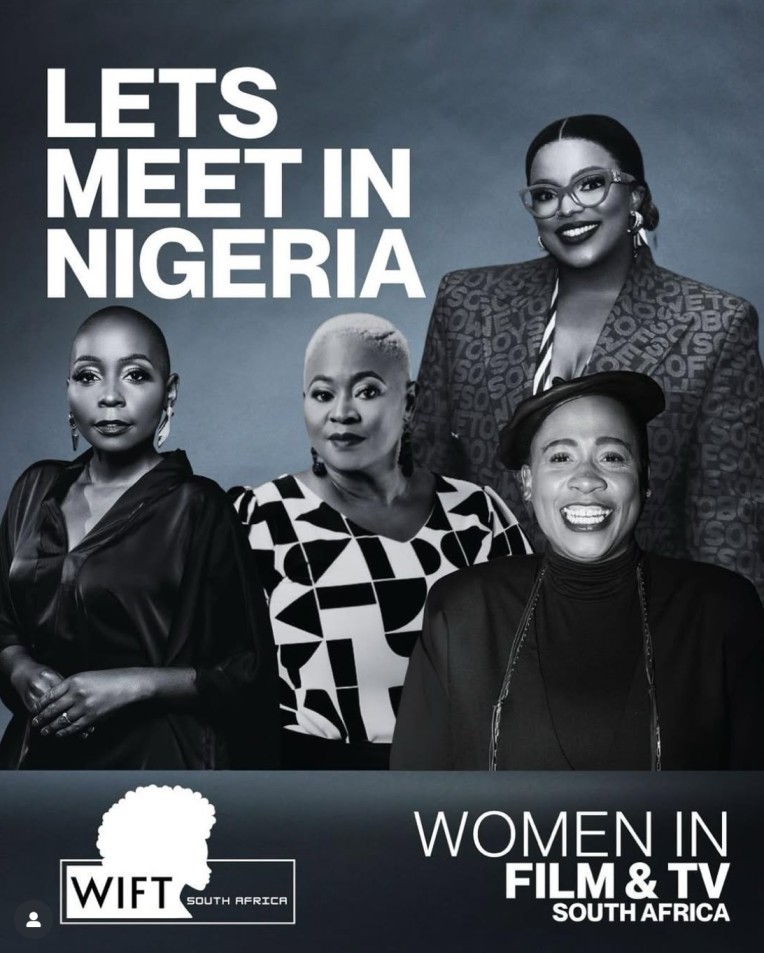
WIFT South Africa becomes part of a sisterhood of more than 50 chapters worldwide, united in their mission to reshape industries and champion women’s creative contributions.
By Emmanuel ‘Waziri’ Okoro
Women in Film and TV South Africa (WIFT South Africa) has officially launched, marking a major step in empowering women across the country’s film, television, and creative sectors.Â
The organisation joins the Women in Film and Television International (WIFTI) network, which spans more than 60 chapters across six continents, all working towards a common goal of achieving gender balance in the industry.
The South African chapter is led by writer and director, Athi Petela, who serves as its first president. She is supported by a founding leadership team that includes Actor Spaces Co-Founder, Felicia Naiwa Sithebe (Programmes Lead), Hayani Africa Managing Director, Tumelo Moema (Head of Communications), and business consultant and entrepreneur, Andile Mqwebu (Outreach Lead).Â
Together, they are building a platform designed to foster opportunity, drive inclusivity, and create sustainable careers for women in the creative industries.
“Our mission is to build bridges across the continent and beyond,†Petela said. “It is about creating pathways for women to thrive, telling stories that reflect our diverse realities, and ensuring women are not just part of the conversation but at the forefront of shaping the future of film and television.â€
The chapter’s launch comes as Petela prepares to represent South Africa at the Women in Film and TV Conference, a flagship event of the Africa Creative Market. The conference, themed “Creative Bridge: Empowering Talent, Accessing Ecosystems, Unlocking Marketsâ€, takes place on 16 September 2025 at the Landmark Event Centre in Lagos, Nigeria.
She will appear alongside influential WIFT leaders from across the continent, including:
Njoki Muhoho, President, WIFT Kenya
Joke Silva, President, Forum for Women in Film and TV Africa (FWIFT Nigeria)
Fatou Jupiter Toure, President, WIFT Senegal
Juliet Ibrahim, President, WIFT Ghana
Tatapong Bayela, Vice President, WIFT Cameroon
The session will be moderated by Inya Lawal, President of WIFT Africa. While WIFT South Africa will host its official launch event in November at the Africa Rising International Film Festival, its presence at the Africa Creative Market signals the start of a strategic programme aimed at empowering women through mentorship, training, and leadership development; advocating for equity and representation across the creative value chain; unlocking markets to help women creators access funding, platforms, and audiences, and more.
By joining WIFT International’s global network, WIFT South Africa becomes part of a sisterhood of more than 50 chapters worldwide, united in their mission to reshape industries and champion women’s creative contributions.
“I am the one who takes the little stories from friends in the neighborhood and adds my own twists to make them more captivating, more hilarious, or more dramaticâ€. – Achille Ronaimou
By Jerry Chiemeke
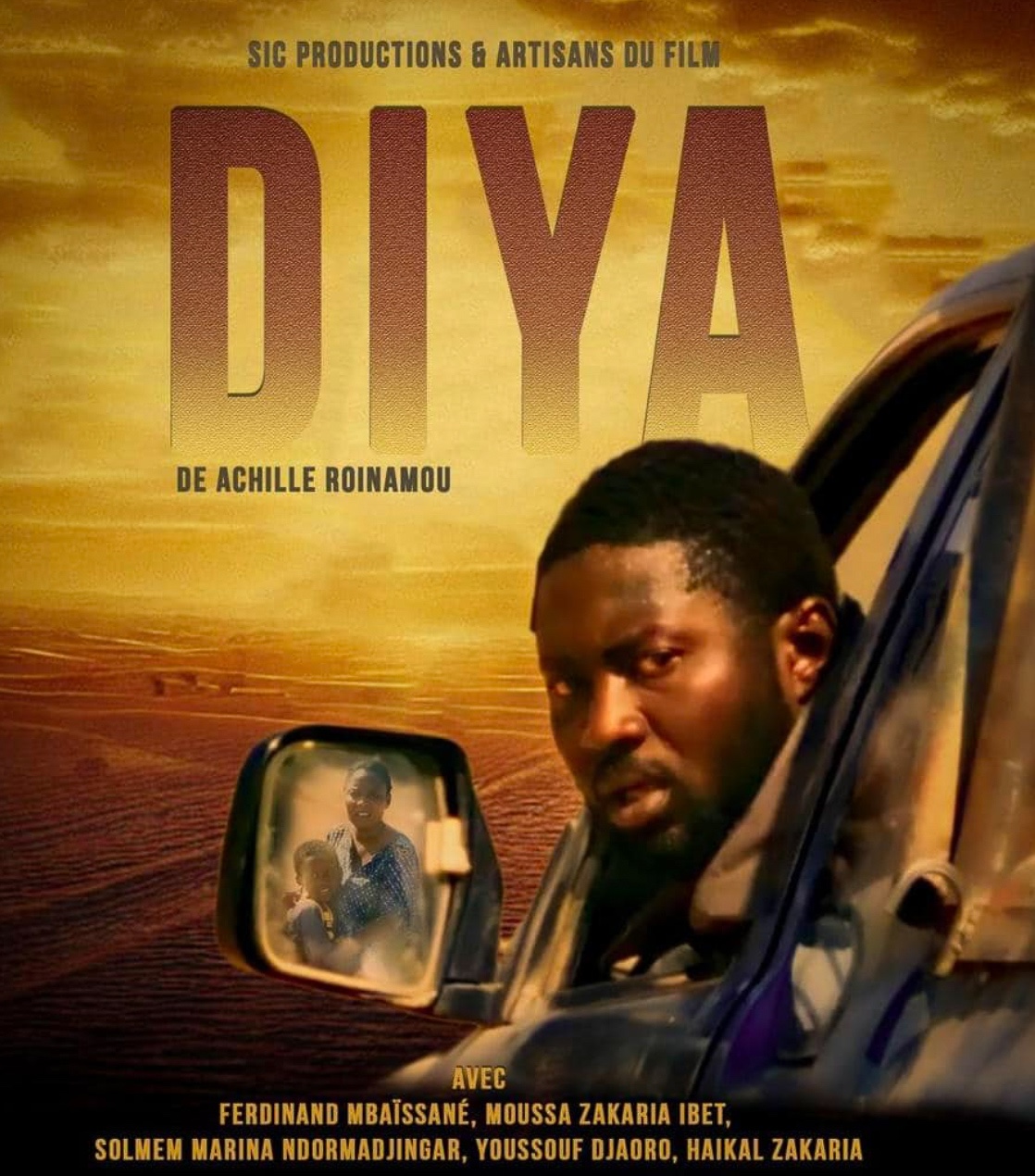
In his feature debut, Diya (Le Prix Du Sang), Achille Ronaimou crafts a morally complex drama that interrogates the collision between ancient customs and modern realities in contemporary Chad.Â
Dismissed from his job, stripped of his licence, and unable to secure employment due to his criminal record, Dane becomes a study in systemic failure. Ronaimou resists easy moralising, instead presenting a society where corruption, poverty, and rigid adherence to custom create seemingly impossible choices.Â
The film’s exploration of the Diya system proves particularly valuable in contemporary African cinema, where traditional justice mechanisms are often portrayed in simplistic terms. Achille Ronaimou avoids both romanticising and demonising the practice, instead presenting it as one element in an intricate web of social, economic, and political relationships that determine individual fate.Â
Diya
While the film occasionally overreaches in its ambitions, its commitment to moral complexity and its refusal to provide comfortable resolutions mark it as a noteworthy first feature.Â
In an exclusive interview with Afrocritik, Achille Ronaimou reflects on the events that inspired writing Diya, locations as characters in film, rigid traditional practices, and the use of cinema to alter perceptions of the African continent.
Diya, in the context of this story, translates to “the price of bloodâ€. Can you walk us through your decision to render this concept both as your film’s title and its central moral dilemma?Â
Interestingly, I never thought of any title other than Diya. I found this title even before I started writing the script. The first versions of my script tackled the subject from a rather violent angle, to the point of offending the sensitivities of some readers who believed that the film could provoke strong emotions in the Muslim community, which is very sensitive to religious issues, and label me as an anti-Islam filmmaker.Â
That’s because, indeed, Diya in Chad is a poor translation of the surah ‘Al-Nissat’ from the Quran. Therefore, for me, Diya, the price of blood, is exactly the title that will resonate best for this film. Even though the script was revised several times to produce this current version, the depth of the content has remained the same.
Achille Ronaimou
How did you first encounter this story that would become your feature debut?
During a family ceremony, a cousin of mine, long consumed by guilt, decided to confide in me. He told me that he killed a 10-year-old child. Several years later, he was scammed and ruined by the latter’s family, in the name of the Diya. In Chad, 7 out of ten people are directly or indirectly victims of this practice called Diya or blood money.Â
Hence, it’s a practice known to all, but the story of this cousin in particular touched me so much because it is the death of a child, an innocent person who pays a high price. One morning in January 2015, I set out to write the first draft of the script.
This is your first feature after directing shorts and documentaries. How did your documentary work on Minors in Prison (2013) and Kanoun (2012) inform your approach to bringing Diya to life?
My initiation to cinema through documentary was very decisive for the continuation of my career. Before that, I wrote short stories that, unfortunately, never got published; I love imaginative creation. I am the one who takes the little stories from friends in the neighborhood and adds my own twists to make them more captivating, more hilarious, or more dramatic. I have always loved writing, and documentary filmmaking has equipped me with another narrative channel because I can now combine both in my narratives, which are mostly scripted real events.
N’Djamena and Northern Chad almost become characters themselves in this story. How did you use geography and location to reflect the cultural and economic divides at play?
Diya is primarily a story of geography and religious confession. The setting and attire are characters in their own right. Following a civil war in 1979 in Chad, pitting southern Christians against northern Muslims, the population remained divided and dispersed according to their geographic and religious affiliations.Â
Thus, in N’Djamena, there are northern neighborhoods inhabited by Muslims, characterised by religious austerity, where one can hear the calls of the muezzin for the 5am daily prayers.Â
Women are all veiled and covered from head to toe, and men wear long boubous. However, in the southern neighborhoods inhabited by Christians, one will find bars, nightclubs, churches, and men and women proudly strolling the streets in Western attire. Therefore, one can never speak of Diya without referencing these very important details.
I was looking for a broken man, a sober man, intelligent but crushed under the weight of society. Ferdinand was that young man among others who reflected this image a bit. He was recommended to me by my first assistant, Cyril Danina, for whom he acted in one of his films over 15 years ago. We still had to work on him a little bit, especially with his acting. For almost a year, we worked with him so that he would be more comfortable in the character of Dane.Â
Working with (cinematographer) Cyrille (Hubert) and (editor) Guillaume (Talvas), how did you create the tension, dread, and chaos that mirror Dane’s psychological state?
Cyrille Hubert is a gem. I would say that the gods of cinema were with me (laughs). They sent me Cyrille from Heaven. I did not expect to have such a young, brilliant, and brave director of photography on set. It was his first time filming in Africa and in Chad where it’s over 40 degrees celsius in the shade.Â
Just like me, it was also his first feature film as a director of photography, but he had more field experience than I did. He fell in love with the script from the first reading and committed to shooting it by my side. He followed the script to the letter, and it hurt him every time I had to modify or remove a scene. He continually proposed a thousand angles for each shot, giving us multiple options in the editing room.Â
By having Ferdinand rehearse the scenes repeatedly, we ended up exhausting him, which sometimes isn’t a bad thing because that’s exactly when he can express the tension, fear, or chaos we’re looking for. I learned a lot from Cyril, and I would like to work with him again on my upcoming projects.
Guillaume Talvas is a very meticulous, rigorous, and creative editor; with him, we rewrote the script, focusing more on the psychology of the characters. He was the one who succeeded in bringing out Dane’s chaotic side on screen. I agreed with almost all his editing suggestions. Starting with a 150-minute rough cut, Guillaume did a remarkable job meticulously combing through every sequence to achieve a final film of 96 minutes, which is more fluid and dynamic.
The film poses questions about what really passes for good and evil. Without spoiling the ending, how do you want audiences to grapple with Dane’s ultimate choices?
I want the public to rise to the level of Dane’s spiritual maturity. After all he has endured in the name of Diya, it would have been legitimate for him to take revenge or to denounce his captors to the authorities. Instead, he chooses forgiveness. By handing little Younous back to his father, Dane breaks the chain of violence and vendetta. He rises above human baseness.
The ancient law of retaliation meets modern legal systems in your film. What does this collision reveal about justice in contemporary African societies?
Most Chadians and Africans wonder how such a practice can survive in the current era, where justice and human rights are known even to children. Diya is normalised, and Chadian authorities agree to concessions for its application. A practice that was originally intended to reconcile communities and avoid reprisals has today become a means of fraud and domination of the strong over the weak.Â
Thus, a murderer can pay the Diya to the family of the deceased and be free from any legal pursuit. It is a true social tragedy that outrages new African societies.
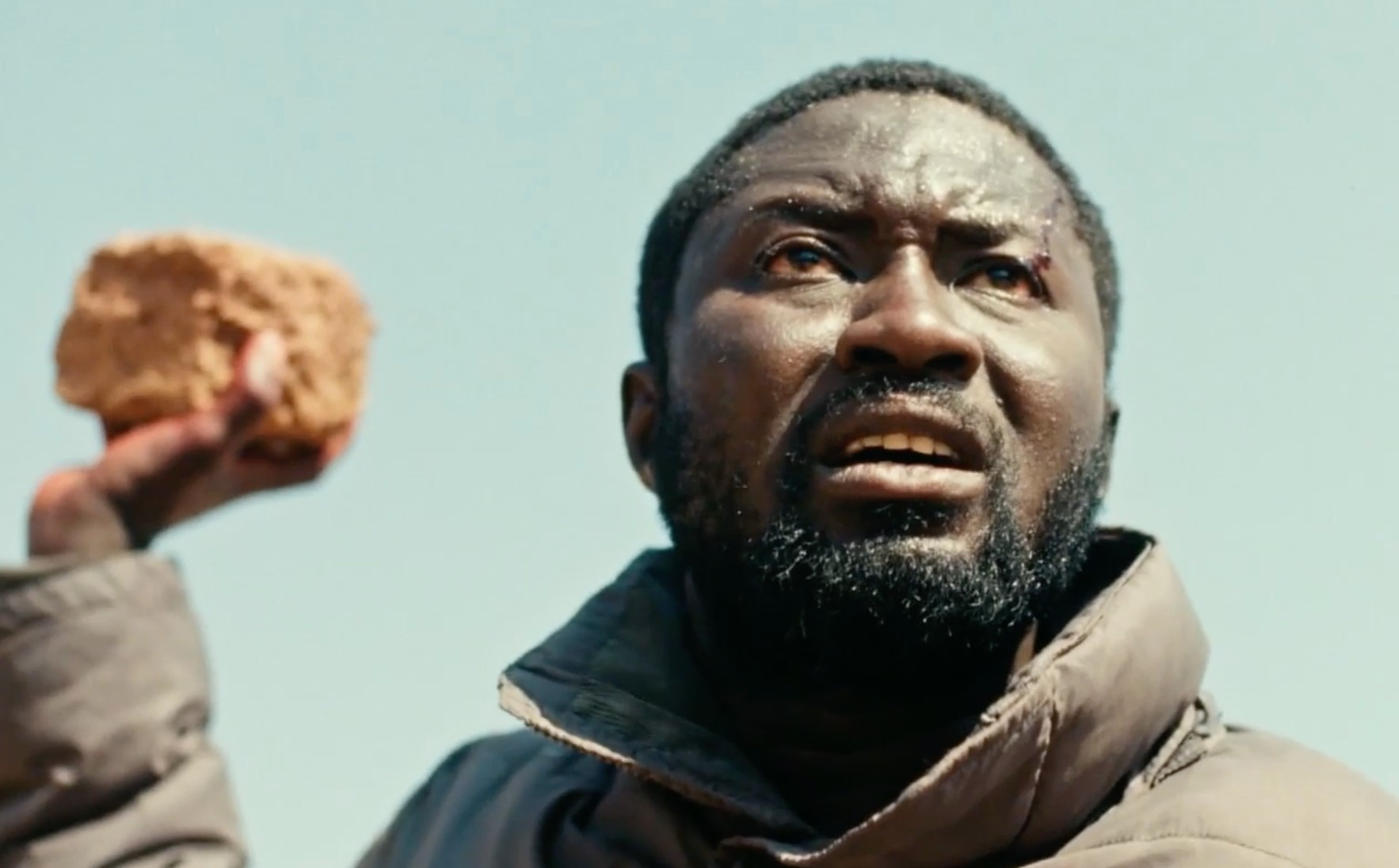
Still from Diya
Diya is distributed by Canal+ and produced by Sic Productions and Artisans Du Film. How important was this partnership in bringing authentic Chadian stories to wider audiences?
It is a beautiful collaboration that opens a global window on Chadian cinema, which is still unknown to the international public. I believe that I will be able to collaborate with Sic Productions for a long time; it’s one of the few Chadian production companies that has the vision of a revolutionary African cinema.
Looking beyond Diya, how has this feature debut shaped your vision for future projects? What stories are you burning to tell next?
This first feature film, recently praised by the public at TIFF, made me realise that there are things worth discussing. Where politicians have failed and tarnished the image of Africans, cinema can correct this by shedding light on it.Â
Thus, I want to continue along the same lines by addressing a topic as burning as the Diya. It concerns the conflict between farmers and herders, which is a conflict skillfully perpetuated by African leaders to keep the populations divided.Â
Livestock and agriculture have been the two nourishing pillars of Africans since time immemorial; they must be nurtured and energised, not hindered in their development through an endless conflict.
Jerry Chiemekeis a Nigerian-born writer, film critic, journalist, and lawyer based in the United Kingdom. His writing has appeared in Die Welt, The I Paper, The Africa Report, The British Blacklist, Berlinale Press, The Johannesburg Review of Books, Culture Custodian, Olongo Africa, and elsewhere. Chiemeke’s work has won or been nominated for the Pushcart Prize, Ken Saro Wiwa Prize, Diana Woods Memorial Award for Creative Nonfiction, Best Small Fictions, and the Quramo Writers Prize. He is the author of the critically-acclaimed short story collection, Dreaming of Ways to Understand You.
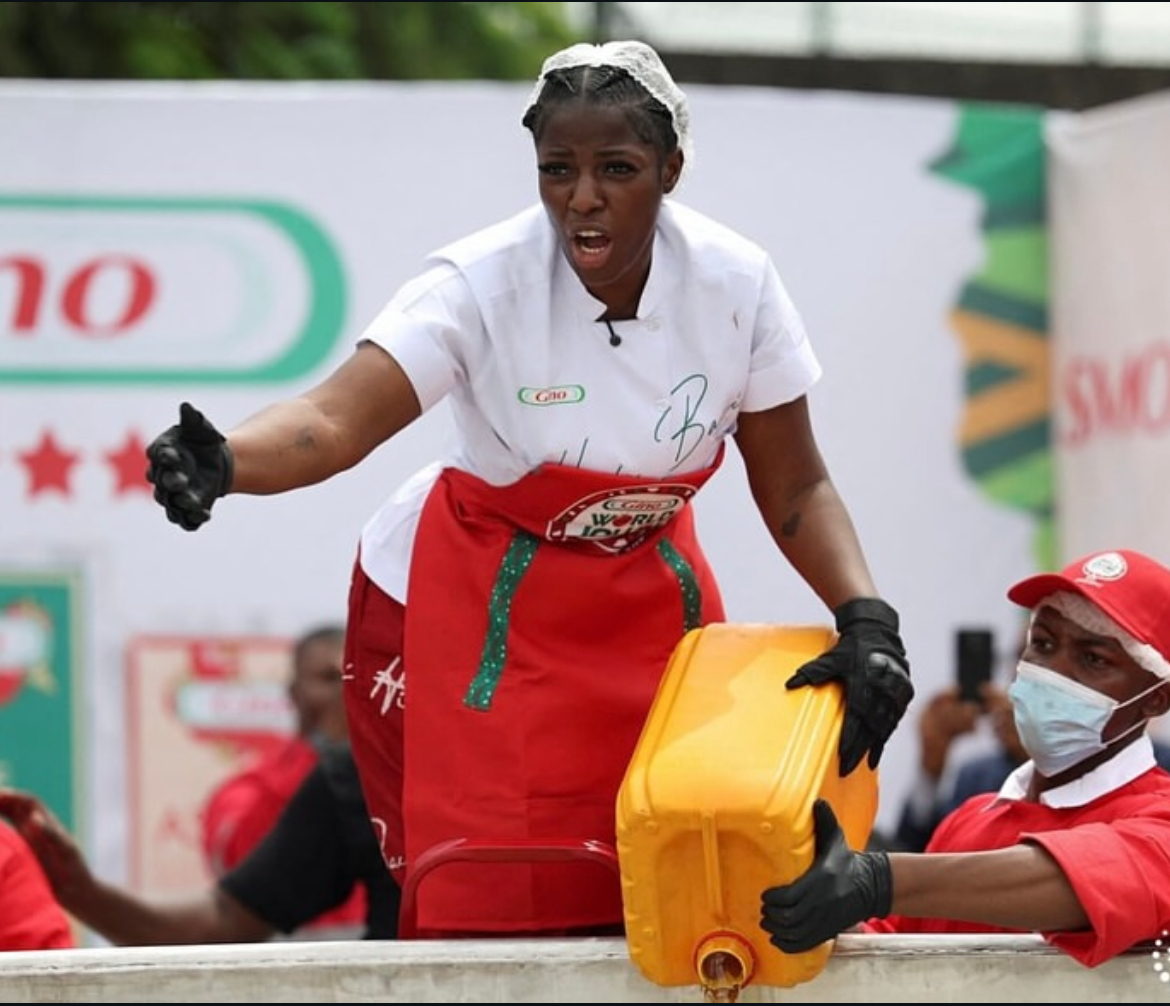
Hilda Baci, who first gained global recognition in 2023 with her marathon cook-a-thon, once again showcased Nigerian cuisine on the international stage.
By Abioye Damilare Samson
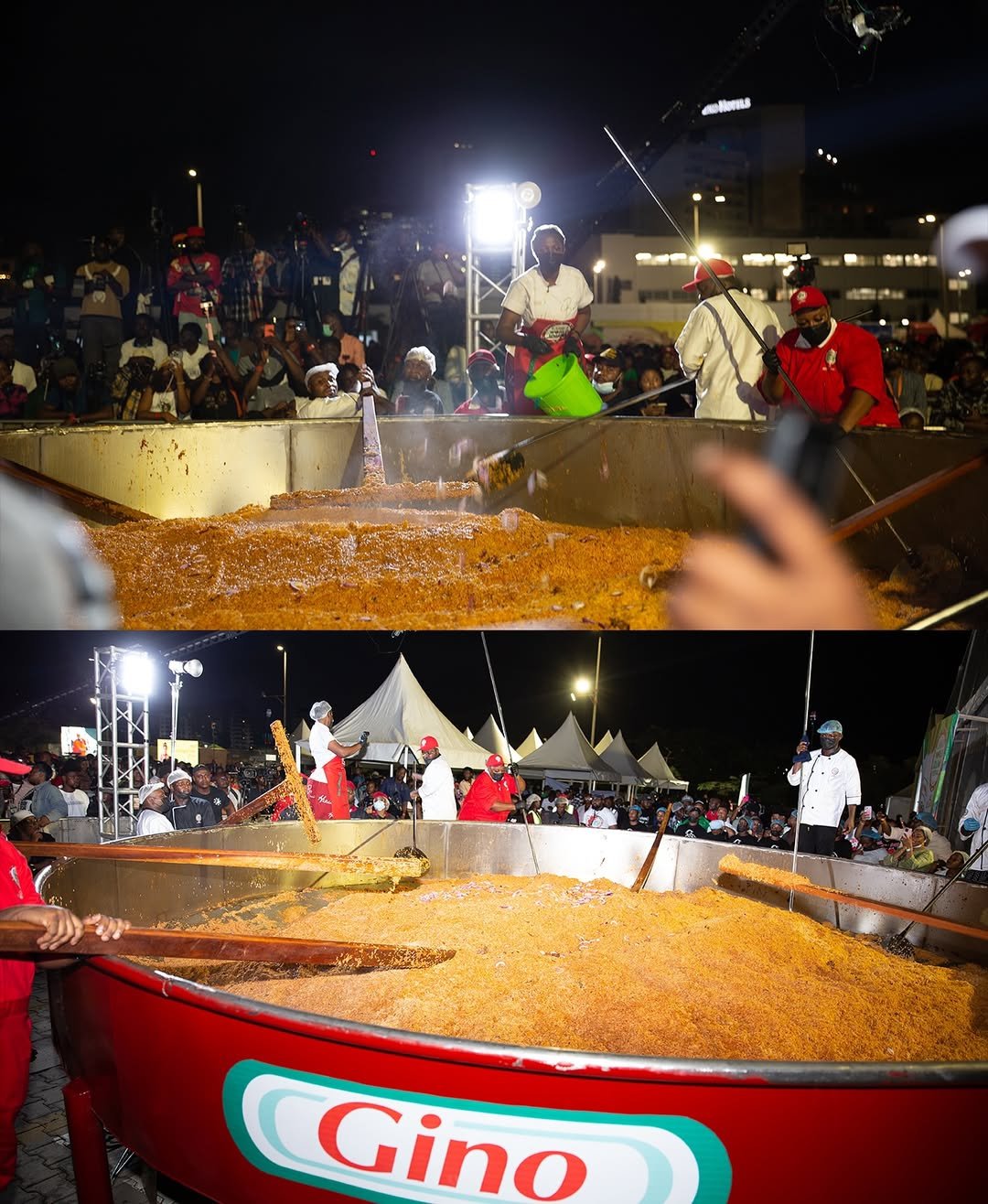
Nigerian celebrity chef, Hilda Baci, has set a new Guinness World Record for the largest serving of Nigerian-style jollof rice, weighing 8,780 kilogrammes.
The achievement, accomplished in partnership with food brand Gino, took place on Friday, September 12, at the Eko Hotel and Suites, Victoria Island, Lagos, and drew a massive crowd of supporters, celebrities, and food enthusiasts. Among those in attendance were dancer Kaffy, filmmaker Funke Akindele, singer Spyro, and digital influencers Enioluwa and Folagade Banks, alongside other high-profile guests.
Hilda Baci
Guinness World Records confirmed the feat on Monday through a post on X (formerly Twitter): “New record: Largest serving of Nigerian-style jollof rice – 8,780 kg (19,356 lb 9 oz) achieved by Hilda Baci and Gino in Victoria Island, Lagos, Nigeriaâ€.
Largest Serving of Nigerian Jollof Rice
Hilda Baci, who first gained global recognition in 2023 with her marathon cook-a-thon, once again showcased Nigerian cuisine on the international stage. Celebrating the achievement on social media, Hilda Baci wrote, “This moment isn’t just mine, it belongs to Gino and to all of us. We made history together for Nigeria, for Africa, and for everyone who believes in the power of food to bring us closer. This win is yours tooâ€.
With this accomplishment, Hilda Baci further strengthens her reputation as one of Nigeria’s most prominent chefs and cultural ambassadors, spotlighting the global appeal of Nigerian food culture.
“The notion of resistance always having to be loud, glorious, and heroic comes from the fantasies of people who have never actually had to fight for anything. Effective resistance is often quiet, careful, and requires a delicate balance.†– Zamo Mkhwanazi
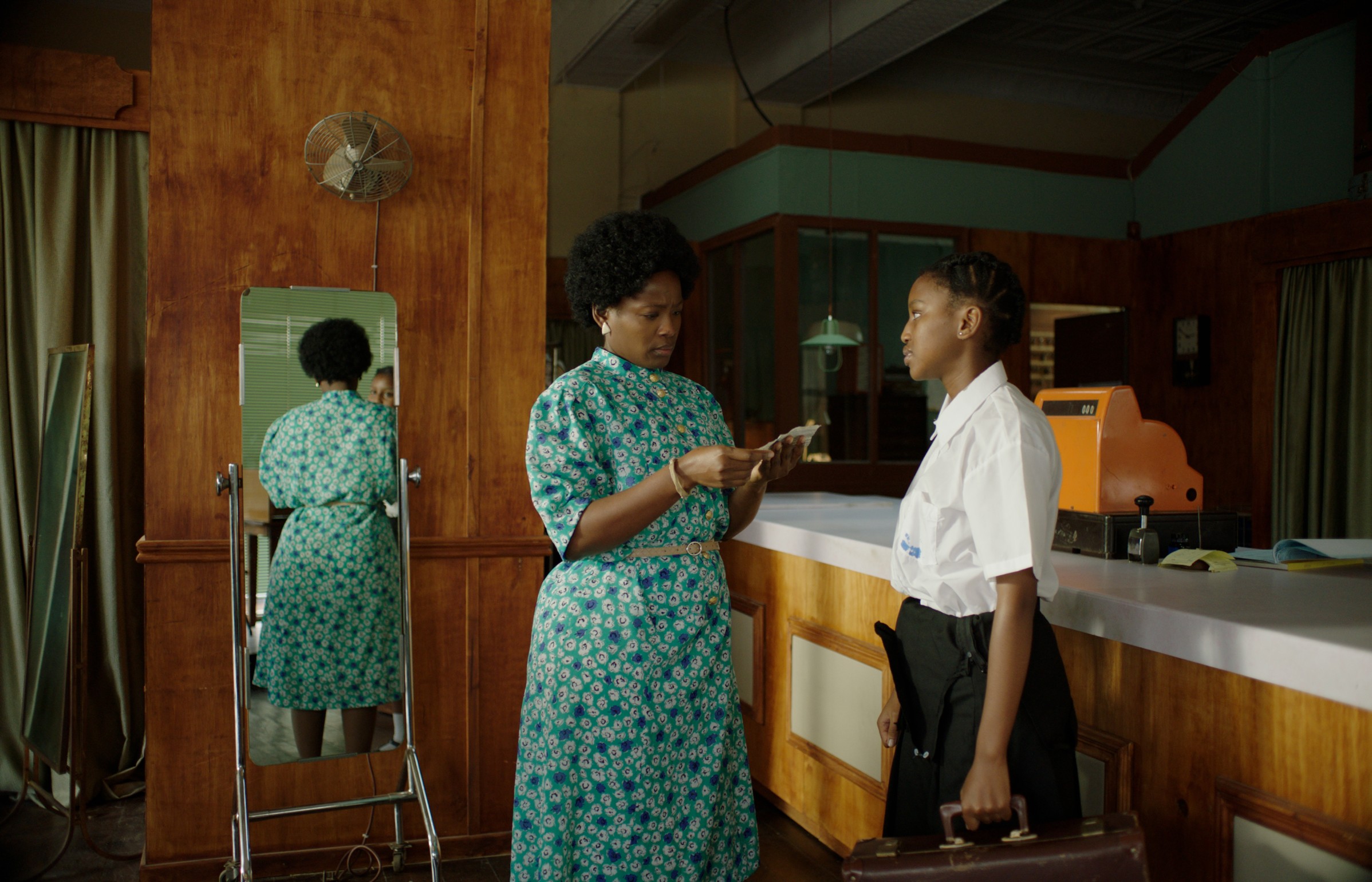
The film emerges from the painful story of Mkhwanazi’s grandfather, whose thriving laundry business in Durban was seized when the apartheid government consolidated its grip on power. This gaping wound becomes the foundation for a quietly devastating portrait of a Black family navigating the precariousness of operating within, but never truly belonging to, the violently stratified world of 1960s South Africa.
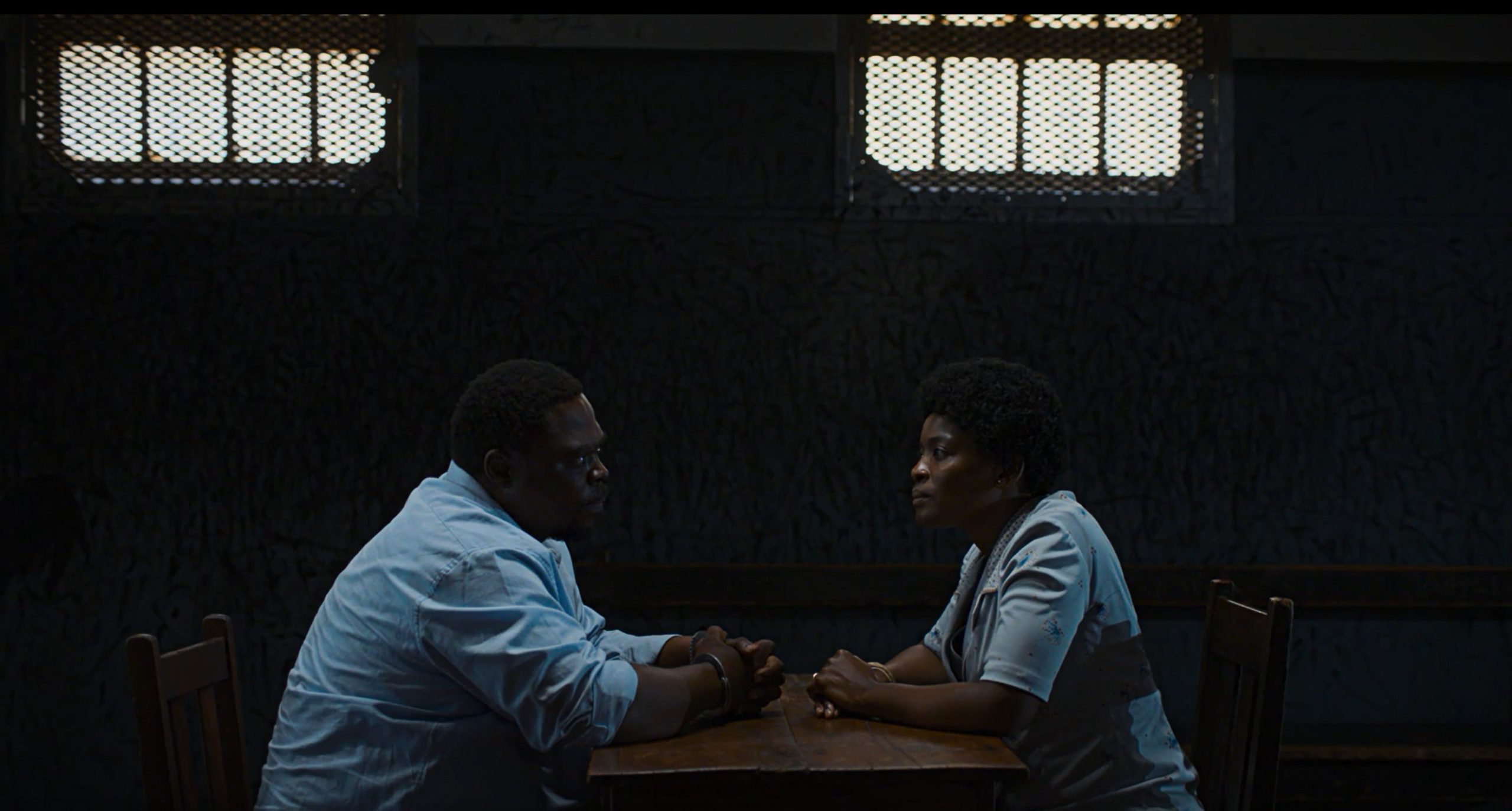
Set against the backdrop of apartheid’s tightening noose, Laundry centres on the Sithole family’s laundry business, granted rare permission to operate in a whites-only area of town. Patriarch Enoch (Siyabonga Shibe) walks a careful line between protecting his family’s fragile foothold and contending with his son Khuthala’s (Ntobeko Sishi) dreams of musical stardom.Â
When Enoch faces imprisonment, the family’s survival depends on choices that pit pragmatic endurance against creative freedom.
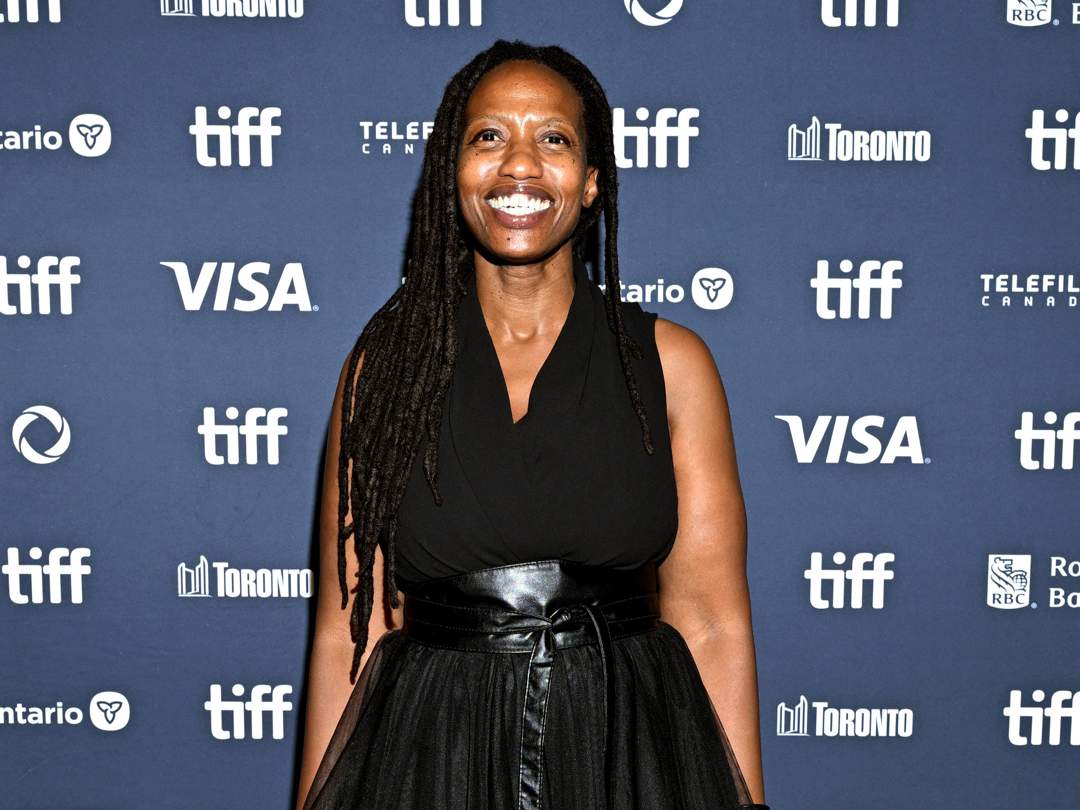
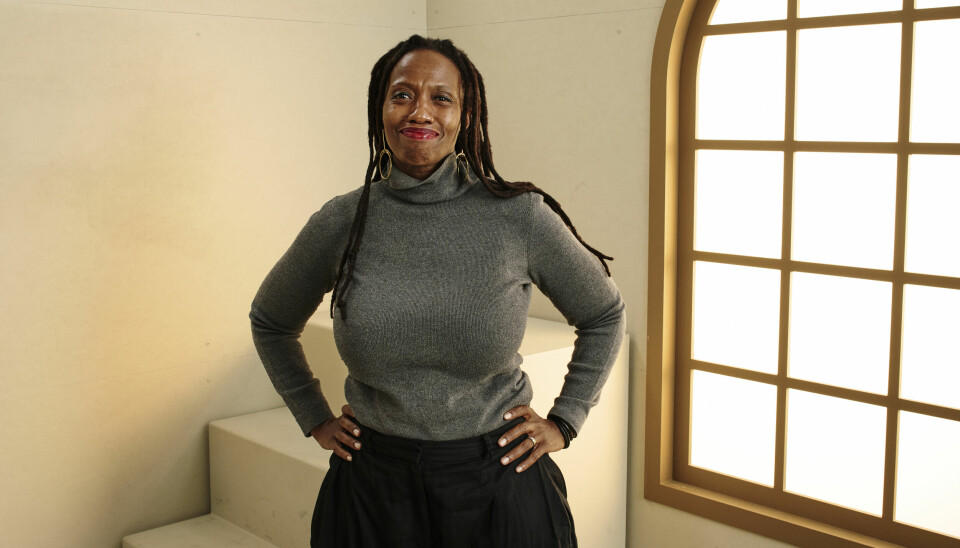
Zamo Mkhwanazi at the premiere of “Laundry†at the 2025 Toronto International Film Festival
“Prosperous black men like my grandfather were an unwelcome challenge to the myths of white superiorityâ€, says Mkhwanazi. “This film is my way of not being silent. It is the story rarely told in the glorification of the struggle heroes. It is about the smaller moments that take place in the midst of the great injusticesâ€.
Building on her extensive background in South African television and her internationally acclaimed short films, Mkhwanazi brings both intimate knowledge and artistic sophistication to this project. Her approach treats the laundry itself as a character: the steam-filled back rooms reflecting confusion and uncertainty, while the incandescent front space embodies the family’s determination to maintain control.
In an exclusive conversation, Afrocritik caught up with Mkhwanazi during the Festival to discuss stylistic choices, Black joy, the deployment of music in filmmaking, creating story worlds, and the exploration of resistance in African cinema.
Where does this film come from? Describe the combination of ideas and/or real-life experiences that culminated in the birth of Laundry as a screenplay.
My grandfather owned a laundry in Durban, South Africa, and when the apartheid government came into power, the laundry was taken from him.Â
Laundry
What conversations, if any, did you have with surviving family members about their experiences during Apartheid, and how did those inform the authenticity of this film?
Many. The choices of my mother’s family members were limited after these events, and I made sure to place some of these limitations on the characters in the film. Some of the phrases used by white characters are direct quotes that have been said to my family members.Â
Music is very important to South Africans, and the stories around how music was made, the places it was played, and the characters that inhabited that world filled out a lot of people for me. The limitations placed on African women that essentially relegated them to the status of children were something my mother navigated directly.Â
Laundry captures the perennial shadow of oppression that pervaded that era while maintaining moments of joy and hope. How do you navigate showing systemic brutality without letting the film fall into some sort of “joylessness�
It is surprisingly not difficult for me as a South African. Black rebellion in South Africa has always had an element of the joyful. In the words of Steve Biko, “The most potent weapon in the hands of the oppressor is the mind of the oppressedâ€.Â
There is an understanding that not allowing the enemy to hijack your joy is the first weapon we can wield against oppression. If we can find joy in the fight, we can endure it.Â
From a character perspective, how does Khuthala’s musical ambition function as both personal expression and political act in the context of 1968?
I do not believe anyone wakes up in the morning wishing to fight a system or to fight oppression. What people wake up wanting to do is to fight for their dreams. I chose a commonplace dream. Not particularly admirable like being a doctor, or realistic like running a laundry or noble like being a teacher. Just an ordinary, somewhat selfish, possibly foolish dream.Â
In the context of a world where black bodies were actively being turned into industrial fodder, a dream that does not create goods and services is the antithesis of a body that is meant to be an input of production.Â
Still from Laundry
Music serves as both escape and resistance in this film. Can you discuss how you developed the musical elements and what specific South African musicians or musical traditions influenced the soundtrack?
The music was mostly created by Tracy September, Tshepang Ramoba, and Mpumi Mcata who are the musicians seen in the film. They have all been making music for decades and are some of my favourite musicians from my country.Â
These are musicians who are not afraid to experiment with the traditional to create wholly unique sounds. I did not want the music to sound too ‘familiar’. It needed to have an edge, a feeling that they could have added something significant to the musical cannon of the time.Â
The film draws parallels to real musicians like Miriam Makeba and Hugh Masekela, who had to flee South Africa. Was there a conscious decision to explore the stories of those who couldn’t escape?
Yes, there are many more who never had a chance to share their talents with the world, who never had a chance to escape the circumstances and the iron fist of a fascist regime.Â
This feature focuses on the intimate textures of family life rather than grand historical events. What influenced your decision to tell this story through such a domestic lens?
There are more of those ordinary folk who quietly fought the system daily in their lives. Most films are not made by people who have had to survive any kind of oppression. The notion of resistance always having to be loud, glorious, and heroic comes from the fantasies of people who have never actually had to fight for anything. Effective resistance is often quiet, careful, requires a delicate balance, and can even seem illogical.Â
For example, when you read South African history from the 1980s, you will hear much about the burning of schools – which were indoctrinating black children into willing slavery (called Bantu Education). But you will not hear about the resulting effect because to this day, that history is being told by people who think struggle is only valid when it’s highly visible. Mothers stayed home with their children, who had no classrooms to attend and were in danger of being on those burning streets where apartheid police were shooting us from Israeli-designed tankers.Â
The government didn’t care about us burning our schools, but they could not continue without the labour of so many black mothers. Stayaways became even more effective as a tool than burning down those schools.Â
We could be outgunned in the arena of violence; however, staying home and withholding labour was even more crippling for the regime. But I think when we look for drama, we look at the burning of schools and the faces of manufactured heroes shouting slogans. I wanted to look at the home front, where real resistance is held down.Â
Laundry is a period piece. Tell us more about how the world for this story came to be, from the visual design to the fashion and verbiage.
Production design is what we started with; creating these environments to reflect both the times as well as class and lifestyle differences. This was also a family that owned a laundry and had access to the best seamstresses and fabrics.Â
The family was not rich, but it was important that they be well turned out, especially compared to a character like Albert, who was a street urchin surviving on the margins. The wardrobe for Lillian was important, as she was the character who linked the world of the father and son.Â
The actors had much work to do, and we had to place each character within context. Enoch, the father, was a missionary school product who had a strong command of the English language and would pepper his speech more with English, but his wife did not have the same education and was less confident in her speech in general, especially with regard to figures of authority.Â
His children were already victims of the Bantu Education system and were far more stimulated by their home life, which included a musical, mechanical, and business education. The younger sister retained a certain innocent curiosity about the world, while Khuthala was more single-minded. Therefore, they all spoke a little differently from each other to reflect those historical and personal realities.
Still from Laundry
How did you work with your actors, particularly Ntobeko Sishi and Siyabonga Shibe, to capture the complex father-son dynamic at the heart of the story?
Both Ntobeko and Siyabonga are fairly experienced actors. I am a fan of stillness in performance as it forefronts emotion over action. With Ntobeko, it sometimes felt unnatural to the character, and so I was selective about using the moments of stillness as a punctuation mark in the story.Â
Ntobeko was truly a collaborator in creating his character, and sometimes, instead of directing him, I would ask him questions as his character and let him answer with his performance. Siyabonga is an actor with a phenomenal physical presence, and sometimes his stillness could be right down intimidating, which was useful in certain moments with his son.Â
But it was important to find the warmth of the character while maintaining the stoic dignity required for the storyline. For this, Siyabonga mastered the micro-expressions of the steady Enoch.Â
The concept of “uneasy privileges†that your characters experience – being granted limited rights within an oppressive system – feels relevant beyond apartheid South Africa. Was this universality intentional?
Oh absolutely. In South Africa, we have the concept of the ‘the better black’, in the USA it is the house negro. Latin America is replete with examples of differential privilege. I am a middle-class person in the most unequal society in the world. These uneasy privileges are very much part of my life. And I am fully aware that as long as these systems of oppression thrive, those privileges are only borrowed.Â
Zamo Mkhwanazi (Credit: Gareth Cattermole)
The laundry business becomes a gathering place for the Black community in the film. How important was it to show these spaces of connection and mutual support within the oppressive system?
The laundry is a place where they are served according to when they arrive, as opposed to most places where whites would always be served first. This is never explicitly mentioned, but is clear in the way customers line up when Enoch is present. It is also important to make it clear that while the area is declared white, most of the people given patronage or working in the area are black.Â
Apartheid was incredibly nonsensical; a capitalist system that thought it could thrive by keeping the majority of consumers without any buying power. So places like this laundry show that these laws were nigh to impossible to maintain.Â
After exploring your family’s past so intimately in Laundry, how has this experience changed your approach to storytelling and what stories you want to tell next?
What changed the most for me was when I had the screening here (in Toronto). Honestly, putting the work in front of an audience that connected so strongly with the work assured me that the issues that interest me remain relevant, even as I feel that political storytelling from Africa, particularly stories that challenge white supremacy, are being strongly discouraged both locally and in the international festival space.Â
Having an audience that responded to the story with enthusiastic appreciation of the difficult themes was a blessing. My next project retains a strongly political point of view, with feminist themes. It’s set in the future and concerns bodily autonomy.
Laundry screened in the Discovery section of TIFF.
Jerry Chiemekeis a Nigerian-born writer, film critic, journalist, and lawyer based in the United Kingdom. His writing has appeared in Die Welt, The I Paper, The Africa Report, The British Blacklist, Berlinale Press, The Johannesburg Review of Books, Culture Custodian, Olongo Africa, and elsewhere. Chiemeke’s work has won or been nominated for the Pushcart Prize, Ken Saro Wiwa Prize, Diana Woods Memorial Award for Creative Nonfiction, Best Small Fictions, and the Quramo Writers Prize. He is the author of the critically-acclaimed short story collection, Dreaming of Ways to Understand You.
If The Serpent’s Gift had one lesson for Nollywood, it would be that cultural truth requires more than surface markers.
By Joseph Jonathan
Films do something blunt and unavoidable: they teach. Every shot, every costume, and cut either bolsters an image the world already carries about a people or complicates it. The Serpent’s Gift, directed by Kayode Kasum, signals an ambition to do the latter — to interrogate widowhood, wealth, and inheritance in a contemporary Igbo setting. Too often, though, it takes the cheaper route.
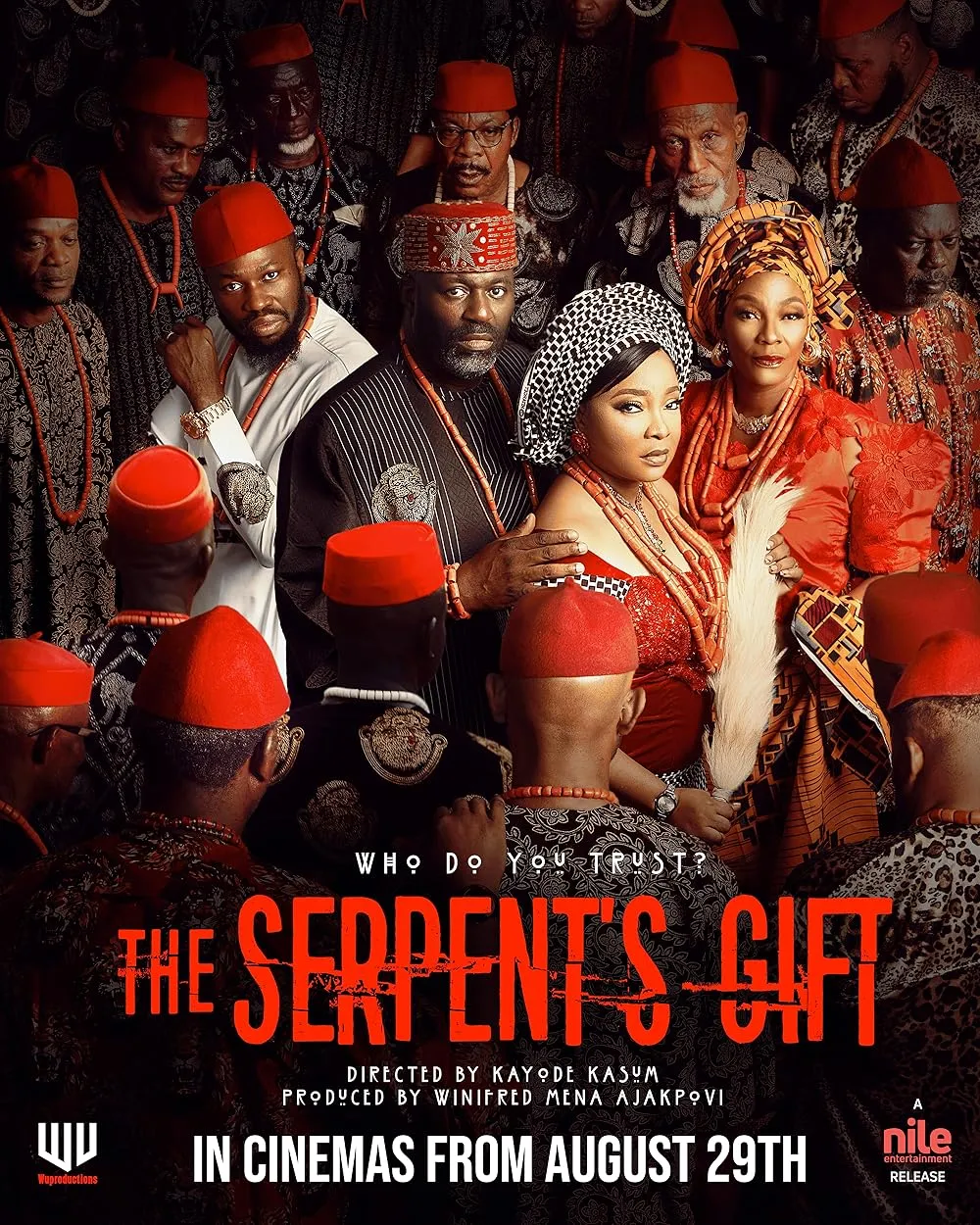
At its core, The Serpent’s Gift is straightforward: Nduka Sylvanus (Chico Aligwekwe), a wealthy businessman, dies suddenly; his young widow Ijeoma (Linda Ejiofor-Suleiman) finds herself under siege from relatives hungry for control of his empire.Â
That premise, inheritance as battlefield, widowhood as vulnerability, has strong dramatic potential. But the film’s recurring error is a dramaturgical one: it treats certain customs as if they were the default script for contemporary Igbo culture, deploying them for maximum emotional jolt rather than interrogating their place in modern social practice.
The Serpent’s Gift
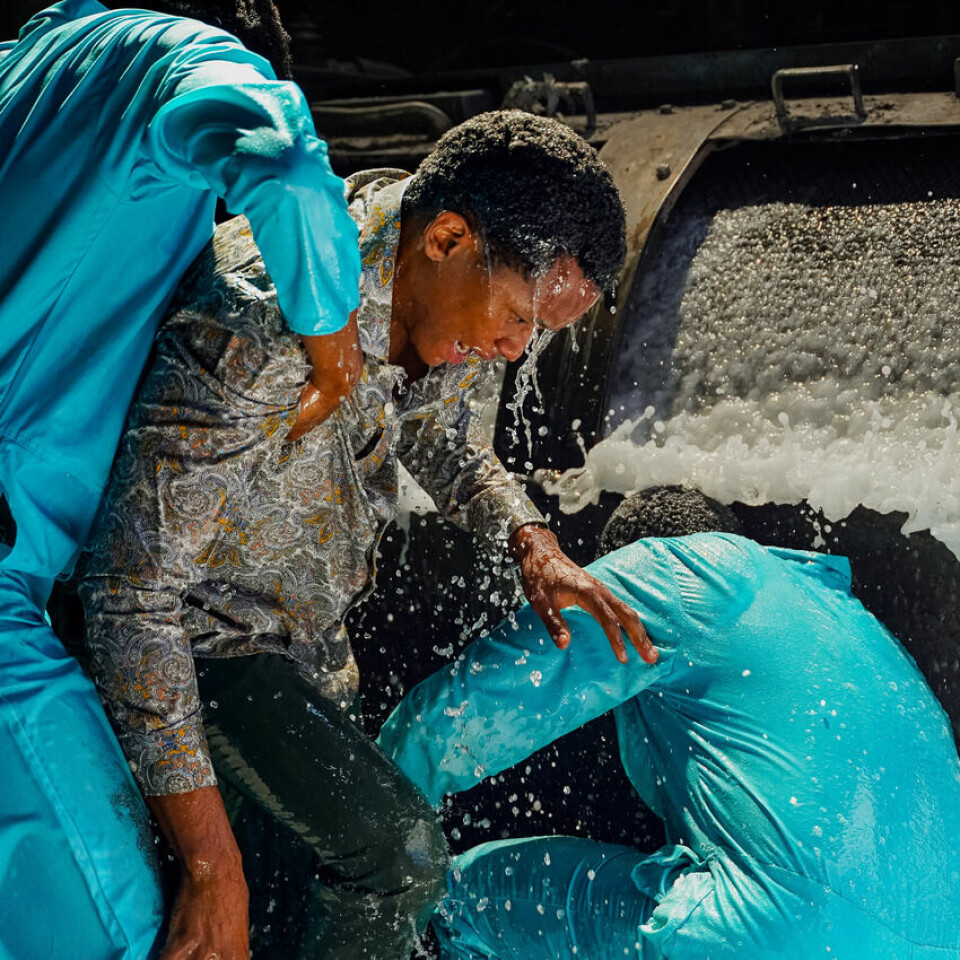
Let’s be specific. The Serpent’s Gift repeatedly foregrounds widowhood rituals — the forced ceremonial walk, the insistence that Ijeoma drink the water used to bathe her late husband — and stages them as though they are normative in South-East Nigeria today.Â
That choice reads like sensationalism disguised as ethnography. If you want the audience to understand why such practices persist (despite the fact that they hardly do nowadays), you show the debates, resistances, compromises, and legal or civic contexts that shape them. Instead, these rituals float in the frame as spectacle: dramatic curiosities to be watched, not social problems to be understood.
That tendency toward spectacle is compounded by sloppy world-building. Remove the language, and nothing about The Serpent’s Gift feels specifically Igbo. This isn’t a throwaway grievance — it’s the film’s central, damning weakness. The screenplay peppers dialogue with proverbs and local phrases, but the mise-en-scène often contradicts the claims of cultural specificity.Â
There are moments so incongruous they yank viewers out of the drama: a wealthy businessman’s office decorated with the faces of national politicians who, in context, make no sense; an Ibadan branch of Nduka’s company where all the characters default to Igbo instead of English or a believable hybrid of Yoruba, Igbo and English; and, conversely, there are scenes set in Igbo contexts where the characters oddly switch to English.Â
Even the funeral of a titled man is staged like an afterthought rather than the elaborate social event it should be. These are not minor slips. They signal a lack of scrutiny and research that makes the film feel like a pastiche — an image of Igbo-ness assembled from familiar icons rather than a living, internally consistent world.
Why does this matter? Because when a film claims cultural authenticity but fails to get the small things right, it invites two harms.Â
First, it exoticises: audiences unfamiliar with Igbo culture will take these dramatised anomalies as normal practice. Second, it erodes trust among the community depicted. A scene that treats a titled man’s burial as underwhelming — when, by social and cultural expectation, such a burial would be elaborate, public and ritualised — doesn’t simply misread detail; it shrinks the stakes.Â
If the director wants us to grieve the loss of a man whose wealth will evaporate into the hands of the wrong custodian, the funeral sequence should affirm why that loss matters socially and symbolically. Here it does not.
Still from The Serpent’s Gift
Small details earn large consequences. The decision to have Ijeoma relay the news of her husband’s death to the family via conference call — with none of them present at the hospital during Nduka’s final moments — strains credibility. In many Igbo communities, illness and death are communal events with kinship obligations that mobilise the extended family.Â
Yes, the film suggests that Nduka hid his terminal illness, which could explain why relatives were absent. But even secrecy has limits: sudden hospitalisation or end-of-life care would typically trigger communal intervention, whether through family networks, business associates, or community elders.Â
By presenting absolute isolation as an unquestioned fact, the film bypasses the very tension it needed to dramatise — the clash between a man’s desire for privacy and a culture’s insistence on communal presence. That clash could have enriched the story; instead, we are left with a thin shorthand that weakens emotional stakes.
Performances, to the film’s credit, keep it watchable even when the script and world-building falter. Linda Ejiofor-Suleiman is the film’s moral gravity: she finds the narrow seam between resolute anger and brittle grief and carries the film through its less credible stretches. Her Ijeoma is not simply victimhood in motion; she’s a woman negotiating a public claim to legacy with private sorrow.Â
Tina Mba’s Margaret gives the film its sharp, antagonistic edge — a matriarch, who at times feels deliberately overdrawn, but whose presence grounds the familial friction. Stan Nze’s Nonso, by contrast, often flirts with broadness; his greed is readable, but it lacks the textured human desperation that would have made him more than an archetype.
The screenplay (credited to Stephen Okonkwo and Ufuoma Metitiri) is a mixed bag. It nails cadences and the rhythm of local speech in places, and some lines resonate with the weight of oral tradition. Yet, the script is reluctant to interrogate the practices it stages.Â
Instead of dramatising the legal, economic, and moral mechanisms that sustain certain rituals — the role of title societies, the influence of patriarchal inheritance laws, the social sanctions that enforce conformity — the film lingers on performative acts of humiliation. That’s a storytelling choice with consequences: the viewer learns what happens but never why it still happens, or how it is contested.
Technically, The Serpent’s Gift does offer some pleasure. The cinematography captures the South-East’s green pulse; there are moments of visual lyricism that suggest a respect for place.Â
Still from The Serpent’s Gift
The soundtrack, steeped in Igbo highlife motifs, works as an affective tether to a Nollywood lineage that can be both nostalgic and invigorating. Those formal strengths make the film’s missteps more disappointing: they show the crew had the tools to render a complex cultural portrait, but chose spectacle over nuance.
If The Serpent’s Gift had one lesson for Nollywood, it would be that cultural truth requires more than surface markers. Accuracy is not only about avoiding factual error; it is about showing social texture — the disputes, the negotiations, the everyday resistances that exist inside any living culture. To dramatise widowhood without showing its contested status in modern life is to flatten a subject that deserves interrogation.Â
In the end, The Serpent’s Gift oscillates between two impulses: to honour and to capitalise. It wants to ask hard questions about legacy, gender, and wealth in contemporary Igbo society, and yet it keeps stepping onto a stage built of tropes that simplify its subjects for dramatic effect. Instead of deepening our understanding, the film rehearses stereotypes. And that is the most disappointing lesson it leaves behind.
Rating: 1.9/5Â
Joseph Jonathan is a historian who seeks to understand how film shapes our cultural identity as a people. He believes that history is more about the future than the past. When he’s not writing about film, you can catch him listening to music or discussing politics. He tweets @Chukwu2big.
With Healers Chapel, Wizard Chan invites listeners to experience a warmth of redemption and a sense of solace, even amid the turbulence and uncertainties of life.
By Abioye Damilare Samson
Afro-Pop’s global rise has not erased the truth that some of its most striking moments come from artistes who draw deeply from the roots of their immediate worlds. Whether it’s Rema and Shallipopi flipping Benin street slang into nationwide catchphrases, FirstKlaz experimenting with a Neo-Arewa sound in the north, or Adekunle Gold gesturing toward Fuji in his upcoming album, the pulse of home continues to shape what travels abroad. Wizard Chan, born Fuayefika Maxwell, stands within this current. His debut album, The Healer, is a purposeful extension of the journey to reimagine Ijaw language, elements, and spirituality within a modern fusion sound.
That sound, which he calls Afro-Teme, has always been the distinct marker that sets him apart. Since the meditative “Earth Song†put him on the map in 2022, his style—which recalled the depth of Reggae legend, Orits Wiliki, in the 80s and carried the communal energy of Gyration music—has since expanded far beyond what he displayed on that track.
The song became a career-defining moment, earning him two nominations at the 2023 Headies Awards—for Songwriter of the Year and Best Alternative Song—and ultimately winning the latter. It was proof that Wizard Chan’s music, stitched with gongs, bells, and other Ijaw music elements, alongside a fusion of Folk, Highlife, Hip-Hop, and Soul, could carve out a spiritual, almost ritualistic space in the mainstream, sustained by devoted listeners who now hail him as the “Big Masquerade†and “Native Doctorâ€.
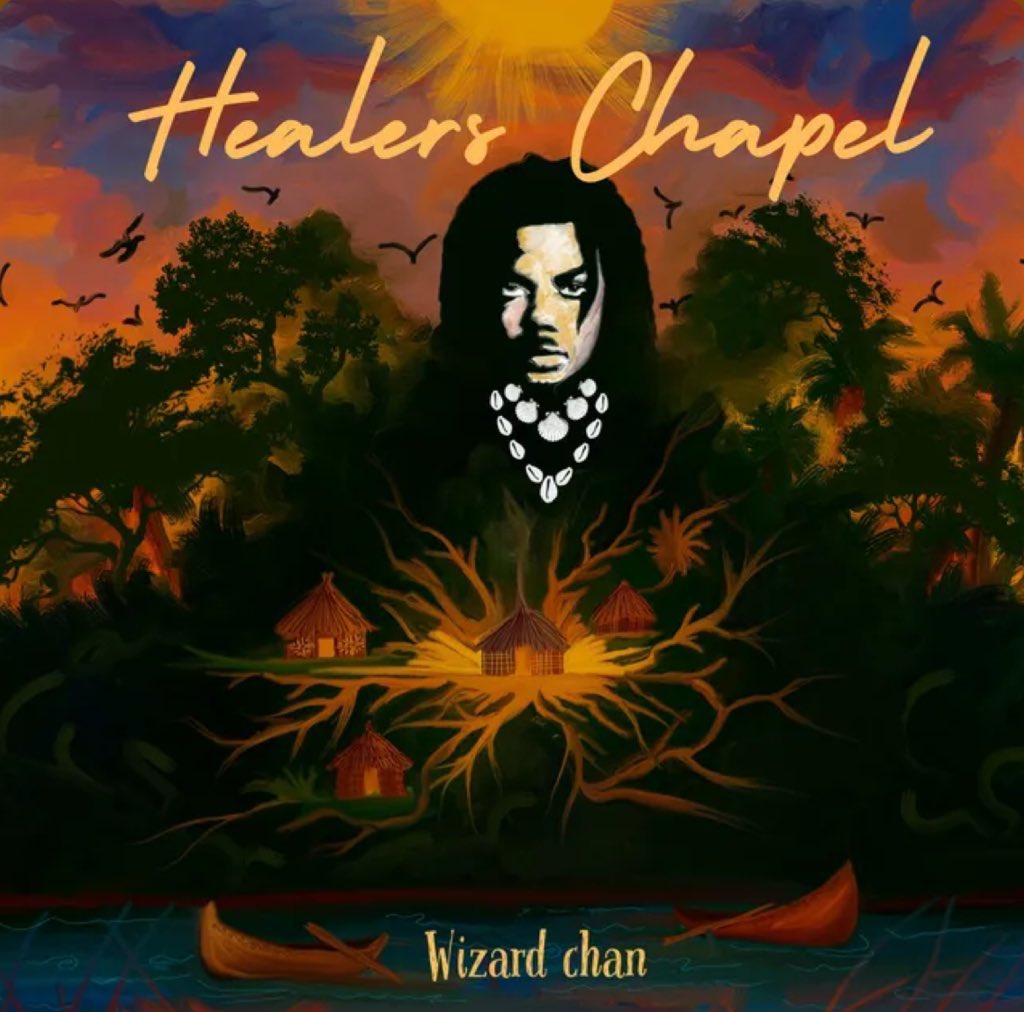
Across projects like The Messenger and Time Traveller, both released in 2024, the Rastafarian-looking artiste has positioned himself as a conscious musician with a reflective approach. His new album, Healers Chapel, continues that trajectory by carrying his music into even more philosophical terrain, and offering a kind of songs to soothe, reflect, and restore.Â
Healers Chapel
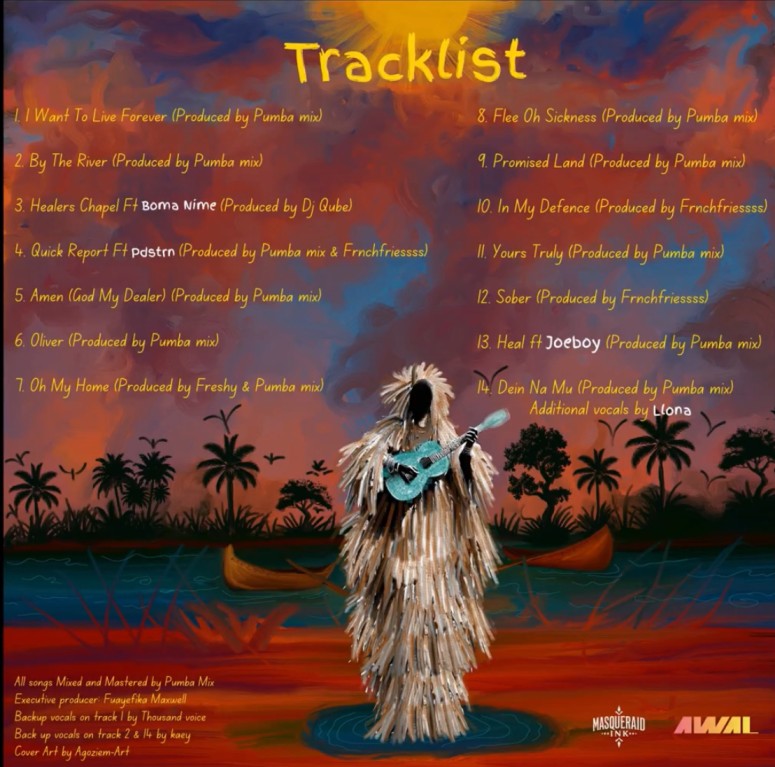
As a conscious artiste, it’s fitting that he chases transcendence for himself and his music on the soulful intro track, “I Want to Live Foreverâ€. “I want to live forever / My songs should live foreverâ€, he quips passionately over soaring keyboard chords and a crowd vocal on the chorus.
The track “By The River†deepens this pursuit, drawing on the River Jordan as a biblical symbol of transition and purification, a motif of healing that aligns perfectly with the album’s title. The title track, “Healers Chapelâ€, features longtime collaborator, Boma Nime, a trio of women traditional healers, who infuse indigenous chants and prayers into the song’s chorus.
On the PDSTRN-assisted “Quick Report†and “Amen (God My Dealer)â€, he shows his range on Drill. The former tells a raw story of police brutality and the chaos such systemic violence breeds, amplified by Lagos-based rapper PDSTRN’s gripping raps and fluid flow, while the latter situates God as his ultimate inspiration, integrating the familiar hymnal chorus, “Amen Amen Amen Amen Amen.â€
The pre-released “Oliver†pushes his fusion instincts further: gyration percussion, dancehall basslines, and Highlife guitar lines intertwine. Yet it is the lyrics, which draw on Oliver Twist’s story of eternal longing for more, that ground its symbolism.
Wizard Chan
With “Oh My Homeâ€, he reimagines a primary school rhyme into a nostalgic Highlife ballad, carried by warm guitar riffs and trumpet solos. On the Pumba Mix-produced “Flee Oh Sicknessâ€, the intro stands as an emblem of his self-coined sub-genre Afro-Teme, while he assumes the role of healer, declaring, “Sickness flee from my body, I am speaking as a person of an almighty Jahâ€, and reflecting on his 2020 Covid-19 ordeal.
The Reggae-tinged “Promised Land†drifts toward visions of Nirvana, while “In My Defenceâ€, “Yours Trulyâ€, and “Sober†lay bare his vulnerabilities in moments of self-rumination. On “Healâ€, featuring Joeboy, he resists the familiar trope of weed as a muse, instead singing about abstinence from substances he once turned to for comfort but never found healing in. The hymnal requiem “Dein Na Mu†closes the album. It’s a poignant dirge that pays homage to lost souls and laments the many vices that hindered his healing, set against a sombre bassline.
Throughout the 38-minute runtime of Healers Chapel, Wizard Chan never loses sight of his primary aim of creating music as a form of healing for the troubled soul while also channeling his lived experiences and inner battles as a compass for redemption. Healers Chapel is richly layered as it taps into a sense of mystique and higher consciousness, particularly in songs like “By The River†and “Healers Chapel†with Boma Nime, and is culturally remarkable in the way he infuses his native Ijaw language to convey emotion with profound intimacy and nuance.
Healers Chapel tracklist
Although he had already proven his artistry with two prior projects, this debut full-length heralds a new chapter for Wizard Chan as a representation of independence and confidence that he has no intention of bending his sound to fit the currents of popular taste or waves in the zeitgeist.
With Healers Chapel, Wizard invites listeners to experience a warmth of redemption and a sense of solace, even amid the turbulence and uncertainties of life. Of course, it’s not the kind of project you play to soundtrack revelry or party anthems, but ultimately, it is the kind you return to for grounding, reflection, and assurance that the good times are still within reach.
Lyricism – 1.8
Tracklisting – 1.4
Sound Engineering – 1.4
Vocalisation – 1.5
Listening Experience – 1.5
Rating – 7.6/10
Abioye Damilare Samson is a music journalist and culture writer focused on the African entertainment Industry. Reading new publications and listening to music are two of his favourite pastimes when he is not writing. Connect with him on Twitter and IG: @Dreyschronicle
Èkó Groove is a fun listen. Its energy, its fluid mix of genres, and its vocal star power make it flow quickly despite its length. Spinall ties it all together with the presence and pacing of a live set, curating an experience that is both eclectic and cohesive in spirit if not in theme…
By Yinoluwa Olowofoyeku
Oluseye Desmond Sodamola, known simply as Spinall, is a Lagos-born DJ, producer, and label head whose career has evolved from mixtapes and club nights into a defining voice in Afrobeats. He founded TheCAP Music in 2014 and began releasing full-length projects shortly afterwards. His debut studio album My Story: The Album arrived in 2015, followed by Ten in 2016, Dreams in 2017, Iyanu in 2018, Grace in 2020, and Top Boy in 2023. Each covers a range of styles, from dancefloor anthems to soulful Afro-Pop, consistently showcasing his ability to curate major collaborations and diverse sounds.
Across these albums, Spinall has built a reputation for blending Afrobeats with House, electronic textures, and global club influences, while remaining rooted in Lagos’s energy. Tracks like “Palazzo†with Asake and “Loju†with Wizkid highlight both his commercial reach and his knack for creating songs that resonate locally and beyond.
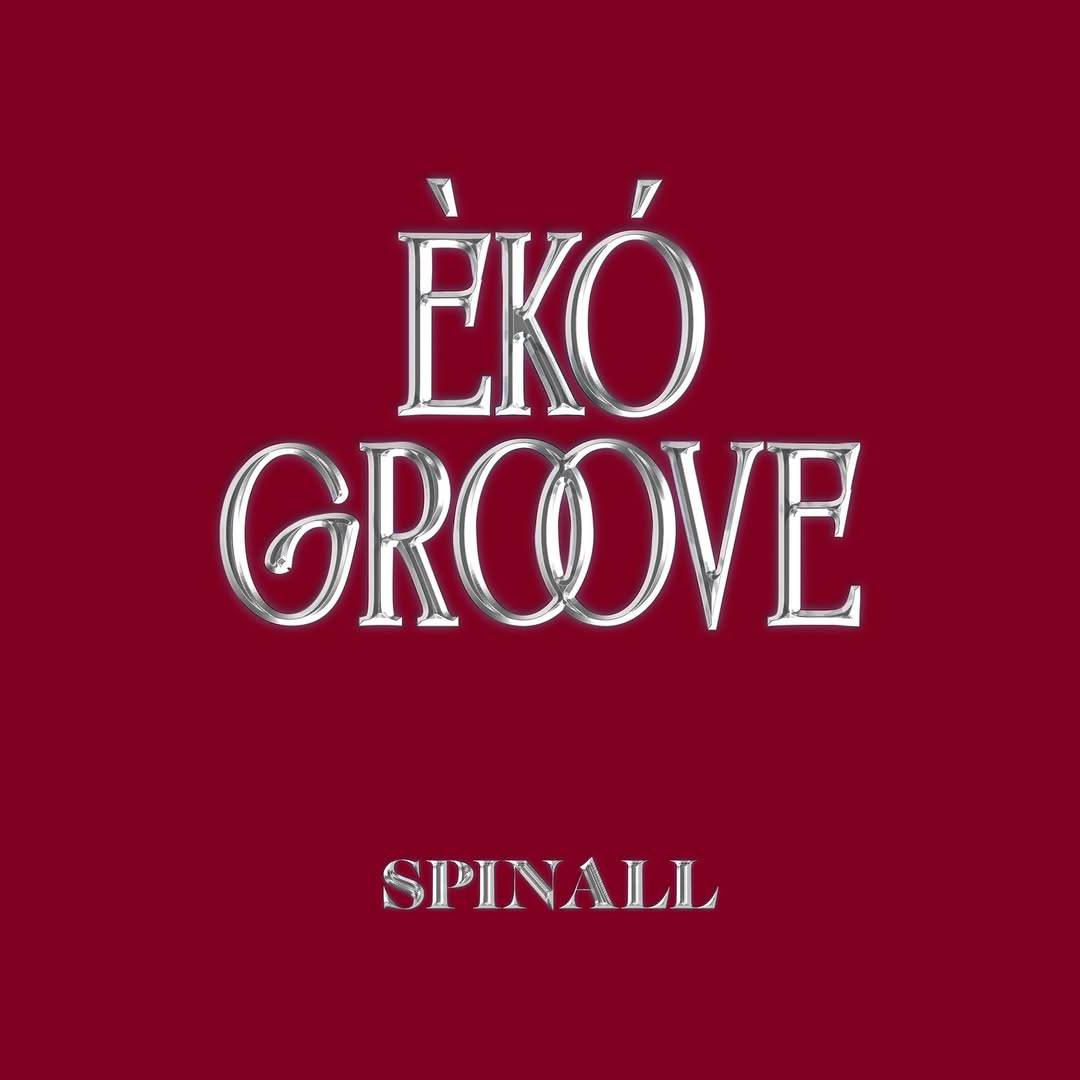
Now, with Èkó Groove, Spinall returns with a project designed to both reflect and expand his legacy. Èkó Groove is rooted in the rhythms, chaos, and vibrancy of Lagos, while also reaching outward, with features from artistes such as Tyla and Dre, and production that leans into the city’s grooves while embracing international colour.Â
It stands as both a tribute and a statement: that after nearly a decade of steady growth and numerous high points, Spinall is still defining what it means to be a groove curator in Afrobeats, while pushing his sound further.
The album opens with the titular “Èkó Grooveâ€, a thematic and sonic overture where rattling shakers and clacking triplet Afrobeats percussion merge with brass and bright guitars. A sample from Ayinde Bakare weaves the city’s history into the music, transforming the track into an ode to Lagos that establishes both the rhythm and the atmosphere shaping the entire project.
That energy carries seamlessly into “Want Youâ€, which builds instrumentally on the same shakers, percussion, guitars, and horns, now joined by filtered key chords. Jayo delivers a loose, patois-inspired flow—sensual and full of whispered accents—while Destiny Conrad layers his soft R&B tone over the Afrobeat pulse.Â
Èkó Groove
Together, their performances embody desire, teasing out intimacy in lyrics such as “Come on and tease and turn/ Watch how you make me freeze and twist and turn/ A little bit of eye contact turn me onâ€, carrying the song’s simplicity with a sensual intensity.
“Early†continues this mood but infuses it with an electronic edge, opening with thumping synths, floating hi-hats, and a groovy Afrobeats rhythm. Pulsing electronics support Victony’s airy vocals, while a sharp guitar riff links the chorus to string pads.Â
His playful lyricism disguises raunch with sly wit, singing, “I just dey give am for ealy morn’/ Her bobo dey call am for early morn’/ Girlie no know say my ting e go reach her belly button/ Easy to shout, I go ta-na-na Selenaâ€. The cheeky tone dances across the synthetic textures, pushing the record’s sensual arc further.
With “Struggleâ€, however, the mood shifts, adopting Reggae instrumentation with steady drums and a rich bass guitar that grounds the track in something spiritual. Buju Banton’s gravelly voice anchors the chorus with heft, while Summer Walker’s soft, solemn tones smooth the edges, harmonising delicately over hard truths. “One time for the hardworking/ You smile but your eyes are hurting/ The life all up your desert/ ‘Cause we wake to the sunset, no no,†they sing together, their contrasting energies uniting in the shared language of perseverance.
The Ghanaian Highlife tradition animates “Aunt Mary,†its triplet clavs, shakers, and lively rhythm guitars paired with a bassline that refuses to sit still. Shine TTW offers soft, airy vocals that glide across the melody, while Darkovibes provides deeper contrast, weaving Twi lyrics and playful effects through the track. Their interplay is buoyed by spirited ad-libs and backing vocals, forming a bright celebration of beauty as Shine sings, “Aunty Mary wey I see for tele/ She say her body be na o gbona feli/ Mo ti moti but I see you clearlyâ€.
From there, Spinall pares back the instrumentation on “Forwardâ€, leaving rattling shakers, percussion-heavy drums, and a restrained palette of guitars and bass synths to create space for Tay Iwar’s agile vocals. His layered delivery carries an uplifting message, urging resilience with lines such as, “One thing that I know is that I love my life/ Through the highs and lows, I survived/ No regrets, no looking back, only forward/ I know yeah, keep moving forward, I know yeahâ€. The positivity is heightened by sprightly rhythm guitars that dance through the groove, keeping the track buoyant.
“Waiting†sets its pulse with four-to-the-floor drums, syncopated percussion, and a brass section that cuts through smooth, jazzy piano chords. A lively bass guitar riff runs like an undercurrent, elevating Taves’ energetic vocals as he sings of longing for a lover to meet him halfway. His chorus, “I’ve been waiting for you/ Say me, and my patience can’t deal/ Your heart that I wan come steal/ Me I want love, love like nobody else’s loveâ€, captures the impatience at the song’s core. Jayo reappears, versatile and insistent, contrasting Taves’ breezy lightness with a sung flow full of drive, their voices together amplifying the tension between yearning and impatience.
“Keroseneâ€, one of Èkó Groove’s earlier singles, rides on bright pianos and smooth drones, with shakers and syncopated percussion leaning into Street-Hop but hinting at Amapiano once the log drums drop in. Young Jonn’s playful lyricism and buoyant delivery carry lines such as, “Baby mi, let’s faaji tongolo/ Body magic, okoro/ Last night was fun, ololo … You dey high me, ogogoroâ€, his signature style burning bright over Spinall’s layered groove.
On “Lojuâ€, another pre-released single, Wizkid slips back into his effortless zone, gliding over energetic Afrobeats drums, plucked synths, and subtle electric piano chords. He rides the rhythm with nonchalance, flexing lyrically rather than narrating, singing, “Na we the girls wan follow go oo / Make the girl change area code / Till you follow me I no go go / Follow bounce if you get staminaâ€. His flow is instinctive, the vibe undeniable—proof of his mastery at bending Afrobeats cadences to his will.
That energy escalates on “Excitedâ€, where triplet claps and pulsating synths signal Afro-House terrain. Ami Faku opens with soft, subdued vocals, painting visions of joy and responsibility over rhythm guitars, brass passages, and pads. Her chorus lifts brightly: “I just want this money/ I’ve been saving, praying about it/ Taking care of family/ With Spinall we rounding/ Come on be honest. We we wo let’s jolly yoâ€.Â
Niniola stamps her signature on the second verse with powerful Yoruba lyrics, agile melodies, and a unique timbre, adding vibrance and vocal force alongside Heavy-K’s steady Afro-House imprint.
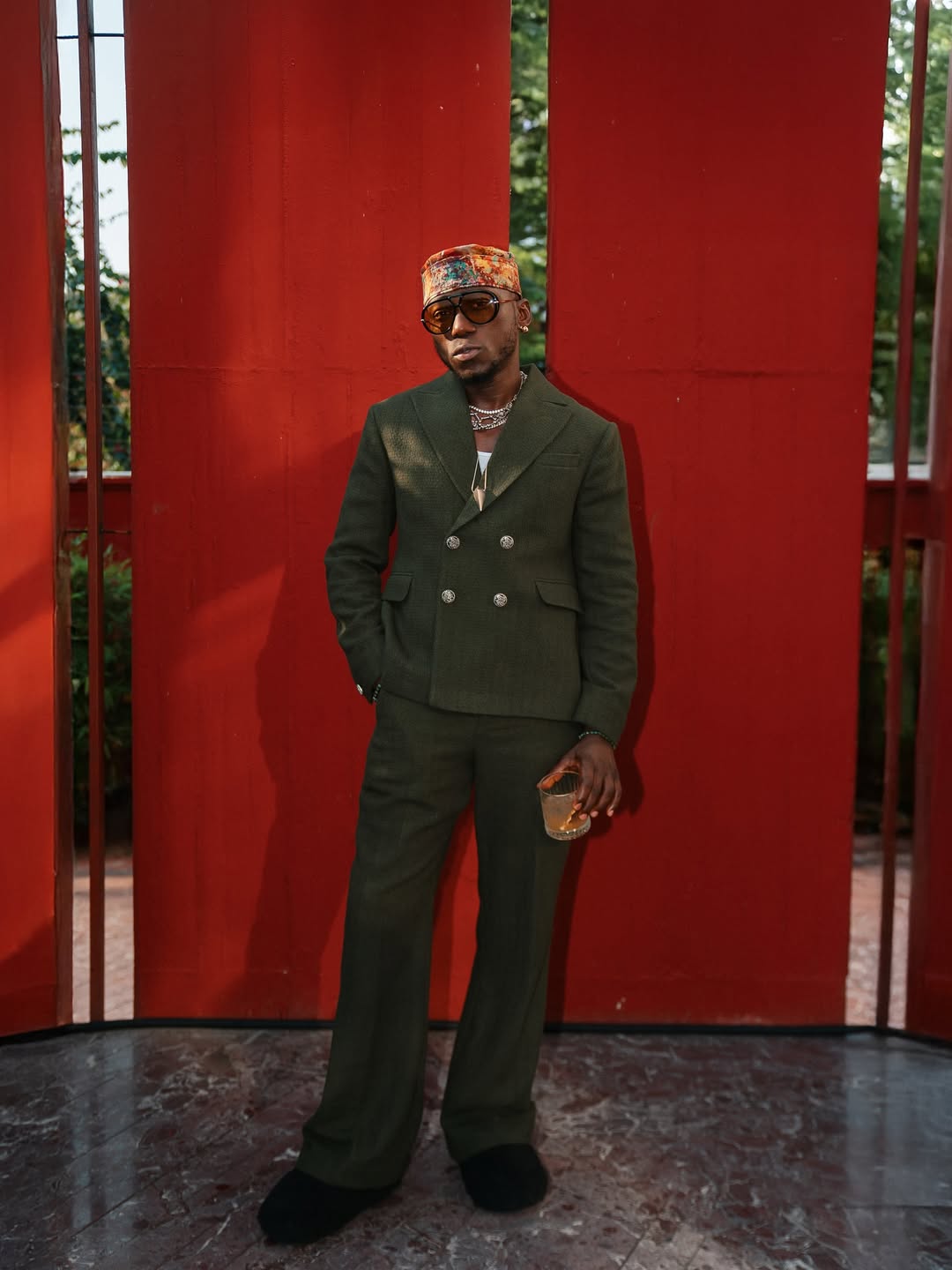
Spinall
“Miami†brings cinematic strings into collision with Street-Hop percussion and hard-hitting Afrobeats drums. Olamide plays both roles, softly crooning the refrain, “When you wake in the morning / When you be yawning, I’d be in Miamiâ€, before switching into rapid Yoruba rap with commanding confidence. T.I. enters with his Southern flow, marrying his cadences to the Afrocentric production seamlessly, never missing a beat as the transatlantic collaboration blurs genre borders.Â
“One Call†follows with tender guitar chords and light percussion ushering in Omah Lay’s drawn-out, emotive voice. He pours himself into the promise of closeness, singing, “I’m on my way to you/ But time is on the loose/ I will always fight for truth/ If I have the chance to choose … ‘Cause no me without usâ€, drawing intimacy from restraint. Tyla’s entrance lifts the energy, her bright ad-libs and group vocals layering over Omah’s more subdued tones. The thumping log drums risk overwhelming the track’s gentleness, but her melodies bring a contrasting vibrance that reshapes its mood.
Returning to South Africa, “Living†builds on Afro-House foundations with thumping kicks, riding shakers, and smooth chords augmented by subtle flutes and mallet runs. Murumba Pitch and Tony Duardo weave their expertise into the evolving instrumental, with filtered kicks and swelling percussion amplifying the track’s meditative dance energy.Â
Their lyrics crave simple freedom: “I wanna dance, let me see the speakers blow now/ Liquor running fast inside my veins yeah/ I ain’t tryna get drunk, I’m just tryna live my life/ The power is yours now/ You could do greater things, the power lies in your mindâ€. The song’s dance break leans inward rather than towards climax—an introspective release before the outro affirms a joy in living.
Finally, “Psalm 23†closes Èkó Groove with a return to Street-Hop’s high voltage. Thumping kicks, log drums, rifling snares, a rich bassline, bright chords, and saxophone riffs set the stage for Teni, whose infectious energy bursts through every word. She ends Èkó Groove on a triumphant note, proclaiming, “I’m so thankful ‘cause I’m so blessed/ Got me shouting seven halleluja/ Psalm 23 for you haters, fuck y’allâ€, her defiance sealing Spinall’s Lagos-inspired vision with gratitude, resilience, and fire.
Èkó Groove plays less like a tightly bound thematic album and more like a well-curated collection of songs. The theme of Lagos, introduced in the opening track, feels nominal and is scarcely revisited, as most of the songs turn instead to the well-worn but effective subjects of love, life, and gratitude.
What the record lacks in narrative cohesion, however, it makes up for in breadth. The tracklist spans a wide range of genres, pulling together strands of Afrobeats, Afro-House, Reggae, Amapiano, and Street-Hop into a lively mix that reflects the multiplicity of contemporary African pop.
The production is strong and versatile, showcasing the craft of a talented team. Beats are energetic and genre-appropriate, bringing the right sonic palette to each song and tailoring the mood to the featured artistes. At times, the light touch works best, allowing vocalists the space to shine against leaner backdrops.Â
At other moments, the layers verge on overproduction, creating clashes of tone and energy that slightly blur Èkó Groove’s balance. Still, the engineering remains sharp and professional, maintaining clarity and polish throughout, ensuring that even the busiest arrangements feel clean.
The featured artistes are Èkó Groove’s real stars. Spinall has assembled a cast that is not only stacked with heavyweights but also cleverly balanced. Most are kept within their comfort zones, delivering exactly the kind of performances that earned them their reputations. Others are nudged into new spaces, and those experiments enrich the record, adding surprise and variation.Â
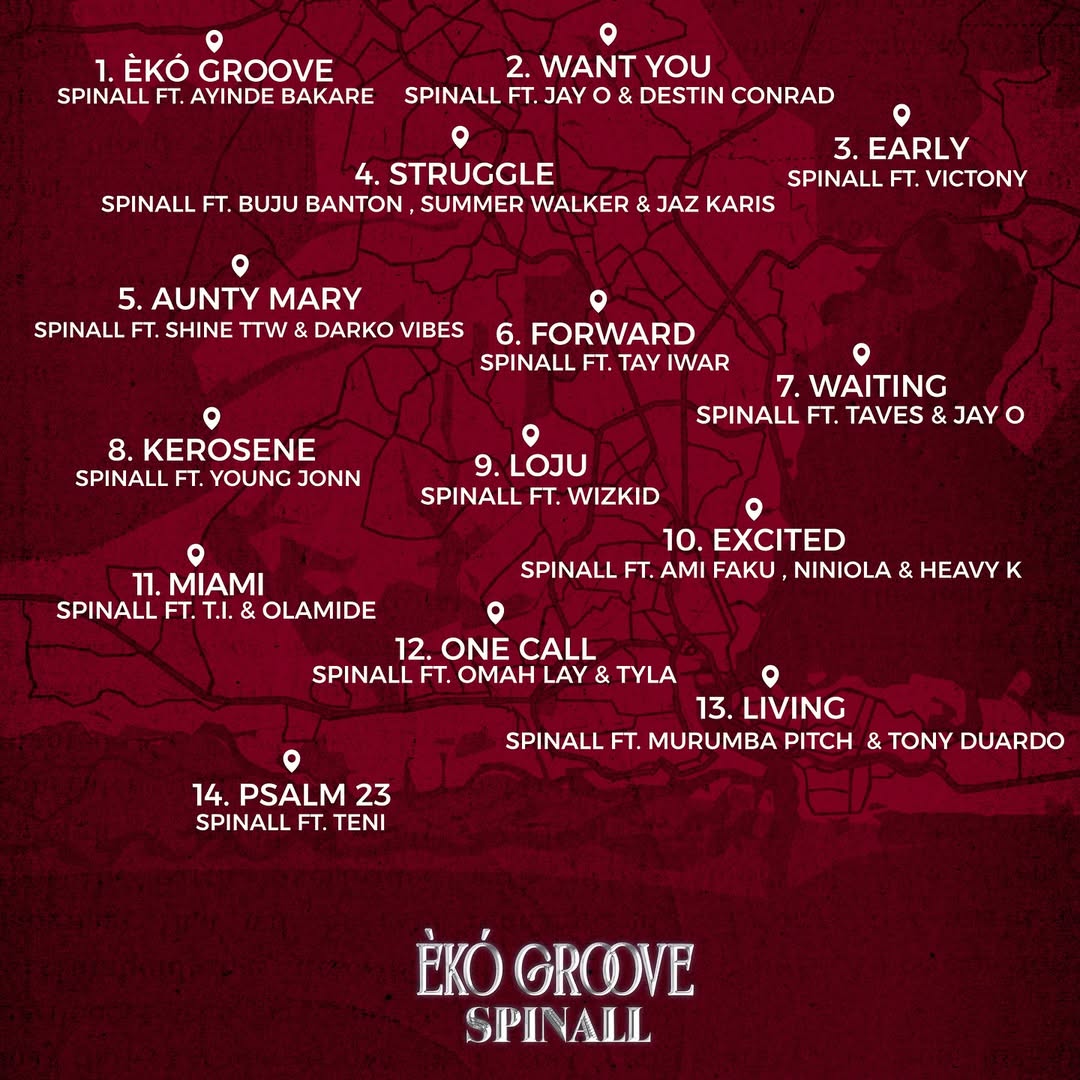
Èkó Groove tracklist
Across the board, the vocals are strong—as expected—but what stands out most is the cross-pollination. The contrasts and harmonies, the way artistes bounce off one another’s styles, create sparks that keep the album engaging. It is less about discovering something entirely new in them, and more about the pleasure of hearing them in dialogue, riffing off one another in a shared space.
As a whole, Èkó Groove is a fun listen. Its energy, fluid mix of genres, and vocal star power make it flow quickly despite its length. Spinall ties it all together with the presence and pacing of a live set, curating an experience that is eclectic yet cohesive in spirit, if not in theme.Â
By pulling together a little of everything his audience loves, he delivers a project that—while uneven in places—remains a milestone in his career. It is a work that should be celebrated, one that underscores his longstanding influence in the industry, showcases his instincts as an A&R, and creates collaborative moments unlikely to be found anywhere else.
Lyricism – 1.4
Tracklisting – 1.3
Sound Engineering – 1.5
Vocalisation – 1.6
Listening Experience – 1.5
Rating – 7.3/10
Yinoluwa “Yinoluu†Olowofoyeku is a multi-disciplinary artist and creative who finds expression in various media. His music can be found across all platforms and he welcomes interaction on his social media @Yinoluu.
Nomad Shadow excavates the personal costs of political displacement with an intimacy that cuts through the abstractions of geopolitical discourse.
By Jerry Chiemeke
In the contested territory of Western Sahara, where Moroccan occupation has displaced populations and shattered communities for nearly half a century, displacement becomes both literal and metaphorical. Eimi Imanishi’s feature debut, Nomad Shadow, takes this fraught geopolitical reality as its backdrop. It follows Mariam (Nadhira Mohamed), a young Sahrawi woman forcibly deported from Spain, who must navigate the treacherous waters between two worlds that no longer feel like home.
We witness the brutal velocity with which belonging can be stripped away in Nomad Shadow’s opening montage. One moment, Mariam is lost in the euphoric throngs of a Spanish nightclub; the next, she’s bundled to Western Sahara, her expired visa the scythe that severs her from the life she knew. It’s a jarring transition that establishes the film’s central preoccupation: what happens when home becomes the most foreign place of all?
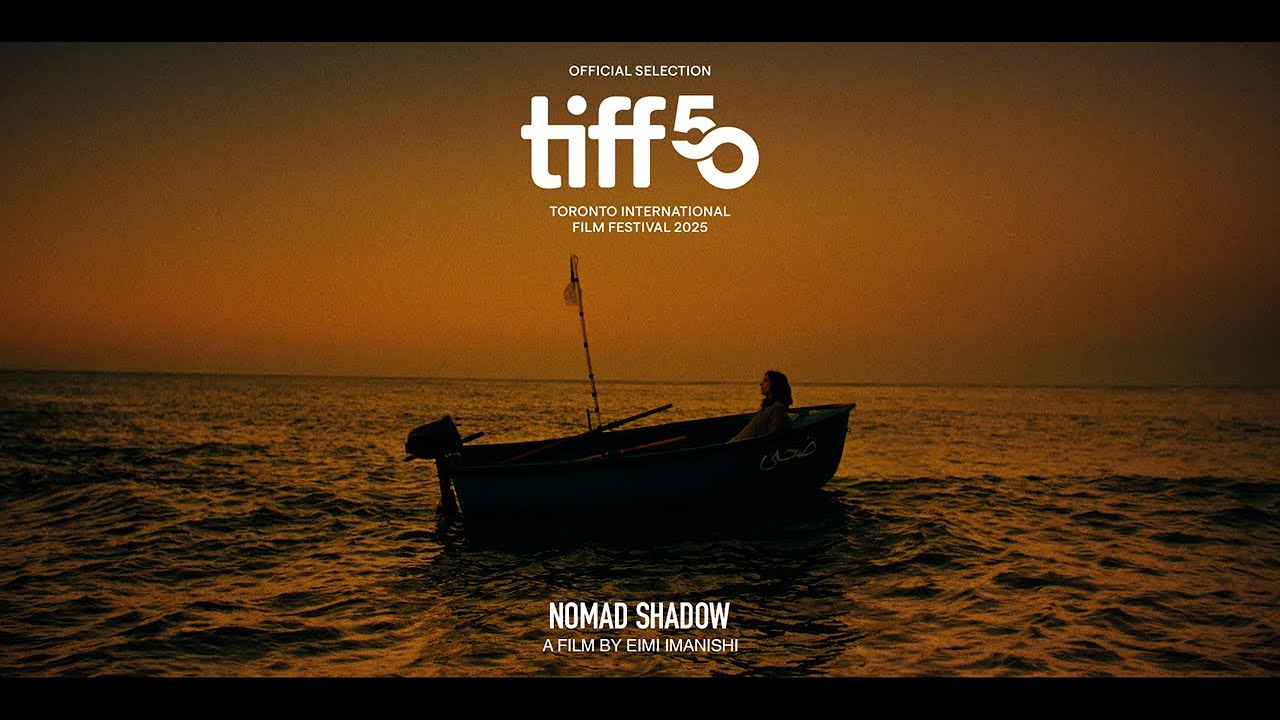
Nomad Shadow
Imanishi, whose previous short, Battalion to My Beat (2016), demonstrated a keen eye for social fractures, manifests an acute understanding of how political displacement manifests in intimate, domestic spaces. Mariam’s mother, convinced her daughter has been corrupted by European values, suggests she is “possessedâ€, a diagnosis that carries particular weight in a community already grappling with cultural erasure under occupation. The film’s most potent moments emerge from these micro-aggressions of rejection, where family becomes another site of exile rather than refuge.
Mariam returns to find Western Sahara transformed by drought. “It hasn’t rained in three yearsâ€, her friend, Sidahmed (Omar Salem), informs her during a visit to a dry riverbed. This environmental devastation serves as both literal context and poetic metaphor for the spiritual aridity she encounters. Her brother, Alwali (Suleiman Filali), has descended into the drug trade, and her sister, Selka (Khadija Najem Allal), harbours silent resentment for Mariam’s abandonment during their father’s illness.
Nomad Shadow’s greatest strength lies in Mohamed’s ferocious central performance. She embodies Mariam’s displacement not through histrionics, but through a carefully calibrated sense of disconnection: the way she holds her body like borrowed clothing, the manner in which familiar spaces seem to reject her presence.Â
When her mother criticises her “decadence†or her brother refuses to involve her in his illegal enterprise, Mohamed registers each rejection as a small death, accumulating layers of alienation that eventually threaten to suffocate her entirely.
The friendship between Mariam and Sidahmed, involving two outcasts finding solace in their shared estrangement from social norms, provides Nomad Shadow’s most tender moments. Salem brings a delicate vulnerability to Sidahmed, a man who faces homophobic persecution. Their scenes together achieve a naturalistic intimacy that contrasts sharply with Mariam’s stilted interactions with family members.
Cinematographer Frida Marzouk’s camera work demonstrates remarkable intimacy, employing close-ups to capture Mohamed’s emotional geography: the tension in her jaw, the vulnerability in her neck and wrists (particularly loaded given Mariam’s history of self-harm). The recurring sailboat dream sequences, shot with disorienting urgency, serve as an effective visual metaphor for Mariam’s psychological drift between two shores of belonging.
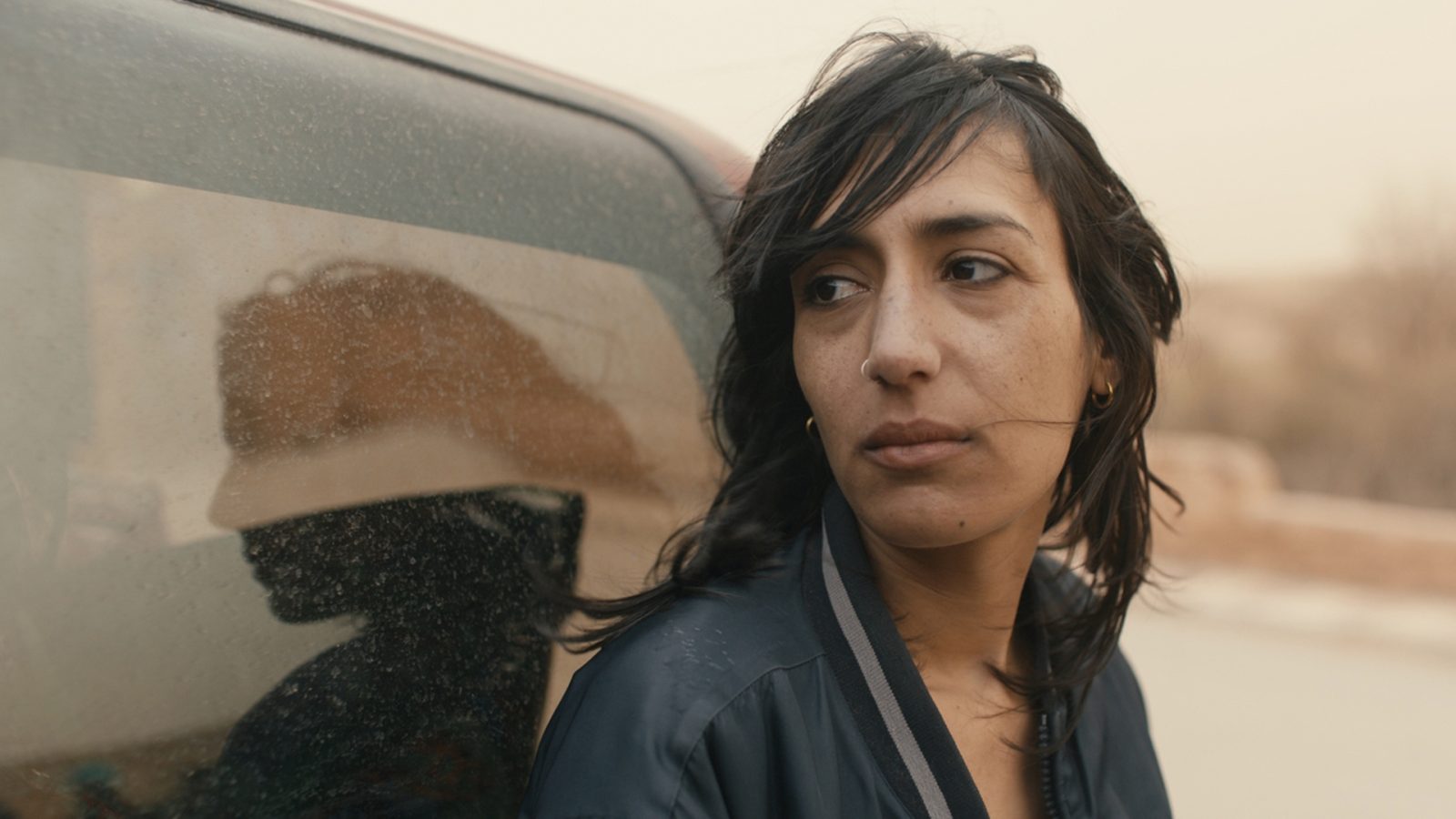
Still from Nomad Shadow
Noelia R. Deza’s editing deserves particular recognition for its restraint. In less capable hands, Mariam’s psychological fragmentation could have been rendered through flashy montages or obvious symbolism, but Deza allows the emotional weight to accumulate through sustained observation rather than editorial manipulation.Â
Nomad Shadow breathes in the spaces between cuts, allowing Mohamed’s performance to carry the narrative burden without unnecessary embellishment.
Where Nomad Shadow falters is in its reluctance to fully engage with the political context that shapes its characters’ lives. While the Moroccan occupation looms over every frame, Imanishi treats it primarily as atmospheric pressure rather than examined reality. The film gestures toward larger questions of cultural survival and political resistance, but never commits to exploring how these macro-forces shape individual consciousness.Â
The glimpses of female agency—a woman celebrating her divorce, Mariam’s mother expressing desires for remarriage—feel underdeveloped, promising explorations that the 81-minute runtime doesn’t allow space to pursue. These moments suggest a richer investigation of how women navigate patriarchal inhibitions in a society already constrained by colonial occupation, but Imanishi pulls back just as these themes begin to deepen.
The choice to centre the narrative around three forms of resistance (anti-colonial struggle, feminist rebellion, and queer visibility via Sidahmed) creates a compelling triptych of marginalisation.Â
Yet, this ambitious thematic architecture sometimes threatens to overwhelm the plot. While the inclusion of Sidahmed’s character adds necessary complexity to Nomad Shadow’s exploration of otherness, his subplot feels underdeveloped, serving more as punctuation than fully-realised narrative thread.
Nomad Shadow
Nomad Shadow succeeds most when it resists the temptation to romanticise exile or transform suffering into easy political allegory. Imanishi understands that displacement’s true violence lies not in dramatic confrontation but in the quiet erosion of belonging: the way familiar places become foreign, and the way identity fractures across geographical and cultural boundaries.
In its exploration of what happens when neither departure nor return offers genuine resolution, Nomad Shadow captures something essential about the contemporary experience of displacement.Â
For Mariam, and for countless others caught between worlds, home exists not as a place to be recovered, but a concept to be continually negotiated. Imanishi’s debut suggests that sometimes the most radical act is simply learning to live in the space between shores.
Jerry Chiemeke is a Nigerian-born writer, film critic, journalist, and lawyer based in the United Kingdom. His writing has appeared in Die Welt, The I Paper, The Africa Report, The British Blacklist, Berlinale Press, The Johannesburg Review of Books, Culture Custodian, Olongo Africa, and elsewhere. Chiemeke’s work has won or been nominated for the Pushcart Prize, Ken Saro Wiwa Prize, Diana Woods Memorial Award for Creative Nonfiction, Best Small Fictions, and the Quramo Writers Prize. He is the author of the critically-acclaimed short story collection, Dreaming of Ways to Understand You.
Diya is a morally complex drama that interrogates the collision between ancient customs and modern realities in contemporary Chad.Â
By Jerry Chiemeke
In the opening frames of Achille Ronaimou’s feature debut, Diya (Le Prix Du Sang), we are confronted with an ancient equation: life for life, blood for blood. Yet what unfolds across this 96-minute moral labyrinth is far more complex than the stark mathematics of retribution might suggest.Â
Ronaimou, whose previous work includes the documentaries: Minors in Prison (2013) and Kanoun (2012), brings an ethnographer’s eye to this fictional excavation of Chadian justice, tradition, and the crushing weight of circumstance.
Ronaimou’s direction displays the confident hand of someone who understands that the most powerful dramas emerge not from grand gestures but from the accumulation of small indignities. Dane’s dismissal from work, his wife’s humiliating attempts to bribe police for the return of his license, the community’s grudging collection of funds—each detail adds another stone to the mountain of pressure threatening to crush his protagonist.Â
It’s precisely this attention to the bureaucratic machinery of oppression that elevates Diya beyond simple moral fable into something more uncomfortably recognisable. Ronaimou resists easy moralising, instead presenting a society where corruption, poverty, and rigid adherence to custom create seemingly impossible choices.Â
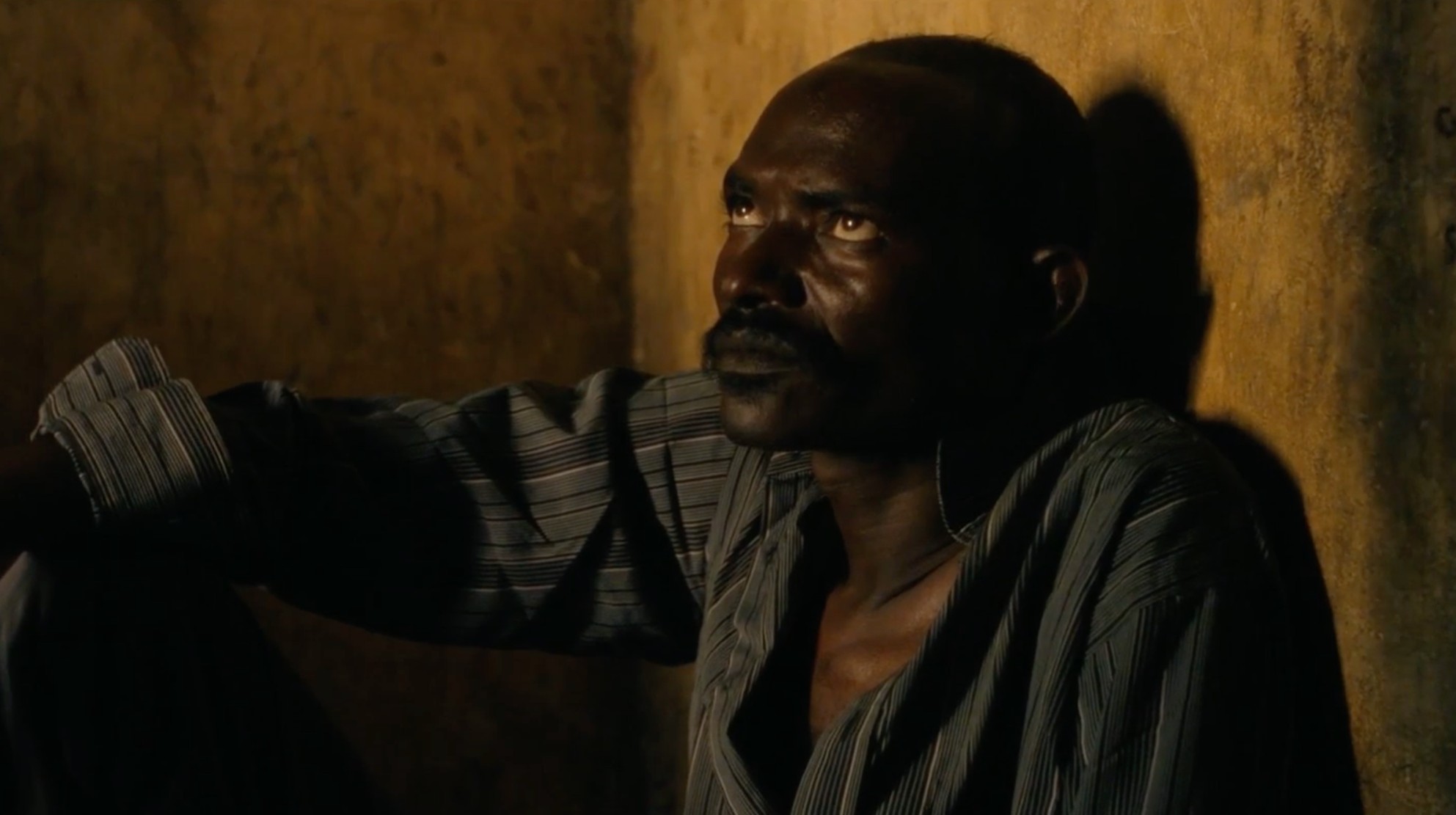
Equally impressive is Moussaka Zakaria Ibet as Oumarou, Dane’s cynical cellmate whose fluid ethics ultimately precipitate the film’s most dramatic revelations. Ibet brings a magnetic unpredictability to the role, embodying the kind of moral pragmatist who thrives in systems where traditional justice meets modern corruption. His performance suggests depths that Ronaimou, to the film’s credit, refuses to fully plumb, leaving us to grapple with the implications ourselves.
Still from Diya
Solmem Marina Ndormadingar provides the film’s emotional anchor as Delphine, Dane’s pregnant wife, whose loyalty remains unwavering even as danger escalates. Ndormadingar brings a grounded humanity to scenes that might otherwise devolve into melodrama, particularly in moments where Delphine must achieve a balance between consternation and empathy.
The film’s visual elements serve its moral complexity. Cyrille Hubert’s cinematography captures both the suffocating heat of N’djamena’s streets and the cooler expanses of Chad’s north, while Guillaume Talvas’s editing maintains the mounting tension without sacrificing clarity. The score by Afrotronix adds layers of foreboding that never overwhelm the performances, understanding that the film’s greatest power lies in its human moments rather than its mythic resonances.
Similarly, certain plot mechanics, particularly the film’s climactic heist involving what appears to be an entirely unsuitable vehicle, strain credibility in ways that threaten to undermine the careful moral ambiguity Ronaimou has constructed throughout the film.Â
But these are minor quibbles with a film that succeeds admirably in its larger ambitions. Diya uses the specificity of Chadian culture to examine universal questions about justice, morality, and the ways in which good people can find themselves doing terrible things. Ronaimou understands that the most interesting existential questions are not those with clear answers but those that force us to confront the uncomfortable ambiguity of human behaviour under pressure.
Still from Diya
The film’s final act delivers a twist that reframes everything that has come before, forcing both Dane and the audience to reckon with the true cost of the choices made. It’s a bold narrative gambit that works precisely because Ronaimou has earned our investment in these characters’ fates. We may not approve of Dane’s ultimate decisions, but we understand them, and that understanding is perhaps more troubling than simple condemnation would be.
Diya succeeds most completely as a character study of a man whose principles are tested by circumstances beyond his control. While the film occasionally overreaches and stumbles, its refusal to provide comfortable resolutions marks it as a noteworthy debut. Ronaimou has crafted a film that trusts audiences to grapple with difficult posers about tradition and survival in contemporary Africa, even if his technical execution doesn’t always match his thematic ambitions.
Jerry Chiemeke is a Nigerian-born writer, film critic, journalist, and lawyer based in the United Kingdom. His writing has appeared in Die Welt, The I Paper, The Africa Report, The British Blacklist, Berlinale Press, The Johannesburg Review of Books, Culture Custodian, Olongo Africa, and elsewhere. Chiemeke’s work has won or been nominated for the Pushcart Prize, Ken Saro Wiwa Prize, Diana Woods Memorial Award for Creative Nonfiction, Best Small Fictions, and the Quramo Writers Prize. He is the author of the critically-acclaimed short story collection, Dreaming of Ways to Understand You.
It is perhaps this deep grounding in Yoruba history and mythology that earned Sanya a spot on the shortlist for the Nigeria Prize for Literature 2025. And deservedly so.
By Evidence EgwuonoÂ
Literature, among many other things, serves as a mirror to society. Perhaps no writer embodies this idea more profoundly than the venerated William Shakespeare. Through his tragedies, Shakespeare revealed the dangers of unchecked power, unbridled ambition, and the inevitable consequences of human choices—whether seemingly good or bad.Â
At its core, his work reflects the nuances and complexities of human nature. For instance, Macbeth’s extraordinary battle skills eventually gave way to an insatiable thirst for power, fostering a dangerous sense of invincibility that ultimately led to his downfall.
As a research student, it is easy to observe that Oyin Olugbile must have drawn deeply from these invaluable lessons in literature. What is especially commendable, however, is the way she has domesticated and recreated such lessons in her debut novel, Sanya. In her novel, Olugbile offers a fresh, creative perspective on the mythology of Sango, one of the most significant primordial beings in the Aborisa religious system.
Sanya begins with a prologue that establishes the historical premise of the entire story. It follows a chronological storytelling style, reminiscent of tales-by-moonlight narratives about the Yoruba pantheon, but with a particular focus on the Orisas. Although fictional, the prologue draws from historical accounts and serves as a creative retelling of the mythological foundations upon which Sanya is built.
Sanya
The main story introduces us to a sickly child, Dada, born with locs into the family of Ajoke and Aganju, an otherwise ordinary couple in Banire village. The couple, plagued by fear of Dada’s fragile health, desperately seeks more children. After several inquiries and the heartbreak of stillbirths, the eponymous character, Sanya, is finally born. Her arrival disrupts the seemingly ordinary lives of the family. Consequently, the sudden deaths of Ajoke first after childbirth and Aganju months later propel both siblings into a new phase of life with their mother’s twin sister in Aromire village. They gradually move toward fulfilling a prophecy in which they both play crucial roles, though they remain unaware of its significance.
The next time Sanya appears is in Part II, now a fourteen-year-old lanky teenager described as having “sturdier shoulders than her brother. Her arms had small, firm muscle mounds, and her legs, sticking out from her buba andadire shorts, seemed to go on foreverâ€.Â
This physical portrayal stands in stark contrast to her brother, Dada, who is depicted as “as weak as an okro plant, and anyone could bend him to their will by just applying a little force.†As the stronger and younger of the two, Sanya naturally assumes the role of protector. This sense of duty not only defines her relationship with Dada but also serves as the catalyst for many of the actions and conflicts that unfold in the later parts of the novel.
As the children grow, their differences—particularly their strengths and weaknesses—become more pronounced. What Dada lacks in physical strength, he makes up for with his gift of clairvoyance, though this ability also serves as his greatest vulnerability. He is the more introspective of the two, and we encounter him primarily through his stream of consciousness rather than through direct action.
Sanya, on the other hand, is driven largely by impulse. Her extraordinary physical strength fuels her brazenness, but she remains largely oblivious to her surroundings. Unlike her brother’s reflective nature, Sanya is defined by her actions. This contrast is evident from her first act of “saving†Dada, where the omniscient narrator highlights her personality: “Sanya continued talking, unaware of her brother’s thoughts… Her loud voice disturbing the birds…â€. These contrasting traits are gradually deepened as the narrative unfolds, ultimately manifesting in the defining choices and actions of each character.
In many African cosmologies, dreams are understood not simply as psychological by-products but as spiritual experiences. They act as conduits between the human and the supernatural, providing warnings, revelations, or glimpses of destiny.Â
Oyin Olugbile’s Sanya situates itself firmly within this African paradigm. Both Sanya’s and Dada’s dreams are not abstract psychological states but direct precedents of future realities. Dada’s opaque vision of a rivalry with his sister over a throne foreshadows the eventual conflict that shapes their intertwined destinies. Sanya’s dream encounter with her mother similarly becomes a literal turning point in the novel. In the dream, she is compelled to swallow a stone, which materialises in reality as a consuming, almost invincible strength in battle.
This spiritual empowerment, however, becomes uncontrollable. Sanya’s inability to master her newfound power culminates in the murder of Ropo, her brother’s bully, exposing the double-edged nature of divine gifts. The act disrupts the careful efforts of her aunt, Abike, who attempts to shield Sanya from a prophesied destructive path. Yet, true to the logic of African cosmology, destiny proves inescapable. On the eve of her arranged marriage, Sanya abandons Abike’s plan and flees, stepping into a future which is seemingly unknown, yet already etched into her fate.
After Sanya’s disappearance, Dada struggles with conflicting emotions: “A part of him, some dark part, was relieved that he would no longer be smothered by his sister’s need to protect him… but those feelings were also conflicted by a childish anger that Sanya had broken her promise to always be there for him.†As the novel progresses, however, and he gradually comes into his own—eventually crowned the new Kabiyesi of Banire—he concludes that it is best for his egocentric sister to remain far away, lest she undermine his authority and efforts.
Meanwhile, Sanya’s disappearance marks the beginning of her transformation. She wanders through an unknown path and emerges profoundly changed: “…she was noticeably older and looked fierce, as though well-cooked in the flames of a life she could not rememberâ€.Â
Oyin Olugbile
Her growth, however, extends beyond her physical appearance; she evolves into a formidable warrior. Finding herself in Oluji village, whose king has just been murdered by marauders, she rallies the few remaining warriors and leads them to victory. After months of living among the people and proving her strength, she is crowned king—mistakenly, under the assumption that she is a man due to her masculine appearance.
Both siblings rise to prominence, yet Dada’s determination to avoid his sister Sanya, rooted in the fear of his prophetic dream, inevitably erodes under the weight of destiny. His futile resistance mirrors the Shakespearean insight that human beings are often powerless before larger cosmic forces: “As flies to wanton boys are we to the gods; they kill us for their sportâ€.Â
Indeed, Sanya offers a creative retelling of the story of Sango, but with a dynamic focus not only on power but also on the nuances of human emotions and relationships. One such instance is the sibling rivalry between Sanya and Dada.Â
Because of his physique and frail health, Dada continues to nurse a wounded ego. His sister looks down on him, believing he is incapable of much, but Dada is determined to prove everyone wrong. When he gets the chance to become king, he accepts it as an opportunity to finally demonstrate his worth.Â
However, Sanya reappears and, despite her earlier promise, reclaims the spotlight amidst the praises of the people of Banire. She, too, is crowned king, and from this point Dada begins to plot her downfall. Sanya, however, blinded by fame and adulation, remains unaware of her surroundings and does not see Dada’s schemes until it is too late. Her fall results largely from her hubris or pride rather than from any preternatural force.
Beyond pride, Sanya’s downfall also stems from her unchecked powers and overreaching ambition. Like Macbeth, she believes she can act without consequence. Her decision to subsume her brother’s kingdom under her control, as well as her refusal to heed Oya’s warnings about the dangers of her relationship with Osoosi, ultimately led to her tragic end
Although this book is undeniably a work of creative brilliance, it is not without its limitations. My first critique concerns the implicit message it conveys about femininity. In an interview with Literature Voices, Oyin Olugbile subtly distanced herself from the claim that she was reimagining Sango through female instincts but rather from a creative lens.Â
Yet, when gender is at stake, neutrality is hardly possible. While Sanya is nominally identified as a woman, the text offers little to substantiate her femininity. As the narrator observes, “The only hint of femininity about her, [were] mere nubs where breasts should beâ€. Her physicality and attributes are consistently coded in masculine terms—strength, bravery, and fearlessness.
In contrast, her brother Dada is characterised through weakness, vulnerability, and, at times, effeminacy. This juxtaposition produces a troubling implication: that strength and authority are inherently masculine qualities, while weakness and fragility are aligned with femininity.Â
Rather than disrupting patriarchal binaries, the novel inadvertently reinforces them, suggesting that power cannot be embodied in a recognizably feminine form. Thus, while Sanya succeeds as a mythological and literary reinvention, and attempts to blur the importance of gender in matters of power (see this excerpt: “If they did not feel that her deeds were more important than her gender, then it was their own failing rather than her problemâ€), it reinscribes stereotypes it might otherwise have subverted.
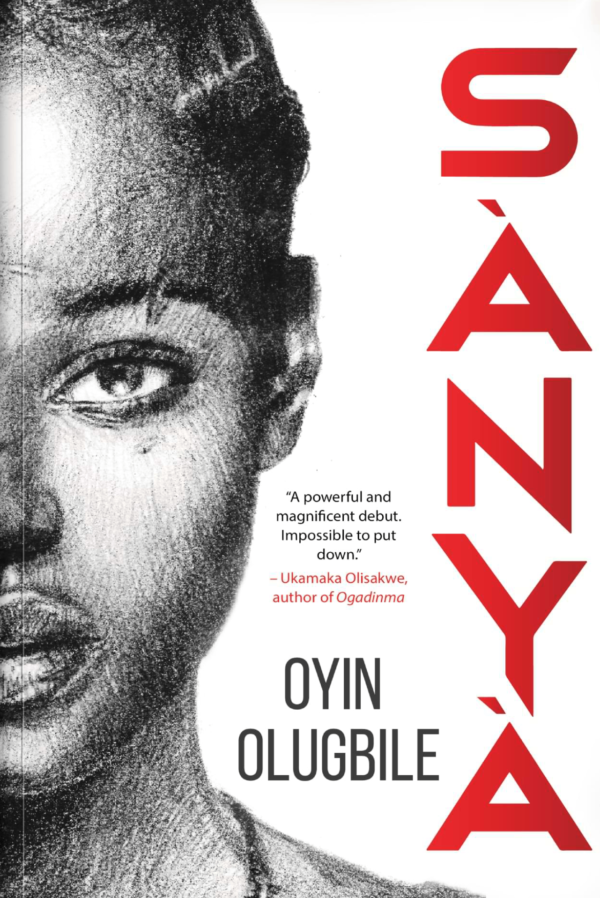
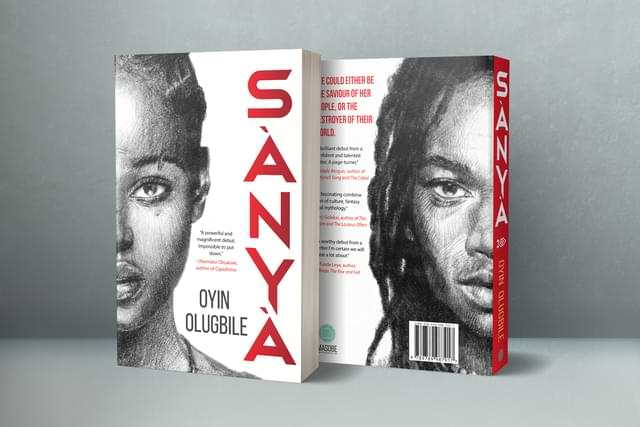
Sanya (Source: Masobe Books)
Another criticism is the way the Orisa, Esu, is portrayed. In the Aborisa religious tradition, Esu is a trickster god and a divine messenger. As Wole Soyinka points out, people often blame Esu for everything evil, even though he is not evil at all.Â
In Sanya, however, Esu is shown as exactly that—an evil figure, a disruptor of order, described as one who was rejected in heaven and cast down to earth. All through the novel, Esu appears in dark, menacing terms as the ultimate source of destructive dark power. The issue here is that this repeats a long-standing distortion. By painting Esu as purely evil, the book leans into the Euro-Christian view of Esu, rather than reflecting his true role in Yoruba belief.
Among other things, what makes Sanya such a remarkable work is the way it reimagines an important story in Yoruba mythology, one that deserves to be passed down from generation to generation. But beyond that, its real brilliance lies in its layered portrayal of human personalities and their complexities.Â
The novel’s ending is not about punishment for wrongdoing or reward for making the right choices. Instead, it holds up a mirror to readers, showing us that binaries—right and wrong, fair and unfair—are often illusions. Sanya is the kind of novel that pushes us to question ideas of partiality, impartiality, fairness, and justice, all through the lens of history, culture, and myth.
It is perhaps this deep grounding in Yoruba history and mythology that earned Sanya a spot on the shortlist for the Nigeria Prize for Literature 2025. And deservedly so. Sanya is not just a book to admire for its beauty; it is a work that should be shared and taught.
Evidence Egwuono Adjarho is a dynamic and evolving creative with a flair for literature and the arts. She finds joy in reading and writing, and often spends her free time observing the world around her. Her interests span a wide range of artistic expressions, with a particular focus on storytelling in its many forms including photography.
“This track is about celebration and connection. It’s the perfect blend of dancehall energy and Afrobeats rhythm. We wanted something that felt timeless but ready for the culture right now.†– Ras Kwame
“Pon Time Again, Look out fi it, b’cos we book out fi it, Orange Hil†–Vybz Kartel
“Collaborating with Ras Kwame is always a joy—he’s like a brother to me. Working alongside Vybz Kartel & Yung Alpha makes this record even more special, and I feel truly honoured to be a part of it.†– Idris Elba
“Can’t wait to share this, it was amazing to work on Pon Time Again with these icons, bringing different cultures together. Let’s get it†– Yung Alpha
Orange Hill, the UK-based electronic dance music and DJ outfit led by renowned DJ and producer Ras Kwame, make their long-awaited return with the Afrobeats and dancehall-infused single ‘Pon Time Again’ featuring Vybz Kartel, Idris Elba and Yung Alpha out 3rd September, 2025, via Platoon. HERE
Formed in 2011, Orange Hill burst onto the scene with the fiery debut ‘Wine De Best’ featuring UK rap icon Kano, Jamaica’s dancehall stalwart Busy Signal, and the late US club legend Fatman Scoop, a release that stormed into the UK Official Singles Breakers Chart Top 20.
Originally a duo with production partner Jnr Tubby, Tubby left the group in 2013. Ras has since collaborated with global producers KickRaux and Yung Alpha, creating a catalogue of standout tracks with Mr Vegas, Stylo G, Mr Eazi, RDX, Sneakbo, Anthony B, Ishawna, Camidoh, and Lisa Mercedez. Their music has earned playlisting across BBC 1Xtra, Capital Xtra, Kiss FM, MTV, Spotify, and Apple Music.
On stage, Orange Hill have delivered high-energy sets worldwide, from touring with Fatman Scoop to performances at SxSW (USA), London’s Fabric and The Roundhouse, Notting Hill Carnival (Boiler Room), Damian Marley’s Welcome to Jamrock Cruise, and Glastonbury, blending dancehall, Afrobeats, reggae, and EDM into an electrifying club experience.
Following a hiatus after 2018’s ‘The Carnival EP’, Ras Kwame now reignites Orange Hill with ‘Pon Time Again’, a feel-good anthem uniting global superstar and dancehall’s finest Vybz Kartel, actor/DJ/producer Idris Elba, and rising Nigerian Afrobeats star Yung Alpha (Sober ft. Davido, Olumbah & Hmmm… for Chris Brown & Davido), who also co-produces the track.
‘Pon Time Again’ is out now on all major platforms via Platoon.HERE
Coachella has announced its 2026 lineup, and as always, the California festival is set to be one of the biggest musical gatherings of the year. Headliners JustinBieber, SabrinaCarpenter, KarolG, and Anyma will lead two weekends of performances, running from April 10–12 and April 17–19 at the Empire Polo Club in Indio, California.
Among the global mix of artists, Nigerian superstar Davido is featured as the only Nigerian act on the bill. He will perform on both Saturdays, April 11 and 18, marking his first-ever Coachella appearance.
The 2026 lineup also includes names like The Strokes, IggyPop, NineInchNails (with Boys Noize), and FKA twigs, alongside British Kenyan singer PinkPantheress and British Nigerian rapper LittleSimz, who will perform on Sundays, April 12 and 19.
African and diaspora artists have steadily carved out a space at Coachella in recent years. This year, Tyla, Amaarae, and SeunKuti brought their sounds to the festival, and next year’s lineup continues that momentum. With Davido, Little Simz, and PinkPantheress all on the stage, African talent will once again have a visible presence at the world’s most-watched music festival.

 Connexion